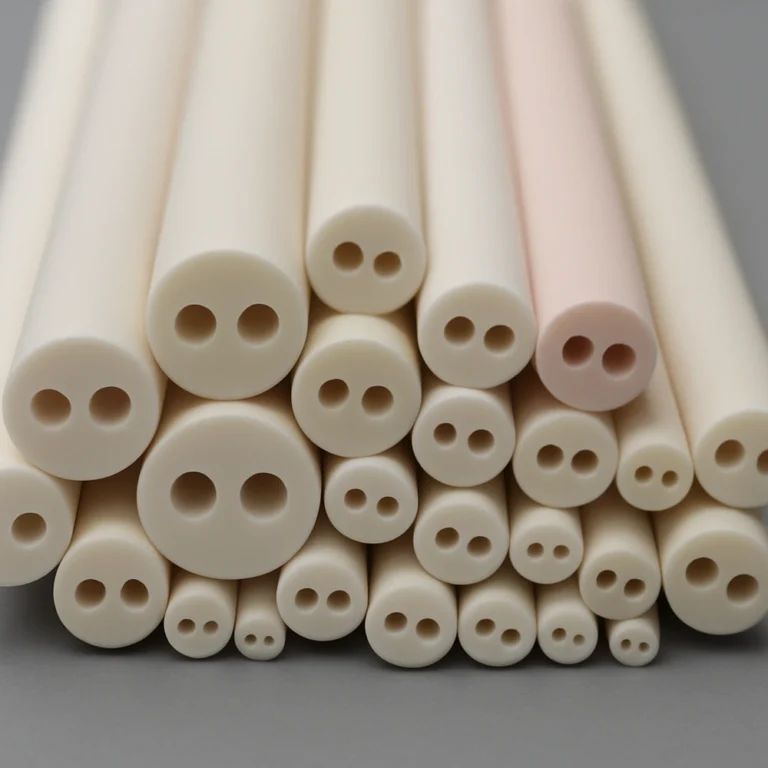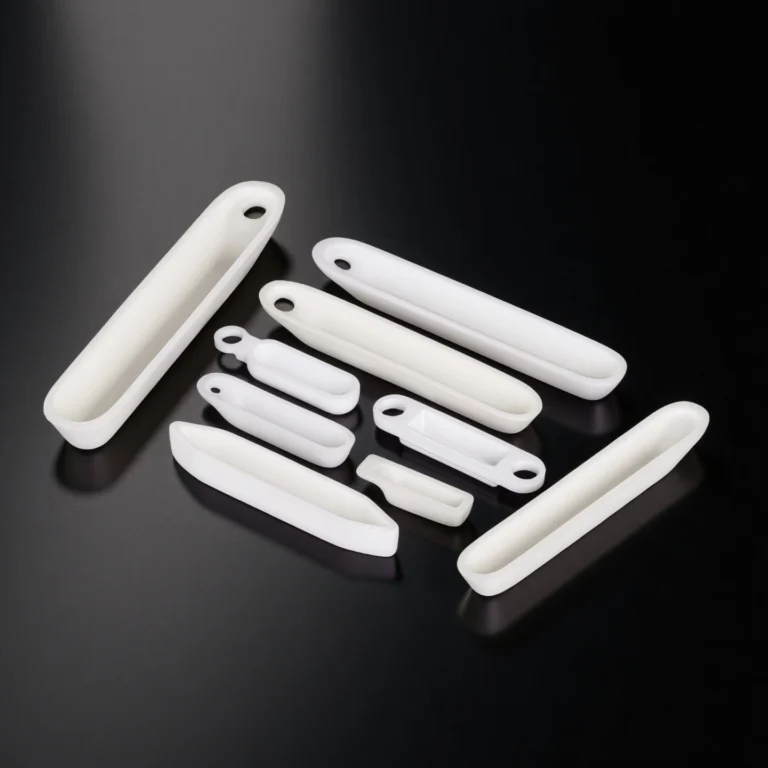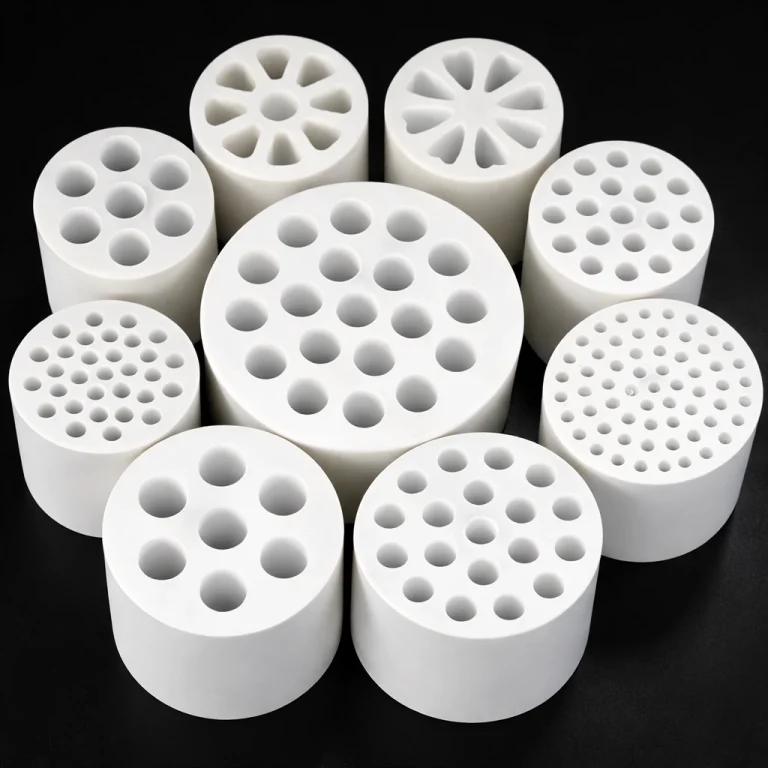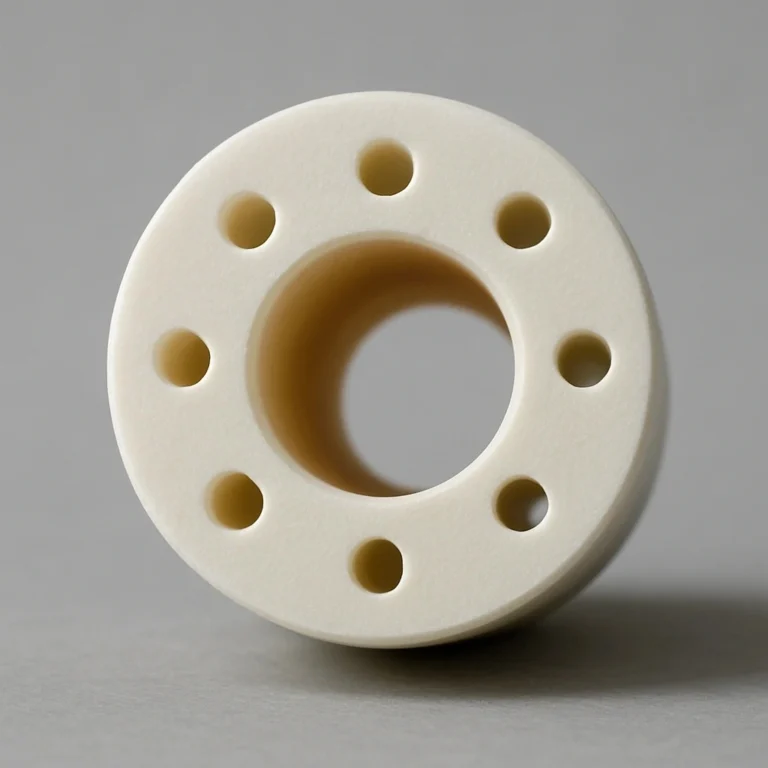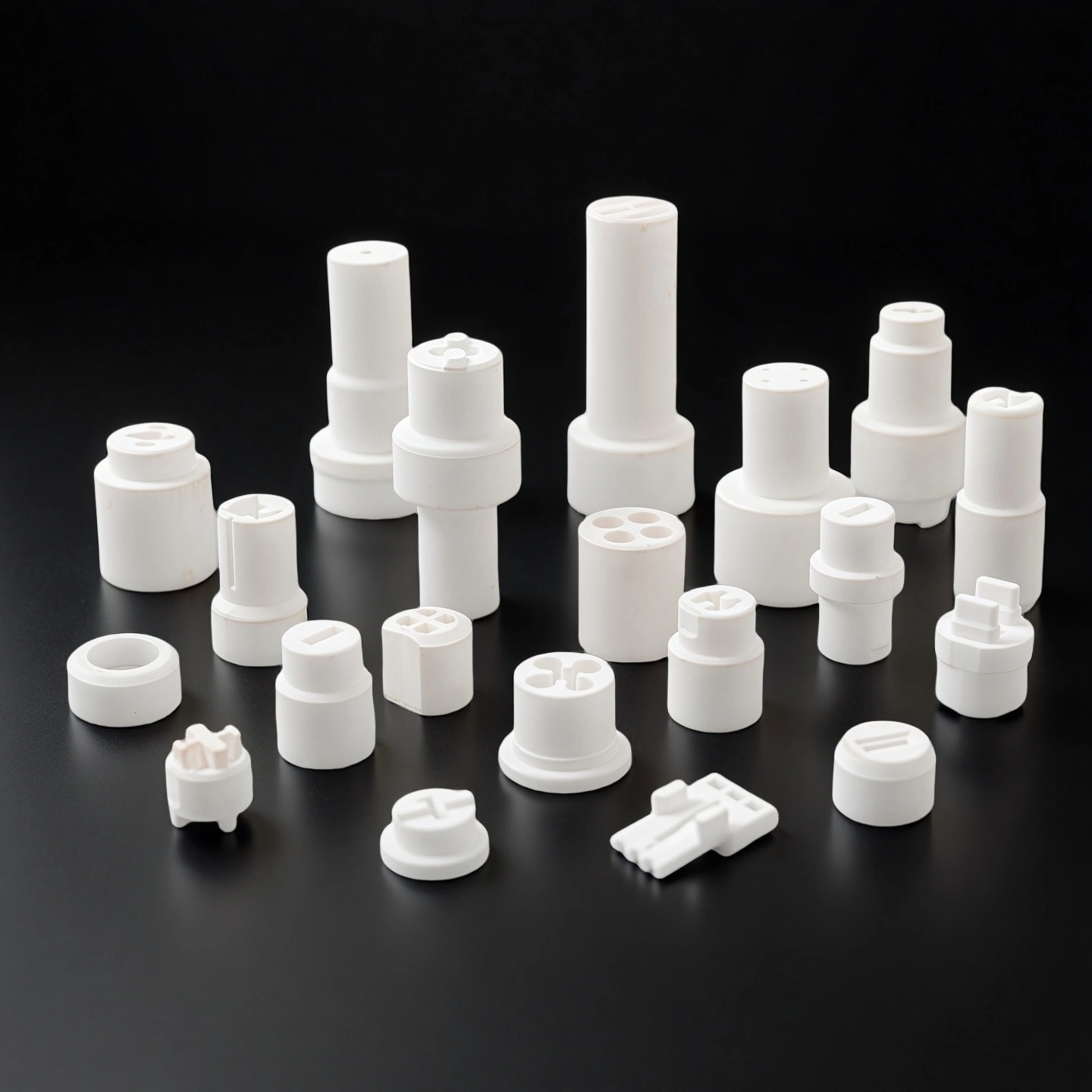
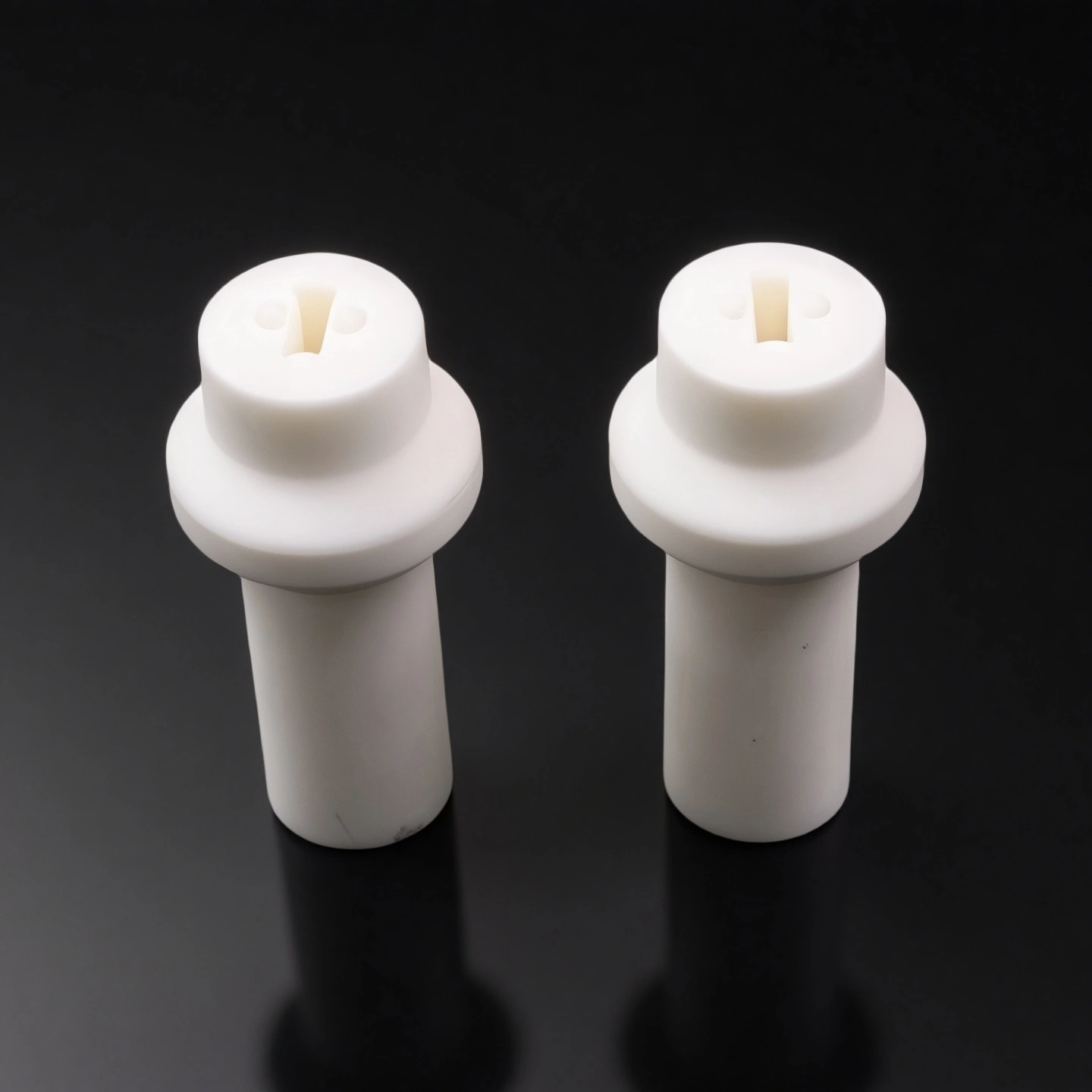
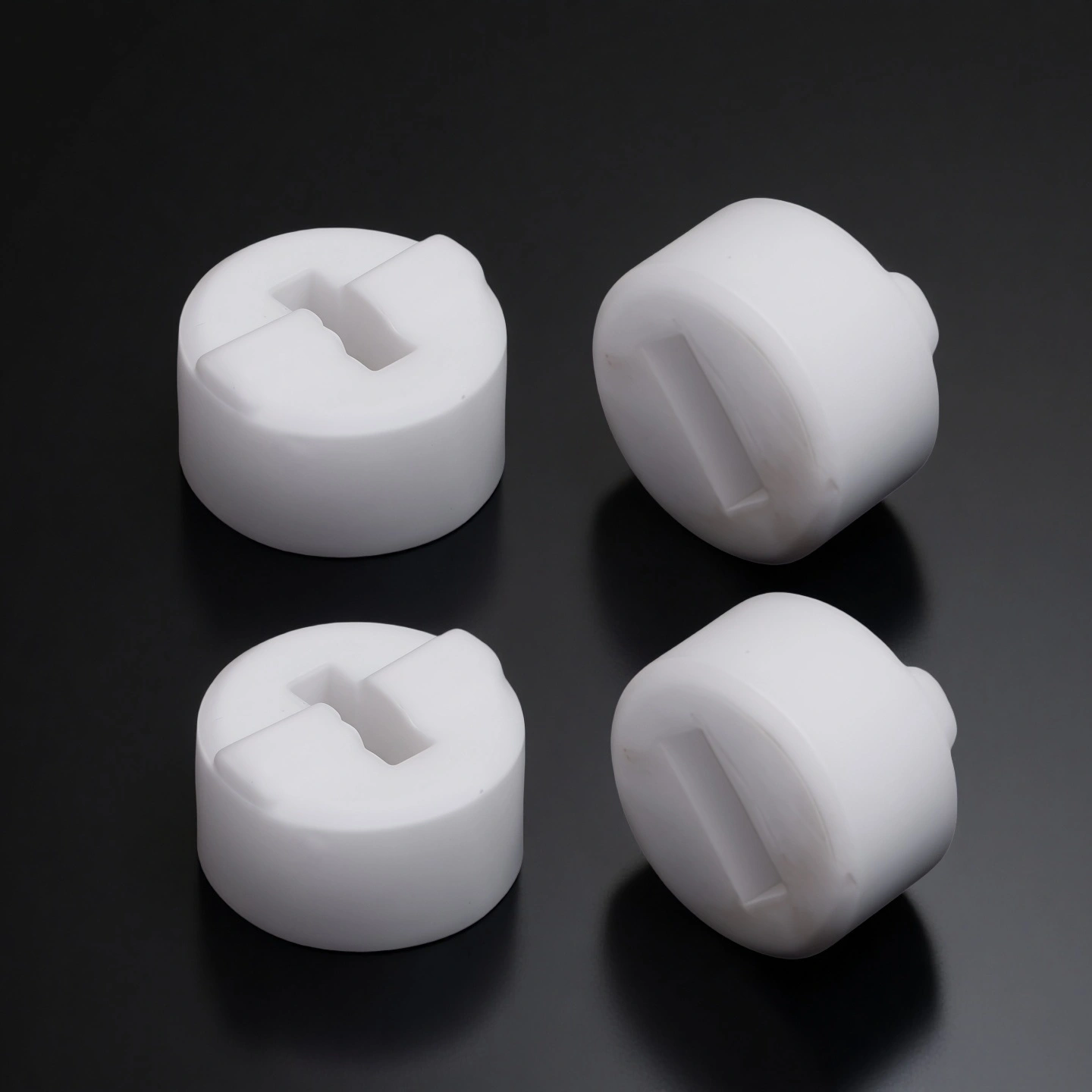
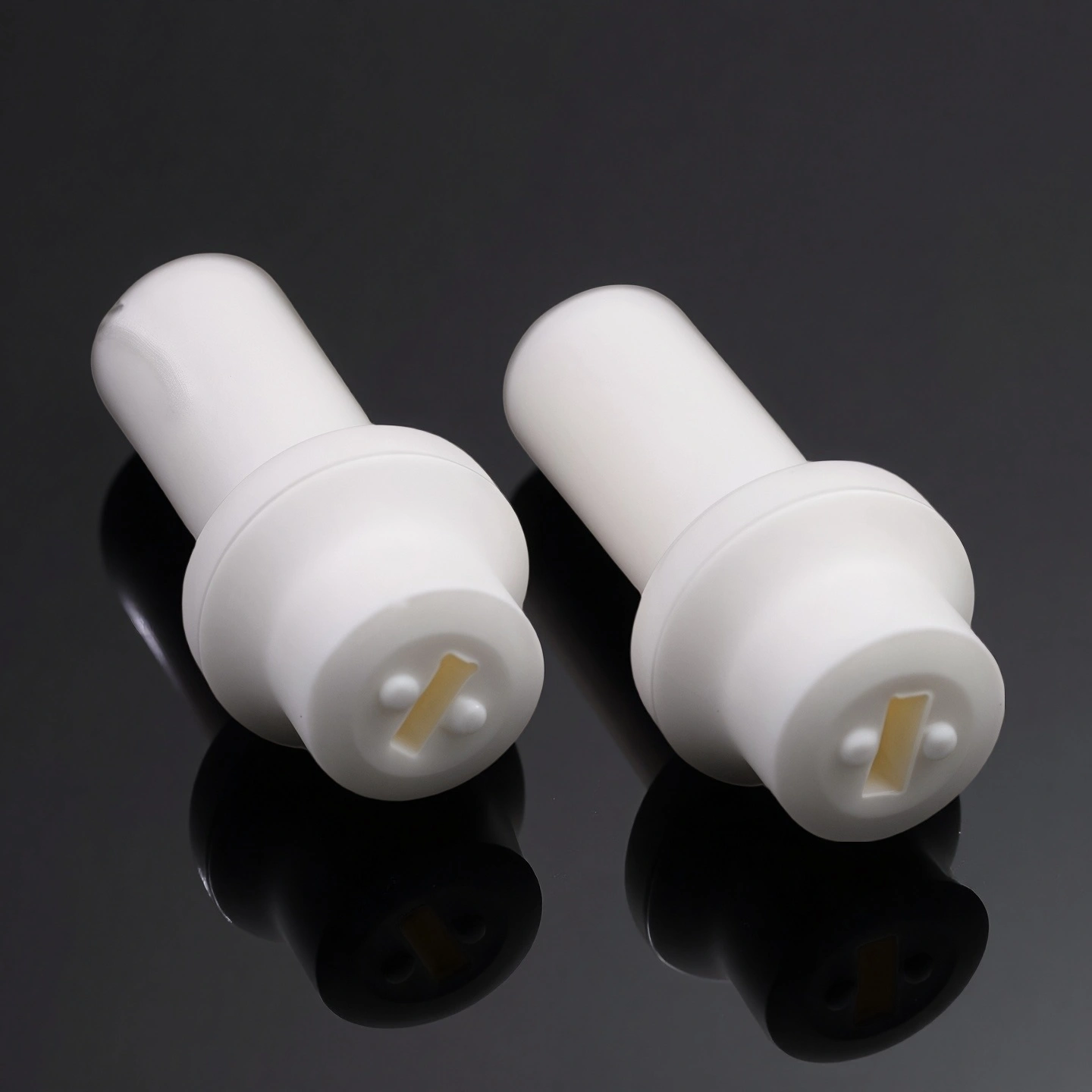
Alumina oxygen sensor housing is a high-temperature ceramic body made from high-purity Al₂O₃ that supports and insulates the zirconia sensing element, heater and electrodes inside an oxygen sensor. It defines the internal geometry of the sensor stack, keeps the gas path and reference gap stable, and provides electrical insulation between conductive parts while working in hot exhaust or flue gas.
Alumina Oxygen Sensor Housing Benefits
-
Stable oxygen measurement geometry
The alumina oxygen sensor housing holds zirconia elements, heaters, and electrodes in a fixed position so the sensing gap and gas path remain consistent throughout the service life of the sensor. -
High electrical insulation at elevated temperature
High-purity alumina maintains high dielectric strength and volume resistivity even at several hundred degrees Celsius, protecting measurement circuits from leakage and short circuits inside compact sensor stacks. -
Thermal cycling resistance in exhaust and flue gas
The dense alumina oxygen sensor housing tolerates repeated heating and cooling cycles between ambient and exhaust gas temperatures typical for automotive engines and combustion systems, reducing risk of cracking around sealing lines and through-holes. -
Chemical resistance in combustion atmospheres
Alumina provides high resistance to oxidation, most combustion by-products, and many corrosive species found in exhaust gas, which helps protect the zirconia cell from particulate contamination and condensate attack. -
Geometric flexibility for different sensor architectures
The ceramic body can incorporate multi-step bores, slots for leads, side ports, chamfers, and sealing shoulders, allowing engineers to adapt the housing to narrowband, wideband, or diffusion-limited oxygen sensor designs.
Alumina Oxygen Sensor Housing Properties
| Property | Unit | 96% Al₂O₃ | 99% Al₂O₃ | 99.5% Al₂O₃ | 99.6% Al₂O₃ | 99.7% Al₂O₃ | 99.8% Al₂O₃ | 99.9% Al₂O₃ | 99.99% Al₂O₃ |
| Alumina content | % | 96 | 99 | 99.5 | 99.6 | 99.7 | 99.8 | 99.9 | 99.99 |
| Density | g/cm³ | 3.6-3.75 | 3.83 | 3.89 | 3.91 | 3.92 | 3.93 | 3.94 | 3.98 |
| Color | – | white | Ivory | Ivory | Ivory | Ivory | Ivory | Ivory | Ivory |
| Water absorption | % | 0 | 0 | – | 0 | 0 | 0 | 0 | 0 |
| Young’s modulus (Elastic modulus) | GPa | 300 | 350 | 375 | 356 | 357 | 358 | 359 | 362 |
| Shear modulus | GPa | – | – | 152 | – | – | – | – | – |
| Bulk modulus | GPa | – | – | 228 | – | – | – | – | – |
| Poisson’s ratio | – | – | – | 0.22 | – | – | – | – | – |
| Compressive strength | MPa | 1910 | 2210 | 2500 | 2552 | 2554 | 2556 | 2558 | 2570 |
| Flexural strength | MPa | 260 | 300 | 340 | 345 | 346 | 347 | 348 | 365 |
| Fracture toughness | MPa·m¹ᐟ² | – | – | 4 | – | – | – | – | – |
| Hardness | GPa | 14.5 | 17 | 17 | 23 | 24 | 25 | 26 | 30 |
| Thermal conductivity | W/m·K | 20 | 31 | 31 | 31-33 | 31-33 | 31-33 | 31-35 | 31-35 |
| Thermal shock resistance ΔT | °C | – | – | – | 222 | 223 | 224 | 225 | 228 |
| Maximum use temperature (no load) | °C | 1450 | 1680 | ≤1750 | 1755 | 1760 | 1765 | 1770 | 1800 |
| Coefficient of thermal expansion | 10⁻⁶/°C | 7.6 | 7.6 | 7.6 | 7.6 | 7.5 | 7.5 | 7.4 | 7.4 |
| Volume resistivity | Ω·cm | >1×10¹⁴ | >1×10¹⁴ | >1×10¹⁴ | >1×10¹⁴ | >1×10¹⁴ | >1×10¹⁴ | >1×10¹⁴ | >1×10¹⁴ |
| Dielectric constant (relative permittivity) | – | 9.2 | 9.5 | 9.8 | 9.83 | 9.84 | 9.85 | 9.86 | 9.92 |
| Dielectric strength | kV/mm | 15 | 19 | 16.9 | 23.2 | 23.4 | 23.6 | 23.8 | 24 |
| Dissipation factor (loss factor @ 1 kHz) | – | – | – | 0.0002 | – | – | – | – | – |
Specifications of Al2O3 Oxygen Sensor Housing
| Item No. | Diameter (mm) | Thickness (mm) | Purity |
| AT-AO-CG01 | Customize | ||
Alumina Oxygen Sensor Housing Packaging
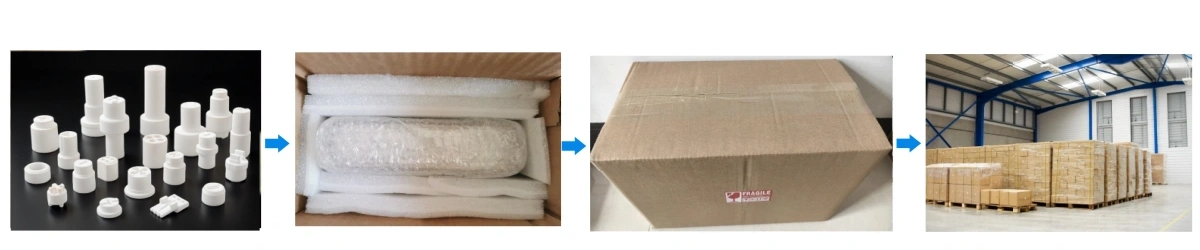
- Each batch of alumina oxygen sensor housings is separated with soft, non-abrasive layers to avoid ceramic-to-ceramic contact during transit.