

✅Flexible Customization & Rapid Prototyping
✅Precision Machining Services
✅Expert Engineering Support
✅24-Hour Dispatch Guarantee
ADCERAX is a professional alumina ceramic manufacturer based in China, specializing in high-purity aluminum oxide (Al₂O₃) components for demanding industrial applications.
Alumina ceramic is the most widely used advanced ceramic material, chosen for its unmatched combination of:
We offer alumina ceramics in multiple purity grades (96%, 99%, 99.5%, 99.7%) to match your specific performance requirements and budget. Our product range includes tubes, crucibles, plates, rods, substrates, balls, rings, and custom-machined components.
Alumina ceramic is a ceramic material mainly made from aluminum oxide (Al₂O₃). It is widely used in industrial and laboratory applications and can be manufactured into tubes, rods, plates, crucibles, substrates, seals, and many custom-shaped parts.
Available in purities ranging from 96% to 99.9%, alumina ceramics are ideal for use in electronics, chemical processing, high-temperature furnaces, and precision machinery.
| Grade | Key Characteristics | Typical Applications |
|---|---|---|
| 96% | Cost-effective; good general properties; easier to manufacture | General industrial wear parts, insulators, kiln furniture |
| 99% | Best balance of performance and cost; higher strength and thermal conductivity | Laboratory crucibles, furnace tubes, pump components |
| 99.5% | Higher purity for demanding chemical environments | Chemical processing, semiconductor support |
| 99.7% | Highest performance; best thermal/mechanical properties; lowest contamination | Semiconductor, TGA/DSC crucibles, precious metal thermocouple protection |
Alumina ceramic offers high density, purity, and surface finish, making it ideal for applications requiring wear resistance, accuracy, and thermal stability.
| Property | Typical Value/Range | Description |
|---|---|---|
| Density | 3.6-3.98 g/cm³ | Higher purity results in higher density (≥3.97 g/cm³ for 99% Al2O3). |
| Purity | 96%-99.9% Al2O3 | Industrial grade typically 96%-99.5%, high-purity grade up to 99.9%. |
| Color | White or off-white | Higher purity appears whiter; impurities may cause a light yellow tint. |
| Surface Roughness | Ra 0.1-0.6 µm | Can achieve mirror finish (Ra <0.05 µm) after polishing. |
Material grades per IEC 60672-3: 96% (Type C-786), 99% (Type C-795), 99.7% (Type C-799). Compliant with ASTM D2442.
| Parameter | Parameter Range | Description | Application |
|---|---|---|---|
| Melting Point (°C) | 2050 – 2070 | High melting point ensures excellent high-temperature stability. | Aerospace components, high-temperature furnace parts. |
| Max Operating Temp (°C) | 1600 -1800 | Allows for operation in extremely high-temperature environments. | Metallurgical industry, ceramic-based heat exchangers. |
| Thermal Expansion Coefficient (x 10-6/K) | 7.6 | Relatively low thermal expansion coefficient provides good thermal shock resistance. | Thermal protection systems in rockets, electronic substrates. |
| Thermal Conductivity (W/(m·K)) | 20 – 30 | High thermal conductivity enables efficient heat dissipation. | Power semiconductor devices, LED heat sinks. |
| Property | Value/Range | Description | Application |
|---|---|---|---|
| Dielectric Strength | 15 – 22 kV/mm | High dielectric strength ensures reliable electrical insulation in high-voltage applications. | High-voltage power transmission components. |
| Volume Resistivity | >10¹⁴ | Extremely high volume resistivity provides excellent electrical insulation performance. | Electronic circuit insulators. |
| Dielectric Constant | 9.2-9.8 | Moderate dielectric constant is suitable for applications requiring stable capacitance in electronic devices. | Capacitors in electronic circuits. |
| Loss Tangent | 10-4 – 10-3 | Low loss tangent indicates minimal energy loss in alternating-current applications, improving efficiency. | RF and microwave components. |
| Property | Typical Value/Range | Description |
|---|---|---|
| Acid Resistance | Resistant to strong acids (except HF and hot concentrated H₂SO₄) | Stable against most inorganic acids; hydrofluoric acid can corrode the surface. |
| Alkali Resistance | Resistant to weak alkalis, not resistant to strong alkalis | Strong alkalis (e.g., molten NaOH) cause slow corrosion. |
| Oxidation Resistance | Excellent | Resistant to oxidation at high temperatures, does not react with O₂. |
| Solvent Resistance | Fully inert | Insoluble in organic solvents (e.g., alcohols, hydrocarbons). |
| Property | Typical Value/Range | Description |
|---|---|---|
| MohS Hardness | 8.9-9.1 | Second only to diamond and silicon carbide, excellent wear resistance. |
| Flexural Strength | 200-420 MPa | 99.9% Al₂O₃ can exceed 420 MPa. |
| Compressive Strength | 2000-2500 MPa | the higher the purity of alumina ceramics, the greater its compressive strength. |
| Fracture Toughness (KIC) | 7-10 MPa·m¹/² | Brittle material, but toughness can be improved with additives (e.g., ZrO₂). |
| Property | 96% Al₂O₃ | 99% Al₂O₃ | 99.7% Al₂O₃ |
|---|---|---|---|
| Density (g/cm³) | 3.65-3.8 | 3.8-3.9 | ≥3.93 |
| MohS Hardness | 8.9 | 9.0 | 9.1 |
| Flexural Strength (MPa) | 200-250 | 350-400 | 380-420 |
| Thermal Conductivity (W/(m·K)) | 22 | 24 | 29 |
| Volume Resistivity (Ω·cm) | >10¹⁴ | >10¹⁴ | >10¹⁴ |
Alumina ceramic is the optimal choice when your application requires high-temperature stability, excellent electrical insulation, or chemical resistance — especially when cost-effectiveness matters. As the most widely used advanced ceramic, alumina offers proven performance with a mature, reliable supply chain.
| Your Application Requirement | Why Alumina Excels | Recommended Grade |
|---|---|---|
| Operating temperature 1100–1700°C | Maintains structural integrity and properties at extreme temperatures; proven in furnace applications for decades | 99% for ≤1600°C; 99.7% for >1600°C |
| High-voltage electrical insulation | Volume resistivity >10¹⁴ Ω·cm, dielectric strength 15–22 kV/mm, maintains insulation at high temperatures | 99% or 99.7% |
| Thermocouple protection (Type S/R/B) | Industry standard material, chemically inert to prevent contamination, available in multi-bore configurations | 99.7% for precious metal TCs |
| Laboratory crucibles & sample containers | High purity prevents sample contamination; excellent thermal shock resistance with proper design | 99.7% for analytical; 99% for general |
| Furnace tubes & process tubes | Excellent dimensional stability under thermal cycling; low porosity prevents gas permeation | 99.7% for semiconductor; 99% for general |
| Wear-resistant components | Mohs hardness 9; excellent abrasion resistance; cost-effective for large wear parts | 96% for cost-sensitive; 99% for demanding |
| Chemical pump & valve components | Resists most acids and alkalis (except HF); maintains surface finish in corrosive media | 99% or 99.7% |
| Electronic substrates & insulators | Good thermal conductivity (20–30 W/m·K) for heat dissipation; excellent dielectric properties | 96% for standard; 99.7% for high-frequency |
| Budget-sensitive projects | Lowest cost among advanced ceramics; mature manufacturing means competitive pricing | 96% for best value |
While alumina is versatile and cost-effective, it may not be the best fit if:
contact us to discuss your load conditions
we can recommend design modifications or alternative materials
alumina is attacked by these; contact us for alternatives
Alumina purity directly affects performance and cost. Here’s how to select the optimal grade for your application:
💡 Cost Tip: 99.7% alumina costs approximately 30-50% more than 96% grade. For non-critical applications, 96% or 99% can deliver excellent performance at significantly lower cost.
| Your Requirement | Grade | Reason |
|---|---|---|
| Operating temperature >1650°C | 99.7% | Highest temperature capability (up to 1730°C) |
| Sample purity is critical (analytical/semiconductor) | 99.7% | Lowest impurity content minimizes contamination |
| Precious metal thermocouple protection (Type S/R/B) | 99.7% | Prevents thermocouple contamination and drift |
| General furnace tubes and crucibles | 99% | Best balance of performance and cost |
| Chemical pump and valve components | 99% | Good chemical resistance with reasonable cost |
| Electronic substrates (standard) | 96% | Adequate dielectric properties at lowest cost |
| Kiln furniture and setters | 96% | Cost-effective for large pieces |
| General wear parts | 96% | Good hardness at lowest cost |
| Budget is the primary constraint | 96% | Lowest cost option |
We supply a comprehensive range of alumina ceramic products and custom parts wholesale, from standard industrial components to precision-engineered solutions tailored to your specifications. Our product line includes various purity grades (95%–99.8%) covering substrates, wear-resistant parts, insulators, and structural components.
We maintain a ready stock of standard alumina ceramic products, ensuring 24-hour dispatch for urgent requirements, enabling you to minimize downtime and maintain operational continuity.
Alumina is widely used in demanding industrial and laboratory applications where high purity, electrical insulation, dimensional stability, and wear resistance are required.
alumina can withstand molten steel splash above 1500°C and provides a cost-effective replacement solution. Closed-end 99.7% alumina tubes are commonly used in this environment.
High-purity alumina helps reduce particle generation and contamination risks. In these systems, polished 99.7% alumina furnace tubes are a common choice.
Alumina is valued for its chemical inertness and low contamination risk. 99.7% alumina crucibles are widely used for accurate sample handling.
Alumina provides strong dielectric strength above 15 kV/mm and helps prevent tracking or breakdown. 99% alumina insulation tubes are often selected for this application.
Alumina offers dimensional stability at high temperature and remains cost-effective for large parts. 96%–99% alumina plates are commonly used.
Alumina combines Mohs 9 hardness with strong chemical resistance, making 99% alumina mechanical parts suitable for demanding service conditions.
Describe your application and we’ll recommend the optimal alumina solution.
ADCERAX provides custom alumina ceramic components, including tubes, rods, plates, and complex parts, with precision machining and tolerances up to ±0.01 mm. Designed for demanding environments, they support prototyping, production, and global delivery with ISO-compliant quality control.
±0.01mm
Precision Tolerance
→”Meeting aerospace & semiconductor standards”
Send your drawing, CAD file, or sample with material, dimensions, tolerances, and quantity. Our engineers will review it and provide a quotation with lead time and pricing.
Once the quote is approved, we proceed with sample prototyping (1–50 pcs) if needed, for testing and validation.
After sample approval or confirmation, we begin batch production with CNC machining, sintering, and polishing. All parts are checked for dimensions, purity, and surface finish.
Finished products are securely packed and shipped via DHL/FedEx/UPS or your preferred method. We support global delivery with full documentation.

ADCERAX is a professional China alumina ceramics manufacturer that offers high-performance components with tight tolerances (±0.001mm) and custom geometries. Using advanced forming methods and CNC machining, we deliver precision-engineered solutions for electronics, chemical, and high-temperature applications.
This table highlights our core technical strengths, including material options, tight tolerances, and advanced manufacturing methods. We offer tailored solutions to meet diverse industrial requirements.
| Technical Capabilities Overview | |
|---|---|
| Material Grades | 96%, 99%, 99.5%, 99.7% Al₂O₃ – high purity for demanding applications |
| Tolerances | Up to ±0.001mm – suitable for precision assemblies |
| Forming Methods | Dry pressing, isostatic pressing, extrusion, casting, injection molding |
| Processing | CNC machining, fine grinding, polishing |
| Customization | Drawings, CAD files, or samples accepted for custom parts |
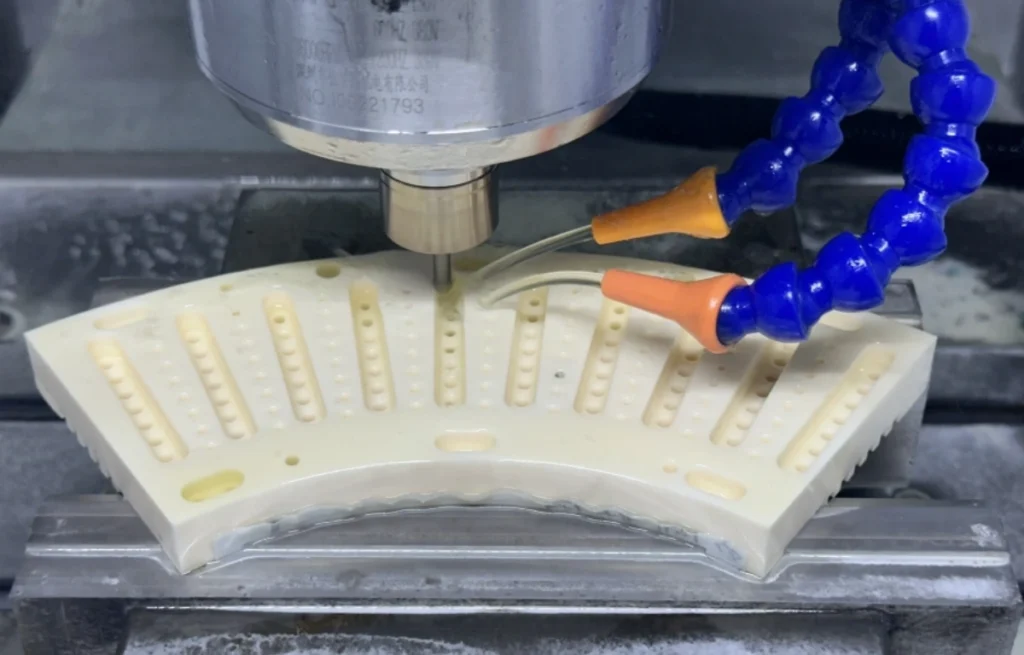
State-of-the-art CNC equipment delivers exceptional precision for complex geometries and ultra-tight tolerances, ensuring perfect fit and function.
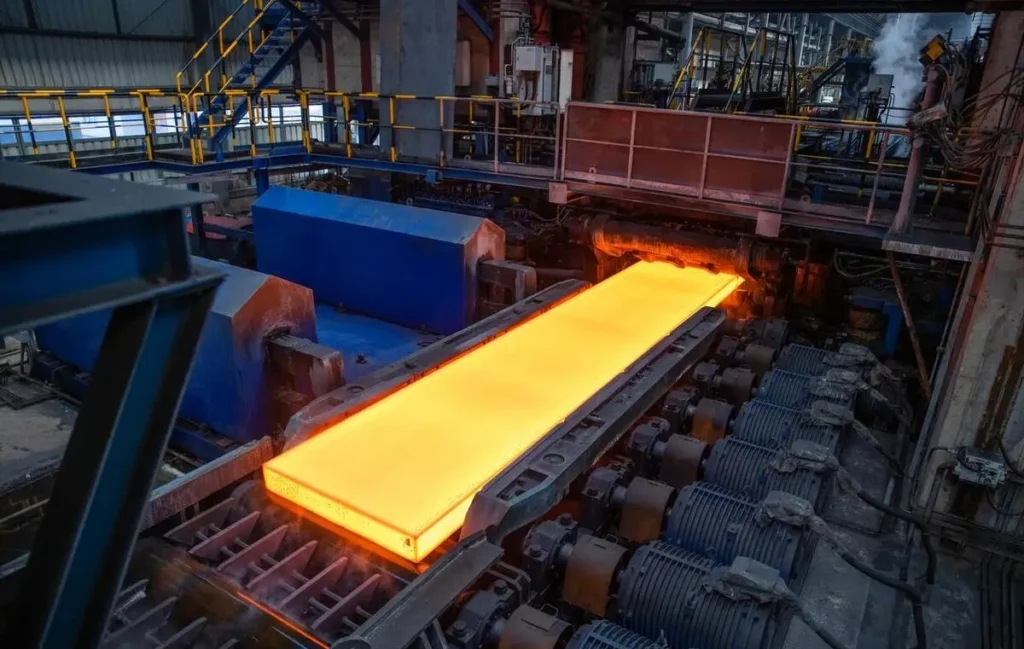
Advanced sintering furnaces with precise temperature control ensure optimal density and superior material properties for demanding applications.
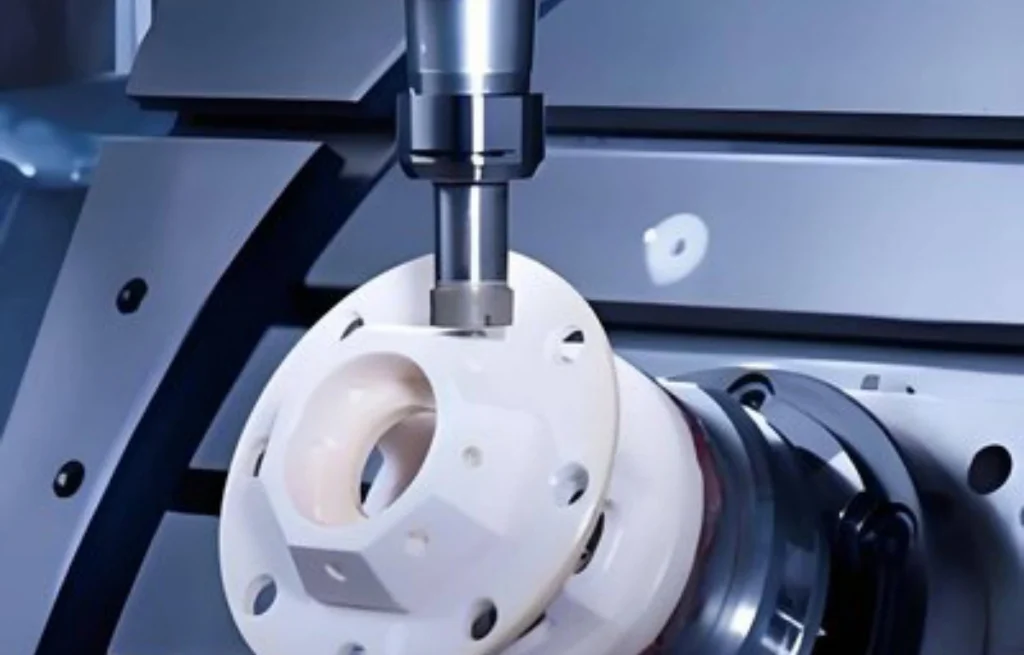
Professional polishing and surface treatment services deliver exceptional surface quality and performance characteristics for critical applications.


Choosing the right advanced ceramic supplier is crucial for the success of your industrial projects. ADCERAX stands out as a reliable and competitive partner.
Direct manufacturer eliminating intermediaries for cost-effective solutions without compromising quality.
20+ years of B2B experience providing unparalleled technical support and collaborative design.
Agile manufacturing for small-batch customization and rapid prototyping capabilities.
Stringent quality measures from raw material inspection to final product testing.
24-hour response guarantee with dedicated support for global clientele.
Trusted by global customers for advanced ceramic materials and precision components.
Yes, alumina is a type of ceramic.
Alumina ceramic is a kind of advanced ceramic material. It is made from alumina (Al₂O₃) as the main raw material. Alumina ceramics have many excellent properties, such as high hardness, high melting point, good chemical stability, high electrical resistivity, and low dielectric loss. They are widely used in various fields, including electronics, machinery, aerospace, and medical devices.
Yes. Alumina ceramic is extremely durable due to its high hardness (Mohs ≥ 9), excellent wear resistance, and chemical inertness. It performs reliably in harsh environments, including high temperatures and corrosive conditions.
We offer alumina ceramics in various purities, including 95%, 99%, 99.5%, 99.7%, and 99.8%. Higher purity grades provide better electrical insulation, thermal conductivity, and mechanical strength.
Several shaping methods can be employed in the fabrication of alumina ceramics, which are typically derived from bauxite. These methods include injection molding,isostatic pressing, die pressing, slip casting, diamond machining, and extrusion.
| Method | Description | Applications |
|---|---|---|
| Injection Molding | Ceramic powder and binder injected into a mold. | Complex shapes, high volume, small intricate parts. |
| Isostatic Pressing | Powder compacted in a flexible mold under uniform pressure. | Uniform density, complex shapes, high strength parts. |
| Die Pressing | Powder compacted in a rigid die. | Simpler shapes, economical, tiles, plates. |
| Slip Casting | Ceramic slip poured into a porous mold. | Hollow shapes, sanitaryware, vases. |
| Diamond Machining | Material removed from pre-sintered ceramic using diamond tools. | High-precision, tight tolerances, finishing process. |
| Extrusion | Plastic ceramic mass forced through a die. | Long shapes, constant cross-section, tubes, rods. |
Cutting aluminum oxide ceramic involves several methods, each suited to different applications:
Cleaning aluminum oxide ceramic is generally straightforward due to its chemical resistance. The best method depends on the type of soiling:
Important Considerations:
| Property | Zirconia (ZrO2) | Alumina (Al2O3) |
| Mohs Hardness | 9 | 9.1 |
| Fracture Toughness | Very High (7-10 MPa·m¹/²) | Moderate (3-5 MPa·m¹/²) |
| Flexural Strength | High (800-1500 MPa) | Moderate (200-300 MPa) |
| Compressive Strength | Very High (2000-2500 MPa) | High (2000-2500 MPa) |
| Young's Modulus | Moderate (200-220 GPa) | High (300-320 GPa) |
| Thermal Conductivity | Low (2-3 W/mK) | Moderate (20-30 W/mK) |
| Thermal Expansion | Moderate (10-11 x 10⁻⁶ /°C) | Moderate (7-8 x 10⁻⁶ /°C) |
| Max Operating Temp | High (Up to 2100°C depending on stabilize) | High (Up to 1750°C) |
| Chemical Resistance | Excellent (resistant to many acids and alkalis) | Excellent (resistant to many acids and alkalis) |
| Wear Resistance | Excellent | Excellent |
| Biocompatibility | Excellent (used in medical implants) | Good |
| Cost | Higher | Lower |
Zirconia:Exceptional toughness, high strength, good wear resistance, excellent biocompatibility.But lower thermal conductivity, higher cost.
Alumina:High hardness, good wear resistance, good chemical resistance, lower cost.But lower toughness compared to zirconia, moderate thermal conductivity.
If you are not sure which material to choose for your product, please contact us to recommend for you.
Working with alumina (Al2O3) means shaping an advanced ceramic that's known for being extremely hard but also brittle. Its great properties – like hardness, wear resistance, high-temperature stability, electrical insulation, and chemical resistance – make it crucial for many demanding industrial applications. However, that same hardness and brittleness make it tough to machine using regular methods.
The Main Challenges
Common Machining Methods
Because of these challenges, specialized techniques are needed:
Absolutely. We provide precision machining services for alumina ceramics, including CNC grinding, cutting, and polishing. We support custom parts based on your drawings or samples, with tolerances up to ±0.001 mm.
Common Alumina Ceramic Failure Modes & Prevention
Understanding alumina's failure mechanisms helps engineers specify and operate components correctly:
| Failure Mode | Root Cause | Prevention |
|---|---|---|
| Thermal shock cracking | Rapid temperature change (>200°C/min) creates thermal stress exceeding material strength | Control heating/cooling rates; use thinner wall designs; preheat before high-temp exposure |
| Mechanical fracture | Point loading, impact, or improper support creates stress concentration | Distribute loads evenly; avoid metal-to-ceramic point contact; use proper mounting fixtures |
| Chemical attack | HF acid, hot phosphoric acid, or molten alkalis corrode alumina | Verify chemical compatibility; use higher purity grades (99.5%+) for aggressive environments |
| Creep deformation | Sustained load at temperatures >1400°C causes slow deformation | Reduce load; use 99.7% grade for better creep resistance; redesign support structure |
| Surface contamination | Contact with metals or organics at high temperature leaves deposits | Pre-fire to 1200°C before use; use dedicated handling tools; specify polished surface |
| Grain boundary attack | Impurities in lower-purity grades are attacked preferentially | Specify 99%+ purity for corrosive environments |
💡 Engineering Tip: The #1 cause of premature alumina failure is thermal shock from rapid heating or cooling. Always follow recommended heating/cooling rates: typically 3-5°C/minute for thick-walled parts, up to 10°C/minute for thin-walled designs.
We believe that Adcerax will become your best partner!
Please fill in your contact information in the form or call us.

*Our team will answer your inquiries within 24 hours.
*Your information will be kept strictly confidential.
info@adcerax.com
+(86) 0731-74427743 | WhatsApp: +(86) 19311583352
Within 24 hours
WhatsApp us
The more details you provide, the faster we can respond.

*We respond within 24 hours. All inquiries are confidential.
The more details you provide, the faster we can quote.
*We respond within 24 hours. All inquiries are confidential.