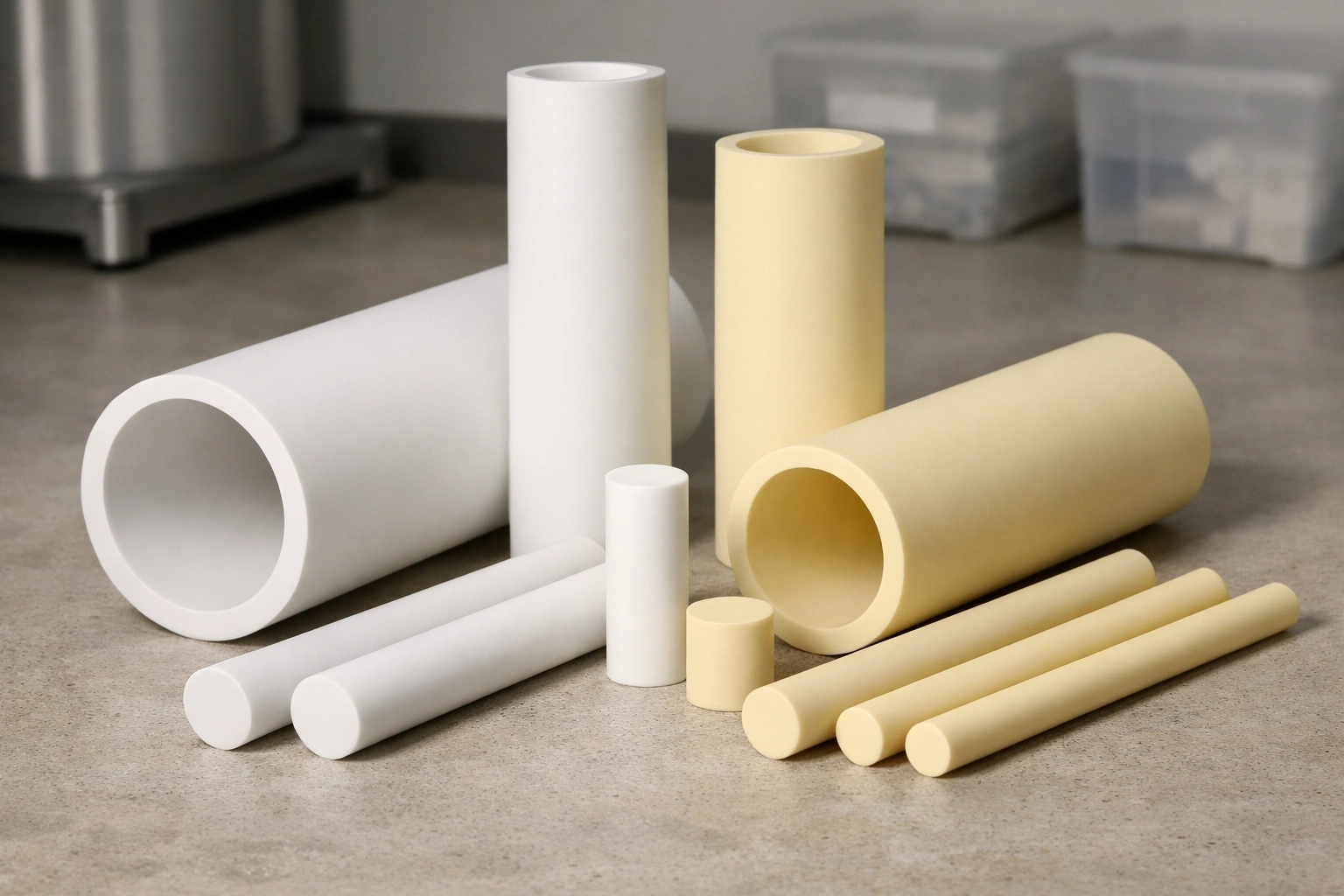
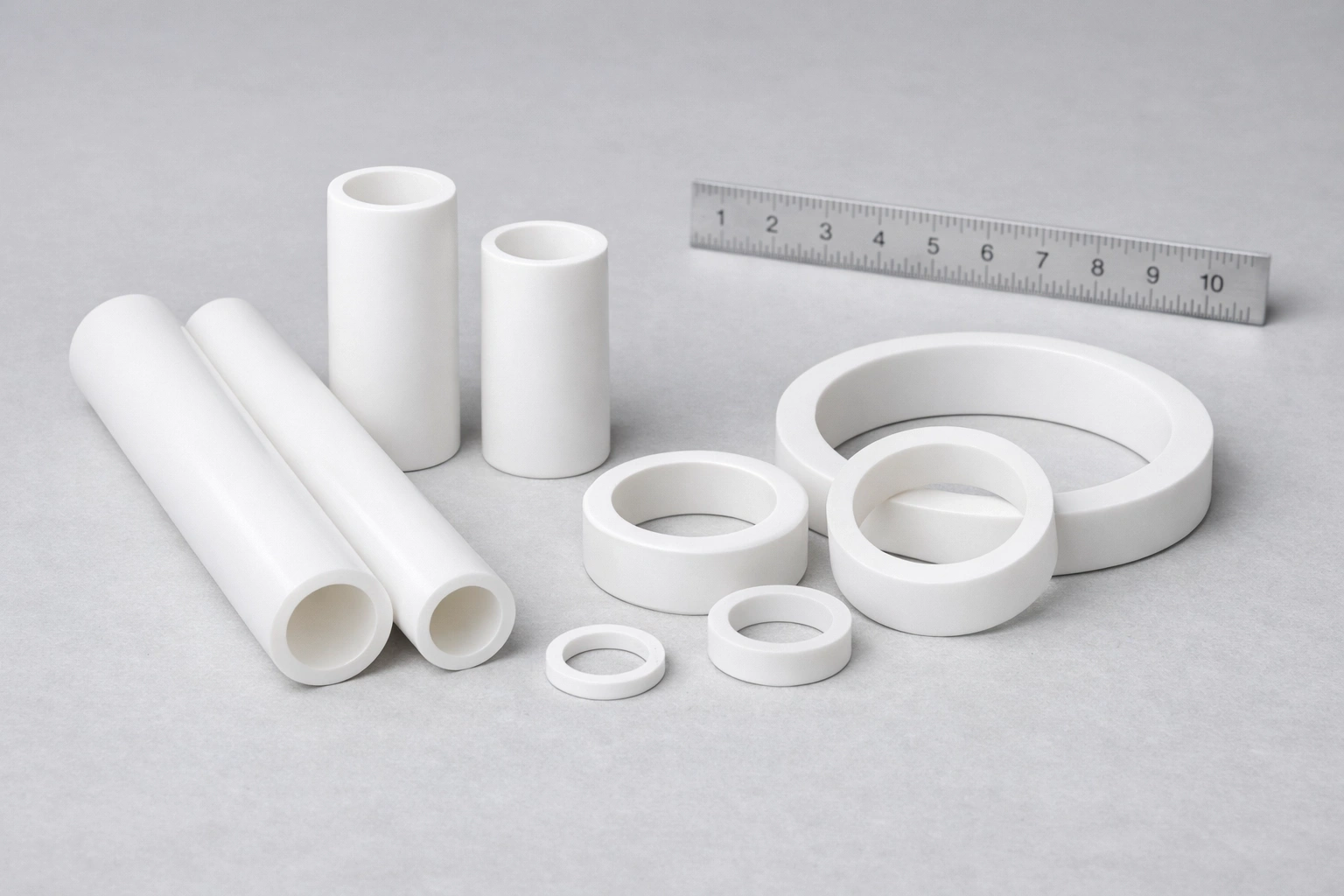
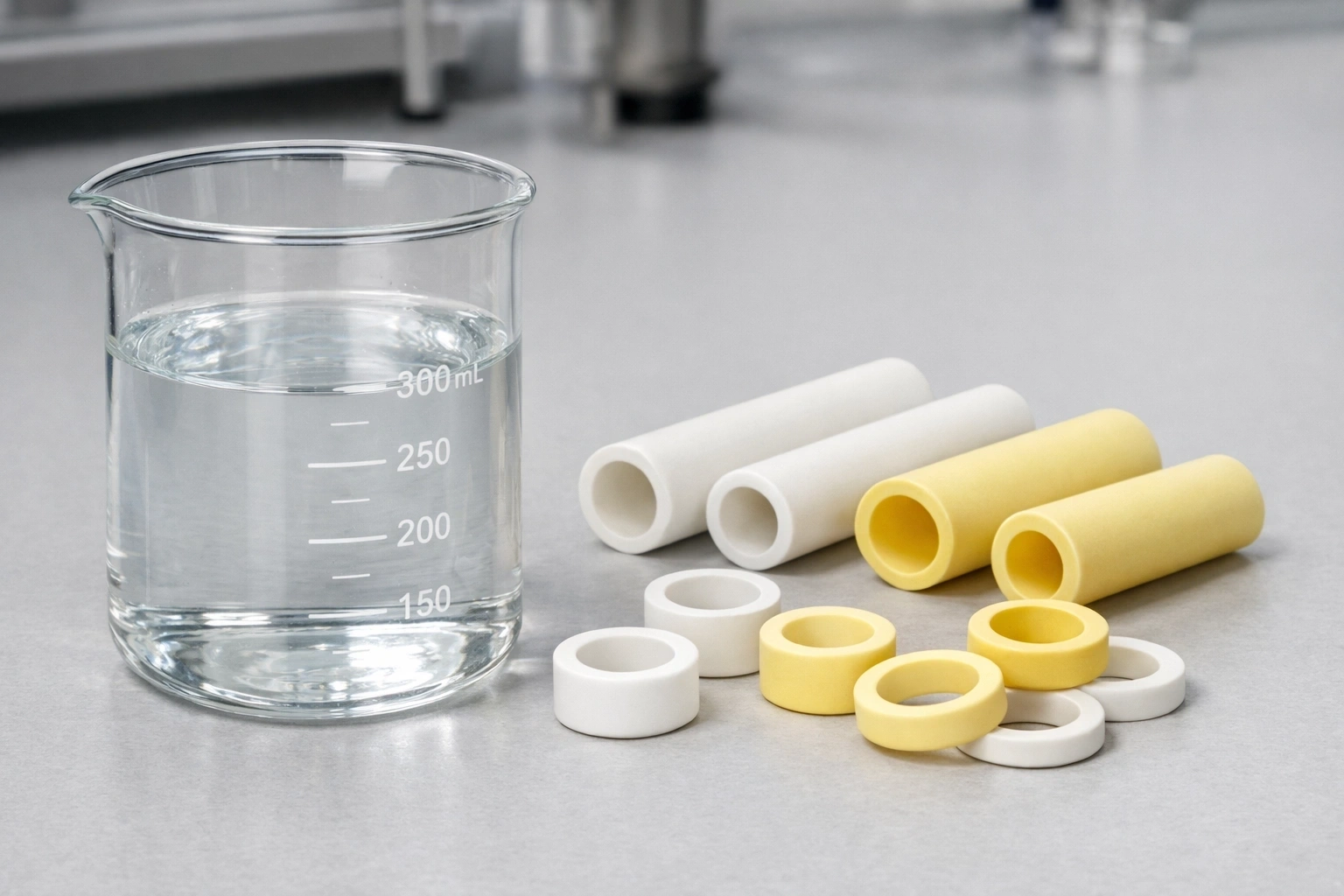
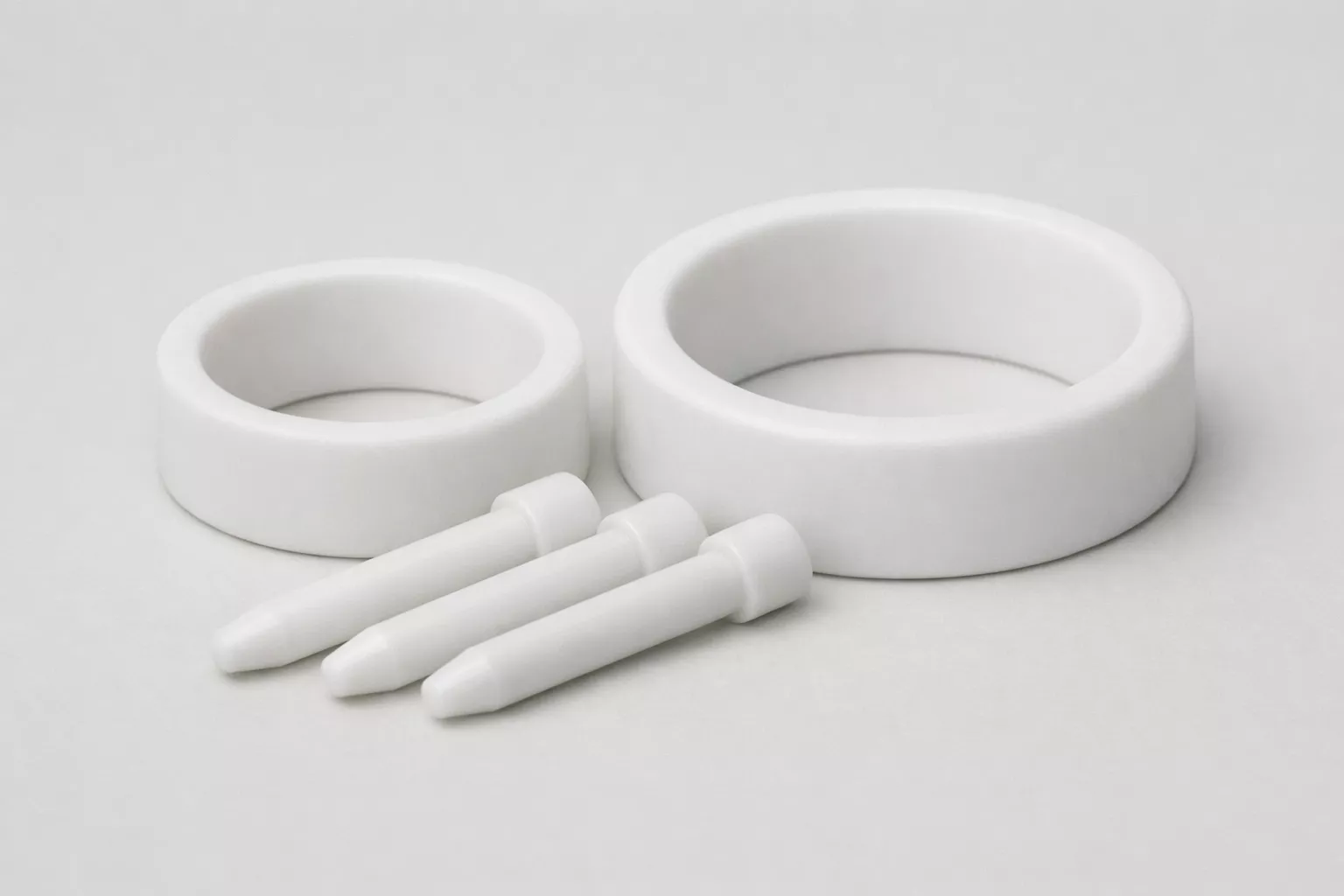
Alumina ceramic continues to be the most widely adopted engineered ceramic in industrial manufacturing, instrumentation, electronics, and high-temperature environments. In 2025, its appeal is stronger than ever: stable supply chains, predictable material behavior, high mechanical reliability, and cost advantages make it the default choice for engineers who need a balance between performance and manufacturability.
Al₂O₃ ceramic combines high hardness, thermal resistance, chemical stability, and exceptional electrical insulation, enabling its use in automotive sensors, semiconductor tools, measurement systems, heavy machinery, and precision assemblies.
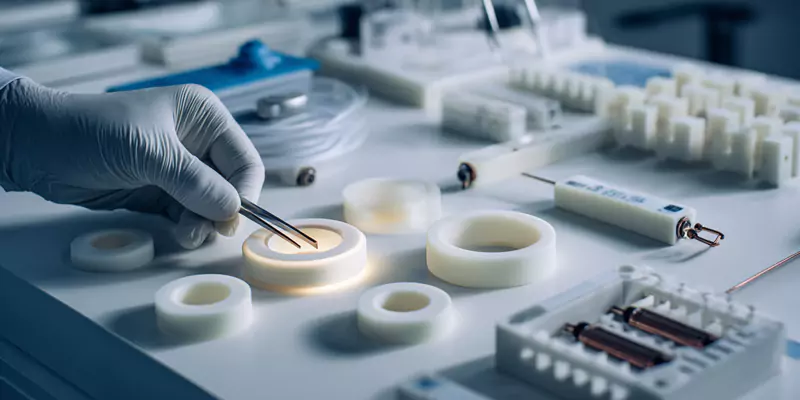
Unlike more advanced (and more expensive) ceramics such as zirconia, silicon nitride, or aluminum nitride, alumina delivers 80–90% of the required performance in many engineering scenarios at only 40–60% of the cost. This performance-to-cost ratio explains why it remains the most purchased technical ceramic globally.
What Is Alumina Ceramic and Its Defining Characteristics?
Alumina ceramic belongs to the family of oxide ceramics, known for their stable crystal structures, robustness under thermal load, and strong ionic bonding. Commercial engineering grades are typically available in purities ranging from 85% to 99.9% Al₂O₃, with high-purity (>99.5%) alumina used in semiconductor, high-vacuum, medical, and analytical systems.
Core material characteristics (2025 engineering summary)
| Property | Typical Values (99–99.8% alumina) | Engineering Implication |
|---|---|---|
| Melting Point | 2050–2072 °C | High thermal stability for furnace & combustion systems |
| Flexural Strength | 300–450 MPa | Strong enough for dense structural components |
| Compressive Strength | 1800–2500 MPa | Suitable for high-load bearing parts |
| Hardness | ≥1800 HV | Exceptional wear and abrasion resistance |
| Dielectric Strength | 9–12 kV/mm | Excellent insulator for high-voltage systems |
| Thermal Conductivity | 20–30 W/m·K | Stable thermal management behavior |
| CTE | 7.8–8.6 ×10⁻⁶/K | Predictable expansion for precision assemblies |
These properties arise from alumina’s crystal phases, purity level, and grain morphology.
Chemical Composition and Purity Control in Al₂O₃ Ceramics
Alumina ceramics are primarily composed of Al₂O₃ content exceeding 90%, with minor inclusions of Na₂O, SiO₂, CaO, MgO, and Fe₂O₃. Although present at fractions of a percent, these impurities strongly influence sintering, dielectric properties, and mechanical reliability.
Purity grades and engineering suitability
| Purity Grade | Al₂O₃ Content | Typical Applications | Notes |
|---|---|---|---|
| 85–95% | Industrial grade | Wear parts, guides, mechanical components | Cost-effective; higher porosity |
| 99% | Engineering grade | Electrical insulators, nozzles, plates | Balance between cost & performance |
| 99.5–99.8% | High-purity | Semiconductor components, analytical instruments | Low ionic contamination |
| 99.9% | Ultra-pure | Vacuum chambers, medical implants | Highest dielectric & biocompatibility |
Higher purity → lower ionic diffusion, higher dielectric strength, better corrosion resistance.
Structural Crystal Phases of Alumina
Alumina exhibits multiple transitional phases—gamma, delta, theta—that transform into alpha-Al₂O₃ above ~1100–1200 °C. Only the alpha phase provides the density, hardness, and mechanical stability required for engineering components.
Crystal phase comparison
| Phase | Relative Stability | Density | Engineering Relevance |
|---|---|---|---|
| Alpha (α-Al₂O₃) | Highest | 3.9 g/cm³ | Structural ceramics, wear-resistant parts |
| Gamma | Moderate | 3.6 g/cm³ | Catalysts, adsorbents |
| Delta | Lower | 3.5 g/cm³ | Transitional phase |
Engineering-grade alumina is >95% alpha phase, ensuring predictable performance.
Key Differentiators Between Alumina Ceramic and General Ceramics
Compared with silicate or conventional ceramics:
- Porosity is dramatically lower (<0.5–1%)
- Flexural strength is 2–4× higher
- Hardness is significantly greater (1800 HV vs. 400–600 HV)
- Chemical resistance is superior (nearly inert to acids & alkalis)
- Higher thermal stability and lower CTE enable precision designs
| Property | Alumina | Silicate Ceramics | Engineering Outcome |
|---|---|---|---|
| Flexural Strength | 300–400 MPa | 80–150 MPa | Alumina survives higher bending stresses |
| Thermal Expansion | 8.5 ×10⁻⁶/K | 12–14 ×10⁻⁶/K | Less expansion → better dimensional stability |
| Porosity | <1% | >5% | Greater density & reliability |
Why Alumina Ceramic Is Critical for Industrial Engineering?
Historical Reliability
From spark plug insulators (early 20th century) to modern industrial automation systems, alumina has a century-long track record of reliability under heat and electrical load.
Why engineers still choose alumina
- Stable global supply chain compared to niche ceramics
- Lower material & processing costs
- Predictable, well-documented material behavior
- Compatibility with standard forming & machining processes
- Broad vendor ecosystem → reduced procurement risk
This makes alumina ideal for both legacy equipment and advanced system upgrades.
Mechanical Properties Driving Engineering Applications
Mechanical strength, hardness, and wear resistance make alumina a frontline material in sliding, rotating, abrasive, and load-bearing environments.
Hardness & Wear Resistance
- Hardness ≥1800 HV, surpassing most steels
- Wear rate: 10⁻⁵–10⁻⁶ mm³/N·m (significantly lower than zirconia)
- Grain size control (<2 μm) further enhances wear performance
| Property | Alumina | Zirconia |
|---|---|---|
| Hardness (HV) | 1800–2000 | 1200–1400 |
| Wear Rate | Very Low | Moderate |
Strength and Structural Stability
- Flexural strength: 300–450 MPa
- Compressive strength: 1800–2500 MPa
- Modulus of Elasticity: 300–380 GPa
These values support applications like:
- pump seals
- guide rails
- precision bushings
- metrology fixtures
Fracture Toughness Considerations
Alumina K_IC = 3–4 MPa·m½ → lower than zirconia (8–10 MPa·m½).
Engineers compensate by:
- adjusting wall thickness
- introducing fillets
- using chamfers to reduce stress concentrations
Thermal Properties Supporting High-Temperature Applications
Alumina is engineered for both static and cyclic high-temperature environments.
Thermal Resistance
- Working temperature: up to 1500–1700 °C
- Melting point: >2050 °C
- Stable under oxidation, combustion, and radiant heat
Thermal Shock Behavior
Though not as capable as silicon nitride, alumina survives moderate thermal cycles when:
- ΔT < 200–250 °C per cycle
- heating/cooling ramps are controlled
Dimensional Stability
With CTE ~8.5×10⁻⁶/K, alumina maintains shape and tolerances across large temperature gradients, critical for:
- analytical instruments
- precision holders
- semiconductor boats
Why Alumina Ceramic Matters in Critical Applications?
Biomedical Devices
High-purity alumina (>99.5%) offers:
- ISO 13356 biocompatibility
- high wear resistance
- chemical inertness
Used in: dental crowns, orthopedic implants, surgical guides.
Semiconductor Manufacturing
Ultra-high purity (99.8–99.9%) alumina minimizes:
- ionic contamination
- particle generation
- chemical reactions under plasma or vacuum
Used in:
- wafer boats
- susceptor rings
- plasma chambers
- insulation parts
High-Reliability Industrial Systems
Alumina’s chemical inertness and dielectric strength make it ideal for:
- corrosive process lines
- high-voltage switchgear
- metrology instruments
Why Alumina Ceramic Is Widely Used in Electronics and Electrical Systems?
Dielectric Properties
- Volume resistivity: 10¹²–10¹⁴ Ω·cm
- Dielectric strength: 9–12 kV/mm
- Dielectric constant (1 MHz): 9.5–10
- Loss tangent: 0.0001–0.0002
These values outperform most ceramics except AlN.
RF & Microwave Applications
Stable dielectric behavior enables:
- resonators
- antennas
- microelectronic substrates
- power laser drivers
| Property | Alumina (99.5%) | Silicon Nitride |
|---|---|---|
| Dielectric Strength | 9–12 kV/mm | 8–9 kV/mm |
| Loss Tangent | 0.0001–0.0002 | 0.001 |
Harsh Electrical Environments
Alumina withstands:
- corona discharge
- arc exposure
- voltage surges
Ensuring safe insulation in transformers, power modules, and HV systems.
Alumina Ceramic vs Zirconia Ceramic
Hardness vs Toughness
| Feature | Alumina | Zirconia |
|---|---|---|
| Hardness | Higher | Lower |
| Toughness | Lower | Much higher |
Cost Comparison
- Alumina ≈ 40–60% cheaper than zirconia
- Zirconia’s processing cost is higher (sintering shrinkage, grinding complexity)
Application Boundaries
- Alumina → seals, nozzles, substrates, wear components
- Zirconia → impact parts, dynamic seals, medical implants
Alumina Ceramic vs Silicon Nitride
Thermal Shock
Si₃N₄ survives ΔT > 600 °C; alumina usually must stay <250 °C.
Mechanical Fatigue
Si₃N₄ excels in:
- bearings
- turbines
- high-speed rotating systems
While alumina is ideal for static/load-bearing precision parts.
Limitations of Alumina Ceramic
Alumina is not suitable when:
- extreme toughness is required
- rapid thermal shock occurs
- ultra-high thermal conductivity is needed (AlN superior)
Alternatives:
- Zirconia → toughness
- Silicon nitride → thermal shock & fatigue resistance
- Aluminum nitride → thermal management
Key Factors Influencing Alumina Ceramic Pricing
1. Powder Purity
99.8% purity powder costs 2–4× more than 95% grade.
2. Processing Complexity
Grinding tolerance <±0.01 mm can increase cost 20–50%.
3. Volume
Large batches decrease per-unit cost by 15–40%.
4. Part Geometry
Thin-walled parts, internal channels, or sharp radii increase machining time.
Evaluating Alumina Ceramic Supplier Capabilities
Manufacturing Precision
A high-quality supplier should offer:
- tolerance to ±0.02 mm (general)
- ±0.005–0.01 mm (precision)
- Ra <0.4 μm (polished surfaces)
Certification & Traceability
Look for: ISO 9001, material traceability, batch testing records.
Global Supply Reliability
Suppliers must provide:
- stable lead times
- export documentation
- inventory buffers
- MOQ flexibility
Quality Standards for Alumina Ceramic Orders
Relevant Standards
- ASTM C1161 (Flexural Strength)
- ASTM C1327 (Vickers Hardness)
- ASTM C373 (Water Absorption / Density)
- ISO 14704 (Mechanical Properties of Advanced Ceramics)
Material & Dimensional Inspection
- Density: 3.85–3.95 g/cm³
- Visual defect inspection
- Dimensional measurement
- Flatness/parallelism checks where required
Typical Lead Times and MOQs
- Stock parts: 1–2 weeks
- Semi-custom parts: 3–4 weeks
- Fully custom parts: 6–8 weeks
- Export logistics: add 1–3 weeks depending on destination
MOQ usually ranges from 20–100 pcs, with flexibility for prototypes.
Conclusion
Alumina ceramic remains the preferred choice for engineers because it delivers the best balance of performance, cost, reliability, and manufacturability. Its mechanical strength, electrical insulation, corrosion resistance, and high-temperature capability enable use across nearly every major industrial sector—from semiconductor tools to automotive sensors, from furnace hardware to laser equipment.
For engineering teams seeking dependable ceramic performance at competitive cost, ADCERAX provides factory-direct alumina components, precision machining, and customization suited for both prototype and mass production requirements.
FAQs
Q1: What makes alumina suitable for wear applications?
Its ≥1800 HV hardness and dense microstructure minimize abrasion.
Q2: How does alumina compare to zirconia in electrical insulation?
Alumina has higher resistivity and lower dielectric loss.
Q3: Is high-purity alumina safe for biomedical use?
Yes—99.5%+ purity meets ISO biocompatibility standards.
Q4: Why is alumina preferred in mass production?
Lower cost, mature processing methods, and predictable shrinkage.
Q5: What determines alumina pricing?
Purity, geometry, machining difficulty, and order volume.
Q6: Are all alumina ceramics the same?
No—calcined, tabular, and reactive aluminas differ in sintering behavior and grain size.