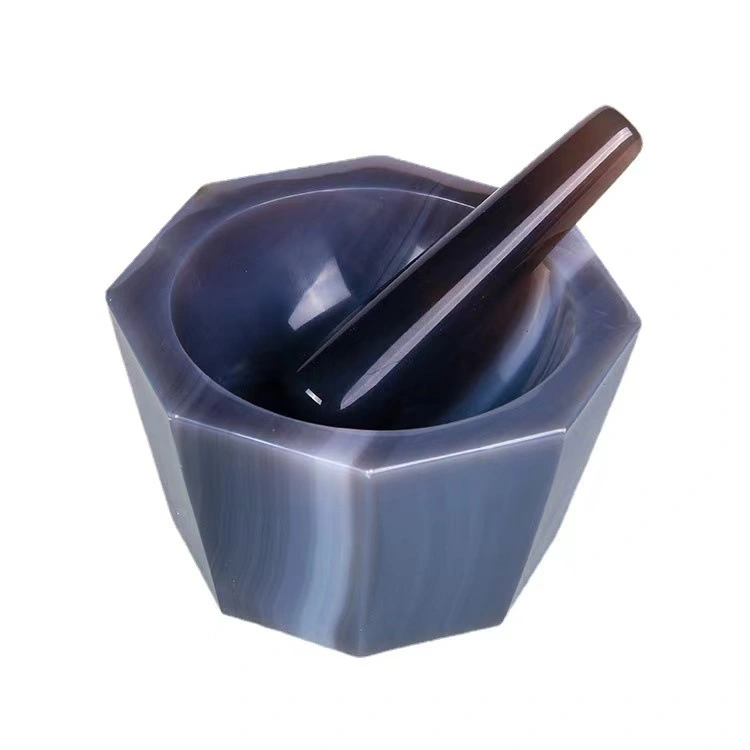
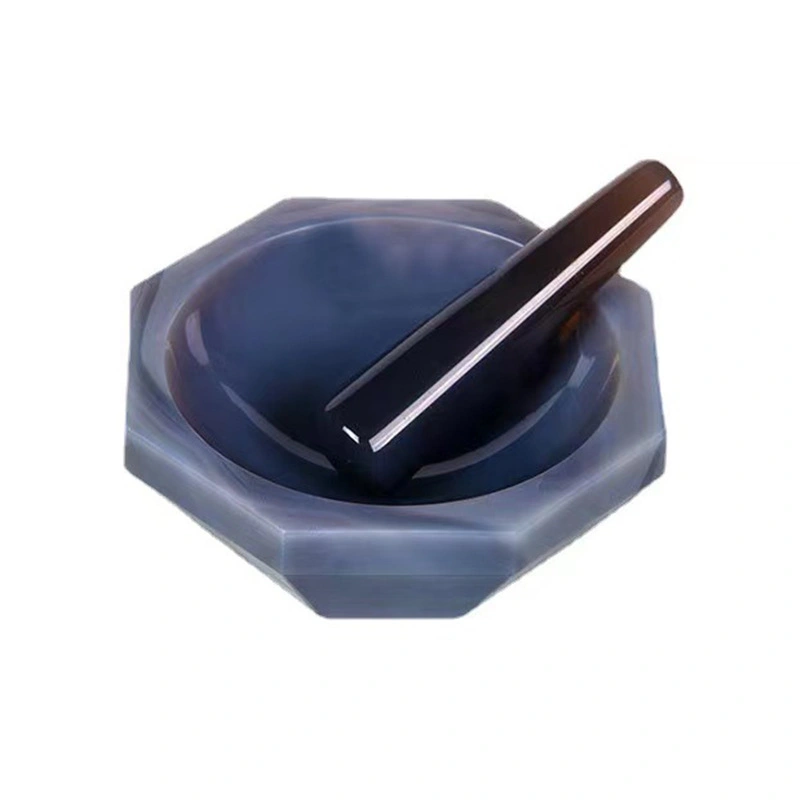
Agate Mortar and Pestle for Materials & Chemistry Labs — Low-Residue Grinding Bowl + Pestle

ADCERAX offers Agate Mortar and Pestle sets in multiple bowl diameters and depths, with deep-form options, replacement pestles, and size/fit customization based on your lab method and batch volume.

Catalogue No. AT-MN-YB1001
Material Agate
Mohs Hardness (Agate) 6.5–7.0
Inner Grinding Surface Finish  Polished, Ra ≤ 0.4 μm
Dimensional Tolerance (ID/Depth, by size) ±0.1 mm (typical), ±0.05 mm (select sizes)
24H Standard Dispatch
Small Batch Support OEM
Factory Direct
Expert Engineering Support

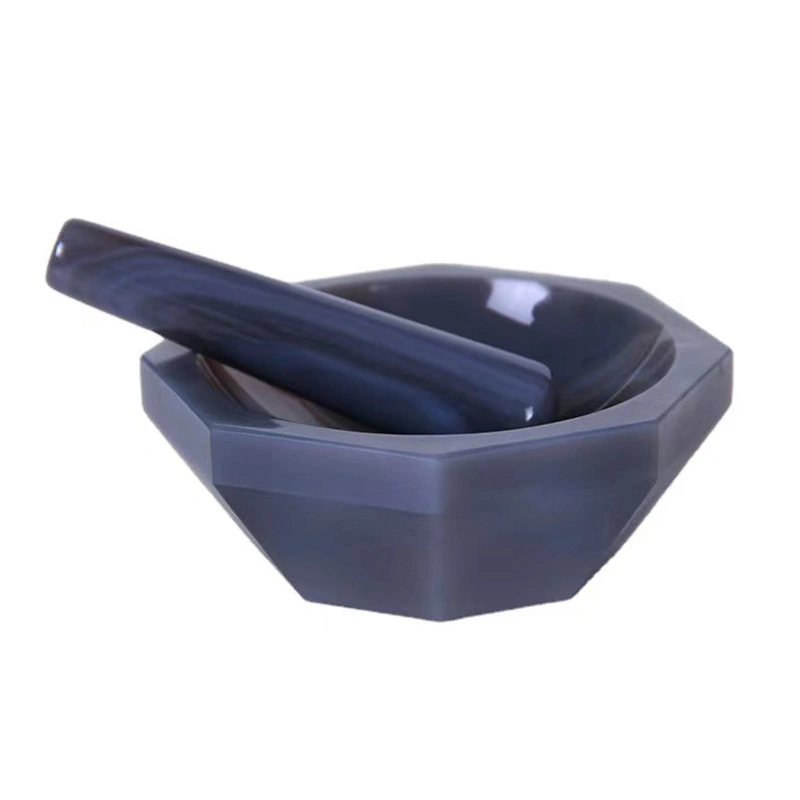
Agate Mortar and Pestle is a non-metallic laboratory grinding set (agate bowl + matching pestle) used to crush, grind, and homogenize solid samples into fine powder with low residue and reduced cross-contamination risk for analytical sample preparation.

Agate Mortar and Pestle Benefits

  • Matched bowl–pestle fit improves contact stability and grinding control, reducing “skipping” and uneven shear when you switch from crushing to fine powder homogenization.

  • Polished inner bowl supports smoother powder circulation and clearer visual inspection, helping you spot residual film faster before the next sample and keep carryover risk lower.

  • Deep-form bowl option reduces powder loss during manual mixing, especially for light, fluffy, or electrostatic powders that tend to lift, dust, or spill during circular grinding.

  • Non-metallic grinding interface (Agate Mortar and Pestle) helps limit metallic trace introduction compared with metal tools, which is often preferred for sensitive analytical preparation and clean sample recovery.

  • Replacement pestle option extends usable life of the set by restoring the contact surface when the pestle tip wears, without requiring a full bowl-and-pestle replacement each time.


Agate Mortar and Pestle Properties

Technical Parameter Typical Spec Why Buyers Care
Material (Agate) SiO₂-rich dense agate for bowl and pestle It defines the non-metal contact surface and overall grinding behaviour.
Hardness (Mohs) 6.5–7.0 Mohs Higher hardness improves wear resistance and helps keep grinding performance stable over time.
Density 2.55–2.65 g/cm³ Consistent density usually correlates with uniform structure and a more predictable handling feel.
Grinding Surface Finish (Ra) Polished inner bowl; common target Ra ≤ 0.4 μm A smoother surface is easier to clean and helps reduce residual carryover between samples.
Bowl Dimensions ID / OD / Depth (mm), plus “deep form” option Size determines batch capacity, powder containment, and operator control during circular grinding.
Dimensional Tolerance Typical ±0.1 mm (select sizes can be tighter) Tolerance affects repeatable volume, fit consistency, and replacement compatibility across repeat orders.
Fit Class (Pestle–Bowl Matching) Matched set; optional tighter fit by request Fit stability reduces “skipping” and improves control when moving from crushing to fine homogenization.
Recommended Service Temperature (Guidance) Common catalogue guidance: up to ~350°C (process-dependent) Buyers need a clear limit to avoid misuse in heating steps and reduce the risk of thermal damage or cracking.

Agate Mortar and Pestle Specifications

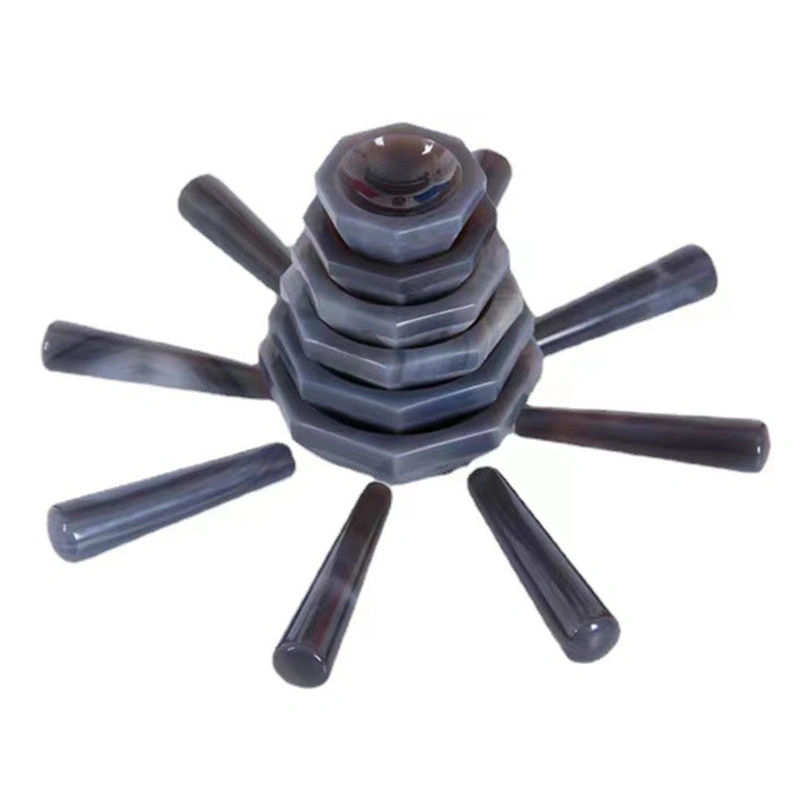
Type 1: Agate Mortar Bowl
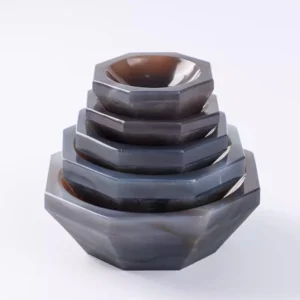
Type 1 Agate Mortar Bowl

Agate Mortar Bowl
Item Inner Diameter (mm) Outer Diameter (mm) (Depth of Bowl)mm (Height of Bowl) mm
AT-MN-YB1001 30 40 9 21
AT-MN-YB1002 40 55 13 25
AT-MN-YB1003 50 65 15 28
AT-MN-YB1004 60 75 18 30
AT-MN-YB1005 70 85 21 32
AT-MN-YB1006 80 95 24 35
AT-MN-YB1007 90 105 27 40
AT-MN-YB1008 100 115 30 45
AT-MN-YB1009 110 125 32 45
AT-MN-YB1010 120 136 34 50
AT-MN-YB1011 130 150 40 55
AT-MN-YB1012 140 160 45 60
AT-MN-YB1013 150 170 50 65
AT-MN-YB1014 160 180 55 70
AT-MN-YB1015 170 190 55 70
AT-MN-YB1016 180 200 60 75
AT-MN-YB1017 190 210 60 75
AT-MN-YB1018 200 220 65 80


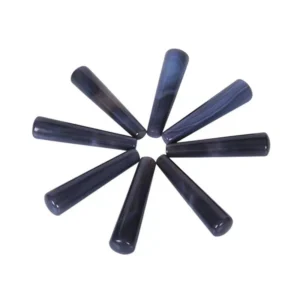
Type 2: Agate Grinding Pestle

Type 2 Agate Grinding Pestle

Agate Grinding Pestle
Item Products Length (mm) Bottom Diameter of Pestle (mm) Top Diameter of Pestle (mm)
AT-MN-YB2001 Agate mortar and pestle, 30 mm (with slim pestle) 30-40 10-12 6-7
AT-MN-YB2002 Agate mortar and pestle, 40 mm (with slim pestle) 40-50 10-12 6-7
AT-MN-YB2003 Agate mortar and pestle, 50 mm (with slim pestle) 50-60 12-13 6-8
AT-MN-YB2004 Agate mortar and pestle, 60 mm (with thick pestle) 60-70 12-13 6-8
AT-MN-YB2005 Agate mortar and pestle, 70 mm (with thick pestle) 70-80 13-15 6-8
AT-MN-YB2006 Agate mortar and pestle, 80 mm (with thick pestle) 80-90 13-15 8-10
AT-MN-YB2007 Agate mortar and pestle, 90 mm (with thick pestle) 80-90 15-18 8-10
AT-MN-YB2008 Agate mortar and pestle, 100 mm (with thick pestle) 90-100 15-18 10-12
AT-MN-YB2009 Agate mortar and pestle, 110 mm (with thick pestle) 100-110 18-20 12-14
AT-MN-YB2010 Agate mortar and pestle, 120 mm (with thick pestle) 110-120 20-22 12-14
AT-MN-YB2011 Agate mortar and pestle, 130 mm (with thick pestle) 120-130 22-23 14-16
AT-MN-YB2012 Agate mortar and pestle, 140 mm (with thick pestle) 130-140 23-24 14-16
AT-MN-YB2013 Agate mortar and pestle, 150 mm (with thick pestle) 140-150 24-26 16-18
AT-MN-YB2014 Agate mortar and pestle, 160 mm (with thick pestle) 150-160 26-28 16-18
AT-MN-YB2015 Agate mortar and pestle, 170 mm (with thick pestle) 160-170 28-30 18-20
AT-MN-YB2016 Agate mortar and pestle, 180 mm (with thick pestle) 170-180 30-35 20-23
AT-MN-YB2017 Agate mortar and pestle, 190 mm (with thick pestle) 180-190 30-35 23-25
AT-MN-YB2018 Agate mortar and pestle, 200 mm (with thick pestle) 190-200 35-40 23-25


Agate Mortar and Pestle Packaging

  • Foam-insert protection for bowl rim and pestle tip to reduce transit chipping risk
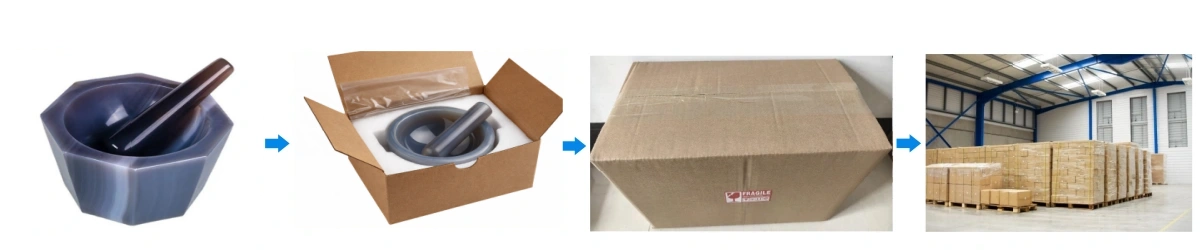
Agate Mortar and Pestle Packaging

Application Scenarios — Agate Mortar and Pestle

  •  University & Research Labs (Materials /Chemistry /Geology)

    ✅Key Advantages

    1. Polished Ra ≤ 0.4 μm supports faster cleaning checks between sample families.
    2. Mohs 6.5–7.0 helps maintain a stable grinding feel across repeated runs.
    3. ±0.1 mm typical dimensional control supports repeatable bowl volume and pestle contact.

    ✅ Problem Solved

    A research lab that runs 10–30 powder samples/week often needs separate grinding sets for each material family to limit cross-carryover. With a polished Agate Mortar and Pestle, residual film is easier to detect and remove during routine cleaning, reducing rework triggered by “unexpected peaks” or inconsistent powder behaviour. Deep-form bowls can reduce powder loss during vigorous mixing, which helps when sample quantities are limited and each batch must be fully recovered for downstream analysis.

  • Mining / Cement / Metallurgy QA Laboratories

    ✅Key Advantages

    1. Wear-resistant agate interface (Mohs 6.5–7.0) supports routine crushing and fine grinding cycles.
    2. Deep-form geometry reduces loss of coarse-to-fine transition powders during manual reduction.
    3. Replacement pestle option reduces total replacement cost for high-usage labs.

    ✅ Problem Solved

    QA labs may process multiple shifts and treat the mortar as a consumable tool with predictable replacement timing. A matched-set agate bowl and pestle reduces grinding inconsistency caused by tip wear mismatch, helping maintain steadier reduction results. Many labs keep 2–5 sets per station to rotate between sample types.

  • Analytical Sample Prep (FTIR / KBr Mixing / Contract Testing)

    ✅Key Advantages

    1. Non-metallic grinding contact reduces the risk of metallic trace introduction compared with metal tools.
    2. Polished contact surfaces help achieve more uniform mixing for fine powders.
    3. Tighter-fit option (select sizes) improves repeatable manual mixing pressure control.

    ✅ Problem Solved

    Contract labs often handle diverse samples and must avoid carryover while keeping throughput. A dedicated Agate Mortar and Pestle set for sensitive prep steps supports repeatable manual mixing and quick cleaning verification. When a lab runs several sample categories/day, keeping separate labeled sets reduces the time spent re-cleaning and lowers the probability of re-prep caused by suspected contamination.

Use Guide — Agate Mortar and Pestle

  • Setup /Before First Use

    1. Unpack the Agate Mortar and Pestle and check the rim and pestle tip for any transit dust or micro-chips.
    2. Rinse with clean water and wipe the polished surfaces using a lint-free cloth to remove packaging particles.
    3. Assign a dedicated set for a specific sample family (e.g., minerals vs. catalysts) when cross-carryover risk is a concern.
    4. If your lab uses multiple sets, label the mortar body and storage position to prevent accidental swapping between materials.

  • How to Use

    1. Step 1 — Crushing stage: start with gentle vertical pressing and short strokes to break large particles without impact on the rim.
    2. Step 2 — Grinding stage: switch to circular motion with steady pressure to reduce particle size and improve uniformity.
    3. Step 3 — Homogenization stage: Use wider circular sweeps and a consistent rhythm to blend powders evenly across the bowl surface.
    4. For light or electrostatic powders, work in smaller portions and keep the pestle angle lower to reduce powder lift and dusting.
    5. If you need comparable results between batches, standardize the grinding time and motion pattern (for example, fixed minutes and direction changes).

  • Handling Tips

    1. Avoid striking the pestle against the mortar rim; rim impact is a common cause of chipping.
    2. Keep the mortar on a stable, non-slip surface or rubber mat to reduce accidental sliding.
    3. Do not overload the bowl; leaving headspace improves control and reduces spills during circular grinding.
    4. For abrasive samples, apply controlled pressure rather than speed to reduce localized wear on the pestle tip.

  • Cleaning

    1. First remove powder mechanically using a non-metal-core brush or soft tool; avoid metal-core brushes that can leave residues.
    2. Rinse and wipe the polished surface until no visible film remains; use lint-free wipes to prevent fibres on the grinding face.
    3. For sticky residues, repeat wipe-and-rinse cycles and allow the bowl to fully dry before reuse.
    4. If cross-contamination control is critical, keep separate cleaning tools for each sample family and document cleaning steps as part of your SOP.

  • Drying & Storage

    1. Dry the mortar and pestle completely before storage to prevent residue film and dust adhesion.
    2. Store the pestle separately from the bowl to avoid tip-on-rim contact during handling or vibration.
    3. Use foam-lined compartments or a dedicated storage box to protect the rim and polished surfaces.
    4. Keep the set in a clean cabinet or sealed container to prevent airborne grit from embedding on the grinding surface.

  • Common Issues + Practical Fix

    1. Issue: Powder shows inconsistent fineness between operators.
    Fix: Standardize time, pressure, and motion pattern; keep a simple “grinding routine” card next to the workstation for the Agate Mortar and Pestle.

    2. Issue: Residual carryover suspected after cleaning.
    Fix: Use dedicated sets per material family and add a strong-light visual inspection step on the polished inner bowl before the next sample.

    3. Issue: Rim chipping during busy lab work.
    Fix: Place the mortar on a rubber mat, avoid rim contact when setting down the pestle, and store the pestle separately in foam protection.

FAQ — Agate Mortar and Pestle

  1. How do I choose the correct size of Agate Mortar and Pestle for my lab workflow?
    Select a bowl diameter that allows free circular motion of the pestle while keeping the powder level below half of the working depth. Small bowls (30–70 mm) suit 0.5–5 g batches, while larger diameters provide more working area for multi-gram or multi-component mixes.

  2. In what situations is an Agate Mortar and Pestle preferred over porcelain or alumina mortars?
    An Agate Mortar and Pestle is often chosen when you want a non-metal, low-porosity grinding surface and you want to reduce the risk of powder entrapment and cross-contamination. It is especially useful for analytical sample preparation, trace-element work and samples where metal contact or porous surfaces are undesirable.

  3. Can an Agate Mortar and Pestle be used for very hard mineral or ore samples?
    It can handle many mineral and rock powders, but it is still a natural stone and should not be treated as a substitute for tungsten carbide or steel tools. For very hard or high-volume ore reduction, it is better to pre-crush with mechanical equipment and use the Agate Mortar and Pestle mainly for fine finish grinding and homogenization.

  4. What is the typical service life of an Agate Mortar and Pestle in a busy QA or research lab?
    Service life depends on sample hardness, grinding pressure, and cleaning practice; however, many labs use the same Agate Mortar and Pestle set for months or years. The bowl usually outlasts the pestle; replacing the pestle when the tip becomes flat or uneven is a practical way to extend overall service life.

  5. How does the surface finish of an Agate Mortar and Pestle affect contamination control and cleaning?
    A polished inner bowl and pestle contact surface reduces micro-crevices where fine powders could lodge, so residues are easier to see and remove. Rougher finishes increase mechanical grip but require more careful cleaning and are less suitable when you need very low cross-contamination.

  6. What cleaning agents are compatible with an Agate Mortar and Pestle, and what should be avoided?
    Most neutral or mildly alkaline laboratory cleaning agents and water are suitable when used according to your safety procedures. Strongly reactive solutions or agents that can attack silica-based materials should be evaluated carefully, and abrasive metal tools should be avoided because they can scratch or embed foreign particles into the agate surface.

Customer Reviews about Agate Mortar and Pestle

  • ⭐️⭐️⭐️⭐️⭐️
    We replaced mixed-brand sets with a single Agate Mortar and Pestle spec. The polished bowl makes cleaning checks faster, and the replacement pestle option helped us control spend without changing our workflow.
    -- Dr. Alan Rivera — Lab Manager, NorthPeak Materials Testing
  • ⭐️⭐️⭐️⭐️⭐️
    As a supplier program, ADCERAX supported consistent sizing and packaging for our Agate Mortar and Pestle SKUs. Pricing stayed stable across repeat POs, which matters for catalogue planning.
    -- Sophie Müller — Procurement Specialist, RheinLab Supplies (Distributor)
  • ⭐️⭐️⭐️⭐️⭐️
    The deep-form Agate Mortar and Pestle reduced powder loss during grinding, and the matched fit felt more consistent across shifts. We now keep spare pestles to extend the set life.
    -- James Patel — QC Supervisor, QuarryCem Analytics
  • ⭐️⭐️⭐️⭐️⭐️
    For a multi-site order, we needed a controlled spec for Agate Mortar and Pestle sets and spares. The factory-side communication on fit class and marking format reduced receiving errors.
    -- Emma Chen — Purchasing Manager, ADCERAX Supplier Coordination (Project Buy)
customize size

Custom Agate Mortar and Pestle

ADCERAX can customize the Agate Mortar and Pestle set by adjusting bowl geometry, pestle contact profile, and finish targets to match your sample volume, powder behavior, and handling method. Customization is commonly used to improve powder containment and grinding feel.

  • Bowl size: inner diameter (ID), outer diameter (OD), overall height, and working depth (standard or deep form)

  • Bowl geometry: deeper bowl profile for light powders / wider opening for easier loading / reinforced wall if extra edge robustness is required

  • Bowl lip design: straight rim / reinforced rim / rounded rim for safer handling and reduced chipping risk

  • Pestle size: length, diameter, and handle/grip profile (straight/ergonomic grip /extended length for deeper bowls)

  • Pestle tip geometry: rounded / flatter contact / narrowed tip for corner access and controlled pressure distribution

  • Fit class: standard matched fit / tighter fit for repeat grinding feel and improved contact stability (by request)

  • Surface finish: polished inner bowl only / polished bowl + polished pestle contact zone / defined finish for easier cleaning verification

Related Products

ADCERAX - Your Trusted Advanced Ceramics Manufacturing Partner

Direct factory manufacturing with comprehensive ceramic materials expertise and global supply capabilities

Direct Factory Manufacturing

China-based ceramic materials production facility with state-of-the-art equipment

Engineering Team

Experienced professionals in advanced ceramics applications and custom design

Quality Control

Strict quality control standards for technical ceramics manufacturing and quality management

Global Supply Chain

Serving customers worldwide with technical ceramics and rapid response

24/7 Technical Support

Round-the-clock support for ceramic components inquiries and technical assistance

500+ Satisfied Customers

Trusted by global customers for advanced ceramic materials and precision components

Get in touch with us

Our team will be happy to respond to you in less than 24 hours.

Adcerax's factory

Quick Quotation

*Our team will answer your inquiries within 24 hours.

*Your information will be kept strictly confidential.

Ready to Solve Your Engineering Challenge?

Partner with ADCERAX for reliable, high-performance advanced ceramic solutions. Our engineers are ready to discuss your project.

E-mail

info@adcerax.com

Phone

+(86) 0731-74427743 | WhatsApp: +(86) 19311583352

Response Time

Within 24 hours

Quick Quote

The more details you provide, the faster we can quote.

*We respond within 24 hours. All inquiries are confidential.

Download Catalog

Get Your Custom Sulution

The more details you provide, the faster we can respond.

customize size

*We respond within 24 hours. All inquiries are confidential.

Download Catalog