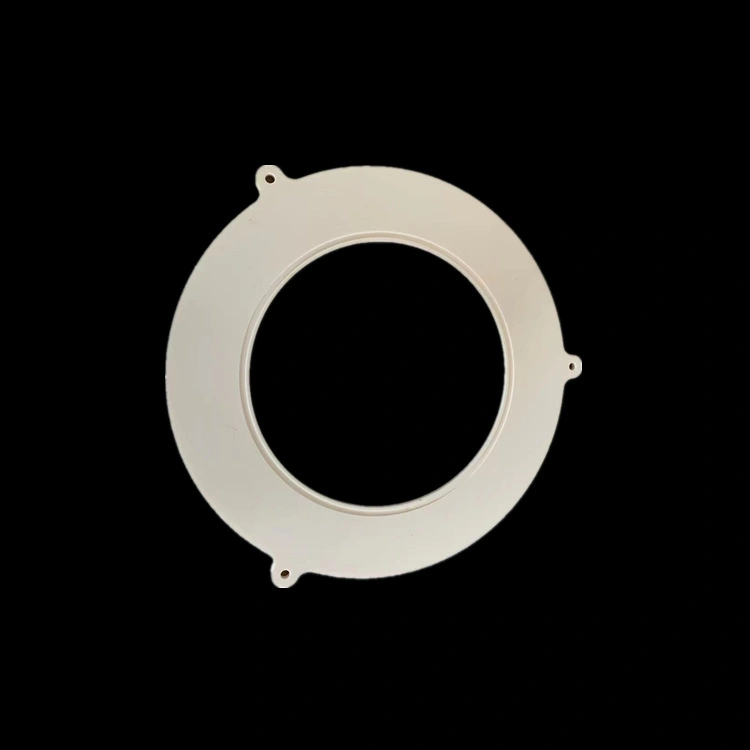
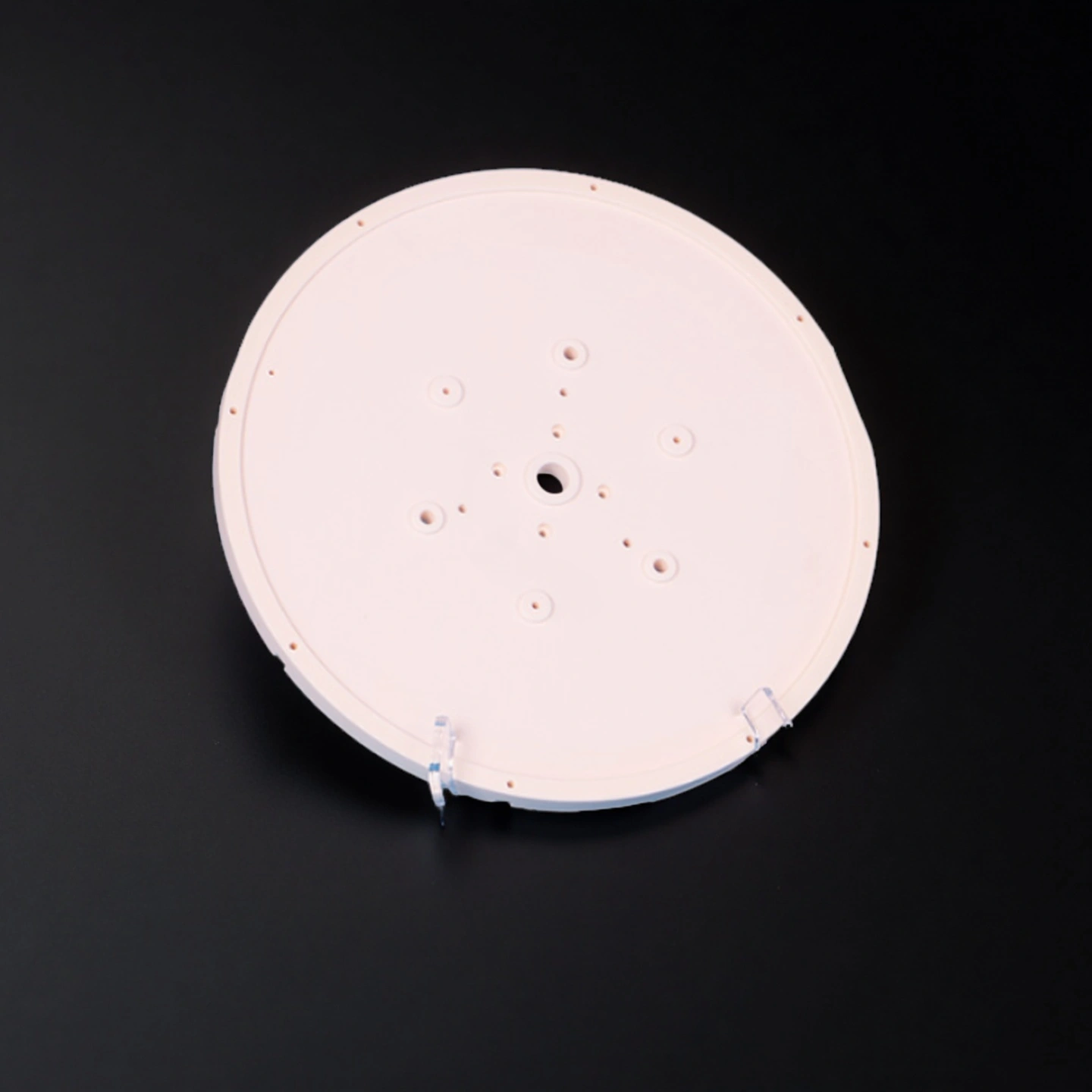
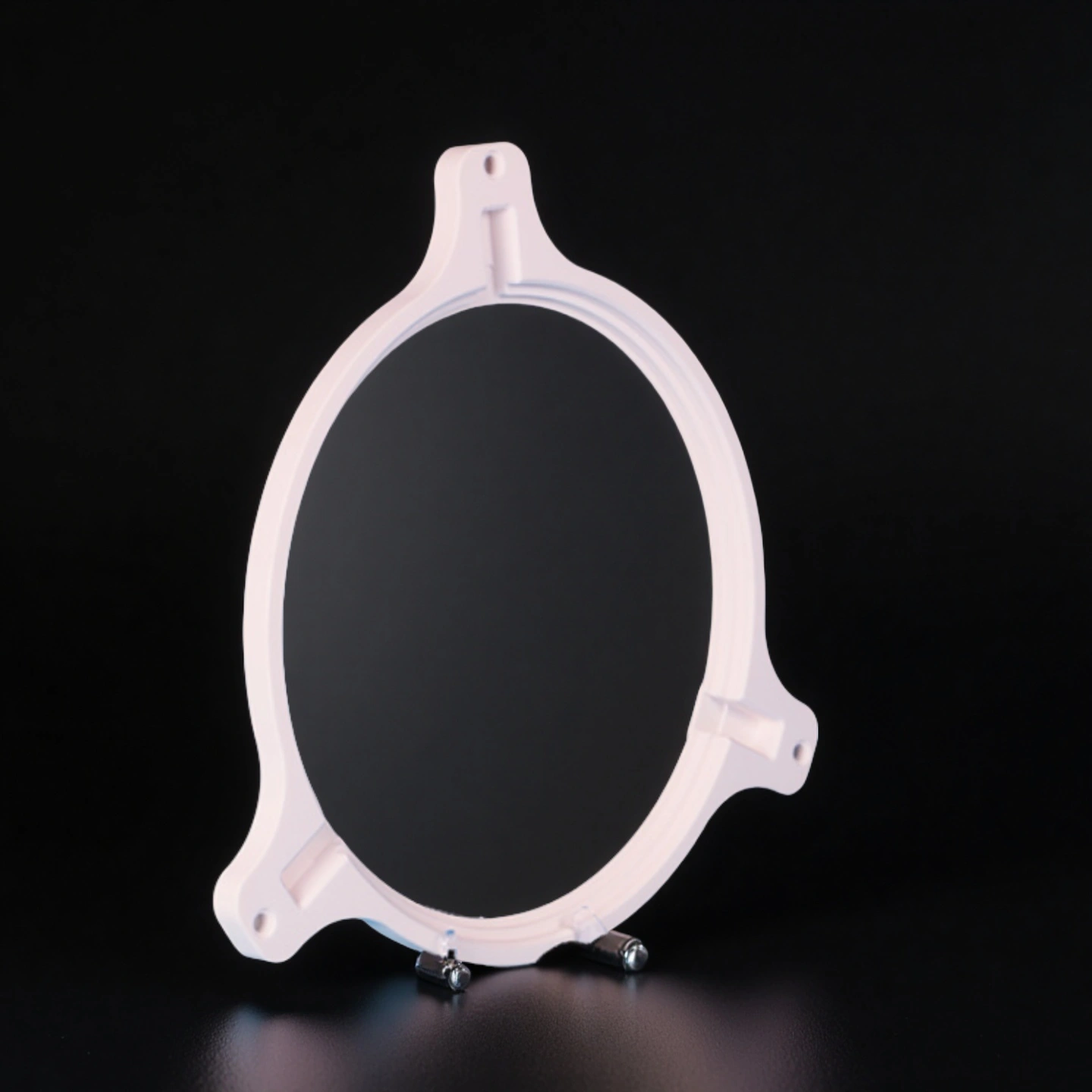
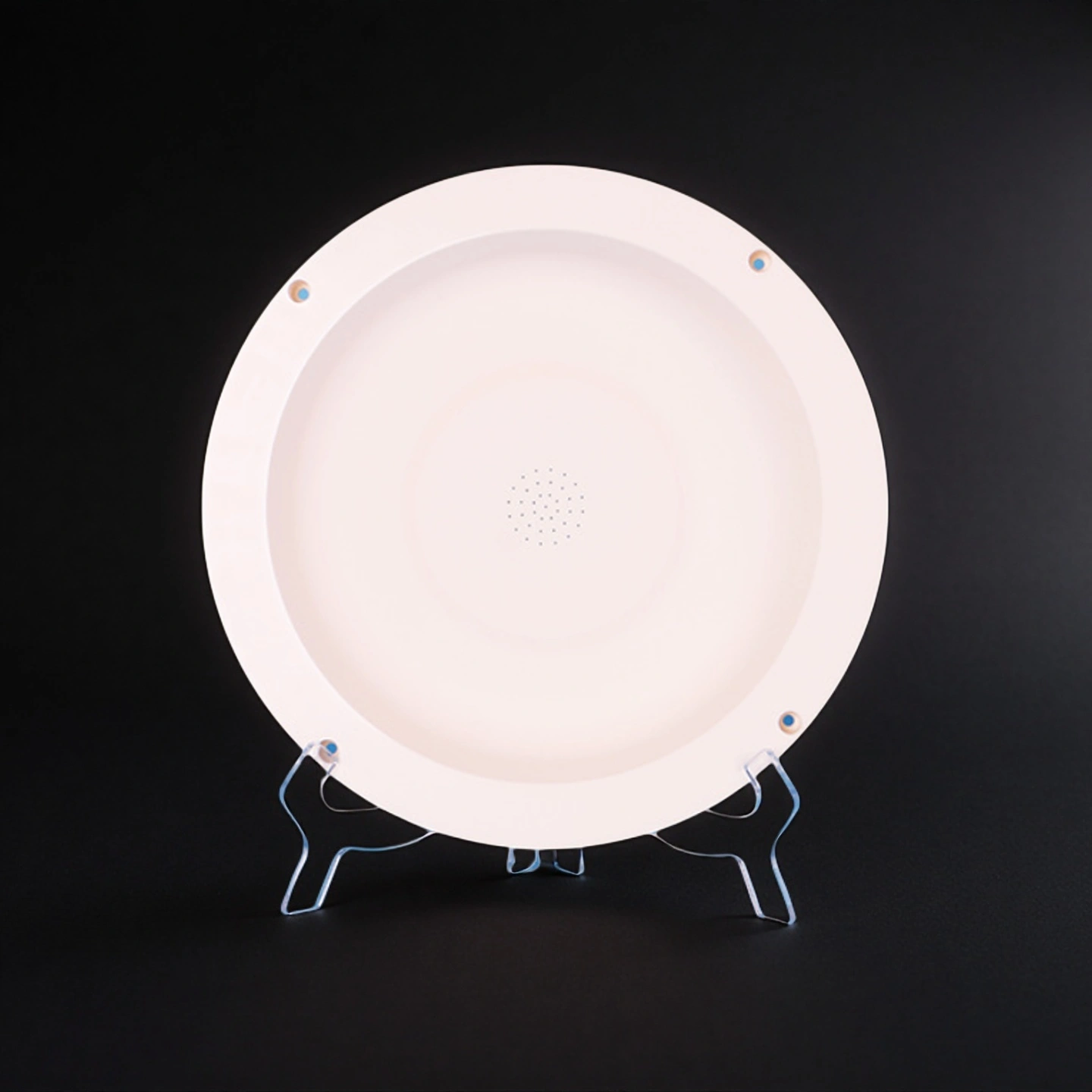
Alumina Semiconductor Components for CVD / PVD Chamber Parts – Liners, Edge Rings, Wafer Carriers

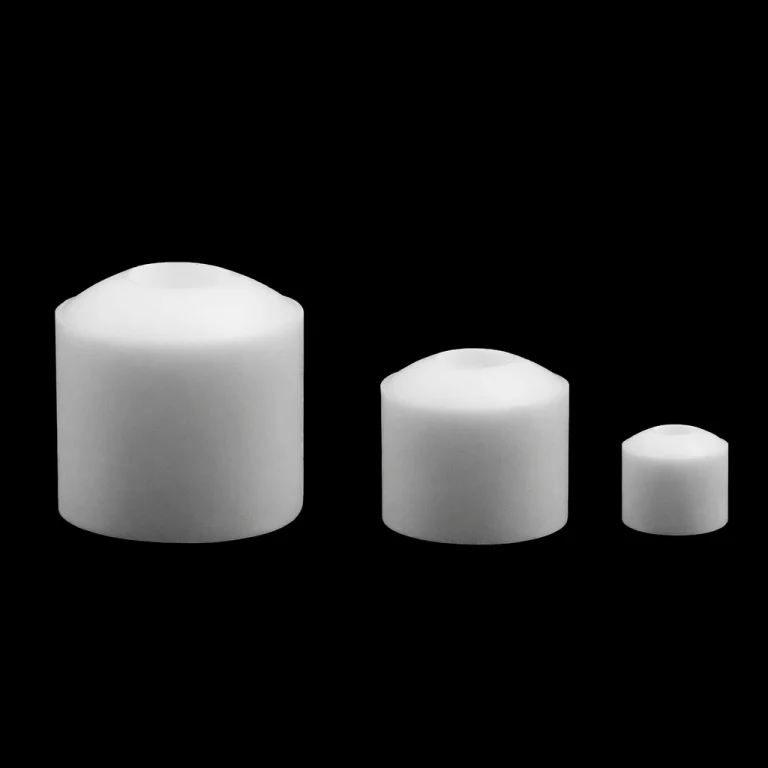
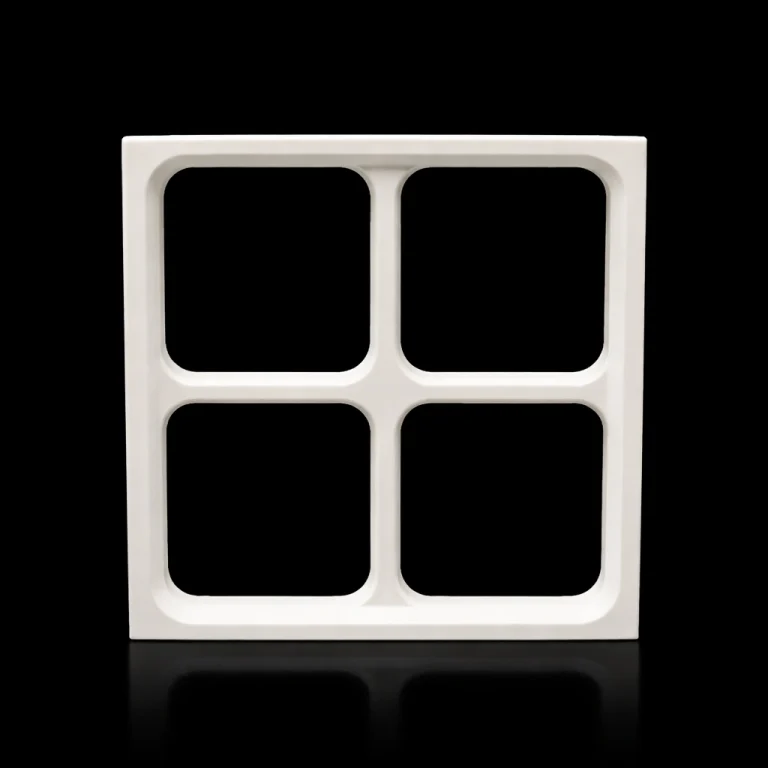
These alumina semiconductor components can be supplied as disks, rings, plates, nozzles, spacers, and complex 3D shapes in sizes from a few millimetres up to medium-format assemblies, with custom thickness, hole patterns, and surface finishes available according to customer drawings.

Catalog No. AT-OEM-1001
Material ≥ 96% Al2O3
Maximum Use Temperature 1650°C
Dielectric Strength >15 kV/mm
Dielectric strength Approx. 8–12 kV/mm
(room temperature)
24H Standard Dispatch
Small Batch Support OEM
Factory Direct
Expert Engineering Support

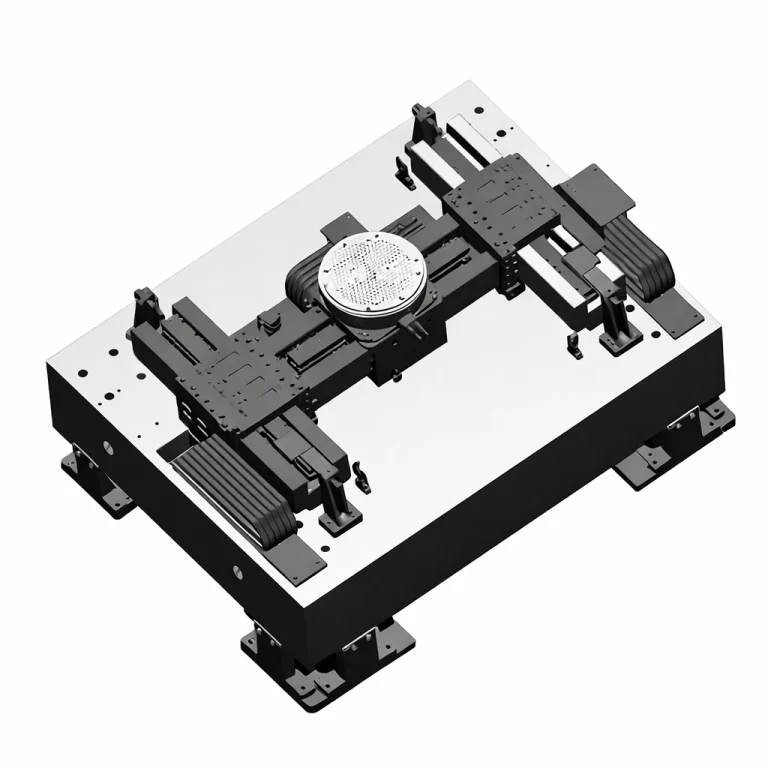
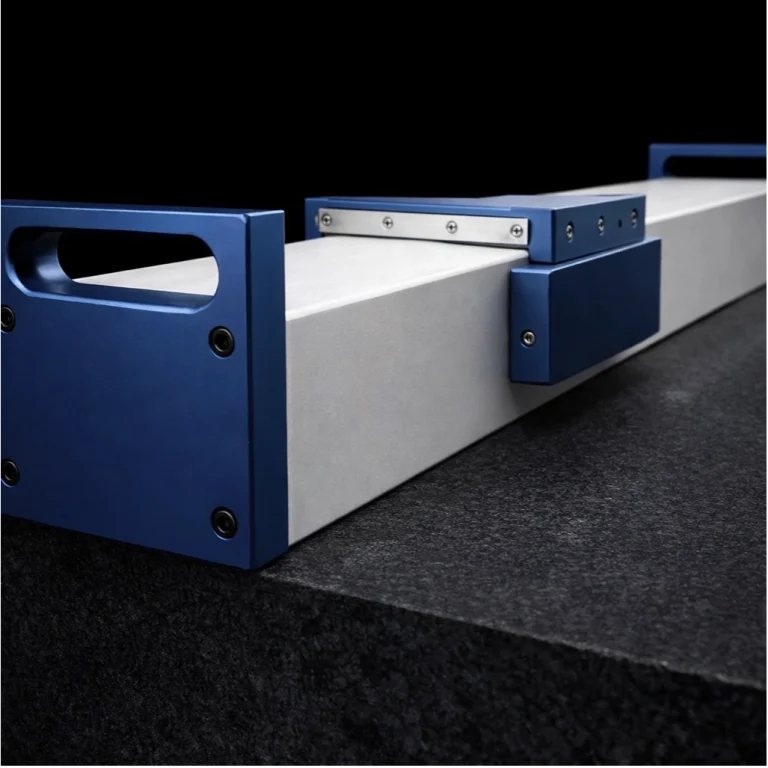
Alumina semiconductor components are precision parts made from high-purity alumina (Al₂O₃) ceramics, used inside semiconductor equipment wherever high electrical insulation, thermal stability, and cleanliness are required. They are not raw powder or generic blocks, but finished, machined components designed to fit specific tools and positions in the semiconductor process.

Alumina Semiconductor Components Benefits

  • Dimensional Stability for Tool Alignment
    Flatness and thickness uniformity help maintain chamber gaps, wafer spacing, and tool calibration, supporting stable process windows over long maintenance cycles.

  • Low Contamination Surfaces
    Fine-grain alumina with controlled porosity and polished or ground surfaces reduces particle shedding and chemical interaction with process gases and by-products.

  • Electrical Insulation in High-Voltage Zones
    High dielectric strength and volume resistivity support reliable isolation in RF, high-voltage, and heater circuits inside semiconductor equipment.

  • High-Temperature and Corrosion Resistance
    Stable mechanical performance at elevated temperatures and resistance to many acids, alkalis, and process gases make alumina suitable for hot zones and chemically active steps.

  • Flexible Geometry for New Tool Designs
    Components can be adapted into new chamber layouts, shielding concepts, or handling fixtures without changing core material systems, simplifying design updates and cost reduction projects.

Alumina Semiconductor Parts Properties

Property Unit 99.5% Al₂O₃ 99.6% Al₂O₃ 99.7% Al₂O₃ 99.8% Al₂O₃ 99.9% Al₂O₃ 99.99% Al₂O₃
Alumina content % 99.5 99.6 99.7 99.8 99.9 99.99
Density g/cm³ 3.89 3.91 3.92 3.93 3.94 3.98
Open porosity % 0
Color Ivory Ivory Ivory Ivory Ivory Ivory
Water absorption % 0 0 0 0 0
Young’s modulus (Elastic modulus) GPa 375 356 357 358 359 362
Shear modulus GPa 152
Bulk modulus GPa 228
Poisson’s ratio 0.22
Compressive strength MPa 2600 2552 2554 2556 2558 2570
Flexural strength MPa 379 312 313 314 315 320
Fracture toughness MPa·m¹ᐟ² 4
Hardness GPa 14.1 (≈1440 kg/mm²) 23 24 25 26 30
Thermal conductivity W/m·K 35 32–37 33–38 34–39 35–40 36–42
Thermal shock resistance ΔT °C 222 223 224 225 228
Maximum use temperature (no load) °C ≤1750 1755 1760 1765 1770 1800
Coefficient of thermal expansion 10⁻⁶/°C 8.4
Specific heat J/kg·K 880
Volume resistivity Ω·cm >1×10¹⁴ >1×10¹⁴ >1×10¹⁴ >1×10¹⁴ >1×10¹⁴ >1×10¹⁴
Dielectric constant (relative permittivity) 9.8 9.83 9.84 9.85 9.86 9.92
Dielectric strength kV/mm 16.9 23.2 23.4 23.6 23.8 24
Dissipation factor (loss factor @ 1 kHz) 0.0002


Alumina Semiconductor Parts Specifications

Alumina Ceramic Components
Item No. Diameter (mm) Thickness (mm)
AT-OEM-1001 Customize


Alumina Ceramic Semiconductor Parts Packaging

  • Components are individually separated using soft protective films or foam layers to reduce surface contact and chipping risk.
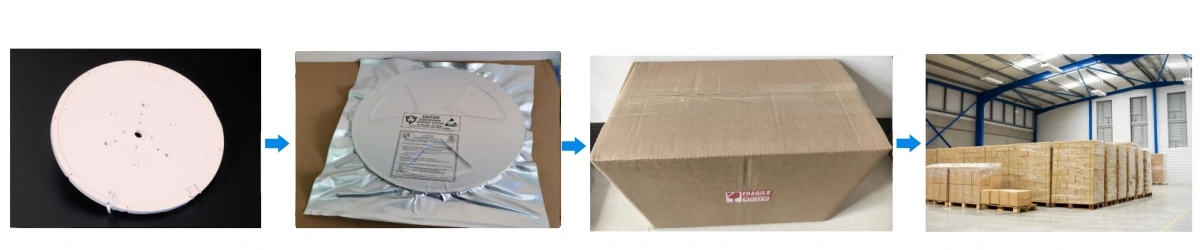

Alumina Ceramic Semiconductor Parts Packaging

Alumina Semiconductor Parts Applications

  • Semiconductor Wafer Processing Equipment (Front-End)

    ✅Key Advantages

    1. Stable Chamber Geometry – Alumina rings, liners, and shields help maintain consistent chamber gaps and wafer spacing, supporting repeatable etch and deposition profiles over many cycles.

    2. Lower Particle Risk Around the Wafer – Smooth alumina surfaces in wafer carriers and edge rings reduce backside contact points and help minimize particle transfer to the wafer.

    3. Electrical Isolation for RF and Plasma – High-resistivity alumina components isolate RF power paths and electrodes, reducing arcs and leakage during plasma steps.

    ✅ Problem Solved

    A mid-volume etch tool OEM replaced mixed metal–ceramic shields with high-purity alumina edge rings and liners for a 200 mm platform. After the change, chamber clean intervals extended by approximately 15–20%, and particle-related wafer scrap on that tool family dropped by roughly 8–10% over six months of production, helping the customer offset the cost of higher-grade ceramic parts through yield improvement and lower unplanned downtime.

  • Backend Packaging and Test Equipment

    ✅Key Advantages

    1. Mechanical Support for Test Sockets and Fixtures – Alumina plates and blocks provide rigid, stable bases for sockets and contacts in high-temperature or high-voltage test conditions.

    2. Thermal and Electrical Isolation for Power Devices – Insulating carriers and spacers reduce leakage paths and help distribute heat during power cycling or burn-in.

    3. Repeatable Alignment for Fine-Pitch Packages – Precision-ground locating features keep high pin-count packages aligned during clamping and release.

    ✅ Problem Solved

    A test-equipment integrator supplying power module burn-in racks introduced alumina support components for high-temperature fixtures. By replacing polymer-based supports, fixture life increased from around 1,000 cycles to more than 3,000 cycles before replacement, and thermal drift at the device interface was reduced by several degrees Celsius, improving measurement repeatability and reducing fixture maintenance frequency.

  • Industrial Heating Equipment

    ✅Key Advantages

    1. High-Temperature Structural Integrity – Alumina fixtures and spacers retain mechanical strength and electrical insulation at temperatures well above many engineering metals.

    2. Chemical Resistance in Reactive Atmospheres – Alumina supports handle many oxidizing and neutral atmospheres in vacuum and controlled gas processes for power electronics.

    3. Compatibility with Advanced Ceramics Market Trends – As advanced ceramics for electronics grow at ~4–6% per year, standardizing on alumina for fixtures simplifies supply and qualification.

    ✅ Problem Solved

    A furnace OEM building equipment for power module sintering moved from mixed metal–ceramic fixtures to largely alumina-based supports and alignment pieces. This change reduced fixture deformation at peak temperature and cut alignment-related rework on pilot lines by an estimated 20–25% during the first year of use, while keeping fixture material costs under control compared with more exotic ceramics.


Alumina Semiconductor Components Usage Guide

  • Installation

    1. Verify that incoming alumina semiconductor components match the latest drawing revision, including thickness, hole patterns, and chamfer directions.
    2. Use non-metallic tools or protected contact surfaces when handling parts near functional faces to avoid scratching or edge chipping.
    3. When installing in chambers or fixtures, tighten fasteners gradually in a cross pattern to distribute stress and avoid bending thin plates or rings.

  • Operation / Use

    1. Observe the recommended maximum operating temperature for the selected alumina grade and design; avoid sudden temperature jumps beyond the qualified profile. Precision Ceramics+1
    2. Avoid direct mechanical impact from wafers, carriers, or metal parts; design contact areas and stops so that alumina surfaces are loaded in compression where possible.
    3. In plasma or chemically aggressive steps, monitor erosion patterns and schedule inspection before any wear reaches critical structural areas.

  • Storage

    1. Store alumina semiconductor components in dry, clean, vibration-free cabinets or shelves, preferably in their original packaging until installation.
    2. Avoid stacking parts directly on one another; use soft interlayers between plates, rings, and disks.
    3. Keep spares labelled by tool type, position, and lot number to simplify traceability and failure analysis.

  • Cleaning

    1. For light contamination, use filtered deionized water and appropriate neutral detergents; rinse thoroughly and dry with clean air or in a low-temperature oven.
    2. Avoid abrasive media or hard brushes on functional surfaces; if necessary, consult about acceptable cleaning methods based on surface finish.
    3. Ensure that cleaning agents are compatible with alumina and do not leave residues that might outgas in vacuum or react during processing.

  • Precautions and Typical User Issues

    1. Issue: Micro-cracks from Over-Tightened Fasteners
    Symptom: Hairline cracks around mounting holes after assembly.
    Handling: Reduce torque, use washers or compliant layers where appropriate, and verify that hole spacing and countersinks match the mating metal parts.

    2. Issue: Unexpected Particle Generation after Cleaning
    Symptom: Increased particle counts in initial process runs after installing cleaned alumina semiconductor components.
    Handling: Introduce a controlled bake and purge step after cleaning, and avoid contact between parts and hard racks or tools during drying.

    3. Issue: Gradual Dimension Drift in Hot Zones
    Symptom: Alignment loss or contact mismatch after many high-temperature cycles.
    Handling: Check actual operating temperatures versus design limits, increase inspection frequency, and consider geometry changes (thicker cross-sections or added supports) in the next drawing revision.

Alumina Ceramic Semiconductor Components FAQ

  1. Q: What purity levels are typical for alumina semiconductor components?
    A: Alumina semiconductor components are commonly manufactured in the 95–99.7% Al₂O₃ range; higher purities are used closer to the wafer or in high-voltage insulation zones to minimize ionic contamination.
  2. Q: Which semiconductor tools most often use alumina semiconductor components?
    A: They are widely used in CVD, PVD, etch, oxidation, diffusion, implant, backend packaging, and test systems as chamber liners, edge rings, heater insulators, supports, and fixtures.
  3. Q: How do alumina semiconductor components compare with AlN or SiC parts?
    A: Alumina offers strong electrical insulation, good mechanical strength, and comparatively lower cost, while AlN and SiC provide higher thermal conductivity or better resistance in some extreme plasma steps; the choice depends on the specific process and location in the tool.
  4. Q: Can alumina semiconductor components be polished on one side only?
    A: Yes, it is common to specify a polished or lapped side facing the wafer or sealing surface, while keeping other sides ground or as-fired to control cost.
  5. Q: Can alumina semiconductor components include metal inserts or brazed interfaces?
    A: Yes, some designs integrate metal inserts, flanges, or brazed joints; these require specific material matching and process control and are usually evaluated on a case-by-case basis.
  6. Q: How are alumina semiconductor components inspected before shipment?
    A: Typical inspection covers key dimensions, visual surface checks, flatness on critical faces, and verification of any specified tolerances; for critical parts, additional leak, electrical, or profile measurements may be arranged.

Alumina Semiconductor Components Customer Reviews

  • ⭐️⭐️⭐️⭐️⭐️
    We use alumina semiconductor components for chamber liners and edge rings on a 200 mm platform. Dimensional stability has been consistent across several batches, and integrating the parts into our existing designs was straightforward.
    -- Michael R. – Engineering Manager, NovaFab Tools (USA)
  • ⭐️⭐️⭐️⭐️⭐️
    Switching several heater insulators and spacers to alumina semiconductor components from ADCERAX’s factory helped us shorten lead times and keep specifications aligned with our drawings. Pricing remained within our project budget for mid-volume production.
    -- Sara K. – Purchasing Lead, EuroVac Systems (Germany)
  • ⭐️⭐️⭐️⭐️⭐️
    Custom alumina semiconductor fixtures for our backend test line improved thermal stability and reduced rework on power devices. The ability to adjust hole patterns and surface finish in later revisions was particularly helpful.
    -- Kenji S. – Process Development Engineer, Hokuto Packaging Lab (Japan)
  • ⭐️⭐️⭐️⭐️⭐️
    As a regional distributor, we need repeatable ceramic parts for different tools. The alumina semiconductor components we source are stable in size and finish, and custom ring and plate versions are now part of our standard spare parts catalogue.
    -- Luca B. – Director, Semitech Spare Parts Distributor (Italy)
customize size

Alumina Semiconductor Components Customized

We offer alumina semiconductor components primarily as drawing-based custom parts supported by engineering review of the application and installation conditions.

1. Geometry and Dimensions

  • Outer and inner diameters for rings and disks
  • Plate length, width, and thickness (e.g. from ~0.5 mm to 20 mm typical ranges)
  • Overall part height and step features
  • Groove widths, depths, and alignment slots

2. Tolerances and Shape

  • Linear tolerances down to ±0.02–0.05 mm for many small and medium parts (case-by-case)
  • Flatness requirements on functional surfaces
  • Concentricity/perpendicularity of bores and faces

3. Material and Microstructure

  • Al₂O₃ purity grades (e.g. 95%, 96%, 99%, 99.5–99.7%)
  • Optional choice of fine-grain material for surfaces in direct contact with wafers or critical gas paths

4. Surface and Edge Treatment

  • As-fired, ground, lapped, or polished surfaces
  • Chamfers, radii, and deburring of edges in contact with wafers or O-rings
  • Marking zones for laser engraving or identification codes

5. Functional Features

  • Through holes, threaded inserts (with metal parts supplied by customer or specified separately)
  • Vacuum grooves and pumping slots
  • Local thickness changes for thermal or mechanical design needs

Related Products

ADCERAX - Your Trusted Advanced Ceramics Manufacturing Partner

Direct factory manufacturing with comprehensive ceramic materials expertise and global supply capabilities

Direct Factory Manufacturing

China-based ceramic materials production facility with state-of-the-art equipment

Engineering Team

Experienced professionals in advanced ceramics applications and custom design

Quality Control

Strict quality control standards for technical ceramics manufacturing and quality management

Global Supply Chain

Serving customers worldwide with technical ceramics and rapid response

24/7 Technical Support

Round-the-clock support for ceramic components inquiries and technical assistance

500+ Satisfied Customers

Trusted by global customers for advanced ceramic materials and precision components

Get in touch with us

Our team will be happy to respond to you in less than 24 hours.

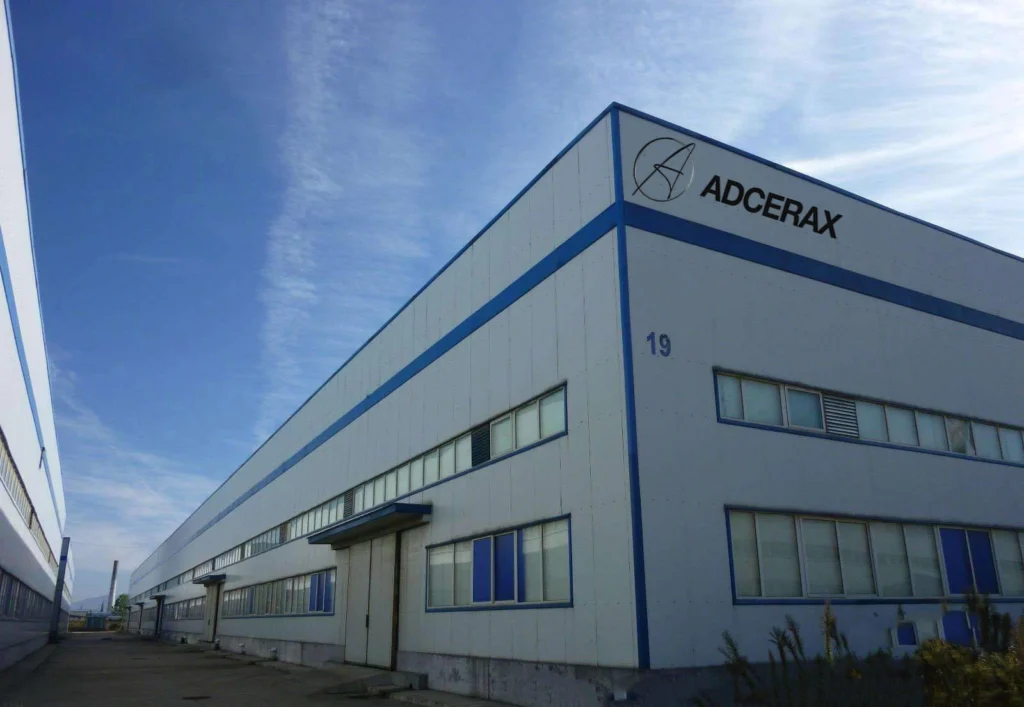
Adcerax's factory

Quick Quotation

*Our team will answer your inquiries within 24 hours.

*Your information will be kept strictly confidential.

Ready to Solve Your Engineering Challenge?

Partner with ADCERAX for reliable, high-performance advanced ceramic solutions. Our engineers are ready to discuss your project.

E-mail

info@adcerax.com

Phone

+(86) 0731-74427743 | WhatsApp: +(86) 19311583352

Response Time

Within 24 hours

Quick Quote

The more details you provide, the faster we can quote.

*We respond within 24 hours. All inquiries are confidential.

Download Catalog

Get Your Custom Sulution

The more details you provide, the faster we can respond.

customize size

*We respond within 24 hours. All inquiries are confidential.

Download Catalog