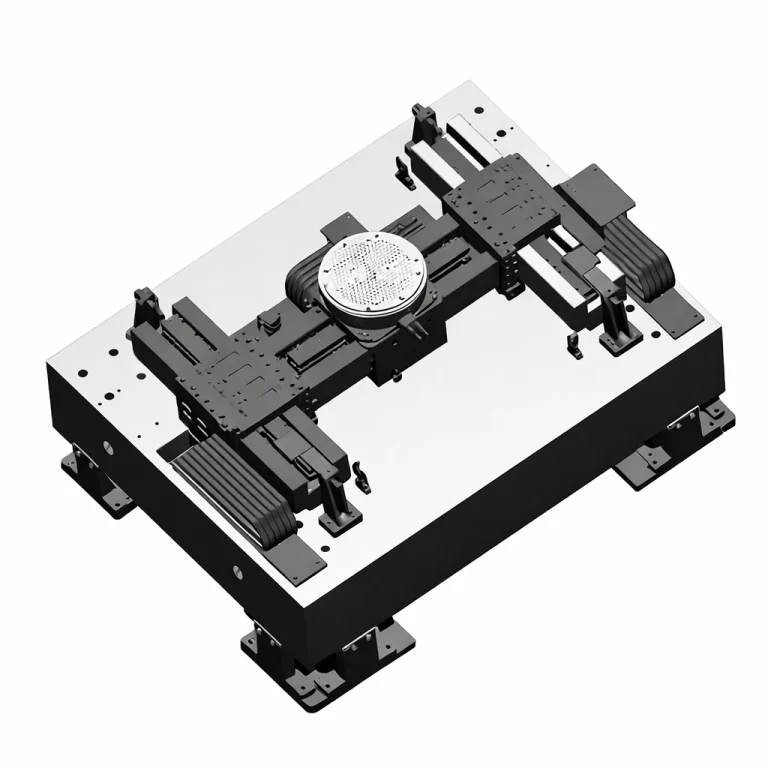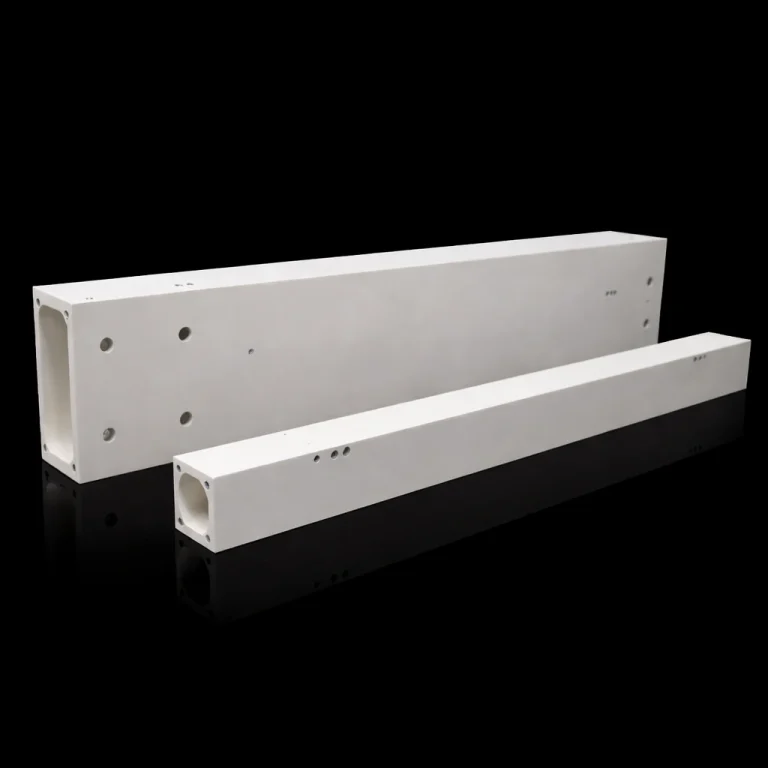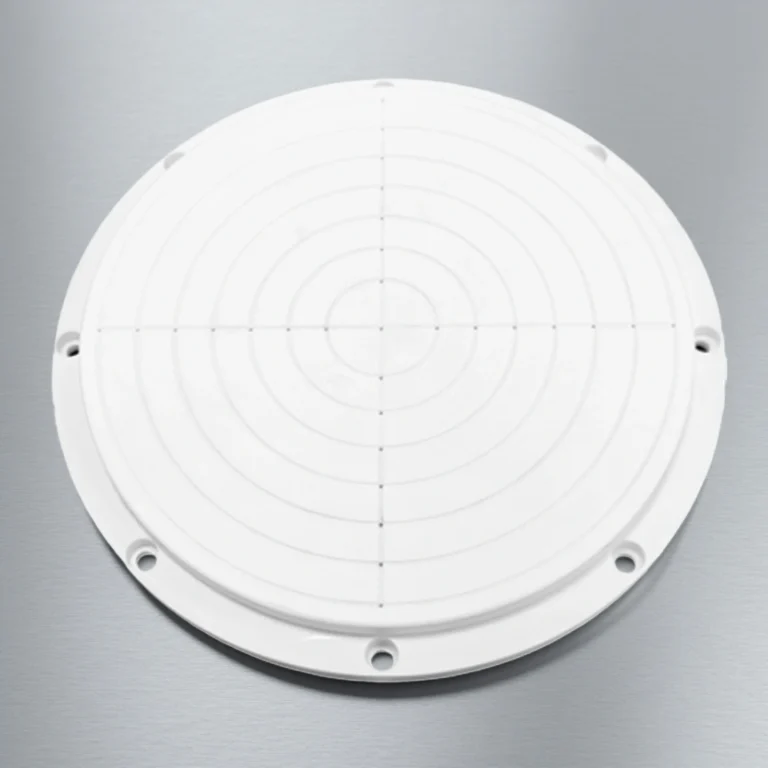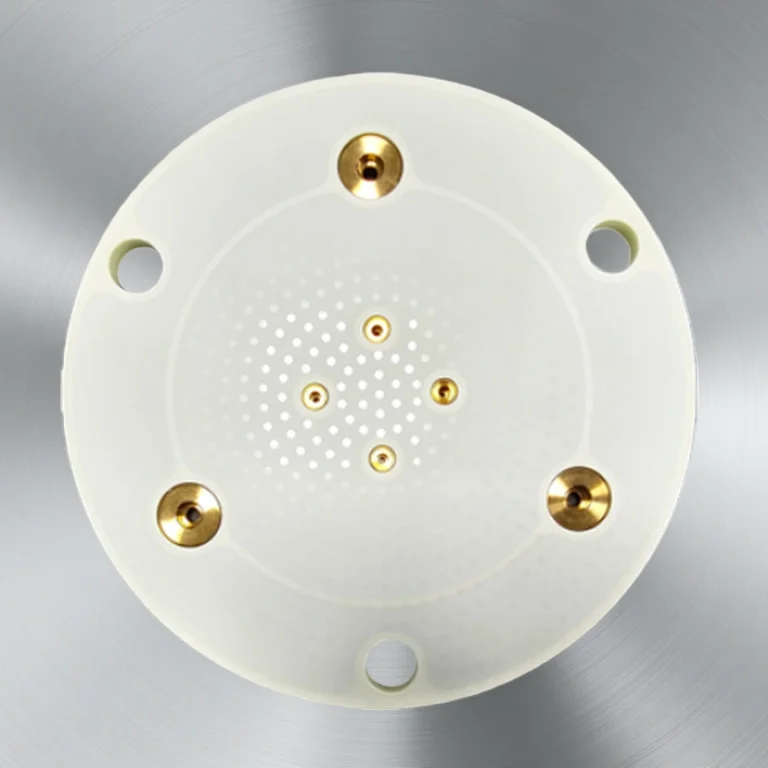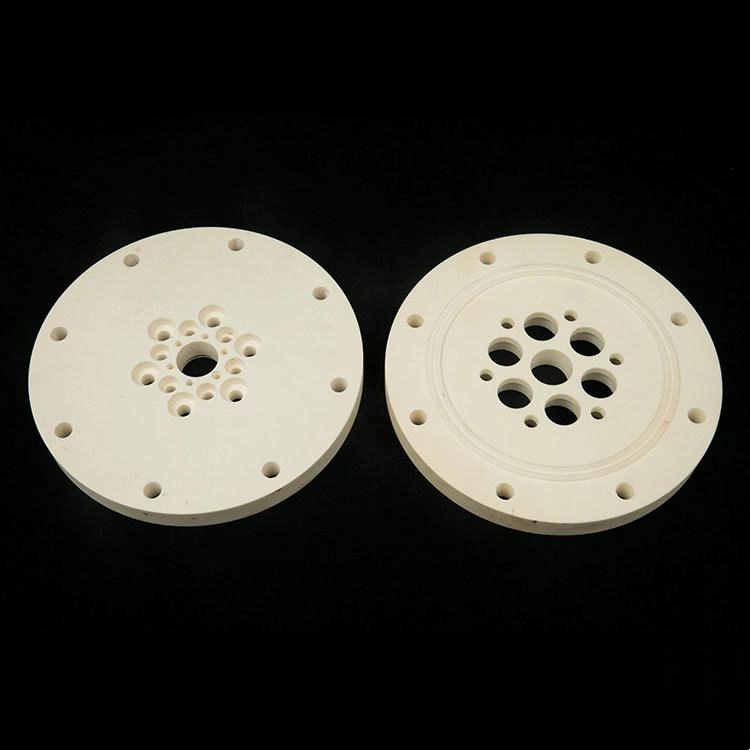
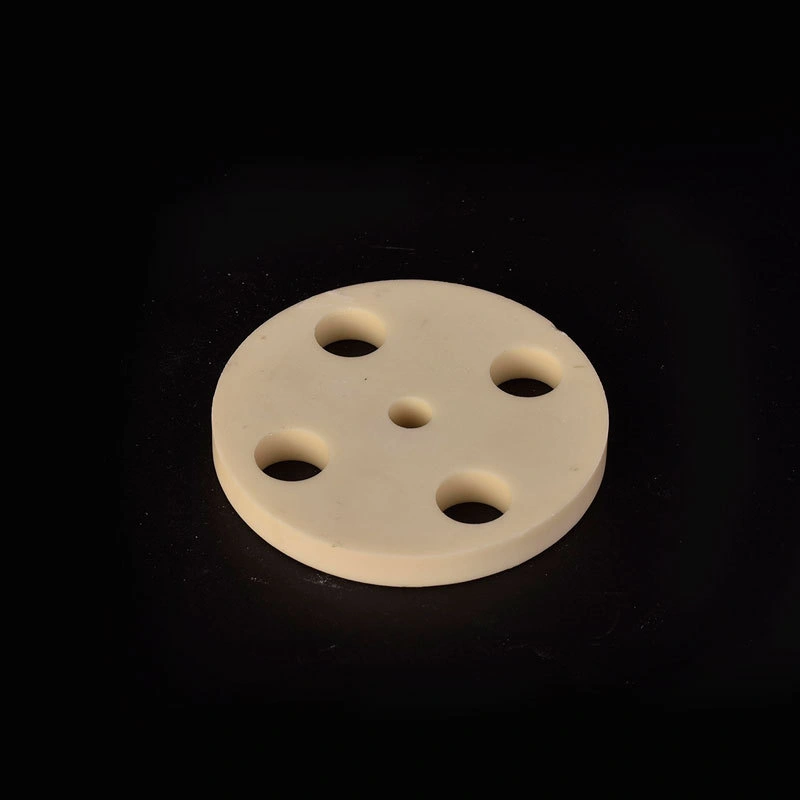
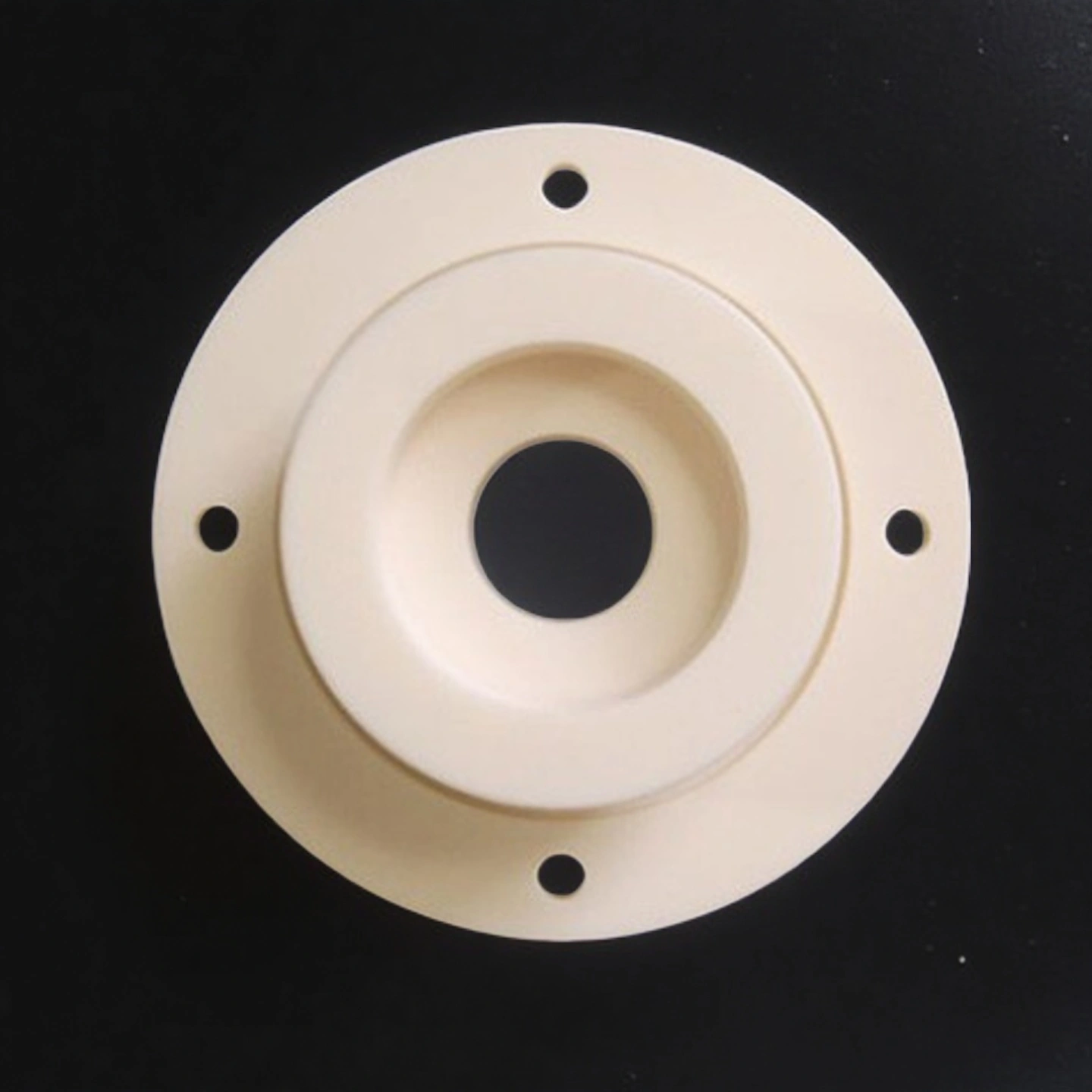
Alumina Ceramic Flange for Furnace Tubes and High-Temperature Gas Lines

Standard alumina ceramic flange designs typically cover small laboratory tube sizes up to medium industrial diameters, with outer diameters from about 20 mm up to several hundred millimetres. ADCERAX supplies alumina ceramic flange rings and flanged tube sections based on customer drawings, allowing tailored bolt circles, groove patterns, stepped bores and matching fits to existing metal or ceramic hardware.

Catalog No. AT-YHL-FL01
Material ≥ 95% Al2O3
Dimensional Tolerance ±0.05 mm (standard)
Max Operating Temperature Up to 1600°C
Coefficient of Thermal Expansion ~7–8.5 ×10⁻⁶ /°C (25–1000°C)
24H Standard Dispatch
Small Batch Support OEM
Factory Direct
Expert Engineering Support

An alumina ceramic flange is a dense aluminum oxide (Al₂O₃) structural part designed to connect tubes, chambers and housings in high-temperature, vacuum or corrosive systems while providing electrical insulation and a stable sealing surface. It is typically made from 95–99.5% alumina engineering ceramic.

Alumina Ceramic Flange Benefits

  • Matched thermal expansion for high-temperature seals
    The alumina ceramic flange uses dense Al₂O₃ with a controlled thermal expansion coefficient around 7–8.5 ×10⁻⁶ /°C, which helps maintain sealing contact and dimensional stability in 800–1400°C continuous service.

  • High electrical insulation for vacuum and power feedthrough areas
    The material offers very high volume resistivity and dielectric strength, making the flange suitable around heaters, electrodes and sensor lines that pass through vacuum or controlled atmosphere.

  • Dense, corrosion-resistant ceramic contact surfaces
    Fully dense alumina ceramic resists many acids, alkalis and process gases, reducing metal corrosion at tube connections and helping keep process atmospheres clean in chemical or thermal treatment equipment.

  • Rigid support for tubes and chambers
    The high hardness and compressive strength of alumina allow each flange to support tube loads and gasket compression without plastic deformation, improving alignment and reducing re-tightening over time.

  • Compatible with multiple sealing concepts
    The flange face can be made flat, stepped or grooved to accept graphite gaskets, fiber gaskets or metal seals, so users can integrate alumina ceramic flanges into existing furnace and vacuum hardware standards.

Properties of Alumina Ceramic Flange

Property Unit 99.5% Al₂O₃ 99.6% Al₂O₃ 99.7% Al₂O₃ 99.8% Al₂O₃ 99.9% Al₂O₃ 99.99% Al₂O₃
Alumina content % 99.5 99.6 99.7 99.8 99.9 99.99
Density g/cm³ 3.89 3.91 3.92 3.93 3.94 3.98
Open porosity % 0
Color Ivory Ivory Ivory Ivory Ivory Ivory
Water absorption % 0 0 0 0 0
Young’s modulus (Elastic modulus) GPa 375 356 357 358 359 362
Shear modulus GPa 152
Bulk modulus GPa 228
Poisson’s ratio 0.22
Compressive strength MPa 2600 2552 2554 2556 2558 2570
Flexural strength MPa 379 312 313 314 315 320
Fracture toughness MPa·m¹ᐟ² 4
Hardness GPa 14.1 (≈1440 kg/mm²) 23 24 25 26 30
Thermal conductivity W/m·K 35 32–37 33–38 34–39 35–40 36–42
Thermal shock resistance ΔT °C 222 223 224 225 228
Maximum use temperature (no load) °C ≤1750 1755 1760 1765 1770 1800
Coefficient of thermal expansion 10⁻⁶/°C 8.4
Specific heat J/kg·K 880
Volume resistivity Ω·cm >1×10¹⁴ >1×10¹⁴ >1×10¹⁴ >1×10¹⁴ >1×10¹⁴ >1×10¹⁴
Dielectric constant (relative permittivity) 9.8 9.83 9.84 9.85 9.86 9.92
Dielectric strength kV/mm 16.9 23.2 23.4 23.6 23.8 24
Dissipation factor (loss factor @ 1 kHz) 0.0002


Alumina Ceramic Flange Specifications

Alumina Ceramic Flange
Item No. Diameter (mm) Thickness (mm)
AT-YHL-FL01 Customize


Alumina Ceramic Flange Packaging

  • Each alumina ceramic flange is wrapped in soft cushioning material to avoid chipping on edges and bolt holes.
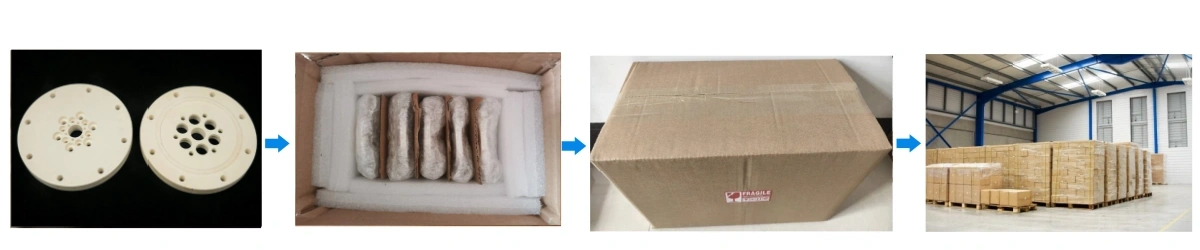

Alumina Ceramic Flange Packaging

Alumina Ceramic Flange Applications

  • Industrial Furnaces and Heat Treatment Lines

    ✅Key Advantages

    1. Stable sealing at repeated thermal cycling
    Alumina ceramic flange supports furnace tube connections that see repeated heating and cooling cycles up to around 1400–1600°C, reducing distortion at the sealing interface.

    2. Reduced metal scaling and contamination
    By placing an alumina ceramic flange between the hot zone and metallic outer structure, scaling and flaking of metal in the hot area can be reduced, helping keep treated parts and furnace interiors cleaner.

    3. Longer service intervals for tube connections
    The high hardness and compressive strength of alumina ceramic flange reduce wear around bolt holes and gasket seats, so maintenance intervals for tube connections can be extended compared with soft metal or composite solutions.

    ✅ Problem Solved

    A heat-treatment line using metal flanges at the hot end needed gasket changes every few months because axial distortion at 1000–1100°C caused repeated leakage. Industry data show alumina ceramics can operate stably in the 1400–1600°C range, significantly above steel’s comfortable range. After replacing the hot-end metal connections with alumina ceramic flanges matched to the tube expansion, the maintenance cycle for that connection moved from several times per year to an annual inspection, cutting unplanned downtime and seal-related stoppages.

  • Vacuum Coating and Thermal Processing Systems

    ✅Key Advantages

    1. High electrical insulation around heaters and electrodes
    An alumina ceramic vacuum flange provides high dielectric strength and volume resistivity, enabling safe routing of heater leads or electrodes through chamber walls without conductive paths along the flange body.

    2. Clean vacuum-compatible material
    Dense alumina ceramic has low open porosity and stable composition, which helps minimise gas release and contamination in high-vacuum or controlled atmosphere coating chambers.

    3. Dimensional stability for alignment-critical hardware
    The alumina ceramic flange retains geometry under temperature load and vacuum pressure, so lamp housings, shields and tubes mounted through it stay aligned during operation.

    ✅ Problem Solved

    A thin-film deposition tool experienced drift in electrode alignment after long runs near 800–900°C with metal support flanges. Alumina ceramics are documented as maintaining shape and insulation at temperatures well beyond that range, with maximum use temperatures often listed between 1400 and 1700°C. By replacing the electrode support interface with a custom alumina ceramic vacuum flange, the system reduced alignment rework and improved coating uniformity over extended production batches.

  • Chemical Process and Fluid Control Systems

    ✅Key Advantages

    1. Corrosion resistance in aggressive media
    The alumina ceramic flange resists many acids, alkalis and saline solutions, supporting pipelines where metal flanges would require thick linings or frequent replacement.

    2. Electrical insulation in mixed metal systems
    In lines that combine different metals, using an alumina ceramic flange between sections can help reduce galvanic corrosion by electrically isolating components.

    3. Stable dimensions for flow-control interfaces
    Because the alumina ceramic flange maintains its geometry at elevated temperatures, valve bodies, orifices and measurement inserts connected through it remain properly seated, supporting repeatable process conditions.

    ✅ Problem Solved

    A chemical plant operating a heated corrosive stream needed repeated replacement of lined metal flanges every 6–12 months due to pitting and lining damage. Aluminium oxide ceramics are widely recognised for their chemical stability and high-temperature capability in such environments. After introducing alumina ceramic flanges at the most exposed points, inspection intervals lengthened and replacement became a planned operation rather than an emergency response, reducing maintenance-related production interruptions.

Alumina Ceramic Flange Usage Instructions

  • Installation of Alumina Ceramic Flange

    1. Verify that the alumina ceramic flange dimensions (OD, ID, bolt circle and thickness) match the tube and mating part drawings before installation.
    2. Handle the flange with clean gloves and support it from the body rather than by bolt holes or edges to avoid chipping.
    3. Align the alumina ceramic flange with the tube or chamber step and seat it gently before tightening bolts in a cross pattern to distribute load evenly.
    4. Use gasket materials compatible with the operating temperature and chemistry (such as graphite or high-temperature fiber gaskets) and avoid over-compressing them against the ceramic face.
    5. For flanged tube assemblies, insert the tube fully into the designed shoulder or bore so that mechanical loads are taken by the cylindrical section rather than by the edge alone.

  • Use in Operation

    1. Bring the system up to temperature at a controlled rate that is consistent with the alumina thermal shock capability; avoid sudden direct flame on the flange surface.
    2. Keep mechanical loads within the design limits of the assembly—ceramic flanges are strong under compression but sensitive to unexpected bending or impact.
    3. Avoid hitting the flange with tools during maintenance or when adjusting adjacent hardware.
    4. Monitor joints during initial runs for small leaks or displacement and adjust bolt torque only after cooling to a safe temperature.

  • Storage

    1. Store alumina ceramic flanges in dry, clean shelves or cartons, separated by foam or soft dividers to avoid contact between parts.
    2. Avoid stacking heavy items on top of boxed ceramic flanges to prevent hidden micro-cracks.
    3. Label storage with material grade, drawing number and intended equipment to keep the correct parts for each line.

  • Cleaning

    1. For general dust or handling marks, clean the alumina ceramic flange using a soft cloth or brush and non-aggressive solvent or deionised water; avoid strong mechanical scrubbing on sealing faces.
    2. If process residues build up, use compatible chemical cleaning agents recommended for alumina ceramics and rinse thoroughly, ensuring no cleaning chemicals are trapped in bolt holes or crevices.
    3. Dry the flange completely before re-installation, particularly when it will be used in vacuum.

  • Common Misuse Points and Fixes

    1. Over-tightening bolts on the alumina ceramic flange

    Issue: Excessive torque concentrates stress around bolt holes and may cause radial cracks.
    Fix: Use torque values recommended for the gasket and design; tighten gradually in a cross pattern and, if necessary, use washers or load-spreading hardware to reduce local stress.

    2. Thermal shock from rapid heating or quenching

    Issue: Exposing the alumina ceramic flange to abrupt temperature changes beyond its thermal shock tolerance can cause cracking. Morgan Technical Ceramics+2INSACO Inc.+2
    Fix: Use controlled heating and cooling ramps; avoid direct cold gas or liquid on a hot flange; design process steps to limit sudden temperature differences.

    3. Misalignment between the alumina ceramic flange and mating parts

    Issue: Forcing misaligned bolts or tubes into position can impose bending loads on the ceramic body.
    Fix: Check machining and assembly tolerances; correct misalignment by adjusting metal supports or spacers rather than using bolt force to pull components into place.

Frequently Asked Questions – Alumina Ceramic Flange

  1. Q: What is an alumina ceramic flange used for?
    A: An alumina ceramic flange is used to connect tubes and housings in high-temperature, vacuum and chemical process equipment where electrical insulation, mechanical support and corrosion resistance are required.
  2. Q: What working temperature can an alumina ceramic flange withstand?
    A: Depending on the alumina grade and design, many alumina ceramic flanges can operate in the 1400–1600°C range under no-load conditions, with exact limits defined by material grade and geometry.
  3. Q: Which alumina purity is recommended for an alumina ceramic flange in vacuum service?
    A: For vacuum and high-temperature applications, 96% and 99–99.5% alumina ceramic grades are commonly used because they offer low porosity, stable electrical insulation and good chemical resistance.
  4. Q: Can alumina ceramic flanges be used with quartz tubes?
    A: Yes, alumina ceramic flange designs are often used to support and seal quartz tubes, with bores and shoulders machined to match the tube outer diameter and coefficient of thermal expansion.
  5. Q: How is an alumina ceramic flange sealed to metal hardware?
    A: Alumina ceramic flanges are typically sealed to metal components using graphite gaskets, fiber gaskets or specially designed metal seals, with bolt loads controlled to avoid excessive stress on the ceramic.
  6. Q: Can I order a custom alumina ceramic flange from a drawing?
    A: Yes, ADCERAX can produce custom alumina ceramic flange parts directly from 2D drawings or 3D models, including specific bolt patterns, sealing faces and tube interface details.
  7. Q: Can alumina ceramic flange components be combined with other ceramic materials?
    A: Alumina ceramic flanges can be combined with other ceramic parts such as zirconia or silicon carbide inserts, but the design should consider differences in thermal expansion and mechanical properties to avoid stress during heating.

Customer Reviews about Alumina Ceramic Flange

  • ⭐️⭐️⭐️⭐️⭐️
    We switched the hot-end tube connections on one furnace line to custom alumina ceramic flanges, and the sealing stability at high temperature improved noticeably. The dimensional consistency between batches has made installation more predictable.
    -- Michael R., Process Engineer – EuroTherm Kiln Systems GmbH
  • ⭐️⭐️⭐️⭐️⭐️
    ADCERAX supplied alumina ceramic flange parts for several vacuum coating tools. The parts matched our drawings closely, and the insulating flanges allowed us to simplify the power feedthrough design while keeping the chamber layout compact.
    -- Laura S., Purchasing Manager – NovaVac Coating Equipment Inc.
  • ⭐️⭐️⭐️⭐️⭐️
    For our laboratory tube furnaces we needed alumina ceramic flanged tube assemblies with specific bore sizes. The alumina ceramic flange and tube combination has stayed stable over multiple heating cycles without alignment problems.
    -- Kenji T., R&D Engineer – Kyoto Materials Lab
  • ⭐️⭐️⭐️⭐️⭐️
    After installing alumina ceramic flanges at key positions in one heated corrosive line, we saw fewer unplanned gasket changes. The ceramic flange surfaces stay intact even after long exposure to the process media.
    -- Ahmed H., Maintenance Supervisor – GulfChem Process Solutions
customize size

Custom Alumina Ceramic Flange

ADCERAX supplies alumina ceramic flange components as both standard rings and fully custom machined parts, so the alumina ceramic flange can match existing tube sizes, bolt patterns and sealing geometries in your equipment.

1. Outer and inner diameters

  • OD and ID with typical dimensional tolerance down to ±0.05 mm on critical fits, and wider tolerance options for non-critical surfaces.

2. Flange thickness and sealing face design

  • Overall thickness, step heights, and recesses for gaskets or O-rings.

3. Bolt circle geometry

  • Number of holes, bolt circle diameter, hole diameter and positional tolerance for through-holes or threaded inserts (threaded via metal inserts or secondary parts if needed).

4. Tube interface

  • Straight bore, taper bore, shoulder bore to locate alumina tubes, quartz tubes or metal tubes.

5. External shape

  • Round, square or rectangular alumina ceramic flange bodies, with optional flats or key features to prevent rotation.

6. Surface finish on critical faces

  • As-fired, ground or polished sealing faces to support different gasket or metal seal designs.

7. Material grade

  • Selection among 95%, 96% or 99–99.5% alumina ceramic depending on working temperature and chemical environment.

Related Products

ADCERAX - Your Trusted Advanced Ceramics Manufacturing Partner

Direct factory manufacturing with comprehensive ceramic materials expertise and global supply capabilities

Direct Factory Manufacturing

China-based ceramic materials production facility with state-of-the-art equipment

Engineering Team

Experienced professionals in advanced ceramics applications and custom design

Quality Control

Strict quality control standards for technical ceramics manufacturing and quality management

Global Supply Chain

Serving customers worldwide with technical ceramics and rapid response

24/7 Technical Support

Round-the-clock support for ceramic components inquiries and technical assistance

500+ Satisfied Customers

Trusted by global customers for advanced ceramic materials and precision components

Get in touch with us

Our team will be happy to respond to you in less than 24 hours.

Adcerax's factory

Quick Quotation

*Our team will answer your inquiries within 24 hours.

*Your information will be kept strictly confidential.

Ready to Solve Your Engineering Challenge?

Partner with ADCERAX for reliable, high-performance advanced ceramic solutions. Our engineers are ready to discuss your project.

E-mail

info@adcerax.com

Phone

+(86) 0731-74427743 | WhatsApp: +(86) 19311583352

Response Time

Within 24 hours

Quick Quote

The more details you provide, the faster we can quote.

*We respond within 24 hours. All inquiries are confidential.

Download Catalog

Get Your Custom Sulution

The more details you provide, the faster we can respond.

customize size

*We respond within 24 hours. All inquiries are confidential.

Download Catalog