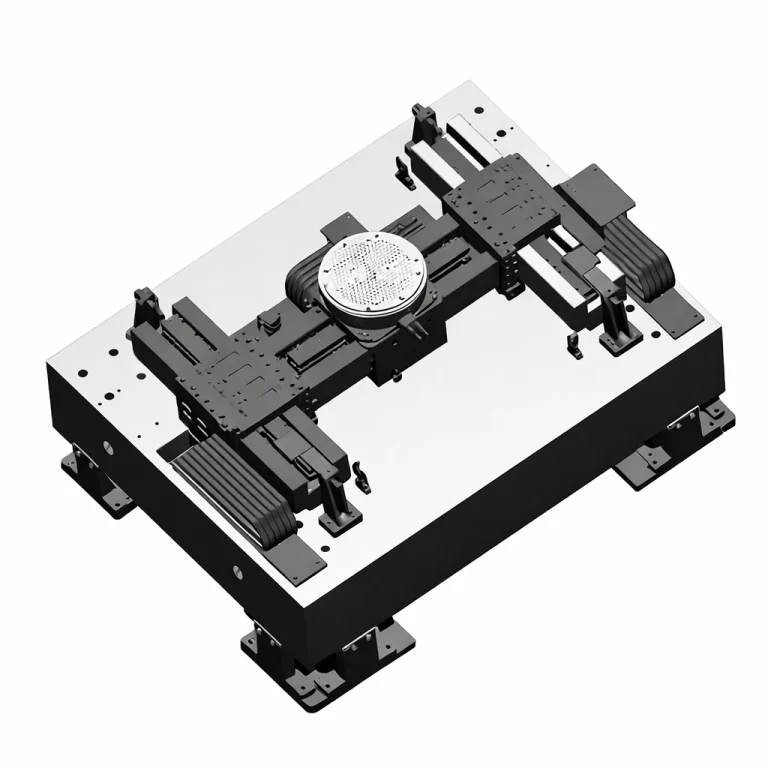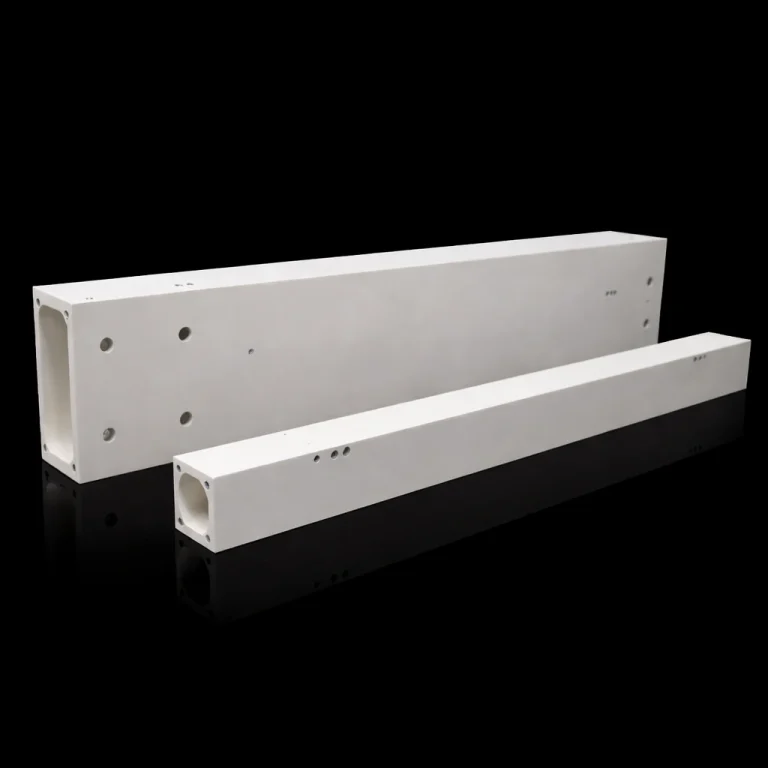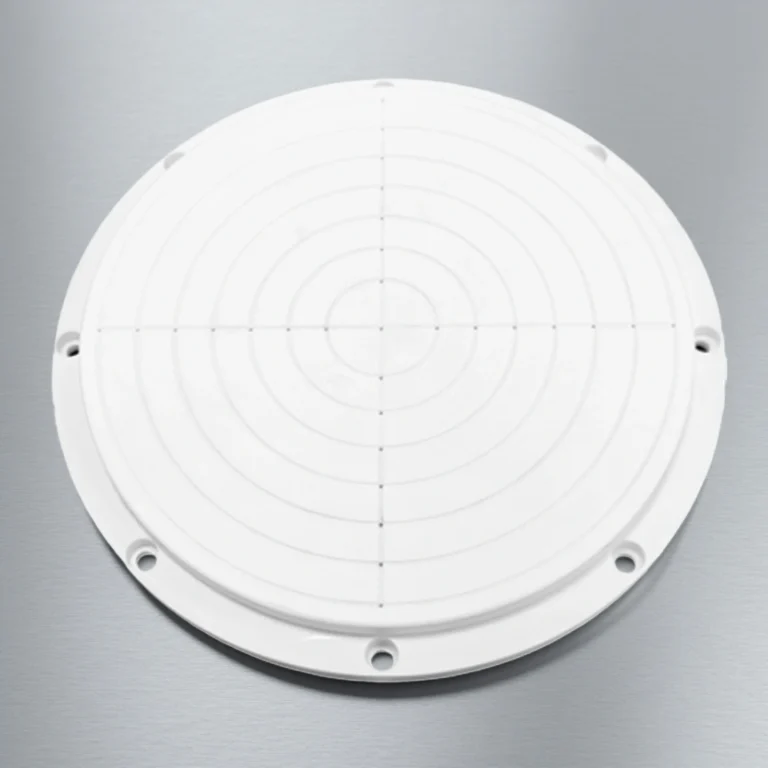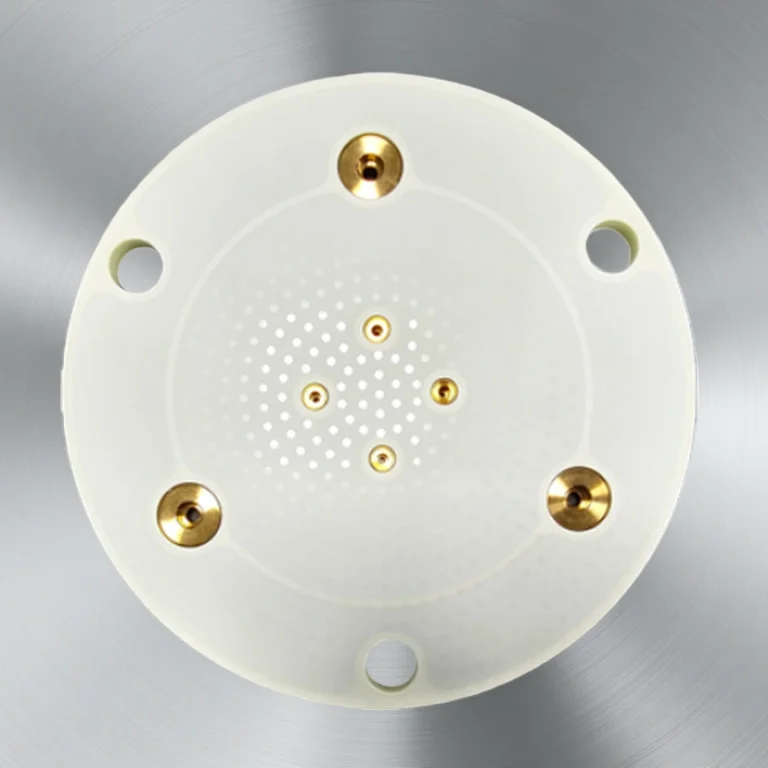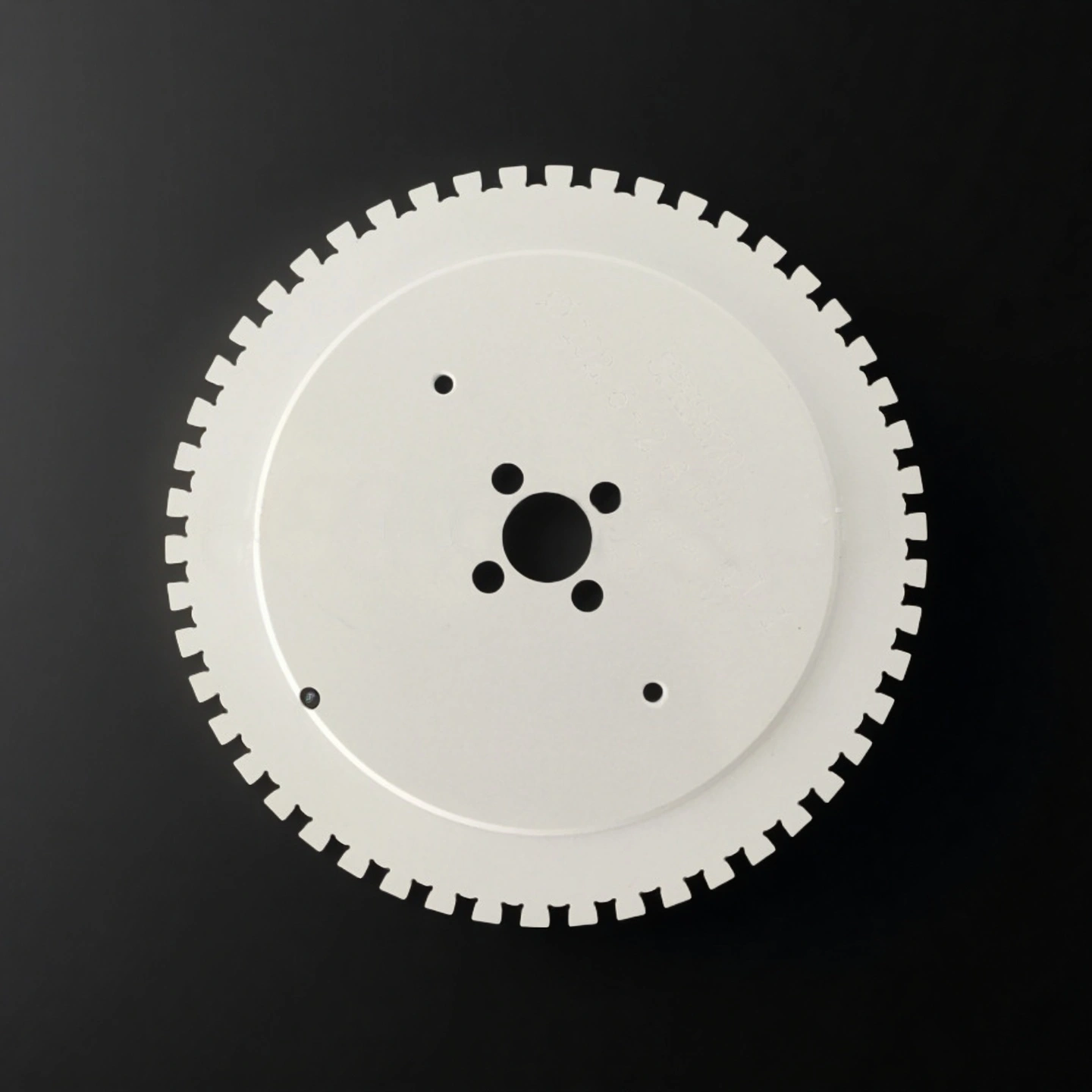
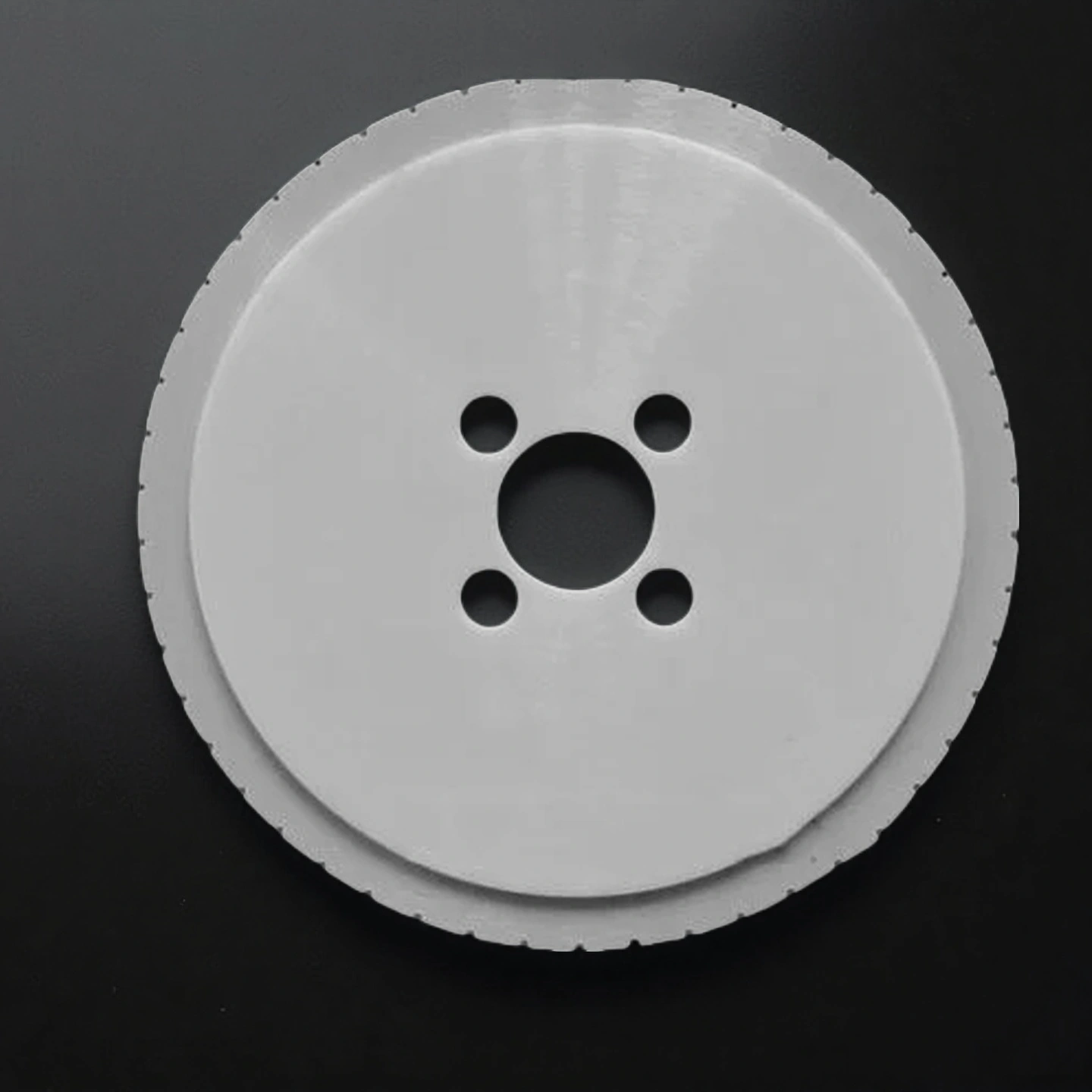
High-Purity Alumina Ceramic Rotary Index Table Plate for Automation Systems

ADCERAX supplies alumina ceramic rotary indexing table plates in standard diameters and customer-specified layouts, covering small to large table sizes with customized hole patterns, slot features, and thickness to match different rotary indexers and automation platforms.

Catalog No. AT-YHL-IW01
Material ≥ 96% Al2O3
Density 3.8~3.9 g/cm³
Maximum Operating Temperature  1500°C
Table face flatness / runout Target ≤0.02–0.05 mm on working
diameter (design-dependent)
24H Standard Dispatch
Small Batch Support OEM
Factory Direct
Expert Engineering Support

Alumina ceramic rotary indexing tables are designed for precise rotational positioning in high-precision equipment, including laser marking stations, CNC systems, and automated inspection platforms. Made from ≥95% alumina, the material offers exceptional hardness, dielectric strength, and thermal resistance, making it ideal for harsh industrial conditions or cleanroom environments.

Alumina Ceramic Rotary Indexing Table Benefits

  • Ceramic table plate integrated with rotary indexer
    The working surface is a solid alumina ceramic disk bonded or mechanically fixed to the indexer, improving electrical insulation and surface stability compared with metal plates.

  • Controlled flatness and runout for repeatable indexing
    The ceramic table face is lapped or ground to controlled flatness and runout so parts locate consistently on every index step, supporting tight process capability on multi-station dials.

  • High-temperature and chemically stable surface
    High-purity alumina withstands repeated heating cycles and exposure to many process chemicals, which helps maintain indexing accuracy in laser processing, curing, or heating stations.

  • Electrical insulation for test and high-voltage stations
    The alumina ceramic table provides high dielectric strength and volume resistivity, isolating test probes and fixtures from the mechanical drive and frame during in-line electrical tests.

  • Wear-resistant contact surface
    The ceramic surface resists indentation and groove formation from repeated clamping or fixture contact, helping to maintain position accuracy across millions of indexing cycles.


Alumina Rotary Indexing Table Properties

Property Unit 99.5% Al₂O₃ 99.6% Al₂O₃ 99.7% Al₂O₃ 99.8% Al₂O₃ 99.9% Al₂O₃ 99.99% Al₂O₃
Alumina content % 99.5 99.6 99.7 99.8 99.9 99.99
Density g/cm³ 3.89 3.91 3.92 3.93 3.94 3.98
Open porosity % 0
Color Ivory Ivory Ivory Ivory Ivory Ivory
Water absorption % 0 0 0 0 0
Young’s modulus (Elastic modulus) GPa 375 356 357 358 359 362
Shear modulus GPa 152
Bulk modulus GPa 228
Poisson’s ratio 0.22
Compressive strength MPa 2600 2552 2554 2556 2558 2570
Flexural strength MPa 379 312 313 314 315 320
Fracture toughness MPa·m¹ᐟ² 4
Hardness GPa 14.1 (≈1440 kg/mm²) 23 24 25 26 30
Thermal conductivity W/m·K 35 32–37 33–38 34–39 35–40 36–42
Thermal shock resistance ΔT °C 222 223 224 225 228
Maximum use temperature (no load) °C ≤1750 1755 1760 1765 1770 1800
Coefficient of thermal expansion 10⁻⁶/°C 8.4
Specific heat J/kg·K 880
Volume resistivity Ω·cm >1×10¹⁴ >1×10¹⁴ >1×10¹⁴ >1×10¹⁴ >1×10¹⁴ >1×10¹⁴
Dielectric constant (relative permittivity) 9.8 9.83 9.84 9.85 9.86 9.92
Dielectric strength kV/mm 16.9 23.2 23.4 23.6 23.8 24
Dissipation factor (loss factor @ 1 kHz) 0.0002


Alumina Rotary Indexing Table Specifications

Alumina Rotary Indexing Table
Item No. Diameter (mm) Thickness (mm)
AT-YHL-IW01 Customize


Alumina Rotary Indexing Table Packaging

  • Each alumina ceramic rotary indexing table plate is individually wrapped in soft protective film to prevent surface scratches.
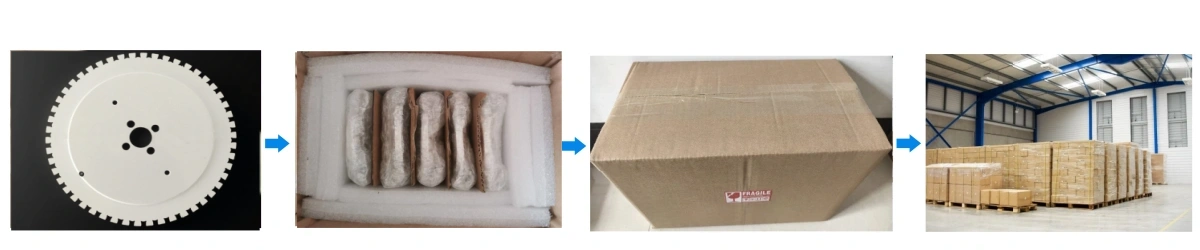

Alumina Rotary Indexing Table Packaging

Alumina Ceramic Rotary Indexing Table Applications

  • Automotive and Electrical Assembly Lines

    ✅Key Advantages

    1. Stable indexing under heat – Alumina ceramic rotary indexing tables retain flatness and dimensions during local heating or curing steps, helping maintain assembly tolerance over long production runs.

    2. Insulated test stations – The ceramic table interrupts stray currents and leakage paths when integrating high-voltage or continuity tests directly on the dial.

    3. Lower wear at high cycle counts – The hard ceramic surface reduces groove formation from fixtures and grippers, supporting consistent clamping forces over millions of cycles.

    ✅ Problem Solved

    On a high-volume automotive component line, unplanned downtime can cost around 2.3 million USD per hour in lost production and penalties, as reported for automotive manufacturers. Replacing a worn metal indexing table that requires frequent re-machining with an alumina ceramic rotary indexing table reduces surface wear and heat-related deformation. This lowers the risk of misindexing, fixture misalignment, and scrap events that trigger emergency stops. Over a year of operation, even preventing a single multi-hour downtime incident can offset the total cost of the ceramic dial and associated engineering work.

  • Laser Marking and Laser Processing Cells

    ✅Key Advantages

    1. Reduced thermal drift under laser heating – Alumina’s thermal properties limit dimensional change during repeated laser exposure, keeping focus and marking position more stable over time.

    2. Clean, non-contaminating surface – The ceramic table does not generate rust or oily films, which supports consistent laser interaction and cleaner marking results.

    3. Compatibility with multi-station rotary systems – The alumina plate integrates with mechanical or servo-driven rotary indexing machines used in compact laser marking cells.

    ✅ Problem Solved

    In a rotary laser marking machine, inconsistent mark depth and position often trace back to small changes in part stand-off and thermal movement of the table. A ceramic rotary indexing table with controlled flatness and lower thermal expansion reduces the stack-up of height and position variations. When indexed thousands of times per shift, this helps keep mark quality within specification, reducing rework and avoiding the need for frequent mechanical recalibration.

  • Precision Testing, Inspection and Metrology

    ✅  Key Advantages

    1. Controlled flatness for measurement accuracy – The alumina ceramic table can be ground to flatness bands aligned with typical rotary table requirements, supporting repeatable measurement paths.

    2. Electrically inert platform for sensitive probing – High dielectric strength and resistivity reduce electrical noise and leakage during contact or capacitive probing on rotary stages.

    3. Dimensional stability across temperature changes – The ceramic platform helps maintain alignment in inspection cells where ambient temperature and part temperature vary during measurement.

    ✅  Problem Solved

    A precision inspection station that uses a rotary stage for 3D scanning or optical inspection can experience measurement drift when the table top distorts with temperature or wears unevenly. By adopting an alumina ceramic rotary indexing table plate with tight flatness and runout specifications, the inspection system maintains more consistent reference geometry. Over many production lots, this reduces false rejects and limits the need for frequent system re-qualification.


Alumina Ceramic Rotary Indexing Table Usage Instructions

  • Installation

    1. Verify that the rotary indexer mounting face is clean and within its flatness tolerance before installing the alumina ceramic table.
    2. Use the specified bolt pattern and torque sequence to clamp the ceramic plate uniformly, avoiding local stress peaks at the fasteners.
    3. Align dowel pins and keyways carefully; never force the ceramic plate into misaligned pins.

  • Operation

    1. Avoid point loading by distributing clamping forces through properly sized fixtures and pads on the ceramic surface.
    2. Set indexing acceleration and deceleration so that inertial loads remain within the mechanical design limits of both the indexer and table.
    3. Monitor for abnormal vibration or noise in the indexing mechanism that could indicate imbalance or fixture interference.

  • Storage

    1. Store spare alumina ceramic rotary indexing table plates horizontally on flat padded surfaces.
    2. Keep plates in dry, clean indoor environments away from corrosive vapors and impact hazards.

  • Cleaning

    1. Clean the ceramic surface with lint-free wipes and neutral or mildly alkaline detergents; avoid aggressive acids or strong bases unless confirmed compatible with the alumina grade.
    2. Do not use metal scrapers or tools that can chip edges; use plastic or composite scrapers for adhesive removal.

  • Precautions and typical misuse points

    1. Overtightening clamps on small contact areas

    Issue: Concentrated stresses on sharp clamp jaws or small pads may produce local chipping.
    Mitigation: Use larger clamping pads with radiused edges and set torque limits on clamping devices.

    2. Mounting on a distorted or dirty interface

    Issue: Particles or distorted metal mounting faces can warp the ceramic plate and increase runout.
    Mitigation: Inspect and clean the metal hub, verify flatness with feeler gauges or dial indicators before assembly, and re-lap if necessary.Weiss World+1

    3. Impact damage during handling

    Issue: Dropping or striking the edge of the alumina table can cause chips or cracks that propagate under cyclic loading.
    Mitigation: Always handle large plates with two people or lifting fixtures, keep protective edge guards in place until final installation, and reject components with visible structural cracks.

FAQ – Alumina Ceramic Rotary Indexing Table

  1. Q: What is an alumina ceramic rotary indexing table used for?
    A: An alumina ceramic rotary indexing table is used to move parts between multiple stations in automation systems such as assembly lines, laser marking cells, and testing stations, while providing an electrically insulated and dimensionally stable working surface.
  2. Q: How does an alumina ceramic rotary indexing table differ from a standard metal indexing table?
    A: Compared with a metal table, an alumina ceramic rotary indexing table offers higher electrical insulation, better chemical resistance, and improved surface wear performance, which helps maintain indexing accuracy in high-temperature or corrosive processes.
  3. Q: What maximum temperature can an alumina ceramic rotary indexing table handle?
    A: High-purity alumina components are commonly specified for continuous service up to about 1,500°C in industrial applications, with some grades rated higher; the allowable temperature for a specific rotary indexing table depends on the complete system design and loading.
  4. Q: Is the alumina ceramic rotary indexing table compatible with cam indexers and servo rotary tables?
    A: Yes, alumina ceramic rotary indexing table plates can be machined with the required central bore, bolt pattern, and keyways to match mechanical cam indexers or servo-driven rotary tables used in assembly and packaging machines.
  5. Q: Can the alumina ceramic rotary indexing table support heavy fixtures and parts?
    A: High-purity alumina has high hardness and flexural strength, and rotary indexers are designed to carry significant loads; the allowable payload per station must be calculated from the ceramic plate dimensions, support conditions, and the indexer’s load rating.
  6. Q: Is an alumina ceramic rotary indexing table suitable for cleanroom or medical device environments?
    A: The ceramic surface is non-rusting and easy to clean, making it suitable for clean processes, but cleanroom or medical device use also depends on system-level design and regulatory requirements outside the table itself.
  7. Q: Can the alumina ceramic rotary indexing table be used with vacuum fixtures or suction cups?
    A: Yes, the ceramic surface can be machined with vacuum channels and ports, and its low porosity supports vacuum clamping where the design includes suitable seals and grooves.

Customer Reviews – Alumina Ceramic Rotary Indexing Table

  • ⭐️⭐️⭐️⭐️⭐️
    We replaced a stainless table with an alumina ceramic rotary indexing table on a compact assembly cell. The ceramic surface has kept its flatness and has reduced re-alignment work between shifts.
    -- Marco R., Automation Engineer, Linatec Systems (Italy)
  • ⭐️⭐️⭐️⭐️⭐️
    For a laser marking dial with multiple heating steps, the ADCERAX alumina ceramic rotary indexing table plate helped stabilize mark position and limited scrap during long runs.
    -- Sarah K., Project Manager, North Valley Automation (USA)
  • ⭐️⭐️⭐️⭐️⭐️
    The custom hole pattern and flatness tolerance we specified for the alumina ceramic rotary indexing table were achieved without extra iterations, which simplified our prototype schedule.
    -- Kenji S., Design Manager, KJ Laser Equipment Co. (Japan)
  • ⭐️⭐️⭐️⭐️⭐️
    Working directly with the ADCERAX factory on a ceramic rotary index table for a packaging machine allowed us to integrate insulated test stations on the same dial without changing the basic machine layout.
    -- Michael B., Operations Director, EuroPack Assembly Solutions (Germany)
customize size

Custom Alumina Ceramic Rotary Indexing Table

You can configure the alumina ceramic rotary indexing table plate to fit servo rotary tables, cam indexers, and custom automation dials for both new machines and retrofit projects.

  • Table size: Outer diameter, inner bore, and thickness based on your mechanical envelope

  • Mounting interface: Centre bore, bolt circle, keyways, torque-motor or reducer interface pattern

  • Indexing configuration: Number of stations and angular divisions (6, 8, 10, 12, 16, 24 positions)

  • Working station layout: PCD, hole size, threaded holes, counterbores, and dowel pin locations for fixtures

  • Functional structures: Radial slots, nesting pockets, locating steps, vacuum channels, vision openings

  • Precision requirements: Surface flatness, runout, parallelism, concentricity for rotary positioning accuracy

  • Edge and safety design: Chamfered or radiused edges to reduce chipping and handling risk

  • Material grade selection: Alumina purity options (95%, 99%, 99.5%, 99.7%) based on thermal, wear, and insulation needs

Related Products

ADCERAX - Your Trusted Advanced Ceramics Manufacturing Partner

Direct factory manufacturing with comprehensive ceramic materials expertise and global supply capabilities

Direct Factory Manufacturing

China-based ceramic materials production facility with state-of-the-art equipment

Engineering Team

Experienced professionals in advanced ceramics applications and custom design

Quality Control

Strict quality control standards for technical ceramics manufacturing and quality management

Global Supply Chain

Serving customers worldwide with technical ceramics and rapid response

24/7 Technical Support

Round-the-clock support for ceramic components inquiries and technical assistance

500+ Satisfied Customers

Trusted by global customers for advanced ceramic materials and precision components

Get in touch with us

Our team will be happy to respond to you in less than 24 hours.

Adcerax's factory

Quick Quotation

*Our team will answer your inquiries within 24 hours.

*Your information will be kept strictly confidential.

Ready to Solve Your Engineering Challenge?

Partner with ADCERAX for reliable, high-performance advanced ceramic solutions. Our engineers are ready to discuss your project.

E-mail

info@adcerax.com

Phone

+(86) 0731-74427743 | WhatsApp: +(86) 19311583352

Response Time

Within 24 hours

Quick Quote

The more details you provide, the faster we can quote.

*We respond within 24 hours. All inquiries are confidential.

Download Catalog

Get Your Custom Sulution

The more details you provide, the faster we can respond.

customize size

*We respond within 24 hours. All inquiries are confidential.

Download Catalog