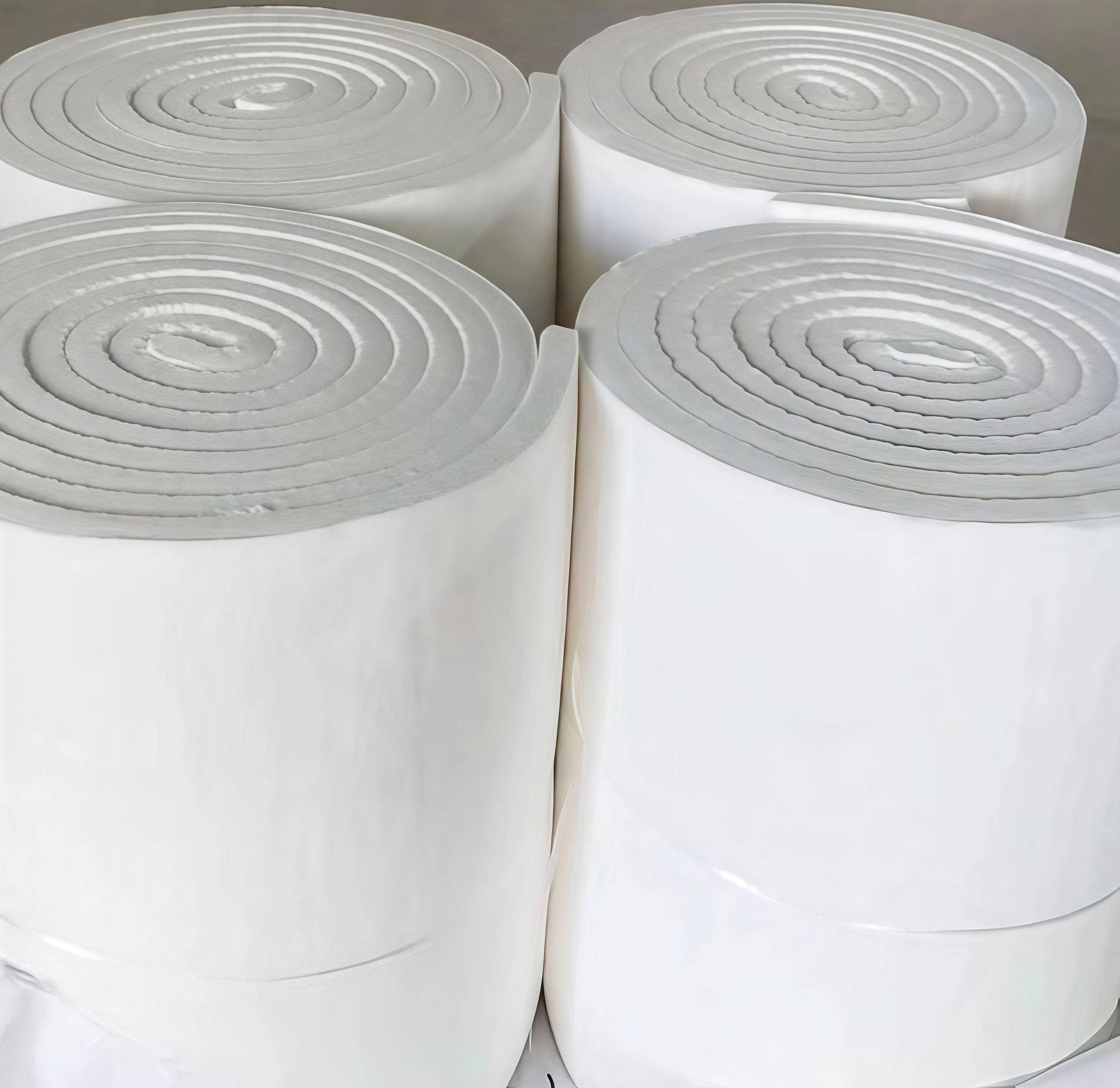
Alumina Fiber Insulation Blanket for Aluminum Melting and Holding Furnaces

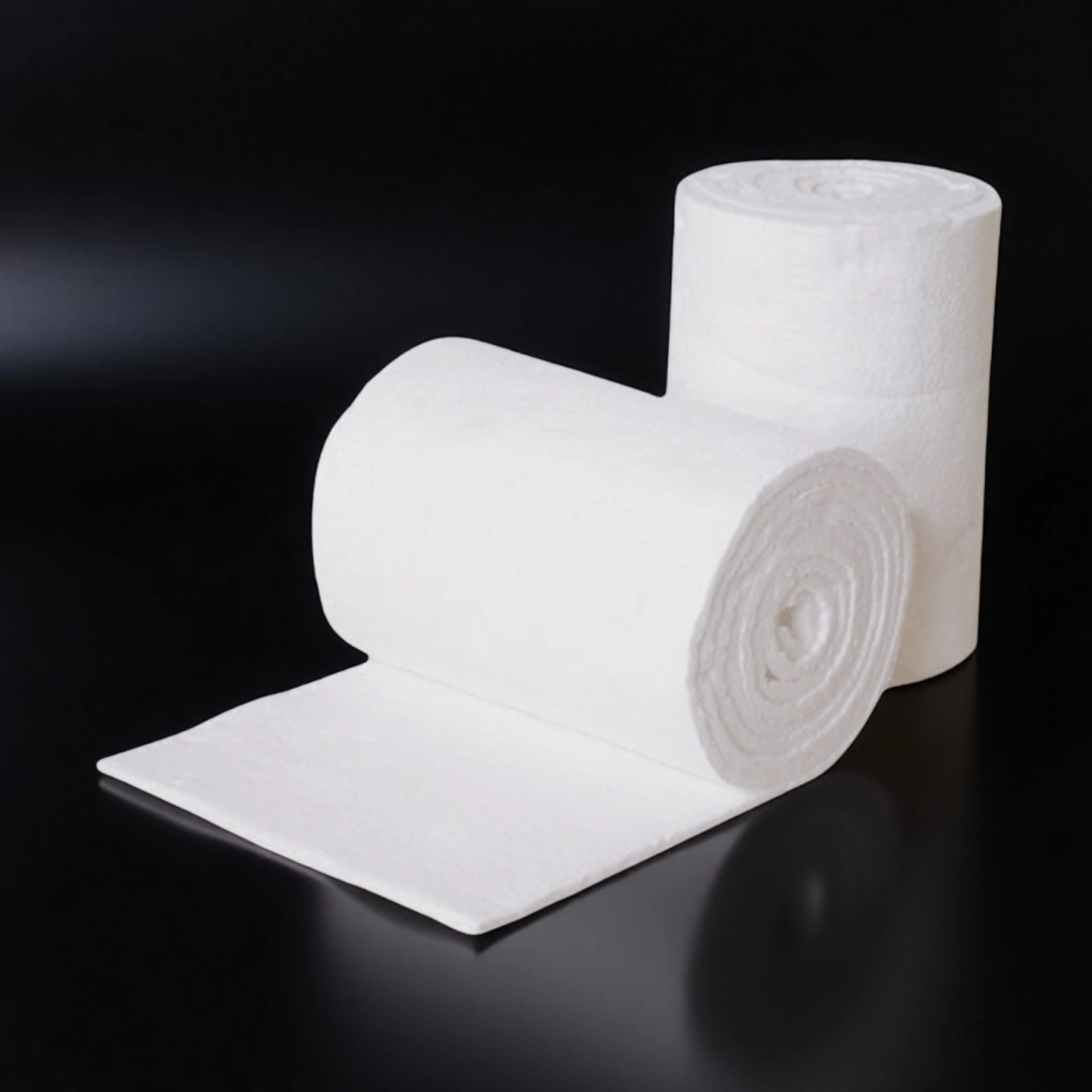
Alumina fiber blanket rolls are available as continuous coils (for example 3600–14400 mm per roll) or converted into pre-cut mats, strips, and modules according to project drawings. Both 1260°C standard alumina fiber blanket and higher classification grades can be supplied with customized density, thickness combinations, and cut patterns to match OEM lining layouts and retrofit projects.

Catalog No. AT-AO-XW2001
Material Al2O3+Sio2+other
Density 96–128 kg/m³
Thermal Conductivity  ≤0.15 W/m·K @1000°C
Bulk density 64/96/128/160 kg/m³
24H Standard Dispatch
Small Batch Support OEM
Factory Direct
Expert Engineering Support

Alumina Fiber Blanket is a flexible, needle-punched alumina–silicate ceramic fiber insulation material designed for continuous high-temperature applications. It is manufactured by converting alumina-rich ceramic fibers into layered mats and mechanically interlocking them through a needle-punching process, creating a resilient blanket with low thermal conductivity and low heat storage.


Alumina Fiber Blanket Benefits

  • Stable High-Temperature Performance
    Alumina fiber blanket is classified for 1260–1430°C with controlled linear shrinkage (often ≤3% at rated temperature for 128 kg/m³), which helps maintain lining thickness and mechanical integrity during long-term operation.

  • Low Thermal Conductivity and Low Heat Storage
    For a 128 kg/m³ alumina fiber blanket, thermal conductivity at 800°C typically ranges around 0.15–0.18 W/(m·K), and the low heat capacity of the fiber structure supports fast heat-up and cool-down, reducing fuel consumption and cycle time compared with brick linings.

  • Lightweight and Flexible for Complex Geometries
    The low-density and flexible mat form allow the blanket to conform to furnace curves, doors, expansion joints, and non-standard geometries, which simplifies installation and reduces steel structure loads compared with conventional refractory bricks or castables.

  • Needle-Punched Structure with Handling Strength
    Double-sided needle punching interlocks the fibers through the thickness and provides tensile strength suitable for hanging systems, layered linings, and removable insulation pads without excessive fiber pull-out during installation.

  • Compatible with Multilayer Refractory Systems
    Alumina fiber blanket can be used as a hot-face or backup insulation behind bricks, modules, or boards to form multi-layer systems with optimized heat loss control and lower shell temperatures, supporting modern energy-efficiency standards in industrial plants.


Alumina Fiber Blanket Properties

Chemical Composition
Item 1000°C Fiber Blanket 1260 °C Fiber Blanket 1425°C Fiber Blanket 1500°C Fiber Blanket 1600°C Fiber Blanket
AI2O3 42-44% 45-47% 34-36% 41-43% 72%
SiO2 56-58% 53-55% 49-51% 54-56% 28%
ZrO2 - - 14-17% - -
Cr2O3 - - - 2-3% -
Physical Properties
Item  1000  1260  1425  1500  1600
Classification Temperature (°C) 1000 1260 1425 1500 1600
Melting Point (°C) 1700 1760 1700 1760 -
Color White White White Light Green White
Average Fiber Diameter  (mm) 2.6 2.6 2.8 2.65 3.1
Fiber Length (mm) ~200 ~250 ~250 ~150 ~100
Bulk Density(kg/m3) 2600 2600 2800 2650 3100
Thermal Conductivity (W/m·K) 400℃ 0.15 0.13 - - -
Thermal Conductivity (W/m·K) 600℃ 0.22 0.19 0.13 0.13 0.06
Thermal Conductivity (W/m·K) 800℃ 0.31 0.25 0.2 0.19 0.1
Thermal Conductivity (W/m·K) 1000℃ - - 0.29 0.26 0.14


Alumina Fiber Blanket Specifications

Alumina Fiber Blanket
Item no. Working Temp.(℃) Density(kg/m3) Length(mm) Width(mm) Thickness(mm)
AT-GSL-T1001 1260 96  128  160  7200 610 6
AT-GSL-T1002 96  128  160  15000 610 10
AT-GSL-T1003 96  128  160  7200 610 20
AT-GSL-T1004 96  128  160  7200 610 25
AT-GSL-T1005 96  128  160  5000 610 30
AT-GSL-T1006 96  128  160  3600 610 50
AT-GSL-T1007 1400 96  128  160  7200 610 6
AT-GSL-T1008 96  128  160  15000 610 10
AT-GSL-T1009 96  128  160  7200 610 20
AT-GSL-T1010 96  128  160  7200 610 25
AT-GSL-T1011 96  128  160  5000 610 30
AT-GSL-T1012 96  128  160  3600 610 50


Alumina Ceramic Fiber Blanket Packaging

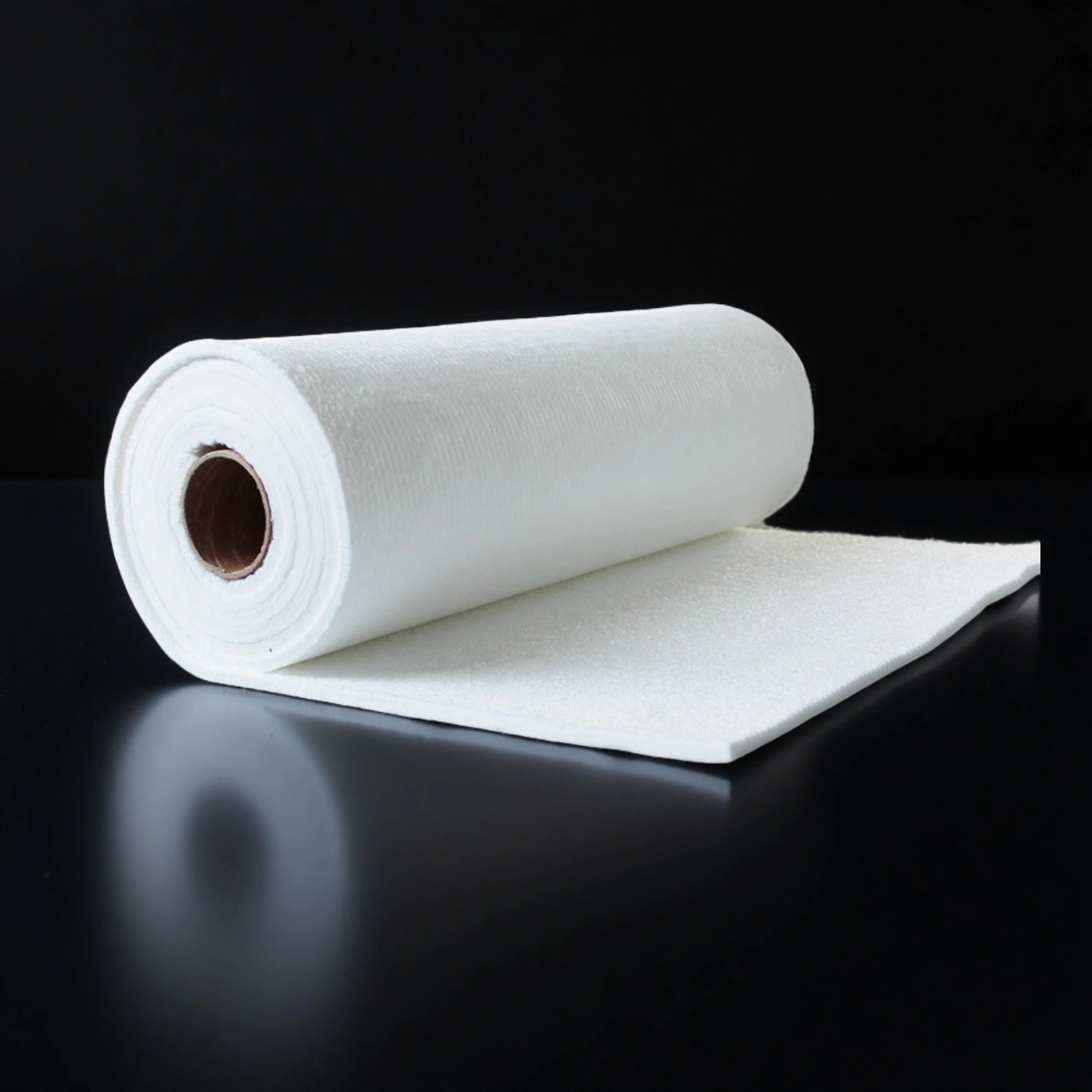
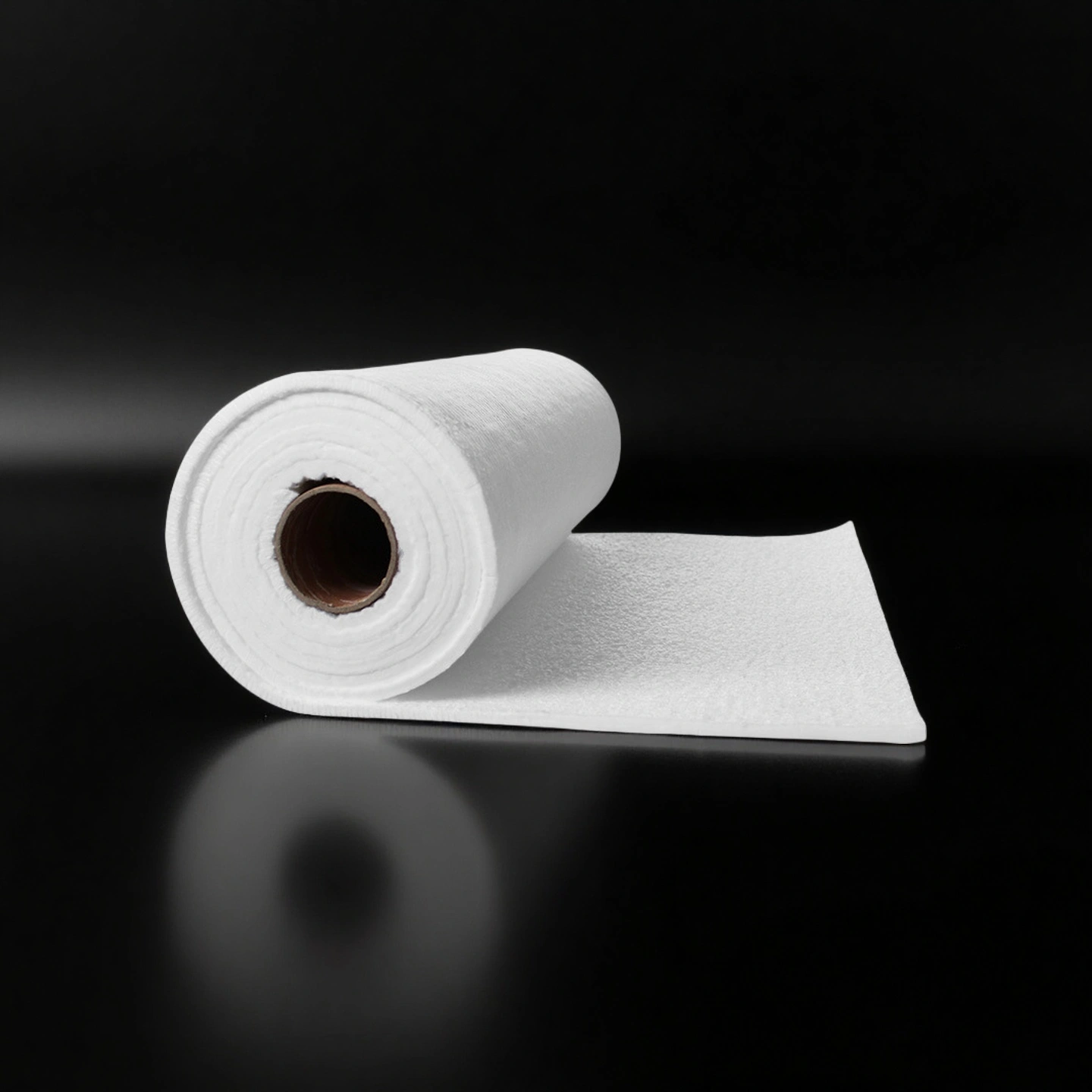
  • Each alumina fiber blanket roll is wrapped in plastic film to limit moisture pickup and fiber loss during handling.
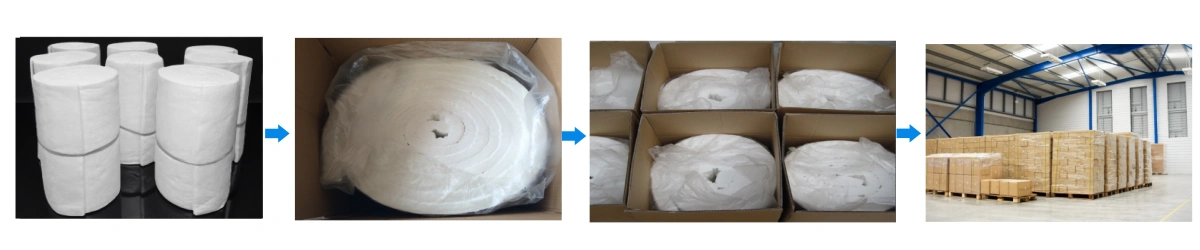

Alumina Ceramic Fiber Blanket Packaging

Al2O3 Ceramic Fiber Blanket Applications

  • Heat Treatment and General Industrial Furnaces

    ✅Key Advantages

    1. Improved Shell Temperature Control
    Alumina fiber blanket linings can reduce external shell temperatures by 40–60°C compared with brick-only linings at similar operating conditions, helping operators meet safe touch and workplace regulations.

    2. Shorter Heat-Up and Cool-Down Cycles
    Low thermal mass reduces stored heat, which can shorten heat-up and cool-down times by 15–30% in batch furnaces, supporting higher throughput without structural changes.

    3. Lower Fuel Consumption in Continuous Operation
    When used as a backup or primary lining, alumina fiber blanket can reduce steady-state heat losses through the furnace shell, contributing to fuel savings that can reach several percent of total energy input in continuous lines.

    ✅ Problem Solved

    A heat treatment furnace OEM retrofitted a batch furnace from a lightweight brick lining to a combined alumina fiber blanket and module system. At a working temperature of around 950°C, shell temperatures were reduced by approximately 50°C and heat-up time decreased by roughly 20%. Based on measured gas consumption and production cycles, the user reported an annual fuel saving in the range of several tens of thousands of cubic meters of natural gas, with a payback period of around 1–2 years including installation downtime.

  • Power Boilers and Waste Incineration Units

    ✅Key Advantages

    1. Weight Reduction for Boiler Casings and Ducts
    Boiler and incinerator casings insulated with alumina fiber blanket can be lighter than those using conventional refractory bricks, which eases structural design on large ductwork and support frames.

    2. Simplified Field Installation and Maintenance
    Flexible blanket layers are easier to cut and fit on large boiler walls and outlet ducts than rigid boards, which can reduce installation time and allow localized replacements during outages.

    3. Support for Emission and Efficiency Targets
    By limiting heat loss and improving thermal efficiency, alumina fiber blanket helps power and waste-to-energy operators lower fuel usage and contributes indirectly to reduced CO₂ emissions per unit of energy output.

    ✅ Problem Solved

    In a retrofit project on a waste incineration boiler outlet duct, an engineering company replaced aging insulation with a multi-layer alumina fiber blanket system. Thermal calculations and subsequent temperature measurements indicated a reduction in external surface temperature by more than 30°C and a measurable improvement in overall boiler efficiency. Maintenance crews reported easier access and shorter repair time during the next scheduled shutdown due to simpler removal and re-installation of blanket layers.

  • Non-Ferrous Metallurgy and Aluminum Casting

    ✅Key Advantages

    1. Reduced Heat Loss in Troughs and Launders
    Alumina fiber blanket can be applied under refractory linings of troughs and launders to reduce heat flow into the steel shell, which helps maintain aluminum temperature during transfer and reduces reheating demand.

    2. Fast Repair and Patch Insulation
    In foundries and aluminum plants, maintenance teams can quickly apply blanket patches to doors, lids, and access openings, limiting accidental heat losses during short stoppages.

    3. Better Temperature Stability for Holding Furnaces
    With a lightweight blanket backup layer, holding furnaces respond more quickly to control adjustments and show less temperature variation around the metal bath, improving metallurgical consistency.

    ✅ Problem Solved

    A non-ferrous foundry added alumina fiber blanket behind existing refractory linings in an aluminum holding furnace. Measurements over several months showed smaller temperature swings at metal level and reduced burner on-time. Estimated energy savings were in the low single-digit percentage range of total fuel consumption, while lining repairs during maintenance outages became easier due to the flexible blanket layer.


Alumina Ceramic Fiber Blanket Usage Instructions

  • Installation

    1. Verify design drawings for layering, density, and thickness before installation.
    2. Use suitable fixing systems such as stainless steel anchors, studs, and washers that match operating temperature and furnace structure.
    3. Install blanket layers in a staggered joint pattern, paying attention to overlaps and compression so that there are no significant gaps.
    4. For vertical walls or ceilings, ensure adequate mechanical support with anchors and lacing where necessary.
    5. Avoid over-compression, which can increase thermal conductivity and reduce insulation performance.

  • Operation and Use

    1. Gradually heat new linings according to a defined startup curve to allow any residual moisture to escape and to stabilize the fiber structure.
    2. Monitor shell temperatures during the first commissioning runs and compare them with design values to confirm insulation performance.
    3. Avoid repeated mechanical impact on exposed blanket areas such as doors and inspection hatches.

  • Storage

    1. Store alumina fiber blanket in a dry, covered warehouse away from rain, standing water, and direct sunlight.
    2. Keep rolls in their original packaging until installation to minimize contamination and fiber loss.
    3. Do not place heavy loads directly on top of blanket rolls that could deform the fibers.

  • Cleaning and Handling

    1. During cutting and installation, use appropriate personal protective equipment such as masks, gloves, and protective clothing as recommended in the material safety data sheet.
    2. Keep work areas ventilated and remove loose offcuts and dust by vacuum rather than dry sweeping.
    3. Avoid oil, grease, or other contaminants on blanket surfaces that may degrade at high temperatures.

  • Typical Misuse Points and How to Address Them

    1. Insufficient Fastening on Overhead Surfaces

    Problem: Blanket installed on ceilings or vertical walls with too few anchors can sag over time.
    Solution: Follow design guidelines for anchor spacing and pattern; add extra fixings in high-vibration or frequent opening areas.

    2. Over-Compression of Layers

    Problem: Excessive compression to “save space” increases thermal conductivity and can reduce insulation performance.
    Solution: Keep compression within recommended limits and use correct thickness and density instead of squeezing fewer layers.

    3. No Controlled Heat-Up During First Firing

    Problem: Rapid heating can lead to localized stresses, shrinkage, or cracking of other refractory layers.
    Solution: Apply a controlled initial heat-up schedule so that moisture and residual binders in the whole refractory system are removed gradually.

Alumina Fiber Blanket FAQ

  1. Q: How is alumina fiber blanket different from standard ceramic fiber blanket?
    A: Alumina fiber blanket is a needle-punched alumina–silicate ceramic fiber blanket designed for higher classification temperatures and lower shrinkage than many general ceramic fiber blankets, making it suitable for continuous high-temperature industrial furnace duty.
  2. Q: What temperature range can an alumina fiber blanket handle in continuous operation?
    A: An alumina fiber blanket is normally classified at 1260–1430°C, but typical continuous operating temperatures are lower (for example around 1000–1200°C) depending on the selected grade, design safety margin, and service conditions.
  3. Q: Which density should I choose for my alumina fiber blanket lining?
    A: Lower density grades such as 64–96 kg/m³ are often used as backup insulation where weight and cost are key, while 128–160 kg/m³ alumina fiber blankets are selected for hot-face or single-layer linings that require higher mechanical strength and lower shrinkage.
  4. Q: Can alumina fiber blanket be used as the primary hot-face lining?
    A: Yes, alumina fiber blanket can be used as a primary hot-face lining in many medium and high-temperature furnaces when combined with suitable anchors and a correct multi-layer design; however, in abrasive or high-gas-velocity zones it is frequently used as a backup layer behind modules, boards, or castables.
  5. Q: Is alumina fiber blanket suitable for direct contact with molten metal?
    A: Alumina fiber blanket is generally used behind refractory linings or as external insulation and is not intended for direct contact with molten metal; facing layers and higher-density refractory materials are normally required in metal contact areas.
  6. Q: Can I cut alumina fiber blanket on site, and which tools should be used?
    A: Yes, alumina fiber blanket can be cut on site using sharp knives or serrated blades; cutting surfaces should be protected and offcuts collected to reduce dust and keep consistent dimensions.

Alumina Ceramic Fiber Blankets Reviews

  • ⭐️⭐️⭐️⭐️⭐️
    We used alumina fiber blankets from ADCERAX in a series of heat treatment furnace upgrades. The blanket density and thickness matched our drawings, and shell temperatures were aligned with the calculated values, which made commissioning straightforward.
    -- Mark H., Project Engineer – Furnace Systems Europe GmbH
  • ⭐️⭐️⭐️⭐️⭐️
    For our boiler and duct insulation projects we purchase alumina fiber blanket rolls in mixed density grades. ADCERAX as a factory supplier has been able to combine standard rolls with custom-cut pieces in one shipment, which helps us reduce site cutting time.
    -- Laura P., Procurement Manager – Thermal Equipment Solutions Inc.
  • ⭐️⭐️⭐️⭐️⭐️
    We added alumina fiber blanket as backup insulation under existing trough linings. The installation was simple and the blanket layers have held their shape during several maintenance cycles, supporting more stable metal temperature during casting.
    -- Kenji S., Maintenance Supervisor – Aluminum Casting Plant, Japan
  • ⭐️⭐️⭐️⭐️⭐️
    Our team uses alumina fiber blanket for furnace doors, burner blocks and patch insulation. The material arrives well packed, cuts cleanly on site, and the range of densities allows us to adapt to different projects without redesigning the whole lining.
    -- Diego R., Owner – Refractory Service Contractor, Mexico
customize size

Custom Alumina Ceramic Fiber Blanket

ADCERAX supports project-specific alumina fiber blanket configurations so that OEMs and contractors can convert thermal designs directly into supply specifications.

1. Dimensions and Cutting

  • Roll width: typical 610 mm or 1220 mm, custom widths on request
  • Roll length: for example 3600 / 7200 / 14400 mm per roll or project-specific lengths
  • Pre-cut formats: flat sheets, strips, door seals, expansion joint pieces, module feedstock

2. Thickness and Density

  • Thickness: 6/10/12.5/20/25/38/50 mm and intermediate thicknesses if required
  • Bulk density: 64 / 96 / 128 / 160 kg/m³ or other defined density ranges within the production window

3. Temperature Grade and Composition

  • 1260°C classification alumina–silicate blanket for general industrial furnaces
  • Higher-alumina or zirconia-containing grades for 1350–1430°C classification where higher service temperature and lower shrinkage are needed

4. Surface and Facing Options

  • One-side or double-side light stitch patterns
  • Optional foil, cloth, or mesh facings (where design requires a facing layer)

5. Supply Form

  • Loose rolls for on-site installation
  • Folded or layered blocks prepared as module cores
  • Wrapped elements for pipes, flanges, or removable insulation covers

Related Products

ADCERAX - Your Trusted Advanced Ceramics Manufacturing Partner

Direct factory manufacturing with comprehensive ceramic materials expertise and global supply capabilities

Direct Factory Manufacturing

China-based ceramic materials production facility with state-of-the-art equipment

Engineering Team

Experienced professionals in advanced ceramics applications and custom design

Quality Control

Strict quality control standards for technical ceramics manufacturing and quality management

Global Supply Chain

Serving customers worldwide with technical ceramics and rapid response

24/7 Technical Support

Round-the-clock support for ceramic components inquiries and technical assistance

500+ Satisfied Customers

Trusted by global customers for advanced ceramic materials and precision components

Get in touch with us

Our team will be happy to respond to you in less than 24 hours.

Adcerax's factory

Quick Quotation

*Our team will answer your inquiries within 24 hours.

*Your information will be kept strictly confidential.

Ready to Solve Your Engineering Challenge?

Partner with ADCERAX for reliable, high-performance advanced ceramic solutions. Our engineers are ready to discuss your project.

E-mail

info@adcerax.com

Phone

+(86) 0731-74427743 | WhatsApp: +(86) 19311583352

Response Time

Within 24 hours

Quick Quote

The more details you provide, the faster we can quote.

*We respond within 24 hours. All inquiries are confidential.

Download Catalog

Get Your Custom Sulution

The more details you provide, the faster we can respond.

customize size

*We respond within 24 hours. All inquiries are confidential.

Download Catalog