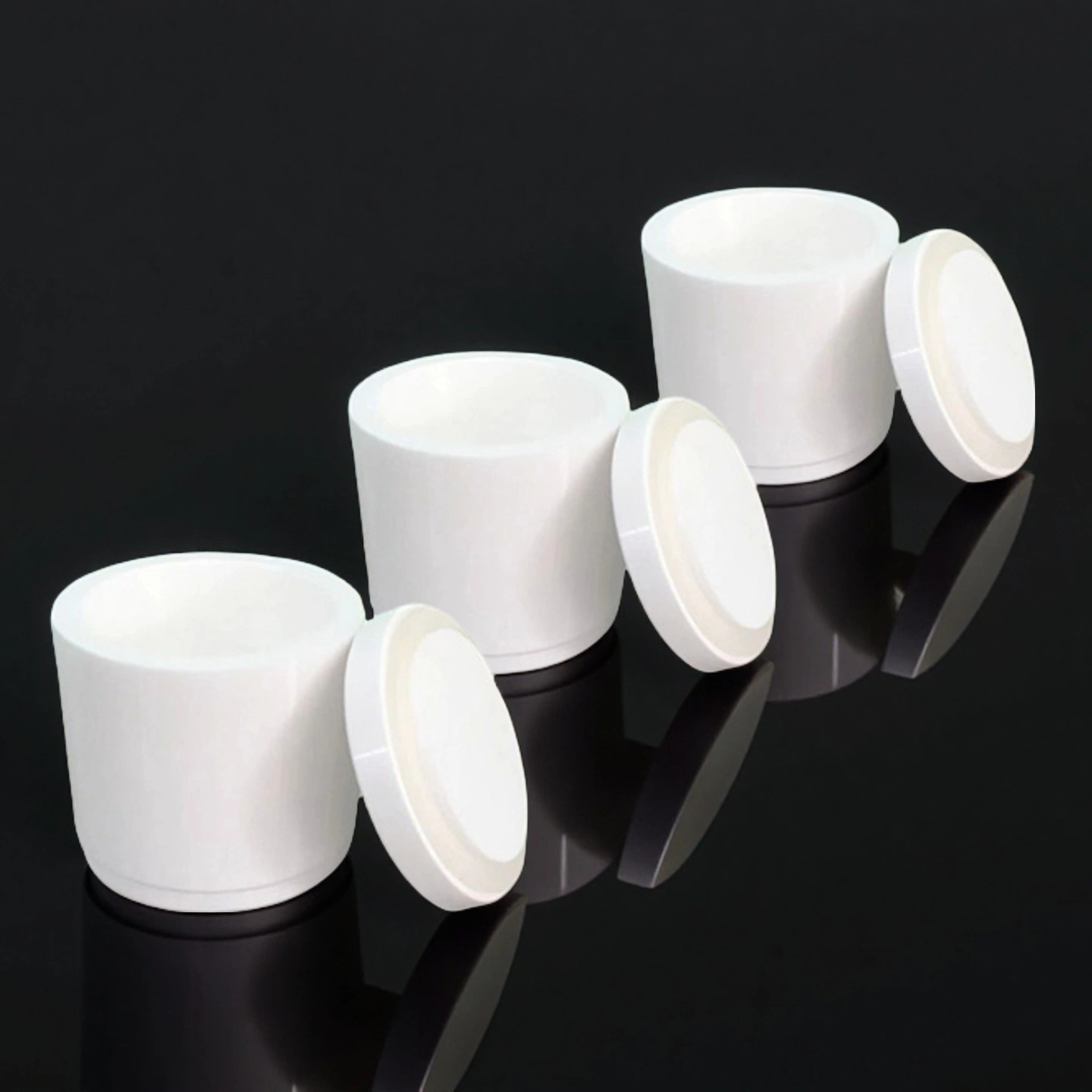
High-Purity Alumina Ceramic Mill Jar – Cylindrical Jars for Planetary and Roller Ball Mills

Alumina grinding jars from ADCERAX are available in standard capacities from about 50 ml up to 5 L, with matching lids and recommended media sizes, and can also be produced according to your drawings to match non-standard planetary or jar mill interfaces while keeping the same high-purity alumina grinding surface.

Catalog No. AT-J-01
Material ≥ 96% Al2O3
Max Working Temp 1400°C
Dimensional Precision ±0.2mm
Max service temperature 1,500–1,700 °C in air
(non-thermal shock)
24H Standard Dispatch
Small Batch Support OEM
Factory Direct
Expert Engineering Support

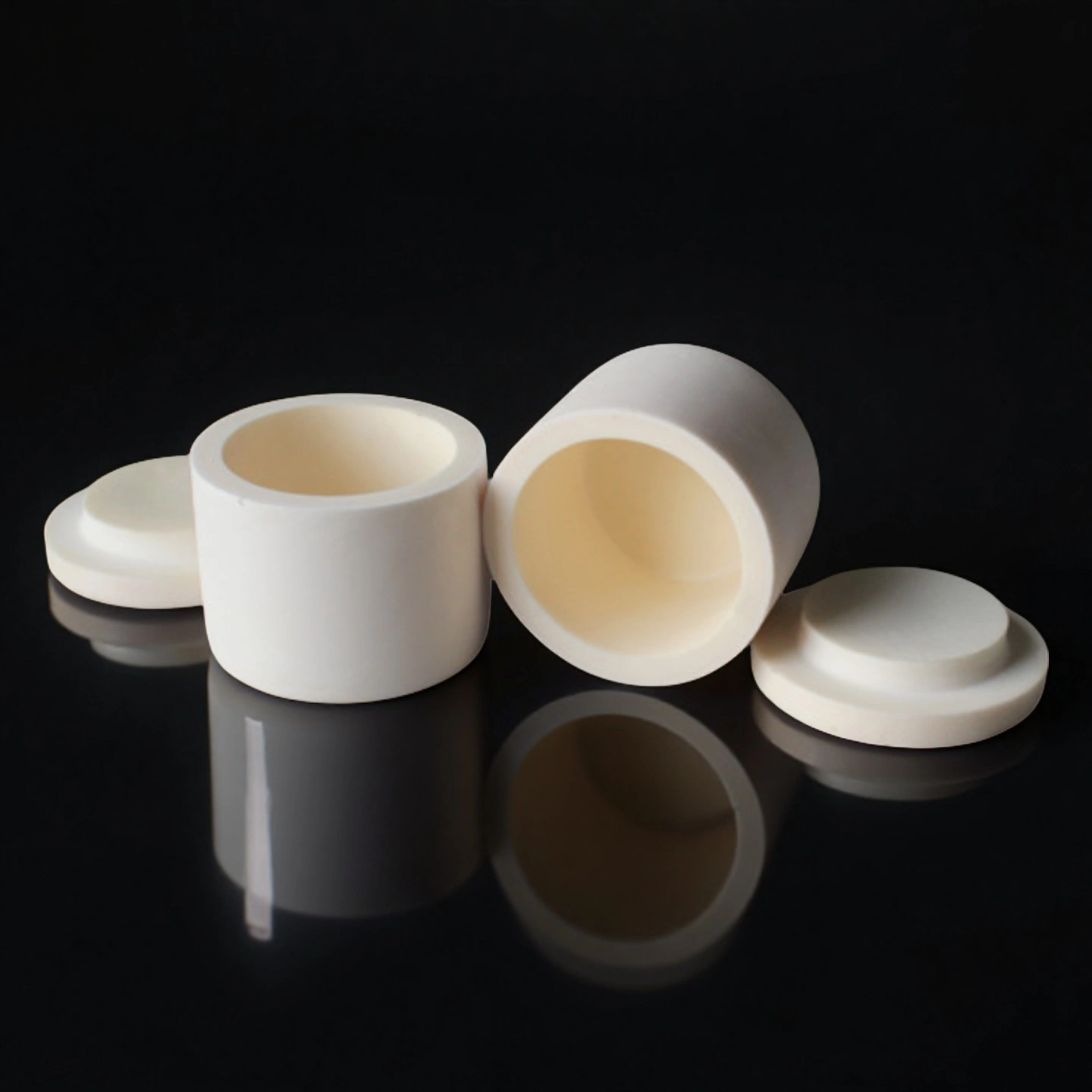
An alumina grinding jar is a high-density Al₂O₃ ceramic container used in planetary, roller and laboratory ball mills for grinding hard, abrasive or contamination-sensitive powders. It provides a chemically inert, wear-resistant milling chamber that minimizes metallic impurities while delivering stable performance in both dry and wet grinding applications.

Alumina Grinding Jar Benefits

  • Low contamination grinding chamber
    The alumina grinding jar provides an Al₂O₃ interface that avoids iron or nickel pickup from steel jars, suitable for high-purity powders and battery materials.

  • High wear resistance and long jar life
    High-density alumina with Vickers hardness around 18–20 GPa resists abrasion under repeated high-speed impacts from grinding media.

  • Stable performance at elevated temperatures
    Alumina ceramics maintain strength and chemical stability above 1,500 °C, so the jar remains dimensionally stable under frictional heating during intensive milling.

  • Acid and alkali-resistant inner surface
    The jar can be used with many aqueous slurries and common process chemicals without significant corrosion or leaching.

  • Compatible with common grinding media configurations
    The jar geometry supports standard alumina or zirconia ball size combinations (for example 3–20 mm) used in planetary mills for fine and ultra-fine grinding.


Alumina Ceramic Grinding Jar Properties

Property Unit 99.5% Al₂O₃ 99.6% Al₂O₃ 99.7% Al₂O₃ 99.8% Al₂O₃ 99.9% Al₂O₃ 99.99% Al₂O₃
Alumina content % 99.5 99.6 99.7 99.8 99.9 99.99
Density g/cm³ 3.89 3.91 3.92 3.93 3.94 3.98
Open porosity % 0
Color Ivory Ivory Ivory Ivory Ivory Ivory
Water absorption % 0 0 0 0 0
Young’s modulus (Elastic modulus) GPa 375 356 357 358 359 362
Shear modulus GPa 152
Bulk modulus GPa 228
Poisson’s ratio 0.22
Compressive strength MPa 2600 2552 2554 2556 2558 2570
Flexural strength MPa 379 312 313 314 315 320
Fracture toughness MPa·m¹ᐟ² 4
Hardness GPa 14.1 (≈1440 kg/mm²) 23 24 25 26 30
Thermal conductivity W/m·K 35 32–37 33–38 34–39 35–40 36–42
Thermal shock resistance ΔT °C 222 223 224 225 228
Maximum use temperature (no load) °C ≤1750 1755 1760 1765 1770 1800
Coefficient of thermal expansion 10⁻⁶/°C 8.4
Specific heat J/kg·K 880
Volume resistivity Ω·cm >1×10¹⁴ >1×10¹⁴ >1×10¹⁴ >1×10¹⁴ >1×10¹⁴ >1×10¹⁴
Dielectric constant (relative permittivity) 9.8 9.83 9.84 9.85 9.86 9.92
Dielectric strength kV/mm 16.9 23.2 23.4 23.6 23.8 24
Dissipation factor (loss factor @ 1 kHz) 0.0002


Alumina Grinding Jar Specifications

Recommended quantity of grinding balls (for reference)

Alumina Grinding Mill Capacity 100ML 250ML 500ML 1000ML
Grinding ball Weight 66g 165g 330g 660g
Φ5mm grinding ball(0.25g/pcs) 106pcs 300pcs    
Φ10mm grinding ball(1.99g/pcs) 20pcs 76pcs 50pcs 100pcs
Φ15mm grinding ball(6.72g/pcs)   4pcs 30pcs 59pcs
Φ20mm grinding ball(15.92g/pcs)     3pcs 5pcs


Type 1: Vertical (Cylindrical) Alumina Grinding Jar
Precision milled alumina jar with bottom view

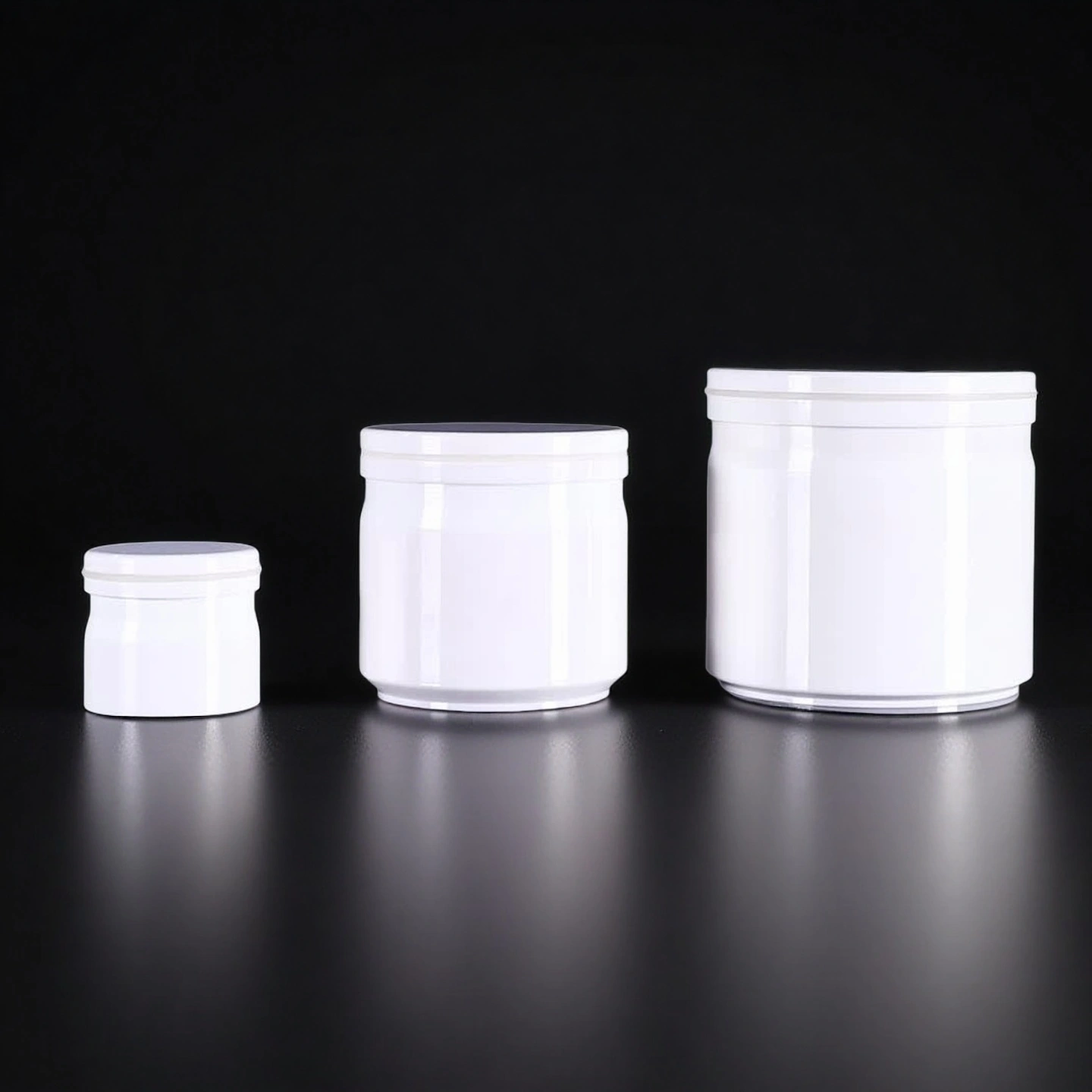
Cylindrical Alumina Grinding Jar
Item No. Capacity Outer Diameter(mm) Inner Diameter(mm) Height Without Lid (mm) Height of Lid(mm) Total Height (mm) Thickness ((mm)
AT-J-01 50ml 55 38 60 8 67 8
AT-J-02 100ml 65 50 66 8 45 8
AT-J-03 250ml 92 74 78 9 88 8
AT-J-04 500ml 100 84 108 9 118 9
AT-J-05 1L 128 108 117 10 150 10
AT-J-06 1.5L 132 112 158 10 175 10
AT-J-07 2.0L 158 138 151 12 162 10
AT-J-08 2.5L 170 150 160 12 170 10
AT-J-09 3.0L 158 138 185 12 220 10


Type 2: Horizontal Alumina Grinding Jar
alumina grinding mill

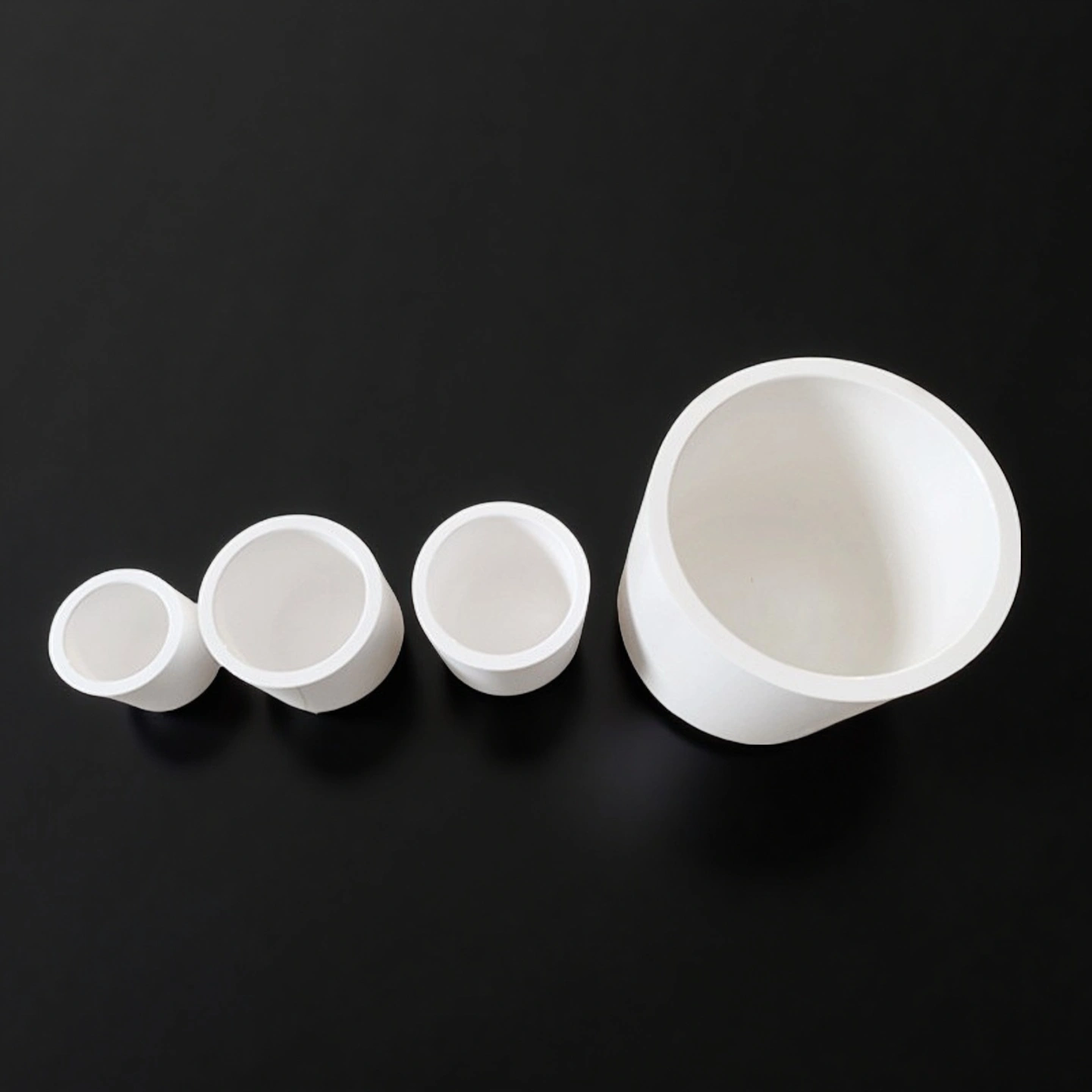
Horizontal Alumina Grinding Jar
Item NO. Capacity Outer Diameter (mm) Inner Diameter(mm)
AT-J-10 50ml 64 59
AT-J-11 100ml 69 66
AT-J-12 250ml 90 78
AT-J-13 500ml 106 99
AT-J-14 1L 133 126
AT-J-15 1.5L 172mm 152mm
AT-J-16 2.0L 210mm 168mm
AT-J-17 3.0L 265mm 200mm


Type 3: Alumina Ball Mill Jar for Petanque Grinder
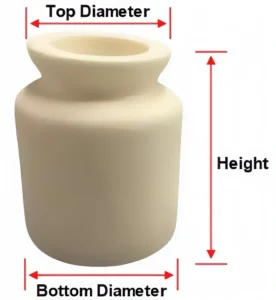
size of alumina ball jar

Alumina Ball Mill Jar for Petanque Grinder
Item No. Top Diameter (mm) Bottom Diameter (mm) Height(mm) Height+Lid (mm)
AT-AM-01 124 153 140 190
AT-AM-02 148 180 175 235


Type 4: Alumina Grinding Mill with Lid
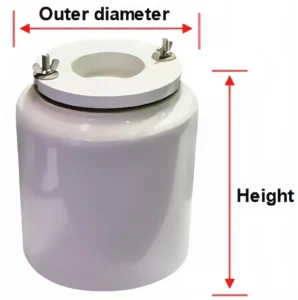
size of alumina ball jar2

Alumina Grinding Mill with Lid
Item No. Capacity     (L) Outer Diameter*Height  (mm) Weight (KG)
AT-AM-03 30-40 400*600 20-22
AT-AM-04 18-18.5 300*400 18
AT-AM-05 15-16 300*330 14-15
AT-AM-06 10-14 270*320 11
AT-AM-07 5-6.5 220*260 9
AT-AM-08 3-5 180*250 6
AT-AM-09 1.5 150*180 5.4
AT-AM-10 1 130*170 5


Alumina Grinding Jar Packaging

  • Each alumina grinding jar and lid is wrapped with cushioning material to protect the rim and sealing surfaces.
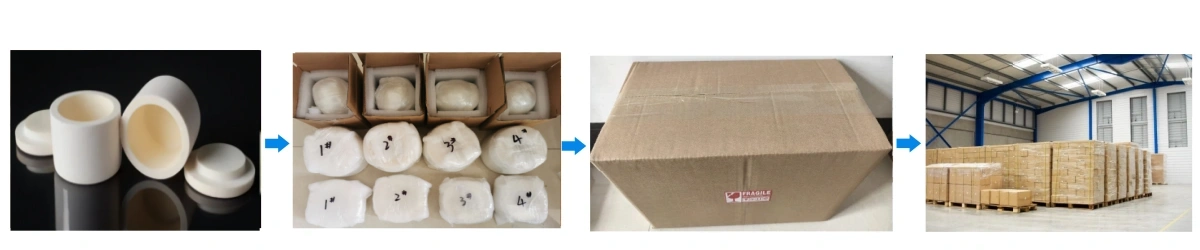

Alumina Ceramic Grinding Jar

Al2O3 Grinding Jar Applications

  • Battery Material R&D and Pilot Lines – Low-Contamination Powder Processing

    ✅Key Advantages

    1. Reduced metallic impurity for cathode and anode powders
    Alumina grinding jars provide an oxide-only contact surface, which helps limit iron or chromium pickup compared with steel jars when milling high-nickel, LFP, or solid-state electrolyte powders.

    2. Stable jar geometry under repeated high-energy cycles
    High-density alumina maintains hardness and strength under repeated impacts at planetary mill speeds, supporting consistent particle size distribution from run to run.

    3. Suitable for both dry and slurry milling
    The ceramic jar and lid design works with typical wet and dry battery precursor processes, including solvent-based slurries, without significant chemical attack.

    ✅ Problem Solved

    A battery R&D lab running small planetary mills often finds that stainless steel jars introduce trace iron into high-nickel cathode powders, affecting electrochemical test consistency. By switching to alumina grinding jars and matching alumina media, the lab can run repeated 100–300 g batches of powder without additional metallic sources from the jar wall, reducing the risk that milling hardware will influence cycle life or impedance results and allowing the team to focus on formulation variables instead of hardware-induced variation.

  • University and Research Institute Materials Laboratories – Versatile Teaching and Research Jars

    ✅Key Advantages

    1. One jar type for a wide range of inorganic powders
    Alumina grinding jars cover ceramics, oxides, and many minerals, so teaching labs can standardize on one jar material for multiple courses and projects.

    2. Robust construction for repeated student use
    The combination of high hardness and flexural strength in 95–99.8% alumina allows the jar to withstand frequent loading and unloading during semester-long courses.

    3. Compatible with different mill brands and models
    Through custom dimensions, one alumina grinding jar series can be adapted to different planetary or jar mills that coexist in a university environment.

    ✅ Problem Solved

    Teaching labs often run multiple small mills in parallel. When jars from different suppliers are mixed, lid fit, clamping and volume markings can differ, leading to inconsistent experiments between groups. Standardizing on a set of alumina grinding jars with harmonized capacities and wall thickness helps the lab run parallel grinding tasks with the same filling level and media loading, improving the repeatability of lab exercises and student projects.

  • Advanced Ceramics and Powder Metallurgy R&D – Wear-Resistant Milling Vessel

    ✅Key Advantages

    1. Suitable for hard, abrasive ceramic and metal powders
    With Vickers hardness on the order of 18–20 GPa, alumina jars can handle hard carbides, oxides and ceramic mixtures without rapid wall wear.

    2. High compressive and flexural strength
    High-purity alumina components show compressive strengths around the thousands of MPa and flexural strengths in the hundreds of MPa, supporting high-energy grinding conditions.

    3. Temperature margin for processes with frictional heating
    Maximum service temperatures of >1,500 °C give a wide safety margin compared with typical milling temperatures that only rise moderately above ambient.

    ✅ Problem Solved

    A ceramic R&D group using steel jars for initial trials on hard oxide blends often sees rapid jar wall wear and surface roughening. By changing to alumina grinding jars, the group maintains more stable jar geometry over many hours of milling while also reducing unintended ferrous contamination. This helps shorten the development loop because grain size and sintering behavior can be studied without compensating for material from the jar itself.

Alumina Grinding Jar Usage Instructions

  • Installation

    1. Verify that the alumina grinding jar size and base match your planetary or jar mill holder.
    2. Check that the jar, lid, and gasket (if used) are clean and free from chips or cracks before each use.
    3. Place the jar in the correct position and tighten the clamping device according to the mill manufacturer’s instructions, avoiding over-clamping on sharp metal edges.

  • Loading and Operation

    1. Choose grinding media of equal or higher hardness than the material being milled, typically alumina or zirconia balls when using an alumina grinding jar.
    2. Fill the jar to about one-third volume with media and one-third with powder for most high-energy milling tasks, leaving the remaining volume for movement.
    3. For wet milling, ensure the lid and sealing elements are correctly seated and do not overfill the jar to avoid leakage.
    4. Follow the recommended rotation speed and time profile for your mill, and avoid sudden speed changes that can cause impact peaks at the jar wall.

  • Storage

    1. After cleaning and drying, store the alumina grinding jar with the lid slightly open or separated to prevent condensation in the jar.
    2. Keep jars in padded racks or shelves where rims and corners are not in direct contact with hard metal surfaces.

  • Cleaning

    1. Empty remaining powder and media carefully to avoid chipping the rim.
    2. For most inorganic powders, use soft plastic tools and a brush; avoid metal scrapers.
    3. Wet cleaning can be carried out with compatible solvents or mild detergents; rinse thoroughly and dry completely before the next use to prevent residual moisture.
    4. Avoid very rapid heating or cooling during drying to limit thermal shock.

  • Safety and Lifetime Considerations

    1. Inspect jars regularly for hairline cracks, chipped rims, or heavily worn areas; replace jars that show structural damage.
    2. Avoid mixing very large balls with fragile or low-density materials, which can cause excessive impact on the jar wall.
    3. Operate within the mill manufacturer’s recommended speed and jar mass limits to reduce mechanical stress on both the jar and the mill.

  • Typical Misuse Points and How to Handle Them

    1. Overfilling the jar
    – Problem: Media cannot move freely, leading to poor grinding and high torque loads.
    – Solution: Reduce loading to keep the total filling level at roughly half to two-thirds of the jar volume.

    2. Thermal shock from hot cleaning or drying
    – Problem: Placing a cold jar into a hot oven or rinsing a warm jar with cold water may cause cracking.
    – Solution: Allow gradual temperature changes and avoid direct contact with very hot or very cold liquids.

    3. Using mismatched lids or clamps
    – Problem: A lid that does not match the jar rim can cause uneven stress and leakage.
    – Solution: Use matched lid and jar sets, and adjust clamping force so the lid seats evenly on the sealing surface.

Alumina Ceramic Grinding Jar FAQ

  1. Q: Which materials are suitable for an alumina grinding jar?
    A: Alumina grinding jars are suitable for hard, abrasive, and chemically stable powders including many ceramics, glass frits, metal oxides, and some battery precursors; they are not intended for materials that strongly react with Al₂O₃.
  2. Q: Can alumina grinding jars be used for both dry and wet milling?
    A: Yes, alumina grinding jars can be used for dry and wet milling as long as appropriate lids and sealing systems are used and the filling level leaves enough free volume for safe motion of the media.
  3. Q: What grinding media should be used inside an alumina grinding jar?
    A: Most users select alumina or zirconia grinding balls so that the hardness of the media is equal to or higher than the jar wall and the materials being milled, which helps maintain jar life and reduce contamination.
  4. Q: How long does an alumina grinding jar typically last?
    A: Jar lifetime depends on the material, speed, and total milling hours; in many lab applications an alumina grinding jar can complete hundreds of cycles before significant wear is observed when operated within recommended conditions.
  5. Q: What is the maximum operating temperature for an alumina grinding jar?
    A: The alumina material can tolerate temperatures above 1,500 °C in air, but typical milling is done near room temperature; thermal shock should still be avoided during heating or cooling.
  6. Q: How should a damaged alumina grinding jar be handled?
    A: A jar with visible cracks, chipped rim, or significant wall wear should be removed from service and replaced, since continued high-energy use may lead to sudden failure inside the mill.


Alumina Ceramic Grinding Jar Reviews

  • ⭐️⭐️⭐️⭐️⭐️
    We switched several lines to alumina grinding jars and matched media for our small planetary mills. Contamination checks on our cathode powders are now easier to interpret, and ADCERAX as a factory supplier has been able to match the jar interfaces of our existing mills.
    -- Daniel K.Process Engineer NorthVolt Materials Lab
  • ⭐️⭐️⭐️⭐️⭐️
    Our standard lab mills now ship with alumina grinding jar sets as one of the default configurations. The jar dimensions were adapted to our clamping system, and ADCERAX pricing is competitive for OEM quantities.
    -- Laura M. Product Manager EuroLab Mill Systems GmbH
  • ⭐️⭐️⭐️⭐️⭐️
    We needed non-standard capacity and wall thickness for a high-energy application. The customized alumina grinding jars met the drawing requirements and have shown consistent behavior over many hours of milling.
    -- Hiroshi S. R&D Director Osaka Advanced Ceramics Co.
  • ⭐️⭐️⭐️⭐️⭐️
    Our teaching laboratories use alumina grinding jar kits in different sizes. The jar and lid tolerances are consistent, so we can run multiple student groups on different mills without constant adjustments.
    -- Emily R. Laboratory Coordinator Midlands Institute of Materials Science
customize size

Alumina Grinding Jar Customized

ADCERAX supplies standard alumina grinding jars and drawing-based custom jars so your planetary ball mill, jar mill, or roller mill can be equipped with a matching Al₂O₃ container that fits the original clamping and rotation system.

1. Jar capacity and geometry
– Nominal volumes from small test jars (≈50–250 ml) to multi-liter jars (≈1–5 L)
– Cylindrical, slightly tapered, or square-shoulder designs for different mill types

2. Outer and inner dimensions
– ID / OD / overall height according to your drawing
– Typical dimensional tolerance down to about ±0.1–0.3 mm depending on size

3. Wall thickness profile
– Uniform or locally thickened walls in high-stress areas
– Optimized balance between jar mass and impact resistance

  • Mouth and lid interface
    – Straight rim, stepped rim, or groove for O-ring sealing
    – Matching ceramic lids, optional gasket grooves for wet milling

  • Base details
    – Flat base for roller or jar mills
    – Slightly curved or reinforced base for high-energy planetary mills

  • Internal surface condition
    – As-sintered surface for higher friction grinding
    – Polished or smoothed surface to reduce powder sticking

  • Material grade
    – 95% alumina for general grinding
    – ≥99% Al₂O₃ for high-purity or analytical work

Related Products

ADCERAX - Your Trusted Advanced Ceramics Manufacturing Partner

Direct factory manufacturing with comprehensive ceramic materials expertise and global supply capabilities

Direct Factory Manufacturing

China-based ceramic materials production facility with state-of-the-art equipment

Engineering Team

Experienced professionals in advanced ceramics applications and custom design

Quality Control

Strict quality control standards for technical ceramics manufacturing and quality management

Global Supply Chain

Serving customers worldwide with technical ceramics and rapid response

24/7 Technical Support

Round-the-clock support for ceramic components inquiries and technical assistance

500+ Satisfied Customers

Trusted by global customers for advanced ceramic materials and precision components

Get in touch with us

Our team will be happy to respond to you in less than 24 hours.

Adcerax's factory

Quick Quotation

*Our team will answer your inquiries within 24 hours.

*Your information will be kept strictly confidential.

Ready to Solve Your Engineering Challenge?

Partner with ADCERAX for reliable, high-performance advanced ceramic solutions. Our engineers are ready to discuss your project.

E-mail

info@adcerax.com

Phone

+(86) 0731-74427743 | WhatsApp: +(86) 19311583352

Response Time

Within 24 hours

Quick Quote

The more details you provide, the faster we can quote.

*We respond within 24 hours. All inquiries are confidential.

Download Catalog

Get Your Custom Sulution

The more details you provide, the faster we can respond.

customize size

*We respond within 24 hours. All inquiries are confidential.

Download Catalog