Alumina Heaters for Thermoforming, Packaging & Preheat | Standard & Custom Options

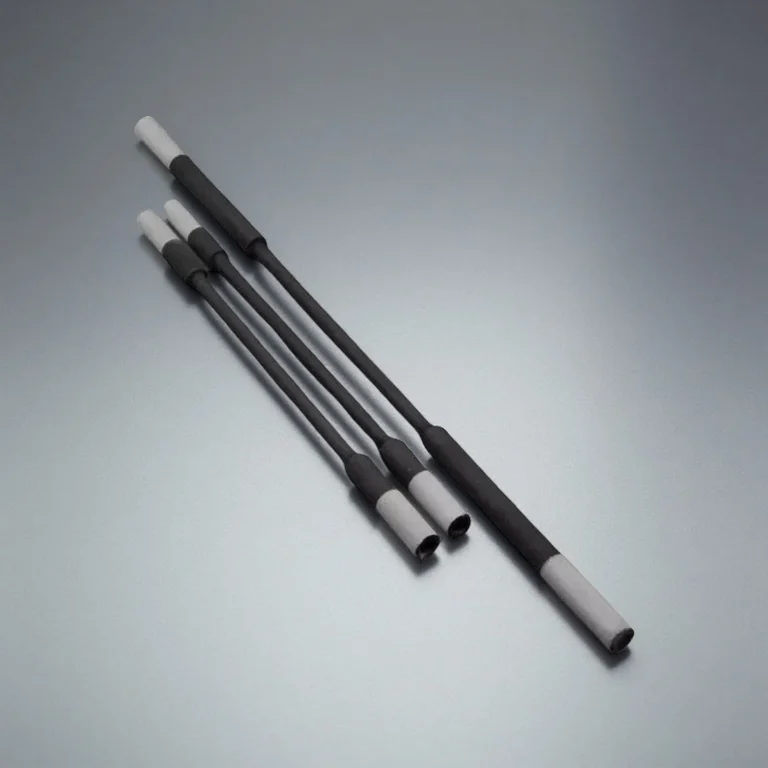
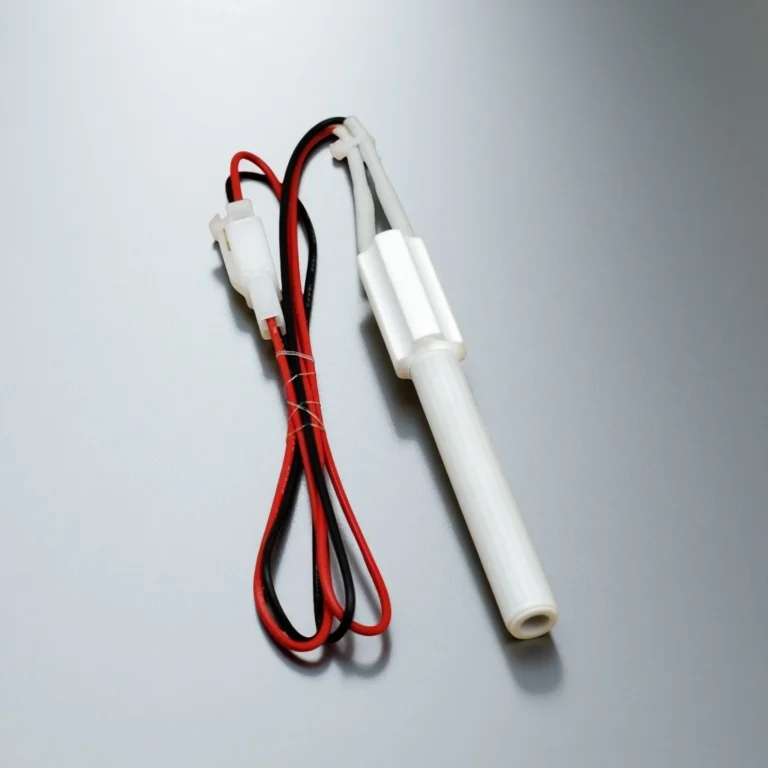
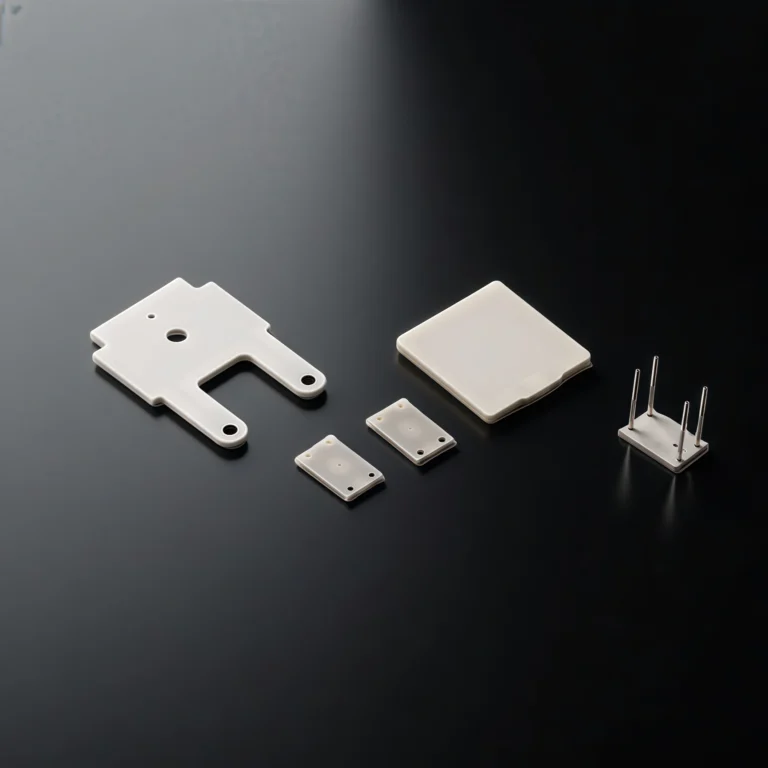
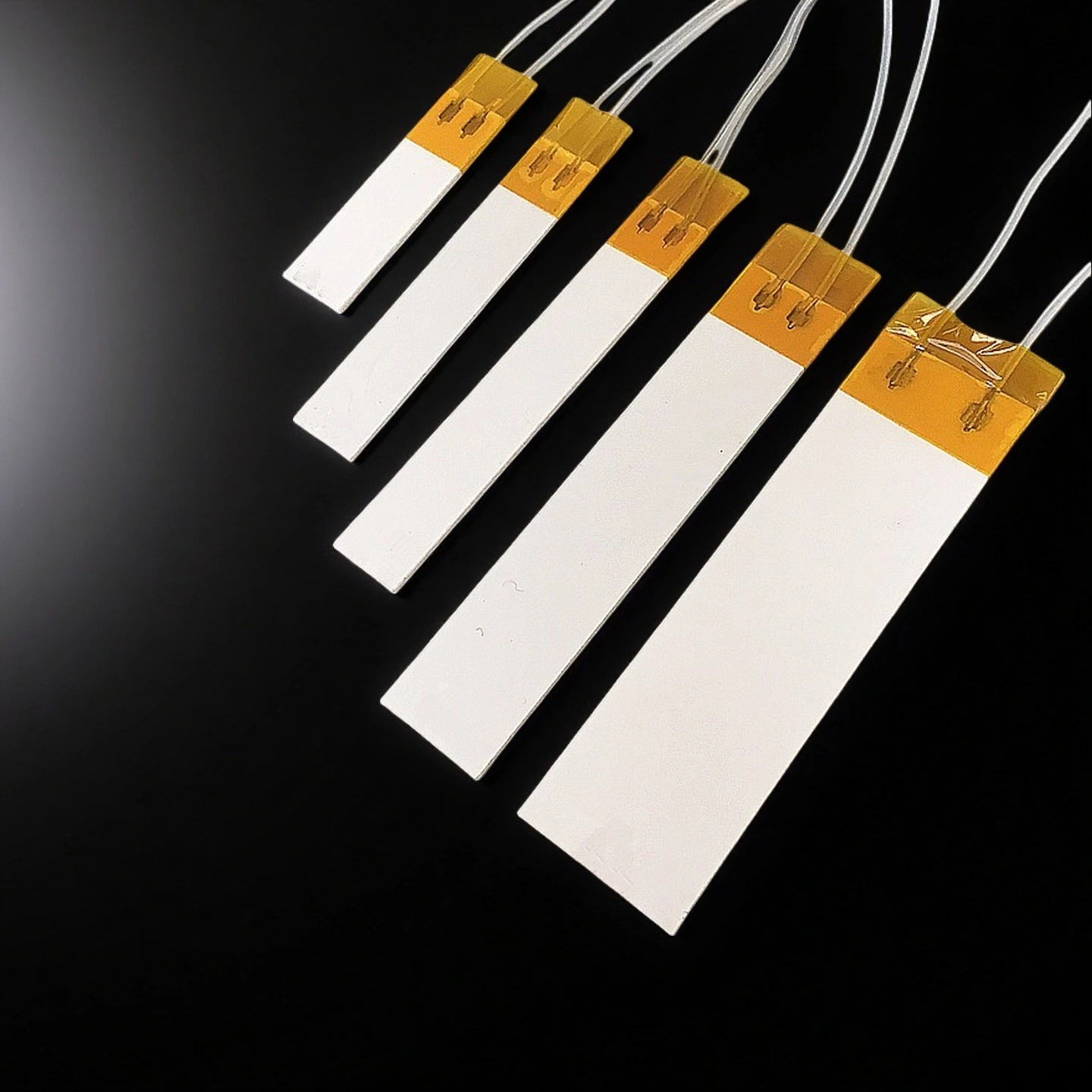
Alumina ceramic heaters are available as flat plates, tubes/rods, and IR panels from small 20–50 mm parts to large panels >300 mm. Custom hole patterns, slots, leadouts, and multi-zone circuits are supported for precise temperature windows.

Catalog No. AT-YHL-JRQ001
Material ≥ 96% Al2O3
Surface Power Density 1.5–2.5 W/cm² (IR panels);up to high W/cm² class (thick-film plates)
Dielectric Strength up to 4.5 kV / 1 s class
Dimensions/Sizes Download PDF
24H Standard Dispatch
Small Batch Support OEM
Factory Direct
Expert Engineering Support

Alumina heaters are metal-ceramic heating elements made from high-purity Al₂O₃. They use printed tungsten or molybdenum heating circuits co-sintered with the ceramic at about 1,600 °C, forming a compact, insulated body. These alumina ceramic heaters feature fast heat-up (to 600–700 °C within 20 s), high power density (≥ 45 W/cm²), and strong dielectric strength (≈ 4.5 kV/1 s).


Alumina Heaters Benefits

  1. High power density in small footprints — enables shorter dwell or smaller heater count.

  2. Uniform surface heating — reduces hot spots and improves part-to-part consistency.

  3. Electrically insulated surface — supports safe integration near grounded tooling.

  4. Stable R–T behaviour — simplifies PID tuning and maintains set-point accuracy.

  5. Thermal robustness of Al₂O₃ — tolerates cyclic operation and moderate thermal shock.


Alumina Heaters Properties

Property Unit 99.5% Al₂O₃ 99.6% Al₂O₃ 99.7% Al₂O₃ 99.8% Al₂O₃ 99.9% Al₂O₃ 99.99% Al₂O₃
Alumina content % 99.5 99.6 99.7 99.8 99.9 99.99
Density g/cm³ 3.89 3.91 3.92 3.93 3.94 3.98
Open porosity % 0
Color Ivory Ivory Ivory Ivory Ivory Ivory
Water absorption % 0 0 0 0 0
Young’s modulus (Elastic modulus) GPa 375 356 357 358 359 362
Shear modulus GPa 152
Bulk modulus GPa 228
Poisson’s ratio 0.22
Compressive strength MPa 2600 2552 2554 2556 2558 2570
Flexural strength MPa 379 312 313 314 315 320
Fracture toughness MPa·m¹ᐟ² 4
Hardness GPa 14.1 (≈1440 kg/mm²) 23 24 25 26 30
Thermal conductivity W/m·K 35 32–37 33–38 34–39 35–40 36–42
Thermal shock resistance ΔT °C 222 223 224 225 228
Maximum use temperature (no load) °C ≤1750 1755 1760 1765 1770 1800
Coefficient of thermal expansion 10⁻⁶/°C 8.4
Specific heat J/kg·K 880
Volume resistivity Ω·cm >1×10¹⁴ >1×10¹⁴ >1×10¹⁴ >1×10¹⁴ >1×10¹⁴ >1×10¹⁴
Dielectric constant (relative permittivity) 9.8 9.83 9.84 9.85 9.86 9.92
Dielectric strength kV/mm 16.9 23.2 23.4 23.6 23.8 24
Dissipation factor (loss factor @ 1 kHz) 0.0002


Alumina Ceramic Heater Specifications

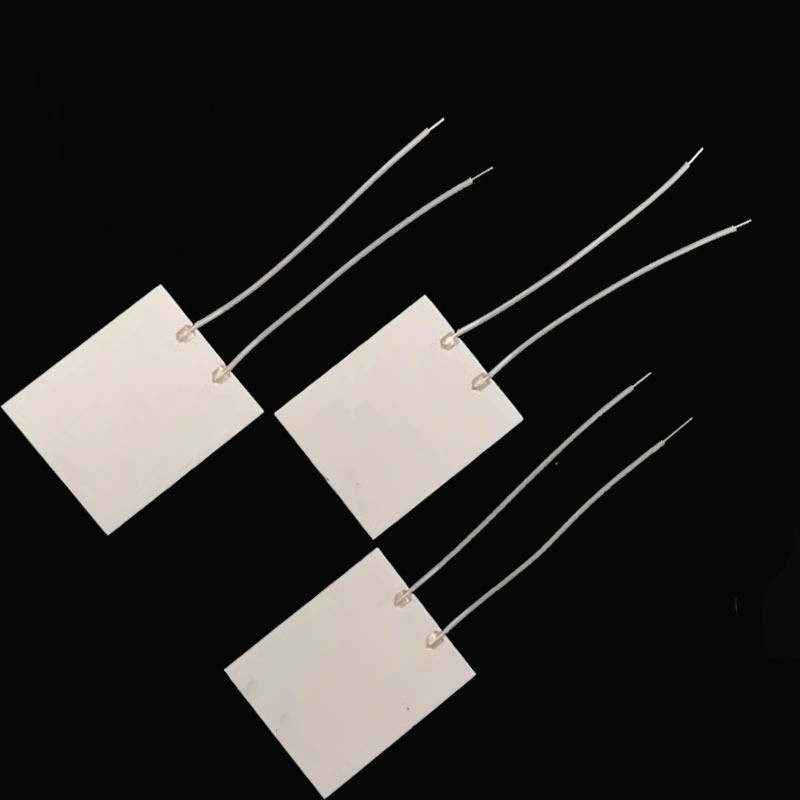
Type 1: Square Alumina Heaters
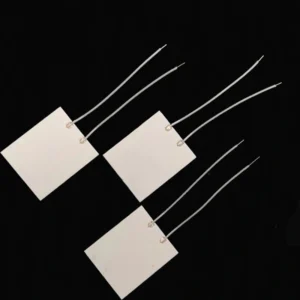
Surface Detail of Alumina Heating Element

Square Alumina Heaters
Item No. Length(mm) Width(mm) Thickness(mm) Resistance
AT-YHL-JRQ001 10 10 1.3 4.8V
AT-YHL-JRQ002 10 10 1.3 12V
AT-YHL-JRQ003 12 12 1.3 12V
AT-YHL-JRQ004 12 12 1.3 24V
AT-YHL-JRQ005 15 15 1.3 72V
AT-YHL-JRQ006 18 18 1.3 4.8V
AT-YHL-JRQ007 22 22 1.3 12V
AT-YHL-JRQ008 24 24 1.3 48V
AT-YHL-JRQ009 25 25 1.3 60V
AT-YHL-JRQ010 30 30 1.3 24V
AT-YHL-JRQ011 35 35 1.3 48V
AT-YHL-JRQ012 40 40 1.3 220V
AT-YHL-JRQ013 15 15 1.3 24V


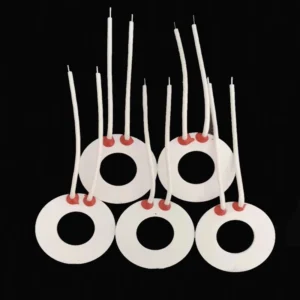
Type 2: Round Alumina Heaters

Round Alumina heaters

Round Alumina Heaters
Item No. Diameter(mm) Thickness(mm) Resistance
AT-YHL-JRQ014 7 0.6 110V
AT-YHL-JRQ015 9 0.8 110V
AT-YHL-JRQ016 9 1.3 24V
AT-YHL-JRQ017 10 1.3 5V/12V
AT-YHL-JRQ018 11 0.8 3.7V
AT-YHL-JRQ019 11 1.3 5V
AT-YHL-JRQ020 13 0.8 5V
AT-YHL-JRQ021 14 1.3 20V
AT-YHL-JRQ022 16 1.3 5V/12V
AT-YHL-JRQ023 19 1.3 5V/12V
AT-YHL-JRQ024 20 1.3 12V/72V
AT-YHL-JRQ025 24 1.3 5V/12V
AT-YHL-JRQ026 26 1.3 12V/24V
AT-YHL-JRQ027 28 1.3 24V
AT-YHL-JRQ028 30 1.3 5V
AT-YHL-JRQ029 30 1.3 12V/24V
AT-YHL-JRQ030 30 2 24V
AT-YHL-JRQ031 38 38.5 24V
AT-YHL-JRQ032 39 39.7 24V
AT-YHL-JRQ033 40 1.3 12V/24V
AT-YHL-JRQ034 48 2 12V/110V


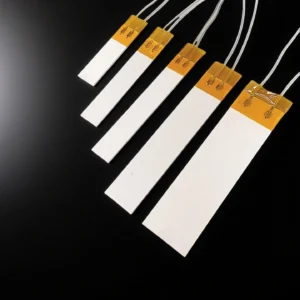
Type 3: Rectangle Alumina Heaters

Alumina Heater Elements with Electrical Insulation ≥15kV

Rectangle Alumina Heaters
Item No. Length(mm) Width(mm) Thickness(mm) Resistance
AT-YHL-JRQ035 10 7 1.3 5V/12V
AT-YHL-JRQ036 15 7 1.3 24V
AT-YHL-JRQ037 15 10 1.3 5V
AT-YHL-JRQ038 25 7 1.3 5V
AT-YHL-JRQ039 20 15 1.3 12V/24V
AT-YHL-JRQ040 30 25 1.3 12V/24V
AT-YHL-JRQ041 35 20 1.3 5V/12V
AT-YHL-JRQ042 35 15 1.3 48V
AT-YHL-JRQ043 35 7 1.3 5V
AT-YHL-JRQ044 40 30 1.3 5V
AT-YHL-JRQ045 55 10 1.3 3.7V/5V/12V
AT-YHL-JRQ046 55 20 1.3 110V
AT-YHL-JRQ047 60 20 1.3 5V/12V
AT-YHL-JRQ048 70 30 1.3 24V/110V/220V
AT-YHL-JRQ049 70 7 1.3 12V/24V/110V/220V
AT-YHL-JRQ050 80 15 1.3 220V
AT-YHL-JRQ051 90 10 1.3 110V/220V
AT-YHL-JRQ052 100 10 1.3 220V


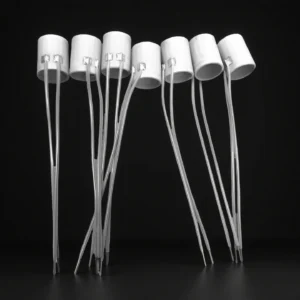
Type 4: Cylindrical Alumina Heaters

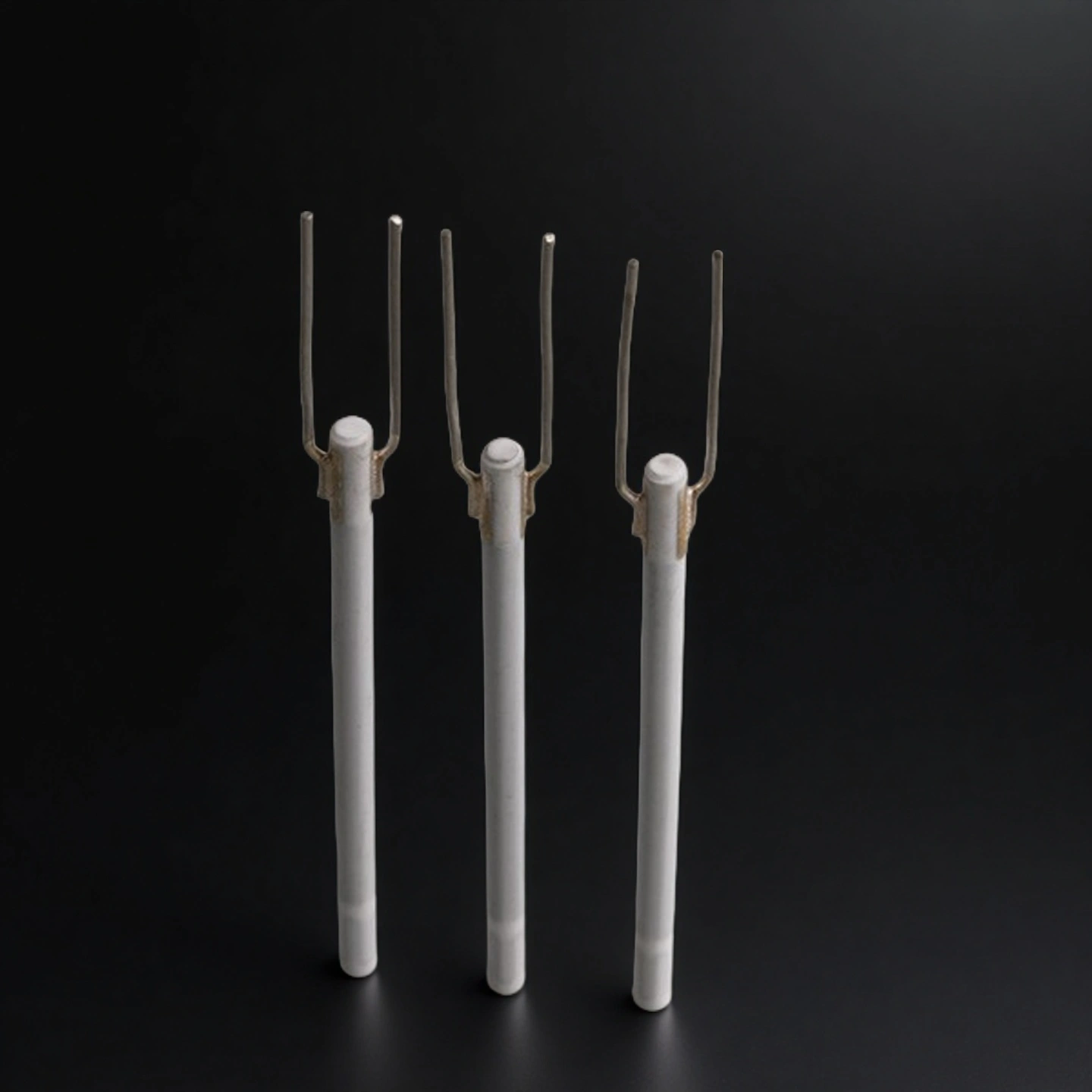
Cylindrical Alumina Heater Tube with Closed End1

Cylindrical Alumina Heaters
Item No. Diameter(mm) Length (mm) Resistance
AT-YHL-JRQ053 2 2.9 12V
AT-YHL-JRQ054 2 2.9 24V
AT-YHL-JRQ055 3 32 12V
AT-YHL-JRQ056 3 57 12V
AT-YHL-JRQ057 3 57 24V
AT-YHL-JRQ058 3 3.8 12V
AT-YHL-JRQ059 3 3.8 22V
AT-YHL-JRQ060 3 3.8 220V
AT-YHL-JRQ061 4 4 22V
AT-YHL-JRQ062 4 4.5 110V
AT-YHL-JRQ063 4 4.5 220V
AT-YHL-JRQ064 4 70 220V
AT-YHL-JRQ065 8 70 110V
AT-YHL-JRQ066 8 80 110V
AT-YHL-JRQ067 15 84 110V
AT-YHL-JRQ068 50 3.8 24V
AT-YHL-JRQ069 60 3.8 110V
AT-YHL-JRQ070 60 3.8 220V
AT-YHL-JRQ071 70 5.5 220V
AT-YHL-JRQ072 75 5 220V


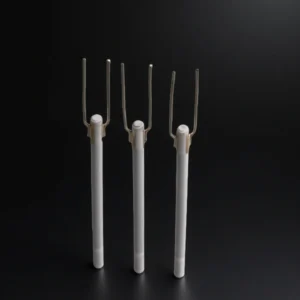
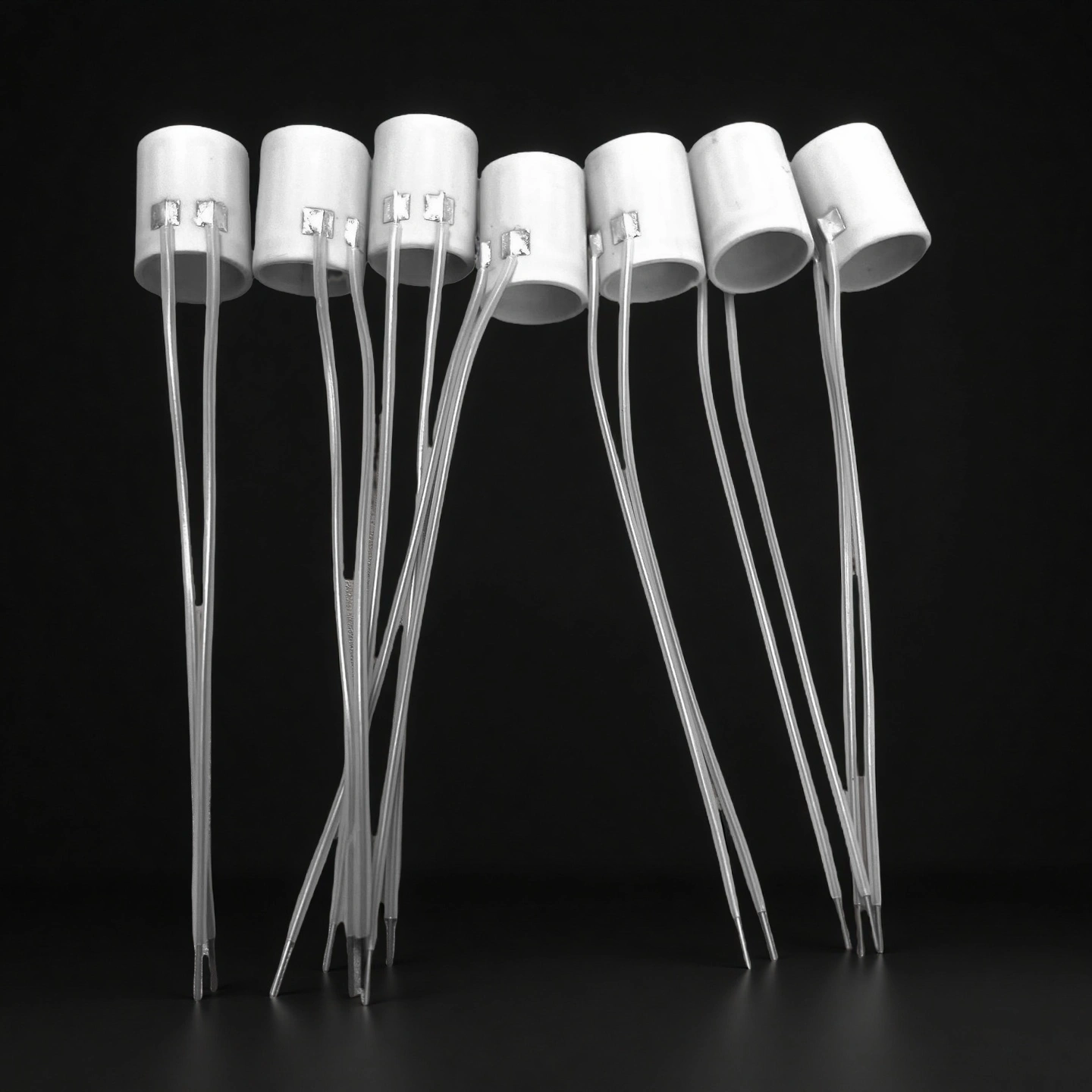
Type 5: Tubular Alumina Heaters

High Purity 99.5% Alumina Heater Rods in Custom Sizes

Tubular Alumina Heaters
Item NO. Inner Diameter(mm) Outer Diameter(mm) Length(mm)
AT-YHL-JRQ073 9 13 23
AT-YHL-JRQ074 10 11.4 20
AT-YHL-JRQ075 9 10.2 11.5
AT-YHL-JRQ076 11 12.4 14.44
AT-YHL-JRQ077 10 11.4 20
AT-YHL-JRQ078 11 12.4 14.4
AT-YHL-JRQ079 9 13 23
AT-YHL-JRQ080 14 16 15
AT-YHL-JRQ081 18 21.4 50
AT-YHL-JRQ082 18 21.5 55


Alumina Ceramic Heater Packaging

  • Each unit is plastic-wrapped and packed in anti-vibration export cartons. Large diameters or fragile structures are enclosed in a padded wooden casing. Packaging is moisture-proof and shock-resistant.
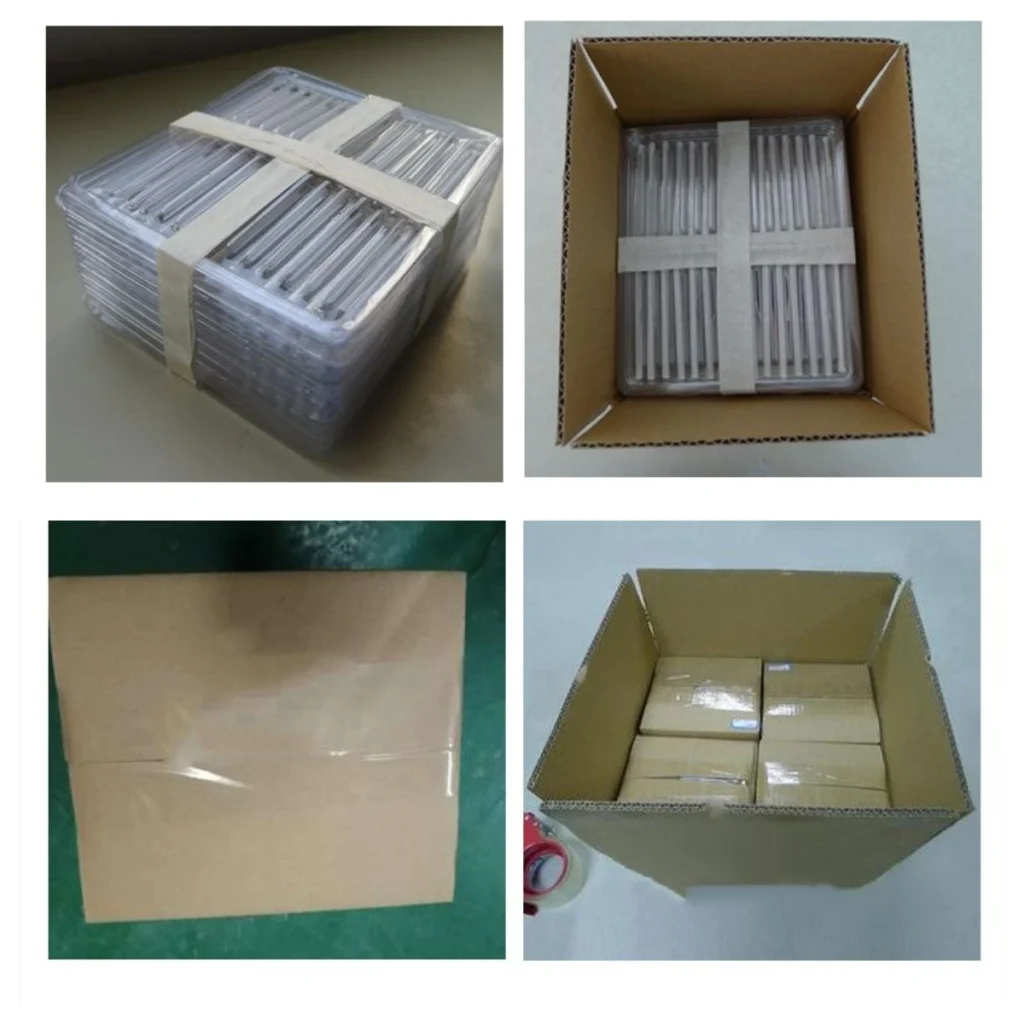

Alumina Ceramic Heater Packaging

Alumina Heaters Applications

  • Thermoforming & Vacuum Forming (IR Panels / Plates)

    ✅Key Advantages

    1. Uniformity at distance — Panel layout achieves ΔT ≤ ±10 °C across work zone of typical trays.
    2. Mid-IR coupling — Effective 4–6 µm band for many polymers improves energy use per part.
    3. Modular arrays — 1.5–2.5 W/cm² panels scale output without redesigning frames..

    ✅ Problem Solved

    A packaging OEM replaced mixed IR tubes with alumina IR panels in a 4-zone tray heater. At the same cycle time, line power dropped ~12–15% while scrap from under-heated corners fell below 1%. Zone-wise trim allowed faster startup and fewer recipe changes across SKUs.

  • Packaging Heat-Seal & Shrink (Thick-Film Plates)

    ✅Key Advantages

    1. Fast heat-up — 500 W class plate reached ≥600 °C in ≤20 s, reducing standby time.
    2. Flat, insulated surface — Safer sealing near metal frames; minimized leakage current.
    3. Stable resistance — Predictable R–T curve simplifies PID for seal temperature windows.

    ✅ Problem Solved

    A co-packer standardized a 24 V/300 W alumina heater plate with dual zones on three seal heads. Warm-up time cut by ~30 s per run; monthly seal-defect returns decreased by ~40% due to steadier tip temperature under varying film gauges.

  • Electronics Assembly Preheat / Bonding

    ✅Key Advantages

    1. Compact footprints — High W/cm² enables small jigs under no-flux areas.
    2. Localized zoning — Edge-hot patterns limit thermal spread to nearby components.
    3. Sensor integration — TC pads at the heat focus improve closed-loop control.

    ✅ Problem Solved

    A contract assembler moved from mica plates to a 100×50 mm alumina thick-film heater with integrated TC pads. Reflow assist became repeatable across boards; rework time per lot decreased by ~20% while fixture temperature variance narrowed to single-digit °C.

Alumina Heaters Usage Instructions

  • Installation

    1. Ensure the mounting surface is flat and clean. Apply a thin, even layer of high-temperature thermal compound across the contact area to enhance heat transfer.
    2. Use spring-loaded clamps or torque-controlled screws to prevent localized stress; avoid tightening directly on vias or circuit zones.
    3. Maintain uniform pressure across the heater; non-uniform load may cause thermal distortion or micro-cracks.
    4. Route power leads and thermocouple wires away from moving parts, sharp edges, or heat sources.
    5. Add strain-relief and insulation sleeves to minimize mechanical fatigue during repeated thermal cycles.
    6. For multi-heater assemblies, confirm all units are electrically insulated from the mounting base to avoid ground loops.

  • Operation

    1. Follow the rated voltage and power specified on the nameplate; ramp temperature gradually according to process requirements.
    2. Always enable over-temperature, over-current, and ground-fault protection in the control circuit.
    3. Tune the PID controller with load mass in place; base temperature readings on sensors located near the hottest functional zone.
    4. Avoid “air-burn” operation (running at full power without thermal load), which may shorten heater life.
    5. In systems with multiple zones, stagger power startup by 1–2 seconds per zone to reduce inrush current.
    6. Keep surface temperature within ±10 °C of target to maintain product quality and prevent overheating.

  • Storage

    1. Store in a dry, ventilated environment with relative humidity below 70%.
    2. Keep terminals capped or bagged to prevent dust and oxidation.
    3. Use soft foam or cardboard separators between stacked heaters to protect ceramic edges.
    4. Avoid dropping or sliding heaters on hard surfaces; alumina is hard but brittle.
    5. Long-term storage (>6 months): recheck insulation resistance (>100 MΩ) before reinstallation.

  • Cleaning

    1. Disconnect power and allow the heater to cool below 50 °C before handling.
    2. Wipe gently with a lint-free or microfiber cloth.
    3. For glazed or coated panels, use a mild neutral solvent (e.g., ethanol or IPA) to remove residue.
    4. Avoid sharp metal scrapers or abrasive tools that may damage the ceramic surface.
    5. For embedded sensors, ensure connector pins remain dry and free of oxidation after cleaning.

  • Misuse & Remedies (Three Common Issues)

    1. Uneven heating on part→ Check flatness and compound coverage; verify clamp torque and zone wiring. Re-map zones if thermal imaging shows local cold spots.

    2. Nuisance trips (leakage/ground fault)→ Inspect lead insulation and terminal sealing; dry the heater in 80–100 °C air for 1–2 hours to remove moisture; confirm clearance from grounded metal frames.

    3. Crack at the mounting hole or edge→ Reduce torque or use spring washers; insert ceramic or silicone spacers; relocate slot or hole away from high-stress regions. Avoid over-tightening during re-assembly.

Alumina Ceramic Heater FAQ

  1. Q: What information do you need to quote an alumina heater?
    A: Please provide your drawing or sketch with dimensions, rated voltage, wattage, and working temperature. If possible, note the heating area, zone layout, and lead type. This allows us to quote the alumina heater accurately and confirm technical feasibility.
  2. Q: What temperature range can alumina heaters reach?
    A: Standard MCH alumina heaters can operate up to 600–700 °C, and IR ceramic panels typically reach 300–500 °C depending on airflow and installation. Both types maintain stable output without power decay over time.
  3. Q: How fast can an alumina heater reach operating temperature?
    A: A 500 W thick-film alumina heater can reach 600 °C in about 20 seconds, making it ideal for rapid start-up applications like heat sealing or preheating systems.
  4. Q: Are alumina heaters safe to touch or operate near metal parts?
    A: Yes. The alumina surface is fully electrically insulated, with dielectric strength up to 4.5 kV / 1 s and leakage current below 0.5 mA, ensuring safe integration into grounded metal assemblies.
  5. Q: Can I customize the size, shape, or voltage of my alumina heater?
    A: Absolutely. We offer custom alumina thick-film and IR ceramic heaters with adjustable voltage (5–480 V), dimensions, wattage, and hole layouts. Multi-zone heating and integrated thermocouple pads are also available.
  6. Q: What are the typical lifetimes of alumina heaters?
    A: When installed correctly and operated within rated limits, alumina heaters typically exceed 20,000 hours of service, with minimal resistance drift or thermal degradation.

  7. Q: How do alumina heaters compare with quartz or metal heaters?
    A: Alumina heaters offer better insulation, heat uniformity, and contamination resistance than quartz or metallic types. They are preferred where safety, precision, and long duty cycles are required.

Aumina Ceramic Heater Reviews

  • ⭐️⭐️⭐️⭐️⭐️
    “We installed alumina IR heaters on two thermoforming lines. Temperature uniformity improved, and setup time dropped by 15%.”
    -- Lars König Engineering Manager, ThermoPack GmbH
  • ⭐️⭐️⭐️⭐️⭐️
    “ADCERAX supplied custom alumina thick-film heaters with dual zones. Samples matched our drawings, and we reordered after testing.”

    -- Erin Wallace Procurement Lead, NorthSeal Co-packing

  • ⭐️⭐️⭐️⭐️⭐️
    “The roundalumina heater plate held a stable 620 °C set-point. Built-in thermocouple pads made PID tuning easy.”
    -- Kenji Arai Process Engineer, J-Tech Assembly
  • ⭐️⭐️⭐️⭐️⭐️
    “Replacing old quartz units with alumina heaters removed cold spots and solved grounding issues on our forming molds.”
    -- Michael Cruz Maintenance Supervisor, Delta Plastics
customize size

Customize Alumina Heaters

We tailor geometry, circuitry, and interfaces to meet defined heat-flux and mounting needs. What you can specify:

  • Dimensions & thickness: Plates, rods, or panels in 0.6–3.0 mm thickness; precision ±0.1 mm on ground faces; max panel size 300 × 300 mm.
  • Heated area & zoning: Single, dual, or multi-zone circuits with independent terminals for accurate local temperature control.
  • Electrical: Voltage 5–480 V, power density 1.5–2.5 W/cm², resistance tolerance per spec, leakage < 0.5 mA.
  • End details: Open or closed ends, chamfers, countersinks, keyholes, or custom slots for assembly alignment.
  • Terminations: High-temperature leads, lugs, or studs with strain relief and optional ceramic bushings; lead length is customizable.
  • Surface finish: Raw, polished, glazed, or sandblasted; optional anti-soiling layer and laser-etched ID marking.
  • Sensing: Integrated thermocouple pads, RTD pockets, or printed sensing zones for closed-loop control.
  • Mounting: Compatible with clamps, standoffs, frames, or quick-swap fixtures; thermal paste interface optional.
  • Environment: Designed for use in dry, dusty, or splash-prone environments; optional PTFE-coated leads provide chemical resistance.

Related Products

ADCERAX - Your Trusted Advanced Ceramics Manufacturing Partner

Direct factory manufacturing with comprehensive ceramic materials expertise and global supply capabilities

Direct Factory Manufacturing

China-based ceramic materials production facility with state-of-the-art equipment

Engineering Team

Experienced professionals in advanced ceramics applications and custom design

Quality Control

Strict quality control standards for technical ceramics manufacturing and quality management

Global Supply Chain

Serving customers worldwide with technical ceramics and rapid response

24/7 Technical Support

Round-the-clock support for ceramic components inquiries and technical assistance

500+ Satisfied Customers

Trusted by global customers for advanced ceramic materials and precision components

Get in touch with us

Our team will be happy to respond to you in less than 24 hours.

Adcerax's factory

Quick Quotation

*Our team will answer your inquiries within 24 hours.

*Your information will be kept strictly confidential.

Ready to Solve Your Engineering Challenge?

Partner with ADCERAX for reliable, high-performance advanced ceramic solutions. Our engineers are ready to discuss your project.

E-mail

info@adcerax.com

Phone

+(86) 0731-74427743 | WhatsApp: +(86) 19311583352

Response Time

Within 24 hours

Quick Quote

The more details you provide, the faster we can quote.

*We respond within 24 hours. All inquiries are confidential.

Download Catalog

Get Your Custom Sulution

The more details you provide, the faster we can respond.

customize size

*We respond within 24 hours. All inquiries are confidential.

Download Catalog