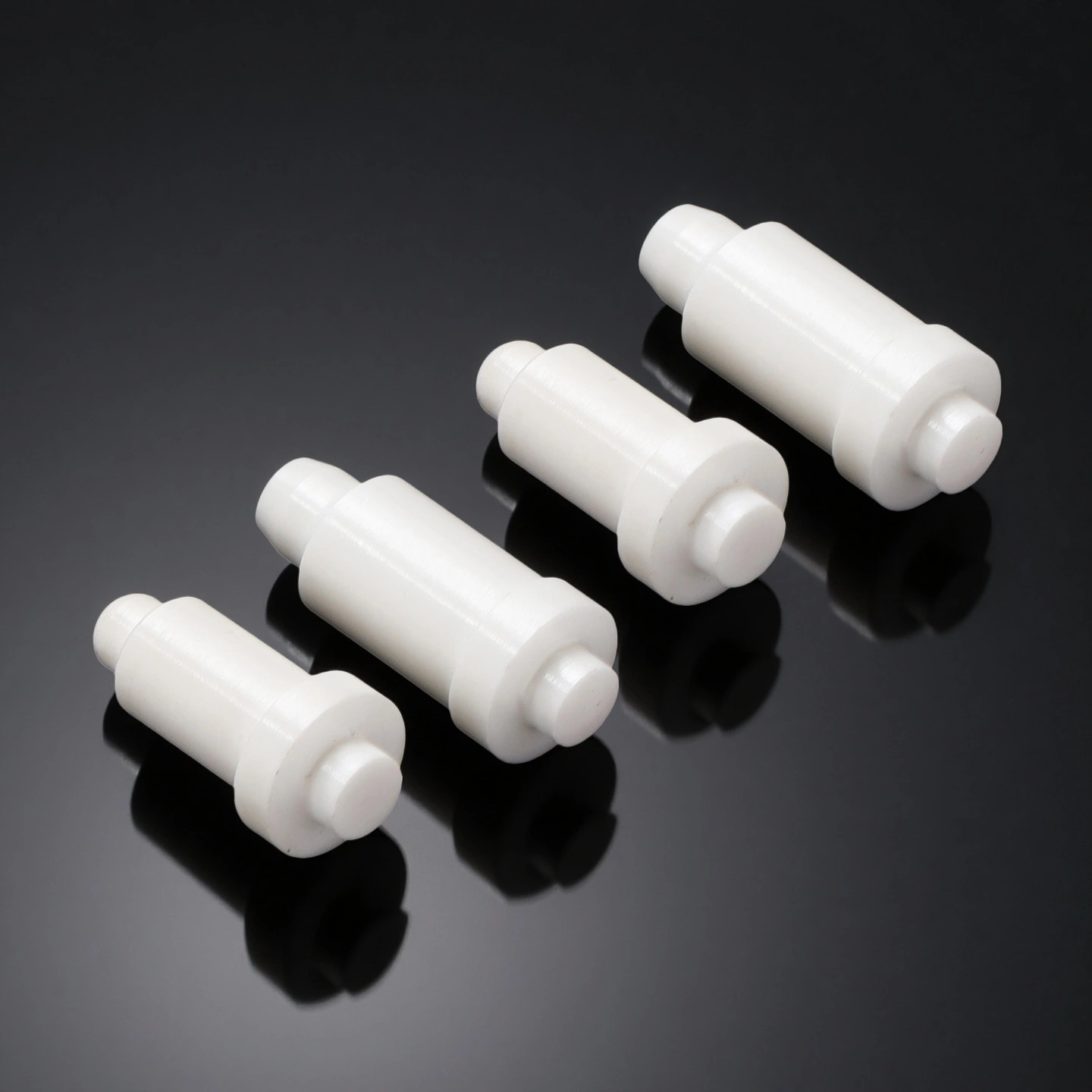
Alumina Locating Pin for Robotic Welding Fixtures – High-Precision Ceramic Guide Pins

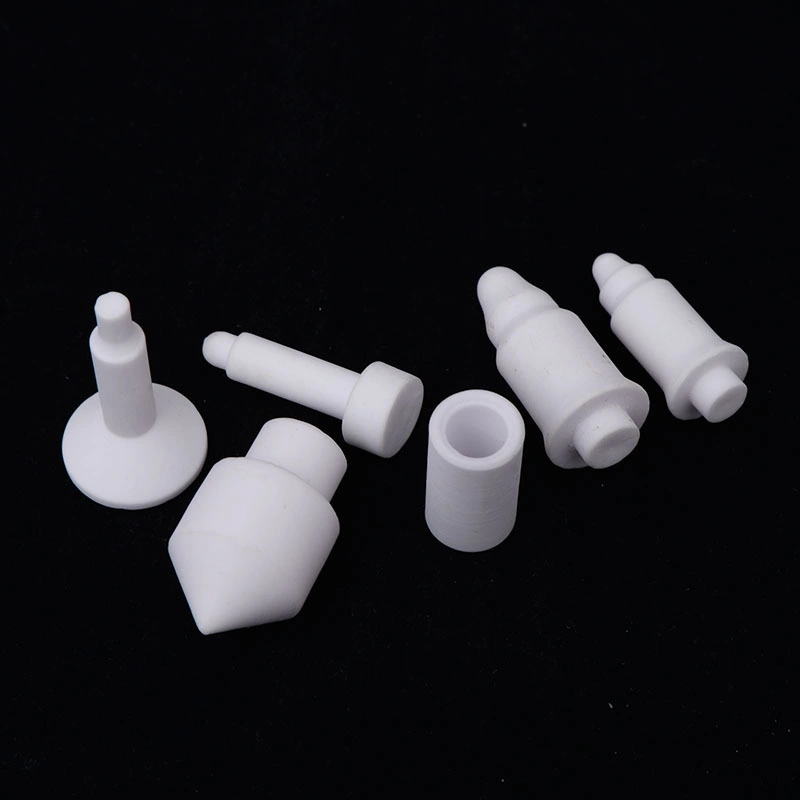
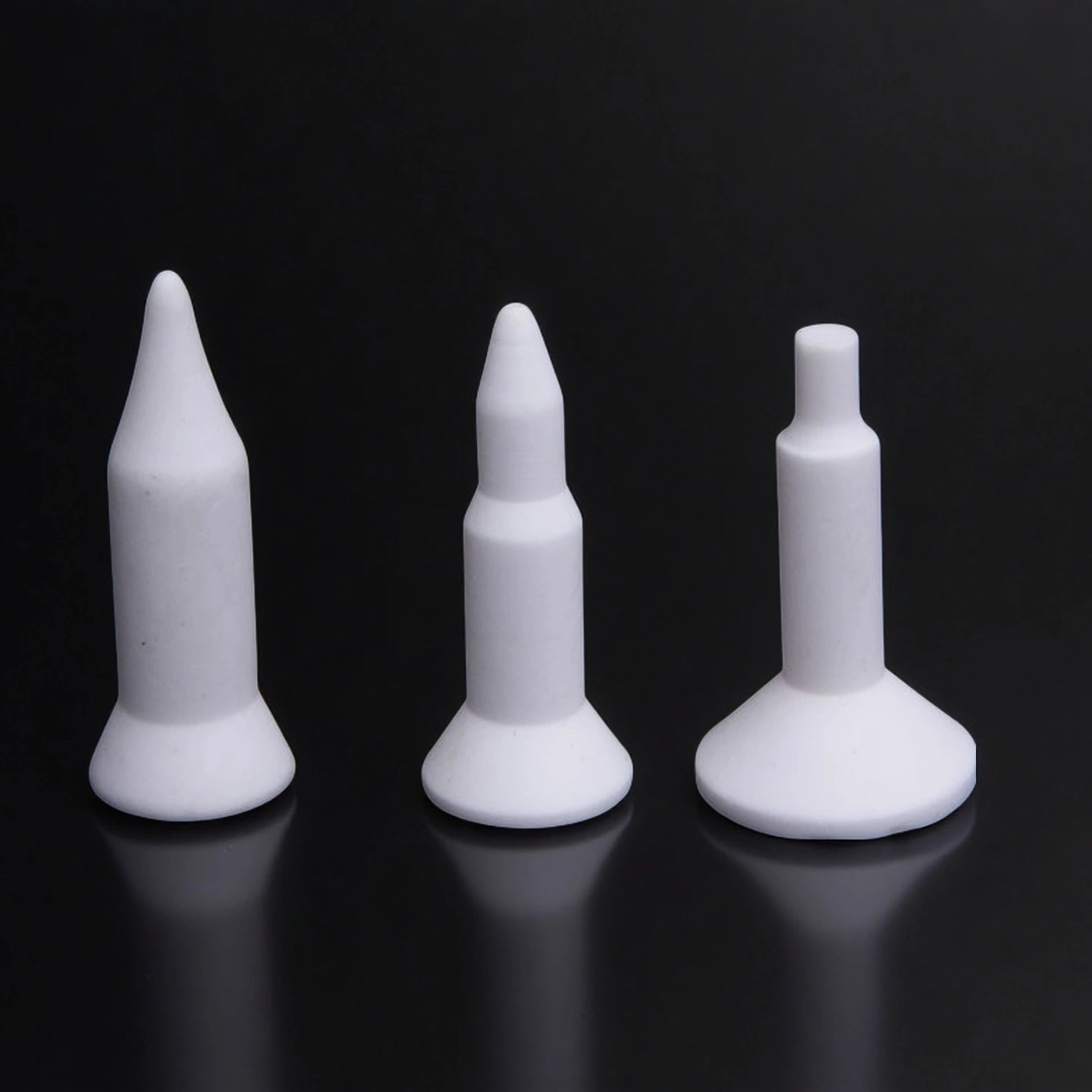
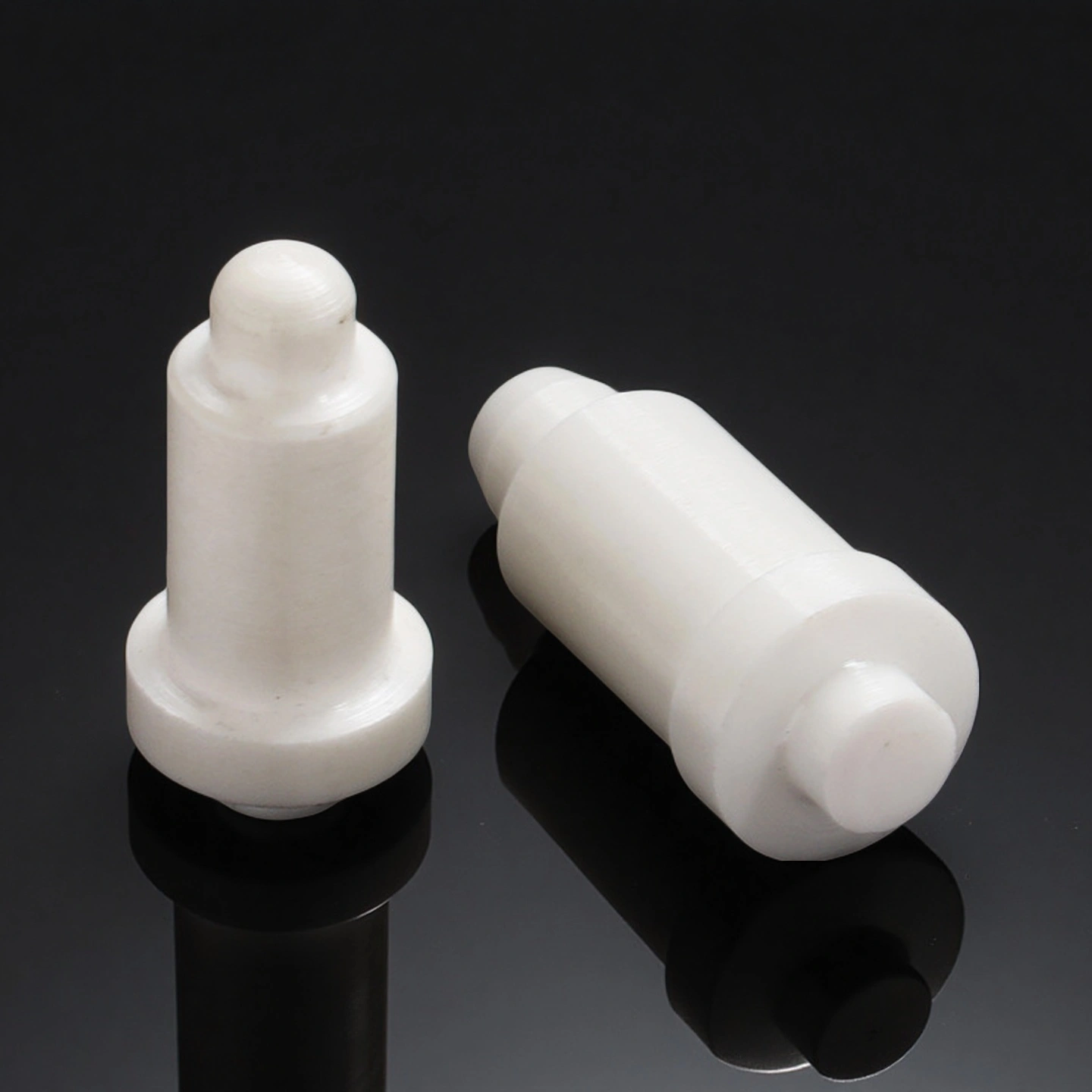
Alumina locating pins from ADCERAX cover common welding fixture diameters from 4–20 mm and working lengths from 20–150 mm, with straight, stepped, tapered and shouldered designs available as standard and drawing-based parts. Each alumina locating pin can be manufactured to customer drawings with specified tolerances on the locating diameter and head geometry, allowing you to match existing metal pins or upgrade to ceramic in current jigs and fixtures.

Catalog No. AT-YHL-DWX001
Material ≥ 96% Al2O3
Thermal Resistance Up to 1500°C
Diameter Tolerance ±0.02mm
Vickers hardness (HV) 1700–1800 HV
24H Standard Dispatch
Small Batch Support OEM
Factory Direct
Expert Engineering Support

Alumina locating pin is a precision ceramic positioning component made from high-purity aluminum oxide (Al₂O₃). It is widely used in welding fixtures, robotic welding cells, checking fixtures, and high-temperature industrial equipment to accurately locate and support metal parts during processing.

Alumina Locating Pin Benefits

  • Stable diameter for high-cycle welding
    The high hardness of alumina (around 1700–1800 HV) keeps the locating diameter stable against wear, reducing fixture rework and calibration frequency in high-volume robotic welding cells.

  • Electrical insulation during projection and resistance welding
    The ceramic body provides high electrical resistivity, helping control current paths in nut welding and preventing unintended arcing through the pin body.

  • Reduced weld spatter adhesion compared with metal pins
    Alumina surfaces are less prone to spatter build-up than untreated steel pins, which helps maintain repeatable seating of nuts and sheet metal parts and lowers manual cleaning time on fixtures.

  • High-temperature capability for welding and furnace applications
    Depending on grade and design, alumina locating pins can tolerate welding thermal cycles up to around 1200 °C and furnace or lining applications approaching 1600–1700 °C.

  • Customizable heads and mounting features
    Pins can be produced with cylindrical, tapered or spherical heads, with shoulders, threads, slots or other features to suit your existing fixture plates, mounting blocks and sleeves.

Alumina Locating Pin Properties

Property Unit 99.5% Al₂O₃ 99.6% Al₂O₃ 99.7% Al₂O₃ 99.8% Al₂O₃ 99.9% Al₂O₃ 99.99% Al₂O₃
Alumina content % 99.5 99.6 99.7 99.8 99.9 99.99
Density g/cm³ 3.89 3.91 3.92 3.93 3.94 3.98
Open porosity % 0
Color Ivory Ivory Ivory Ivory Ivory Ivory
Water absorption % 0 0 0 0 0
Young’s modulus (Elastic modulus) GPa 375 356 357 358 359 362
Shear modulus GPa 152
Bulk modulus GPa 228
Poisson’s ratio 0.22
Compressive strength MPa 2600 2552 2554 2556 2558 2570
Flexural strength MPa 379 312 313 314 315 320
Fracture toughness MPa·m¹ᐟ² 4
Hardness GPa 14.1 (≈1440 kg/mm²) 23 24 25 26 30
Thermal conductivity W/m·K 35 32–37 33–38 34–39 35–40 36–42
Thermal shock resistance ΔT °C 222 223 224 225 228
Maximum use temperature (no load) °C ≤1750 1755 1760 1765 1770 1800
Coefficient of thermal expansion 10⁻⁶/°C 8.4
Specific heat J/kg·K 880
Volume resistivity Ω·cm >1×10¹⁴ >1×10¹⁴ >1×10¹⁴ >1×10¹⁴ >1×10¹⁴ >1×10¹⁴
Dielectric constant (relative permittivity) 9.8 9.83 9.84 9.85 9.86 9.92
Dielectric strength kV/mm 16.9 23.2 23.4 23.6 23.8 24
Dissipation factor (loss factor @ 1 kHz) 0.0002


Alumina Locating Pin Specifications

Alumina Locating Pin
Item No. Length(mm) Diameter (mm) Purity(%)
AT-YHL-DWX001 35.6 13.8 95-99
AT-YHL-DWX002 32.5 8.7 95-99
AT-YHL-DWX003 42.2 7.3 95-99
AT-YHL-DWX004 32.4 5.6 95-99
AT-YHL-DWX005 17.7 8 95-99
AT-YHL-DWX006 34.3 8.7 95-99
AT-YHL-DWX007 24.3 6 95-99
AT-YHL-DWX008 21.6 5.8 95-99
AT-YHL-DWX009 23.7 4.9 95-99
AT-YHL-DWX010 33.4 13.6 95-99
AT-YHL-DWX011 33.2 11 95-99
AT-YHL-DWX012 25.7 6.9 95-99
AT-YHL-DWX013 27.1 7.9 95-99
AT-YHL-DWX014 30 10 95-99
AT-YHL-DWX015 28.3 7.8 95-99
AT-YHL-DWX016 25.5 8 95-99
AT-YHL-DWX017 23.2 6.9 95-99
AT-YHL-DWX018 22.6 6.8 95-99
AT-YHL-DWX019 22 8.9 95-99
AT-YHL-DWX020 23 10.4 95-99
AT-YHL-DWX021 27.8 8.7 95-99
AT-YHL-DWX022 27.4 7.7 95-99
AT-YHL-DWX023 23.8 8.8 95-99
AT-YHL-DWX024 24.2 8.6 95-99
AT-YHL-DWX025 28.5 13 95-99
AT-YHL-DWX026 27.3 8.8 95-99
AT-YHL-DWX027 23.7 9.8 95-99
AT-YHL-DWX028 25.2 8.5 95-99
AT-YHL-DWX029 37 12 95-99
AT-YHL-DWX030 27.7 8.7 95-99
AT-YHL-DWX031 27.1 6.6 95-99
AT-YHL-DWX032 29 19 95-99


Alumina Ceramic Locating Pin Packaging

  • Each alumina locating pin is separated by soft protective layers or individual sleeves to avoid chipping of the locating diameter and head during transport.
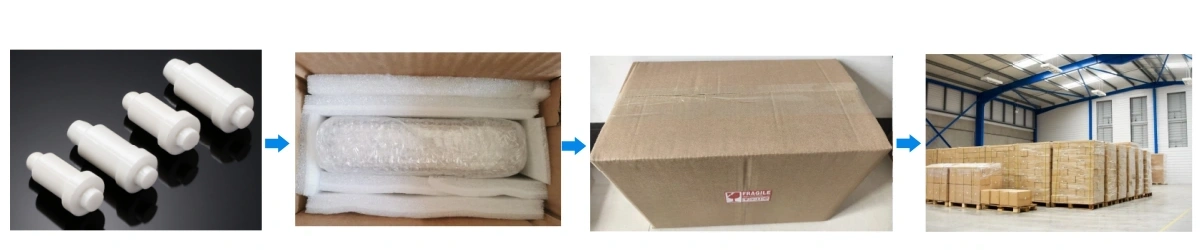

Alumina Ceramic Locating Pin Packaging

Al2O3 Locating Pin Applications

  • Automotive welding fixtures and BIW tooling

    Automotive OEMs and Tier 1 suppliers use alumina locating pins in nut welding tools, projection welding fixtures and body-in-white (BIW) jigs to hold nuts and sheet metal panels in repeatable positions during high-speed welding cycles.

    ✅Key Advantages

    1. Stable positioning over long runs – alumina locating pins maintain diameter and alignment over hundreds of thousands of welds, reducing fixture rebuilds and re-machining of holes.

    2. Lower spatter maintenance – ceramic surfaces reduce spatter attachment compared with untreated steel locator pins, cutting cleaning time between shifts.

    3. Consistent weld quality – electrical insulation and rigid positioning of nuts support consistent projection collapse and weld nugget formation.

    ✅ Problem Solved

    A robotic nut welding line with steel locating pins required frequent downtime because spatter and wear changed the effective pin diameter, causing nut misalignment and rework. For a line running around 80–120 parts per hour, even a two-hour unplanned stop can represent well over 1 000 lost assemblies and tens of thousands of dollars of lost value in some plants. After switching to alumina locating pins in critical stations, maintenance intervals between pin changes increased from a few weeks to several months, and welded nut rework dropped by several percentage points, improving line availability and reducing scrap.

  • Robotic welding cells and automation integrators

    Automation integrators build robot cells for general metal fabrication, off-highway equipment and construction machinery, where flexible fixtures must handle multiple part variants with repeatable positioning. Alumina locating pins help maintain fixture accuracy as part families and cycle counts grow.

    ✅Key Advantages

    1. Repeatable positioning in flexible jigs – ceramic locating pins provide stable reference points when fixtures are reconfigured between models.

    2. Improved total cost of ownership – longer pin life and reduced cleaning effort help lower operating cost per weld.

    3. Support for accurate offline programming – stable fixture geometry allows offline programs and simulation models to remain valid for longer periods.

    ✅ Problem Solved

    In a flexible robot cell producing several bracket and frame variants, metal pins wore unevenly and required frequent offset adjustments in robot programs. After adopting alumina locating pins for key references, the integrator reported a longer period between geometry checks and reduced on-line program touch-ups. The combination of stable references and known wear behaviour allowed the cell to maintain geometric capability over large batches, making it easier to justify ceramic pins on total cost rather than just piece price.

  • Industrial furnaces, kilns and thermal equipment

    In furnaces and kilns, alumina pins similar to locating pins are used to hang ceramic fibre blanket, secure lining boards or support components inside hot zones. These alumina furnace pins operate in temperatures up to about 1600–1700 °C, depending on grade and design.

    ✅  Key Advantages

    1. High-temperature stability – alumina locating pins retain strength and shape in continuous service well above 1000 °C.

    2. Low interaction with refractory lining – compatible thermal expansion and chemical behaviour with many fibre modules and boards.

    3. Low creep and long-term support – fine-grain alumina reduces creep deformation over time, supporting fibre or board lining weight.

    ✅  Problem Solved

    A furnace operator using metallic anchors for fibre modules experienced distortion and scaling of the anchors at high process temperatures, leading to local lining failure and unplanned repairs. Switching to alumina furnace pins and compatible washers extended relining intervals and helped the furnace maintain insulation thickness. For high-temperature furnaces where shutdowns are costly, extending the lining lifetime by even one additional campaign cycle can significantly reduce annual maintenance expenditure.


Al2O3 Locating Pin Usage Instructions

  • Installation

    1. Confirm pin material and drawing revision match the fixture documentation before installation.
    2. Inspect each alumina locating pin visually for chips on the locating diameter and head; reject pins with obvious damage.
    3. Align the pin shank with the fixture bore or sleeve carefully and insert by hand where possible; avoid hammering the ceramic body.
    4. Use appropriate clamping (collars, threaded ends, clamps) on the mounting side rather than forcing the ceramic portion against misaligned plates.

  • Use

    1. Apply alumina locating pins only within the specified load, temperature and clamping conditions in your welding or furnace design.
    2. Avoid using pins as levers or pry bars when releasing parts; design separate ejectors or supports for that purpose.
    3. In welding fixtures, keep nuts and sheet metal holes free from heavy burrs that could impact the pin surface.

  • Storage

    1. Store spare alumina locating pins in padded trays or compartments where they cannot impact each other.
    2. Keep storage boxes dry and clean to avoid contamination that might transfer to fixture seats.
    3. Label trays by size, drawing number and fixture to simplify traceability and replacement planning.

  • Cleaning

    1. Remove loose weld spatter and deposits with non-metallic tools (plastic or fibre scrapers) to avoid surface scratching.
    2. For stubborn build-up, use suitable chemical agents or blasting media authorised for ceramic surfaces, following your plant’s safety procedures.
    3. Do not quench hot ceramic pins in water or oil to avoid thermal shock; allow controlled cooling before cleaning.

  • Cautions

    1. Avoid sharp impact on the ceramic head or diameter; even high-strength alumina can chip when hit by hard tools.
    2. Do not exceed recommended service temperature or rapid temperature swings beyond your process design.
    3. Do not modify ceramic pins by grinding or cutting without consulting the supplier, as it may introduce micro-cracks.

  • Common user issues and guidance

    1. Issue: unexpected chipping at the locating edge
    Guidance: review how parts are loaded; if operators slide sharp-edged holes onto the pin, introduce lead-in chamfers on the workpiece or specify a larger chamfer radius on the pin.

    2. Issue: shorter-than-expected lifetime in one station
    Guidance: compare thermal and mechanical loads between stations; if one pin sees higher spatter or impact, consider an alternative head design, sleeve support, or different ceramic grade for that position.

    3. Issue: difficulty replacing pins in the fixture
    Guidance: ensure mounting design includes accessible clamping from the cold side (threads, collars or set screws) and avoid designs where the ceramic must be pressed out through tight steel bores.

Alumina Locating Pin FAQ

  1. Q: What is an alumina locating pin used for in welding fixtures?
    A: An alumina locating pin is used to position nuts, studs and sheet metal parts accurately in resistance or projection welding fixtures while providing electrical insulation and reduced weld spatter adhesion compared with metal pins.
  2. Q: How does an alumina locating pin compare to steel locator pins?
    A: Compared with steel pins, alumina locating pins offer higher hardness, reduced wear on the locating diameter and better resistance to weld spatter and electrical current, which helps extend maintenance intervals and stabilise weld quality.
  3. Q: What tolerance can alumina locating pins achieve on the locating diameter?
    A: For many applications, alumina locating pins can be ground to h6 or similar tolerance ranges on the locating diameter, as long as the pin design allows sufficient wall thickness and support during grinding.
  4. Q: What is the typical service temperature limit for alumina locating pins in welding?
    A: In welding applications, alumina locating pins are often used in environments up to around 1200 °C, with the actual limit determined by the ceramic grade, fixture design and thermal cycling pattern.
  5. Q: Can alumina locating pins be used in furnaces or kilns?
    A: Yes, alumina pins are widely used as furnace pins or hanger rods for fibre and board linings, with certain designs and alumina grades rated for continuous service up to about 1600–1700 °C.
  6. Q: Which materials are alternatives to alumina for locating pins?
    A: Alternatives include silicon nitride and zirconia ceramic locating pins, which can offer higher impact resistance in some conditions but may differ in cost and machining capability; selecting between alumina and these materials depends on loading, temperature and budget.

Customer Reviews for Alumina Locating Pins

  • ⭐️⭐️⭐️⭐️⭐️
    We switched several critical nut welding tools from steel to alumina locating pins and saw a clear reduction in rework and fixture cleaning time. The ceramic pins from ADCERAX dropped into our existing holders with only minor drawing updates.
    -- Michael S., Tooling Engineer, EuroWeld Systems GmbH
  • ⭐️⭐️⭐️⭐️⭐️
    As an automation integrator we need consistent components across multiple robot cells. The alumina locating pins supplied by ADCERAX matched our tolerance requirements and helped us stabilise long-term accuracy in our BIW fixtures.
    -- Laura K., Project Manager, AutoMotion Integrations Ltd.
  • ⭐️⭐️⭐️⭐️⭐️
    Our furnace maintenance team has used alumina pins to support ceramic fibre modules in high-temperature zones. The pins hold up well to repeated cycles, and the packaging from the ADCERAX factory kept breakage rates low during shipping.
    -- Hiroshi T., Maintenance Supervisor, Kanto Thermal Engineering
  • ⭐️⭐️⭐️⭐️⭐️
    We asked for several custom alumina locating pin sizes with special heads and threaded shanks. ADCERAX responded with clear drawings and consistent deliveries, which helped us migrate a group of fixtures away from metal pins without disrupting production.
    -- Carlos R., Operations Director, Precision Fixture Solutions SA
customize size

Custom Alumina Locating Pin Supplier

ADCERAX supplies alumina locating pins as standard sizes and fully custom parts based on your drawing or sample, so you can match existing fixture layouts or redesign pins to increase service life in demanding welding cells. Each alumina locating pin can be optimized for diameter, length, head geometry and mounting style to fit your jig and process window.

  • Locating diameter and tolerance
    • Typical diameters: 4–20 mm (smaller or larger by agreement)
    • Tolerances: up to h6/h7 or application-specific limits

  • Overall length and working length
    • Pin length: 20–150 mm
    • Effective locating length; shoulder position; under-head relief

  • Head design and end details
    • Cylindrical, tapered, spherical or flat heads
    • Stepped pins, double-diameter pins, countersink-compatible heads
    • Mounting ends with straight shank, metric thread or slot

  • Cross-section and special forms
    • Round pins as standard
    • Option for non-round location features: flats, keyways, anti-rotation shapes

  • Material grade and colour
    • 95–99.5% alumina grades
    • White or ivory body; contrast markings if requested

  • Surface finish
    • Ground locating diameter for smooth entry into workpiece holes
    • Polished or fine-ground head surface for reduced spatter adhesion

  • Additional details
    • Chamfers and radii at entry edges
    • Identification grooves or laser-marked reference codes on the shank

Related Products

ADCERAX - Your Trusted Advanced Ceramics Manufacturing Partner

Direct factory manufacturing with comprehensive ceramic materials expertise and global supply capabilities

Direct Factory Manufacturing

China-based ceramic materials production facility with state-of-the-art equipment

Engineering Team

Experienced professionals in advanced ceramics applications and custom design

Quality Control

Strict quality control standards for technical ceramics manufacturing and quality management

Global Supply Chain

Serving customers worldwide with technical ceramics and rapid response

24/7 Technical Support

Round-the-clock support for ceramic components inquiries and technical assistance

500+ Satisfied Customers

Trusted by global customers for advanced ceramic materials and precision components

Get in touch with us

Our team will be happy to respond to you in less than 24 hours.

Adcerax's factory

Quick Quotation

*Our team will answer your inquiries within 24 hours.

*Your information will be kept strictly confidential.

Ready to Solve Your Engineering Challenge?

Partner with ADCERAX for reliable, high-performance advanced ceramic solutions. Our engineers are ready to discuss your project.

E-mail

info@adcerax.com

Phone

+(86) 0731-74427743 | WhatsApp: +(86) 19311583352

Response Time

Within 24 hours

Quick Quote

The more details you provide, the faster we can quote.

*We respond within 24 hours. All inquiries are confidential.

Download Catalog

Get Your Custom Sulution

The more details you provide, the faster we can respond.

customize size

*We respond within 24 hours. All inquiries are confidential.

Download Catalog