High Thermal Conductivity Aluminum Nitride Electrostatic Chuck for Wafer Temperature Control

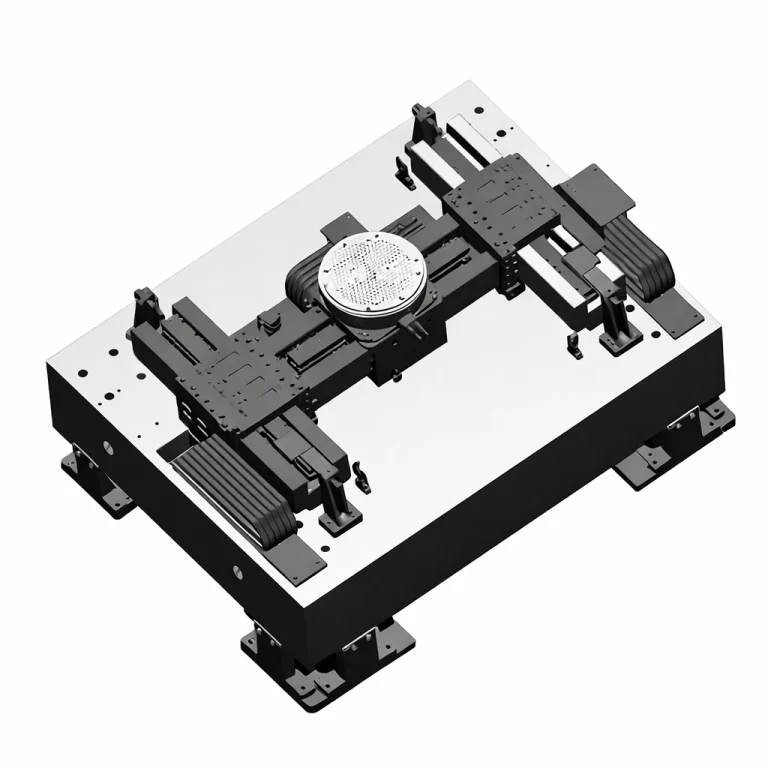
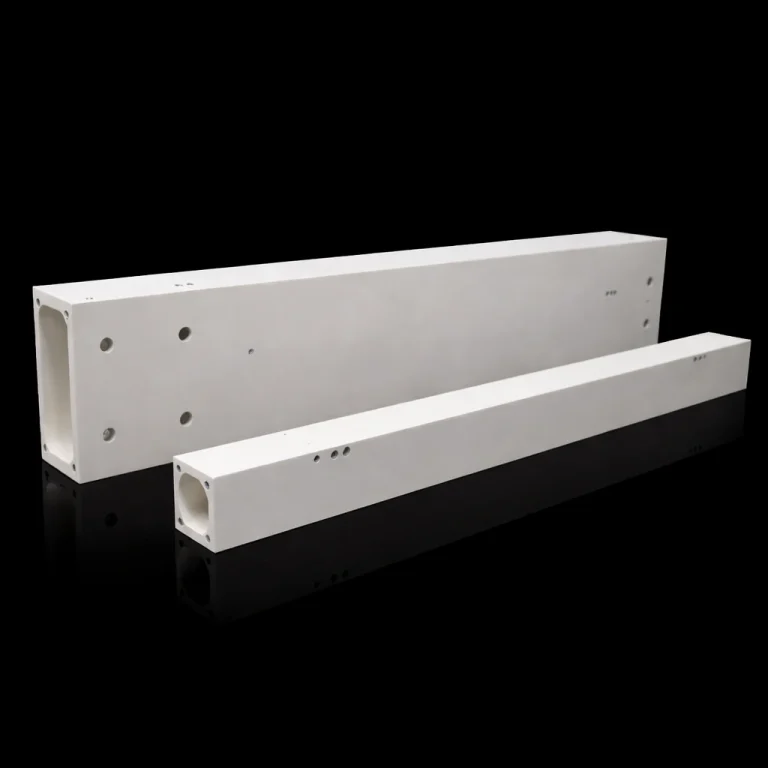
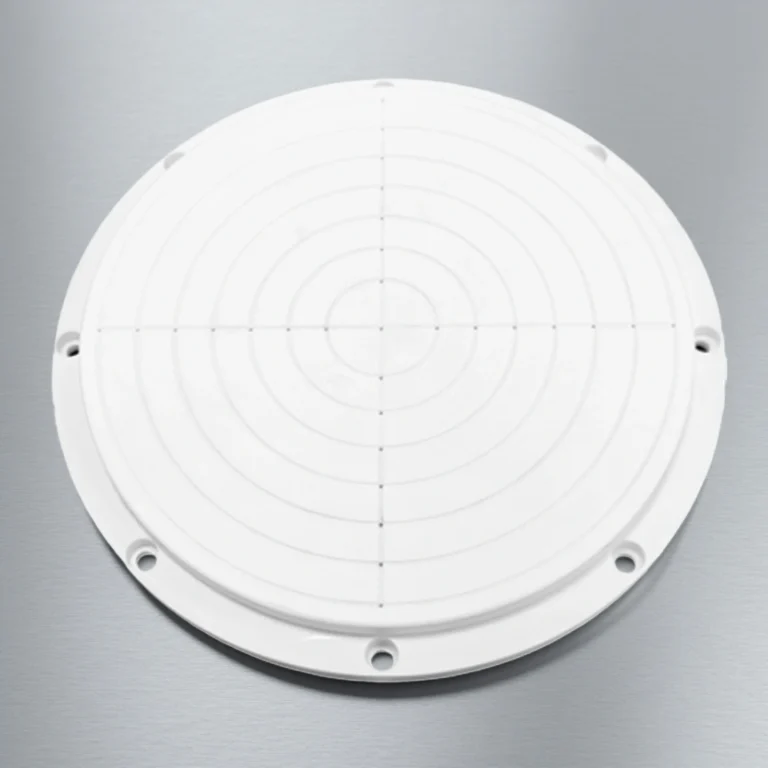
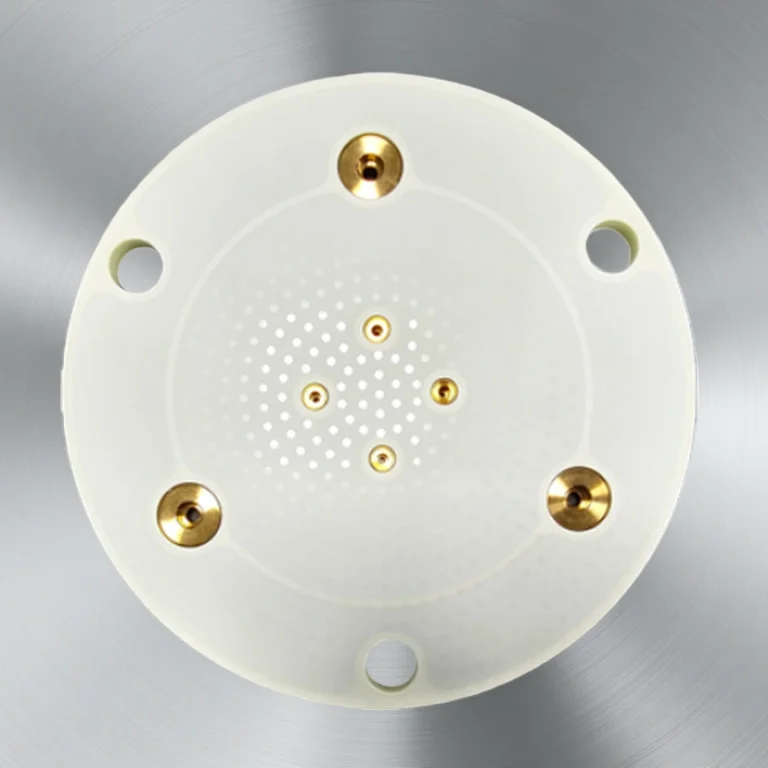
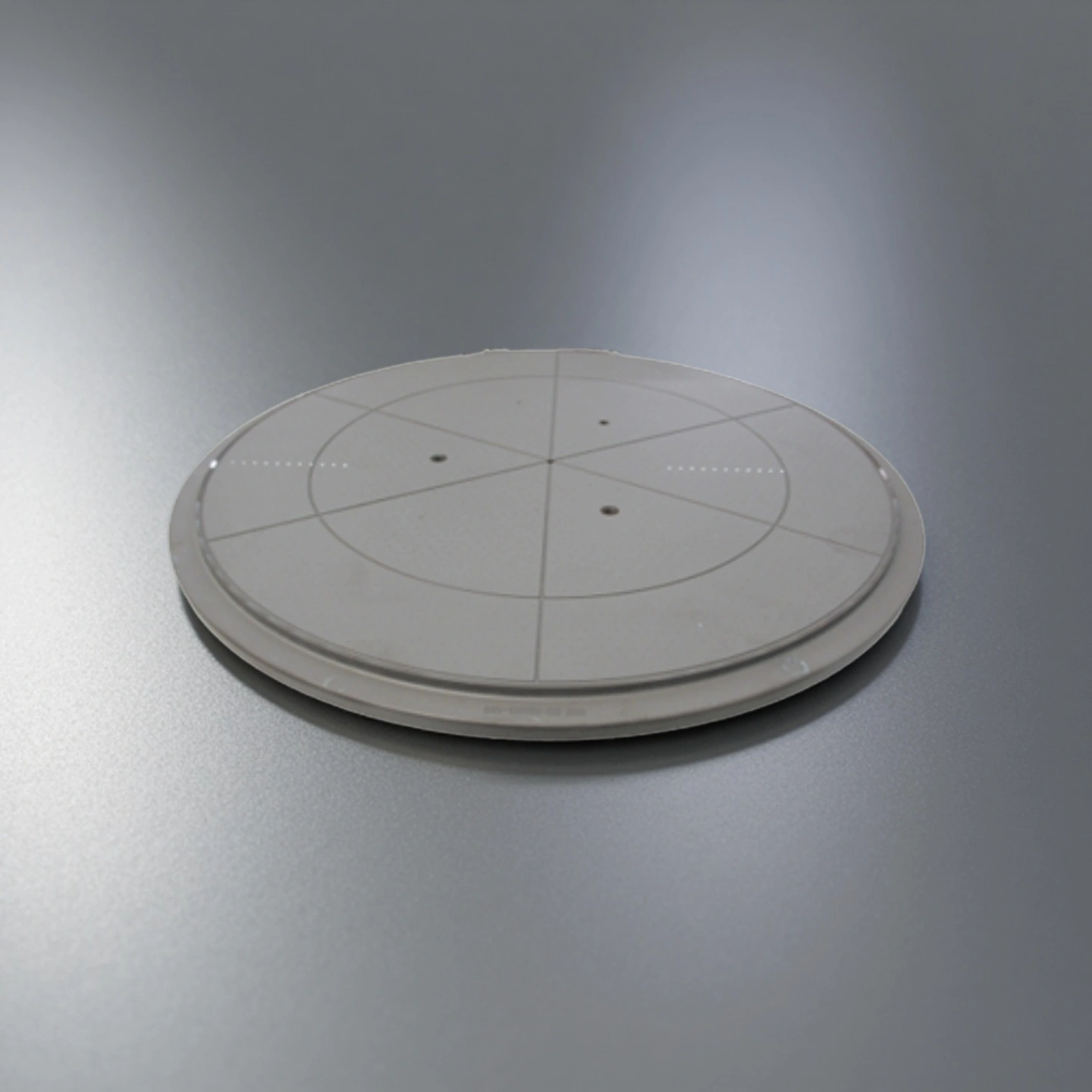
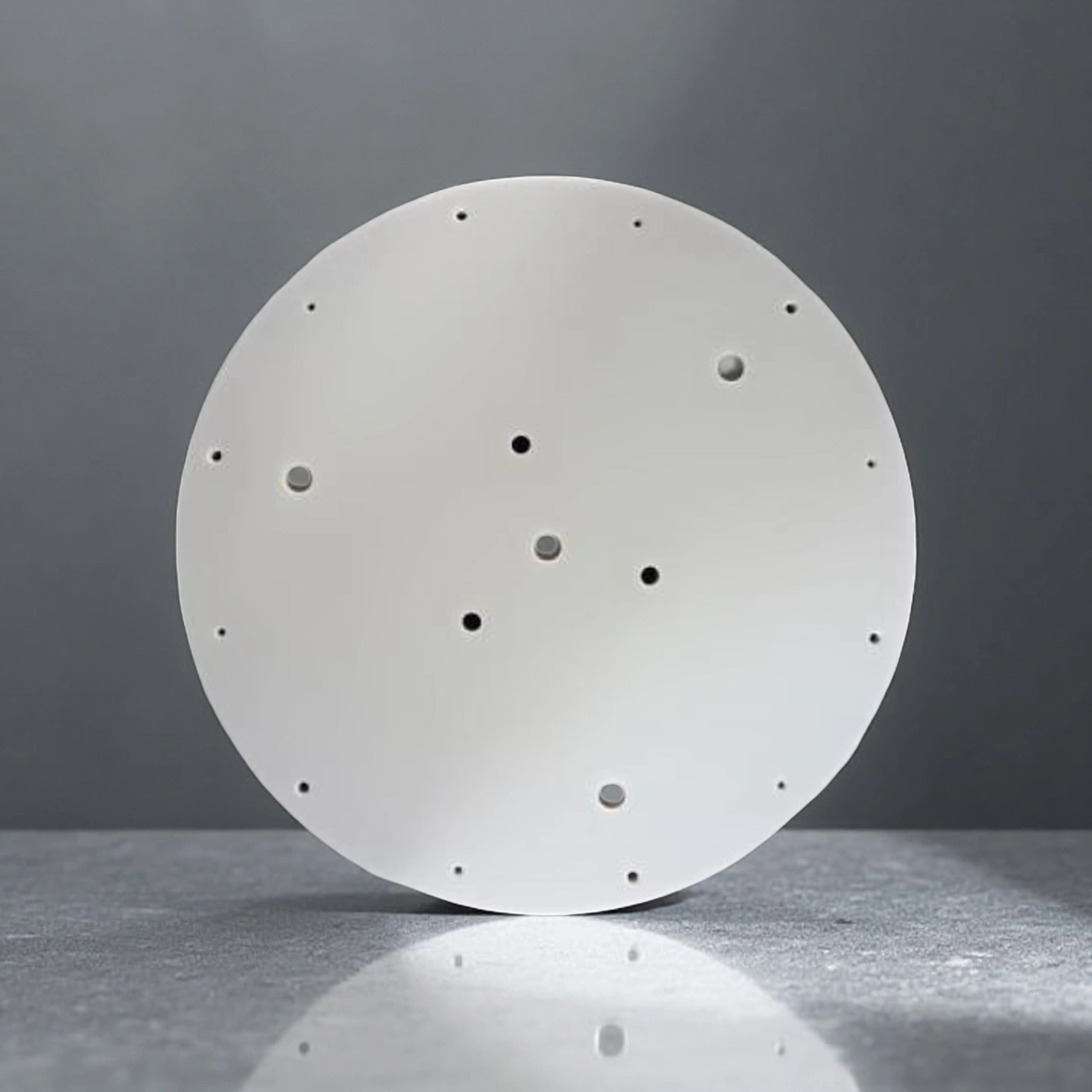
The aluminum nitride ceramic electrostatic chuck is a dielectric wafer chuck that uses a high thermal conductivity AlN body and embedded electrodes to clamp semiconductor wafers during etch and deposition processes. It integrates electrostatic clamping, backside gas cooling and wafer heating in one compact ceramic assembly, and is supplied in both standard wafer sizes and fully custom geometries.

Catalogue No. AT-AIN-JD1001
Material  Aluminum Nitride
Thermal Conductivity ≥170 W/m·K
Flatness Tolerance ≤0.01 mm
Dimensions/Sizes ~4.5–5.5 × 10⁻⁶ /K (25–400 °C)
24H Standard Dispatch
Small Batch Support OEM
Factory Direct
Expert Engineering Support

Aluminum nitride ceramic electrostatic chucks are dielectric wafer chucks that combine a high thermal conductivity AlN body with built-in electrodes and gas distribution channels to clamp, heat and cool wafers during plasma and vacuum processes. Electrostatic chucks are widely used in plasma etching, chemical vapour deposition (CVD), physical vapour deposition (PVD) and ion implantation equipment because they hold the wafer securely while allowing precise temperature control and backside gas cooling

Aluminum Nitride Ceramic Electrostatic Chuck Benefits

  • High heat-flux handling with AlN body
    The aluminum nitride ceramic body supports high thermal conductivity levels, which helps the chuck handle high plasma power densities while keeping wafer temperature more uniform across the surface.

  • Integrated temperature control structure
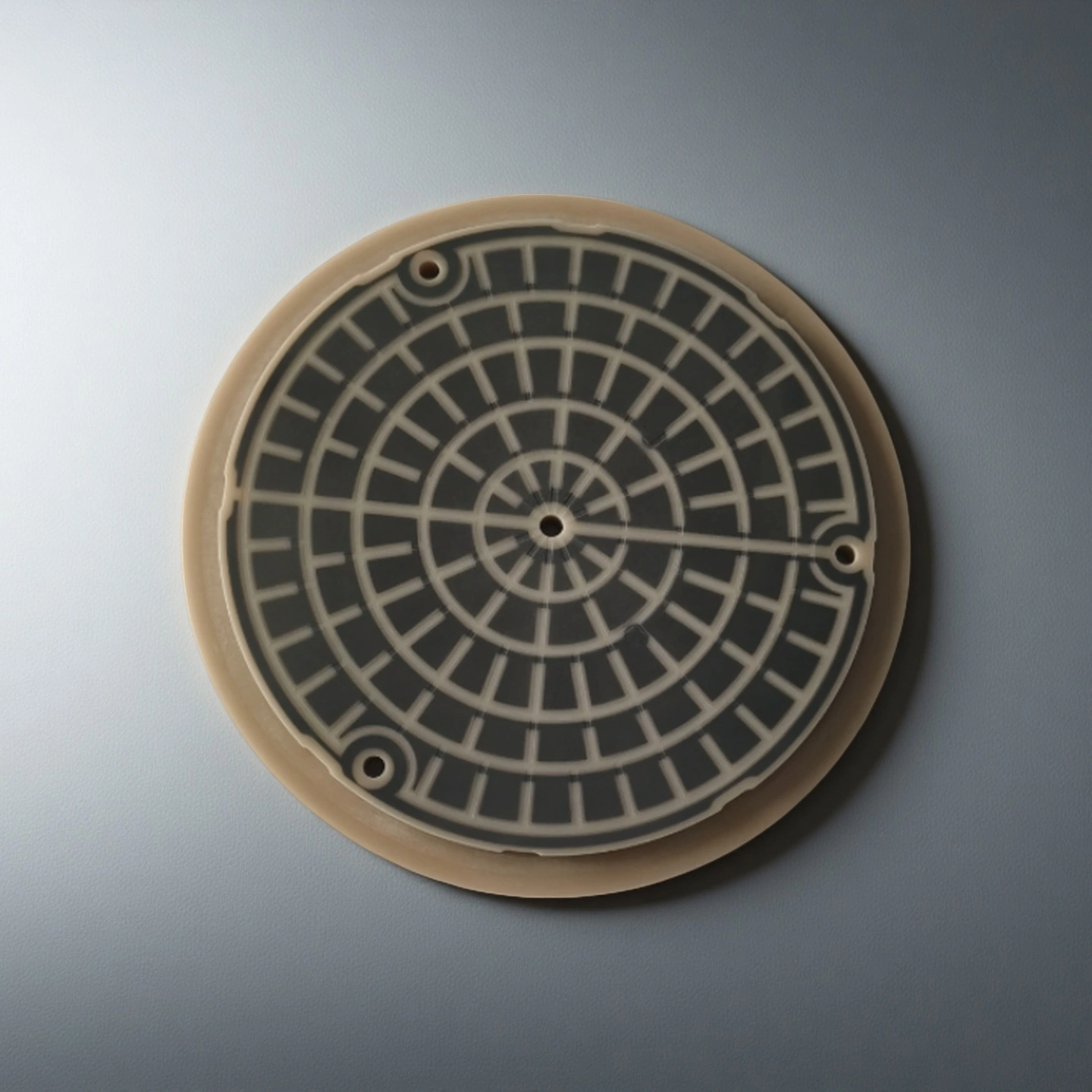
    The electrostatic chuck can incorporate multi-zone heater layouts, helium backside cooling grooves and embedded sensor holes to support tight wafer temperature uniformity targets used in semiconductor processing.

  • Stable electrostatic clamping performance
    The ceramic dielectric stack and electrode layout are designed to provide consistent chucking force, controlled release behaviour and good insulation under typical process voltages and frequencies used in plasma tools.

  • Low particle and plasma compatible surface
    The polished AlN surface and controlled surface features help limit particle generation and are compatible with halogen-based plasma chemistries used in etch and CVD chambers.

  • Platform-specific geometries
    The aluminum nitride ceramic electrostatic chuck can be machined and ground to match specific chamber interfaces, lift-pin layouts and seal surfaces, which supports drop-in use on existing tool platforms and customized systems.


Aluminum Nitride Electrostatic Chuck Properties

Property Content Unit Unit ALN-170 ALN-200 ALN-230
Basic Properties Color gray light yellow light yellow
Density g/cm³ 3.2-3.3 3.2-3.3 3.2-3.3
Surface Roughness μm 0.2-0.75 0.2-0.75 0.2-0.8
Camber length ‰ ≤3‰ ≤3‰ ≤3‰
Hardness HV 1100 1100 1100
Thermal Properties Max Operating Temperature °C 1100 1100 1100
Thermal Conductivity W/m·K 170-190 190-220 220-230
Coefficient of Thermal Expansion 10⁻⁶/K(20-400°c) 4-5 4-5 4-5
Coefficient of Thermal Expansion 10⁻⁶/K(400-800°c) 5-6 5-6 5-6
Mechanical Properties Flexural Strength MPa 300-400 350-450 400-500
Tensile Strength MPa 200-300 250-350 280-380
Compressive Strength MPa 2000-3000 2200-3200 2500-3500
Electrical properties Dielectric Constant at 1MHz 8-9 8-9 8-9
Dielectric strength KV/mm ≥15 ≥15 ≥15
Volume resistivity 20℃ Ω.cm ≥1014 ≥1014 ≥1014


AlN Ceramic Electrostatic Chuck Specifications

Item No. Diameter (mm) Thickness (mm) Purity
AT-AIN-JD1001 Customize


Aluminum Nitride Electrostatic Chuck Packaging

  • Each aluminum nitride ceramic electrostatic chuck is first cleaned and packed in a cleanroom-compatible bag to limit particle contamination during shipping.
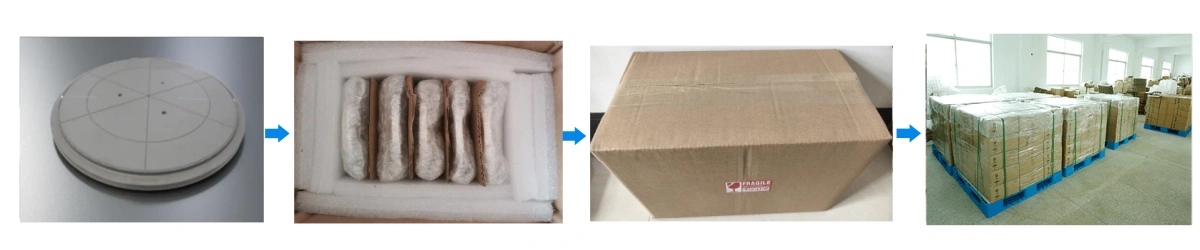

Aluminum Nitride Electrostatic Chuck Packaging

Aluminum Nitride Ceramic Electrostatic Chuck Applications

  • Plasma Etching Tools for Logic, Memory and Specialty Devices

    ✅Key Advantages

    1. High heat-flux support – The AlN ESC body enables efficient heat removal in high power plasma etch recipes where the wafer surface receives significant ion and radical heating.
    2. Tight temperature uniformity – Multi-zone heating and controlled backside gas gaps help achieve wafer temperature uniformity within narrow windows that etch processes require.
    3. Stable clamping during pressure ramps – Proper electrode selection and AlN dielectric properties support stable clamping at the pressures typical of high aspect-ratio etch processes.

    ✅ Problem Solved

    A process engineering team running a high-density plasma etch chamber needed to improve CD uniformity and reduce edge-ring defects on 200 mm wafers. By switching from a standard alumina ESC to an aluminum nitride ceramic electrostatic chuck with multi-zone heaters and optimized helium groove patterns, wafer surface temperature uniformity was improved to within approximately 2 °C over the active area, a value consistent with multi-zone heater designs reported in literature.This improvement supported tighter etch control and reduced the number of wafers requiring re-qualification after major chamber maintenance.

  • CVD / PVD / PECVD Deposition Systems for Power and RF Devices

    ✅Key Advantages

    1. Temperature headroom for elevated processes – AlN ESCs support higher operating temperature ranges compared with some alumina-based solutions, matching the ranges reported for advanced ESC products.
    2. CTE match to silicon – The AlN body has a coefficient of thermal expansion close to silicon, which helps limit wafer bow during thermal cycling in deposition tools.
    3. Support for long deposition cycles – High thermal conductivity and stable dielectric behaviour help the chuck cope with long recipe times without excessive temperature gradients across the wafer.

    ✅ Problem Solved

    A power device deposition line operating at several hundred degrees Celsius needed to reduce thickness non-uniformity on 150 mm wafers. Literature on multi-zone heater and chuck design shows that combining high conductivity ceramics with optimized heating can maintain uniformity within a small temperature band during long deposition cycles.By adopting an aluminum nitride electrostatic chuck with multiple heater zones, the equipment integrator aligned its tool performance with these design principles and supported more consistent film properties across the wafer surface.

  • Vacuum Coating and Surface Engineering Systems

    ✅Key Advantages

    1. Compatibility with halogen-based and reactive atmospheres – AlN ESCs offer corrosion resistance suitable for halogen and reactive gas environments documented for advanced ceramic
    2. Support for non-standard substrates – Custom AlN ESC designs allow clamping and heating of small panels, discs or special fixtures used in vacuum coating lines.
    3. Reduced mechanical shadowing – Electrostatic clamping avoids mechanical clamps on the front side, which supports more uniform coating coverage.

    ✅ Problem Solved

    A vacuum coating company needed to coat batches of precision components where local overheating had caused variation in layer structure. Studies on ESC and substrate temperature control in vacuum systems highlight the impact of heat transfer management on film properties. By integrating an aluminum nitride electrostatic chuck with defined heating zones and controlled backside gas gaps, the company brought component surface temperatures into a tighter band during long coating cycles and improved batch-to-batch consistency.

Usage Guide – Aluminum Nitride Ceramic Electrostatic Chuck

  • Installation

    1. Ensure that the pedestal or cooling plate surface is clean, flat and free from burrs before installing the aluminum nitride ceramic electrostatic chuck.
    2. Use the specified bolts, pins and seals according to the drawing, tightening bolts in a cross pattern to avoid bending the ceramic chuck.
    3. Verify that electrical connections to the ESC electrodes, heater circuits and sensors follow the prescribed torque and insulation requirements.

  • Operation

    1. Bring process recipes up to target temperature gradually so that thermal gradients across the AlN chuck remain within the limits defined during tool qualification.
    2. Control helium backside gas pressure according to the recommended range for the specific process and wafer size, and verify that gas distribution grooves are not blocked.
    3. Apply the electrostatic clamping voltage within the specified range and observe the clamp and declamp timing described in the tool manual.

  • Storage

    1. Store spare aluminum nitride electrostatic chucks in their original clean packaging or in clean cabinets with dust protection.
    2. Avoid stacking chucks directly on top of each other; use trays or separators to prevent surface and edge contact.

  • Cleaning and maintenance

    1. Use cleanroom-compatible wipes and approved cleaning agents to gently clean the wafer surface when necessary, avoiding abrasive actions that could change the surface finish.
    2. Do not use metal tools, hard brushes or sharp instruments on the chucking surface or edges.
    3. Inspect the chuck periodically for chips, cracks or discolouration, and remove chucks with visible damage from production use.

  • Common incorrect operations and remedies

    1. Incorrect backside gas pressure
    If helium pressure is set too high or channel restrictions occur, wafer release can be unstable and temperature uniformity may degrade. Adjust the pressure to the qualified range for the recipe and check for contamination in gas grooves and orifices.

    2. Running outside the qualified temperature range
    Operating the aluminum nitride electrostatic chuck outside the specified temperature window can stress the ceramic or change the dielectric properties. Align recipe setpoints with the qualified ESC temperature range documented for the tool and material.

    3. Over-tightening mounting hardware
    Excessive torque on mounting bolts can introduce stress concentrations in the ceramic body. Use calibrated torque tools and follow the torque values defined in the installation drawing during each maintenance cycle.

FAQ – Aluminum Nitride Ceramic Electrostatic Chuck

  1. Q: What is an aluminum nitride ceramic electrostatic chuck used for?
    A: An aluminum nitride ceramic electrostatic chuck is used to clamp and temperature-control wafers or substrates during plasma etching, CVD, PVD and related semiconductor or vacuum processes, combining electrostatic holding with heating and cooling functions.
  2. Q: Why choose an aluminum nitride electrostatic chuck instead of an alumina ESC?
    A: An aluminum nitride electrostatic chuck offers higher thermal conductivity and a coefficient of thermal expansion close to silicon, which helps handle higher heat loads and maintain better wafer temperature uniformity compared with many alumina-based ESCs.
  3. Q: What wafer sizes can an aluminum nitride electrostatic chuck support?
    A: Aluminum nitride ceramic electrostatic chucks are commonly produced for 100 mm, 150 mm, 200 mm and 300 mm wafers, and can also be customized for smaller substrates or panels used in R&D and specialty equipment.
  4. Q: What operating temperature range is typical for an AlN electrostatic chuck?
    A: Operating ranges depend on the tool design, but commercial electrostatic chucks with AlN ceramics are used over wide temperature ranges that can extend from sub-ambient up to several hundred degrees Celsius, according to published ESC product data.
  5. Q: How does an aluminum nitride electrostatic chuck help with wafer temperature uniformity?
    A: The aluminum nitride body conducts heat efficiently, and when combined with multi-zone heaters and controlled helium backside cooling, the electrostatic chuck can support wafer temperature uniformity within narrow bands reported for advanced chuck designs.
  6. Q: Can an aluminum nitride ceramic electrostatic chuck be customized for a specific etch or deposition tool?
    A: Yes, the aluminum nitride electrostatic chuck can be customized for a specific chamber, including diameter, thickness, electrode pattern, gas groove layout, heater zones and mounting interface, based on the tool platform and process conditions.

Customer Reviews – Aluminum Nitride Ceramic Electrostatic Chuck

  • ⭐️⭐️⭐️⭐️⭐️
    We introduced the aluminum nitride ceramic electrostatic chuck on a new plasma etch platform and saw a significant improvement in wafer temperature stability during long recipes. The custom AlN ESC geometry matched our chamber interface accurately and integrated well with our multi-zone heater design.
    -- Michael H., Senior Process Engineer, NovaEtch Systems (Germany)
  • ⭐️⭐️⭐️⭐️⭐️
    For our CVD and PVD tools we needed a supplier that could support custom aluminum nitride electrostatic chucks in small batches for different equipment models. The ability to work directly with an AlN ceramic manufacturer simplified our sourcing and helped standardise several spare parts across platforms.
    -- Soo-jin Park, Procurement Manager, K-Tech Vacuum Co. (South Korea)
  • ⭐️⭐️⭐️⭐️⭐️
    The custom AlN electrostatic chuck body allowed us to combine He cooling patterns, sensor locations and a non-standard wafer size on one carrier. The machining tolerances and flatness met our design targets, which reduced the time needed for chamber re-qualification.
    --David L., Equipment Development Engineer, Insight Devices Inc. (USA)
  • ⭐️⭐️⭐️⭐️⭐️
    We use aluminum nitride ceramic electrostatic chucks in a vacuum coating line where substrate temperature control is critical. Having a consistent AlN ESC source that understands drawing changes and special packaging for export has helped us keep coating performance and logistics under control.
    -- Elena R., Supply Chain Engineer, EuroCoat Solutions (Italy)
customize size

Customize– Aluminum Nitride Ceramic Electrostatic Chucks

ADCERAX supplies aluminum nitride ceramic electrostatic chucks mainly according to customer drawings and process requirements, covering standard wafer formats and non-standard chamber designs. This customization service focuses on the AlN electrostatic chuck body and related ceramic interfaces.

  • Chuck outer diameter, inner cut-outs and overall thickness for 100 mm, 150 mm, 200 mm, 300 mm wafers or custom substrates.

  • Flatness and parallelism targets on the chucking surface and backside reference faces according to specific process windows.

  • Electrode configuration, including monopolar or bipolar layouts, electrode patterns and lead-out locations.

  • Backside helium gas groove patterns, gas inlet positions and zone segmentation for different pressure control strategies.

  • Heater zone division, sensor holes and embedded heater slot positions based on target wafer temperature ranges.

  • Mounting interfaces such as bolt-hole circles, dowel pin holes and sealing surfaces to match the pedestal or cooling plate.

  • Surface finish levels on wafer side and backside, including polished, lapped or functional textured surfaces.

  • Peripheral features such as lift-pin holes, focus ring support surfaces and step changes around the active chucking area.

  • Material grade of AlN ceramic, including target thermal conductivity band and purity level according to the project.

Related Products

ADCERAX - Your Trusted Advanced Ceramics Manufacturing Partner

Direct factory manufacturing with comprehensive ceramic materials expertise and global supply capabilities

Direct Factory Manufacturing

China-based ceramic materials production facility with state-of-the-art equipment

Engineering Team

Experienced professionals in advanced ceramics applications and custom design

Quality Control

Strict quality control standards for technical ceramics manufacturing and quality management

Global Supply Chain

Serving customers worldwide with technical ceramics and rapid response

24/7 Technical Support

Round-the-clock support for ceramic components inquiries and technical assistance

500+ Satisfied Customers

Trusted by global customers for advanced ceramic materials and precision components

Get in touch with us

Our team will be happy to respond to you in less than 24 hours.

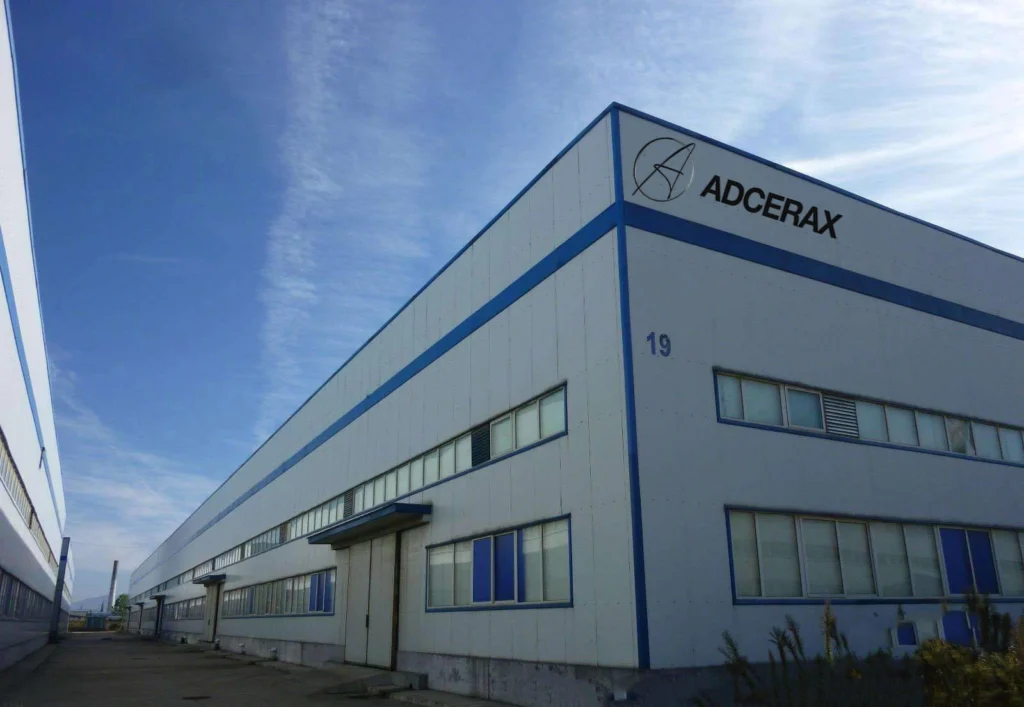
Adcerax's factory

Quick Quotation

*Our team will answer your inquiries within 24 hours.

*Your information will be kept strictly confidential.

Ready to Solve Your Engineering Challenge?

Partner with ADCERAX for reliable, high-performance advanced ceramic solutions. Our engineers are ready to discuss your project.

E-mail

info@adcerax.com

Phone

+(86) 0731-74427743 | WhatsApp: +(86) 19311583352

Response Time

Within 24 hours

Quick Quote

The more details you provide, the faster we can quote.

*We respond within 24 hours. All inquiries are confidential.

Download Catalog

Get Your Custom Sulution

The more details you provide, the faster we can respond.

customize size

*We respond within 24 hours. All inquiries are confidential.

Download Catalog