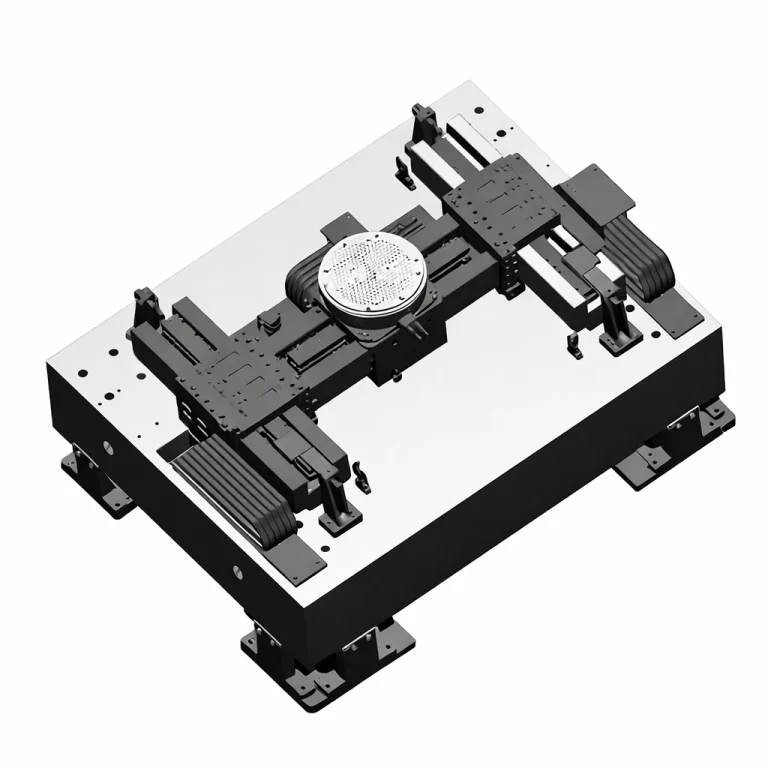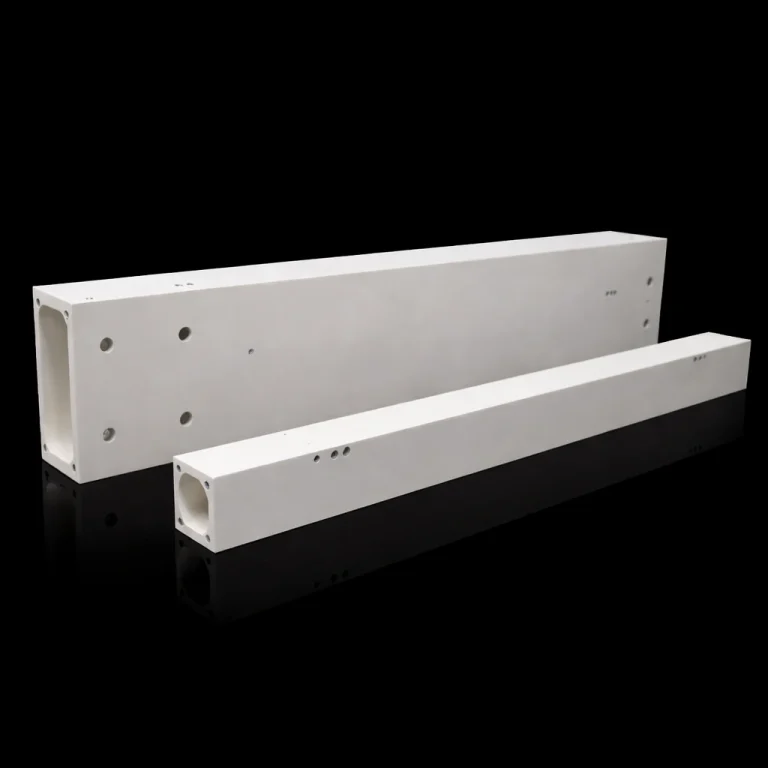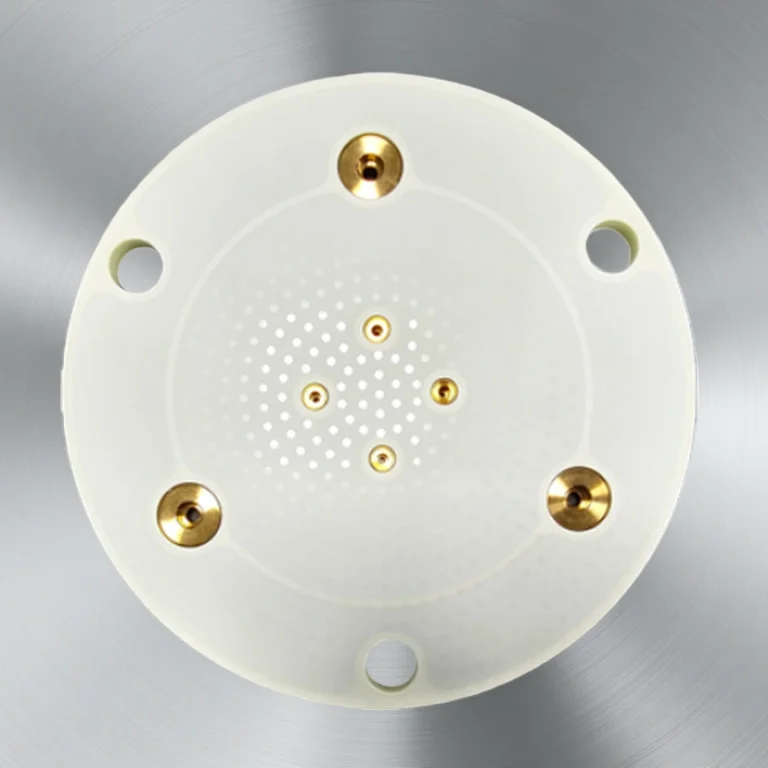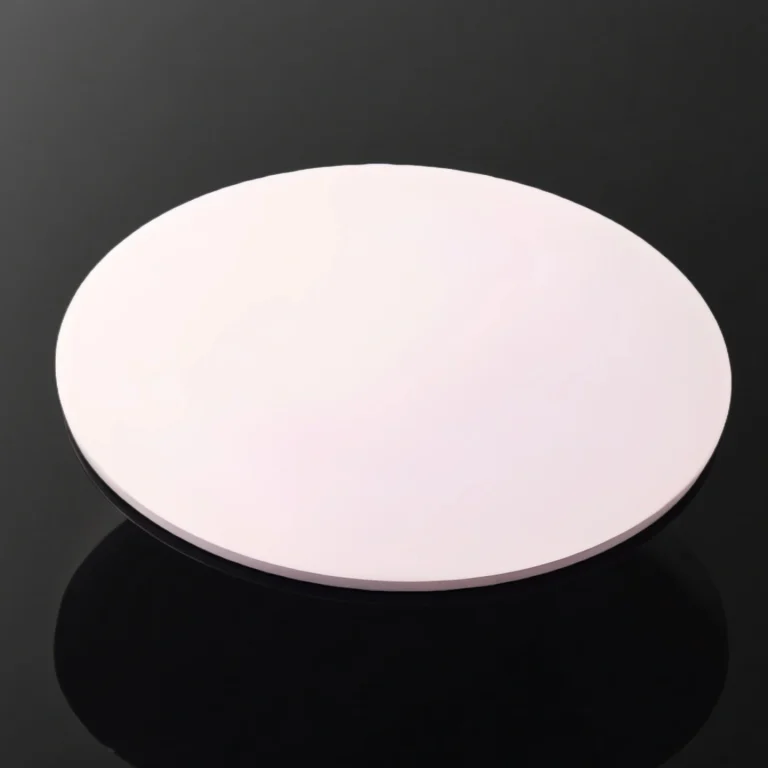
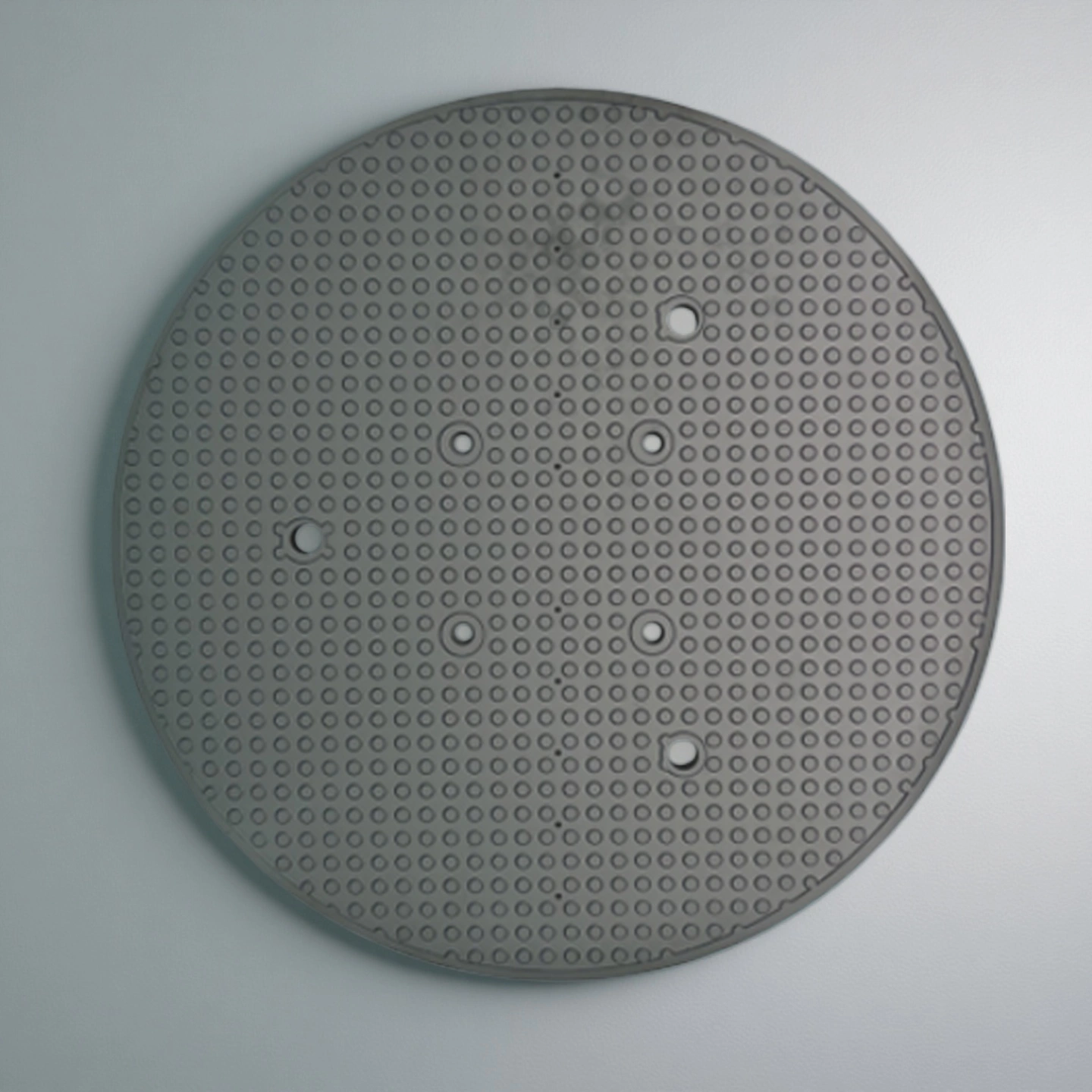
High Purity Alumina Vacuum Chuck for Semiconductor Back-End Service Fabs

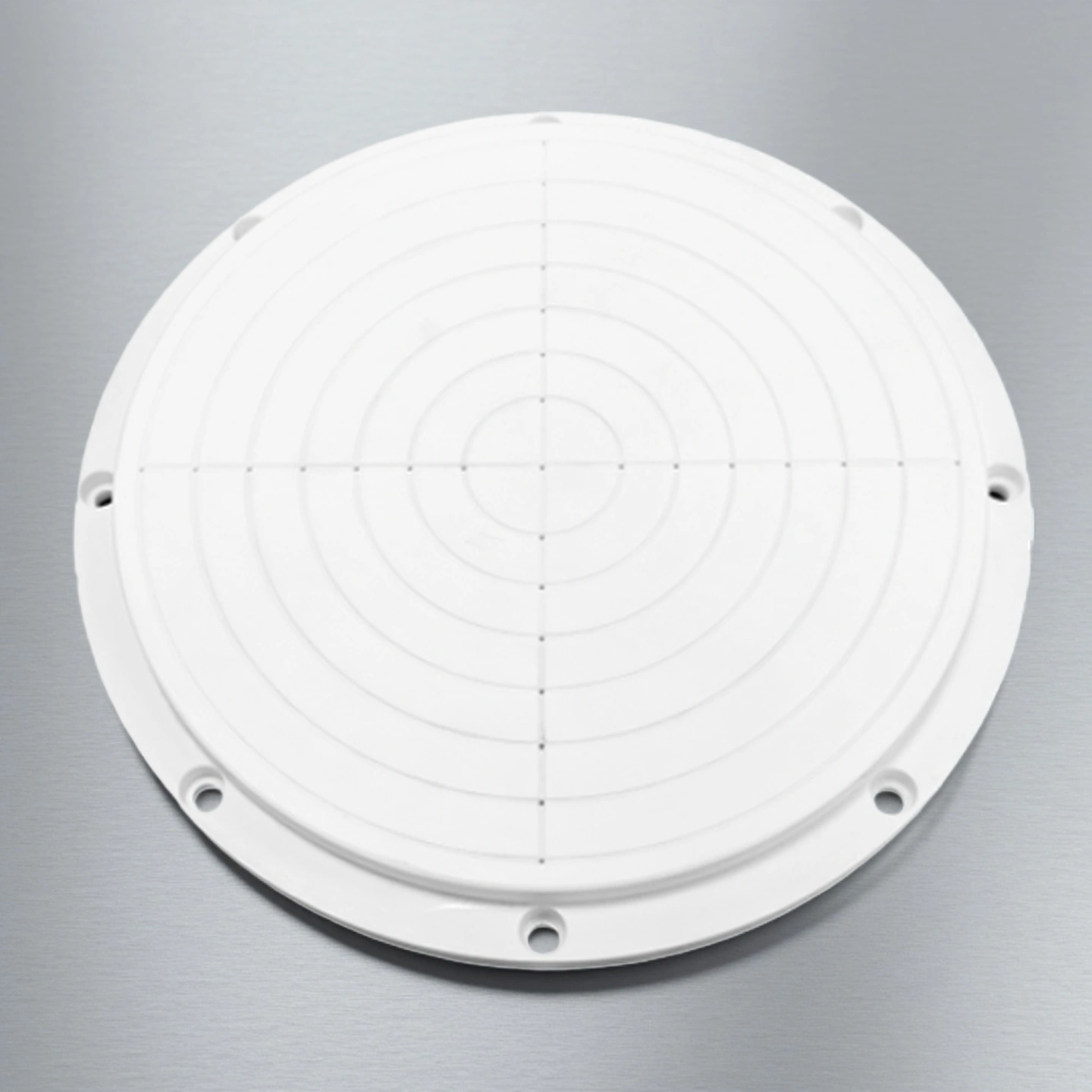
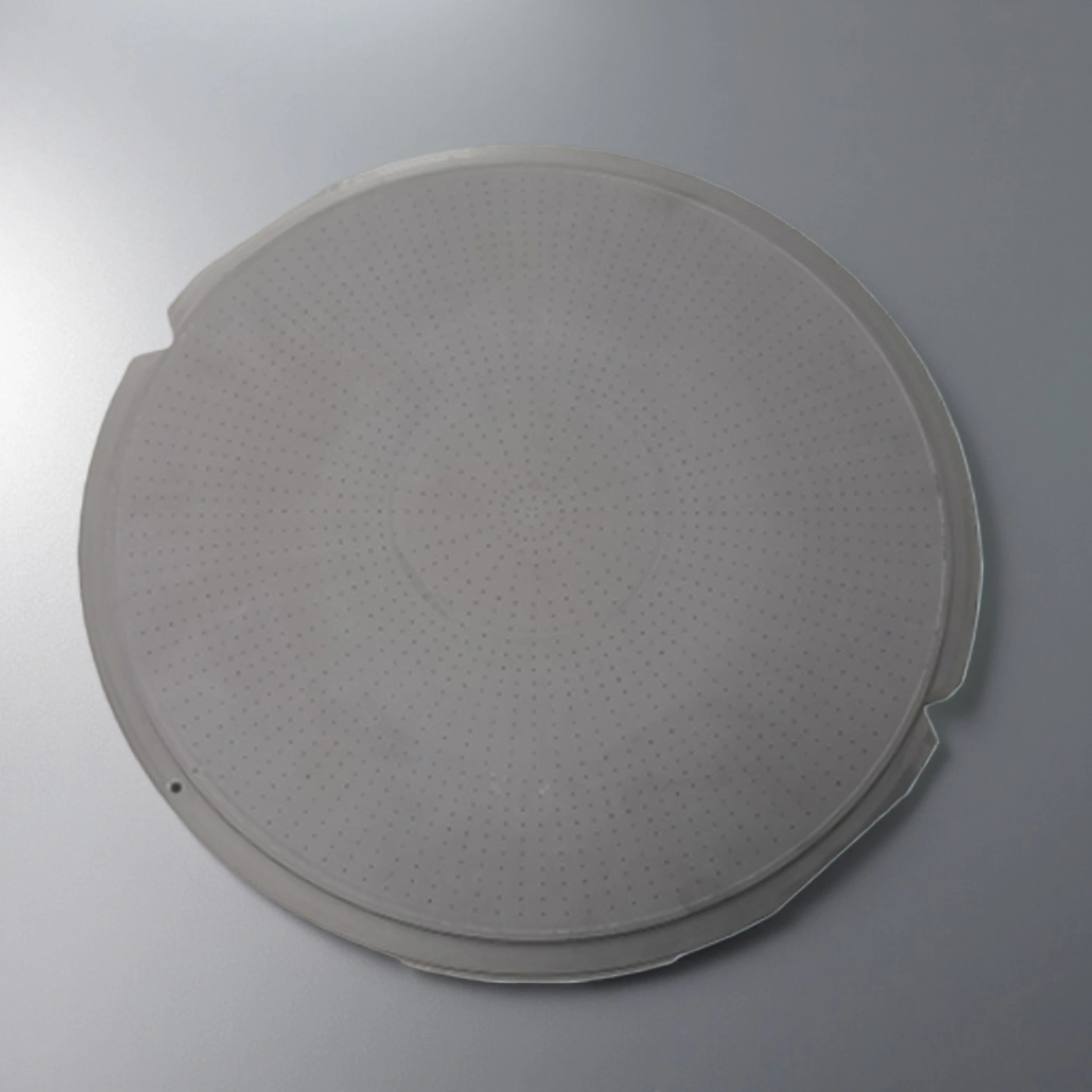
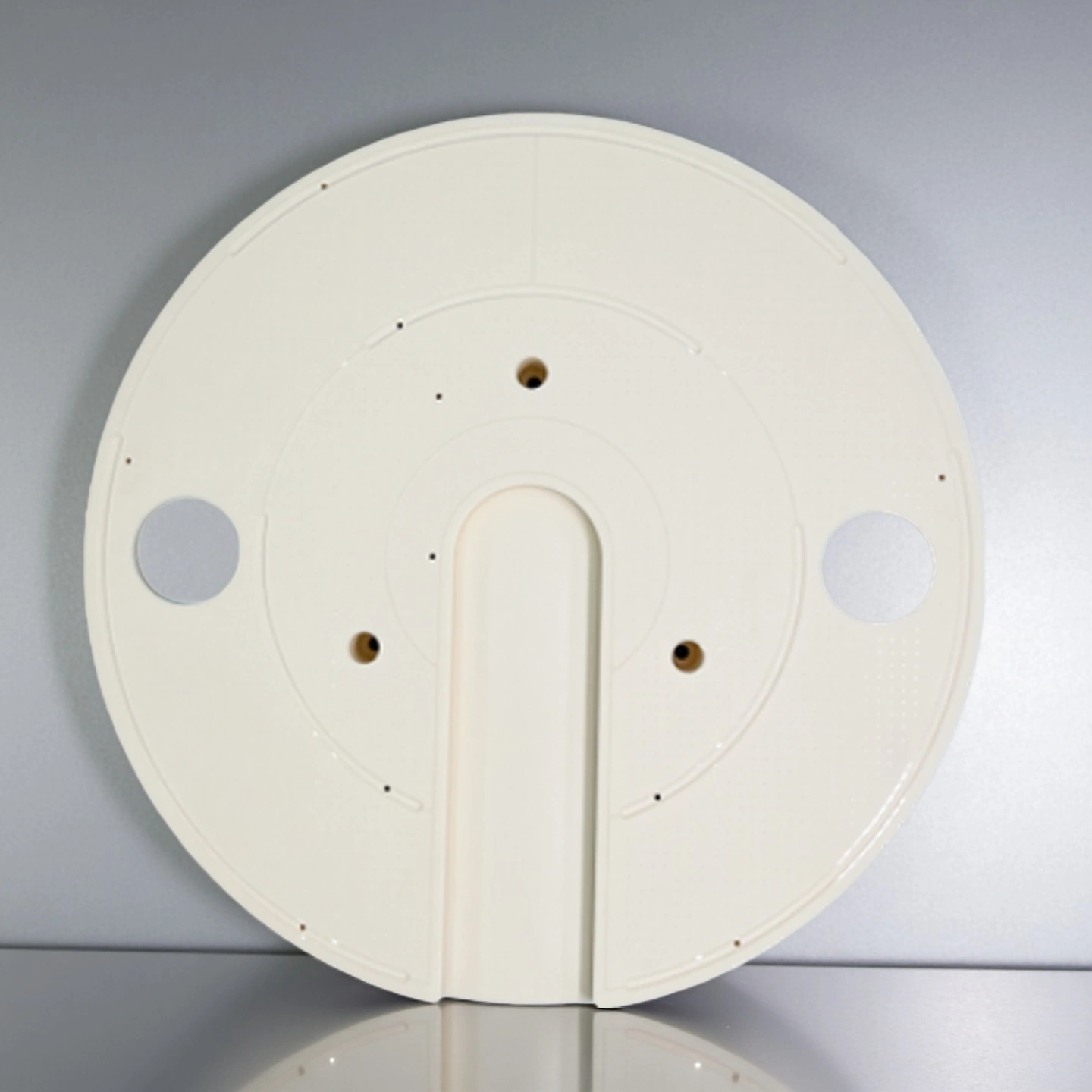
ADCERAX supplies high purity alumina vacuum chucks in round formats for 100–300 mm wafers and in square or rectangular plates for panels and optical parts, as well as fully custom outlines. Port locations, suction zones, pore characteristics and mounting patterns can all be tailored so that each high purity alumina vacuum chuck matches the customer’s tool layout and process window.

Catalogue No. AT-HP-XP01
Material Al₂O₃
Purity  99%-99.99%
Mean pore size of porous surface 1–25 μm (design-dependent)
Top surface flatness(after lapping) ≤ 3–5 μm over 200–300 mm diameter
24H Standard Dispatch
Small Batch Support OEM
Factory Direct
Expert Engineering Support

A High Purity Alumina Vacuum Chuck is a porous ceramic workholding plate made from high-purity Al₂O₃ that uses vacuum to clamp wafers, glass panels or other flat parts uniformly on its surface. Vacuum is drawn through a network of micron-scale pores and internal channels in the alumina body, keeping thin and fragile workpieces flat and stable during grinding, thinning, polishing, dicing or inspection while maintaining good cleanliness and dimensional stability.


High Purity Alumina Vacuum Chuck Benefits

  • Uniform clamping of ultrathin workpieces – the porous alumina surface draws vacuum through thousands of fine pores, distributing the holding force over the entire contact area instead of a few grooves. This helps keep wafers below 100 μm thickness or fragile glass panels flat during grinding, thinning or dicing, reducing local bending, print-through marks and sudden slip when the tool accelerates or decelerates.

  • High flatness for precision grinding and metrology – after precision grinding and lapping, a high purity alumina vacuum chuck can reach flatness on the order of a few microns over a 200–300 mm clamping area. This gives the workpiece a stable reference plane, supports tight SFQR and total-thickness-variation control, and reduces chuck-induced errors in optical or 3D measurement systems.

  • Stable material for cleanroom use – high purity alumina has low outgassing and good resistance to common cleaning agents and process chemicals, so the vacuum chuck introduces fewer mobile ions and particles into the process chamber. The hard ceramic surface also resists wear from repeated wafer loading, which helps maintain cleanliness and dimensional stability over long tool lifetimes.

  • Microporous surface adaptable to many part sizes – controlled pore size and porosity let one high purity alumina vacuum chuck hold full wafers, partial wafers or multiple small components without redesigning the fixture. By tuning pore characteristics and vacuum zoning, the same chuck can be used for different product families while keeping leakage within the pump capacity and maintaining consistent holding force.

  • Serviceable workholding platform – unlike soft vacuum cups or thin carrier plates that are replaced frequently, porous ceramic vacuum chucks can be re-lapped when the surface wears or flatness drifts. This allows users to restore performance, extend service life across many maintenance cycles and lower the long-term fixture cost per processed wafer or part.


High Purity Alumina Vacuum Chuck Properties

Property Unit 99.5% Al₂O₃ 99.6% Al₂O₃ 99.7% Al₂O₃ 99.8% Al₂O₃ 99.9% Al₂O₃ 99.99% Al₂O₃
Alumina content % 99.5 99.6 99.7 99.8 99.9 99.99
Density g/cm³ 3.89 3.91 3.92 3.93 3.94 3.98
Open porosity % 0
Color Ivory Ivory Ivory Ivory Ivory Ivory
Water absorption % 0 0 0 0 0
Young’s modulus (Elastic modulus) GPa 375 356 357 358 359 362
Shear modulus GPa 152
Bulk modulus GPa 228
Poisson’s ratio 0.22
Compressive strength MPa 2600 2552 2554 2556 2558 2570
Flexural strength MPa 379 312 313 314 315 320
Fracture toughness MPa·m¹ᐟ² 4
Hardness GPa 14.1 (≈1440 kg/mm²) 23 24 25 26 30
Thermal conductivity W/m·K 35 32–37 33–38 34–39 35–40 36–42
Thermal shock resistance ΔT °C 222 223 224 225 228
Maximum use temperature (no load) °C ≤1750 1755 1760 1765 1770 1800
Coefficient of thermal expansion 10⁻⁶/°C 8.4
Specific heat J/kg·K 880
Volume resistivity Ω·cm >1×10¹⁴ >1×10¹⁴ >1×10¹⁴ >1×10¹⁴ >1×10¹⁴ >1×10¹⁴
Dielectric constant (relative permittivity) 9.8 9.83 9.84 9.85 9.86 9.92
Dielectric strength kV/mm 16.9 23.2 23.4 23.6 23.8 24
Dissipation factor (loss factor @ 1 kHz) 0.0002


High Purity Alumina Vacuum Chuck Specification

High purity alumina vacuum chuck
Item No. Diameter (mm) Thickness (mm)
AT-HP-XP01 Customize


High Purity Alumina Ceramic Vacuum Chuck Packaging

  • Each high purity alumina vacuum chuck is cleaned, dried and covered with a cleanroom-grade protective film on the porous surface.
  • The chuck is locked in a custom foam cradle or molded tray to prevent edge damage and bending during transport.
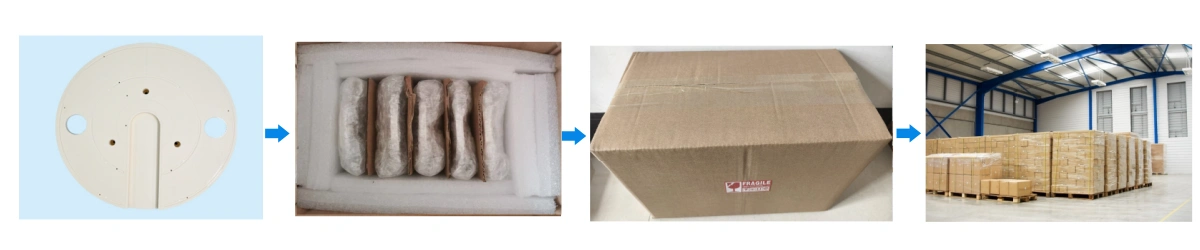

High purity alumina vacuum chuck packaging

Application Scenarios — High Purity Alumina Vacuum Chuck

  • Semiconductor Wafer Grinding and Thinning

    ✅Key Advantages

    1. Micron-level flatness for back-grinding – lapped alumina vacuum chucks help keep ground wafer flatness within a few microns so that downstream lithography and packaging steps stay inside SFQR limits.

    2. Stable support for ultrathin wafers – porous chucks are standard in wafer grinding configurations and are used to support wafers below 100 μm during high-productivity grinding.

    3. Reduced breakage and slip – by distributing suction through microscopic pores, porous alumina vacuum chucks lower peak contact pressure and help reduce wafer slippage compared with chucks that rely on larger channels.

    ✅ Problem Solved

    In back-end wafer fabs, unplanned downtime on a grinding or thinning tool can cost hundreds of thousands to more than one million dollars per hour when lost wafer value and throughput are included. A high purity alumina vacuum chuck with controlled porosity and flatness helps keep the wafer stable during in-feed grinding, limiting edge chipping and breakage events that would otherwise force tool stoppages and requalification. By reducing the frequency of chuck-related defects, users can recover productive hours on critical tools and protect high-value wafers.

  • Wafer Dicing, Inspection and Metrology Platforms

    ✅Key Advantages

    1. Uniform clamping for dicing streets – porous alumina vacuum chucks hold the wafer flat during dicing so that blade depth and kerf width stay consistent across the entire wafer.

    2. Improved measurement repeatability – vacuum chucks with high flatness reduce chuck-induced topography errors that otherwise degrade optical metrology accuracy.

    3. Refurbishable platforms – worn dicing or inspection chucks can be re-lapped or repaired rather than fully replaced, which lowers lifetime tooling cost.

    ✅ Problem Solved

    Optical metrology studies show that the flatness error seen on a wafer is a combination of the wafer itself and the vacuum chuck underneath, so a poorly maintained chuck directly introduces nanotopography errors. By moving to a high purity alumina vacuum chuck with controlled flatness and the option of periodic lapping, metrology and dicing users can limit chuck-driven variation, reduce remeasure cycles and keep tools running closer to their specified throughput.

  • Optical Component Polishing and Precision Micromachining

    ✅Key Advantages

    1. Gentle holding of brittle optics – a porous alumina vacuum chuck spreads load over a large contact area, which lowers the risk of imprints and edge chips on lenses or glass substrates.

    2. Stable base for micro-machined parts – microporous suction tables give small components a rigid, repeatable reference plane for laser or CNC micromachining.

    3. Compatible with wet and dry polishing slurries – high purity alumina withstands typical optical polishing slurries and coolants used in precision finishing.

    ✅ Problem Solved

    In machining and optics plants, industry studies report that unplanned downtime in manufacturing can range from tens of thousands to over two hundred thousand dollars per hour once scrap, idle labour and rescheduling are counted. Switching from soft vacuum cups or mechanical clamps to a high purity alumina vacuum chuck reduces part slippage and surface damage during polishing or engraving, which in turn cuts scrap rates and rework. For a shop producing high-value optical parts, a small reduction in defect rate can offset the fixture cost over a relatively short run.

Use Guide — High Purity Alumina Ceramic Vacuum Chuck

  • Installation

    1. Verify that the mating baseplate or table is clean and free of burrs, then place the high purity alumina vacuum chuck on the interface surface.
    2. Use the specified bolt pattern and torque sequence to secure the chuck; apply even torque in several stages to avoid warping the porous plate.
    3. Connect vacuum ports with suitable seals and check for leaks with a simple vacuum hold test before loading wafers or parts.

  • Operation

    1. Start with the vacuum level recommended for your workpiece thickness; thinner wafers usually need lower differential pressure to avoid bowing.
    2. Ensure the chuck surface and workpiece back side are clean; particles trapped between the two surfaces will reduce flatness and may cause local stress.
    3. Ramp vacuum up and down gradually at the beginning and end of each cycle to minimise sudden movement of fragile substrates.

  • Storage

    1. When not in use, protect the porous surface with the supplied cover plate or cleanroom film.
    2. Store the high purity alumina vacuum chuck on a flat shelf or in a padded tray to avoid bending or accidental impact on edges.

  • Cleaning and maintenance

    1. For routine cleaning, use filtered compressed air and clean, low-residue solvents compatible with alumina to remove fine particles and process residues from the porous surface.
    2. Avoid aggressive brushing that might enlarge pores or change the surface finish.
    3. If vacuum performance degrades due to clogging, plan a controlled deep cleaning or send the chuck for re-lapping and refurbishment.

  • Typical user mistakes and how to avoid them

    1. Over-tightening mounting screws – this can distort the high purity alumina vacuum chuck and introduce flatness errors; use a calibrated torque wrench and follow a star-pattern tightening sequence.
    2. Running with contaminated pores – slurry or debris lodged in the porous network reduces suction uniformity; implement filtration and regular cleaning to restore airflow.
    3. Using one chuck for incompatible processes – mixing abrasive grinding and particle-sensitive inspection on the same chuck can reduce metrology accuracy; dedicate specific chucks for clean inspection steps where possible.

FAQ – High Purity Alumina Vacuum Chuck

  1. Q: What is a high purity alumina vacuum chuck used for?
    A: A high purity alumina vacuum chuck is used to hold wafers, panels or precision parts flat during grinding, thinning, dicing, polishing or inspection by drawing vacuum through a microporous ceramic surface.
  2. Q: How is a high purity alumina vacuum chuck different from a metal vacuum plate?
    A: Compared with metal plates, a porous alumina vacuum chuck provides more uniform suction, better dimensional stability at temperature and lower risk of leaving marks on fragile substrates.
  3. Q: What pore size should I choose for my high purity alumina vacuum chuck?
    A: Many commercial alumina vacuum chucks use pore sizes below 25 μm, while some specialise in pores around 1 μm for very small parts; finer pores usually give smoother holding for thin or delicate workpieces.
  4. Q: What pore size should I choose for my high purity alumina vacuum chuck?
    A: Many commercial alumina vacuum chucks use pore sizes below 25 μm, while some specialise in pores around 1 μm for very small parts; finer pores usually give smoother holding for thin or delicate workpieces.
  5. Q: Is a high purity alumina vacuum chuck suitable for wet grinding and slurry processes?
    A: High purity alumina is commonly used in grinding and CMP environments; the key is to protect and periodically clean the porous surface so that slurry does not permanently clog the pores.
  6. Q: Can a high purity alumina vacuum chuck be repaired if damaged?
    A: Chucks with surface wear, minor scratches or flatness drift can often be re-ground and lapped; heavily chipped or cracked chucks usually need replacement.

High Purity Alumina Vacuum Chuck Reviews

  • ⭐️⭐️⭐️⭐️⭐️
    We switched several tools to high purity al2o3 vacuum chucks from ADCERAX and saw more stable wafer thickness control after back-grinding, especially on thin memory wafers.
    -- Michael K., Process Engineering Manager, Wafer Grinding Service, Germany
  • ⭐️⭐️⭐️⭐️⭐️
    The custom rectangular alumina vacuum chuck holds multiple glass blanks in one set-up, which has simplified our polishing runs and reduced re-clamping time.
    -- Laura S., R&D Director, Optical Components Manufacturer, United Kingdom
  • ⭐️⭐️⭐️⭐️⭐️
    ADCERAX supported our drawing changes quickly and supplied high purity alumina ceramic vacuum chucks with the flatness and pin locations we needed for our 3D measurement platforms.
    -- Kenji T., Equipment Engineer, Precision Metrology OEM, Japan
  • ⭐️⭐️⭐️⭐️⭐️
    The porous alumina vacuum chuck gives us a rigid reference for very small parts; we now use it as a standard fixture on one of our high-precision milling centers.
    -- Daniel R., Operations Manager, CNC Micromachining Shop, United States
customize size

Custom High Purity Alumina Ceramic Vacuum Chuck

High purity alumina vacuum chucks are almost always built to drawing, so ADCERAX focuses on engineering support and flexible machining of porous alumina plates to match each customer’s substrate size, vacuum system and tool interface.

  • Substrate format – round wafers from 100–300 mm, small die held in arrays, square glass panels, rectangular plates for optics, or fully custom outlines matching the active area of your tool.

  • Overall chuck geometry – outer diameter or side length, total thickness, stepped or pocketed regions, edge chamfers, corner radii and any relief features needed for handling or clearance.

  • Vacuum zone layout – single large zone or several independently controlled zones, ring-shaped or grid / matrix patterns, separate center and edge zones, and the relative position of zones to the wafer edge or dicing streets.

  • Pore characteristics – target mean pore size (within a defined micron range), overall porosity, air-flow rate per zone and any request for graded porosity between center and edge to tune holding force.

  • Back-side vacuum channels – number and position of vacuum ports, manifold grooves, cross-drilled passages, sealing grooves, O-ring seats and reference surfaces for aligning to the metal baseplate.

  • Mounting features – through holes or threaded inserts, countersinks, dowel pin bores, keyways, datum faces and any special clamping lugs that interface with your existing fixture system.

  • Surface finish and flatness level – final lapping grade, allowable roughness range, target flatness over the specified clamping area, plus local requirements around vacuum ports, alignment pins or reference pads.

  • Additional integration details – alignment notches or flats, fiducial marks for vision alignment, optional darkened or coated surfaces for optical systems, provisions for temperature sensors or lift pins, and laser-marked part IDs for traceability.

Related Products

ADCERAX - Your Trusted Advanced Ceramics Manufacturing Partner

Direct factory manufacturing with comprehensive ceramic materials expertise and global supply capabilities

Direct Factory Manufacturing

China-based ceramic materials production facility with state-of-the-art equipment

Engineering Team

Experienced professionals in advanced ceramics applications and custom design

Quality Control

Strict quality control standards for technical ceramics manufacturing and quality management

Global Supply Chain

Serving customers worldwide with technical ceramics and rapid response

24/7 Technical Support

Round-the-clock support for ceramic components inquiries and technical assistance

500+ Satisfied Customers

Trusted by global customers for advanced ceramic materials and precision components

Get in touch with us

Our team will be happy to respond to you in less than 24 hours.

Adcerax's factory

Quick Quotation

*Our team will answer your inquiries within 24 hours.

*Your information will be kept strictly confidential.

Ready to Solve Your Engineering Challenge?

Partner with ADCERAX for reliable, high-performance advanced ceramic solutions. Our engineers are ready to discuss your project.

E-mail

info@adcerax.com

Phone

+(86) 0731-74427743 | WhatsApp: +(86) 19311583352

Response Time

Within 24 hours

Quick Quote

The more details you provide, the faster we can quote.

*We respond within 24 hours. All inquiries are confidential.

Download Catalog

Get Your Custom Sulution

The more details you provide, the faster we can respond.

customize size

*We respond within 24 hours. All inquiries are confidential.

Download Catalog