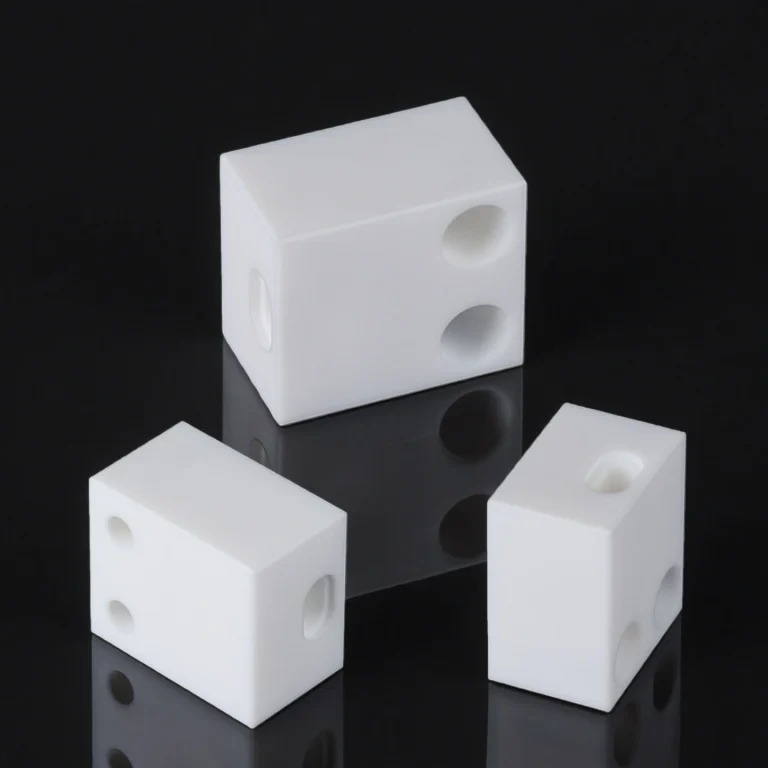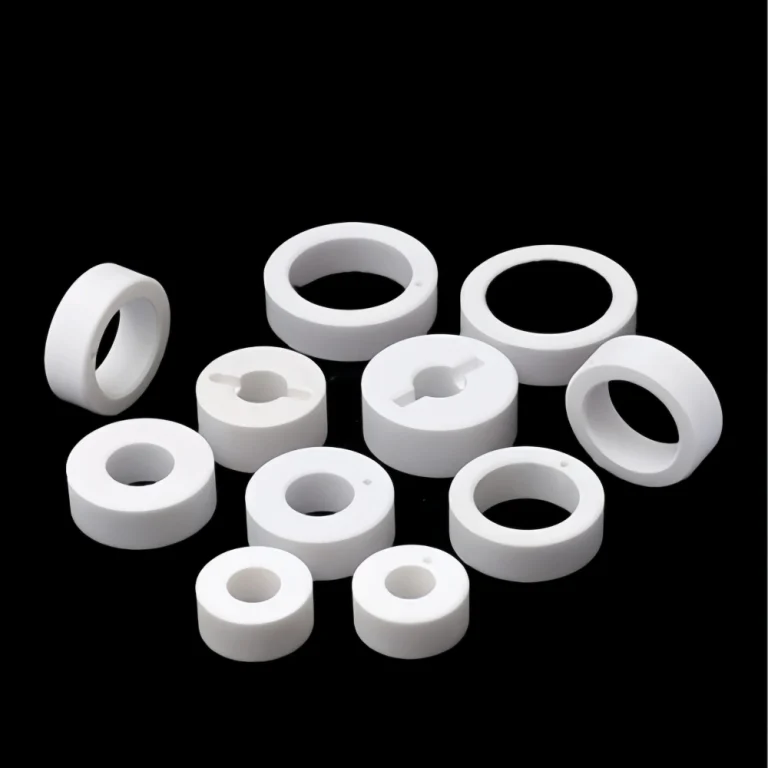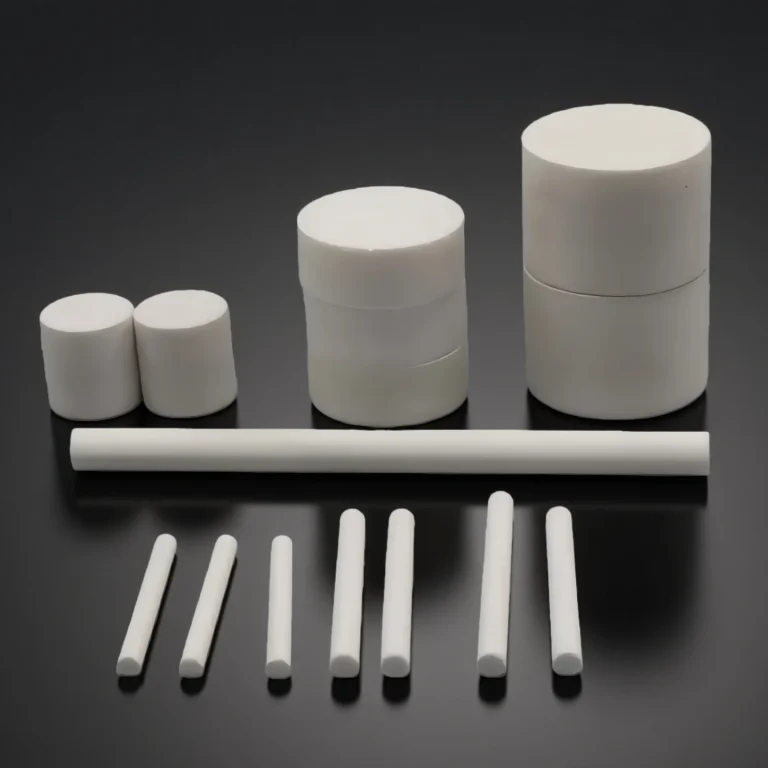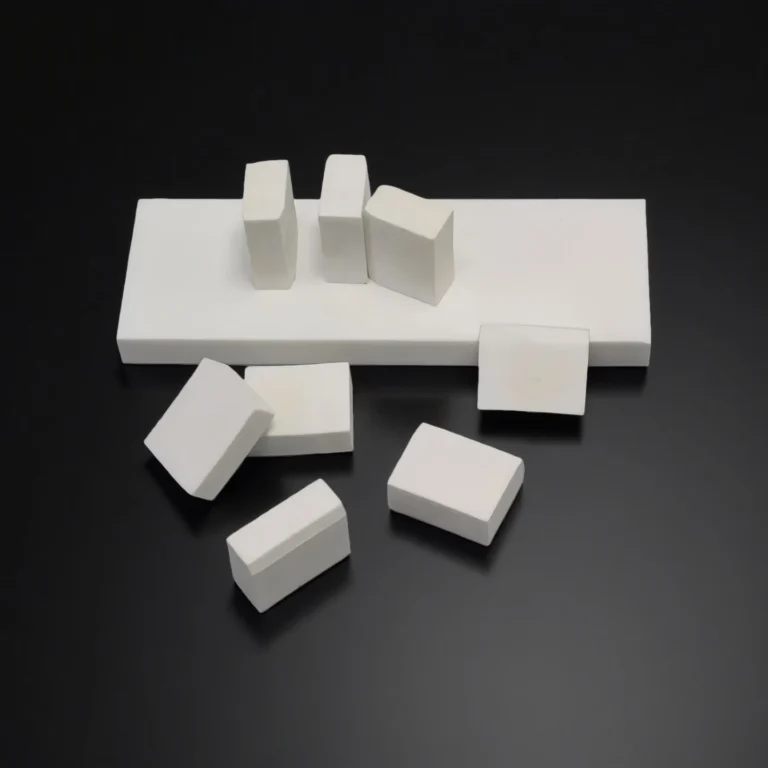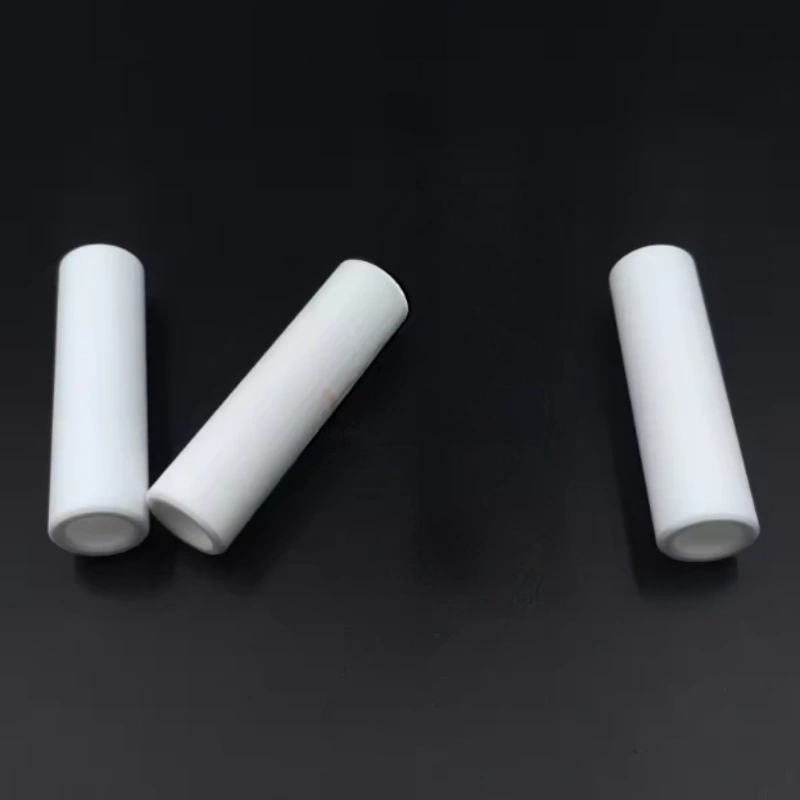
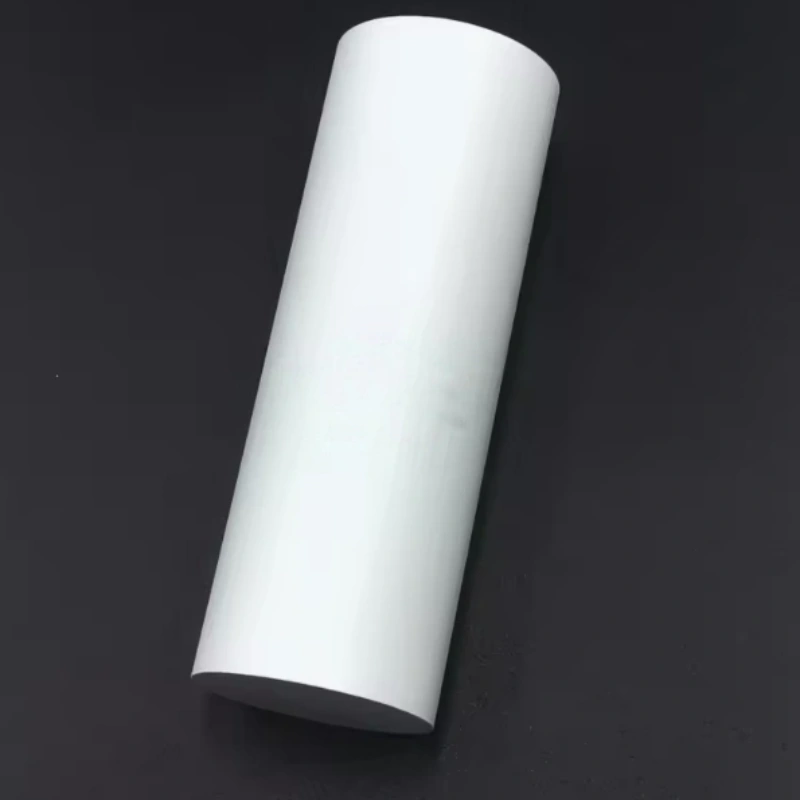
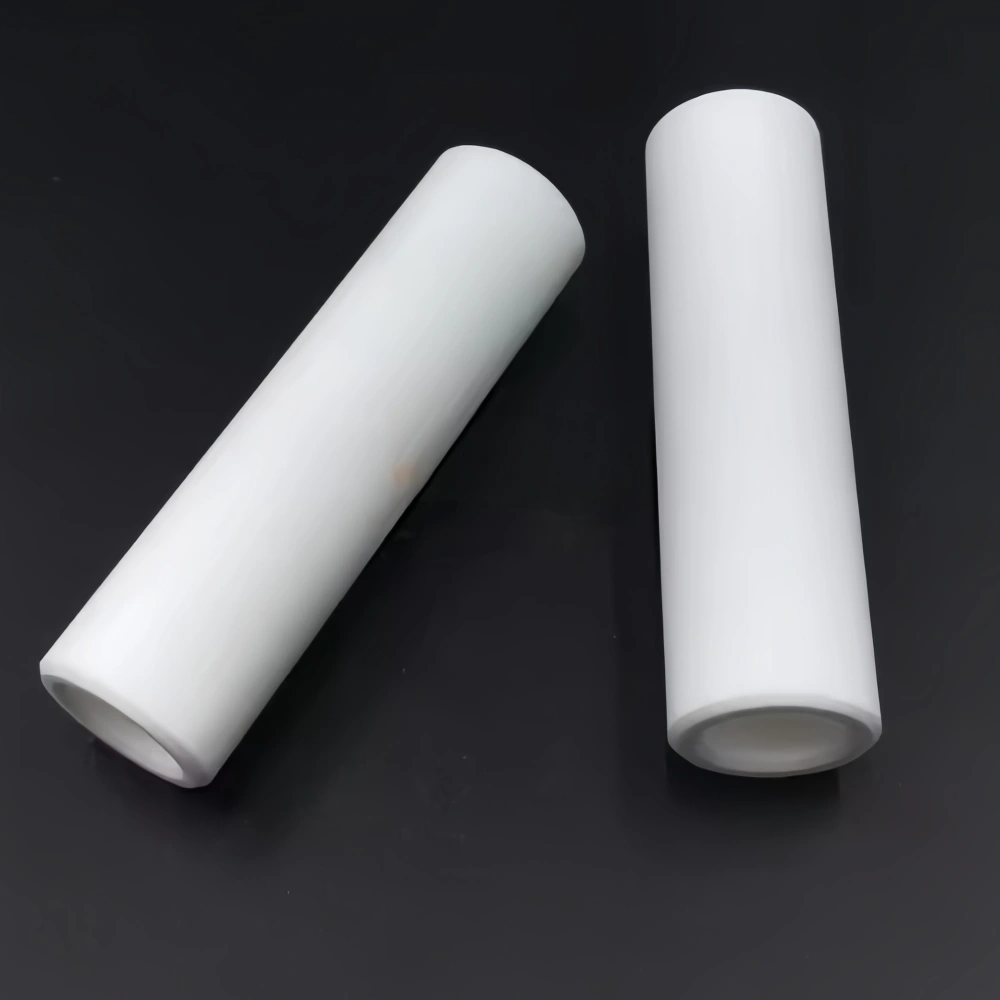
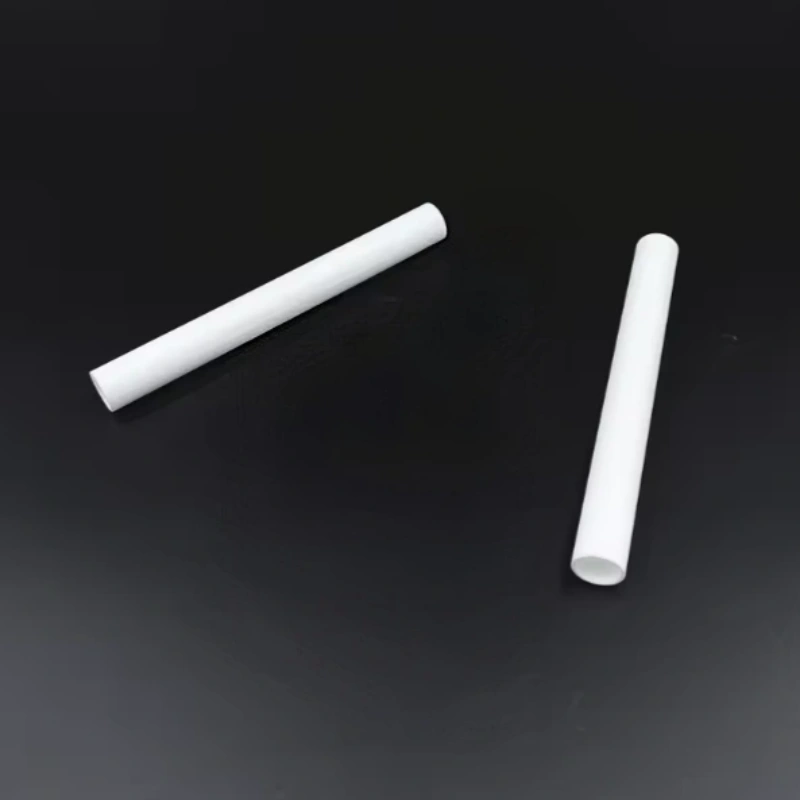
Machinable Glass Ceramic Tube with Tight ID/OD Concentricity for Precision Sleeves

ADCERAX offers machinable glass ceramic tube supply in standard cut lengths and custom drawings, including controlled ID/OD, wall thickness, concentricity, and end features for assembly-ready parts.

Catalogue No. AT-KJG-TC3001
Density 2.52 g/cm³
CTE (25–300°C) 9.3 ×10⁻⁶ /K
Max Operating Temperature (Under Load) 800°C
Thermal Conductivity (25°C) 1.46 W/m·K
24H Standard Dispatch
Small Batch Support OEM
Factory Direct
Expert Engineering Support

A machinable glass ceramic tube is a precision glass-ceramic tube blank or finished tube component that can be CNC machined into tight-fit insulating parts—such as sleeves, spacers, stand-offs, and feedthrough insulators—for vacuum systems, high-voltage fixtures, and scientific instruments where dimensional control and electrical isolation matter.

Machinable Glass Ceramic Tube Benefits

  • Machining-friendly tube geometry supports stepped ends, grooves, cross holes, slots, and counterbores—so complex tube features can be built directly into the part rather than added with secondary sleeves or stacked insulators.

  • Stable ID/OD fit for assemblies helps maintain repeatable interfaces for sleeves, barrels, spacers, and bushings, reducing fit variation across multi-part stacks and rebuild cycles.

  • Concentricity-focused tube performance enables cleaner alignment in rotating or coaxial assemblies where the ID must track the OD for consistent clearance and predictable positioning.

  • Electrical isolation in a compact form factor keeps spacing and creepage paths controlled inside dense layouts, making the tube shape practical for stand-offs, feedthrough sleeves, and insulating barrels.

  • The thermal tolerance window for insulating tubes helps the part keep functional geometry at elevated temperature where many polymer tubes soften, creep, or lose dimensional stability.

  • Edge and end-face control allows defined chamfers/radii and controlled end geometry to reduce chipping risk during insertion, clamping, or frequent installation/removal.

  • Surface finish flexibility by functional zone allows “as-machined” surfaces for general insulation parts, and refined finishes on fit zones where sliding, alignment, sealing contact, or debris control matters.

  • Design-friendly feature integration makes it easier to add practical details—wire pass-throughs, orientation flats, retention grooves, anti-rotation flats—without changing the overall tube envelope.


Machinable Glass Ceramic Tube Properties

Machinable Glass Ceramic Physical Properties
Property Typical value Notes
Purity ≥ 99.9 % Some grades can reach 99.99 %
Density 2.5–2.6 g/cm³ Archimedes method
Open porosity ≤ 0.07 % Effectively non-porous
Water absorption 0 % No measurable uptake
Colour White Clean, uniform appearance
Hardness (Mohs) 4–5 (up to 6–7) Depending on grade
Machinable Glass Ceramic Thermal Properties
Property Typical value Notes
Coefficient of thermal expansion (CTE) 72 × 10⁻⁷ /°C Average from −50 to 200 °C
CTE 25–300 °C 90 × 10⁻⁷ /°C For design over mid-range temperatures
CTE 25–600 °C 112 × 10⁻⁷ /°C
CTE 25–800 °C 123 × 10⁻⁷ /°C
Thermal conductivity 1.7 W/m·K At 25 °C
Continuous use temperature ~800 °C Long-term service
Short-term maximum temperature ~1000 °C Depends on load and atmosphere
Machinable Glass Ceramic Mechanical Properties
Property Typical value Notes
Young’s modulus ≈ 65 GPa Room temperature
Flexural strength ≥ 100 MPa Three-point bending
Compressive strength ≥ 500 MPa Room temperature
Impact resistance ≥ 2.56 kJ/m² Indicative value for brittle fracture
Poisson’s ratio ≈ 0.29
Shear modulus ≈ 25 GPa Derived from E and ν
Machinable Glass Ceramic Electrical Properties
Property Typical value Notes
Dielectric constant (1 kHz) 6–7 25 °C
Dielectric loss (tan δ, 1 kHz) 1–4 × 10⁻³ 25 °C
Dielectric strength > 40 kV/mm Sample thickness 1 mm
Volume resistivity @ 25 °C ≈ 1.0 × 10¹⁶ Ω·cm High insulation level
Volume resistivity @ 200 °C ≈ 1.5 × 10¹² Ω·cm
Volume resistivity @ 500 °C ≈ 1.1 × 10⁹ Ω·cm


Machinable Glass Ceramic Tube Specifications

Machinable Glass Ceramic Tube
Item Outer Diameter (mm) Thickness (mm) Length (mm)
AT-KJG-TC3001 10 2 5
AT-KJG-TC3002 10 2 7
AT-KJG-TC3003 10 2 10
AT-KJG-TC3004 10 2 15
AT-KJG-TC3005 10 2 20
AT-KJG-TC3006 25 4 5
AT-KJG-TC3007 25 4 7
AT-KJG-TC3008 25 4 10
AT-KJG-TC3009 25 4 15
AT-KJG-TC3010 25 4 20
AT-KJG-TC3011 25 4 50
AT-KJG-TC3012 10-70 (Custom) 2-10 (Custom) 5-100 (Custom)


Machinable Glass Ceramic Tube Packaging

  • Individual tube protection: each machinable glass ceramic tube is sleeved or separated to prevent edge-to-edge contact.
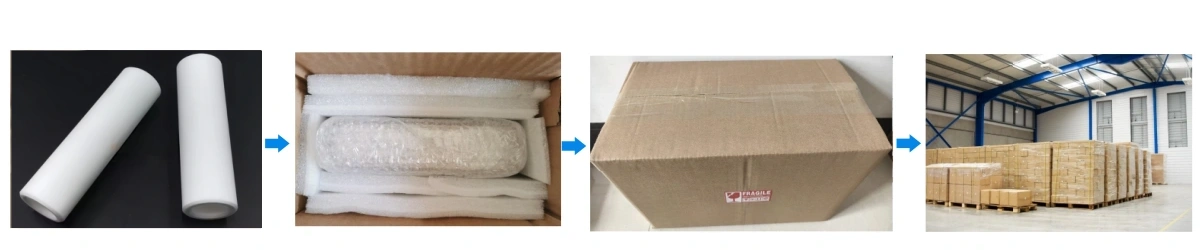

Machinable Glass Ceramic Tube Packaging

Application Scenarios — Machinable Glass Ceramic Tube

  • Vacuum Technology: Feedthrough Sleeves, Stand-Off Barrels, Bakeout Insulators

    ✅Key Advantages

    1. Temperature margin: supports bakeout and elevated operation with a typical continuous service temperature of 800°C

    2. Dimensional control: tube interfaces can be held to drawing-critical fits without sintering shrink variability.

    3. Electrical isolation: typical dielectric strength ~40 kV/mm supports insulation design margins in compact assemblies.

    ✅ Problem Solved

    A vacuum fixture required an insulating tube sleeve that could survive repeated thermal cycles and bakeouts while holding an interference-fit interface. The design targeted a stable tube body for assembly repeatability and electrical isolation near hot hardware. A machinable glass ceramic tube was specified using typical datasheet anchors: 800°C continuous service (with no-load peak exposure near 1000°C) and dielectric strength around 40 kV/mm. The drawing also referenced CTE ~9.3×10⁻⁶/°C (25–300°C) to evaluate thermal fit against mating metal parts.

  • Scientific Instruments: Alignment Sleeves, Sample Fixtures, Precision Spacers

    ✅Key Advantages

    1. Fit repeatability: consistent ID/OD geometry helps reduce rework when assemblies are reinstalled or swapped.

    2. Thermal stability planning: CTE ~9.3×10⁻⁶/°C (25–300°C) supports predictable fit calculations for mixed-material stacks.

    3. Electrical isolation: tube form provides stable separation in compact instrument housings.

    ✅ Problem Solved

    An instrument assembly used a tube as an alignment barrel between a metal mount and a sensor housing. The team needed the alignment sleeve to keep a stable fit after moderate thermal excursions and frequent removal/reinstallation. The machinable glass ceramic tube design referenced typical CTE 9.3×10⁻⁶/°C (25–300°C) for tolerance stack-up checks and main

  • High-Voltage & Laser Systems: Stand-Off Sleeves, Insulating Barrels, Creepage Control

    ✅Key Advantages

    1. Electrical design headroom: typical dielectric strength ~40 kV/mm supports compact insulation layouts

    2. Machinable details: ports/slots/steps can be added to route wires and control spacing paths.

    3. Thermal tolerance: tube geometry stays functional where many plastics soften or deform.

    ✅ Problem Solved

    A compact HV fixture needed an insulating tube barrel with side features for routing and a controlled interface to metal hardware. The design used typical datasheet anchors—dielectric strength ~40 kV/mm and 800°C continuous service temperature—to support insulation margin and thermal tolerance targets, then added machining-defined creepage and spacing features into the tube body.

Use Guide — Machinable Glass Ceramic Tube

  • Installation

    1. Confirm the tube’s ID/OD fit against mating parts before final assembly (use go/no-go gauges where possible).
    2. Add edge chamfers or specify them on drawings if the tube interfaces with sharp metal edges.
    3. Use uniform clamping and avoid point loads; ceramic tubes prefer distributed contact.
    4. If bonding is required, validate adhesive compatibility with your temperature and vacuum requirements.

  • Operation

    1. Avoid rapid mechanical shocks during operation; tube ceramics are strong in compression but sensitive to impact.
    2. For elevated temperature use, ramp temperature in controlled steps to reduce localized gradients.
    3. Keep electrical clearances consistent; do not allow metal burrs or loose hardware to contact the tube surface.

  • Storage

    1. Store tubes separately (no tube-to-tube contact) to avoid edge damage.
    2. Keep in a dry, clean container; protect end faces from abrasion.
    3. Label by part ID and revision to prevent mix-ups in assembly lines.

  • Cleaning

    1. Remove dust with clean, lint-free wipes; avoid abrasive pads on critical fit surfaces.
    2. If solvent cleaning is used, test on a non-critical part first and ensure full drying before vacuum use.
    3. For vacuum builds, use a cleaning workflow aligned with your system practice (clean → dry → bakeout if applicable).

  • Common Misuse Risks + Prevention

    1. Do not press-fit aggressively without verifying thermal expansion and tolerance stack-up.
    2. Do not clamp on a small contact point; use collars, sleeves, or fixtures that spread force.
    3. Do not drag the tube across metal surfaces; lift and place to prevent scratching and edge chips.

  • Users often ask for help here

    1. Issue: tube edge chips during insertion
    Likely cause: sharp metal lead-in, no chamfer, or misalignment
    Fix: add a lead-in chamfer on metal; specify tube chamfer; use alignment jig

    2. Issue: tube binds or squeaks in a sleeve fit
    Likely cause: concentricity mismatch or surface roughness in the fit zone
    Fix: define ID/OD concentricity; refine surface finish in fit area; add controlled clearance

    3. Issue: micro-cracks after clamping
    Likely cause: point load or uneven torque
    Fix: switch to a distributed clamp design; add a compliant layer; use torque control and collars

FAQ — Machinable Glass Ceramic Tube

  1. Q: Can ADCERAX machine a machinable glass ceramic tube to my drawing?
    A: Yes, ADCERAX supplies standard blanks and can machine the machinable glass ceramic tube to your ID/OD, length, and feature requirements.
  2. Q: Is a machinable glass ceramic tube suitable for high-voltage insulation?
    A: Yes, typical datasheet references list dielectric strength around 40 kV/mm, and tube geometry helps maintain controlled spacing paths.
  3. Q: What tolerances are realistic for a machinable glass ceramic tube?
    A: Tolerance depends on diameter, wall thickness, and feature set; critical fits should be defined on the drawing and evaluated with ID/OD concentricity and straightness requirements.
  4. Q: Will a machinable glass ceramic tube chip during assembly?
    A: Chipping risk increases at sharp edges and tight insertions; specify chamfers/radii and avoid point loads to reduce edge damage.
  5. Q: Can a machinable glass ceramic tube be supplied with side holes or slots?
    A: Yes, side ports, windows, and slots are common when routing cables, controlling creepage, or integrating retention features.
  6. Q: How does a machinable glass ceramic tube compare with alumina tubes?
    A: Alumina tubes are often chosen for high wear and high temperature, while machinable glass ceramic tubes are often chosen for complex features and fast iteration without firing shrink steps.

Machinable Glass Ceramic Tube Reviews

  • ⭐️⭐️⭐️⭐️⭐️
    We sourced a machinable glass ceramic tube for a feedthrough sleeve and the dimensional interface matched our assembly stack-up. ADCERAX supplier communication was clear on the drawing characteristics and inspection points.
    -- Daniel M. | Purchasing Manager | Vacuum Systems Integrator (EU)
  • ⭐️⭐️⭐️⭐️⭐️
    The machinable glass ceramic tube arrived with clean end faces and consistent ID/OD across the batch. Pricing stayed stable across the repeat order, which helped us standardize the spare parts list.
    -- Sophie R. | Supply Chain Lead | Scientific Instruments OEM (UK)
  • ⭐️⭐️⭐️⭐️⭐️
    Our design needed side features and stepped ends in a machinable glass ceramic tube. The part assembled without rework after we defined chamfers and a specific fit zone.
    -- Jason K. | Mechanical Engineer | High-Voltage Test Equipment Company (US)
  • ⭐️⭐️⭐️⭐️⭐️
    We used machinable glass ceramic tube parts as insulating sleeves in a hot-zone fixture. ADCERAX factory support helped confirm which dimensions were critical for concentricity and installation clearance.
    -- Marco L. | Operations Buyer | Industrial Thermal Equipment (IT)
customize size

Custom Machining — Machinable Glass Ceramic Tube

If your design needs a tube that fits a specific assembly interface, ADCERAX can machine the machinable glass ceramic tube to your drawing and deliver parts ready for installation.

  • OD / ID & tolerance band: target fit (clearance/slip / light press) with defined zones for functional interfaces.

  • Wall thickness & tube rigidity: thin-wall for compact insulation, thick-wall for clamping strength and longer creepage paths.

  • Length & end squareness: cut-to-length with controlled end-face flatness/perpendicularity for stacked assemblies.

  • Concentricity/runout & straightness: ID-to-OD alignment and straightness limits to reduce binding in long sleeves.

  • End geometry: square, chamfered, radiused, stepped, counterbored, recessed seats, lead-in tapers.

  • Open/closed-end structures: closed-end, partial closures, stop shoulders, barrier-style ends (per drawing).

  • Side features: cross holes, ports, slots, windows, cable pass-throughs, vent/relief features.

  • Grooves & retention: snap-ring grooves, retention grooves, O-ring grooves, anti-rotation flats (design dependent).

  • Threads & inserts: internal/external threads, thread reliefs, insert-ready bores when the design calls for it.

  • Cross-section & profiles: round tube, D-flat, square/rectangular outer profile with tubular cavity, keyed profiles.

  • Surface finish by zone: as-machined, refined/polished areas on fit, seal, or sliding zones; masked/local finishing.

Related Products

ADCERAX - Your Trusted Advanced Ceramics Manufacturing Partner

Direct factory manufacturing with comprehensive ceramic materials expertise and global supply capabilities

Direct Factory Manufacturing

China-based ceramic materials production facility with state-of-the-art equipment

Engineering Team

Experienced professionals in advanced ceramics applications and custom design

Quality Control

Strict quality control standards for technical ceramics manufacturing and quality management

Global Supply Chain

Serving customers worldwide with technical ceramics and rapid response

24/7 Technical Support

Round-the-clock support for ceramic components inquiries and technical assistance

500+ Satisfied Customers

Trusted by global customers for advanced ceramic materials and precision components

Get in touch with us

Our team will be happy to respond to you in less than 24 hours.

Adcerax's factory

Quick Quotation

*Our team will answer your inquiries within 24 hours.

*Your information will be kept strictly confidential.

Ready to Solve Your Engineering Challenge?

Partner with ADCERAX for reliable, high-performance advanced ceramic solutions. Our engineers are ready to discuss your project.

E-mail

info@adcerax.com

Phone

+(86) 0731-74427743 | WhatsApp: +(86) 19311583352

Response Time

Within 24 hours

Quick Quote

The more details you provide, the faster we can quote.

*We respond within 24 hours. All inquiries are confidential.

Download Catalog

Get Your Custom Sulution

The more details you provide, the faster we can respond.

customize size

*We respond within 24 hours. All inquiries are confidential.

Download Catalog