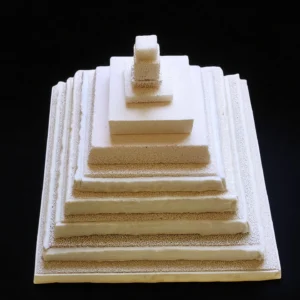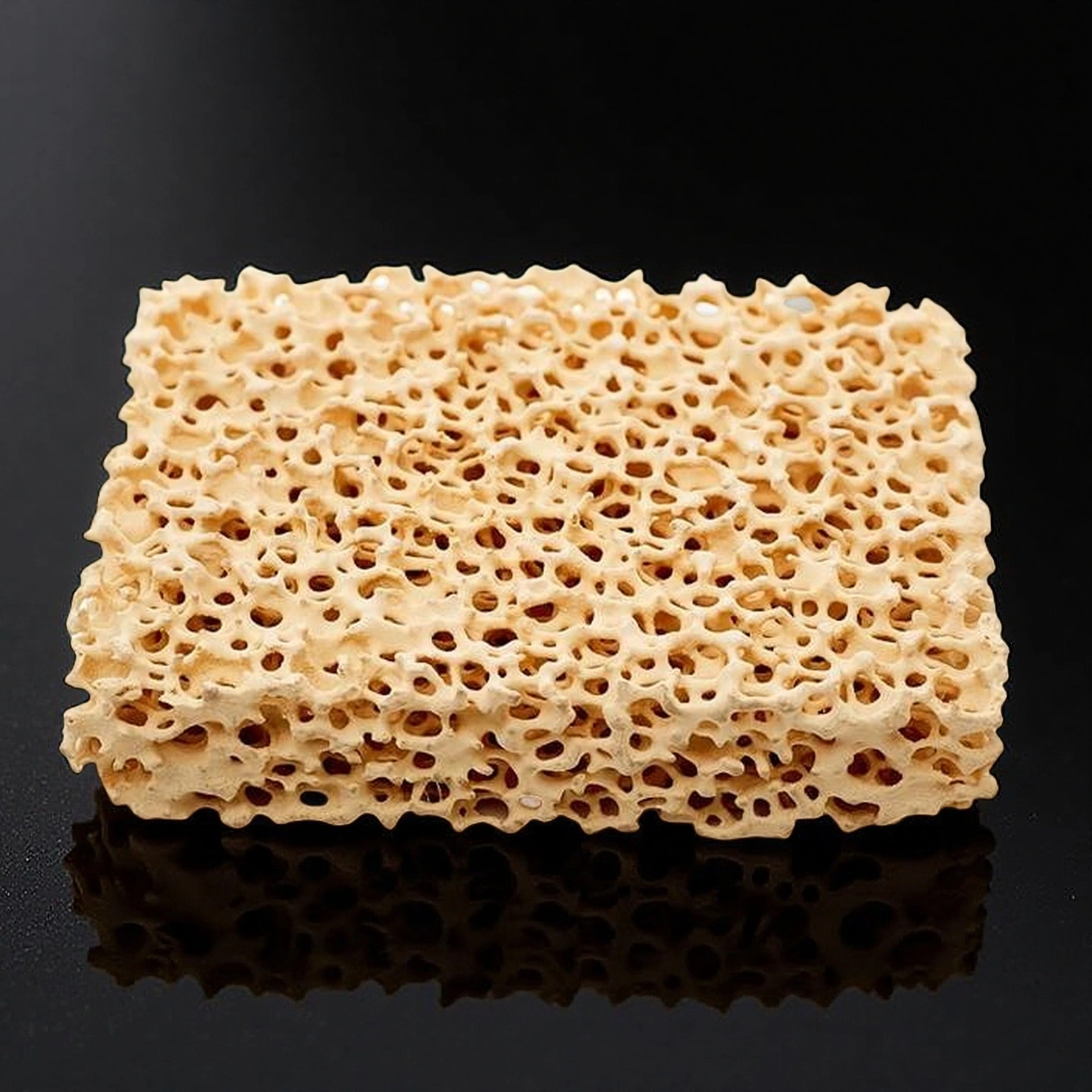
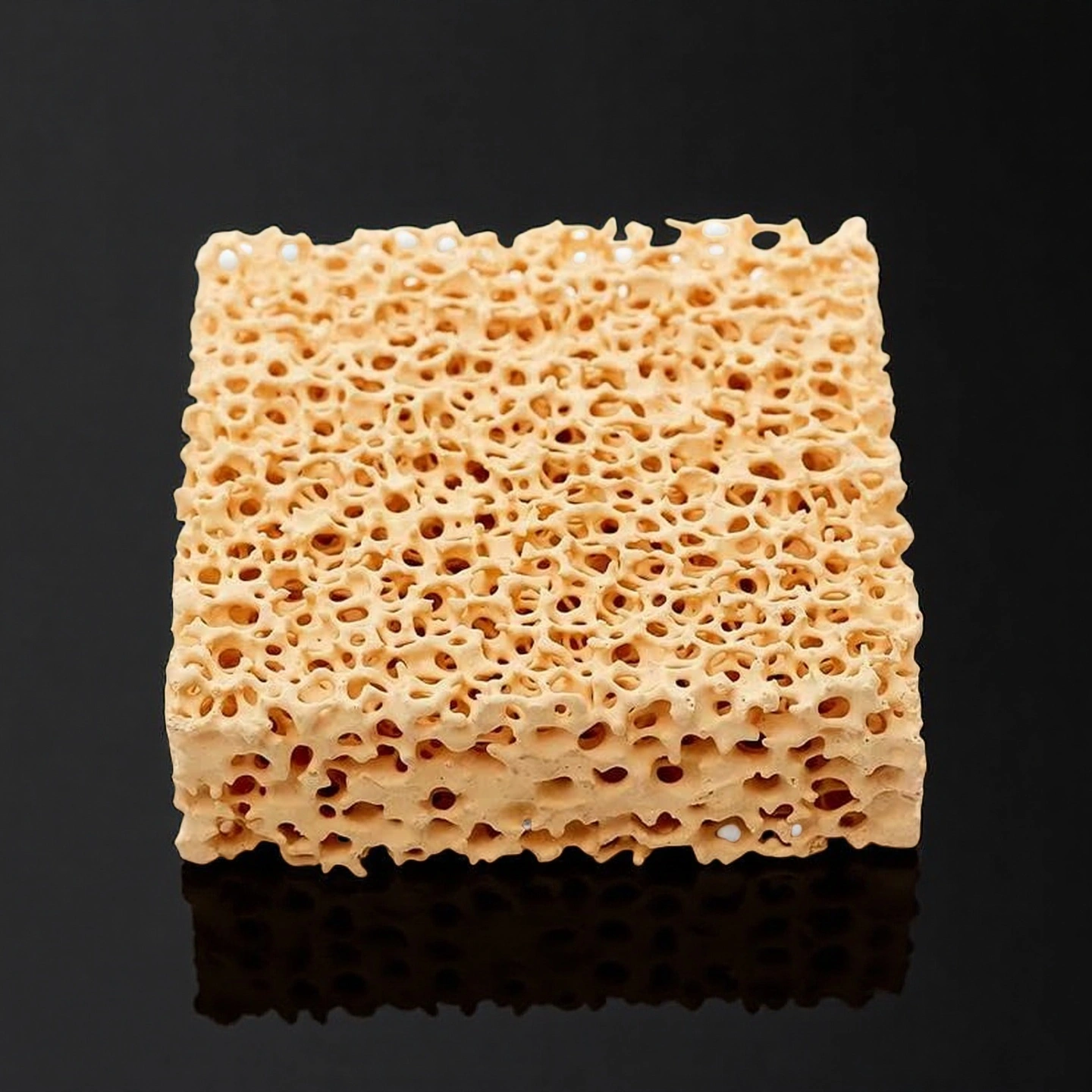
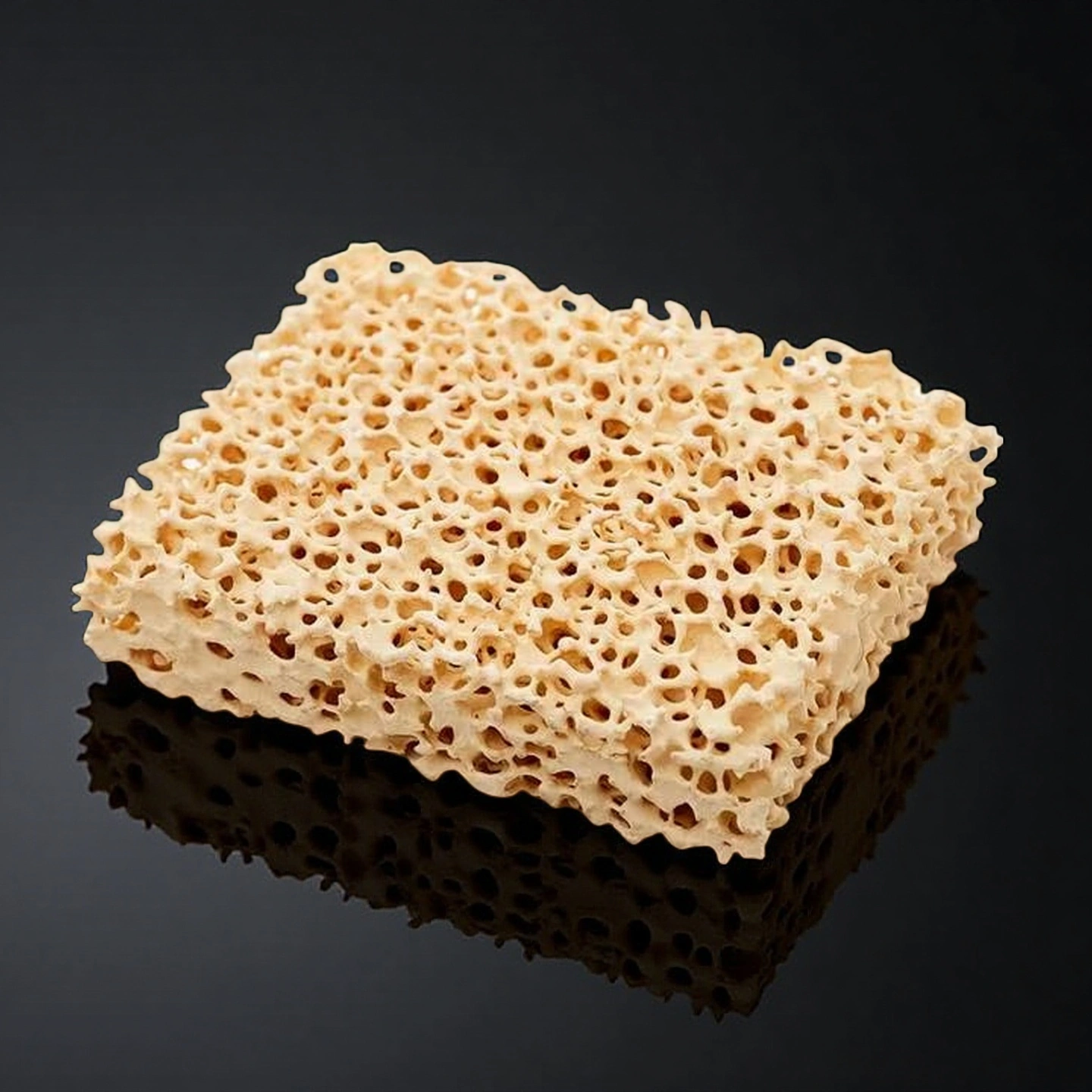
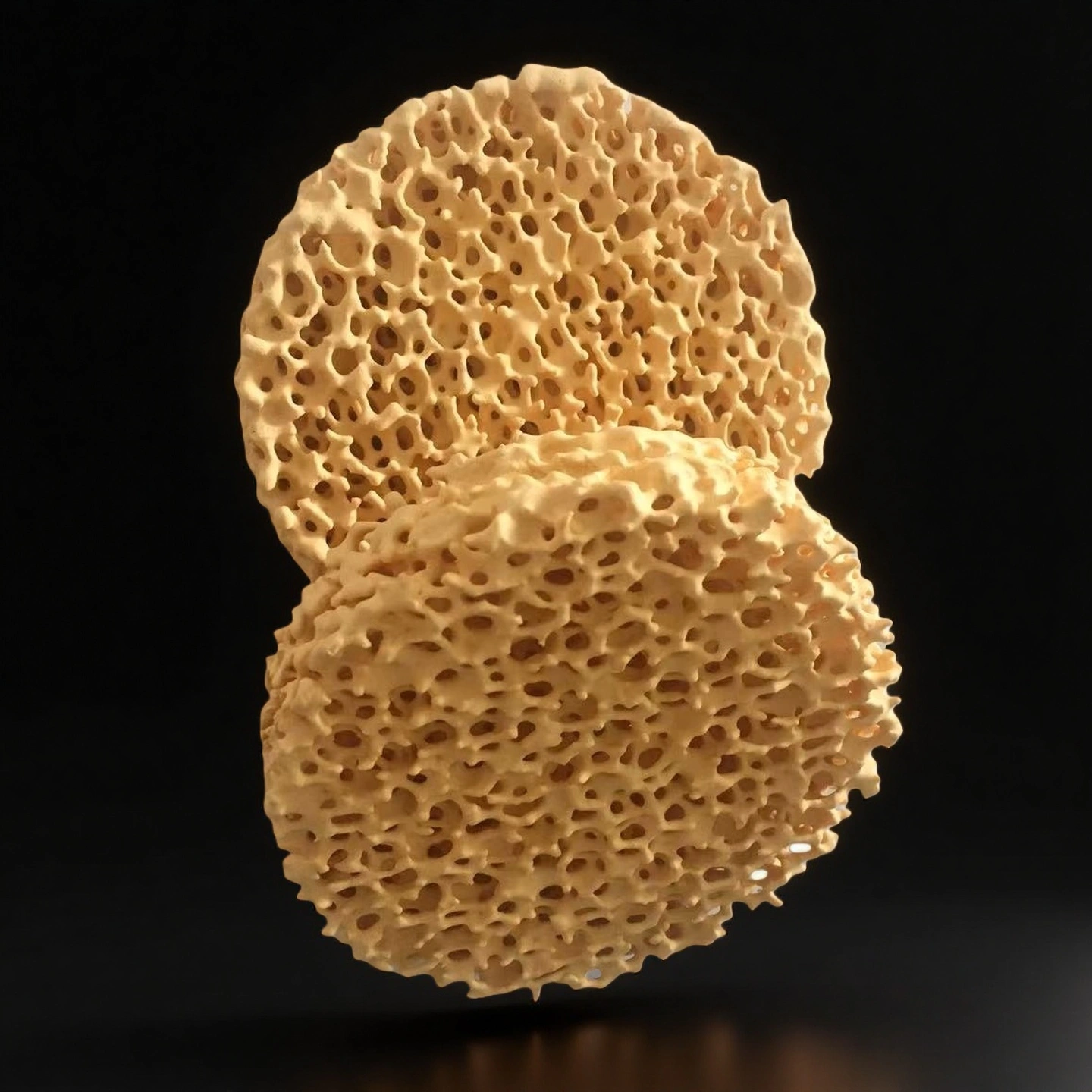
High-Porosity Magnesia Ceramic Foam Filter for Melt Cleanness Control
ADCERAX magnesia ceramic foam filters are designed for magnesium and nickel-based alloy casting, available in square and round formats, thickness 25–50 mm, and custom sizes on request. They provide high thermal stability and chemical compatibility with active magnesium melts.
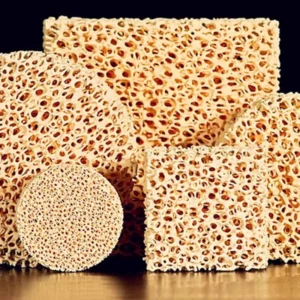
Magnesia ceramic foam filters are porous refractory components made from high-purity magnesium oxide (MgO), specifically developed to purify molten magnesium and other reactive metal alloys such as nickel or zinc. They are designed with a three-dimensional open-cell foam structure that allows the metal to pass through while effectively trapping oxide films, non-metallic inclusions, and slag particles, improving the cleanliness and mechanical quality of the final casting.
Magnesia Ceramic Foam Filters Benefits
Excellent Chemical Resistance – Stable in contact with molten magnesium and nickel alloys.
High Mechanical Strength – Resists metal flow impact during pouring.
Precise Dimensional Control – ± 0.5 mm tolerance for easy mold integration.
Customizable Grades – 10–60 PPI available for different flow rates and purity requirements.
Properties of MgO Foam Filters
Parameter
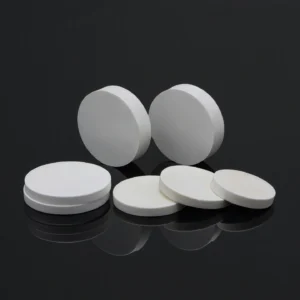
Alumina (Aluminium Oxide)
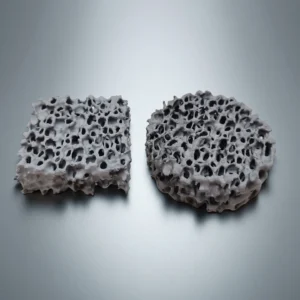
Silicon Carbide
Zirconia (Zirconium Oxide)
Magnesia (Magnesium Oxide)
Raw Material
Alumina
Silicon Carbide
Zirconia
Magnesia
Color
White
Black-Gray
Yellow
Dark Yellow
Pore Density
8-60 ppi
8-60 ppi
8-60 ppi
8-60 ppi
Porosity
80-90%
80-90%
80-90%
80-90%
Refractoriness
≤1100℃
≤1500℃
≤1700℃
≤1000℃
Bending Strength
>0.6Mpa
>0.8Mpa
>1.0Mpa
>0.6Mpa
Compressive Strength
>0.8Mpa
>0.9Mpa
>1.2Mpa
>0.8Mpa
Bulk Density
0.3-0.45g/cm³
0.35-0.5g/cm³
0.9-1.5g/cm³
0.35-0.5g/cm³
Thermal Shock Resistance
6 times/1100℃
6 times/1100℃
6 times/1100℃
6 times/1100℃
Applications
Aluminium alloys and other non-ferrous metal alloys
Ductile iron, Malleable cast iron, Gray cast iron, and other cast iron
High melting point metal alloys, such as steel, alloy steel, stainless steel, etc.
Magnesium and high-activity alloys
Mgo Ceramic Foam Filters Specifications
Type 1: Magnesia Ceramic Foam Filter Round
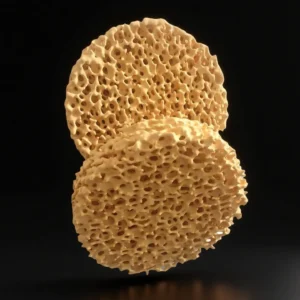
Magnesia Ceramic Foam Filter Round
Item NO.
Diameter(mm)
Thickness(mm)
Pore Density PPI
Porosity(%)
AT-MO-PM1001
40
11
10/20/30/40/50/60
80~90
AT-MO-PM1002
40
22
10/20/30/40/50/60
80~90
AT-MO-PM1003
50
15
10/20/30/40/50/60
80~90
AT-MO-PM1004
50
22
10/20/30/40/50/60
80~90
AT-MO-PM1005
75
22
10/20/30/40/50/60
80~90
AT-MO-PM1006
80
22
10/20/30/40/50/60
80~90
AT-MO-PM1007
90
22
10/20/30/40/50/60
80~90
AT-MO-PM1008
100
22
10/20/30/40/50/60
80~90
AT-MO-PM1009
120
22
10/20/30/40/50/60
80~90
AT-MO-PM1010
150
25
10/20/30/40/50/60
80~90
Type 2: Magnesia Ceramic Foam Filter Square
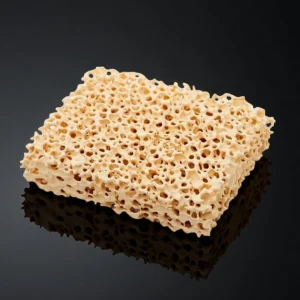
Magnesia Ceramic Foam Filter Square
Item NO.
Length (mm)
Width (mm)
Thickness (mm)
Pore Density PPI
Porosity(%)
AT-MO-PM2001
40
40
10
10/20/30/40/50/60
80~90
AT-MO-PM2002
40
40
22
10/20/30/40/50/60
80~90
AT-MO-PM2003
50
50
10
10/20/30/40/50/60
80~90
AT-MO-PM2004
50
50
22
10/20/30/40/50/60
80~90
AT-MO-PM2005
50
50
30
10/20/30/40/50/60
80~90
AT-MO-PM2006
75
50
22
10/20/30/40/50/60
80~90
AT-MO-PM2007
75
75
22
10/20/30/40/50/60
80~90
AT-MO-PM2008
100
100
22
10/20/30/40/50/60
80~90
AT-MO-PM2009
150
100
22
10/20/30/40/50/60
80~90
AT-MO-PM2010
150
150
22
10/20/30/40/50/60
80~90
AT-MO-PM2011
40-300
40-300
10-50
10/20/30/40/50/60
80~90
MgO Foam Filters Packaging
Each filter is individually packed in shock-resistant foam and sealed in moisture-proof bags. Bulk orders are shipped in reinforced wooden crates.
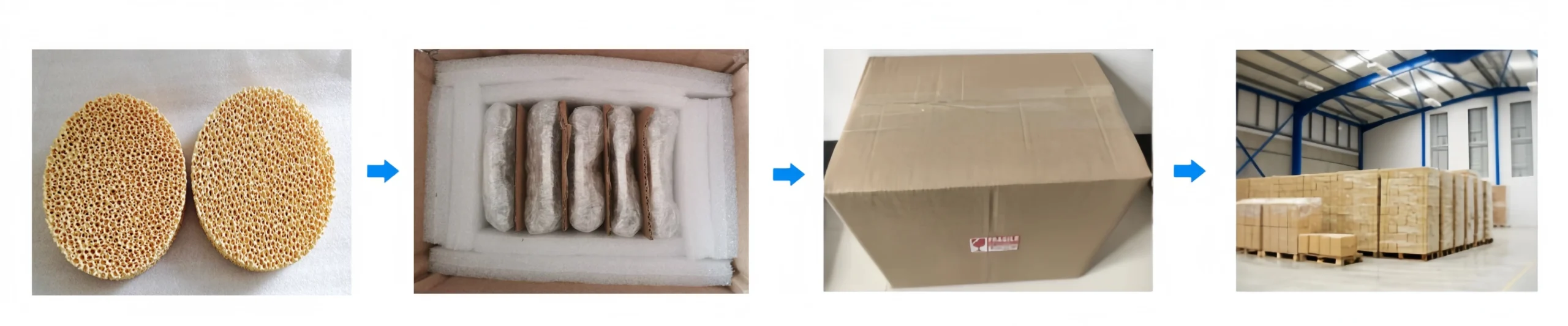
Magnesia Ceramic Foam Filters Applications
MgO foam filters are specialized for molten magnesium and reactive metal casting, where traditional alumina or silica filters fail due to chemical incompatibility. Their exceptional stability and filtration precision make them essential in automotive, aerospace, and foundry engineering sectors.
1. Excellent resistance to reactive molten magnesium up to 1100 °C, preventing violent oxidation.
2. Uniform open-pore structure removes oxide films and non-metallic inclusions ≥ 20 µm.
3. Improves surface finish and mechanical strength of castings such as gearbox housings, steering columns, and laptop frames.
✅ Problem Solved
A European die-casting factory reported that using ADCERAX MgO foam filters reduced inclusion-related rework by 72%, cutting total defect rate from 6.8% → 1.9%. The change shortened polishing time and stabilized casting flow across multiple molds.
Nickel-Based & Superalloy Precision Casting — Aerospace & Turbine Industry
✅Key Advantages
1. Prevents micro-inclusion-induced fatigue cracks in turbine blades, nozzles, and heat-resistant alloy components.
2. Maintains filtration performance across repeated pouring cycles (≥ 6 thermal shocks at 1100 °C).
3. Ensures chemical inertness — no MgO–NiO reaction or melt contamination.
✅ Problem Solved
An Asian aerospace alloy foundry using MgO filters achieved a 40% reduction in defect scrap, improving tensile strength uniformity by 12% in precision-cast turbine parts.
Foundry Consumables Integration — Metal Filtration & Gating Systems
✅Key Advantages
1. Compatible with standard filter cups, gating boxes, and ceramic frames.
2. Reduces slag carry-over and flow turbulence, extending the life of pouring basins and refractory linings.
3. Enables foundry distributors to create full consumable kits (filter + insulation + pouring cup + cover plate).
✅ Problem Solved
A Korean foundry material distributor standardized ADCERAX magnesia filters across their magnesium alloy customer base. As a result, their customers reported 15–20% faster setup and 30% lower inventory complexity due to unified part sizing (50 × 50 mm / 75 × 75 mm modules).
Mgo Ceramic Foam Filters Usage Instructions
Proper use of magnesia ceramic foam filters ensures consistent casting performance, longer service life, and higher yield. Follow the guidelines below to maximize performance and prevent production downtime.
Installation
1. Place the filter securely into the mold gating cup with the textured (inlet) side facing upward.
2. Ensure full contact between filter edges and the refractory lining to prevent molten metal bypass.
3. Avoid applying mechanical stress or impact to the filter during installation — its open-cell structure is strong yet brittle under point pressure.
4. If using a frame or holder, align the centre position with the metal stream path to maintain laminar flow.
5. Apply a thin layer of refractory cement or clay sealant around the filter edge to improve seating stability.
Usage
1. Preheat the filter to 200–300 °C (minimum 250 °C recommended) before pouring to prevent thermal shock cracking.
2. When preheating, ensure even temperature distribution; localized flame heating may cause micro-cracks.
3. Maintain steady head pressure and controlled pouring rate during metal flow to achieve uniform filtration.
4. For high-reactivity magnesium melts, avoid long holding time above the filter — continuous flow minimizes erosion.
5. Use proper PPI rating based on casting type:
a. Coarse filters (10–20 PPI) for large, thick castings requiring high metal throughput.
b. Fine filters (30–60 PPI) for precision parts needing superior surface finish.
Storage
1. Store filters in a dry, ventilated area with relative humidity below 60 %.
2. Avoid direct exposure to moisture or large temperature fluctuations that could weaken ceramic bonds.
3. Stack horizontally in even layers, not exceeding 20 layers per pallet, to prevent warping or edge cracking.
4. Keep filters in their original packaging until use to prevent dust contamination and accidental chipping.
Cleaning / Maintenance
1. Single-use recommended: Do not reuse filters exposed to metal infiltration, erosion, or slag adhesion.
2. After casting, allow the filter to cool gradually with the mould to avoid thermal shock breakage.
3. Once metal residue solidifies, dispose of the filter safely according to local refractory waste regulations.
4. Inspect unused filters before each pour — replace any with visible cracks or corner damage.
Common User Errors & Solutions
1. Issue: Filter cracks during pouring
Cause: No or insufficient preheating.
Solution: Always preheat uniformly to ≥ 250 °C; for large castings, extend soak time to 15 minutes.
2. Issue: Inclusions remain in the melt
Cause: PPI too low or flow rate too high.
Solution: Select a higher PPI (≥ 30) or reduce pouring speed to enhance filtration efficiency.
3. Issue: Filter floats or shifts during pouring
Cause: Improper seating or lack of frame support.
Solution: Use a fitted metal frame or apply clay sealant to secure the position.
4. Issue: Filter erosion after several pours
Cause: Excessive melt superheat or long holding time.
Solution: Control pouring temperature below 1050 °C and maintain continuous metal flow.
5. Issue: Edge leakage between the filter and mould wall
Cause: Incomplete contact with the refractory cup.
Solution: Apply refractory paste along the contact surface and verify tight sealing.
Magnesia Ceramic Foam Filters FAQ
Q: What is the typical operating temperature of magnesia foam filters? A: They perform stably up to 1100 °C, maintaining structure and filtration performance even under high thermal shock.
Q: What pore size (PPI) should I choose for my casting process? A: a. 10–20 PPI: High-flow, coarse filtration (large parts).
b. 30–40 PPI: Balanced filtration for standard castings.
c. 50–60 PPI: Fine filtration for precision surfaces or thin-walled parts.
Q: Can magnesia ceramic foam filters be reused? A: No. They are designed for single-use applications, as molten metal infiltration and erosion affect their structural integrity.
Q: What dimensions or shapes can Mgo foam filters be customized? A: ADCERAX offers square, round, rectangular, and contour-shaped filters in sizes from 30 mm to 200 mm with thicknesses of 25 mm / 40 mm / 50 mm/custom options.
Q: How should I preheat magnesia filters before pouring? A: Preheat to 200–300 °C (minimum 250 °C) for 10–15 minutes to prevent thermal shock cracking and ensure stable metal flow.
Q: Can these filters be used for aluminum alloy casting? A: No. MgO filters are optimized for reactive magnesium or nickel alloys. For aluminum or copper alloys, alumina or zirconia foam filters are more suitable.
Q: Why should I use MgO ceramic foam filters instead of alumina or silica filters? A: Magnesia filters are chemically inert to reactive magnesium melts, preventing violent reactions and contamination that occur with alumina or silica materials.
Customer Reviews about Magnesia Ceramic Foam Filters
⭐️⭐️⭐️⭐️⭐️
Our foundry changed to ADCERAX magnesia ceramic foam filters for magnesium die-casting. They fit our existing mold frames perfectly and cut inclusion defects by over 70%. -- James R., Process Engineer, AluMag Casting Inc.
⭐️⭐️⭐️⭐️⭐️
We import directly from ADCERAX China factory. Stable quality and clear technical support make them our long-term supplier for MgO foam filters. -- Lukas Schmidt, Procurement Manager, Germany Alloy Systems GmbH
⭐️⭐️⭐️⭐️⭐️
Custom round MgO filters (40 PPI) helped us achieve a smoother metal flow and less slag. Delivery was consistent across batches. --Kei Tanaka, Casting Supervisor, Osaka Die-Cast Works
⭐️⭐️⭐️⭐️⭐️
Our distributors appreciate ADCERAX’s standard packaging and dimension consistency. No cracked Mgo ceramic filters after shipment – very reliable. -- Daniel Lee, Technical Director, Foundry Materials Solutions Ltd
ADCERAX provides custom-engineered magnesia ceramic foam filters to meet different casting processes, alloy types, and furnace configurations. Each filter can be tailored in geometry, pore structure, and mechanical performance to ensure perfect integration with your gating system.
1. Dimensions & Geometry
Outer / Inner Size Range: 30 mm – 200 mm standard; larger or irregular sizes available on request.
Thickness Options: 25 mm, 40 mm, 50 mm, and custom thicknesses for specific mold depths.
Shape Selections: Square, round, rectangular, or non-standard contours (e.g., trapezoidal or oval openings).
Tolerance: Precision controlled within ± 0.5 mm for both length and thickness.
2. Filtration Structure
Pore Density (PPI): 10 PPI – 60 PPI; coarse pores for high flow casting, fine pores for premium surface finish.
Porosity Uniformity: ≥ 80 % open-cell network, ensuring smooth metal flow and low turbulence.
Flow-rate Adjustment: Tailored pore size distribution to balance permeability and filtration accuracy.
3. Surface & Edge Finish
Edge Styles: Bevelled, straight-cut, or polished edges for easy seating and minimal metal bypass.
Surface Condition: Raw (as-cast) or finely ground surfaces to reduce turbulence initiation points.
Coating / Impregnation Options: Optional protective or wetting-control layers for high-reactivity melts.
4. Structural & Mechanical Tuning
Density Control: Adjusted ceramic foam density (0.35 – 0.55 g/cm³) to match alloy viscosity.
Reinforcement Option: High-strength backbone for multi-pouring or extended use.
Thermal Shock Rating: ≥ 6 cycles @ 1100 °C, tested under standard foundry pouring conditions.
5. Compatibility & Integration
Designed to fit standard filter cups, metal frames, or ceramic holder systems.
Optional transition adapters are available for integration with existing alumina filter setups.
Technical drawing support is available for OEM mould layout matching.