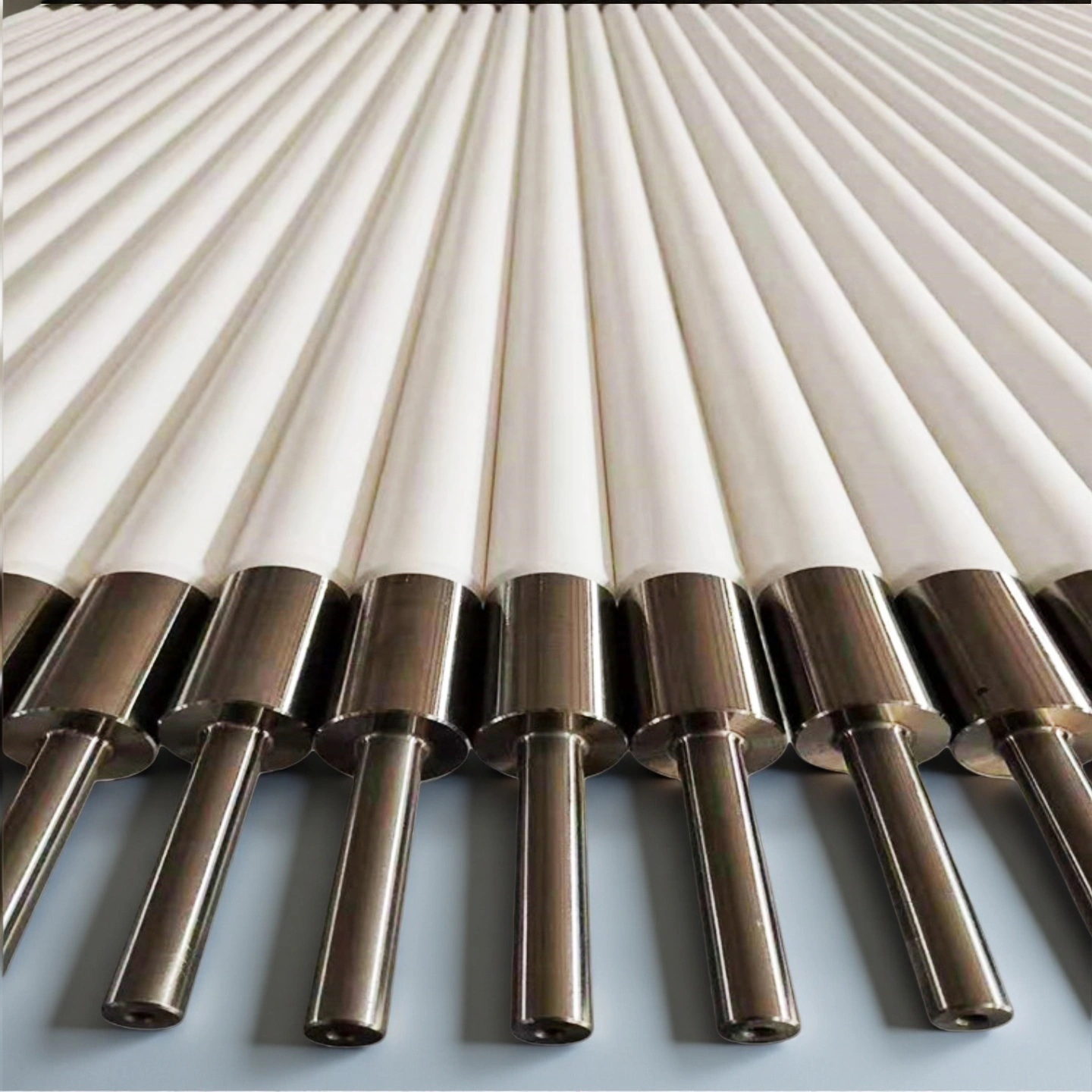
Fused Quartz Ceramic Rollers – Low Thermal Expansion for Precision Conveying

We supply quartz ceramic crucibles in standard and custom sizes for crystal growth, lab high-temperature processing and industrial thermal applications. Sizes range from small lab volumes to large pulling crucibles; custom machining and tolerance control are available on request.

Catalogue No. AT-FT-7001
Material SiO₂
Purity (SiO₂) standard grades 99.9% and 99.99%
Pore Size Range 0.1 – 50 μm
Maximum continuous service temperature: ~1100–1200°C
24H Standard Dispatch
Small Batch Support OEM
Factory Direct
Expert Engineering Support

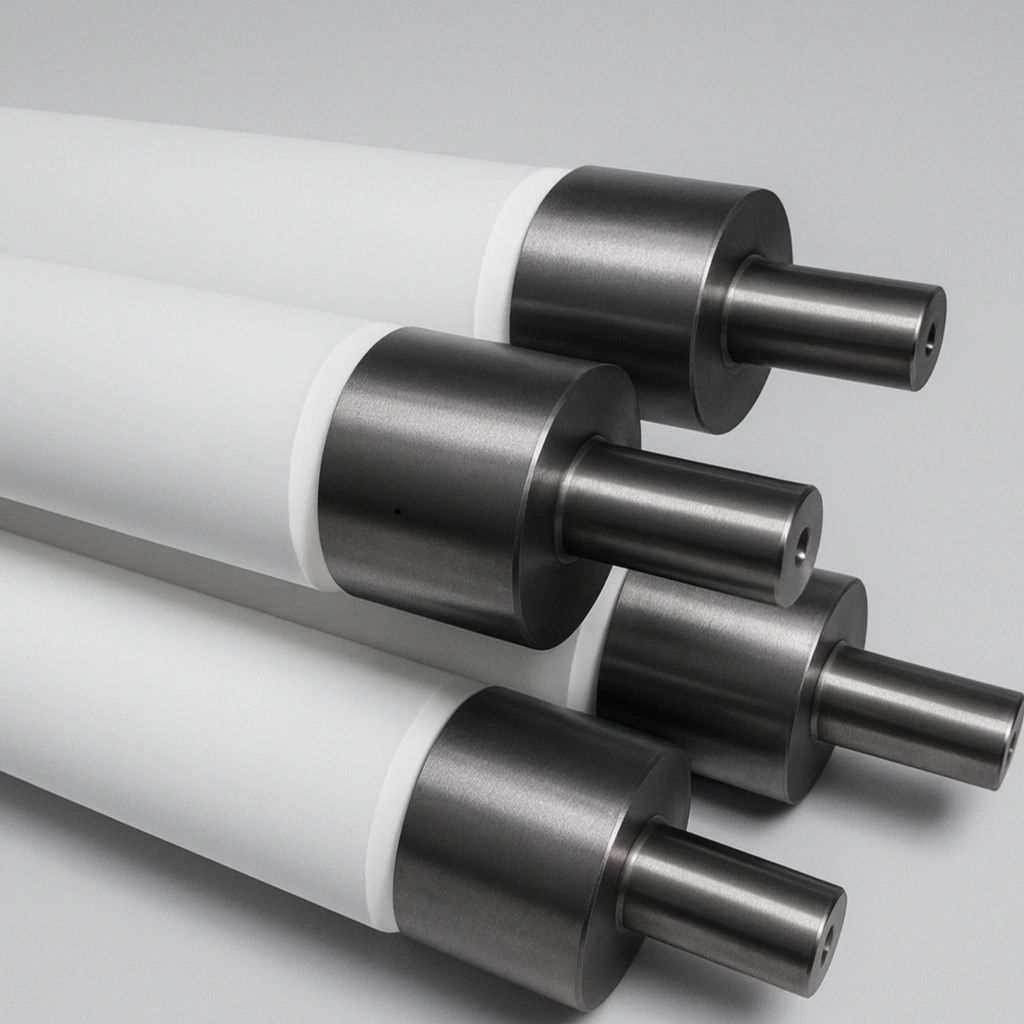
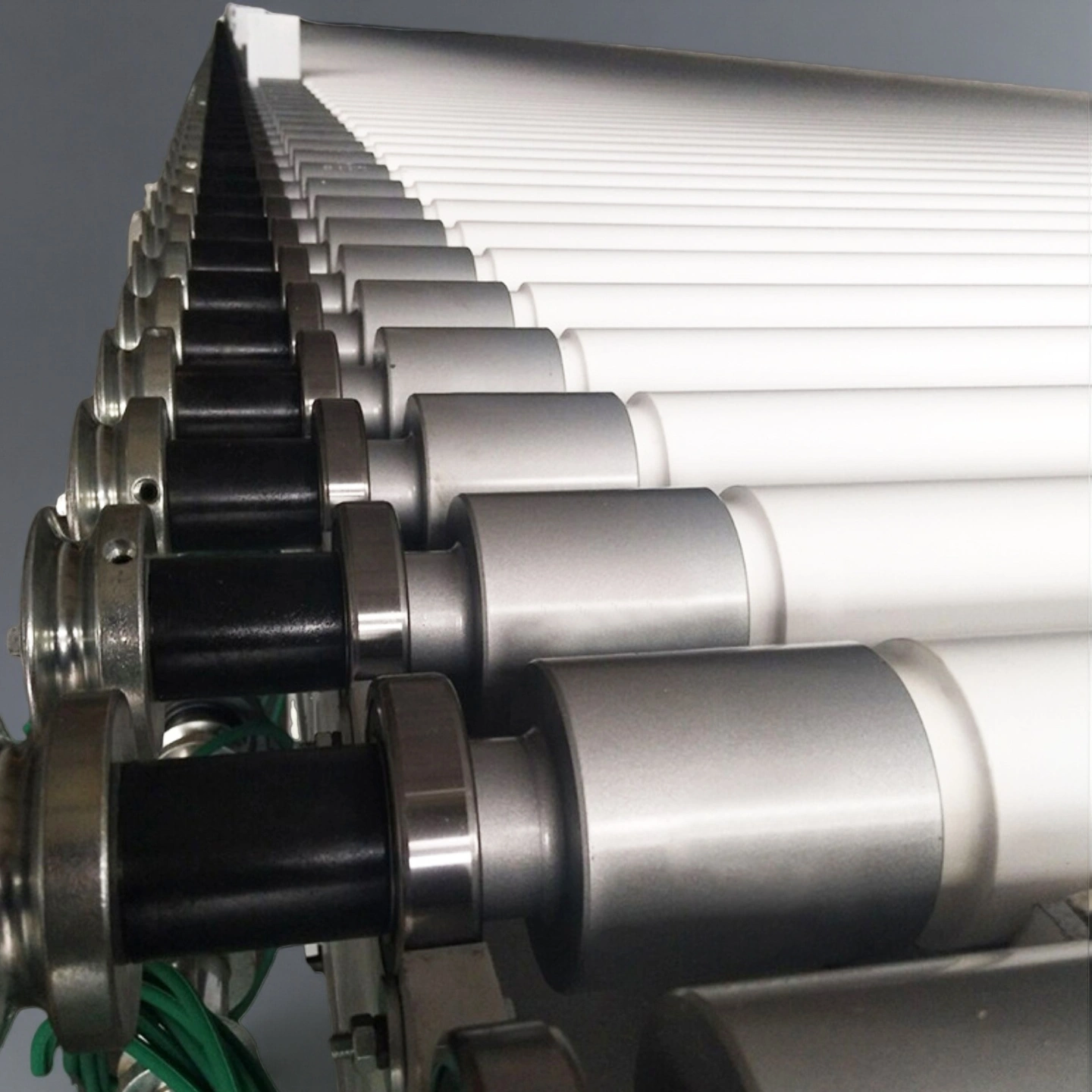
Quartz ceramic rollers are fused-silica–based roller components used to transport products through high-temperature zones in glass tempering furnaces, solar cell firing lines and industrial roller kilns. They combine low thermal expansion, thermal shock resistance and stable dimensional behaviour at elevated temperatures, allowing continuous conveying without distortion or excessive run-out.

Quartz Ceramic Rollers Benefits

  • Low run-out and straightness control
    – Total indicated run-out and straightness can be controlled within a few tenths of a millimetre over multi-meter lengths, supporting stable tracking of glass sheets and ceramic products.

  • Low thermal expansion and high temperature stability
    – Fused silica quartz ceramic rollers maintain dimensional stability at 1000–1100°C with a typical CTE around 0.5×10⁻⁶/K, reducing thermal distortion and misalignment in roller hearth systems.

  • Thermal shock resistance in cyclic furnace operation
    – Quartz ceramic rollers tolerate repeated heating and cooling cycles in production furnaces, reducing breakage during start-up, maintenance and process changes.

  • Clean surface and low contamination to products
    – High purity quartz ceramic material and controlled surface finish help minimise particle shedding, surface marks and contamination on glass, wafers and ceramic products.

  • Adaptable end designs for various drive systems
    – Ends can be machined for keyed connections, tapered seating, metal end caps or bearing interfaces, making quartz ceramic rollers compatible with existing drive and support systems.

Quartz Ceramic Rollers Properties

Item Value
Chemical Composition SiO2(Wt) ≥99.8%
Al2O3 ≤0.12%
Fe2O3 ≤0.02%
TiO2 ≤0.018%
MgO ≤0.004%
Na2O ≤0.004%
CaO ≤0.007%
K2O ≤0.004%
Physical Properties Bulk Density ≥1.90-1.95g/cm3
Apparent Porosity ≤15%
Apparent Porosity ≥50MPa
Flexural Strength (Room Temperature) ≥25MPa
Flexural Strength (High Temperature) ≥28MPa
Crystal Phase Content <1%
Thermal Shock Resistance (1100°C → water quench) ≥10
Thermal Properties Thermal Conductivity @ 20°C 20℃:0.64W/m°K
500℃:0.81W/m°K
1090℃:0.88W/m°K
Thermal Expansion Coefficient (20–1100°C) ≤0.9×10⁶
Thermal Expansion Coefficient (20–1100°C) 1650


Quartz Ceramic Rollers Specifications

Item Diameter(mm) Length(mm) Purity of Sio2(%)
AT-SYT-G1001 15 600 99.8
AT-SYT-G1002 20 800 99.8
AT-SYT-G1003 25 1000 99.8
AT-SYT-G1004 30 1200 99.8
AT-SYT-G1005 35 1250 99.8
AT-SYT-G1006 40 1600 99.8
AT-SYT-G1007 45 1800 99.8
AT-SYT-G1008 50 2000 99.8
AT-SYT-G1009 55 2280 99.8
AT-SYT-G1010 60 2571 99.8
AT-SYT-G1011 35 1230 99.8
AT-SYT-G1012 70 2714 99.8
AT-SYT-G1013 75 2987 99.8
AT-SYT-G1014 85 3360 99.8
AT-SYT-G1015 95 3805 99.8
AT-SYT-G1016 20-31 1600-3100 99.8
AT-SYT-G1017 32 1800-3100 99.8
AT-SYT-G1018 33.7 1800-3100 99.8
AT-SYT-G1019 35 2000-3200 99.8
AT-SYT-G1020 36 2000-3300 99.8
AT-SYT-G1021 40 2000-3500 99.8
AT-SYT-G1022 42 2200-3800 99.8
AT-SYT-G1023 45 2200-3800 99.8
AT-SYT-G1024 50 2400-4600 99.8
AT-SYT-G1025 55 2700-5000 99.8
AT-SYT-G1026 60 2700-5000 99.8
AT-SYT-G1027 65-120 3000-5000 99.8
AT-SYT-G1028 150 1800-2600 99.8
AT-SYT-G1029 180 1800-2600 99.8
AT-SYT-G1030 300 2000-3800 99.8


Fused Quartz Ceramic Roller Packaging

  • Each quartz ceramic roller is wrapped in soft protective film or foam sleeves along the full length to prevent surface abrasion.
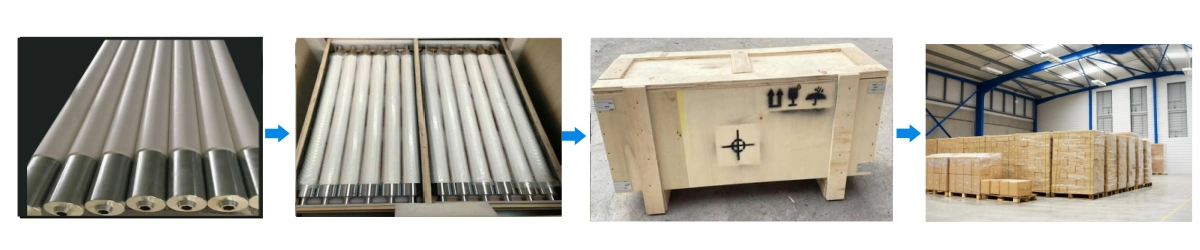

Fused Quartz Ceramic Roller Packaging

Quartz Ceramic Rollers Applications

  • Glass Manufacturing & Tempering Lines

    ✅Key Advantages

    1. Low Run-out for Flat Glass Quality
    – Quartz ceramic rollers with tight run-out control help maintain flatness and reduce optical distortion on tempered and annealed glass sheets.
    2. Stable Transport at High Line Speed
    – Low thermal expansion and good stiffness support glass line speeds above 4–6 m/min while keeping sheet position stable through heating and cooling zones.
    3. Reduced Surface Marks and Scratches
    – Clean quartz ceramic surfaces and controlled roughness reduce roller marks and surface defects on architectural and automotive glass.

    ✅ Problem Solved

    A glass tempering line processing 4–10 mm architectural glass replaced mixed rollers with quartz ceramic rollers controlled for low run-out. At operating temperatures close to 680–700°C and line speeds around 5 m/min, edge chipping and visible roller marks were significantly reduced. Glass rejection rates related to roller defects dropped by approximately 25–30%, and the interval between roller alignment interventions was extended from weekly to monthly checks.

  • Solar Cell & Photovoltaic Firing Furnaces

    ✅Key Advantages

    1. Dimensional Stability for Thin Wafers
    – Quartz ceramic rollers with low CTE keep conveyor geometry stable in firing furnaces, helping protect fragile solar wafers and thin glass substrates.
    2. Support for Narrow Process Windows
    – Stable conveying through 700–900°C firing and drying zones assists in maintaining tight profile control for metallization and contact formation.
    3. Low Particle Generation for Clean Surfaces
    – High purity quartz ceramic surfaces reduce particle shedding, supporting cell efficiency by limiting contamination of active areas.

    ✅ Problem Solved

    A photovoltaic cell producer upgraded the firing furnace transport system to high purity quartz ceramic rollers for a line handling thin cells. Operating with peak temperatures around 800–850°C and production volumes above 3000 cells per hour, breakage attributed to conveying and roller surface issues was reduced by roughly 20%. Maintenance intervals on the roller section were extended, and surface cleaning frequency decreased, contributing to more stable daily output.

  • Industrial Roller Kilns for Ceramics and Heat Treatment

    ✅Key Advantages

    1. Thermal Shock Resistance in Cyclic Operation
    – Quartz ceramic rollers withstand repeated start-ups, controlled cool-downs and load changes in industrial roller kilns.
    2. Compatibility with Various Product Loads
    – Custom diameters and wall thicknesses enable suitable stiffness for tiles, technical ceramics and metal parts on setters.
    3. Support for Atmosphere and Temperature Profiles
    – Quartz ceramic rollers operate in oxidizing environments around 1000–1100°C, supporting consistent process curves.

    ✅ Problem Solved

    A technical ceramics manufacturer running roller kilns at around 1100°C experienced roller cracking during repeated start-stop cycles. After switching to quartz ceramic rollers with optimized wall thickness and controlled straightness, roller failures linked to thermal shock were reduced noticeably over a six-month period. Unplanned kiln stoppages decreased, and annual roller replacement quantities were reduced, contributing to more predictable production planning.

Quartz Ceramic Rollers Usage Guide

  • Installation of Quartz Ceramic Rollers

    1. Inspect each quartz ceramic roller on arrival for visible cracks, chips or severe surface defects before installation.
    2. Handle rollers with two points of support and appropriate lifting fixtures; avoid point impacts on ends or mid-span.
    3. Align rollers carefully in the furnace frame or kiln structure, following specified distance, level and parallelism requirements.
    4. When using metal shafts or end caps, assemble according to specified fit and torque values to avoid excessive stress on the ceramic body.

  • Operation and Process Use

    1. Bring the furnace or roller kiln to temperature using controlled heating ramps according to equipment recommendations, limiting thermal gradients across the roller.
    2. Avoid sudden local cooling, such as directing cold air or liquids onto hot quartz ceramic rollers, to limit thermal shock.
    3. Load products evenly across the width of the quartz ceramic rollers wherever possible to prevent long-term bending and distortion.
    4. Monitor for unusual vibration, noise or product tracking issues and check roller run-out and alignment if needed.

  • Storage of Quartz Ceramic Rollers

    1. Store spare quartz ceramic rollers on padded racks or V-blocks that support the rollers along a suitable length, not only at very short points.
    2. Avoid stacking rollers directly on each other; use soft spacers or individual compartments.
    3. Keep storage areas dry, clean and free from heavy impacts or vibration that might lead to accidental chipping.

  • Cleaning of Quartz Ceramic Rollers

    1. Clean roller surfaces periodically during maintenance using non-metallic tools and appropriate brushes or pads.
    2. For light deposits, use dry brushing or vacuuming to remove loose particles from the quartz ceramic roller surface.
    3. For more persistent residues, use approved cleaning agents or controlled mechanical cleaning, ensuring the roller surface is not deeply scratched.
    4. Allow rollers to dry fully before returning them to high-temperature operation if any wet cleaning method is used.

  • Common Misuse Points and Corrective Actions

    1. Rapid Heating and Cooling Beyond Recommended Ramps
    Issue: Very fast temperature changes can induce thermal stresses and microcracking in quartz ceramic rollers.
    Corrective Action: Adjust heating and cooling profiles to the levels specified for the furnace and roller material, and avoid direct cold air jets on hot rollers.

    2. Local Overloading and Concentrated Weights
    Issue: Placing heavy workpieces on a small zone of a roller can lead to bending or local damage.
    Corrective Action: Distribute load across multiple quartz ceramic rollers and use appropriate setters or carriers to spread the weight.

    3. Improper Handling and Impact During Maintenance
    Issue: Dropping rollers, knocking ends against hard edges or using metallic tools directly on the surface can cause chips or cracks.
    Corrective Action: Use padded supports, lifting slings and non-metallic tools where possible, and train maintenance staff on ceramic handling practices.

FAQ – Quartz Ceramic Rollers

  1. Q: What maximum temperature can quartz ceramic rollers withstand?
    A: Quartz ceramic rollers typically operate in continuous service at around 1050–1150°C, depending on the furnace atmosphere, load and mechanical design.
  2. Q: Why choose quartz ceramic rollers instead of alumina or silicon carbide rollers?
    A: Quartz ceramic rollers offer very low thermal expansion, good thermal shock resistance and clean surfaces, which are useful when line geometry stability and surface quality of glass or wafers are important.
  3. Q: What dimensions can ADCERAX supply for quartz ceramic rollers?
    A: Quartz ceramic rollers can be supplied with outer diameters roughly from 15 to 300 mm and lengths up to about 3000 mm, with hollow or solid construction and machined ends made to customer drawings.
  4. Q: How are tolerances defined for quartz ceramic rollers?
    A: Typical tolerances include OD tolerance down to around ±0.2 mm on selected ranges and controlled straightness and run-out according to the customer’s furnace speed and product flatness requirements.
  5. Q: How long do quartz ceramic rollers usually last in service?
    A: Service life depends on furnace temperature, load, line speed and handling. Under stable operating conditions and correct handling, quartz ceramic rollers can remain in service over extended operating campaigns before replacement is required.
  6. Q: Are custom end designs possible for quartz ceramic rollers?
    A: Yes, ends of quartz ceramic rollers can be machined to accommodate metal caps, keyed shafts, grooves or other features required by the drive and support design.

Customer Reviews – Quartz Ceramic Rollers

  • ⭐️⭐️⭐️⭐️⭐️
    We introduced quartz ceramic rollers from ADCERAX on one of our architectural glass tempering lines. The straightness and run-out control improved our sheet stability, and we observed fewer roller-related marks during production.
    -- Mark Stevens, Process Engineer, GlassLine Technologies Inc.
  • ⭐️⭐️⭐️⭐️⭐️
    Our photovoltaic firing furnace runs at high throughput with thin wafers, and quartz ceramic rollers have helped reduce wafer damage during conveying. Custom dimensions and clear documentation from the supplier made the specification process more straightforward.
    -- Elisa Romero, Production Manager, SolarCell Systems Europe
  • ⭐️⭐️⭐️⭐️⭐️
    We selected quartz ceramic rollers for a roller kiln for processing technical ceramics. After installation, kiln start-up cycles and process changes were handled more smoothly, and we have seen fewer roller failures over several campaigns.
    -- Daniel Kim, Technical Director, Advanced Kiln Systems Co.
  • ⭐️⭐️⭐️⭐️⭐️
    We needed a supplier able to provide custom quartz ceramic rollers with defined tolerances for multiple furnace widths. ADCERAX supported drawing confirmation, packing and shipment planning, and the rollers arrived in good condition and matched our specifications.
    -- Julia Meyer, Purchasing Manager, Industrial Thermal Solutions GmbH
customize size

Customize Quartz Ceramic Rollers

Quartz ceramic rollers can be tailored to match new furnace designs or retrofit existing lines, covering geometry, tolerances and surface characteristics around the specific process window of each customer.

What You Can Specify:

  • Outer Diameter (OD): – Typical range 20–120 mm, with OD tolerance down to ±0.2 mm on selected sizes.

  • Inner Diameter (ID) and Wall Thickness: – Defined ID to fit metallic shafts or sleeves; wall thickness optimized for stiffness and thermal response.

  • Length: – Standard lengths for common furnace widths and custom lengths up to around 3000 mm.

  • Straightness and Run-out: – Straightness and total indicated run-out levels according to line speed and product flatness requirements.

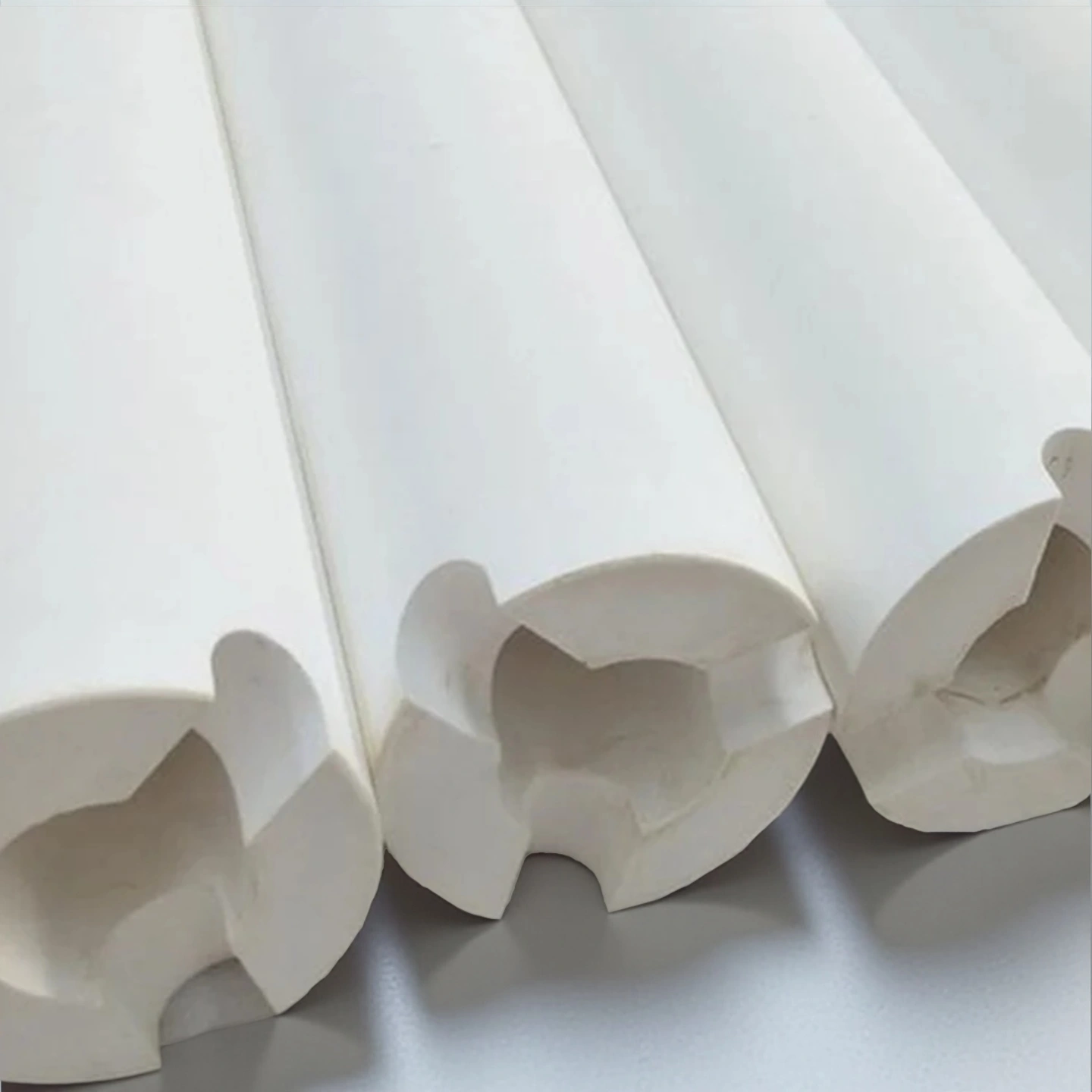
  • End Details:– Plain ends, machined shoulders, tapered ends, key slots, grooves or prepared ends for metal caps.

  • Surface Finish: – As-formed, ground, polished or lightly textured surface to balance grip and mark-free transport.

  • Surface Treatment /Opaque Layer: – Opaque or semi-opaque quartz ceramic rollers for improved infrared absorption or specific heat balance.

  • Matching to Existing Drawings: – Production strictly to customer drawings, with 2D/3D drawing confirmation before machining.

Related Products

ADCERAX - Your Trusted Advanced Ceramics Manufacturing Partner

Direct factory manufacturing with comprehensive ceramic materials expertise and global supply capabilities

Direct Factory Manufacturing

China-based ceramic materials production facility with state-of-the-art equipment

Engineering Team

Experienced professionals in advanced ceramics applications and custom design

Quality Control

Strict quality control standards for technical ceramics manufacturing and quality management

Global Supply Chain

Serving customers worldwide with technical ceramics and rapid response

24/7 Technical Support

Round-the-clock support for ceramic components inquiries and technical assistance

500+ Satisfied Customers

Trusted by global customers for advanced ceramic materials and precision components

Get in touch with us

Our team will be happy to respond to you in less than 24 hours.

Adcerax's factory

Quick Quotation

*Our team will answer your inquiries within 24 hours.

*Your information will be kept strictly confidential.

Ready to Solve Your Engineering Challenge?

Partner with ADCERAX for reliable, high-performance advanced ceramic solutions. Our engineers are ready to discuss your project.

E-mail

info@adcerax.com

Phone

+(86) 0731-74427743 | WhatsApp: +(86) 19311583352

Response Time

Within 24 hours

Quick Quote

The more details you provide, the faster we can quote.

*We respond within 24 hours. All inquiries are confidential.

Download Catalog

Get Your Custom Sulution

The more details you provide, the faster we can respond.

customize size

*We respond within 24 hours. All inquiries are confidential.

Download Catalog