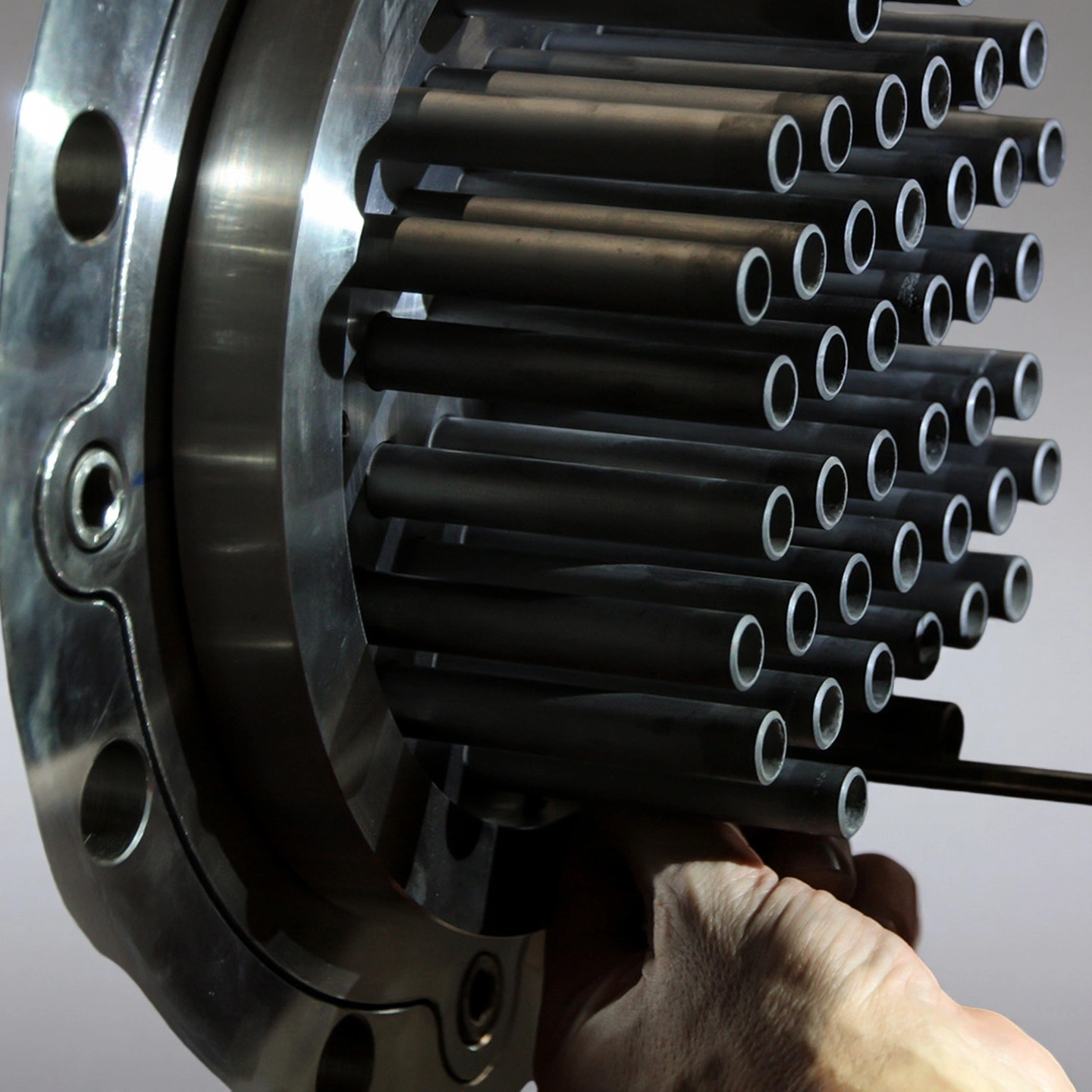
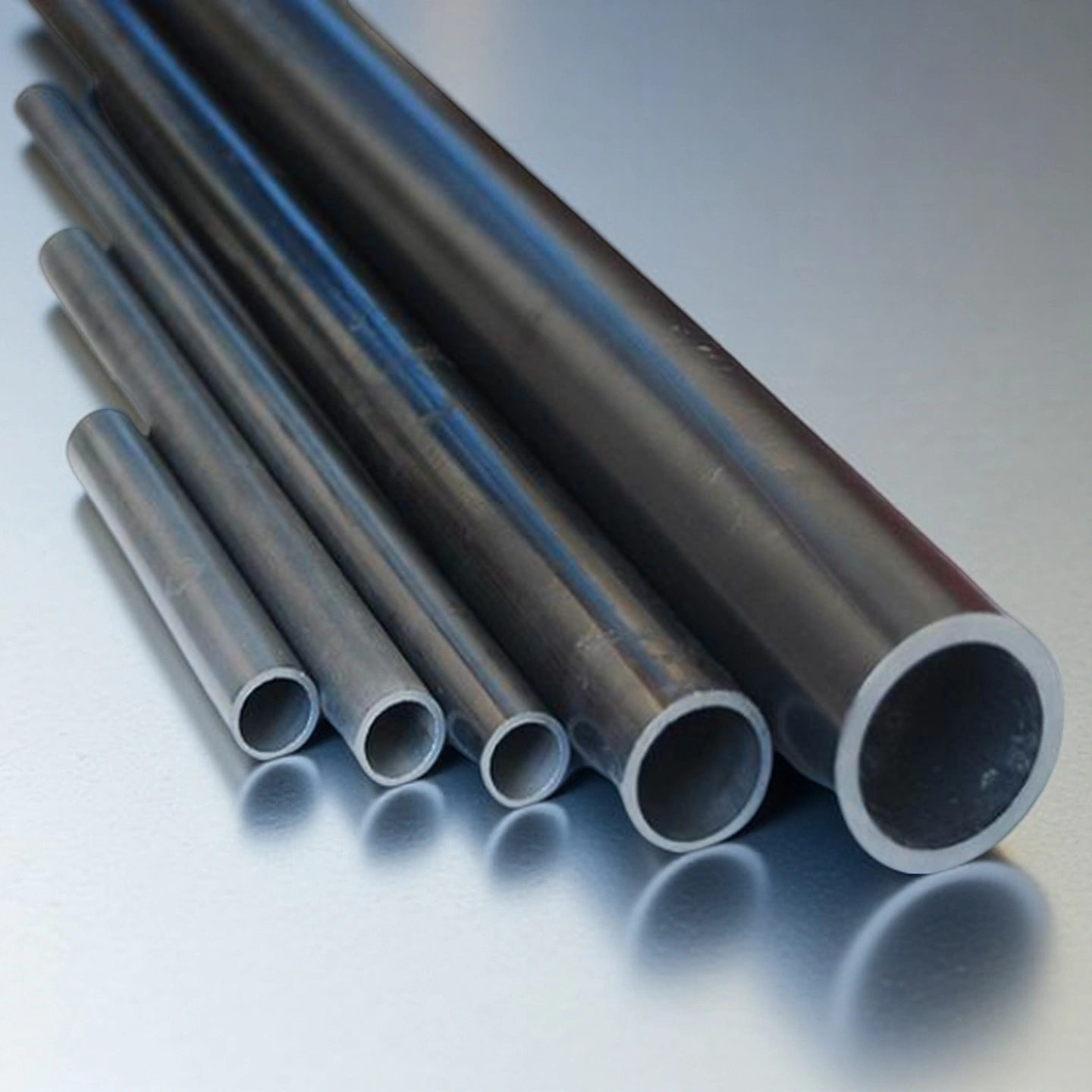
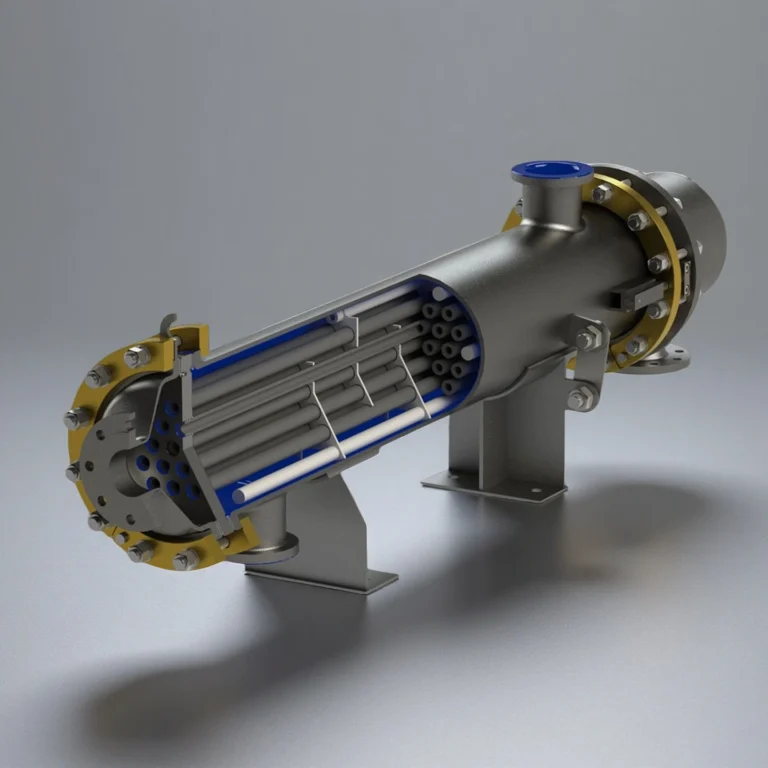
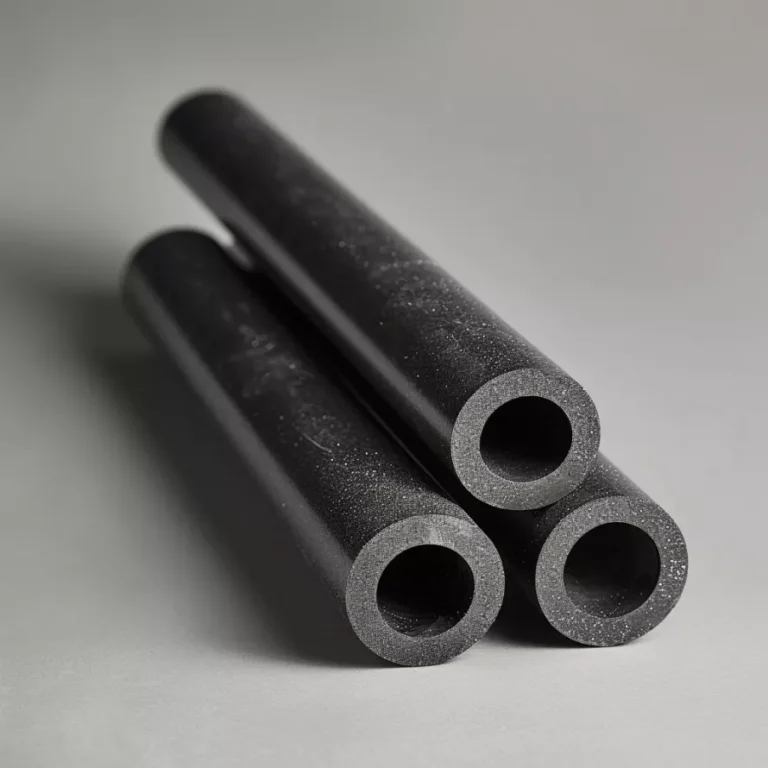
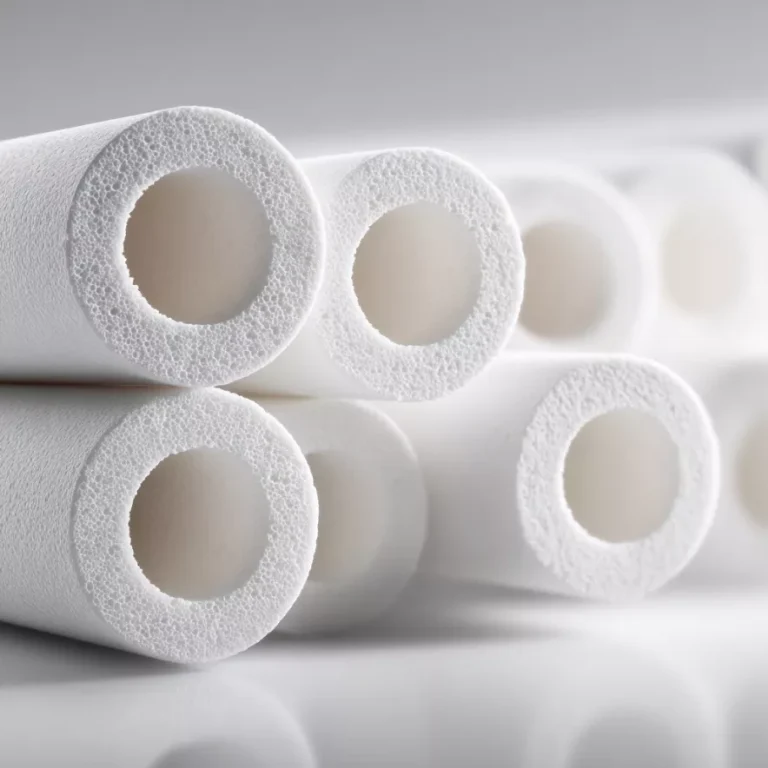
ADCERAX® Silicon Carbide Shell and Tube Heat Exchanger is engineered to transfer heat efficiently between fluids of different temperatures through conduction and convection within its SiC tube bundle structure. Its dense silicon carbide channels sustain stable thermal performance in corrosive, high-temperature and particle-laden industrial environments where metal exchangers commonly degrade. This configuration enables long operating cycles, consistent process control and reliable heat transfer across chemical, metallurgical and clean-processing applications.
Advanced Material Performance of Silicon Carbide Shell and Tube Heat Exchanger
-
High Heat Flux Density
Silicon carbide provides thermal conductivity above 120–170 W/m·K, allowing higher heat flow compared with metal alloys. This enables smaller exchanger footprints while sustaining stable temperature gradients.
Its conductivity exceeds stainless steel by 3–5×, permitting reduced installation space without compromising duty.
-
Compact Heat-Exchange Surface
With heat-transfer coefficients increased by 20–40%, systems require less tube surface area to achieve equivalent process duty.
This reduction directly decreases equipment size and total installed weight in constrained plant layouts.
-
Fast Thermal Response
The material’s low thermal resistance allows rapid stabilization under fluctuating inlet temperatures, improving process control.
Dynamic temperature shifts above ±25 °C/min can be absorbed without thermal lag, enhancing system responsiveness.
-
Strong Acid and Alkali Stability
The SiC matrix remains inert in H₂SO₄, HCl, HNO₃, NaOH and KOH across a wide concentration spectrum, preventing ion release.
Long-term immersion tests indicate mass-loss rates below 0.01%, supporting continuous operation in corrosive loops.
-
Oxidation and Chloride Resistance
Silicon carbide withstands oxidative species and chloride-rich environments where metals fail by pitting or crevice corrosion.
Performance remains stable at temperatures above 800 °C in high-chloride systems, essential for chemical production lines.
-
High Strength at Temperature
Reaction-bonded SiC maintains flexural strength above 250–350 MPa even at elevated temperatures.
This allows the tube bundle to tolerate high-velocity streams carrying solids without surface wear or deformation.
-
Thermal Shock Resistance
The material’s low thermal expansion coefficient (4.0–4.5×10⁻⁶ /K) prevents cracking under rapid cooling or heating cycles.
Temperature shocks exceeding 300 °C can be absorbed while maintaining structural integrity.
-
No Metal Ion Release
SiC’s chemically inert surface avoids leaching of Fe, Ni or Cr ions seen in metal exchangers, protecting process purity.
Extractables are typically below 1 ppm, satisfying stringent clean-process requirements.
-
Non-Porous and Low Contamination Risk
Tube porosity under 0.1% eliminates microbial retention pathways and minimizes fouling.
This ensures reliable operation in CIP/SIP workflows across food and pharmaceutical lines.
Technical Specifications of Silicon Carbide Shell and Tube Heat Exchanger
The Silicon Carbide Shell and Tube Heat Exchanger is engineered for high-duty thermal processes requiring stable heat transfer, corrosion resistance and long-cycle reliability under aggressive chemical and high-temperature environments.
| Property |
Specification |
| Material Type |
Reaction-Bonded Silicon Carbide (RBSiC / SiSiC) |
| Thermal Conductivity |
120–170 W/m·K |
| Flexural Strength |
250–350 MPa |
| Compressive Strength |
1800–2000 MPa |
| Hardness |
~2500–2800 HV |
| Thermal Expansion Coefficient |
4.0–4.5 × 10⁻⁶ /K |
| Maximum Operating Temperature |
Up to 1300 °C |
| Density |
3.02–3.10 g/cm³ |
| Porosity |
< 0.1% |
| Corrosion Resistance |
Stable in strong acids and alkalis (H₂SO₄, HCl, HNO₃, NaOH) |
| Oxidation Resistance |
Stable above 800 °C in oxidizing environments |
| Thermal Shock Resistance |
Withstands > 300 °C rapid temperature shift |
| Erosion Resistance |
Suitable for high-velocity particle-laden streams |
| Chemical Purity |
No metal ion release; extractables < 1 ppm |
Dimensions of Silicon Carbide Shell and Tube Heat Exchanger
Packaging of Silicon Carbide Shell and Tube Heat Exchanger
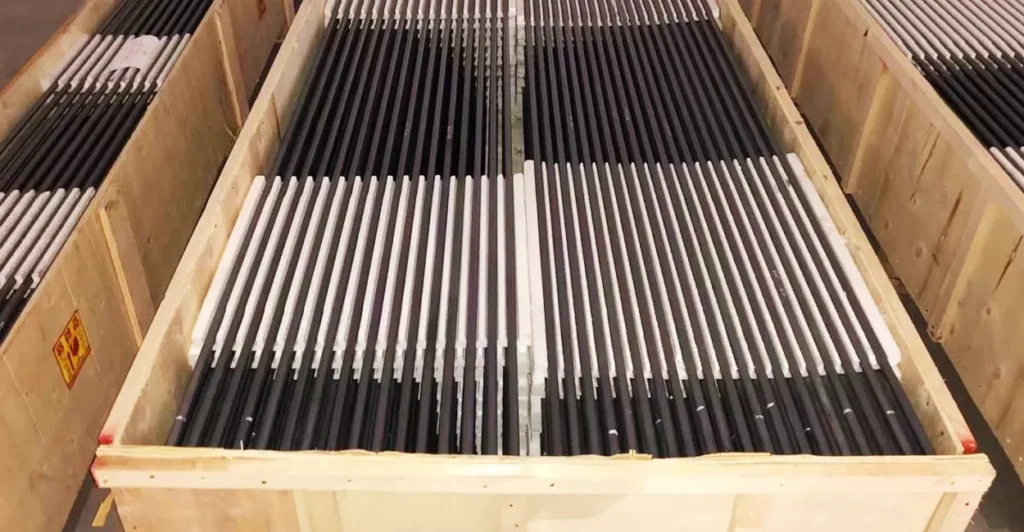
Silicon Carbide Shell and Tube Heat Exchanger components are packed in reinforced wooden crates with fixed-position supports to prevent movement during long-distance transport. Each tube is individually separated to avoid contact abrasion and coated with protective end caps for surface integrity. The complete packaging system is designed to withstand vibration, stacking pressure and international freight handling to ensure safe arrival for industrial installation.
ADCERAX® Silicon Carbide Shell and Tube Heat Exchanger Resolves High-Demand Industrial Thermal Challenges
ADCERAX® Silicon Carbide Shell and Tube Heat Exchanger provides a stable thermal-transfer solution for corrosive, high-temperature and particle-laden industrial systems where conventional metallic and polymer-based exchangers frequently fail. Through high thermal conductivity, chemical inertness and mechanical integrity at elevated temperatures, the exchanger strengthens process reliability across complex chemical, food-processing and metallurgical operations.
-
Silicon Carbide Shell and Tube Heat Exchanger for Chloride-Rich Acid Cooling Units
✅Key Advantages
1. Chloride-Resistant SiC Surface
The silicon carbide tube bundle maintains an inert surface in chloride-rich acid mixtures where stainless steels rapidly pit and crack. Long-duration immersion and circulation tests show cumulative mass loss below 0.01% after extended operation, even under high chloride activity and oxidizing conditions.
2. Stable Heat Transfer in Oxidizing Acid Media
The high thermal conductivity of SiC, typically in the range of 120–170 W/m·K, keeps the overall heat-transfer coefficient stable despite temperature fluctuations. Plants running acid cooling loops report seasonal variation in effective heat-transfer performance remaining within 5%, even under continuous oxidizing exposure.
3. Extended Tube Life in Acid Cooling Circuits
Compared with 300-series stainless steel bundles, ADCERAX® silicon carbide tubes often achieve 3–5 times the operating life in chloride-rich acid circuits. This extension in service intervals reduces tube bundle replacement frequency and stabilizes planned shutdown schedules for acid concentration and recovery units.
✅ ️Problem Solved
A chlor-alkali facility operating hydrochloric acid cooling loops previously used duplex steel bundles that developed through-wall pitting within twelve months of service. Instability in the cooling performance led to frequent adjustments of acid flow and cooling water rates, driving up energy consumption and complicating process control. After installing ADCERAX® Silicon Carbide Shell and Tube Heat Exchanger bundles, the plant documented stable operation over multiple annual campaigns with no observable pitting or crevice damage on tube surfaces. Heat-transfer performance remained within a narrow deviation band, and projected tube life moved from short-cycle replacement to multi-year operation under the same chloride-rich conditions.
-
Silicon Carbide Shell and Tube Heat Exchanger for Clean-Media Heating in Food Additive Processes
✅Key Advantages
1. Ultra-Low Extractables for Hygienic Media
The silicon carbide surface shows very low levels of extractables, typically below 1 ppm, even after repeated exposure to organic acids and cleaning chemicals. This level of stability supports stringent food-additive quality requirements where trace metal ions or corrosion by-products are not acceptable.
2. CIP and SIP Cycle Stability
ADCERAX® silicon carbide tubes tolerate frequent CIP and SIP routines with rapid temperature ramps and alternating chemical detergents. Test data from simulated cleaning cycles show no measurable surface roughening after more than 1000 CIP/SIP sequences, and heat-transfer performance remains consistent over time.
3. Anti-Fouling and Dimensional Stability
The dense, low-porosity structure of SiC, with porosity typically below 0.1%, reduces fouling adhesion and biofilm retention on tube surfaces. As a result, fouling factors remain relatively stable between cleaning intervals, helping process engineers maintain predictable pressure drop and thermal duty across long production runs.
✅ ️Problem Solved
A food-additive producer using metallic shell-and-tube exchangers in organic acid heating service experienced recurrent batch quality deviations linked to elevated nickel and chromium content in product samples. Each deviation triggered extra laboratory checks, partial batch rework and occasional scrapping, which disrupted production planning and increased quality-control costs. After switching the critical heating step to ADCERAX® Silicon Carbide Shell and Tube Heat Exchanger, the plant recorded contaminant levels below the detection limits of its routine analytical methods across successive campaigns. CIP and SIP frequencies remained unchanged, but the measured thermal performance and product purity stayed stable, and batch rejection related to exchanger contamination was effectively eliminated.
-
Silicon Carbide Shell and Tube Heat Exchanger for High-Temperature Slurry and Off-Gas Energy Recovery
✅Key Advantages
1. High-Temperature Integrity in Off-Gas Streams
The silicon carbide tube material maintains mechanical strength and structural integrity in off-gas flows with temperatures up to 1300 °C. This high-temperature stability allows the exchanger to handle waste-heat recovery duties where conventional alloys soften, creep or lose wall thickness under prolonged exposure.
2. Abrasion Resistance in Slurry Service
With hardness in the range of 2500–2800 HV, SiC tubes resist erosion caused by slag particles and solid-laden slurries passing at high velocity. Field comparisons show that wall-thickness loss in silicon carbide tubes can be reduced by more than 60% versus high-alloy steel in similar abrasive service.
3. Thermal Shock Resilience in Cycling Duty
A low thermal expansion coefficient, typically 4.0–4.5 × 10⁻⁶ /K, enables the tube bundle to withstand frequent temperature swings and start–stop cycles. Testing under repeated thermal shocks with temperature differentials above 300 °C has demonstrated minimal crack formation or dimensional distortion in the SiC structure.
✅ ️Problem Solved
In a steel plant off-gas energy recovery system, high-alloy steel tubes in the original waste-heat exchanger suffered accelerated erosion and thermal cracking within a relatively short operating interval. The combination of hot particulate flow, fluctuating gas temperatures and rapid load changes made it difficult to maintain a stable heat-recovery rate, and unplanned tube failures increased the risk of gas leakage into auxiliary equipment. After installing ADCERAX® Silicon Carbide Shell and Tube Heat Exchanger units, inspection intervals showed only minor surface wear on the SiC tubes and no crack propagation after extended high-temperature duty. The service interval for tube bundle replacement was extended from a short replacement cycle to a multi-year period, and the off-gas recovery efficiency remained within a stable performance range despite frequent thermal cycling.
Comprehensive User Guide for ADCERAX® Silicon Carbide Shell and Tube Heat Exchanger
To support safe integration and long-cycle operation, the Silicon Carbide Shell and Tube Heat Exchanger requires clear understanding of installation, start-up, cleaning and maintenance practices across various industrial systems. This module provides structured, engineering-oriented guidance to help users maintain thermal stability, protect tube integrity and ensure reliable performance throughout continuous or batch-type process duties.
-
Installation Requirements for Stable System Integration
1. Proper Mechanical Support
The exchanger must be mounted on a rigid frame that prevents bending stress and vibration transfer from upstream equipment. Support fixtures should accommodate thermal expansion without imposing external load on the tubes. Incorrect support alignment may reduce service life by concentrating stress at tube-to-header transitions.
2. Inlet and Outlet Fluid Preparation
Process lines should be flushed to remove particulates before connection to avoid early-stage erosion. Flow distribution devices or diffusers may be required for high-velocity circuits. Uncontrolled particle impact can gradually alter tube-wall thickness, affecting thermal uniformity.
3. Seal and Gasket Compatibility
Selected sealing materials must withstand chemical exposure and operating temperatures typical of the process media. Compression levels should be applied evenly to protect the tube sheet interface. Improper gasket choice can lead to micro-leakage and thermal drift during operation.
-
Safe Heating and Start-Up Procedures
1. Gradual Temperature Ramp-Up
Heating cycles should increase temperature in controlled increments to avoid sharp gradients between the tube surface and internal fluid. Temperature uniformity helps stabilize thermal stress across the SiC structure. Abrupt ramp-ups can trigger transient strain that compromises long-term reliability.
2. Balanced Flow Conditions
Flow should be established before significant heating begins to prevent stagnant hot zones. The combination of circulation and rising temperature stabilizes heat distribution across all active tubes. Non-circulating hot spots may accelerate oxidation of boundary layers.
3. Monitoring Early Cycle Behavior
During the first operating hour, monitoring inlet/outlet delta-T and pressure drop helps identify flow maldistribution. Any deviation should be corrected before full-load operation. Early-cycle anomalies often indicate installation or alignment issues.
-
Cleaning, Inspection and Routine Maintenance
1. Chemical Cleaning Compatibility
Cleaning agents must be selected according to process residue characteristics without reacting with SiC or gasket materials. Acidic or alkaline cycles should follow controlled concentration limits. Incompatible cleaning fluids may reduce surface smoothness or affect sealing components.
2. Mechanical Cleaning Guidelines
Soft, non-metallic tools are recommended for manual cleaning of accessible areas. High-pressure jetting should maintain moderated velocity to avoid erosion. Mechanical abrasion from unsuitable tools can scratch the tube surface and impair flow efficiency.
3. Inspection Frequency Planning
Routine inspections should be scheduled based on fluid corrosivity, suspended solids content and operating temperature. Inspection intervals may be extended in stable service environments. Skipping inspections in high-duty service may obscure early warnings of wear progression.
-
Operational Safeguards for Long-Term Reliability
1. Flow Velocity Management
Tube-side and shell-side velocities must stay within recommended ranges corresponding to abrasive content and viscosity. Controlled velocity maintains thermal performance without accelerating wear. Excessive velocity may magnify particle impact energy on tube surfaces.
2. Media Compatibility Review
Before introducing new chemical formulations, compatibility with SiC and sealing components must be evaluated. Media with aggressive additives may alter system load. Unexpected chemical reactions can degrade auxiliary components despite SiC’s inertness.
3. Preventing Air Entrapment
Air pockets in high-temperature circuits can create localized overheating zones and thermal distortion. Proper venting during start-up is essential. Air presence reduces heat-transfer efficiency and destabilizes temperature control.