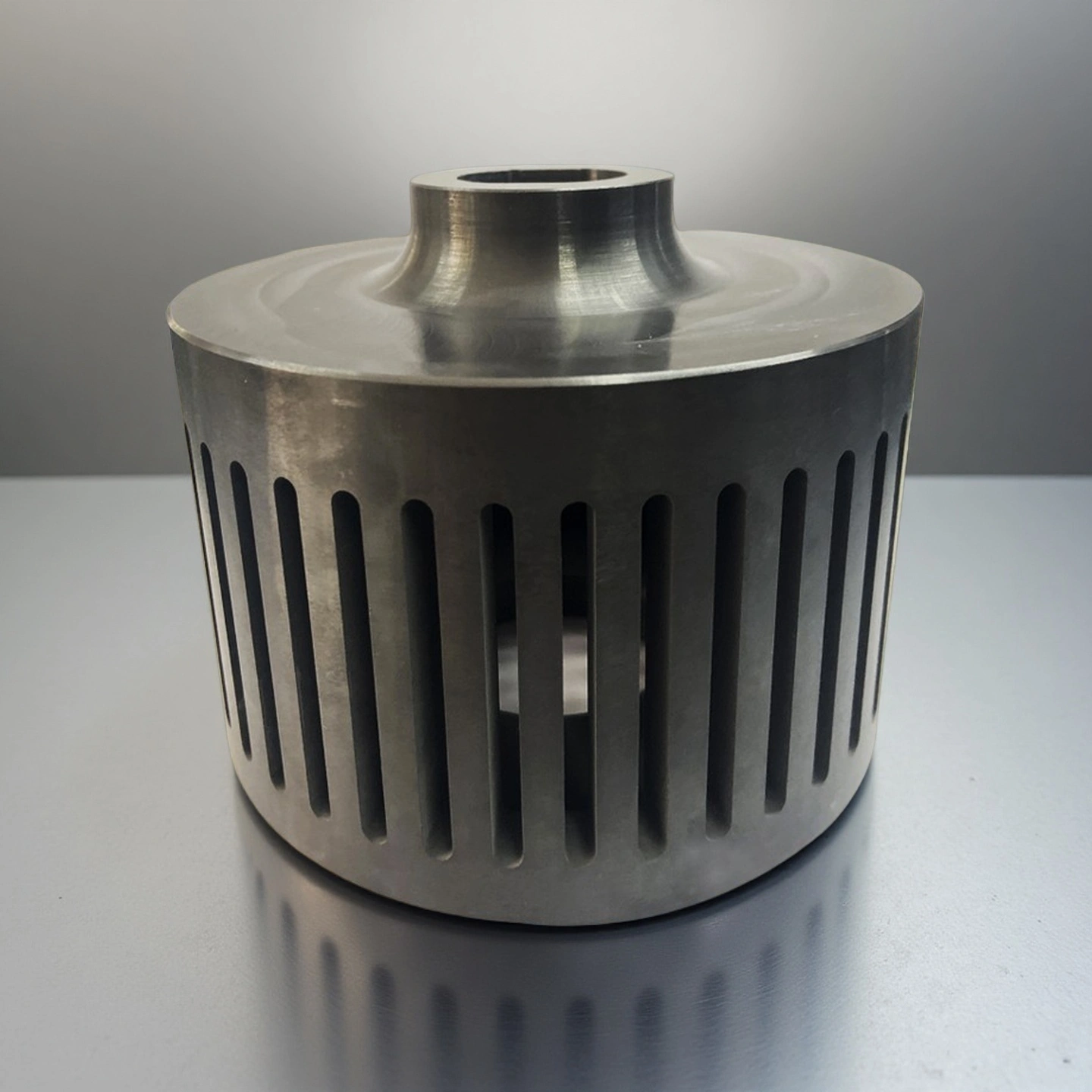
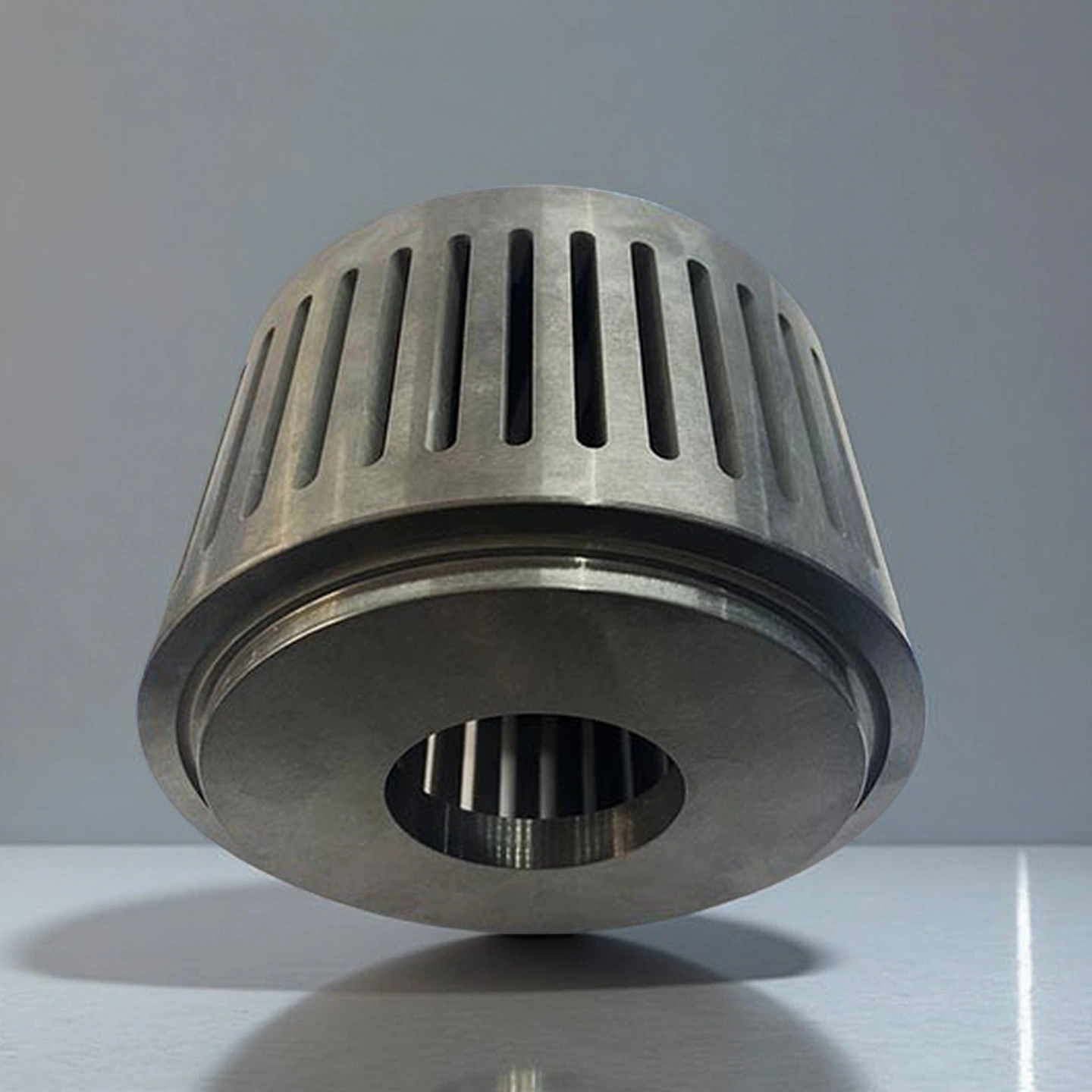
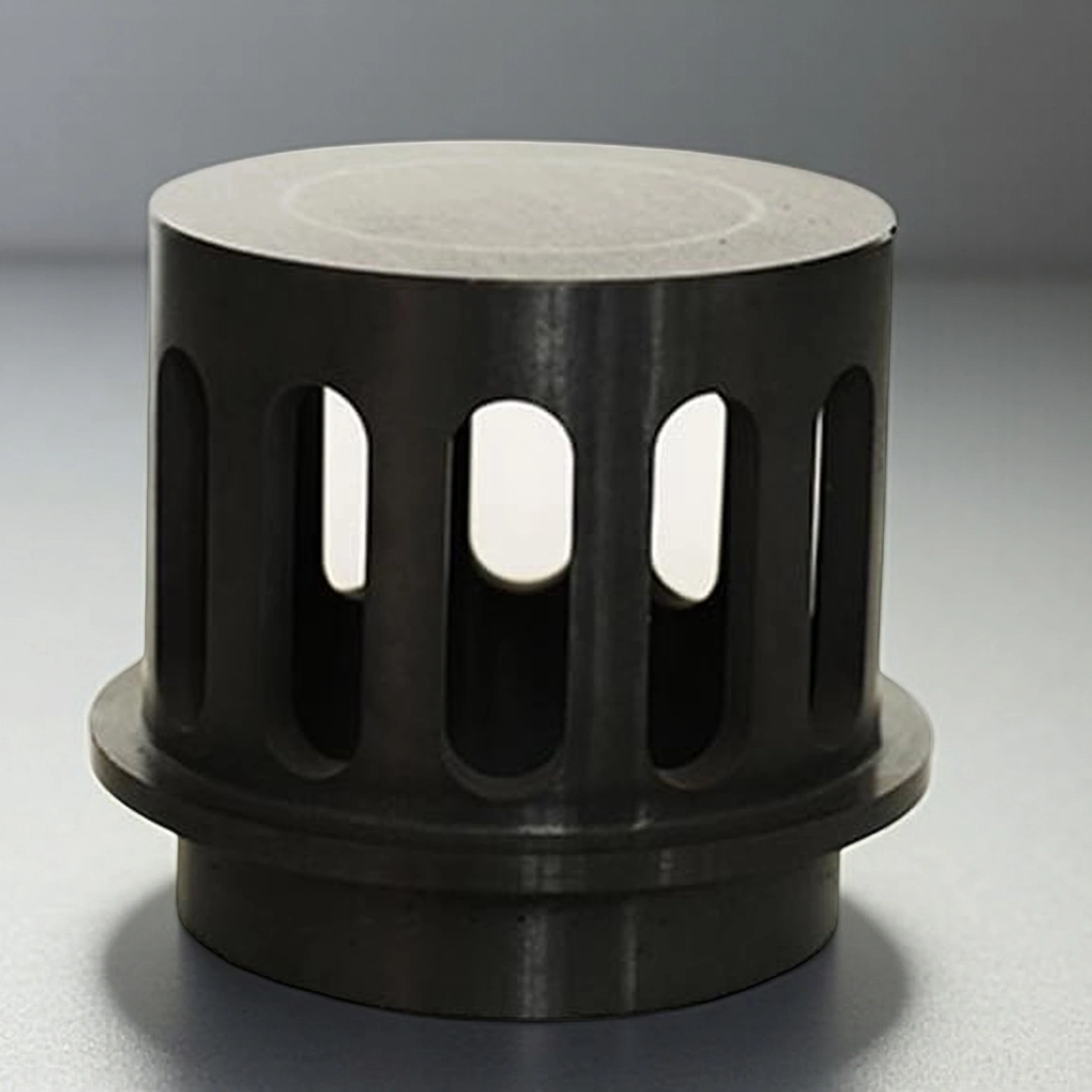
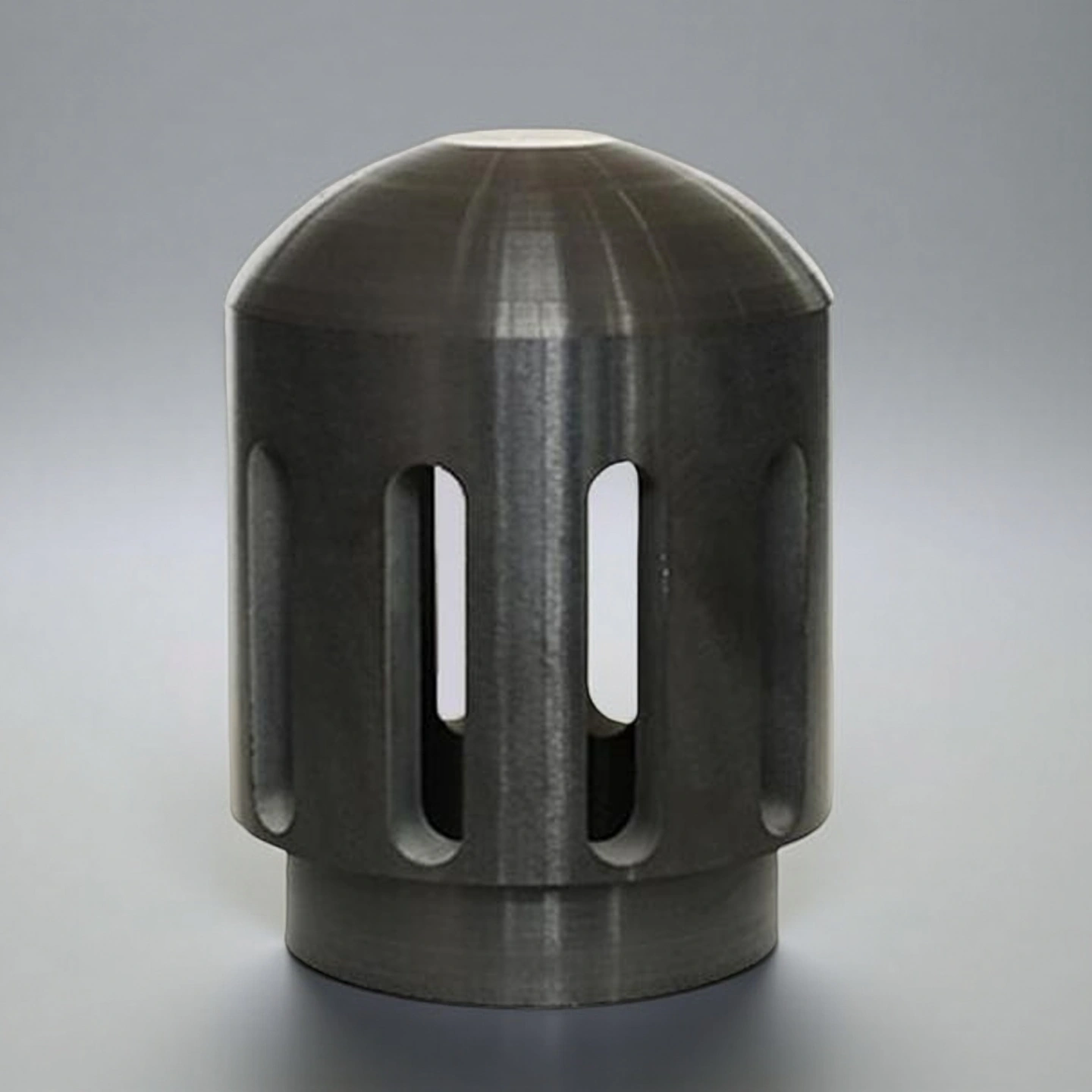
High-precision Silicon Nitride Ceramic Grading Wheel for Air Classifiers

The silicon nitride ceramic grading wheel is a Si3N4 classifier rotor for air classifiers and jet mills, available in diameters from about 150 mm up to 600 mm with custom bores and blade geometries to match your air classifier design and target cut size.

Catalogue No. AT-SIN-FJ001
Material Silicon Nitride
Dimensional Tolerance ±0.05mm (customizable)
Thermal Expansion Coefficient 3.2 × 10⁻⁶ /K
Maximum continuous service temp ~1000–1100 °C in air
24H Standard Dispatch
Small Batch Support OEM
Factory Direct
Expert Engineering Support

The silicon nitride ceramic grading wheel is a full ceramic classifier wheel designed for air classifiers, jet mills, and ACM mills handling high-value fine powders. It combines the high strength and low density of Si3N4 with a balanced rotor structure to support high rotational speeds and narrow particle size distributions.


Silicon Nitride Ceramic Grading Wheel Benefits

  • High wear resistance: Extends service life in abrasive powder environments.
  • Non-metallic: Prevents contamination in high-purity powder processing.
  • Thermal shock resistance: Suitable for rapid temperature changes in jet milling.
  • Dimensional precision: Ensures consistent classification performance.
  • Corrosion resistance: Withstands chemical exposure in fine powder systems.

Si3N4 Ceramic Grading Wheel Properties

Si3N4 Type Gas pressure sintering Si3N4 Hot pressing sintering Si3N4 High thermal conductivity Si3N4
Density (g/cm3) 3.2 3.3 3.25
Flexture strength (MPa) 700 900 600~800
Young Modulus (GPa) 300 300 300~320
Poisson's ratio 0.25 0.28 0.25
Compressive strength (MPa) 2500 3000 2500
Hardness (GPa) 15 16 15
Fracture toughness (MPa*m1/2) 5~7 6~8 6~7
Maximum working temperature (℃) 1100 1300 1100
Thermal conductivity (W/m*K) 20 25 80~100
Thermal expansion coefficient (/℃) 3*10-6 3.1*10-6 3*10-6
Thermal shock resistance (ΔT ℃) 550 800 /


Si3N4 Ceramic Grading Wheel Specifications

Si3N4 Ceramic Grading Wheel
Item No. Outer Diameter(mm) Inner Diameter(mm) Height(mm) Upper limit of linear speed m/s
AT-SIN-FJ001 100 75 80 70
AT-SIN-FJ002 155 135 95 70
AT-SIN-FJ003 250 220 100 70
AT-SIN-FJ004 260 240 120 70
AT-SIN-FJ005 315 265 120 70


Si3N4 Classifier Wheel Packaging

  • Each silicon nitride ceramic grading wheel is wrapped with foam or soft cushioning material to protect blades and edges.
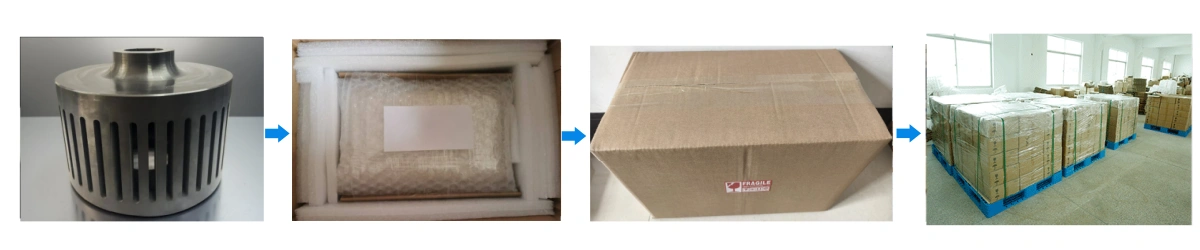

Si3N4 Classifier Wheel Packaging

Application of Silicon Nitride Grading Wheel

  • Lithium Battery Cathode and Anode Materials

    ✅Key Advantages

    1. Stable grading for D50 around 5–15 µm with narrow D97 limits in cathode and anode powders.
    2. Full ceramic rotor design helps keep metallic contamination below typical battery material thresholds.
    3. High-balance Si3N4 grading wheel supports high classifier speeds used in modern high-throughput lines.

    ✅ Problem Solved

    Battery material plants often run several air classifiers on each production line and need consistent cut size to keep electrode density and capacity within specification. When a metal or low-grade ceramic rotor wears, D97 can drift by 1–3 µm, which may force downgrading or reworking of entire batches. By using a silicon nitride ceramic grading wheel with stable blade geometry and low wear rate, plants can reduce unplanned rotor changes and keep particle size distribution within their process window, which supports more stable electrode performance and fewer off-spec lots.

  • Advanced Ceramic and Electronic Ceramic Powders

    ✅Key Advantages

    1. Ceramic classifier wheel for high-purity alumina, Si3N4, and AlN powders with minimal metallic pick-up.
    2. Si3N4 rotor strength supports high tip speed to achieve fine cuts for sub-10 µm advanced ceramic powders.
    3. Consistent classification supports tight shrinkage and dielectric performance in electronic ceramic parts.

    ✅ Problem Solved

    Producers of electronic ceramic powders must control particle size to support predictable shrinkage and electrical properties after sintering. If the classifier wheel deforms or wears unevenly, the powder PSD widens and can increase internal defect rates. Silicon nitride ceramic grading wheels maintain their profile under repetitive loading, so the powder feed to spray drying or pressing operations stays within target ranges, which helps lower internal scrap and improve lot-to-lot stability.

  • Metal Powder for Additive Manufacturing and Powder Metallurgy

    ✅Key Advantages

    1. Ceramic grading wheel for metal powder classification where the powder itself has high unit value.
    2. High-speed Si3N4 classifier wheel supports fine cut sizes needed for powder bed fusion and binder jetting.
    3. Stable rotor geometry helps maintain flowability and packing density in AM metal powders.

    ✅ Problem Solved

    Additive manufacturing powders are expensive, and their usable fraction is determined by particle size distribution and flow properties. If classification is unstable, too much powder falls outside the usable size range and either needs reprocessing or is written off. With a silicon nitride ceramic grading wheel tuned for the target metal powder cut size, producers can keep more material in the saleable PSD window and reduce the frequency of rotor-related process adjustments.

Silicon Nitride Grading Wheel Usage Instructions

  • Installation

    1. Inspect the silicon nitride ceramic grading wheel for visible chips or cracks before installing.
    2. Clean the classifier shaft and bore surfaces to remove dust, oil, and burrs.
    3. Align the bore and shaft keys carefully to avoid point loading on the ceramic bore.
    4. Use controlled fitting methods (such as gentle heating of the hub or precise pressing) to avoid impact.
    5. After installation, check axial run-out and balance according to your classifier manufacturer’s limits.

  • Operation

    1. Start the classifier at low speed to confirm vibration levels and noise are within normal operating ranges.
    2. Increase rotor speed gradually to the target set-point while monitoring current, vibration, and throughput.
    3. Operate within the recommended maximum rotational speed or peripheral velocity defined for the rotor design.
    4. Avoid running with strong unbalanced powder loads for extended periods, as this increases bending stress in the rotor.

  • Storage

    1. Store spare Si3N4 ceramic grading wheels in dry, clean areas away from impact and vibration sources.
    2. Keep rotors upright or in dedicated cradles so blades and outer edges are not loaded or pressed against hard surfaces.
    3. Avoid stacking heavy objects on top of the packed rotor boxes.

  • Cleaning and inspection

    1. Use soft brushes or compressed clean air to remove dust from the blades and hub.
    2. Do not use steel tools or aggressive mechanical scraping directly on ceramic surfaces.
    3. Inspect rotor blades for local chipping, cracks, or severe erosion during planned shutdowns.
    4. Replace the rotor if any critical cracks are observed or if the blade profile is significantly reduced.

  • Common misuse points and how to avoid them

    1. Over-speeding the rotor
    Risk: Exceeding design speed raises stress and may initiate cracks.
    Action: Always confirm the rated maximum speed for your silicon nitride ceramic grading wheel and set safety limits in your control system.
    Impact during installation

    2. Risk: Hammer blows on the hub or shaft can create micro-cracks that grow during operation.
    Action: Use controlled fitting tools and follow a step-by-step installation procedure without direct impact.

    3. Running with severe imbalance
    Risk: Accumulated coarse powder on one side of the rotor can create high bending loads.
    Action: Keep the system clean, check balance indicators, and schedule cleaning if vibration trends increase over time.

Silicon Nitride Ceramic Grading Wheel FAQ

  1. Q: What is a silicon nitride ceramic grading wheel used for?
    A: A silicon nitride ceramic grading wheel is a Si3N4 classifier rotor used in air classifiers, jet mills, and ACM mills to separate fine powder fractions and control D50 and D97 in high-value powders.
  2. Q: Why choose Si3N4 instead of alumina for a ceramic grading wheel?
    A: Si3N4 has higher flexural strength and lower density than many alumina grades, so a Si3N4 ceramic grading wheel can run at higher speeds with lower inertia, which helps achieve stable classification in demanding lines.
  3. Q: Can the silicon nitride ceramic grading wheel be used in both air classifiers and jet mills?
    A: Yes, silicon nitride ceramic grading wheels can be designed for air classifiers, jet mills, and ACM mills, as long as the rotor geometry matches the internal flow and the mechanical design meets the speed and load requirements.
  4. Q: What size range can ADCERAX supply for Si3N4 ceramic grading wheels?
    A: ADCERAX can produce silicon nitride ceramic grading wheels in typical outer diameters from about 150 mm to 600 mm, with custom bore sizes and heights to fit your air classifier design.
  5. Q: How does a Si3N4 ceramic grading wheel reduce contamination?
    A: The full ceramic flow path of the silicon nitride ceramic grading wheel avoids direct contact between the powder and steel rotor surfaces, which helps reduce Fe and Cr pick-up in sensitive powders such as lithium battery materials and electronic ceramics.
  6. Q: What tolerances can be achieved on a silicon nitride grading wheel?
    A: For critical fits such as outer diameter and bore, the Si3N4 ceramic grading wheel can typically be machined to tolerances in the range of ±0.03–0.05 mm, subject to part size and geometry.
  7. Q: How long does a silicon nitride ceramic grading wheel typically last?
    A: Service life depends on powder abrasiveness, operating speed, and cleaning practices, but a Si3N4 ceramic grading wheel usually shows longer blade profile stability than comparable metal or standard ceramic wheels under the same conditions.
  8. Q: Can the blade geometry of a Si3N4 classifier wheel be customized for my powder?
    A: Yes, ADCERAX can customize blade number, thickness, angle, and curvature on the silicon nitride ceramic grading wheel to support specific target D50 and D97 values and flow properties of your powder.
  9. Q: What information do you need to design a custom silicon nitride grading wheel?
    A: For a custom Si3N4 ceramic grading wheel, useful inputs include current classifier model, target particle size distribution, powder type and abrasiveness, existing rotor dimensions, and typical operating speed.

Silicon Nitride Ceramic Grading Wheel Reviews

  • ⭐️⭐️⭐️⭐️⭐️
    We replaced our existing metal classifier wheel on one lithium cathode line with a silicon nitride ceramic grading wheel from ADCERAX. After six months, the particle size distribution is more stable and we have not seen the same level of metallic contamination in our analysis.
    -- Daniel K., Process Engineer, EuroCell Materials GmbH
  • ⭐️⭐️⭐️⭐️⭐️
    As an air classifier OEM, we needed a Si3N4 ceramic grading wheel option for high-purity projects. ADCERAX supplied custom silicon nitride classifier wheels that matched our shaft and housing, and the pricing was competitive for a factory-made ceramic component.
    -- Maria R., Purchasing Manager, Nordic Powder Systems AB
  • ⭐️⭐️⭐️⭐️⭐️
    Our advanced ceramic powder line uses a silicon nitride ceramic grading wheel to keep alumina and Si3N4 powders within a narrow cut. The rotor has held its profile over multiple campaigns, and our internal scrap from PSD issues has gone down.
    -- Kenji S., Production Supervisor, Nippon Fine Ceramics Co., Ltd.
  • ⭐️⭐️⭐️⭐️⭐️
    We use Si3N4 ceramic grading wheels from ADCERAX on a metal powder classification loop. The combination of long service life and consistent cut size has helped justify the initial investment in silicon nitride compared with standard ceramic rotors.
    -- Laura M., Technical Director, ProMetal Powders Inc.
customize size

Custom Silicon Nitride Classifier Wheel

ADCERAX designs and machines Si3N4 ceramic grading wheels to match each air classifier or jet mill, rather than forcing your line to fit a standard rotor. By adjusting geometry, tolerances, and balance level, the silicon nitride ceramic grading wheel can be tuned to your target cut size, throughput, and powder properties.

1. Overall geometry

  • Outer diameter range, for example 150–600 mm (larger or smaller sizes on request)
  • Inner bore diameter, keyway, or spline profile to match your classifier shaft
  • Total rotor height, hub thickness, and flange width

2. Blade design

  • Number of blades and their spacing around the grading wheel
  • Blade thickness, chord length, and tip width influence cut sharpness
  • Blade angle and curvature relative to the gas flow and powder trajectory

3. Mechanical and speed limits

  • Maximum design rotational speed or peripheral velocity for the rotor
  • Safety factor for continuous operation at your typical classifier speed

4. Dimensional accuracy

  • Tolerances for OD, bore, hub faces, and key working surfaces
  • Critical fits are achievable in the range of approximately ±0.03–0.05 mm, depending on size

5. Mounting interface

  • Fixing method options such as shrink fit, keyed fit, clamping hub, or bolted flange
  • Location and size of bolt holes or dowel holes when required

6. Balance and running quality

  • Target balance quality grade for dynamic balancing according to your machine limits
  • Provision for balance correction planes if your classifier requires very low vibration

7. Surface condition

  • Surface finish of hub faces, bore, and reference shoulders (ground, fine machined, or as-sintered where acceptable)
  • Optional edge chamfers or radii on blades and hubs to reduce stress concentrations

Related Products

ADCERAX - Your Trusted Advanced Ceramics Manufacturing Partner

Direct factory manufacturing with comprehensive ceramic materials expertise and global supply capabilities

Direct Factory Manufacturing

China-based ceramic materials production facility with state-of-the-art equipment

Engineering Team

Experienced professionals in advanced ceramics applications and custom design

Quality Control

Strict quality control standards for technical ceramics manufacturing and quality management

Global Supply Chain

Serving customers worldwide with technical ceramics and rapid response

24/7 Technical Support

Round-the-clock support for ceramic components inquiries and technical assistance

500+ Satisfied Customers

Trusted by global customers for advanced ceramic materials and precision components

Get in touch with us

Our team will be happy to respond to you in less than 24 hours.

Adcerax's factory

Quick Quotation

*Our team will answer your inquiries within 24 hours.

*Your information will be kept strictly confidential.

Ready to Solve Your Engineering Challenge?

Partner with ADCERAX for reliable, high-performance advanced ceramic solutions. Our engineers are ready to discuss your project.

E-mail

info@adcerax.com

Phone

+(86) 0731-74427743 | WhatsApp: +(86) 19311583352

Response Time

Within 24 hours

Quick Quote

The more details you provide, the faster we can quote.

*We respond within 24 hours. All inquiries are confidential.

Download Catalog

Get Your Custom Sulution

The more details you provide, the faster we can respond.

customize size

*We respond within 24 hours. All inquiries are confidential.

Download Catalog