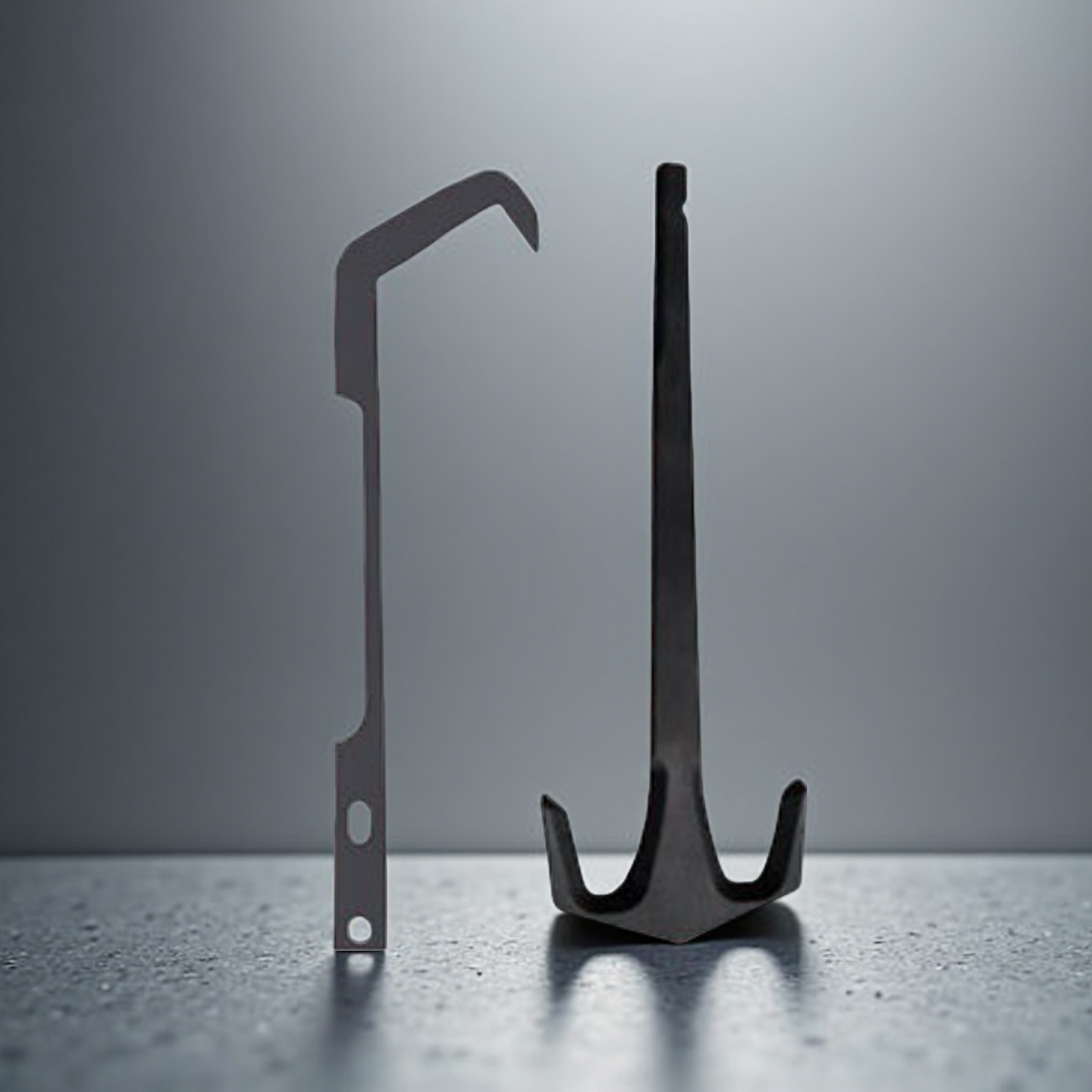
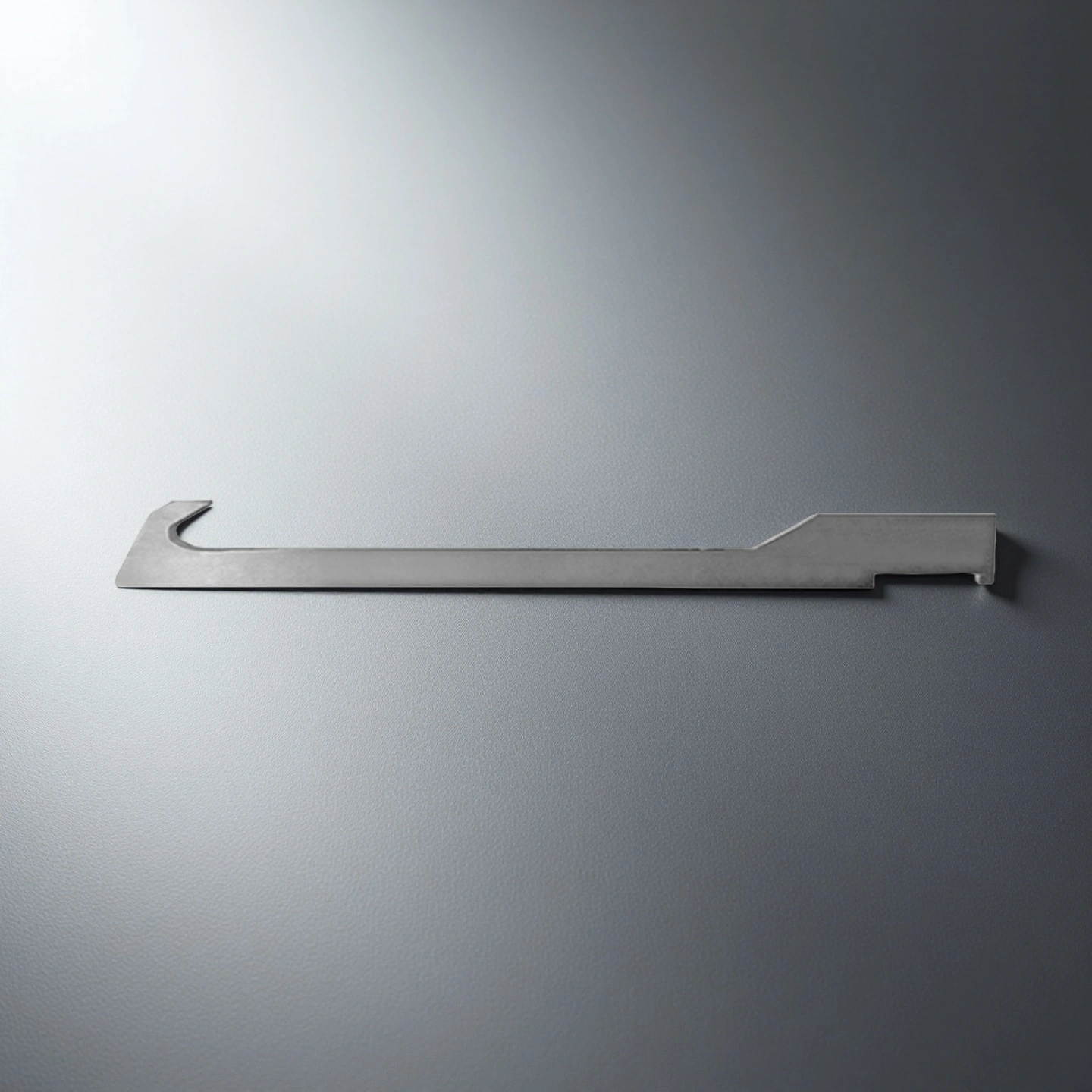
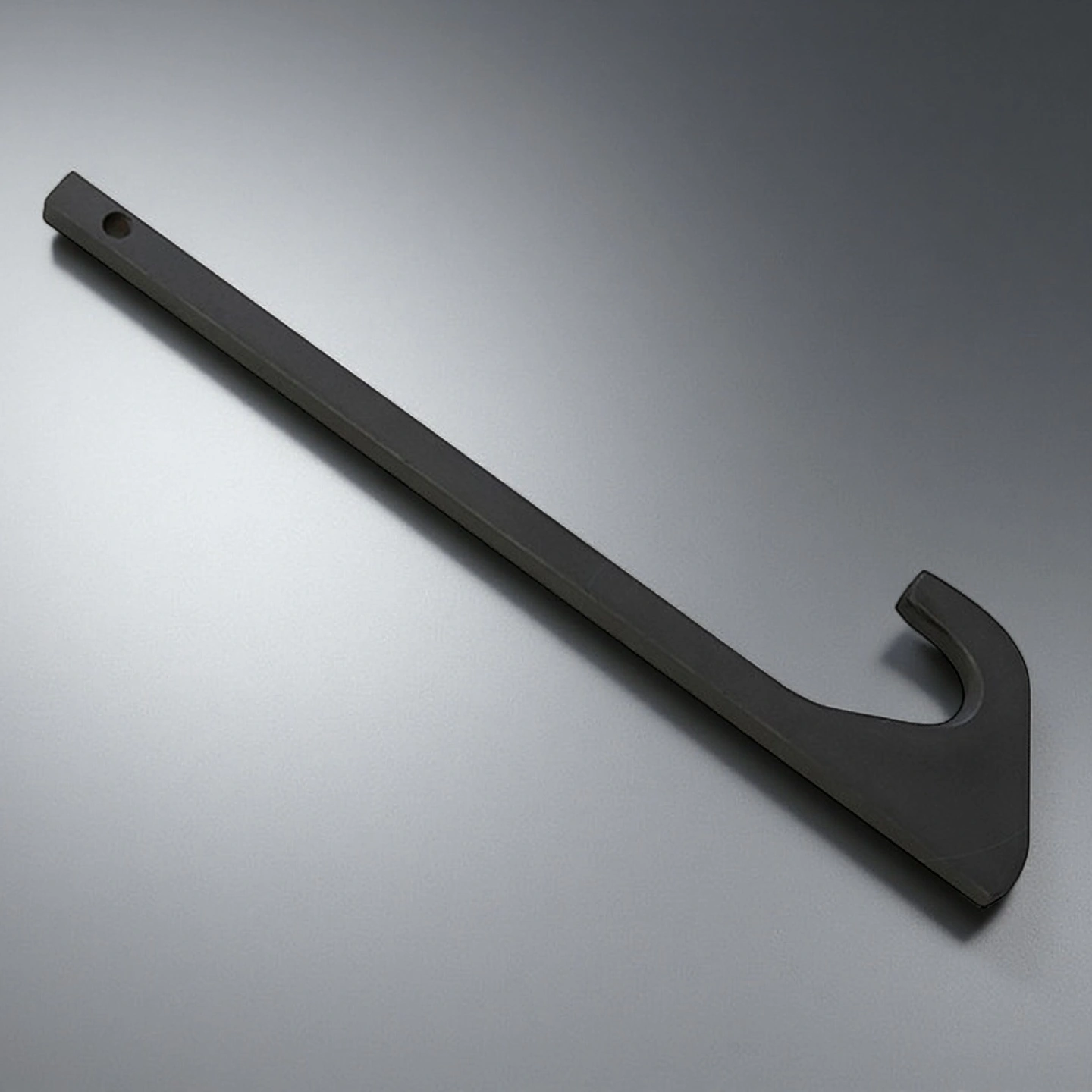
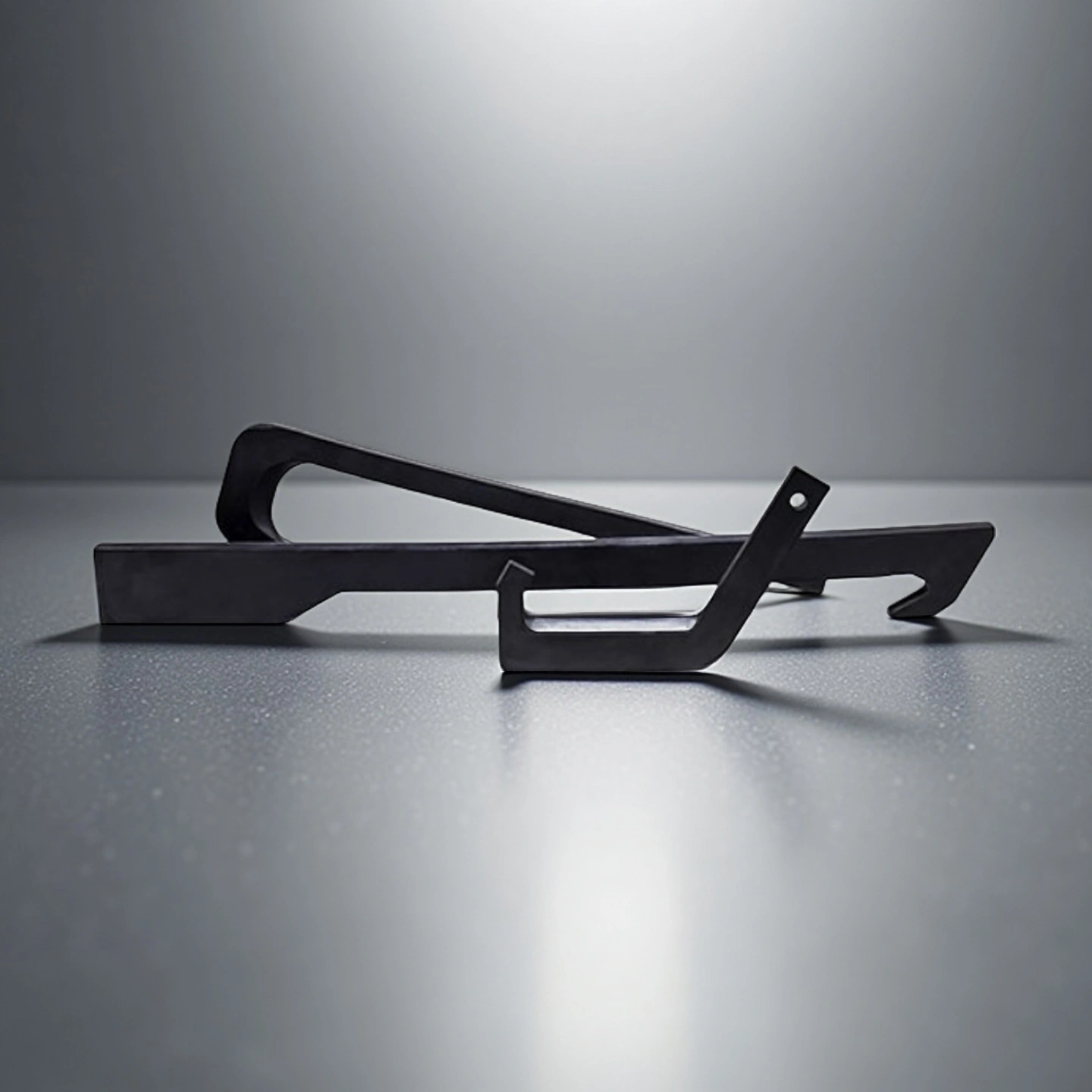
Silicon nitride ceramic hooks are structural Si3N4 components used to suspend loads in hot dip aluminizing and galvanizing lines, aluminium casting cells and industrial furnaces. They are designed to work in molten aluminium or zinc atmospheres and at elevated temperatures where metallic hooks suffer rapid corrosion or distortion.
Silicon Nitride Ceramic Hook Benefits
-
Low wetting in molten aluminium and zinc
The surface of the silicon nitride ceramic hook shows low affinity to molten aluminium and zinc, which reduces metal adhesion and simplifies cleaning of fixtures.
-
High load capacity at temperature
With high flexural strength and a stable microstructure, the Si3N4 ceramic hook can carry defined loads at temperatures above 900 °C without the permanent bending seen in steel hooks.
-
Controlled hook geometry and tolerance
Hook radius, slot width and hole positions can be machined to ±0.2–0.3 mm on key features, allowing the silicon nitride hook to integrate into existing metal fixture assemblies with minimal adjustment.
-
Stable performance under thermal cycling
The low thermal expansion of silicon nitride reduces thermal stresses during repeated immersion in and removal from hot baths, which supports longer service life in cyclic processes.
-
Clean contact with the product surface
Ceramic contact points reduce local sticking and help avoid surface marks or inclusions on coated or cast components, which supports quality requirements in automotive and structural applications.
Si3N4 Ceramic Hook Properties
|
Si3N4 Type |
Gas pressure sintering Si3N4 |
Hot pressing sintering Si3N4 |
High thermal conductivity Si3N4 |
|
Density (g/cm3) |
3.2 |
3.3 |
3.25 |
|
Flexture strength (MPa) |
700 |
900 |
600~800 |
|
Young Modulus (GPa) |
300 |
300 |
300~320 |
|
Poisson's ratio |
0.25 |
0.28 |
0.25 |
|
Compressive strength (MPa) |
2500 |
3000 |
2500 |
|
Hardness (GPa) |
15 |
16 |
15 |
|
Fracture toughness (MPa*m1/2) |
5~7 |
6~8 |
6~7 |
|
Maximum working temperature (℃) |
1100 |
1300 |
1100 |
|
Thermal conductivity (W/m*K) |
20 |
25 |
80~100 |
|
Thermal expansion coefficient (/℃) |
3*10-6 |
3.1*10-6 |
3*10-6 |
|
Thermal shock resistance (ΔT ℃) |
550 |
800 |
/ |
Si3N4 Ceramic Hook Specifications
|
Item No. |
Diameter (mm) |
Thickness (mm) |
Purity |
|
AT-SIN-S1001 |
Customize |
Silicon Nitride Ceramic Hook Packaging
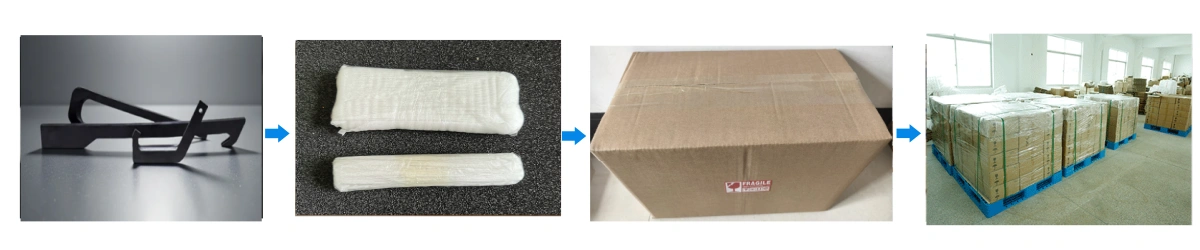
- Each silicon nitride ceramic hook is wrapped in soft material or foam sleeves to protect edges and contact surfaces from impact during transport.
Si3N4 Ceramic Hook Usage Instructions
To achieve consistent performance and service life from a silicon nitride ceramic hook, the installation and use conditions should be controlled.
-
Installation
1. Check that the silicon nitride ceramic hook geometry matches the fixture drawing, including hook opening, slot position and hole alignment.
2. Avoid forcing the ceramic hook into misaligned metal brackets; adjust metal parts rather than bending the ceramic component.
3. Use specified pins, bolts or clamps with suitable clearance to prevent point impact on edges during movement.
4. Ensure that the load path follows the designed hook direction and does not introduce unwanted bending or torsion.
-
Operation
1. Respect the defined maximum working load at the specified temperature; do not exceed the load rating while the hook is hot.
2. When immersing hooks into molten aluminium or zinc baths, avoid sudden contact with cold liquids or air flows that cause rapid thermal gradients.
3. Monitor hooks regularly for any visible cracks, chips or unusual deflection while under load.
-
Storage
1. Store silicon nitride ceramic hooks on padded racks or shelves, with separation between parts.
2. Keep storage areas dry and free from strong mechanical vibration or impact.
3. Do not stack heavy objects on top of ceramic hooks.
-
Cleaning and Inspection
1. Allow hooks to cool under controlled conditions to avoid sudden quenching before mechanical cleaning.
2. Remove thin layers of adherent metal with appropriate tools while avoiding sharp impacts on edges.
3. If any crack, deep chip or unexpected deformation is observed, remove the hook from service and replace it.
-
Typical Misuse Points
1. Problem: Hook used above its design load at high temperature.
Effect: Higher risk of fracture or accelerated microcracking.
Action: Recalculate load distribution, use additional hooks or select a larger cross-section silicon nitride ceramic hook with adequate margin.
Problem: The Hook is quenched directly from high temperature into cold water or air.
2. Effect: Excess thermal shock, leading to cracks.
Action: Implement controlled cooling; avoid sudden exposure to cold liquids or air streams; adjust work instructions for operators.
Problem: Hook installed with concentrated point contact on a sharp metal corner.
3. Effect: Local stress concentration and chipping at the contact point.
Action: Modify the metallic contact surfaces to use larger radii or flat pads, or redesign the hook interface in the drawing.