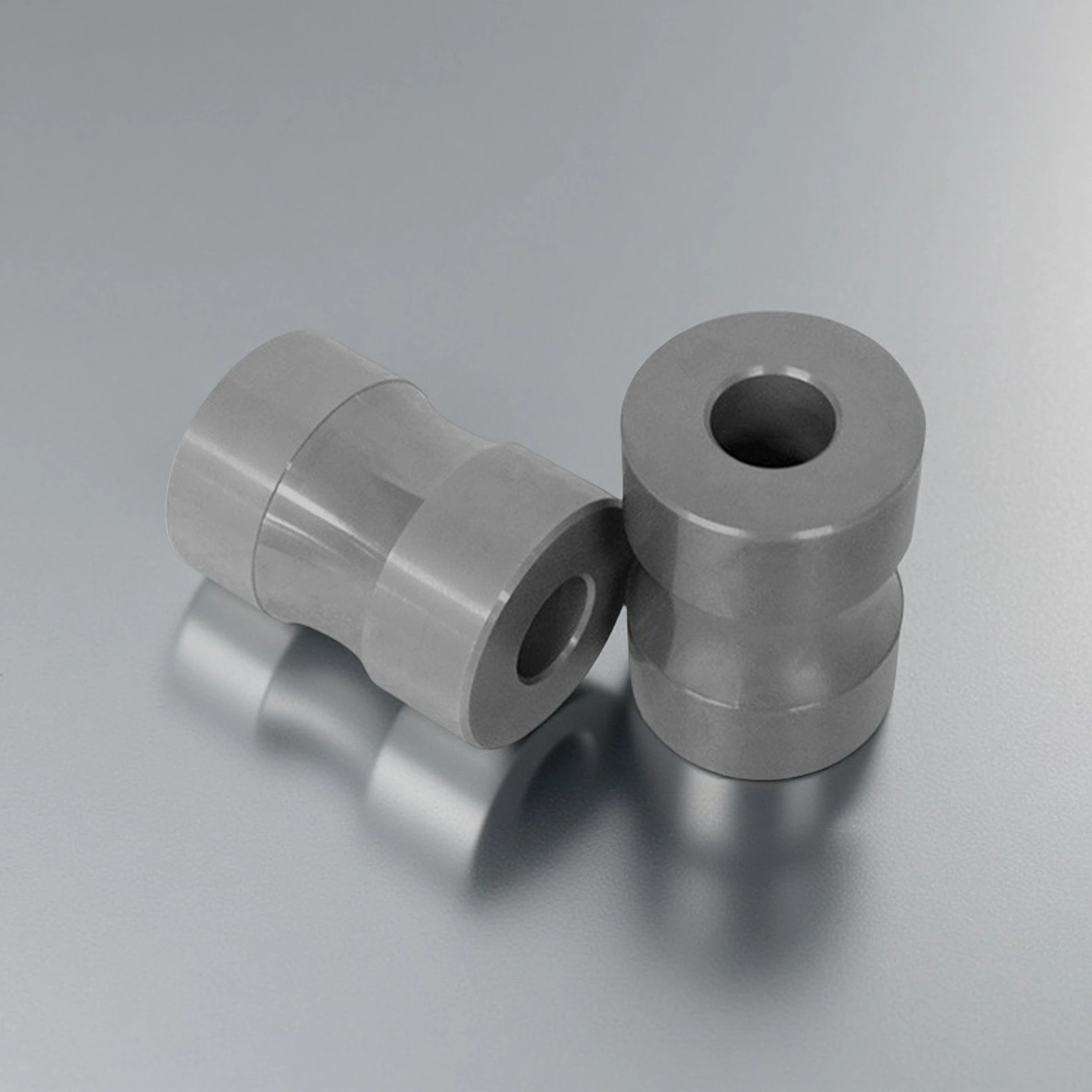
Silicon Nitride Welding Roller for HF-ERW Tube Mills – Squeeze and Guide Positions

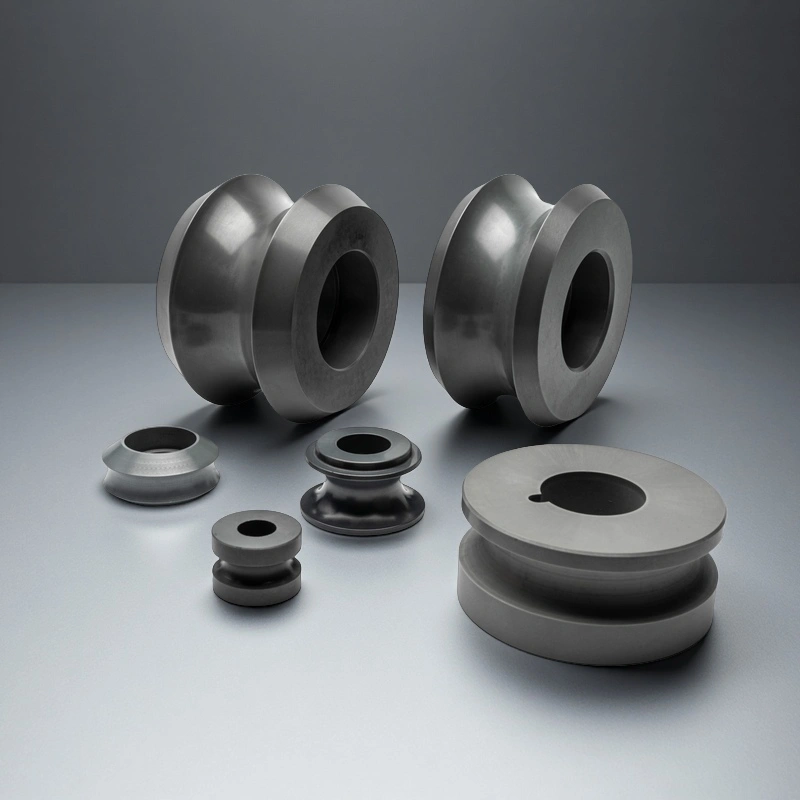
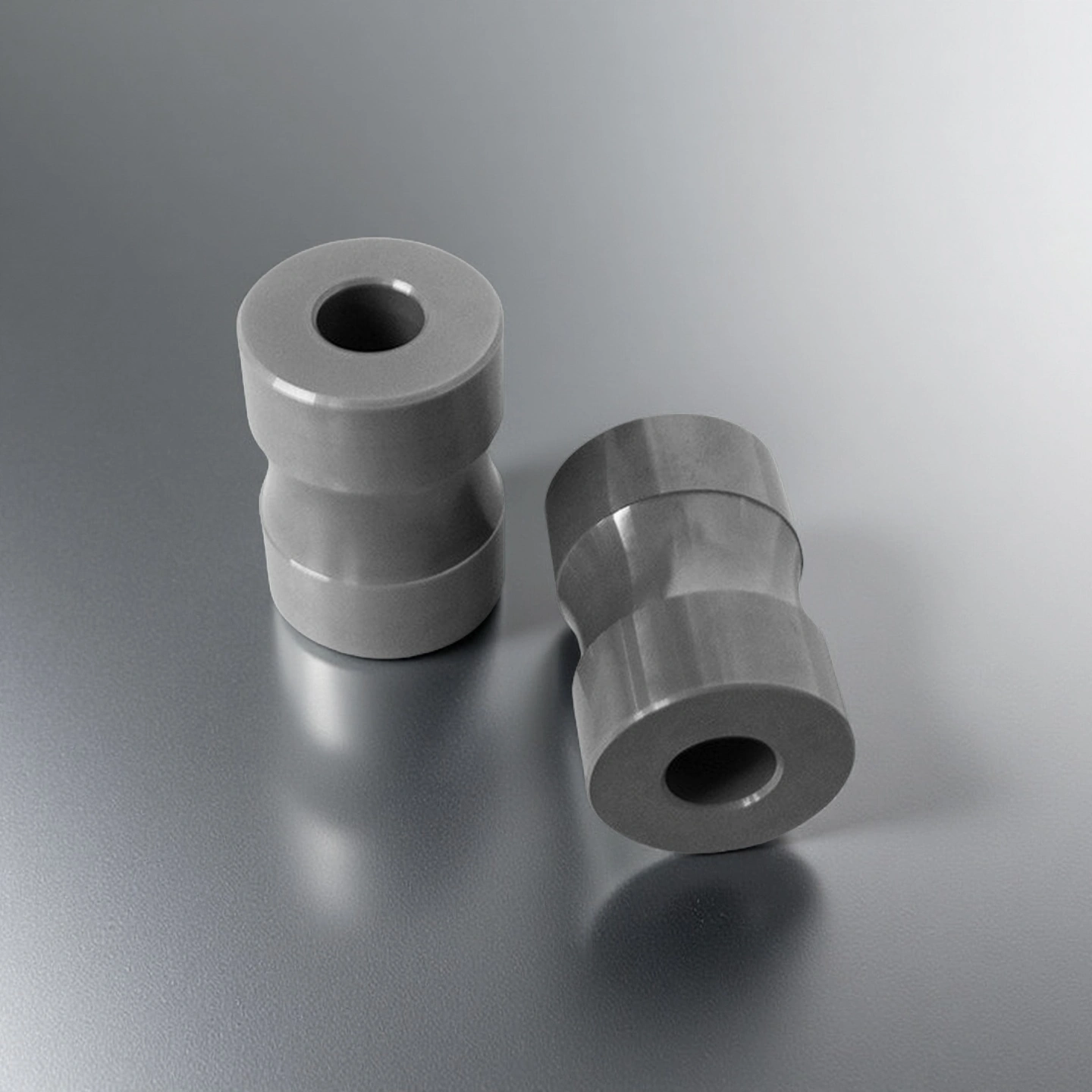
ADCERAX supplies silicon nitride welding rollers in outer diameters typically from 40 to 120 mm, with custom face widths, bores, and groove profiles according to tube size and stand design. Both full-ceramic silicon nitride welding rollers and hybrid designs with a ceramic ring on a steel hub can be produced to customer drawings.

Catalogue No. AT-SN-HG2001
Material Silicon Nitride
Flexural Strength ≥800 MPa
Thermal Expansion Coefficient 3.2 × 10⁻⁶ /K
Maximum use temperature 1000–1200 °C
24H Standard Dispatch
Small Batch Support OEM
Factory Direct
Expert Engineering Support

Silicon nitride welding rollers are ceramic rolls used in high-frequency electric resistance welding and forming stands to support, guide, and squeeze the tube during welding. Their low thermal expansion, high strength, and electrical insulation help stabilise the weld seam and extend roll life compared with tool steel rolls.


Silicon Nitride Welding Roller Benefits

  • Service life multiplier
    In many HF-ERW lines, silicon nitride welding rollers can reach 10–20 times the service life of tool steel rolls when alignment, cooling, and stand conditions are controlled.

  • Lower HF power and cooler operation
    Ceramic weld rolls do not carry HF current and can reduce HF weld power demand, which keeps the weld stand cooler and lowers load on bearings and seals.

  • Reduced metal build-up and better tube surface
    Silicon nitride rolls show less metal pick-up on the groove and help maintain tube surface finish and weld seam stability, which can reduce scrap compared with steel rolls.

  • Stable geometry under heat and load
    The combination of high flexural strength, high compressive strength, and low thermal expansion keeps the groove shape and run-out stable under line load and temperature changes.

  • Non-conductive in HF fields
    Silicon nitride is electrically insulating, so the welding roller does not draw HF current and allows more controlled power distribution in the weld zone.


Si₃N₄ Welding Roller Properties

Si3N4 Type Gas pressure sintering Si3N4 Hot pressing sintering Si3N4 High thermal conductivity Si3N4
Density (g/cm3) 3.2 3.3 3.25
Flexture strength (MPa) 700 900 600~800
Young Modulus (GPa) 300 300 300~320
Poisson's ratio 0.25 0.28 0.25
Compressive strength (MPa) 2500 3000 2500
Hardness (GPa) 15 16 15
Fracture toughness (MPa*m1/2) 5~7 6~8 6~7
Maximum working temperature (℃) 1100 1300 1100
Thermal conductivity (W/m*K) 20 25 80~100
Thermal expansion coefficient (/℃) 3*10-6 3.1*10-6 3*10-6
Thermal shock resistance (ΔT ℃) 550 800 /


Si3N4 Welding Roller Specifications

Silicon Nitride Welding Roller
Item No. Diameter (mm) Thickness (mm)
AT-SN-HG1001 Customize


Silicon Nitride Weld Roll Packaging

  • Each roller is individually packed in shock-resistant foam and sealed in moisture-proof bags.
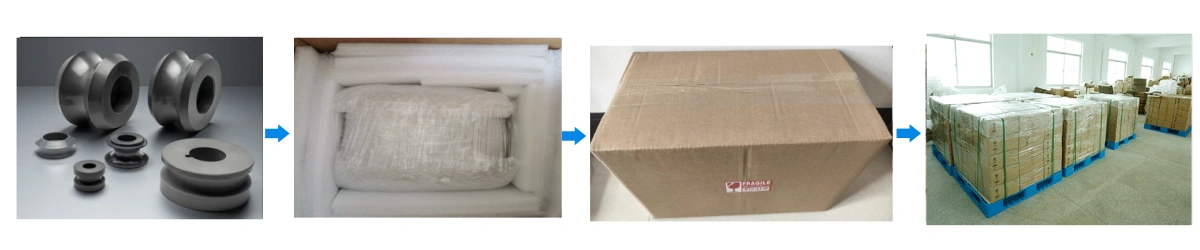
Silicon Nitride Weld Roll Packaging

Si3N4 Welding Roller Applications

  • HF-ERW Steel Tube Mills

    ✅Key Advantages

    1. Extended weld stand roll life – Silicon nitride welding rollers have achieved 10–20 times the service life of tool steel weld rolls in many ERW applications.
    2. Lower HF power consumption – Ceramic weld rolls can reduce HF weld power demand, because they are non-conductive and introduce less electrical loss in the weld zone.
    3. Fewer weld-related stoppages – Low expansion and electrical insulation support stable loading and temperature distribution around the weld seam.

    ✅ Problem Solved

    A steel tube mill running at medium speed changed tool steel weld rolls every 2–3 weeks because of groove wear and metal build-up. After switching to silicon nitride welding rollers, roll life extended to more than 6 months in the same stand, corresponding to roughly 10–12 times longer service. Over one year, the plant reduced weld stand roll changes, roll grinding, and set-ups, cutting roll-related downtime and maintenance labour while maintaining weld seam quality within tolerance.

  • Aluminum Tube and Heat Exchanger Manufacturing

    ✅Key Advantages

    1. Reduced aluminum build-up on grooves – Silicon nitride surfaces show less build-up when forming aluminium and copper alloys, which supports stable tube surface quality.
    2. Stable geometry under thermal cycling – Low thermal expansion and high thermal shock resistance keep groove geometry stable in hot sections of the line.
    3. Support for thin-wall tubes – Smooth ceramic surfaces and controlled run-out help limit marking on thin-wall heat exchanger tubes.

    ✅ Problem Solved

    A heat exchanger tube producer experienced recurring metal build-up and groove wear on steel forming and welding rolls, causing surface streaks and scrap. After replacing the weld stand rolls with silicon nitride welding rollers, visible build-up on grooves decreased, roll cleaning intervals extended, and the scrap rate related to weld stand rolls dropped while tube surface quality remained within specification for more metres per roll set.

  • Stainless Steel and Precision Tube Lines

    ✅Key Advantages

    1. High stiffness with moderate weight – Silicon nitride provides an elastic modulus around 300–320 GPa at a density near 3.2 g/cm³, giving stiff yet relatively light rollers.
    2. High compressive strength margin – Compressive strength in the range of about 2000–3000 MPa provides margin for contact loads in precision tube stands.
    3. Improved tube surface consistency – Hard, smooth ceramic surfaces reduce local micro-slip and groove deformation compared with worn metallic rolls.

    ✅ Problem Solved

    On a precision stainless tube line, tool steel weld rolls showed edge wear and pitting between regrinds, leading to local marking on small-diameter tubes. After switching to silicon nitride welding rollers, the plant recorded fewer surface marks linked to weld stand rolls and extended intervals between dimensional checks. High hardness, stiffness, and low expansion kept the running profile stable during the planned campaign length.

Silicon Nitride Welding Roller Usage Instructions

  • Installation

    1. Check that bore, keyway, and shaft tolerances match the technical drawing before assembly.
    2. Mount the silicon nitride welding roller with clean hands and soft supports to avoid edge impacts.
    3. Use correct torque on locking elements and avoid point loads directly on the ceramic ring.
    4. Verify radial and axial run-out after installation and adjust shims or spacers to meet line requirements.

  • Operation

    1. Bring the line up to speed with a gradual load increase so the roll and tube seat correctly in the groove.
    2. Maintain stable HF power and cooling to avoid sudden temperature shocks above the design level.
    3. Monitor weld seam and tube surface; if marking appears, inspect stand alignment and supporting rolls before adjusting the ceramic weld roll.

  • Storage

    1. Store spare silicon nitride welding rollers in dry, clean racks with soft supports under the bore or hub.
    2. Avoid stacking rolls directly on ceramic surfaces; keep a gap or soft layer between parts.
    3. Keep packing materials for future transport of unused spares.

  • Cleaning and maintenance

    1. Remove metal build-up with non-metallic scrapers or fine abrasives recommended for ceramics.
    2. Avoid impact tools or aggressive grinding wheels that can introduce microcracks.
    3. Record operating hours, line speed, and weld parameters for each roll set to link service life with process conditions.

  • Common mistakes and solutions

    1. Over-tight clamping on the ceramic ring
    Issue: Localised high stress at the bore can lead to premature cracking.
    Solution: Move clamping to a steel hub where possible, or use specified torque and correct fit on the shaft.
    Uncontrolled thermal shock during setup

    2. Issue: Direct exposure to a hot weld zone from room temperature can exceed the thermal shock limit.
    Solution: Warm up the line gradually and avoid sudden HF power steps; respect recommended temperature change limits for silicon nitride.
    Using damaged rolls after edge chipping

    3. Issue: Small chips on the edges can mark the tube or grow during operation.
    Solution: Inspect edges regularly; if visible chipping appears in the groove or on edges, remove the roll for assessment and replacement.

Silicon Nitride Welding Roller FAQ

  1. Q: What is a silicon nitride welding roller used for in an HF-ERW tube mill?
    A: A silicon nitride welding roller supports and squeezes the tube around the weld seam in a high-frequency ERW stand, helping to control the weld bead and tube alignment while tolerating heat, load, and thermal cycling.
  2. Q: How does the service life of a silicon nitride welding roller compare with tool steel rolls?
    A: In many applications, ceramic weld rolls in Si₃N₄ or similar materials run roughly 10–12 times longer than tool steel rolls, and in favourable conditions up to around 20 times, depending on alignment, cooling, and line speed.
  3. Q: Can silicon nitride welding rollers reduce HF weld power in ERW lines?
    A: Yes, ceramic weld rolls do not conduct HF current and can reduce HF weld power demand, which may lower power consumption and reduce heating of the weld stand.
  4. Q: What temperature range can a silicon nitride welding roller withstand?
    A: Many silicon nitride grades for mechanical parts operate up to about 1000–1200 °C in service with suitable support and load conditions, which is above the typical roll surface temperature around HF weld zones.
  5. Q: What tube sizes can a silicon nitride welding roller handle?
    A: ADCERAX can design silicon nitride welding rollers for small precision tubes and larger structural tubes by adjusting OD, face width, and groove shape; the practical range is defined by your stand dimensions, line speed, and load.
  6. Q: Are silicon nitride welding rollers suitable for aluminum and stainless steel tubes?
    A: Yes, silicon nitride rollers are used for forming and welding stainless steel, aluminium, and copper alloy tubes; they help limit metal build-up and maintain tube surface quality.

Silicon Nitride Welding Roller Reviews

  • ⭐️⭐️⭐️⭐️⭐️
    We installed silicon nitride welding rollers in two HF-ERW stands and they have outlasted our previous steel weld rolls by at least a factor of ten. The groove stays stable, and roll-related stoppages are now rare.
    -- James Walker, Production Manager, Northshore Tube LLC
  • ⭐️⭐️⭐️⭐️⭐️
    On our aluminium heat exchanger line, the silicon nitride welding rollers from ADCERAX have reduced metal build-up on the groove and helped us keep tube surface defects under control. The dimensional consistency and custom groove profiles matched our drawings from the first batch.
    -- Elena Rossi, Process Engineer, EuroHeat Exchanger Systems
  • ⭐️⭐️⭐️⭐️⭐️
    We changed to silicon nitride welding rollers for several stainless tube sizes. Even though the unit price is higher than steel, the longer life and fewer changes have reduced our total welding roll budget. ADCERAX as a factory supplier responded quickly on drawings and tolerances.
    -- Min-soo Park, Purchasing Supervisor, Hanseong Precision Tubes
  • ⭐️⭐️⭐️⭐️⭐️
    For a retrofit of an HF-ERW line, we cooperated with ADCERAX on custom Si₃N₄ welding rollers and guide rolls. The combination of low expansion and high strength has improved weld stand stability, and our OEM customers appreciate the lower maintenance requirement.
    -- Laura Klein, Technical Manager, RheinForm Tube Mill Equipment
customize size

Customize Silicon Nitride Welding Roller

ADCERAX designs and grinds silicon nitride welding rollers to match the geometry of each tube mill stand, so most orders are based on customer drawings or reverse-engineered samples.

  • Outer Diameter (OD)
    OD range typically from 40–120 mm, or matched exactly to your tube mill stand drawings, including oversized or undersized ceramic rings for retrofit projects.

  • Face Width Options
    Narrow or wide working faces tailored to weld, squeeze, support, or forming positions; optional stepped or relief faces for special stand layouts.

  • Bore Size & Tolerance
    Cylindrical bores with H7/H8 tolerances; optional clearance or transition fits; choice of straight bore, tapered bore, or bore prepared for hybrid steel hubs.

  • Keyway & Drive Interface
    Straight keyways, parallel or Woodruff keyways, spline bores, or ground drive flats for mechanical coupling; depth and width customized per shaft standard.

  • Groove Profile Types
    V-groove, U/radius groove, flat-bottom groove, or custom welded-tube profile matched to tube OD, wall thickness, and squeeze force requirements.

  • Edge & Chamfer Designs
    Side chamfers, radiused edges, or softened transitions to reduce tube-edge marking and minimize localized stress during welding.

  • Run-out & Concentricity Requirements
    Custom radial/axial run-out limits tailored to mill speed—precision options down to 0.01–0.03 mm when required for small-diameter tubes.

  • Surface Finish Options
    Ground or polished running surfaces; finish typically controlled within Ra 0.2–0.8 μm depending on desired tube finish quality and weld bead sensitivity.

  • Roll Geometry Modifications
    Relief cuts, anti-slip flats, cooling reliefs, or weight-reduced geometries for specific HF-ERW stand designs.

  • Material Grade Selection
    Choice of gas-pressure sintered silicon nitride grades to meet flexural strength, thermal shock, or insulation requirements for different welding conditions.

Related Products

ADCERAX - Your Trusted Advanced Ceramics Manufacturing Partner

Direct factory manufacturing with comprehensive ceramic materials expertise and global supply capabilities

Direct Factory Manufacturing

China-based ceramic materials production facility with state-of-the-art equipment

Engineering Team

Experienced professionals in advanced ceramics applications and custom design

Quality Control

Strict quality control standards for technical ceramics manufacturing and quality management

Global Supply Chain

Serving customers worldwide with technical ceramics and rapid response

24/7 Technical Support

Round-the-clock support for ceramic components inquiries and technical assistance

500+ Satisfied Customers

Trusted by global customers for advanced ceramic materials and precision components

Get in touch with us

Our team will be happy to respond to you in less than 24 hours.

Adcerax's factory

Quick Quotation

*Our team will answer your inquiries within 24 hours.

*Your information will be kept strictly confidential.

Ready to Solve Your Engineering Challenge?

Partner with ADCERAX for reliable, high-performance advanced ceramic solutions. Our engineers are ready to discuss your project.

E-mail

info@adcerax.com

Phone

+(86) 0731-74427743 | WhatsApp: +(86) 19311583352

Response Time

Within 24 hours

Quick Quote

The more details you provide, the faster we can quote.

*We respond within 24 hours. All inquiries are confidential.

Download Catalog

Get Your Custom Sulution

The more details you provide, the faster we can respond.

customize size

*We respond within 24 hours. All inquiries are confidential.

Download Catalog