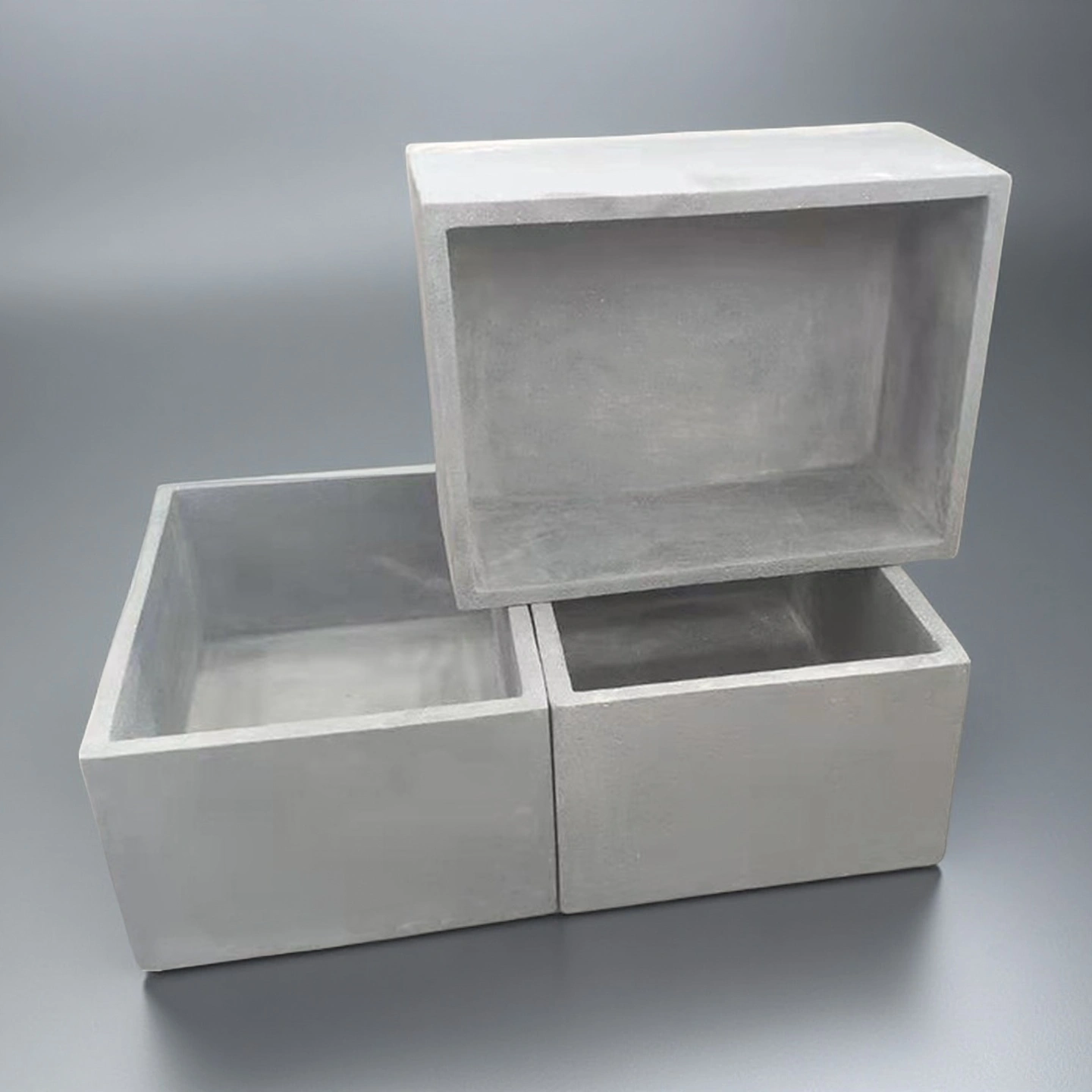
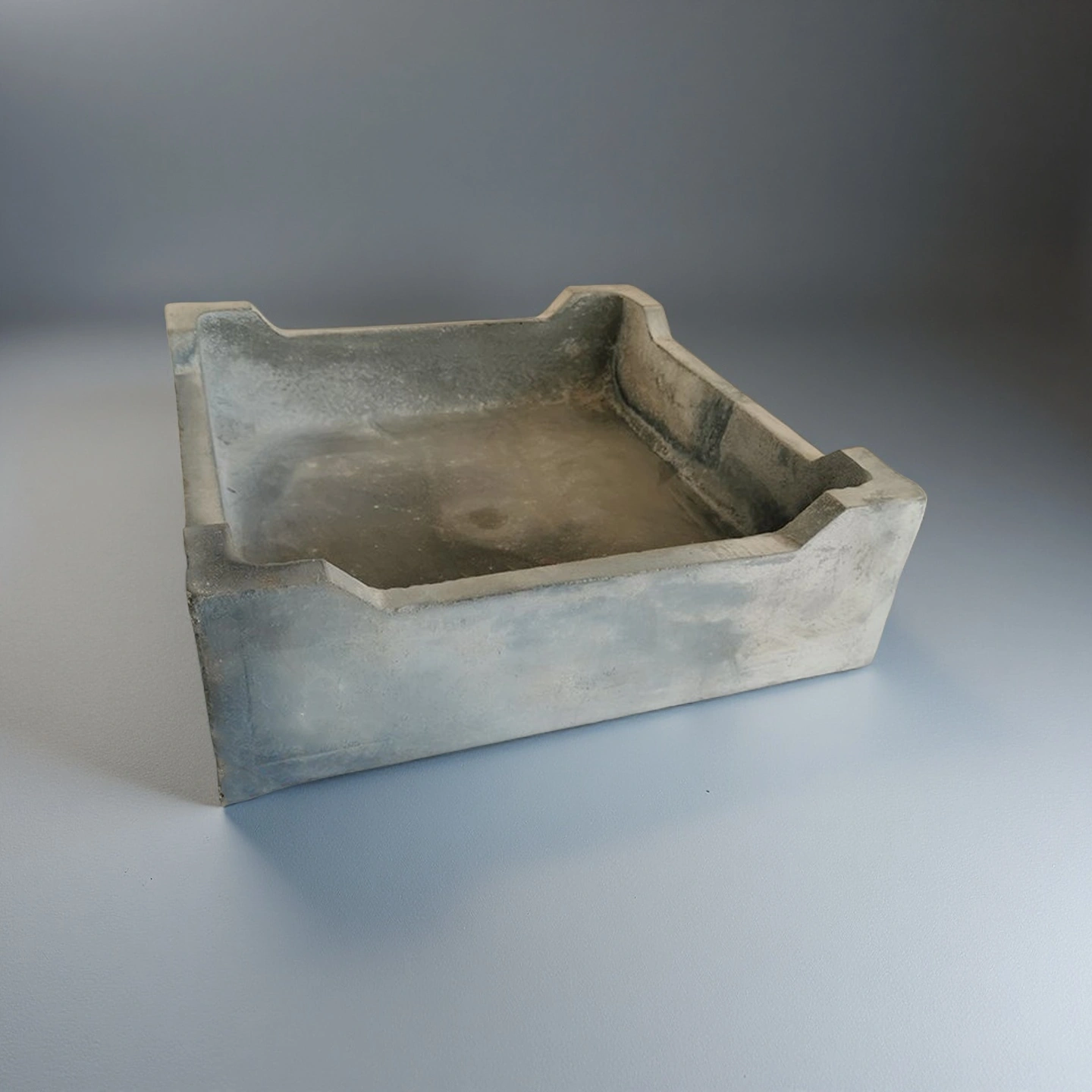
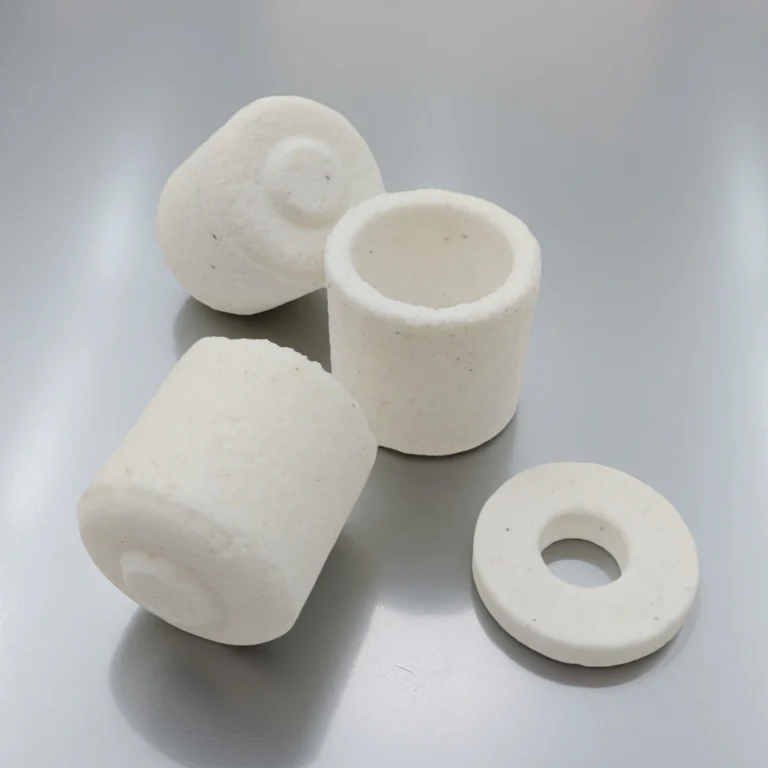
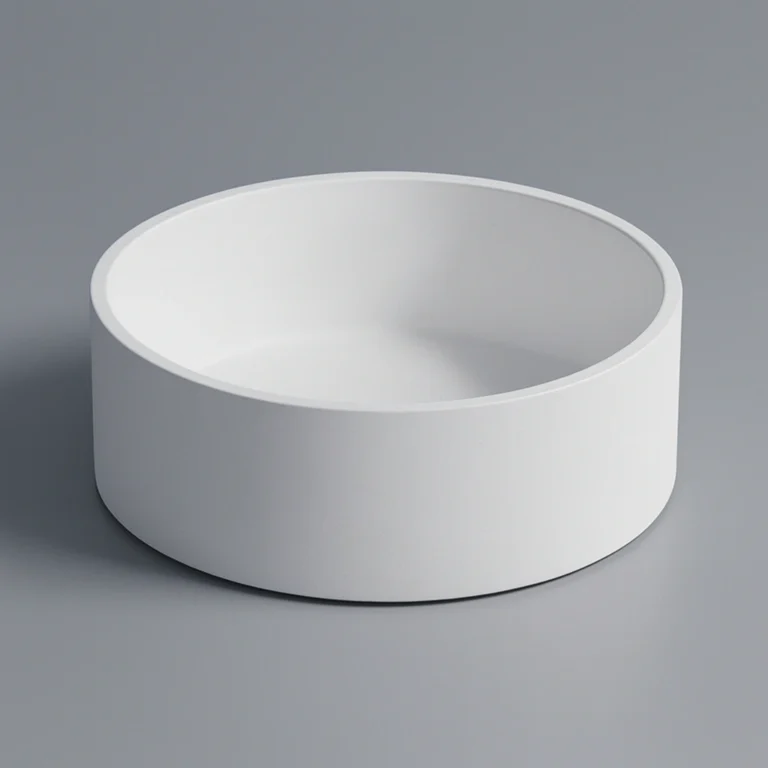
ADCERAX® Square Nitride Bonded Silicon Carbide Crucible is designed to provide superior performance in high-temperature applications, offering enhanced durability and thermal stability. Its unique square geometry ensures more uniform heat distribution compared to traditional round designs, making it particularly effective for processes requiring precision temperature control. This shape not only improves heat retention but also optimizes space within industrial furnaces, allowing for better material processing and higher efficiency in large-scale operations.
Performance Characteristics of Square Nitride Bonded Silicon Carbide Crucible
-
High Thermal Shock Resistance: The combination of silicon carbide (SiC) and silicon nitride (Si₃N₄) in the crucible’s material composition enhances its ability to withstand sudden temperature fluctuations, reducing the risk of cracking during high-temperature processes.
-
Compact Design: The square shape allows for more crucibles to be placed in the furnace, increasing the number of materials being processed simultaneously, which is beneficial in large-scale industrial operations.
-
Uniform Heat Distribution: The square shape facilitates more efficient heat conduction, ensuring that materials within the crucible experience consistent heating across their entire surface area. This reduces the risk of temperature inconsistencies that can negatively affect material properties.
Technical Specifications of Square Nitride Bonded Silicon Carbide Crucible
The Square Nitride Bonded Silicon Carbide Crucible is engineered for high-performance applications, offering exceptional durability, high-temperature resistance, and uniform heat distribution. This crucible is designed to meet the demands of industries requiring precise temperature control and long-lasting, reliable performance under extreme conditions.
| Property |
Specification |
| Maximum Operating Temperature |
1600°C |
| Thermal Shock Resistance |
Excellent |
| Heat Conductivity |
High |
| Corrosion Resistance |
Acid and Alkaline Resistant |
| Density |
High |
| Flexural Strength |
>250 MPa (at room temperature) |
| Hardness |
9.5 Mohs |
| Thermal Expansion Coefficient |
4.5 × 10⁻⁶ /°C |
| Material Composition |
Silicon Carbide (SiC), Silicon Nitride (Si₃N₄) |
| Shape |
Square (customizable to Rectangular) |
| Porosity |
<2% |
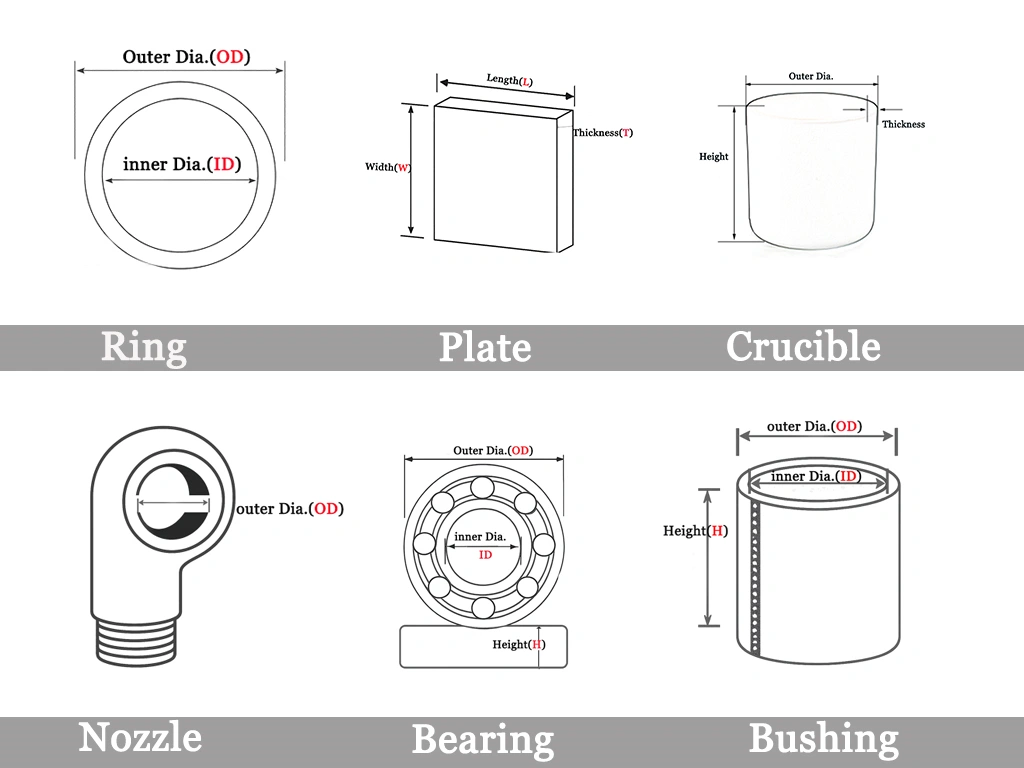
Dimensions of Square Nitride Bonded Silicon Carbide Crucible
Packaging of Square Nitride Bonded Silicon Carbide Crucible
The Square Nitride Bonded Silicon Carbide Crucible is carefully packaged to ensure it reaches you in perfect condition. Each crucible is securely placed in durable cardboard packaging and then reinforced with a wooden crate for added protection during transportation. This packaging method prevents damage and ensures safe delivery, making the Square NBSiC Crucible ready for immediate use upon arrival.

Solving Industrial Challenges with Square Nitride Bonded Silicon Carbide Crucible by ADCERAX®
The Square Nitride Bonded Silicon Carbide Crucible by ADCERAX® is engineered to address specific challenges across various industries, particularly those requiring precise thermal management and durability under high-temperature conditions. The square geometry of the crucible enhances its functionality by ensuring even heat distribution, optimized space usage, and superior thermal shock resistance. This makes it an ideal solution for industries that demand reliability, uniformity, and long-lasting performance.
-
Metal Melting and Alloying - Efficient High-Volume Processing
✅Key Advantages
1. Uniform Heat Distribution
The square shape of the NBSiC Crucible ensures even heat distribution, eliminating the risk of hot spots and temperature gradients in the molten metal. This uniform heating is crucial for maintaining the integrity and quality of high-value alloys during melting and alloying processes.
2. Optimized Furnace Space Utilization
The square design allows for better use of space within industrial furnaces. By fitting more crucibles in a single furnace cycle, manufacturers can maximize the throughput without sacrificing heat consistency. This helps improve operational efficiency and productivity during large-scale metal processing.
3. High-Temperature Durability
Designed to withstand extreme temperatures up to 1600°C, the square crucible maintains its structural integrity during prolonged high-temperature operations. This durability is critical in metal melting and alloying, where crucibles are exposed to continuous thermal stress without cracking or degrading.
✅ ️Problem Solved
Many traditional round crucibles struggle to provide consistent heating across the molten metal during large-scale processing, leading to the risk of material inconsistencies, poor alloying results, and increased production time. For instance, a metal smelting plant faced an issue where round crucibles were causing localized overheating, resulting in poor alloy consistency and a 10% production defect rate. By switching to the Square NBSiC Crucible, the company improved heat distribution and reduced defects by 30%, allowing them to meet their high-volume production goals more efficiently. This switch has not only improved metal quality but also optimized furnace usage, reducing energy costs.
-
Ceramics Sintering and Powder Metallurgy - Uniform Temperature for Precise Material Consolidation
✅Key Advantages
1. Consistent Temperature Across Material
The square geometry of the NBSiC Crucible ensures uniform temperature distribution during sintering, making it ideal for high-precision material consolidation in ceramics and powder metallurgy. This consistency is key to achieving optimal material properties and reducing defects during the sintering process.
2. Enhanced Material Strength and Density
By promoting uniform heat flow, the square design ensures that materials undergo even consolidation, leading to better strength and density. This is particularly important in the production of advanced ceramics or high-performance materials, where consistency is critical for final product quality.
3. Reduced Edge Temperature Variations
The square shape eliminates edge temperature inconsistencies often seen in round crucibles, ensuring the material undergoes uniform heating from all sides. This is crucial for preventing edge warping or uneven material properties, which can occur in traditional crucibles during high-temperature processing.
✅ ️Problem Solved
Traditional round crucibles can create edge temperature inconsistencies during sintering, leading to variations in material properties and increased defect rates. In a ceramics production line, a client was facing issues with inconsistent sintering results when using round crucibles, leading to defects in advanced ceramic parts and longer cycle times. By switching to the Square NBSiC Crucible, the company eliminated edge temperature disparities, resulting in a 25% reduction in production defects and faster cycle times, ensuring that each batch met stringent material quality standards.
-
Catalyst Sintering and High-Temperature Reactions - Maximized Space and Thermal Efficiency
✅Key Advantages
1. Increased Furnace Capacity
The NBSiC Crucible's square shape optimizes furnace space, allowing for the placement of more crucibles within a given area. This results in higher throughput and reduced downtime in catalyst sintering and high-temperature reactions, making it ideal for chemical processes requiring multiple batches.
2. Consistent Thermal Environment for Reactions
The square design ensures that the material inside the crucible experiences uniform heating, which is critical for maintaining consistent reaction conditions in catalyst activation. Uniform temperature distribution improves the efficiency of catalytic reactions and enhances overall product performance.
3. Reduced Batch Processing Times
The efficient use of furnace space combined with uniform heating results in fewer cycles for processing, effectively reducing batch times. This efficiency is crucial in industries that rely on high-temperature reactions and catalyst sintering, where time-sensitive processes demand optimal performance.
✅ ️Problem Solved
Many traditional crucibles, particularly round ones, fail to maximize furnace capacity and often suffer from inconsistent heating, which hinders catalyst activation and reaction efficiency. A chemical processing company using round crucibles found that their reaction times were prolonged due to uneven heating, and their furnace space was underutilized, leading to higher operational costs. After transitioning to the Square NBSiC Crucible, the company was able to process more material in each cycle and achieved uniform heating, cutting reaction times by 15% and improving catalyst performance by 20%. This optimization resulted in cost savings and enhanced production efficiency.
User Guide for Square Nitride Bonded Silicon Carbide Crucible by ADCERAX®
To maximize the performance and longevity of your Square NBSiC Crucible by ADCERAX®, proper usage, maintenance, and care are essential. This guide provides detailed instructions and important recommendations to ensure your crucible is used correctly, maintaining its superior thermal stability and reliability.
-
Inspection Before Use
1. Check for cracks or damage: Examine the surface of the crucible for any visible cracks or chips. If any are found, do not use the crucible.
2. Ensure cleanliness: The crucible should be clean and free from any residue or contaminants that could affect its performance during use.
3. Verify the shape and size: Confirm that the crucible matches your specific application requirements in terms of size and geometry for optimal performance.
-
Proper Handling and Temperature Control
1. Avoid sudden temperature fluctuations: Gradually increase the temperature to avoid thermal shock, which can cause the crucible to crack.
2. Monitor temperature limits: Ensure that the temperature does not exceed the maximum operating limit of 1600°C to prevent damage.
3. Use compatible materials: Make sure the materials you are using within the crucible are compatible with its thermal and chemical properties for effective results.
-
Cleaning and Maintenance After Use
1. Allow the crucible to cool: Always let the crucible cool down completely before cleaning it to avoid thermal shock.
2. Use non-abrasive cleaners: Clean the crucible with soft, non-abrasive materials to prevent scratches and surface damage.
3. Store properly: Keep the crucible in a dry, clean environment to avoid exposure to moisture or contaminants that could degrade its performance.
-
Best Practices for Longevity and Performance
1. Regularly inspect for wear: Over time, inspect the crucible for any signs of wear or damage, especially if it is used in high-stress applications.
2. Avoid overloading: Ensure that the crucible is not overloaded with material, as this could cause uneven heating or stress on the structure.
3. Follow usage guidelines: Always adhere to the manufacturer’s recommendations for usage, temperature limits, and handling to maximize the crucible’s lifespan and maintain its high performance.