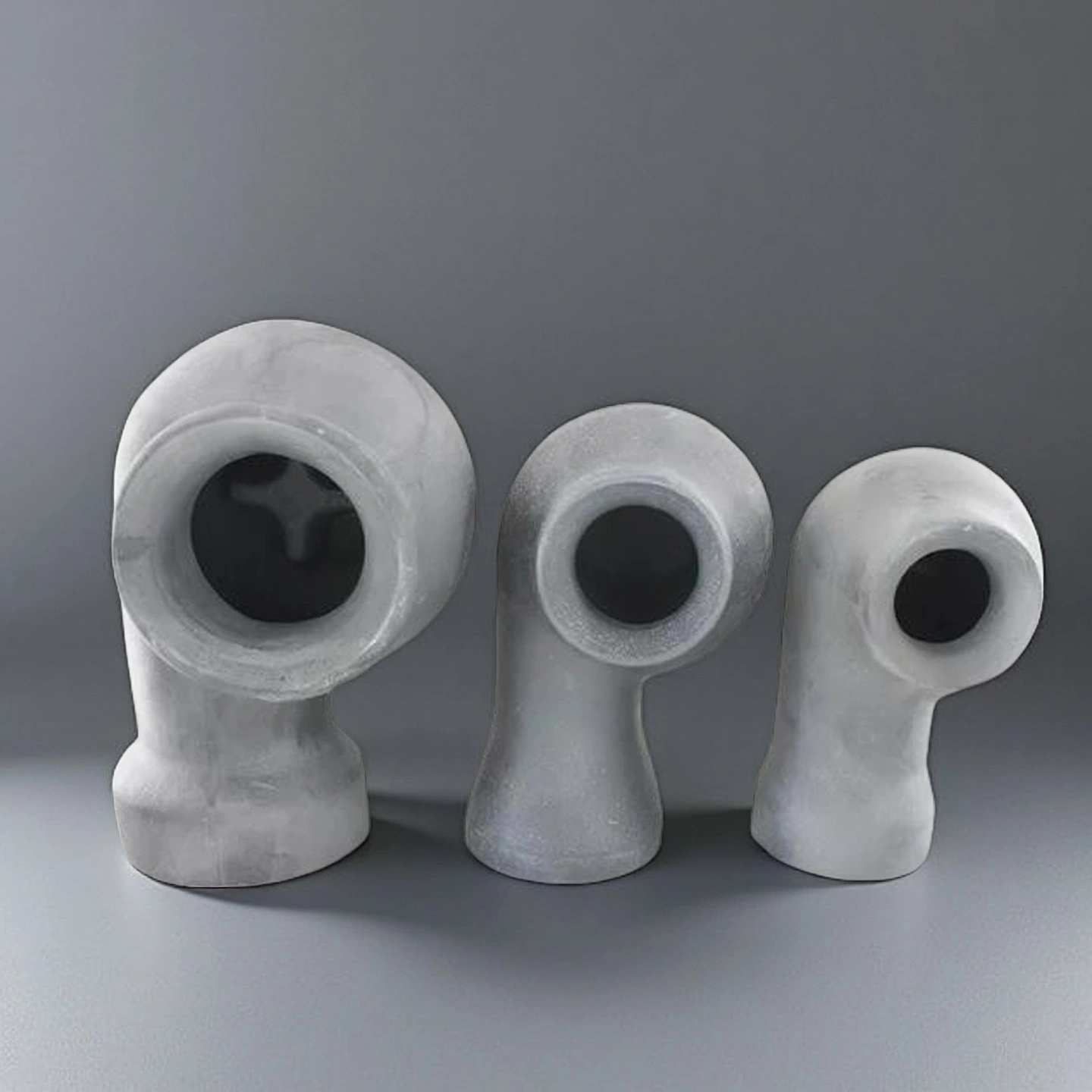
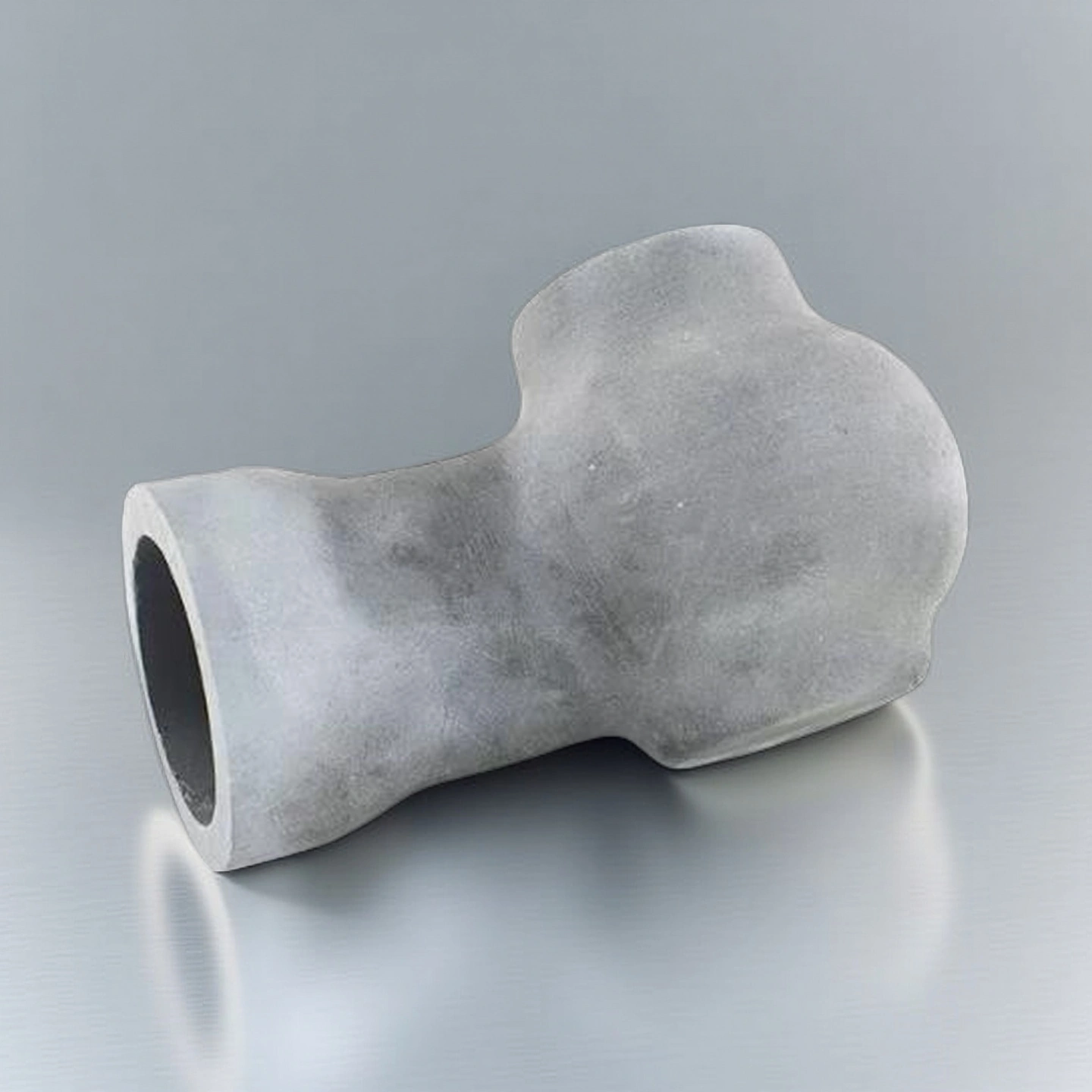
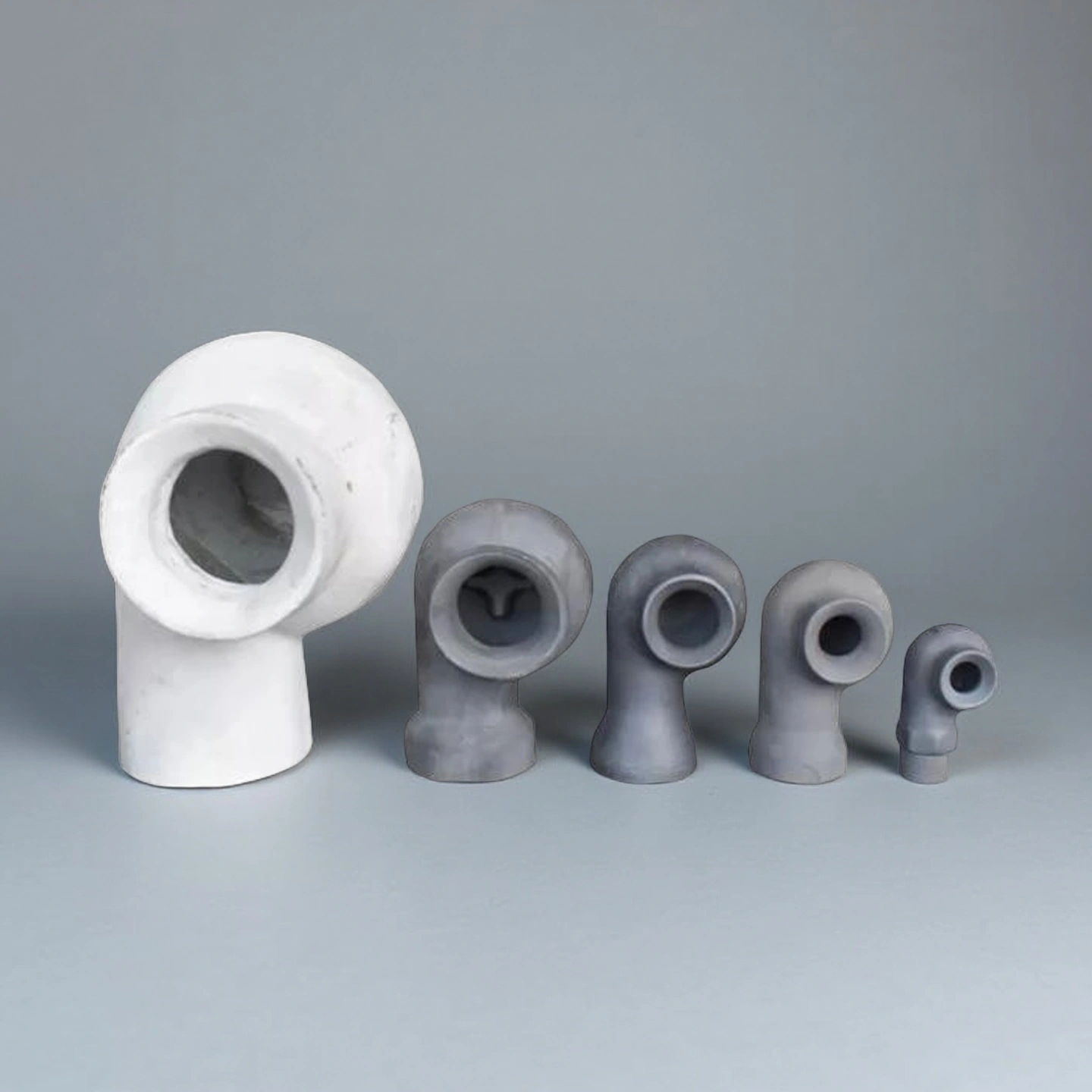
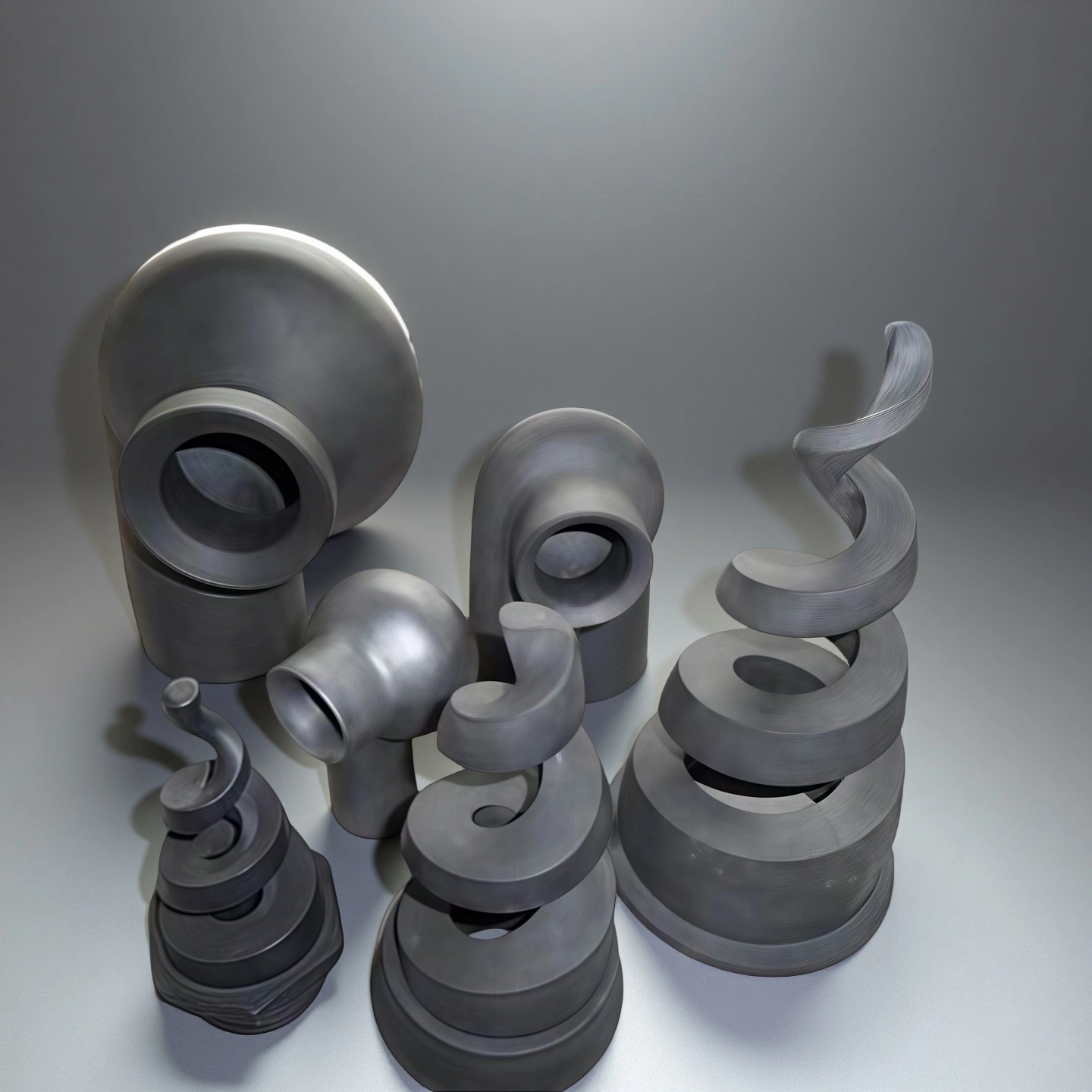
High-Stability Vortex Silicon Carbide Spray Nozzle for Process Gas Handling
The Vortex Silicon Carbide Spray Nozzle integrates high-strength SiC materials with a vortex-induced hydrodynamic structure to maintain stable spray behavior in abrasive, acidic, and fluctuating flue-gas environments. This module highlights the measurable engineering features that influence spray performance, lifetime reliability, and consistency in power-plant and industrial scrubber operations.
Catalogue No.
AT-THG-DN10
Material
Silicon Carbide (RBSiC / SSiC)
Flexural Strength
250–350 MPa (RBSiC) / up to 400+ MPa (SSiC)
Hardness
HRA 88–92, maintaining long-cycle wear resistance
Spray-Angle Stability
Deviation within ±3° under ±10–15% pressure fluctuation
ADCERAX® Vortex Silicon Carbide Spray Nozzle is engineered for high-load gas-treatment systems where abrasive slurries, acidic condensates, and fluctuating hydrodynamics demand long-cycle stability and predictable spray behavior. Its vortex-induced liquid rotation ensures a uniform full-cone spray field that enhances gas–liquid interaction, providing greater operational consistency than conventional desulfurization silicon carbide nozzle designs used in absorber towers and scrubbers. This combination of hydrodynamic stability and material durability enables more reliable flue-gas treatment performance, supporting tighter emission targets and reducing maintenance interruptions across diverse industrial environments.
Advanced Performance Features of Vortex Silicon Carbide Spray Nozzle
Mechanical Load Stability
The nozzle withstands flexural loads up to 250–350 MPa for standard RBSiC materials, ensuring resistance to deformation during variable slurry pressure cycles. This mechanical range is supported by ASTM C1161 material testing results used across global ceramic component evaluations. Under abrasive slurry conditions, SSiC variants exceed 400 MPa flexural strength, maintaining spray-pattern consistency even when exposed to high-velocity particle impact zones.
Droplet Size Uniformity
Vortex breakup reduces the Sauter Mean Diameter (SMD) by 15–25% compared with straight-flow designs, improving gas–liquid contact efficiency documented in FGD CFD benchmark studies. The narrower droplet distribution reduces bypass zones inside absorber towers, increasing effective interfacial area by 8–12% under standard circulation rates.
Pressure–Flow Consistency
Flow-rate deviation at prescribed operating pressures remains below ±4%, supporting predictable mass-transfer performance critical for SO₂ reduction forecasts. This stability helps maintain absorber L/G ratios without requiring additional pump load, reducing energy consumption by 3–6% in high-circulation FGD paths.
Technical Specifications of Vortex Silicon Carbide Spray Nozzle
ADCERAX® Vortex Silicon Carbide Spray Nozzle is engineered with stable SiC microstructures and vortex-driven flow behavior, enabling consistent atomization, high durability, and reliable performance in abrasive and chemically aggressive flue-gas environments. Its material and functional characteristics support long-cycle operation in industrial desulfurization and gas-scrubbing systems.
Property
Specification
Material Type
Reactive Bonded SiC (RBSiC) / Sintered SiC (SSiC)
Density
≥3.00 g/cm³ (RBSiC); ≈3.10–3.15 g/cm³ (SSiC)
Flexural Strength
250–350 MPa (RBSiC); 400+ MPa (SSiC)
Hardness
HRA 88–92
Fracture Toughness
3–4 MPa·m¹ᐟ²
Open Porosity
≤1% (RBSiC typical)
Thermal Conductivity
90–120 W/m·K (at 25°C per SiC reference data)
Maximum Service Temperature
≥1400°C (non-oxidizing industrial environments)
Thermal Shock Resistance
ΔT 250–300°C
Corrosion Rate (Acidic Media)
≤0.01 mm/year in pH 2–4 chloride environments
Wear Rate (Abrasive Slurry)
≤0.1 mm³/N·m (ASTM G65 reference)
Chemical Resistance
Stable in SO₂/SO₃, chlorides, HF and acidic slurries
Surface Friction Coefficient
≈0.2 (reduces slurry deposition)
Spray-Angle Stability
Deviation ≤±3° under ±10–15% pressure fluctuation
Flow-Rate Deviation
Within ±4% at rated operating pressure
Dimensions of Vortex Silicon Carbide Spray Nozzle
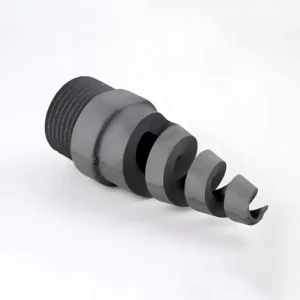
Silicon Carbide Swirl Nozzle
Model
Inch
Outlet Diameter (mm)
Flow Rate Range (m³/h)
Coverage Diameter (m)
Connection Method
AT-THG-DN10
3/8 inch
13
1-2
1.1-1.2
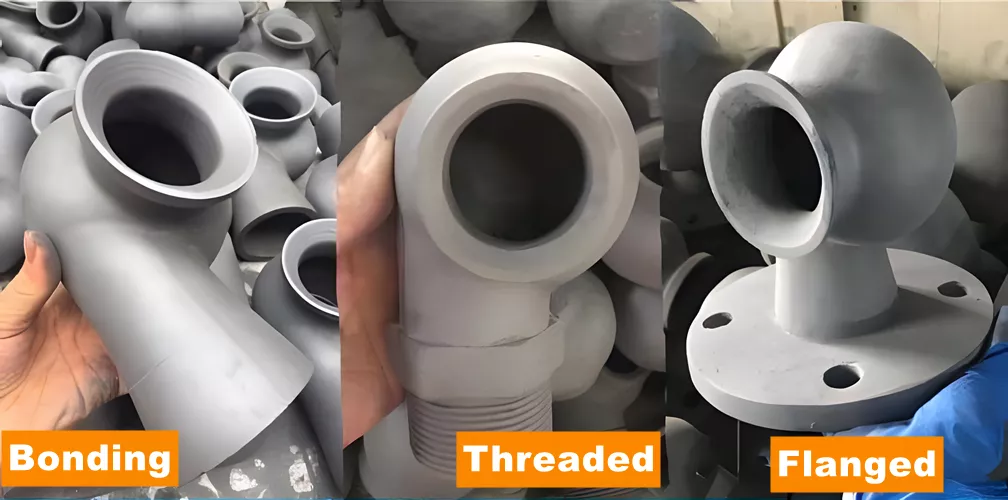
Bonding/Threaded/Flange
AT-THG-DN15
1/2 inch
16
2-3
1.2-1.3
Bonding/Threaded/Flange
AT-THG-DN20
3/4 inch
18
3-5
1.2-1.3
Bonding/Threaded/Flange
AT-THG-DN25C
1 inch
20
5-6
1.3-1.35
Bonding/Threaded/Flange
AT-THG-DN25B
1 inch
25
6-8
1.3-1.4
Bonding/Threaded/Flange
AT-THG-DN25A
1 inch
25
7-10
1.4
Bonding/Threaded/Flange
AT-THG-DN32
1.2 inch
30
9-11
1.4-1.45
Bonding/Threaded/Flange
AT-THG-DN40B
1.5 inch
30
11-13
1.45
Bonding/Threaded/Flange
AT-THG-DN40A
1.5 inch
35
13-15
1.5
Bonding/Threaded/Flange
AT-THG-DN50A
2 inch
45
20-25
1.6
Bonding/Threaded/Flange
AT-THG-DN50B
2 inch
40
16.5-20
1.6-1.7
Bonding/Threaded/Flange
AT-THG-DN50c
2 inch
40
15-16.5
1.7-1.8
Bonding/Threaded/Flange
AT-THG-DN50
2 inch
50
25-30
1.8
Bonding/Threaded/Flange
AT-THG-DN65
2.5 inch
45
20-25
1.8-1.9
Bonding/Threaded/Flange
AT-THG-DN80A
3 inch
50
25-30
1.8-2
Bonding/Threaded/Flange
AT-THG-DN80B
3 inch
55
30-35
1.8-2
Bonding/Threaded/Flange
AT-THG-DN100D
4 inch
65
35-40
1.8-2
Bonding/Threaded/Flange
AT-THG-DN100C
4 inch
70
50-55
1.8-2
Bonding/Threaded/Flange
AT-THG-DN100B
4 inch
75
55-60
1.8-2
Bonding/Threaded/Flange
AT-THG-DN100A
4 inch
80
65-70
1.8-2
Bonding/Threaded/Flange
AT-THG-DN125
5 inch
Custom
Customized on demand
2 meters and above
Bonding/Threaded/Flange
AT-THG-DN150
6 inch
Custom
Customized on demand
2 meters and above
Bonding/Threaded/Flange
Silicon Carbide Swirl Nozzle with Double Head
Item No.
Inch
Single Outlet Inner Diameter (mm)
Flow Rate Range (m³/h)
Coverage Diameter (m)
Remarks
AT-THG-SPZ001
1 inch
20
10-12
2.3-2.4
Single-direction Double Head
AT-THG-SPZ002
1.5 inch
30
22-24
2.6
Double-direction Double Head
AT-THG-SPZ003
2 inch
45
20-36
2.8-3.0
Single-direction Double Head
AT-THG-SPZ004
2 inch
45
40
3
Double-direction Double Head
AT-THG-SPZ005
2.5 inch
48
20-45
3.6-3.8
Single-direction Double Head
AT-THG-SPZ006
2.5 inch
48
42
3.6-3.8
Double-direction Double Head
AT-THG-SPZ007
3 inch
50
25-45
3.6-4
Single-direction Double Head
AT-THG-SPZ008
3 inch
50
50
3.6-4
Double-direction Double Head
AT-THG-SPZ009
4 inch
65
35-65
3.6-4
Single-direction Double Head
AT-THG-SPZ010
4 inch
65
70
3.6-4
Double-direction Double Head
Packaging of Vortex Silicon Carbide Spray Nozzle
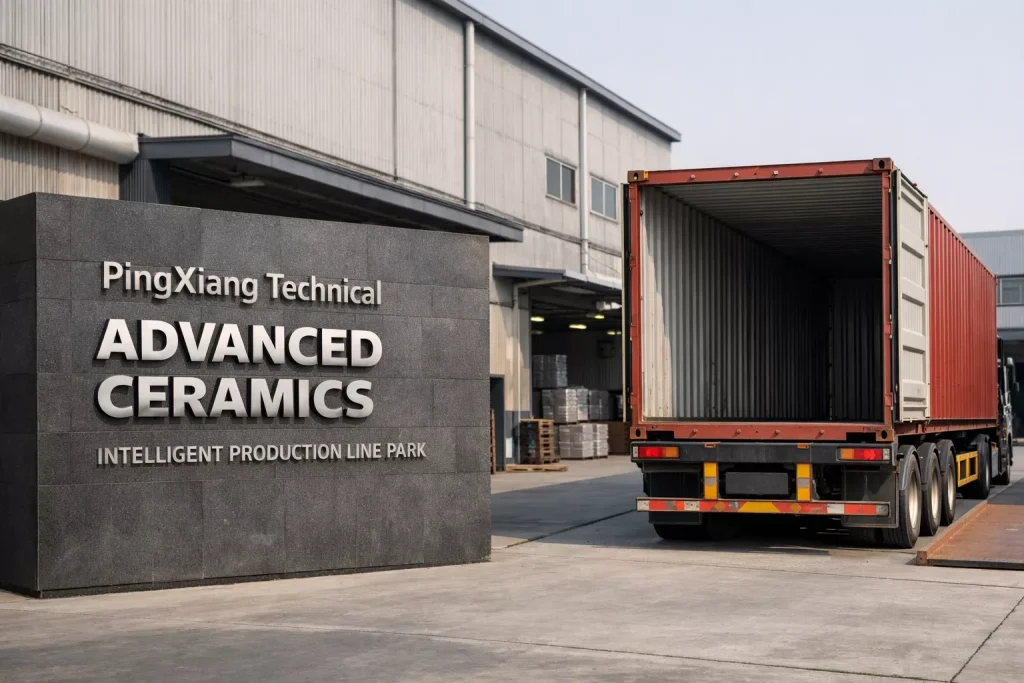
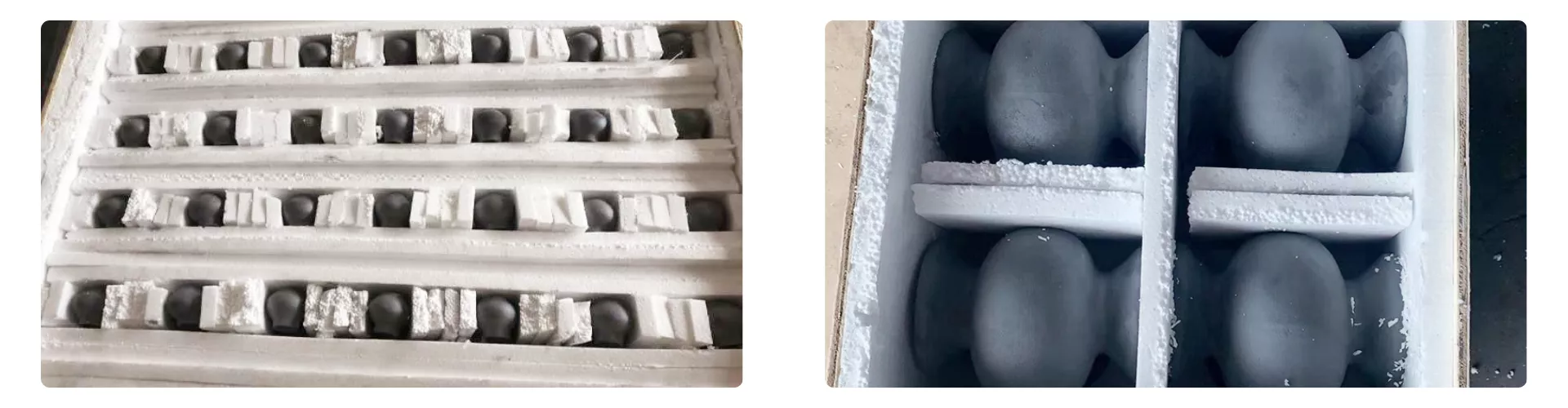
Vortex Silicon Carbide Spray Nozzle is packaged in reinforced foam-lined compartments to prevent movement and protect all critical spray surfaces during transportation. Each nozzle is individually separated by high-density insulation material to avoid surface friction and impact during handling. The packing structure ensures stable support throughout long-distance export shipments, maintaining product integrity upon arrival at the end-user’s facility.
The Vortex Silicon Carbide Spray Nozzle is deployed in gas-treatment systems where abrasive particulates, fluctuating liquid loads, and corrosive condensates sharply influence spray performance. In these environments, equipment reliability depends on the nozzle’s ability to maintain droplet uniformity, spray-angle accuracy, and chemical stability across long operational cycles. This section illustrates how the nozzle’s vortex-induced hydrodynamics and SiC material integrity address the recurring problems found in modern industrial desulfurization, quenching, and scrubbing operations.
1. Stable Full-Cone Spray Under Slurry Fluctuations Content: The nozzle maintains spray-angle deviation within ±3° even when inlet pressure fluctuates by ±10–15%, keeping the droplet field stable in high-solid limestone–gypsum slurry. This stability prevents the formation of under-sprayed absorber zones that typically appear when conventional alloy nozzles lose geometric control.
2. Wear-Resistant Orifice in High-Solid Slurry Content: SiC wear rates remain below 0.1 mm³/N·m in standardized abrasive testing, which significantly slows orifice enlargement under continuous limestone–gypsum circulation. In typical FGD operation this allows service intervals to extend to 12–18 months, compared with the 6–9 month cycles often seen with alloy designs.
3. Consistent Droplet Spectrum for SO₂ Mass Transfer Content: The vortex chamber reduces Sauter Mean Diameter by approximately 15–25% compared with straight-through designs, increasing gas–liquid interfacial area inside the absorber. As a result, desulfurization systems can achieve SO₂ removal efficiency gains of 2–5% without increasing liquid-to-gas ratio.
✅ ️Problem Solved
A European coal-fired unit operating a limestone–gypsum FGD system experienced frequent spray-pattern drift as metal nozzles eroded, leading to a measured SO₂ removal drop of about 3–4% over each 6–8 month cycle. Absorber mapping showed under-sprayed sections where worn orifices produced coarse droplets and distorted cone angles. After switching to the ADCERAX® Vortex Silicon Carbide Spray Nozzle, plant data over 16 months indicated spray-angle stability within ±3° and no detectable orifice enlargement under comparable slurry conditions. The tower maintained target desulfurization efficiency without additional circulation flow, and maintenance planning shifted from reactive nozzle changes to scheduled outages aligned with other equipment.
1. Dust-Impact Geometry Retention Content: Under particle loads commonly in the 20–40 g/m³ range, the SiC orifice profile remains within original dimensional tolerance after 3,000–5,000 operating hours, as verified by post-service inspections. This geometry retention allows the spray envelope to remain stable while upstream sinter mix and draft conditions change.
2. Surface Integrity Under Abrasive Flow Content: The smooth SiC inner surface maintains a friction coefficient near 0.2, which limits dust adhesion and reduces the onset of partial blockage. In long-term operation this combination of low friction and high hardness keeps effective flow area and droplet breakup behavior close to design conditions.
3. Thermal-Cycle Robustness in Sintering Lines Content: Steel sintering gas paths impose rapid temperature swings that can exceed 250–300°C between idling and peak-load states, conditions that often fatigue alloy or polymer nozzles. The SiC body of the Vortex Silicon Carbide Spray Nozzle tolerates these gradients without cracking or distortion, preserving spray uniformity through repeated heating and cooling cycles.
✅ ️Problem Solved
A large sinter plant reported that conventional alloy nozzles in its waste-gas scrubber lost spray uniformity after roughly 2,000–2,500 hours, with visual inspections confirming throat erosion and internal roughening. Process data showed increasing variability in outlet SOx levels and more frequent control adjustments as droplet distribution shifted with dust loading. After installing ADCERAX® Vortex Silicon Carbide Spray Nozzle units in one scrubber train, the plant tracked performance for over 4,000 hours with no measurable loss of cone angle or flow-rate consistency. Dust accumulation inside the nozzles remained minimal, and the operator reduced unplanned nozzle-related interventions while keeping gas-cleaning performance within the original design window.
Vortex Silicon Carbide Spray Nozzle in Municipal Solid-Waste Incineration Quench and Acid-Gas Absorption Systems
✅Key Advantages
1. Acid-Condensate Corrosion Resistance Content: In quench and absorption stages where pH often ranges between 2 and 4, the SiC matrix shows corrosion rates below 0.01 mm/year, preventing wall thinning and distortion of the spray geometry. This resistance allows the nozzle to maintain a consistent atomization pattern through repeated condensate cycles that typically attack metal surfaces.
2. Stable Atomization Across Thermal Transients Content: Quench sections can see temperature drops of more than 250°C over very short residence times, which frequently warp or stress conventional metallic nozzles. The Vortex Silicon Carbide Spray Nozzle endures these thermal shocks without cracking, preserving the full-cone spray needed to ensure uniform cooling and stable conditions entering downstream absorption towers.
3. Reduced Deposition and Flow Loss in Scrubber Duty Content: The combination of low surface roughness and friction coefficient near 0.2 slows the buildup of condensate-driven deposits on internal walls. Over extended operation this minimizes flow-area reduction, so pressure drop and droplet-size distribution stay close to initial commissioning values.
✅ ️Problem Solved
A municipal waste-incineration facility experienced recurring issues with corroded and partially plugged metal nozzles in its quench and acid-gas absorption trains, with inspections revealing severe pitting and deposit layers after 8–10 months. These changes were correlated with unstable quench temperatures and fluctuating HCl and SO₂ removal performance at the stack. The plant replaced one train with ADCERAX® Vortex Silicon Carbide Spray Nozzle units and monitored the system through more than 14 months of operation. Post-service checks showed negligible corrosion, limited deposit formation, and spray patterns consistent with the original design, enabling the operator to maintain emission limits without increasing reagent or water consumption.
How to Use the ADCERAX® Vortex Silicon Carbide Spray Nozzle for Optimal System Performance
The Vortex Silicon Carbide Spray Nozzle achieves its full operational value when installed, operated, and maintained according to the hydrodynamic and material characteristics that define its performance. This guide outlines essential usage practices that help end-users maintain spray stability, reduce wear, and ensure predictable operation in demanding scrubber and gas-treatment environments.
Installation & System Integration Guidelines
1. Correct Nozzle Orientation The vortex chamber must be aligned with the liquid inlet direction to maintain uniform full-cone spray. Misalignment reduces atomization efficiency and can create uneven absorber coverage. Operators should verify seating alignment during commissioning to avoid spray-pattern deviation.
2. Secure Mounting Under Variable Pressure High-load systems may experience pressure pulsation, requiring tight mechanical fixing to maintain positional stability. Loose mounting can induce micro-vibrations that accelerate wear on the inlet edges. Verification during startup ensures stable geometry retention.
3. Avoid Contaminated Seal Interfaces Any solid particles trapped between gasket surfaces may impair sealing integrity and reduce long-cycle leak resistance. Before installation, interfaces should be cleaned to prevent misalignment and turbulence at the nozzle entrance.
Operational Best Practices for Stable Spray Performance
1. Maintain Stable Inlet Pressure Range The nozzle performs best when inlet pressure variation stays within the system’s recommended margin, ensuring consistent droplet size distribution. Large pressure fluctuations reduce spray uniformity and impair SO₂ absorption. Continuous pressure monitoring is recommended in variable-load scrubber units.
2. Ensure Proper Slurry Conditioning Abrasive limestone or particulate-rich slurries require proper agitation to keep solids suspended and maintain balanced hydrodynamic shear. Poor slurry conditioning may cause sediment accumulation near the inlet. This can impact atomization and lead to localized absorber inefficiencies.
3. Prevent Air Entrapment Entrained air pockets create unstable vortex formation and reduce spray-cone uniformity under dynamic flow conditions. System priming procedures should eliminate trapped air before ramp-up to maintain consistent flow rates.
Maintenance, Inspection & Wear Management
1. Periodic Orifice Condition Checks Visual inspection intervals support early identification of wear progression before spray-pattern distortion occurs. Even slight roughening from abrasive slurries can influence cone geometry. Timely replacement plans reduce the risk of efficiency loss in absorber zones.
2. Surface Cleanliness Verification Deposits and scale formation on internal walls may reduce effective flow and disrupt vortex-induced atomization. Routine flushing prevents irreversible buildup and helps maintain system stability, especially in acidic or chloride-rich environments.
3. Monitor High-Dust Exposure Sites In steel sintering or waste-gas scrubbing duties, dust accumulation can compact in nozzle cavities and increase flow-resistance over time. Scheduled inspections during high-load periods allow teams to clean or replace components before performance thresholds are impacted.
Safety & Operational Reliability Considerations
1. Thermal-Shock Awareness Sudden exposure to extreme temperature gradients should be minimized to maintain material integrity. Although SiC exhibits excellent resistance, controlled ramp-up and cooldown procedures improve long-term reliability.
2. Chemical Compatibility Confirmation The nozzle’s SiC matrix withstands acidic condensates and chloride-rich environments with high corrosion stability. For non-standard chemicals or additives, compatibility checks ensure no unexpected reactions compromise structural durability.
3. Avoid Mechanical Impact During Handling While the nozzle is structurally strong, dropping or striking the component can introduce microcracks that evolve under cyclic load. Operators should handle units with care during installation or replacement to prevent premature degradation.
FAQs on the ADCERAX® Vortex Silicon Carbide Spray Nozzle
Q1: How does the Vortex Silicon Carbide Spray Nozzle improve stability compared to a desulfurization silicon carbide nozzle in wet FGD systems?
The Vortex Silicon Carbide Spray Nozzle generates a vortex-induced liquid rotation that produces a highly uniform full-cone spray field, even under slurry load variation. This hydrodynamic stability prevents spray-angle drift that commonly occurs in conventional designs exposed to abrasion and acidic condensates. By maintaining stable droplet distribution, the nozzle supports consistent SO₂ absorption across the absorber tower. This directly mitigates performance losses caused by uneven coverage or worn metal components.
Q2: Why does the Vortex Silicon Carbide Spray Nozzle maintain spray-angle accuracy under fluctuating inlet pressure?
Its internal vortex chamber geometry creates a controlled rotational flow that stabilizes atomization against pressure oscillations. As a result, the nozzle maintains spray-angle deviation within ±3°, protecting the absorber from under-sprayed zones when process flow varies. The geometry resists deformation because of the high mechanical strength of SiC. This helps sustain efficient gas–liquid interaction in real operating conditions.
Q3: How does the nozzle prevent wear-induced orifice enlargement in abrasive slurry environments?
The SiC body provides wear rates below 0.1 mm³/N·m, a value significantly lower than metallic or polymeric alternatives. This resistance protects the orifice shape when exposed to limestone-gypsum or dust-laden flows. By keeping the original geometry intact, the nozzle preserves long-cycle spray uniformity in absorber and scrubber systems. It also reduces the frequency of shutdowns for component inspection or replacement.
Q4: What enables the Vortex Silicon Carbide Spray Nozzle to maintain consistent droplet size distribution?
The vortex-induced flow pattern promotes predictable droplet breakup, reducing Sauter Mean Diameter (SMD) variation. This results in a 15–25% improvement in droplet uniformity when compared with straight-flow nozzles. Consistent droplet formation increases absorber efficiency by enhancing gas–liquid mass transfer. This stability ensures more reliable SO₂ removal and process-control predictability.
Q5: Why is the nozzle suitable for high-chloride or acidic condensate environments?
Silicon carbide offers exceptional chemical resistance, delivering corrosion rates below 0.01 mm/year in chloride-rich solutions. This prevents wall thinning and surface roughening that would otherwise distort the spray field. The nozzle retains its hydrodynamic accuracy even when exposed to repeated condensate cycles. As a result, equipment in incineration and FGD units experiences fewer corrosion-related failures.
Field Feedback on the ADCERAX® Vortex Silicon Carbide Spray Nozzle
⭐️⭐️⭐️⭐️⭐️
We integrated the Vortex Silicon Carbide Spray Nozzle into a limestone–gypsum FGD absorber line during a scheduled upgrade, and the improvement was immediately noticeable. The nozzle maintained a consistently stable full-cone spray even under fluctuating slurry load, which previously caused angle drift with metal nozzles. Our inspection after a long operating window showed minimal wear progression and no measurable distortion of the orifice profile. The enhanced uniformity directly improved absorber section coverage in a way that aligned with our emission-stability targets.
Michael S., Process Engineering Division, NorthRiver Energy Group
⭐️⭐️⭐️⭐️⭐️
In our high-dust steel sintering scrubber, we routinely faced geometry distortion in traditional alloy spray components. After switching to the Vortex Silicon Carbide Spray Nozzle, we observed excellent resistance to particulate impact and no loss of droplet distribution despite aggressive dust loading. The nozzle remained structurally intact through repeated thermal cycles, providing stable atomization under harsh dynamic conditions. This stability simplified our process-control adjustments and reduced nozzle-related downtime.
Daniel R., Senior Operations Engineer, WestForge Metallurgical Systems
⭐️⭐️⭐️⭐️⭐️
Our municipal waste-incineration unit experiences severe acidic condensate cycles that rapidly degrade conventional nozzles. The Vortex Silicon Carbide Spray Nozzle delivered exceptional corrosion stability in low-pH environments, maintaining a smooth internal surface that prevented flow loss. Its predictable hydrodynamic behavior supported reliable quench-zone cooling, which kept downstream absorption performance within specification. This greatly improved our maintenance planning and long-term reliability.
Laura M., Environmental Engineering Team, MetroTherm Waste Solutions
⭐️⭐️⭐️⭐️⭐️
During a multi-month trial in a variable-load industrial scrubber, the Vortex Silicon Carbide Spray Nozzle demonstrated remarkable droplet-size consistency, even during rapid pressure and temperature fluctuations. We also noted significantly less internal deposition compared to prior designs, which kept the system operating at expected flow capacity. The nozzle’s long-cycle operational stability made it a dependable choice for unpredictable process conditions.
James H., Gas-Treatment Engineering Unit, Baltic Process Technologies
Customization Services for Vortex SiC Spray Nozzle
The ADCERAX® Vortex Silicon Carbide Spray Nozzle can be engineered with tailored structural and functional specifications to meet the diverse operational requirements of industrial gas-handling and desulfurization systems.
Structural Geometry Customization
A refined geometric configuration can be adapted to ensure optimal spray-field performance across variable absorber and scrubber environments.
Vortex Chamber Form adjusted to influence rotational energy distribution
Spray-Exit Profile shaped to refine cone boundaries and droplet spread
Internal Flow Path designed to stabilize hydrodynamic behavior
Mounting Interface Type matched to absorber or scrubber connection designs
Material & Process Adaptation
Material composition and processing schemes can be configured to enhance durability, corrosion stability, and slurry-resistance under application-specific conditions.
SiC Material Grade selected for target abrasion and corrosion resistance
Surface Treatment Choice applied to optimize slurry interaction control
Thermal Profile Design configured for extreme cycle conditions
Slurry-Contact Optimization adjusted for high-solid or chemically aggressive flows