High-temperature assemblies fail when a “safe” number hides time, cycling, and damage. Escalating thermal loads amplify risk. A usable limit resolves continuous exposure, peaks, and failure onset.
Zirconia ceramics exhibit multiple stabilized systems with distinct thermal ceilings. Reliable limits require separating continuous service temperature, short peak tolerance, and failure-triggering mechanisms across time scales and stress states.
Accordingly, the discussion moves from a compact definition of usable temperature boundaries to phase-stability constraints, then to system-by-system limits for 3Y-TZP, YSZ, MSZ, and CSZ, followed by a consolidated comparison.
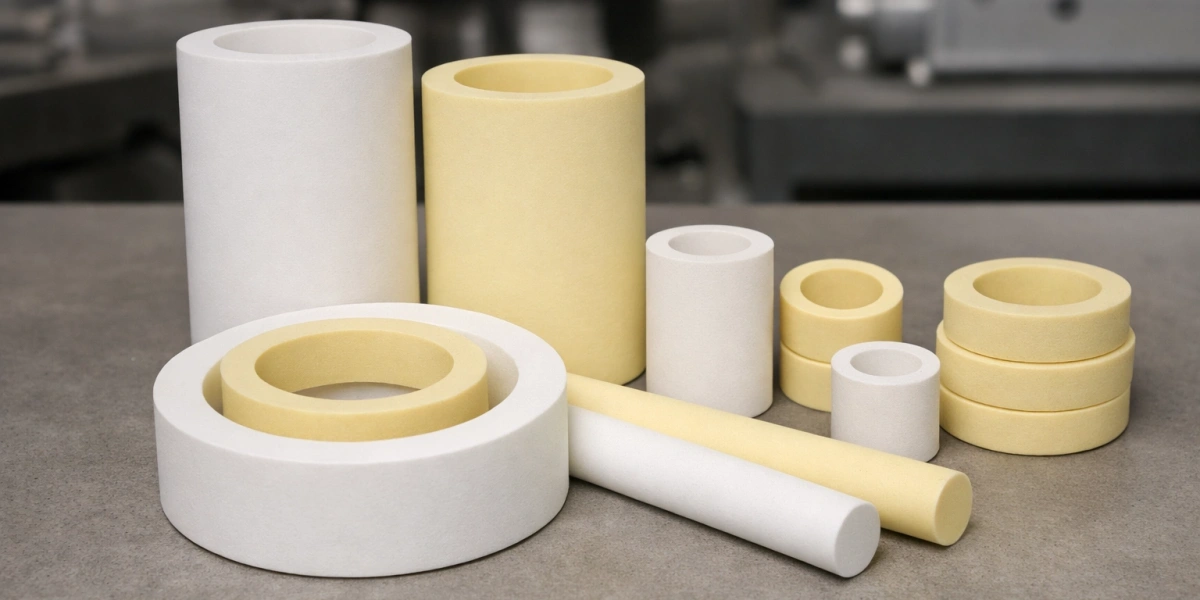
In high-temperature specifications, zirconia ceramic max temperature often appears as a single line item; however, real service margins emerge only after exposure mode, duration, and failure pathways are separated.
Why Zirconia Ceramic Max Temperature Is Not A Single Value
A single maximum number rarely predicts survivability because temperature interacts with time at temperature, thermal cycling, and damage accumulation. Consequently, usable limits depend on what the temperature does to microstructure and stress fields, not only how high it becomes.
-
Continuous Service Temperature
Continuous service temperature refers to the highest temperature that can be held for long durations without unacceptable drift in strength, stiffness, or dimensions. In furnace fixture logs, failures often appear after 200–500 hours even when peak temperatures remain below the catalog maximum. Therefore, long exposure defines the practical ceiling more reliably than a short thermal event.
-
Peak Or Intermittent Temperature
Peak temperature describes short excursions that occur during ramping, transient process spikes, or brief exposure near hot zones. In commissioning trials, components can survive minutes to tens of minutes at temperatures that would be damaging over days. Accordingly, peak tolerance must be tied to a bounded exposure window rather than a single number.
-
Failure Temperature Mechanisms
Failure temperature is the threshold where a dominant damage process becomes irreversible, such as creep-driven deformation, phase-instability damage, or thermally amplified crack growth. In repeated thermal cycling, cracks may initiate after 10–10,000 cycles depending on stress concentration and microstructural stability. As a result, “maximum” becomes a mechanism-dependent boundary, not a material constant.
Usable Temperature Boundaries In Zirconia Ceramics
| Boundary Type | Practical Meaning | Exposure Duration (h) | Dominant Risk Signal |
|---|---|---|---|
| Continuous service limit | Long-hold temperature maintaining structural function | 10^2–10^4 | Creep strain, modulus loss, dimensional drift |
| Peak or intermittent limit | Short exposure temperature tolerated without immediate damage | 10^-3–10^-1 | Thermal shock risk, transient stress, local microcrack initiation |
| Failure-mechanism threshold | Temperature where irreversible damage pathway activates | 10^-2–10^4 | Phase-related stress, creep acceleration, crack propagation rate increase |
Phase Stability Limits Zirconia Ceramic Max Temperature
Across stabilized zirconia systems, usable thermal ceilings originate from phase stability under sustained heat rather than nominal melting points. Consequently, long-hold temperature, peak exposure, and failure onset are governed by how crystal phases evolve with temperature and time.
Elevated temperature alters phase equilibria, generates transformation strain, and reshapes stress fields. Therefore, Zirconia Ceramic Max Temperature must be interpreted through phase-controlled damage thresholds instead of isolated temperature figures.
Zirconia Phase Fields Across Temperature Ranges
Zirconia exhibits monoclinic, tetragonal, and cubic phases whose stability varies with temperature and stabilizer content. Pure zirconia transforms from monoclinic to tetragonal near 1170 °C, then to cubic around 2370 °C, accompanied by a 3–5 % volume change during cooling.
Under stabilized conditions, dopants shift these phase fields and suppress transformation. In laboratory heating profiles, stabilized zirconia maintains non-transforming phases over 600–1000 °C wider ranges compared with unstabilized ZrO₂. Consequently, usable high-temperature limits expand only when phase transitions remain suppressed.
In long-duration thermal exposure, even partially stabilized systems may experience gradual phase redistribution. This slow evolution explains why components can remain intact initially yet degrade after hundreds of hours at elevated temperature.
Phase Transition Strain And Thermally Driven Stress
Phase transitions introduce transformation strain that directly converts thermal energy into mechanical stress. For zirconia, volumetric strain during tetragonal-to-monoclinic transformation approaches 4 %, sufficient to exceed local fracture toughness in constrained geometries.
During controlled heating, stress remains minimal; however, during cooling or thermal cycling, constrained regions accumulate tensile stress exceeding 200–400 MPa locally. Field observations from furnace fixtures show crack initiation frequently coincides with cooling segments rather than peak temperature dwell.
Accordingly, phase-related stress defines a failure temperature that may lie 300–500 °C below the nominal phase boundary, especially in thick or constrained components.
Stabilizer Chemistry And High Temperature Phase Retention
Stabilizer oxides alter zirconia lattice energy and expand the stability domain of high-temperature phases. Yttria additions of 3–8 mol % stabilize tetragonal or cubic structures, while magnesia and calcia require 8–12 mol % to achieve comparable phase suppression.
At elevated temperature, stabilizer distribution remains largely uniform; however, prolonged exposure above 1200–1400 °C can promote diffusion and local depletion. Experimental diffusion coefficients for yttria in zirconia rise by an order of magnitude between 1000 °C and 1400 °C, accelerating long-term instability.
Therefore, stabilizer chemistry governs not only initial phase stability but also time-dependent retention, directly constraining Zirconia Ceramic Max Temperature in continuous service.
Phase Stability Versus Strength Retention At Elevated Temperature
Phase stability does not guarantee mechanical integrity. While cubic zirconia remains phase-stable to very high temperature, flexural strength often declines by 40–60 % between room temperature and 1200 °C due to grain boundary softening.
Conversely, partially stabilized systems may retain higher short-term strength but lose stability over time. In comparative creep tests at 1300 °C, cubic systems exhibit steady deformation, whereas tetragonal-rich systems show abrupt degradation after a critical exposure period.
Thus, usable temperature limits emerge where phase stability and strength retention intersect, not where either property alone appears favorable.
Phase Related Damage Thresholds Under Thermal Exposure
Failure temperature represents the point where a dominant damage mechanism accelerates irreversibly. For zirconia ceramics, this often corresponds to creep rate increases exceeding 10⁻⁶ s⁻¹, rapid grain growth beyond 2–3× original size, or transformation-induced crack networks.
Thermal cycling intensifies these effects. Components subjected to 1000–5000 cycles between ambient and high temperature frequently fail at lower peak temperatures than static tests indicate. Consequently, failure thresholds shift downward with cycling frequency and dwell duration.
These observations establish phase stability as the primary governor of Zirconia Ceramic Max Temperature across stabilized systems.
Phase Stability And Temperature Constraints In Zirconia Ceramics
| Stabilization Aspect | Typical Temperature Range (°C) | Dominant Limitation | Failure Indicator |
|---|---|---|---|
| Unstabilized ZrO₂ | <1000 | Phase transformation | Volumetric cracking |
| Partially stabilized zirconia | 1000–1300 | Phase instability over time | Crack accumulation |
| Fully stabilized zirconia | 1200–1600 | Strength and creep | Dimensional drift |
| Overstabilized systems | >1400 | Grain boundary softening | Structural relaxation |
Zirconia Ceramic Max Temperature In 3Y TZP
Within stabilized zirconia families, 3Y-TZP occupies a unique position where exceptional room-temperature strength coexists with comparatively narrow high-temperature usability. Consequently, its maximum usable temperature must be interpreted through exposure duration and failure progression rather than peak survival alone.
In practice, Zirconia Ceramic Max Temperature for 3Y-TZP is controlled less by instantaneous breakdown and more by time-dependent microstructural instability that accumulates under sustained heat and cyclic stress.
Continuous Service Temperature Range Of 3Y TZP
Continuous service temperature defines the upper boundary where 3Y-TZP can operate for extended periods without unacceptable degradation. Experimental creep and aging studies consistently place this range around 800–1000 °C for long-term exposure exceeding 10²–10³ hours.
At these temperatures, the fine tetragonal grain structure that provides high fracture toughness remains metastable. However, above approximately 950 °C, grain growth accelerates and the driving force for phase destabilization increases measurably. Furnace component logs frequently show dimensional drift or stiffness reduction after 300–500 hours within this range.
Therefore, the continuous service ceiling of 3Y-TZP lies significantly below its short-term thermal tolerance, establishing a conservative but reliable operational boundary.
Peak Temperature Tolerance Under Short Thermal Events
Short-duration thermal exposure reveals a very different picture. Under controlled ramp-up and brief dwell conditions, 3Y-TZP components have repeatedly tolerated peak temperatures of 1200–1400 °C without immediate fracture.
Such tolerance is typically observed during exposure times limited to minutes rather than hours, for example during startup transients or localized hot-spot contact. Mechanical testing after these events often shows minimal strength loss if cooling rates remain moderate and thermal gradients are controlled.
However, repeated peak excursions compound damage. Field measurements indicate that 10–50 peak cycles near 1300 °C can reduce residual flexural strength by more than 25 %, demonstrating that peak tolerance does not equate to sustainable service temperature.
Grain Growth Driven Loss Of Tetragonal Stability
The defining high-temperature limitation of 3Y-TZP is grain growth. Tetragonal zirconia relies on grain sizes typically below 0.5 µm to remain metastable at ambient conditions. Elevated temperature accelerates grain boundary mobility, pushing grains beyond this critical size.
At temperatures above 1000–1100 °C, average grain size can double within tens of hours, significantly lowering resistance to tetragonal-to-monoclinic transformation during cooling. Once critical grain size is exceeded, transformation strain becomes unavoidable.
This mechanism explains why components may appear intact at temperature yet crack during cooldown, effectively lowering the practical Zirconia Ceramic Max Temperature for cyclic or batch processes.
Creep Initiation And Dimensional Drift At High Temperature
Creep behavior further constrains high-temperature use. For 3Y-TZP, measurable creep rates begin to appear above 900–1000 °C, with strain rates approaching 10⁻⁶–10⁻⁵ s⁻¹ under modest stress levels.
Even without catastrophic fracture, creep leads to dimensional drift, loss of flatness, and misalignment in precision assemblies. In fixture applications, accumulated creep strain of 0.1–0.3 % over extended exposure has been sufficient to cause functional failure.
Thus, creep defines a failure temperature that may be lower than the phase instability threshold, especially in load-bearing configurations.
Failure Accumulation Under Thermal Cycling
Thermal cycling amplifies all preceding mechanisms. Each cycle introduces transient thermal stress, promotes microcrack nucleation, and accelerates grain coarsening. Tests involving 500–5000 cycles between ambient temperature and 1000–1200 °C frequently show progressive stiffness loss and crack network formation.
Importantly, failure often manifests after a threshold number of cycles rather than at a specific temperature. This observation reinforces that for 3Y-TZP, usable temperature is inseparable from exposure history.
Consequently, Zirconia Ceramic Max Temperature for 3Y-TZP must be framed as a time- and cycle-dependent boundary, not a fixed material constant.
Summary Table: Temperature Limits And Failure Modes Of 3Y TZP
| Parameter | Typical Range | Governing Mechanism | Failure Indicator |
|---|---|---|---|
| Continuous service temperature (°C) | 800–1000 | Grain growth, creep onset | Dimensional drift, modulus loss |
| Peak temperature tolerance (°C) | 1200–1400 | Short-term phase stability | Residual strength reduction |
| Dominant failure temperature trigger | >950 °C (time-dependent) | Tetragonal instability | Cooling-induced cracking |
| Thermal cycling endurance (cycles) | 10²–10³ | Damage accumulation | Microcrack network formation |
Zirconia Ceramic Max Temperature In YSZ
Among stabilized zirconia systems, yttria-stabilized zirconia occupies the high-temperature end of the usable spectrum, where phase stability is prioritized over room-temperature strength. Consequently, its maximum usable temperature is governed primarily by creep resistance and long-term structural retention rather than abrupt phase-related failure.
In industrial thermal environments, Zirconia Ceramic Max Temperature for YSZ reflects a balance between extended phase stability and gradual mechanical degradation under sustained heat.
Continuous High Temperature Range Of YSZ
YSZ maintains a fully stabilized cubic or near-cubic phase across a wide temperature interval, enabling continuous operation at significantly higher temperatures than partially stabilized systems. Long-duration studies commonly report stable service ranges of 1200–1400 °C for exposure periods exceeding 10³–10⁴ hours under low to moderate stress.
Within this range, the absence of martensitic phase transformation eliminates transformation-induced cracking during heating and cooling. However, elastic modulus measurements reveal a steady decline with temperature, often reaching a 30–50 % reduction by 1300 °C, signaling progressive softening rather than sudden failure.
As a result, continuous service limits for YSZ are defined by acceptable deformation and stiffness loss rather than phase instability.
Peak Temperature Endurance In Intermittent Exposure
Under short-duration exposure, YSZ demonstrates exceptional tolerance to extreme temperatures. Peak temperature endurance approaching 1500–1600 °C has been observed during brief dwell times on the order of minutes, particularly in non-load-bearing configurations.
Such tolerance arises from the intrinsic stability of the cubic lattice and the absence of volumetric phase change. Post-exposure inspections frequently show intact microstructures with limited crack initiation when thermal gradients are moderate.
Nevertheless, repeated peak excursions accelerate damage accumulation. After 20–100 cycles near 1500 °C, residual strength reductions exceeding 20 % have been documented, indicating that peak endurance does not translate into sustained operational capability.
Creep Dominated Failure At Elevated Temperature
Creep represents the dominant failure mechanism for YSZ at high temperature. Above approximately 1200 °C, steady-state creep1 rates increase sharply, often reaching 10⁻⁶–10⁻⁴ s⁻¹ depending on stress level and grain size.
In long-hold tests, accumulated creep strain of 0.2–0.5 % has been sufficient to compromise dimensional tolerances and contact interfaces, even in the absence of visible cracking. Such deformation gradually redefines functional failure well below any catastrophic temperature limit.
Therefore, creep onset and rate establish the effective upper boundary of Zirconia Ceramic Max Temperature for YSZ in load-bearing or precision-critical roles.
Thermal Exposure Duration And Microstructural Coarsening
Time at temperature plays a decisive role in YSZ degradation. Grain growth accelerates markedly above 1300 °C, with average grain diameters increasing by 2–3× over 100–500 hours of exposure.
Grain coarsening reduces grain boundary area, lowering resistance to creep and facilitating grain boundary sliding2. Although phase stability remains intact, the microstructure evolves toward a mechanically softer state.
This temporal effect explains why components may remain dimensionally stable during short tests yet fail during prolonged operation at the same nominal temperature.
High Temperature Loss Of Structural Precision
At elevated temperature, YSZ often fails by loss of structural precision rather than fracture. Flatness deviation, bore ovalization, and interface relaxation become evident after extended exposure above 1200 °C.
In alignment-sensitive assemblies, deviations as small as 0.05–0.1 % of nominal dimensions have led to functional failure, despite the absence of cracks or spalling. Accordingly, the usable temperature ceiling is often defined by allowable geometric tolerance drift.
Thus, for YSZ, Zirconia Ceramic Max Temperature must be interpreted through deformation control and service-life requirements, not survival alone.
Summary Table: Temperature Limits And Failure Modes Of YSZ
| Parameter | Typical Range | Governing Mechanism | Failure Indicator |
|---|---|---|---|
| Continuous service temperature (°C) | 1200–1400 | Creep and modulus reduction | Dimensional drift |
| Peak temperature tolerance (°C) | 1500–1600 | Short-term lattice stability | Residual strength loss |
| Dominant failure temperature trigger | >1200 °C (time-dependent) | Creep acceleration | Loss of flatness or alignment |
| Long-duration exposure sensitivity (h) | 10³–10⁴ | Grain coarsening | Structural relaxation |
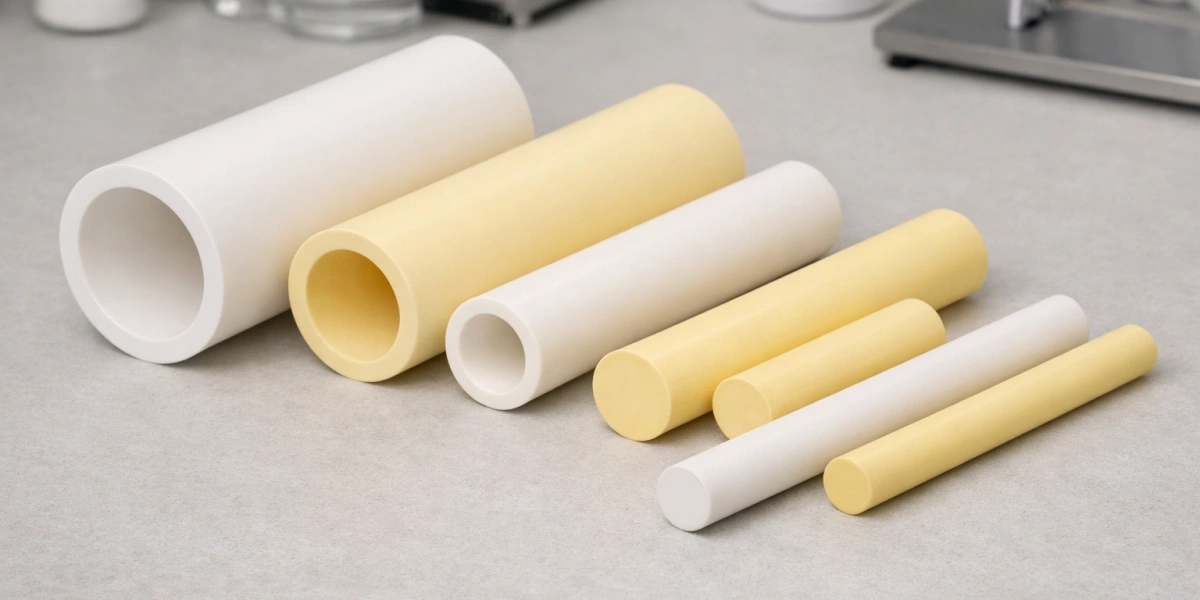
Zirconia Ceramic Max Temperature In Magnesia Stabilized Zirconia
Magnesia-stabilized zirconia occupies a middle ground where thermal stability spans a wider usable window than partially stabilized systems, while avoiding some deformation sensitivity seen in fully cubic materials. Consequently, its maximum usable temperature is governed by balanced phase retention and moderated creep progression.
Across long-hold and cyclic environments, Zirconia Ceramic Max Temperature for MSZ emerges from how grain-boundary processes evolve under heat rather than abrupt phase collapse.
Continuous Temperature Window Of MSZ
MSZ typically sustains continuous operation within 1100–1300 °C for extended durations exceeding 10³ hours, provided applied stresses remain moderate. In this interval, magnesia additions suppress deleterious phase transformations while retaining sufficient grain-boundary cohesion.
Mechanical monitoring during long furnacing campaigns shows modulus reductions of 20–35 % by 1250 °C, lower than YSZ at comparable exposure. Dimensional stability remains acceptable until cumulative exposure surpasses 1500–2000 hours, after which slow deformation becomes measurable.
Accordingly, the continuous service ceiling of MSZ is defined by gradual mechanical softening rather than instability-driven cracking.
Peak Temperature Tolerance Under Thermal Gradients
Under short-term exposure, MSZ tolerates peak temperatures approaching 1400–1500 °C during dwell times limited to minutes. Such tolerance has been observed during thermal gradient testing where temperature differentials exceed 200–300 °C across component sections.
Unlike 3Y-TZP, MSZ shows reduced sensitivity to cooling-induced cracking because phase stability remains intact over the peak cycle. Post-test inspections frequently reveal intact surfaces with only minor microcrack initiation at stress concentrators.
However, repeated peaks accelerate grain-boundary sliding. After 30–80 peak cycles near 1450 °C, residual stiffness losses above 20 % have been recorded, indicating a finite endurance envelope.
Creep Resistance Relative To YSZ And 3Y TZP
Creep behavior places MSZ between YSZ and 3Y-TZP. At 1200–1300 °C, steady-state creep rates typically fall in the 10⁻⁷–10⁻⁶ s⁻¹ range under comparable stress, an order of magnitude lower than YSZ yet higher than room-temperature-optimized tetragonal systems.
This moderated creep response allows MSZ to maintain geometry longer under load. In controlled creep frames, accumulated strain often remains below 0.15 % after 1000 hours at 1250 °C, preserving functional alignment.
Thus, creep onset defines a usable upper limit that remains predictable across extended exposure.
Grain Boundary Sliding And High Temperature Failure
At higher temperatures, failure transitions from creep-dominated strain to grain-boundary sliding. Above 1300–1350 °C, sliding contributes increasingly to deformation, especially in coarse-grained microstructures.
Microscopy after long-hold tests reveals boundary offsets on the order of tens of nanometers, sufficient to degrade stiffness and load transfer. These effects remain progressive rather than catastrophic, shifting the definition of failure toward functional tolerance loss.
Accordingly, the failure temperature for MSZ is often identified by the onset of accelerated boundary sliding rather than visible cracking.
Long Duration Thermal Exposure And Structural Retention
Extended exposure clarifies MSZ’s practical value. After 2000–3000 hours at 1200–1250 °C, components typically retain overall shape with limited warpage, contrasting with the greater relaxation observed in fully stabilized systems.
Field experience from kiln furniture and insulating support elements shows that service life is limited more by accumulated deformation than by sudden rupture. This stability profile supports a broad usable temperature window.
Consequently, Zirconia Ceramic Max Temperature for MSZ is best interpreted as a stable plateau bounded by slow, measurable degradation, offering predictability in long-duration thermal service.
Summary Table: Temperature Limits And Failure Modes Of MSZ
| Parameter | Typical Range | Governing Mechanism | Failure Indicator |
|---|---|---|---|
| Continuous service temperature (°C) | 1100–1300 | Modulus reduction, moderated creep | Gradual dimensional drift |
| Peak temperature tolerance (°C) | 1400–1500 | Phase stability under short exposure | Stiffness reduction |
| Dominant failure temperature trigger | >1250 °C (time-dependent) | Grain-boundary sliding | Loss of alignment |
| Long-duration exposure sensitivity (h) | 10³–10⁴ | Boundary mobility | Progressive deformation |
Zirconia Ceramic Max Temperature In Calcia Stabilized Zirconia
Calcia-stabilized zirconia is positioned at the upper end of stabilized systems where phase stability persists to very high temperature while mechanical capability gradually diminishes. Accordingly, its usable ceiling is controlled by structural retention and deformation tolerance rather than transformation-induced damage.
Across prolonged exposure and short peaks, Zirconia Ceramic Max Temperature for CSZ reflects how strength decay, creep, and relaxation evolve with time at temperature.
Continuous High Temperature Range Of CSZ
CSZ sustains continuous operation at 1300–1500 °C for extended durations exceeding 10³ hours when stresses remain modest. Calcia additions stabilize the cubic phase over a wide interval, eliminating volumetric phase change during heating and cooling.
During long holds near 1400 °C, elastic modulus reductions of 35–55 % have been measured, indicating progressive softening without abrupt fracture. Dimensional change accumulates slowly, often remaining below 0.2 % after 1000 hours, which preserves overall geometry in non-precision roles.
Thus, the continuous service boundary of CSZ is set by acceptable stiffness loss and deformation rather than phase instability.
Peak Temperature Resistance In Short Exposure
Short-duration exposure reveals substantial tolerance to extreme heat. Peak temperatures of 1550–1650 °C have been endured during dwell periods limited to minutes, particularly in components free of external constraint.
Post-exposure evaluation commonly shows intact surfaces and absence of transformation cracking. However, repeated exposure near the upper end of this range accelerates microstructural relaxation. After 15–40 peak cycles around 1600 °C, residual flexural strength losses exceeding 25 % have been reported.
Therefore, peak resistance exists but carries a limited endurance envelope governed by cumulative damage.
Strength Reduction With Rising Temperature
Strength decay is the dominant limitation for CSZ. Flexural strength typically decreases by 50–65 % between ambient conditions and 1400 °C, driven by grain-boundary softening and reduced resistance to sliding.
At elevated temperature, load-bearing capacity becomes sensitive to stress concentration. In structural tests, failure stress dropped below 200 MPa at 1450 °C, even though the material remained crack-free.
As a result, usable temperature must be framed against required load margins, not phase stability alone.
High Temperature Deformation And Structural Relaxation
Creep and relaxation govern long-term behavior. Above 1300 °C, steady-state creep rates in CSZ often approach 10⁻⁶–10⁻⁵ s⁻¹ under moderate stress, producing gradual shape change rather than abrupt failure.
Microscopic examination after long exposure reveals grain-boundary offsets and rounded pore morphology, consistent with viscous relaxation. These changes accumulate over 10²–10³ hours, redefining functional limits through geometry loss.
Accordingly, deformation rather than cracking usually defines failure temperature in CSZ service.
Temperature Limited Structural Envelope
Practical use of CSZ relies on a temperature envelope bounded by structural tolerance. In applications where shape fidelity and alignment tolerance exceed 0.2–0.3 %, CSZ remains usable near the upper end of its continuous range.
In contrast, precision-dependent assemblies reach functional failure at lower temperatures despite preserved phase stability. This divergence underscores that Zirconia Ceramic Max Temperature for CSZ is inseparable from structural acceptance criteria.
Summary Table: Temperature Limits And Failure Modes Of CSZ
| Parameter | Typical Range | Governing Mechanism | Failure Indicator |
|---|---|---|---|
| Continuous service temperature (°C) | 1300–1500 | Strength decay, creep | Deformation beyond tolerance |
| Peak temperature tolerance (°C) | 1550–1650 | Cubic phase stability | Residual strength reduction |
| Dominant failure temperature trigger | >1350 °C (time-dependent) | Creep and relaxation | Geometry loss |
| Long-duration exposure sensitivity (h) | 10²–10³ | Grain-boundary softening | Structural misalignment |
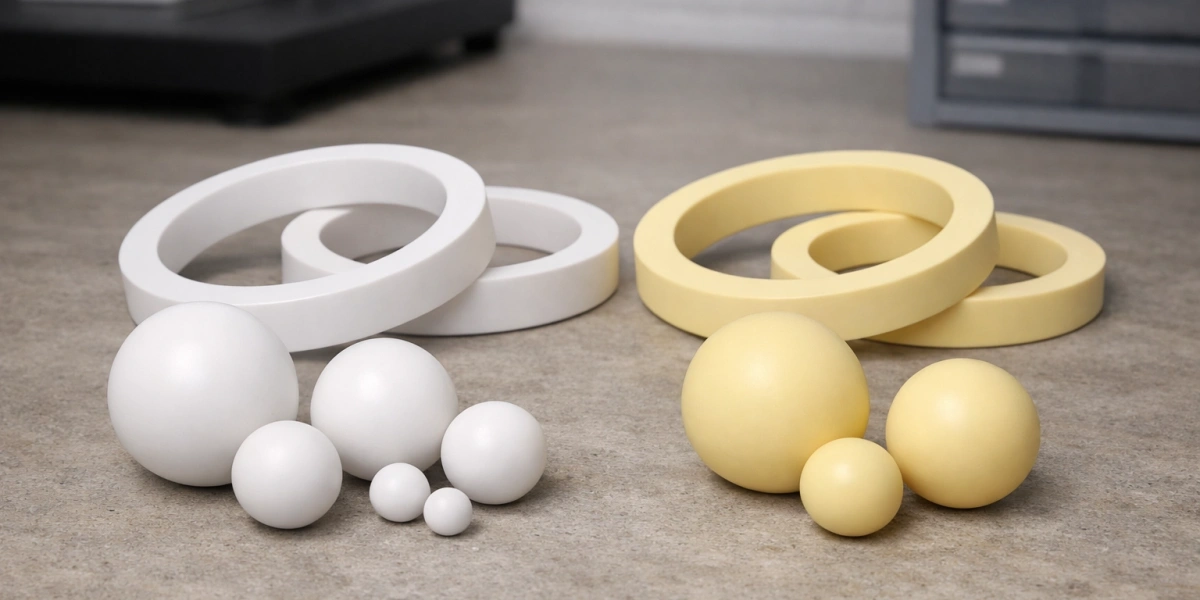
Zirconia Ceramic Max Temperature Across Stabilized Systems
When zirconia ceramics are compared across stabilization strategies, usable temperature emerges as a window shaped by time, stress, and failure mechanism, rather than a single ranking by peak survivability. Consequently, Zirconia Ceramic Max Temperature must be evaluated comparatively through continuous service limits, short-term peak tolerance, and dominant degradation paths.
Across 3Y-TZP, YSZ, MSZ, and CSZ, differences in phase stability and high-temperature deformation behavior define distinct thermal envelopes that align with different engineering expectations.
Continuous Service Temperature Comparison
Continuous service temperature provides the most conservative and reliable comparison across systems. In long-duration exposure exceeding 10³ hours, 3Y-TZP consistently exhibits the lowest usable ceiling, while YSZ and CSZ extend into substantially higher temperature regimes.
Partially stabilized 3Y-TZP typically remains reliable below 1000 °C, beyond which grain growth and creep progressively compromise stability. MSZ expands this window to approximately 1100–1300 °C, offering improved predictability under sustained heat. Fully stabilized systems such as YSZ and CSZ maintain phase stability well above 1300 °C, though deformation tolerance becomes the limiting factor.
Therefore, continuous service limits separate zirconia systems more clearly than peak temperature figures.
Peak And Intermittent Temperature Comparison
Peak temperature tolerance reveals a different hierarchy. Short-duration exposure tests show that all stabilized systems can withstand temperatures significantly above their continuous limits for minutes rather than hours.
3Y-TZP tolerates peaks near 1200–1400 °C, MSZ extends this tolerance toward 1400–1500 °C, and YSZ and CSZ reach 1500–1650 °C under controlled conditions. However, endurance varies sharply with repetition; repeated peaks accelerate damage accumulation.
As a result, peak temperature comparison is meaningful only when paired with exposure count and dwell time.
Failure Temperature Mechanisms Comparison
Failure temperature mechanisms differ fundamentally across systems. In 3Y-TZP, failure is driven by grain growth–induced tetragonal instability and cooling-related cracking. MSZ shifts failure toward grain-boundary sliding and moderated creep, while YSZ and CSZ are governed predominantly by creep, strength decay, and structural relaxation.
Thermal cycling amplifies these mechanisms differently. For example, cyclic exposure above 1000 °C rapidly degrades 3Y-TZP, whereas YSZ tolerates cycling but accumulates deformation over time. Consequently, identical temperature histories yield divergent outcomes depending on stabilization chemistry.
These distinctions explain why identical “maximum temperature” claims lead to different service lifetimes.
Temperature Windows Versus Absolute Limits
Across all systems, usable temperature is best expressed as a window bounded by degradation rates, not an absolute threshold. Continuous service temperature anchors the lower boundary, peak tolerance defines the upper transient edge, and failure mechanisms determine how quickly the window narrows with time.
This window concept reconciles laboratory survivability with field reliability. It also clarifies why nominal maxima often overestimate practical limits when exposure duration or cycling is ignored.
Thus, Zirconia Ceramic Max Temperature represents a range of viable operation conditioned by mechanism and history, not a fixed material property.
Interpreting Max Temperature For Real Use Boundaries
In practical evaluation, stabilized zirconia systems should be aligned with temperature demands according to dominant risk. Where dimensional fidelity is critical, lower continuous limits dominate selection. Where short-term thermal shock prevails, peak tolerance becomes relevant.
Accordingly, interpreting Zirconia Ceramic Max Temperature across systems requires matching continuous exposure, peak events, and failure tolerance into a coherent boundary rather than relying on a single comparative figure.
Summary Table: Comparative Temperature Limits Of Stabilized Zirconia Systems
| System | Continuous Service Temperature (°C) | Peak Temperature Tolerance (°C) | Dominant Failure Mechanism |
|---|---|---|---|
| 3Y-TZP | 800–1000 | 1200–1400 | Grain growth, phase instability |
| MSZ | 1100–1300 | 1400–1500 | Grain-boundary sliding, creep |
| YSZ | 1200–1400 | 1500–1600 | Creep, structural relaxation |
| CSZ | 1300–1500 | 1550–1650 | Strength decay, deformation |
Conclusion
Across stabilized zirconia systems, maximum usable temperature is governed by exposure duration, deformation tolerance, and dominant failure mechanism, not by a single peak value. Continuous service limits consistently fall below transient survivability, while failure thresholds shift downward with time and cycling.
3Y-TZP remains constrained by grain growth and phase instability, MSZ offers a broader and more predictable window, and fully stabilized YSZ and CSZ extend to higher temperatures where creep and structural relaxation define usability. Consequently, Zirconia Ceramic Max Temperature is best expressed as a mechanism-bounded operating window, aligning thermal demand with acceptable degradation rates rather than nominal maxima.
FAQ
What Is The Difference Between Continuous Service Temperature And Peak Temperature In Zirconia Ceramics
Continuous service temperature refers to sustained operation over 10²–10⁴ hours without unacceptable deformation or damage, whereas peak temperature reflects short exposures lasting minutes. Peak tolerance does not indicate long-term reliability.
Which Zirconia System Has The Highest Zirconia Ceramic Max Temperature
Fully stabilized systems such as YSZ and CSZ tolerate the highest peak temperatures, often exceeding 1500 °C briefly. However, their continuous service limits are typically 1200–1500 °C, constrained by creep and structural relaxation.
Why Can Zirconia Fail Below Its Reported Maximum Temperature
Failure often occurs below reported maxima because time-dependent mechanisms such as grain growth, creep, or boundary sliding accumulate damage. Thermal cycling further reduces usable limits compared with static testing.
Does Phase Stability Guarantee High Temperature Structural Integrity
Phase stability prevents transformation cracking but does not prevent strength loss or deformation. In fully stabilized zirconia, structural integrity at high temperature is limited by mechanical softening rather than phase change.
References: