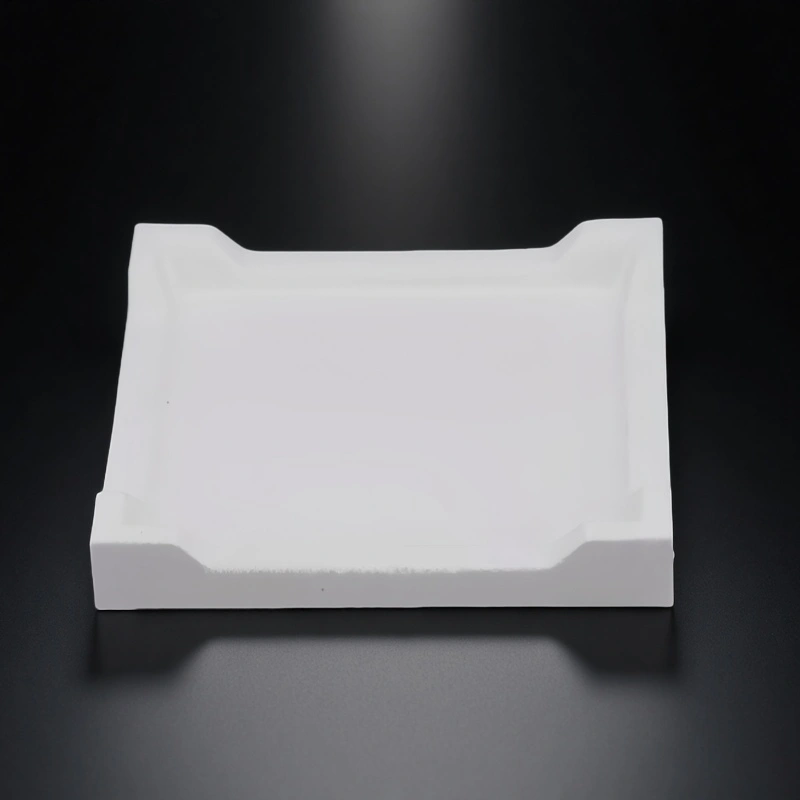
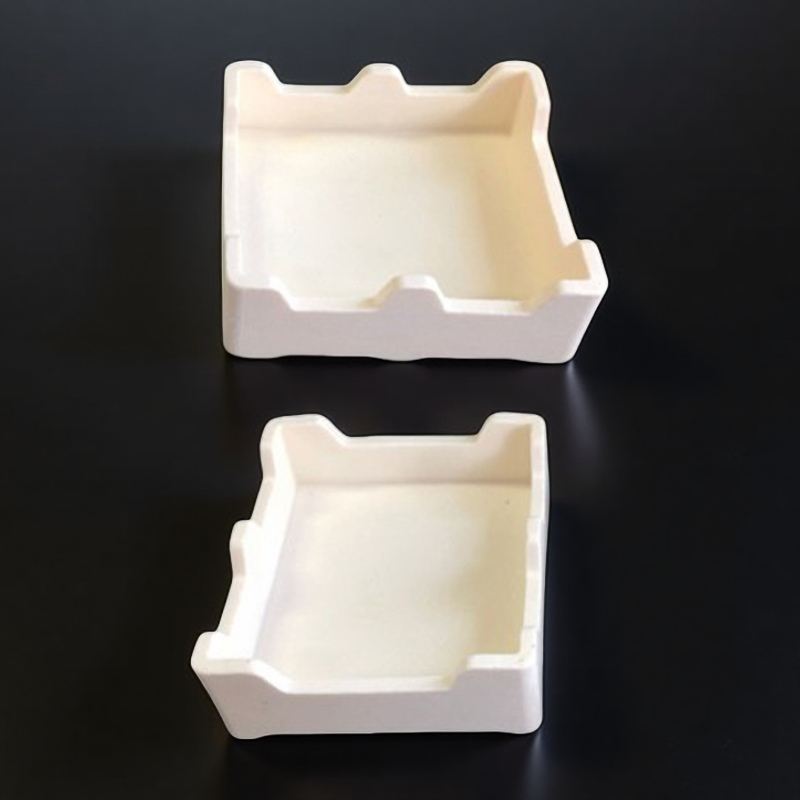
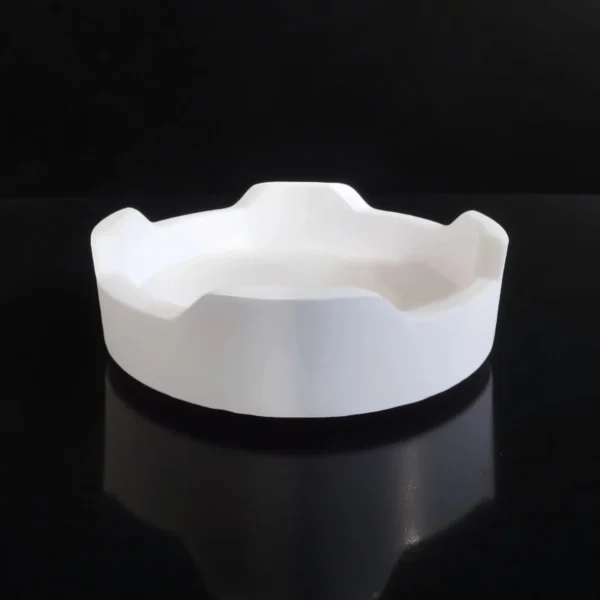
Stackable Alumina Saggar/Sagger, Multi-Cavity, Polished Surface for Electronic Ceramics

This alumina sagger portfolio combines dense Al₂O₃ bodies with configurable lids, vents, and stackable shoulders to deliver clean firing, consistent geometry, and scalable loading from sampling to mass production.

Catalogue No. AT-AS-205
Material Al₂O₃
Purity  88%-99.7%
Maximum Working Temperature 1600(96%)–1730°C(99.7%)
Dimensions/Sizes Download PDF
24H Standard Dispatch
Small Batch Support OEM
Factory Direct
Expert Engineering Support

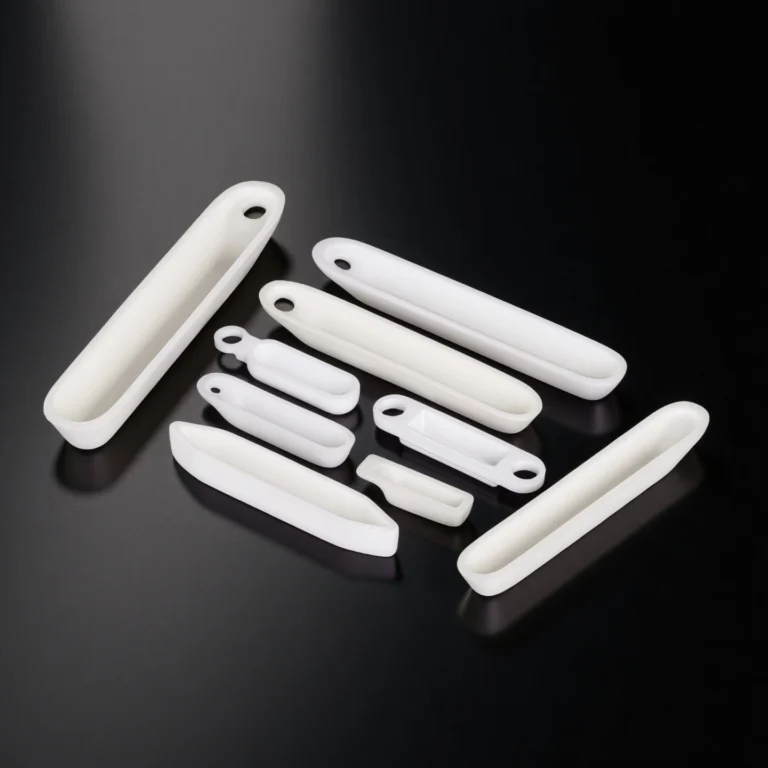
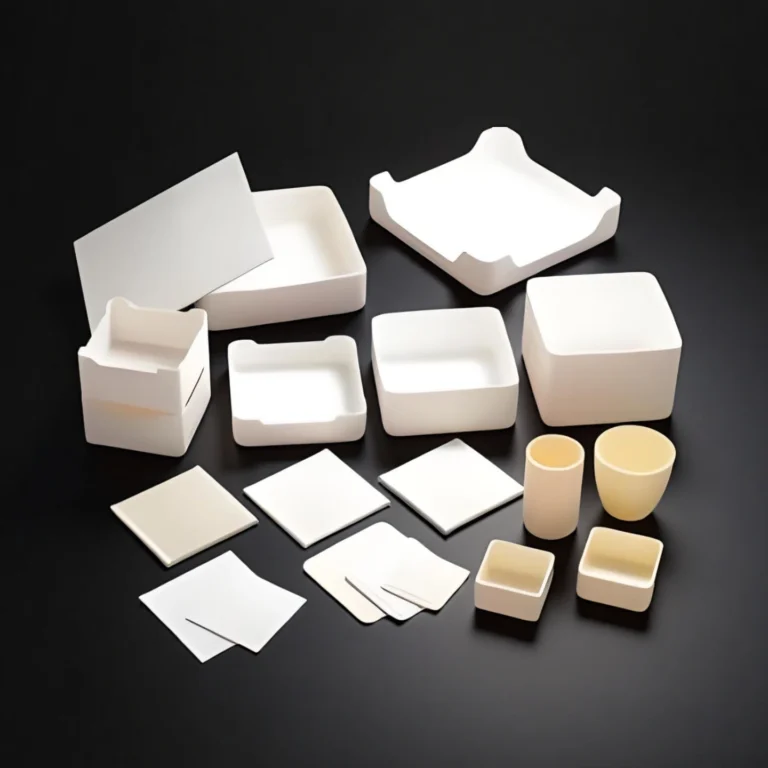
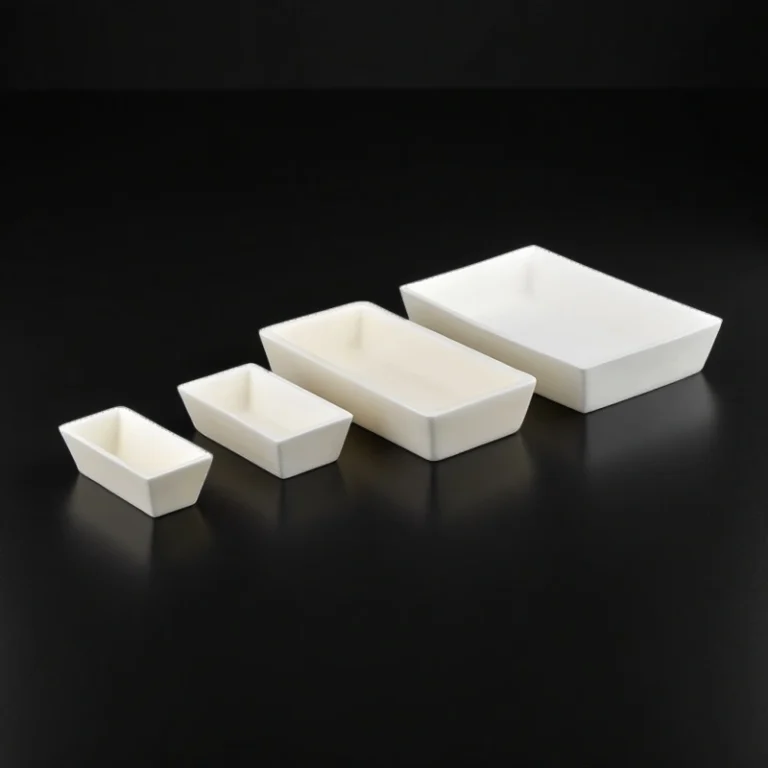
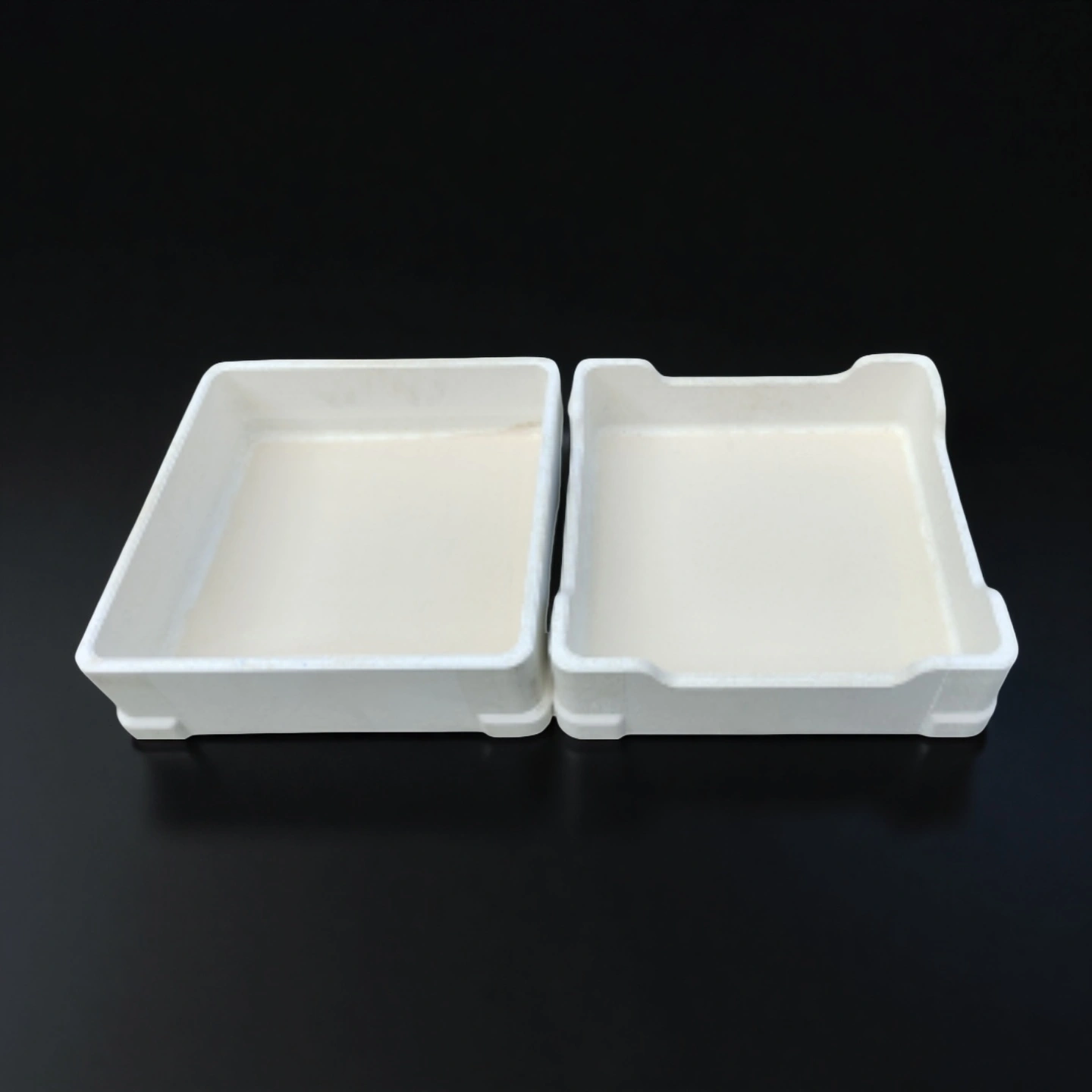
Alumina sagger (alumina saggar) is a refractory ceramic container—box, tray, or deep boat—made primarily from Al₂O₃ and used to hold powders, green parts, or substrates during high-temperature processing. Its purpose is to protect the load and the furnace, control the local atmosphere around the product, and minimize contamination or reaction during firing, calcination, debinding, or sintering.


Alumina Sagger Benefits

  • Clean firing: Dense alumina, low alkali content, and optional liners minimize cross-reaction and particle shedding.
  • Dimensional control: Flatness and warpage control improve stacking and packing density in continuous or batch kilns.
  • Atmosphere management: Lids, vents, and step-stacking help tune vapor transport and reduce re-deposition.
  • Cycle durability: Thickness and corner radii are engineered to endure repeated heat-up/cool-down cycles.
  • Throughput efficiency: Deep-tray and multi-cavity designs increase parts-per-load while keeping handling simple.

Alumina Saggar Properties

Property Unit 99.7% Al₂O₃ 99.5% Al₂O₃ 99% Al₂O₃ 96% Al₂O₃
Color   Ivory White Ivory White Ivory White Ivory White
Density g/cm³ 3.94 3.9 3.83 3.6-3.75
Water Absorption % 0 0 0 0
Hardness Mohs Hardness 9.1 9 9 8.8
Flexural Strength (20°C) Mpa 330 320 300 260
Compressive Strength (20°C) Mpa 2300 2300 2210 1910
Maximum Operating Temperature °C 1730 1700 1680 1450
Thermal Expansion Coefficient(25°C to 800°C) 10⁻⁶/°C 7.6 7.6 7.6 7.6
Thermal Conductivity (25°C) W/(m·K) 29 27 24 22
Dielectric Strength (5mm thickness) AC-kv/mm 22 21 19 15
Dielectric Loss at 25°C@1MHz --- < 0.0001 < 0.0001 0.0003 0.0004
Dielectric Constant at 25°C@1MHz --- 9.8 9.7 9.5 9.2
Volume Resistivity (20°C) Ω·cm³ >10¹⁴ >10¹⁴ >10¹⁴ >10¹⁴
Volume Resistivity (300°C) Ω·cm³ 2*10¹² 2*10¹² 4*10¹¹ 2*10¹¹


Alumina Saggar Specifications

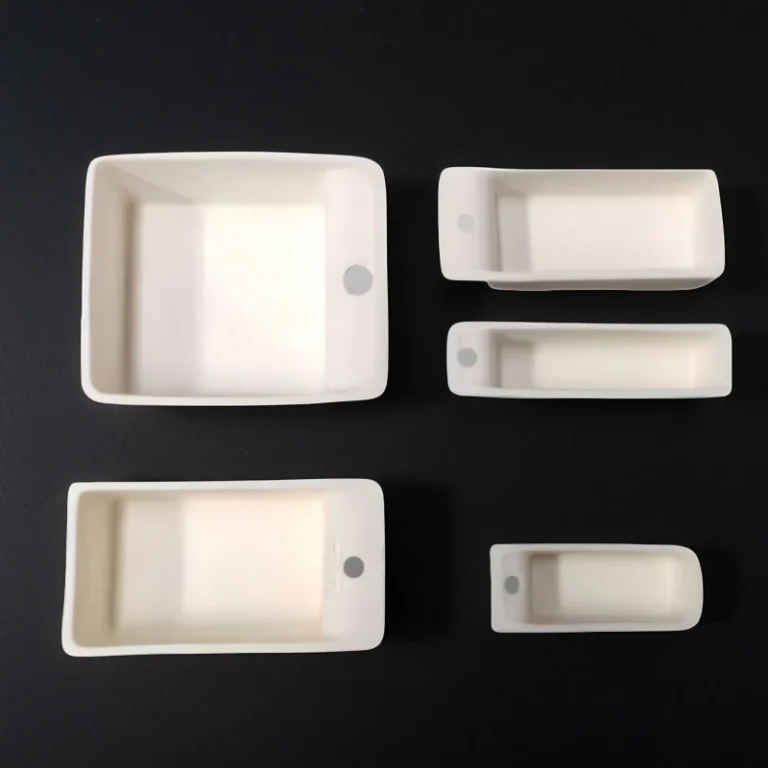
Type 1-Rectangular Alumina Saggar
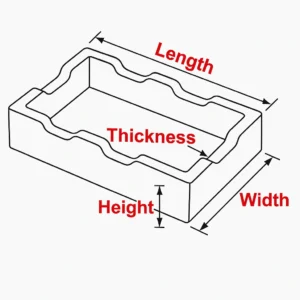
size for tray

Item NO. Volume Length (mm) Width (mm) Height (mm) Thickness (mm)
TE-AS-205 64 100 100 13 5
TE-AS-206 80 100 100 15 5
TE-AS-207 120 100 100 20 5
TE-AS-208 64 100 81 28 5
TE-AS-209 22 100 100 15 6
TE-AS-210 60 115 60 9 6
TE-AS-211 58 115 60 7 6
TE-AS-212 297 120 120 40 6.5
TE-AS-213 161 127 127 21 5
TE-AS-214 270 128 128 25 5
TE-AS-215 355 135 135 35 9
TE-AS-216 575 145 145 55 11
TE-AS-217 49 150 150 18 10
TE-AS-218 300 155 155 28 10
TE-AS-219 350 200 105 30 10
TE-AS-220 1634 220 180 80 14
TE-AS-221 1400 230 230 45 12
TE-AS-222 1752 230 300 50 12
TE-AS-223 1080 230 165 60 12
TE-AS-224 1467 248 155 62 13
TE-AS-225 3000 250 250 100 10
TE-AS-226 1137 295 195 55 10
TE-AS-227 2565 315 158 83 13
TE-AS-228 4100 320 320 60 10
TE-AS-229 6000 320 320 75 10
TE-AS-230 6500 320 320 85 10
TE-AS-231 8900 320 320 110 10
TE-AS-232 7500 320 320 110 14
TE-AS-233 3900 320 320 60 14
TE-AS-234 5000 320 320 75 15
TE-AS-235 5000 320 320 80 15
TE-AS-236 6000 320 320 85.5 14
TE-AS-237 7000 320 320 100 15
TE-AS-238 5186 320 320 85 15
TE-AS-239 10000 330 330 120 13
TE-AS-240 10700 330 330 130 13
TE-AS-241 7900 330 330 100 12.5
TE-AS-242 8000 330 330 100 13
TE-AS-243 8200 330 330 100 12
TE-AS-244 50 63 57 30 6
TE-AS-245 56 100 100 12 5
TE-AS-246 507 150 150 50 10
TE-AS-247 100 160 160 15 8.5
TE-AS-248 350 200 100 30 8.5
TE-AS-249 6900 210 210 200 10
TE-AS-250 4000 220 220 120 10
TE-AS-251 2500 225 161 104 11
TE-AS-252 8000 285 285 160 12.5
TE-AS-253 7600 300 300 110 10
TE-AS-254 11000 300 300 200 10
TE-AS-255 7000 300 300 100 10
TE-AS-256 6000 300 300 175 12
TE-AS-257 5400 300 300 110 12
TE-AS-258 8000 300 300 150 12.5
TE-AS-259 3000 320 320 48 10
TE-AS-260 2800 320 320 48 14
TE-AS-261 12000 330 330 150 10


Type 2- Round Alumina Saggar

size for round tray

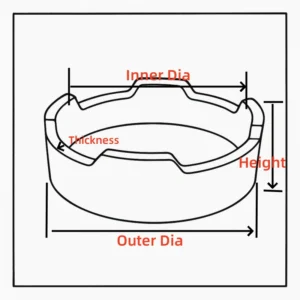
Item Capacity(ml) Outer Diameter(mm) Inner Diameter(mm) Height(mm) Purity (%)
AT-AC-182 152 63 51 30 80-99%
AT-AC-183 51  70  60  24  80-99%
AT-AC-184 127  50  40  106  80-99%
AT-AC-185 142  50  40  118  80-99%
AT-AC-186 169 100 87 35 80-99%
AT-AC-187 210  78  57  89  80-99%
AT-AC-188 215  69  50  118  80-99%
AT-AC-189 243  73  50  135  80-99%
AT-AC-190 362  80  59  143  80-99%
AT-AC-191 373  70  50  200  80-99%
AT-AC-192 459  85  75  109  80-99%
AT-AC-193 566  86  69  160  80-99%
AT-AC-194 583  87  69  165  80-99%
AT-AC-195 610  107  82  128  80-99%
AT-AC-196 1206 180 160 70 80-99%
AT-AC-197 2155 200 170 110 80-99%
AT-AC-198 3188 305 285 60 80-99%
AT-AC-199 6330 260 240 150 80-99%

*Note: The table above shows only some standard specifications. For more specifications, please refer to the complete product catalogue or contact us for customization.


Alumina Saggar Packaging

  • Protective packing: edge-guard plus foam separation; layered cartons with corner blocks for stackable saggar
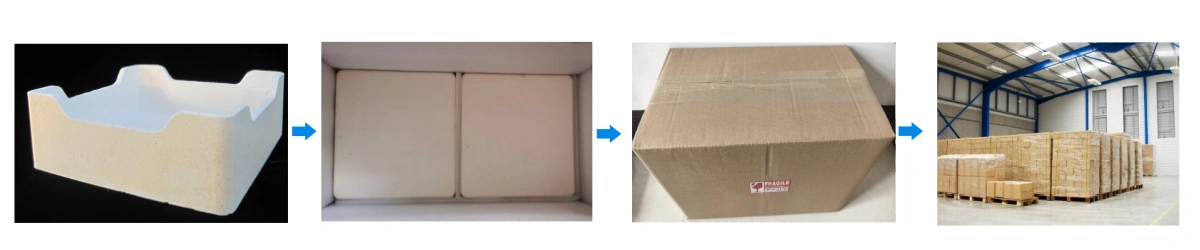

Alumina Saggar Packaging


Alumina Saggars Applications

  • Cathode Powder Calcination (Battery Materials)

    ✅ Key Advantages

    1. Reduced cross-contamination: dense alumina body and optional liner limit alkali interactions and particle fall-back.
    2. Stable stacking: controlled flatness/warpage maintains even bed depth and consistent heating profiles.
    3. Cycle endurance: optimized wall thickness and fillets support repeated ramp/soak cycles at 1,600 °C class.️

    ✅ Problem Solved

    During a cathode powder scale-up, switching to deep-box alumina sagger with lids and Ø4 mm vents stabilized bed uniformity; loading density increased by ~12% while defect-related rework fell noticeably. The thicker corner radii cut corner chipping events across ~800–1,000 thermal cycles per set, improving maintenance intervals and furnace uptime.

  • MIM/CIM Debinding–Sinter (Powder Metallurgy)

    ✅ Key Advantages

    1. Low residue risk: chemically inert surface helps avoid carbon pickup and shape drift.
    2. Vent control: designed venting patterns guide binder removal and reduce blistering.
    3. Dimensional consistency: flatness and cavity separation support uniform shrinkage.

    ✅ Problem Solved

    With vented alumina saggers, binder removal became more uniform; out-of-spec warpage complaints dropped after aligning vent area with part geometry. Trials showed a measurable reduction in scrap during the first production month and faster stabilization of the sintering recipe.

  • Electronic Ceramic Substrates

    ✅ Key Advantages

    1. Low particle shedding: polished or fine-ground surfaces minimize surface defects.
    2. Planarity: tight flatness and low warpage help control bow/tilt of thin sheets.
    3. Repeatability: batch-to-batch dimension control supports predictable stacking density.

    ✅ Problem Solved

    Adopting polished contact surfaces and stackable shoulders improved sheet planarity and simplified line-side handling. The production line reported steadier first-pass yield during quarterly audits, with fewer corrective cleans between cycles.

Alumina Sagger Usage Instructions

  • Before first use

    1. Inspect lids, stack interfaces, and contact surfaces for chips or cracks.
    2. Wipe all surfaces with a lint-free cloth to remove packing dust.
    3. Pre-dry in a kiln or oven at 120–150 °C for 2–4 hours to drive off absorbed moisture; this prevents spalling during the first heat-up.

  • Loading

    1. Distribute weight evenly across the base; avoid point loads from sharp-edged parts.
    2. Align vents/lids with gas flow direction according to the process recipe.
    3. Do not overload trays; keep recommended fill depth (typically ≤70% of saggar height) to ensure binder removal and gas circulation.

  • Cycle settings

    1. Follow controlled heating/cooling ramp rates; sudden temperature changes increase thermal stress.
    2. Keep soak times and maximum temperatures within the grade’s specification (e.g., ≤1,650–1,700 °C for 99% alumina).
    3. Record cycle count per batch; rotate stock so older saggers are used consistently to prevent uneven ageing.

  • Cleaning

    1. Cool saggers to room temperature naturally before stacking.
    2. Use spacers or pads between layers to prevent surface-to-surface abrasion.
    3. Mark each batch with FIFO (first-in, first-out) labels, including cycle count, to help monitor expected lifetime.
    4. Store in a dry, dust-controlled area to prevent contamination.

  • Common misuse (to avoid)

    1. Over-tight stacking that restricts binder vapour or gas flow, leading to blistering.
    2. Exceeding the design temperature or holding too long at maximum soak.
    3. Subjecting saggers to harsh quenching or thermal shock (e.g., opening furnace door prematurely).
    4. Dropping or striking saggers, especially corners and edges that are stress concentrators.

Alumina Sagger FAQ

  1. Q: Which alumina grade should I choose?
    A: Use 99% for general cleanliness and durability; choose 99.5–99.7% or low-sodium options when powders are sensitive to alkalis or require tighter contamination control.
  2. Q: How do I size wall thickness and depth?
    A: Balance thermal cycle life (thicker walls, larger radii) with weight and loading density. Share cycle profile, target life, and furnace type to optimize thickness.
  3. Q: Do I need a lid or vents?
    A: Lids reduce particle fall-back and modulate vapour exchange; vent holes (e.g., Ø3–6 mm) support debinding or gas flow. Your recipe determines the combination.
  4. Q: What is the maximum continuous temperature for alumina saggar?
    A: Typical continuous service is 1,600–1,700 °C, depending on grade, wall thickness, and atmosphere.
  5. Q: How many cycles for alumina sagger?
    A: Service life depends on cycle severity and handling. Engineering teams often plan for hundreds of cycles per set; share your target to model TCO.
  6. Q: Can you provide anti-sticking or liners for the alumina sagger?
    A: Yes. Options include polished surfaces, coated contact areas, or removable liners to reduce residue and simplify cleaning.

What Our Customers Say about Alumina Saggars

  • ⭐️⭐️⭐️⭐️⭐️
    “Drawing-based alumina sagger with lids improved bed uniformity; the first-pass yield stabilized across weekly runs.”
    — Process Engineer, Battery Materials
  • ⭐️⭐️⭐️⭐️⭐️
    “Stackable deep alumina saggers increased parts per load without extra fixtures; cycle life met our quarterly target.”
    — Production Manager, MIM Components
  • ⭐️⭐️⭐️⭐️⭐️
    “Polished contact surfaces reduced particle marks on thin ceramic alumina saggar; line changeovers became quicker.”
    — Quality Lead, Electronic Ceramics
  • ⭐️⭐️⭐️⭐️⭐️
    “Alumina sagger customize vent pattern matched our debinding profile; scrap from blistering was significantly lower than the prior setup.”
    — R&D Engineer, Speciality Ceramics
customize size

Customize Alumina Saggar

What You Can Specify:

  • Outer / inner dimensions & tolerances: length × width × depth; wall thickness; flatness/warpage targets
  • Depth & thickness options: optimize for cycle life vs. weight/throughput
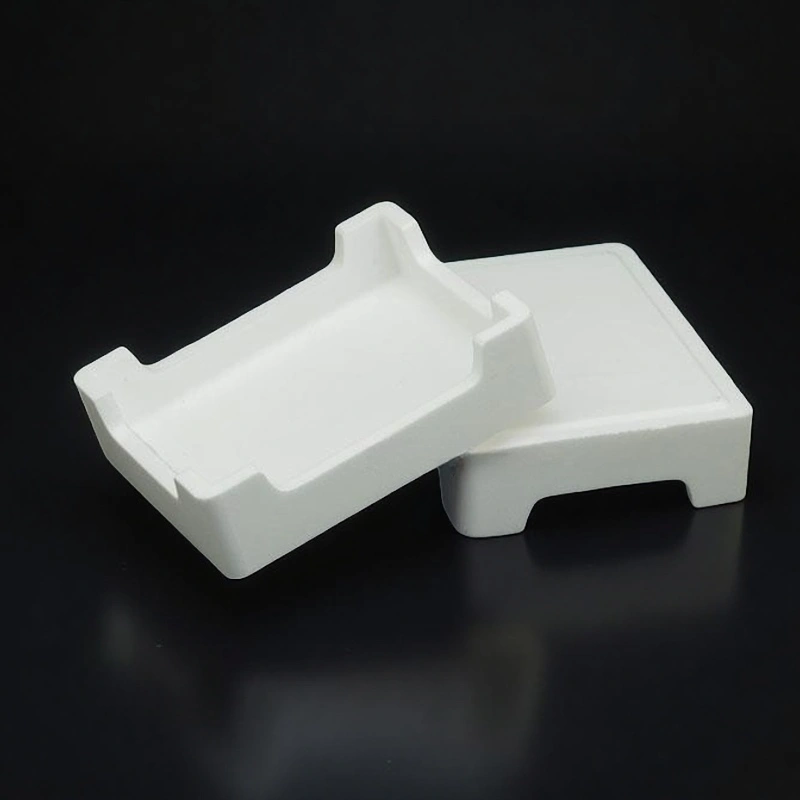
  • End/lid details: open, lidded, windowed, vented (hole Ø & pattern), step-stackable shoulders
  • Cross-section geometry: square, rectangular, multi-cavity, grid floors
  • Surface finish: raw, fine-ground, polished; anti-sticking coatings or liners when required
  • Material grade: 96%, 99%, 99.5–99.7% alumina

Related Products

ADCERAX - Your Trusted Advanced Ceramics Manufacturing Partner

Direct factory manufacturing with comprehensive ceramic materials expertise and global supply capabilities

Direct Factory Manufacturing

China-based ceramic materials production facility with state-of-the-art equipment

Engineering Team

Experienced professionals in advanced ceramics applications and custom design

Quality Control

Strict quality control standards for technical ceramics manufacturing and quality management

Global Supply Chain

Serving customers worldwide with technical ceramics and rapid response

24/7 Technical Support

Round-the-clock support for ceramic components inquiries and technical assistance

500+ Satisfied Customers

Trusted by global customers for advanced ceramic materials and precision components

Get in touch with us

Our team will be happy to respond to you in less than 24 hours.

Adcerax's factory

Quick Quotation

*Our team will answer your inquiries within 24 hours.

*Your information will be kept strictly confidential.

Ready to Solve Your Engineering Challenge?

Partner with ADCERAX for reliable, high-performance advanced ceramic solutions. Our engineers are ready to discuss your project.

E-mail

info@adcerax.com

Phone

+(86) 0731-74427743 | WhatsApp: +(86) 19311583352

Response Time

Within 24 hours

Quick Quote

The more details you provide, the faster we can quote.

*We respond within 24 hours. All inquiries are confidential.

Download Catalog

Get Your Custom Sulution

The more details you provide, the faster we can respond.

customize size

*We respond within 24 hours. All inquiries are confidential.

Download Catalog