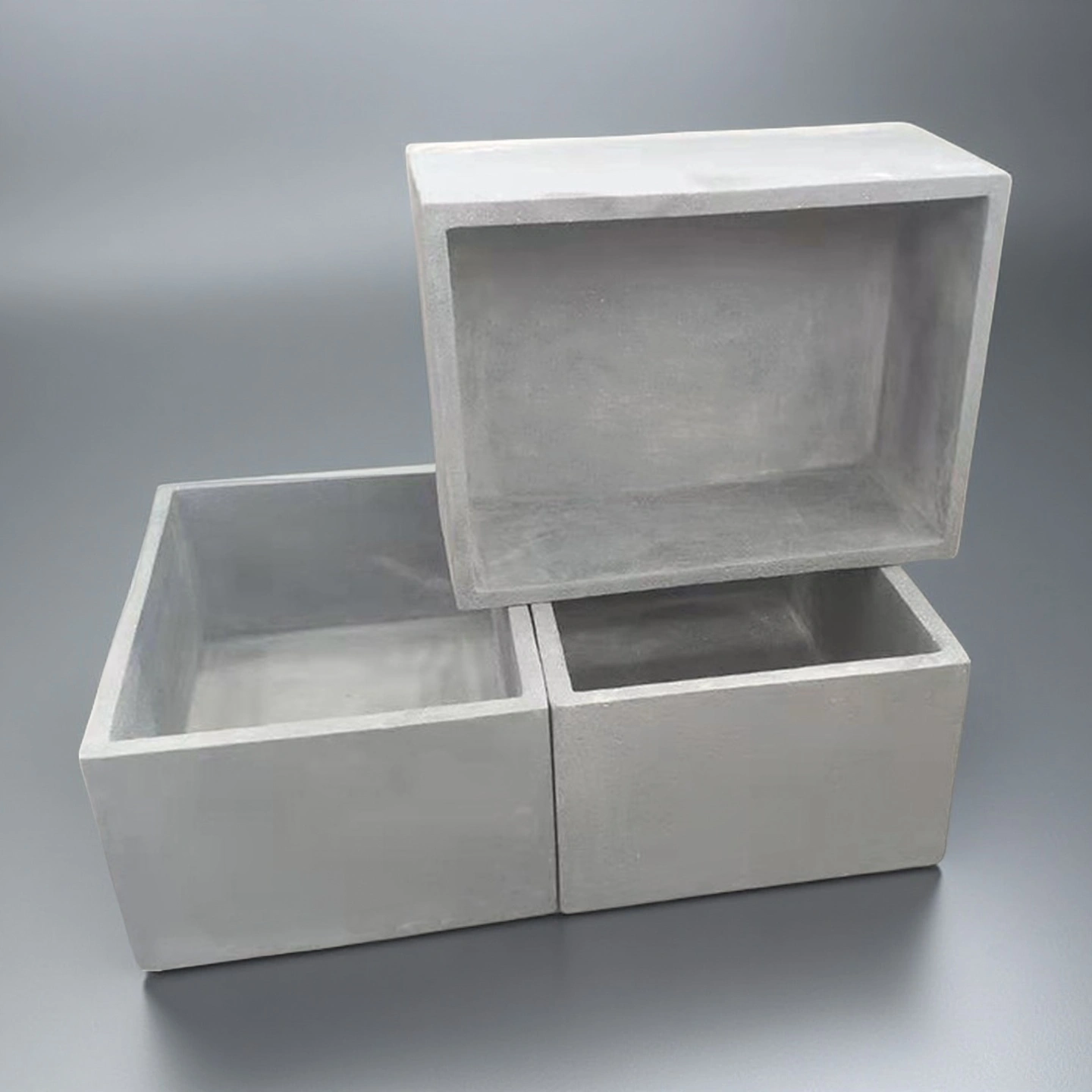
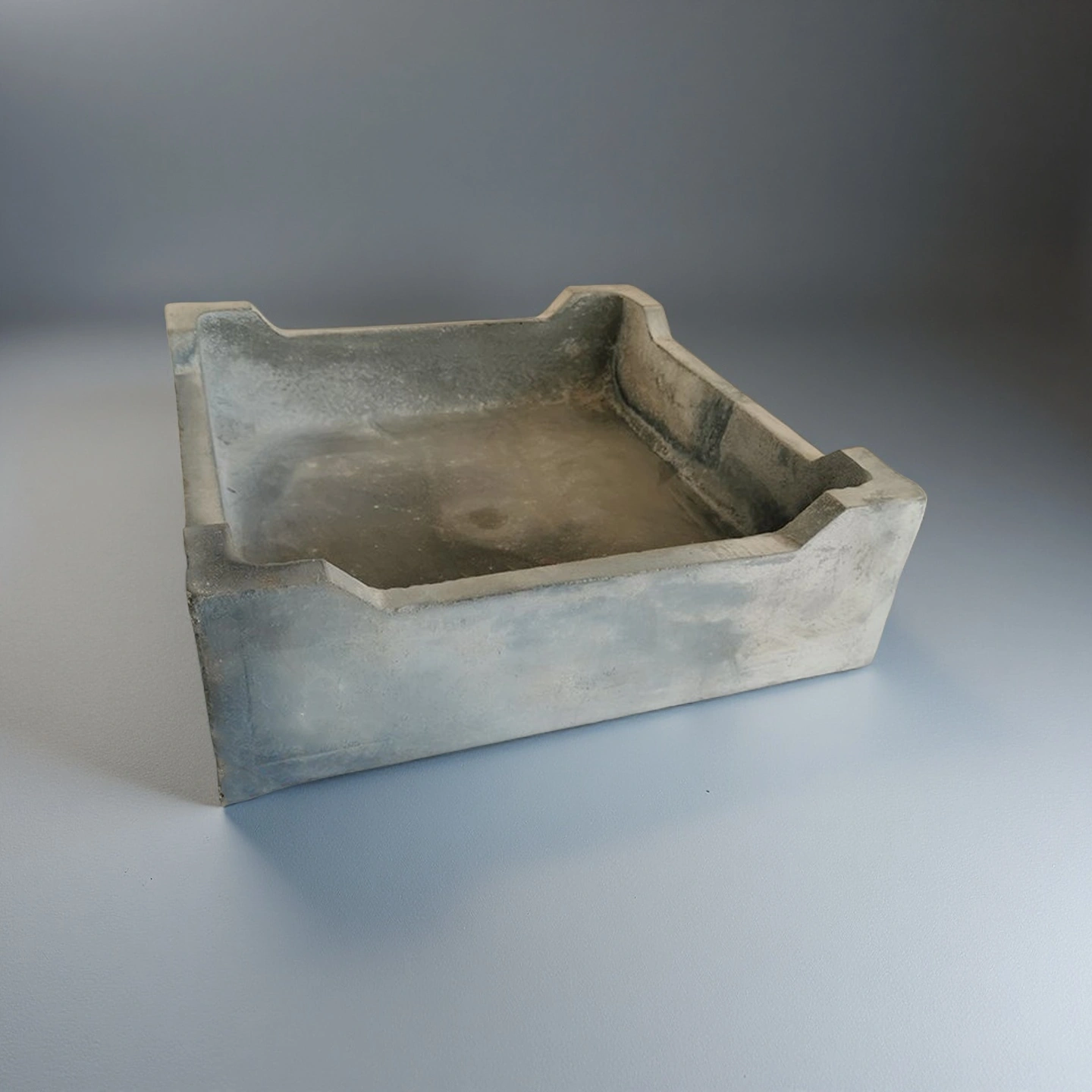
What is a Square Nitride Bonded Silicon Carbide Crucible?
A Square NBSiC Crucible is a nitride bonded silicon carbide ceramic container used in high-temperature furnaces for material processing, powder calcination, ceramic sintering and controlled thermal reactions.
The material combines silicon carbide with a silicon nitride bonding phase, giving the crucible strong resistance to thermal shock, high-temperature deformation and chemical attack in many industrial furnace environments. The square shape is useful when engineers need better space utilization, stable stacking layout or repeatable batch positioning inside box furnaces, chamber furnaces or custom thermal equipment.
Key Benefits of Square Nitride Bonded Silicon Carbide Crucible
Square NBSiC crucibles are selected when the furnace workflow requires more than basic heat resistance. The design helps engineering teams manage loading density, thermal cycling and dimensional stability during repeated high-temperature use.
The square geometry allows multiple crucibles to be arranged more efficiently inside flat-bottom furnace chambers. This can improve usable furnace space without forcing operators to change the process layout. The NBSiC material system also supports repeated heating and cooling cycles better than many traditional refractory containers, especially when thermal shock resistance and structural rigidity are important.
For applications involving powder treatment, sintering or alloy testing, the crucible helps maintain a controlled thermal environment around the processed material. This supports more consistent batch handling and reduces the risk of process variation caused by unstable vessel geometry.
Technical Specifications of Square Nitride Bonded Silicon Carbide Crucible
The technical parameters below help engineers evaluate whether a square NBSiC crucible is suitable for furnace processing, powder treatment, sintering or alloy testing. Actual use should be reviewed according to working temperature, furnace atmosphere, loading method and material contact conditions.
| Parameter |
Current Page Value |
Why It Matters for Furnace Processing |
| Material System |
Silicon Carbide (SiC) with Silicon Nitride (Si₃N₄) Bonding |
This structure supports thermal shock resistance, high-temperature strength and stable performance during repeated furnace cycles. |
| Maximum Operating Temperature |
Up to 1600°C, depending on atmosphere and loading conditions |
This range supports sintering, calcination and high-temperature material processing. The actual limit should be reviewed based on furnace atmosphere and processed material. |
| Flexural Strength |
>250 MPa at room temperature |
Higher flexural strength helps the crucible resist cracking or deformation during handling, loading and thermal cycling. |
| Thermal Expansion Coefficient |
4.5 × 10⁻⁶ /°C |
Controlled thermal expansion helps reduce dimensional movement during repeated heating and cooling. |
| Open Porosity |
<2% |
Low porosity helps reduce material infiltration and surface degradation during high-temperature processing. |
| Hardness |
9.5 Mohs |
High hardness improves wear resistance during powder loading, unloading and contact with solid materials. |
| Shape |
Square, with rectangular customization available |
The square shape supports better furnace space utilization and more predictable batch placement in flat-bottom furnace chambers. |
| Custom Design Options |
Length, width, height, wall thickness and bottom geometry can be reviewed by drawing. |
Custom sizing helps the crucible match chamber size, loading volume, support furniture and material handling method. |
Dimensions of Square Nitride Bonded Silicon Carbide Crucible
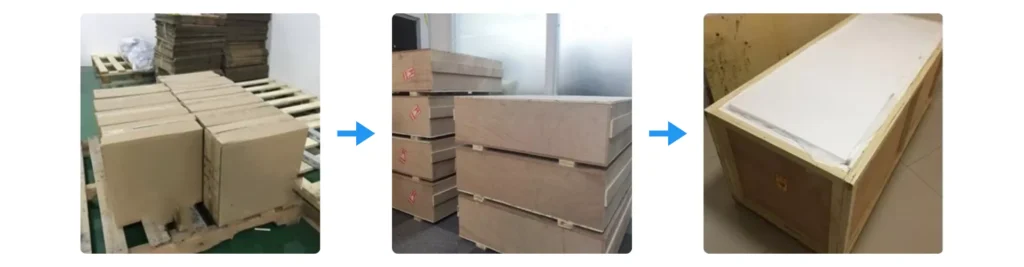
Packaging of Square Nitride Bonded Silicon Carbide Crucible
Square NBSiC crucibles are packed with protective cushioning and reinforced outer packaging to reduce impact risk during international transport. Ceramic corners, edges and thin-wall areas are protected carefully before shipment.
For fragile or custom-sized crucibles, ADCERAX can review packaging details according to part size, quantity and shipping method.
Where Square NBSiC Crucibles Are Used
The Square Nitride Bonded Silicon Carbide Crucible by ADCERAX is designed for high-temperature furnace processes where thermal shock resistance, stable geometry and efficient chamber loading are important. Its square shape helps users arrange more crucibles in flat-bottom furnaces, while the NBSiC material structure supports demanding heating cycles, powder treatment and material reaction workflows.
-
Metal Melting and Alloy Testing — Stable Loading for High-Temperature Evaluation
Square NBSiC crucibles are suitable for selected metal melting, alloy testing and non-ferrous material evaluation where the crucible must maintain shape under high-temperature exposure. The square design helps improve furnace space utilization, especially when multiple samples or batches need to be processed in one heating cycle.
For alloy development and material testing, stable crucible geometry is important because uneven heating, vessel deformation or poor furnace placement can affect test repeatability. The NBSiC structure provides thermal shock resistance and mechanical strength, making it useful for processes that involve repeated loading, heating and cooling.
Before use with molten metals, material compatibility should be reviewed based on the alloy type, furnace atmosphere, holding time and reaction risk between the molten material and crucible surface.
-
Ceramic Sintering and Powder Metallurgy — Controlled Heat Treatment for Material Consolidation
In ceramic sintering and powder metallurgy, square NBSiC crucibles help hold powders, granules, pressed parts or ceramic materials during high-temperature consolidation. Their stable structure supports more controlled furnace loading and helps reduce problems caused by uneven container geometry.
The square shape is useful when engineers need organized batch placement inside box furnaces or chamber furnaces. Compared with randomly arranged round containers, square crucibles can help create a more predictable loading layout, which is valuable for repeat production, laboratory trials and pilot-scale material processing.
For powder-based processes, the crucible design should be selected according to loading depth, material reactivity, required wall thickness, thermal cycle and whether the processed material may stick to or react with the ceramic surface.
-
Calcination and High-Temperature Reactions — Reliable Containment for Thermal Processing
Square NBSiC crucibles are also used in calcination, catalyst preparation and high-temperature reaction processes where materials need controlled exposure to heat. The crucible helps contain powders or reaction materials while maintaining mechanical integrity during elevated-temperature treatment.
This application is common when users need stable ceramic containers for oxide powders, catalyst carriers, ceramic precursors or other materials that require thermal processing. The NBSiC material system helps resist thermal shock and supports repeated furnace cycles, making it suitable for workflows where process stability matters more than one-time use.
For high-temperature reactions, the working atmosphere, chemical additives and possible vapor or residue formation should be reviewed before selecting the crucible material and geometry.
-
Furnace Batch Processing — Efficient Chamber Use and Repeatable Placement
The square crucible format is especially useful when furnace space is limited. Its flat-sided design allows multiple crucibles to be arranged more efficiently, helping users improve usable chamber space without changing the basic furnace setup.
For production teams, this can support more organized batch handling, easier loading plans and better repeatability between furnace cycles. For laboratories and R&D users, square NBSiC crucibles can help keep sample placement consistent when comparing different materials or firing conditions.
ADCERAX can review custom length, width, height, wall thickness, bottom geometry and corner design according to the customer’s furnace chamber size, loading method and material contact conditions.
User Guide for Square NBSiC Crucibles by ADCERAX
Square NBSiC Crucibles should be inspected, loaded, heated, cooled and cleaned with proper care to reduce handling damage and support stable furnace operation. This guide applies to sintering, calcination, powder processing, alloy testing and other high-temperature workflows.
-
Inspection Before Use
1. Check for damage: Inspect the surface, bottom, edges and corners. Do not use the crucible if cracks, chips or impact marks are found.
2. Confirm cleanliness: Remove dust, oil, residue or previous process contamination before loading materials.
3. Verify fit: Make sure the crucible matches the furnace chamber, support furniture and loading method.
4. Review compatibility: Check material compatibility if the crucible contacts molten metal, reactive powder or chemical additives.
-
Loading and Furnace Operation
1. Avoid overloading: Excessive loading may increase stress on the bottom and side walls.
2. Distribute materials evenly: Uneven loading may cause localized stress during heating.
3. Use controlled heating: Increase temperature gradually according to the furnace program and processed material.
4. Check atmosphere conditions: Suitable use depends on atmosphere, holding time, material contact and process conditions.
-
Cooling and Handling After Use
1. Allow controlled cooling: Let the crucible cool under suitable furnace conditions before removal.
2. Protect corners and edges: Avoid impact during loading, unloading and transport.
3. Use suitable tools: Use clean, low-impact handling tools where possible.
4. Avoid forced removal: If material adheres after firing, review the residue and cleaning method before applying force.
-
Cleaning and Storage
1. Clean gently: Remove loose powder or residue only after the crucible has fully cooled.
2. Avoid abrasive methods: Do not use aggressive grinding, scraping or impact cleaning unless approved.
3. Store properly: Keep the crucible in a dry, clean area away from moisture, dust and chemicals.
4. Separate by process: Keep crucibles used for different materials separated to reduce cross-contamination risk.
-
Practical Use Notes
For repeated furnace cycles, keep heating rate, cooling method, loading depth and material contact conditions as consistent as possible. If cracks, surface reaction, heavy residue bonding or dimensional change appears, review the process conditions before the next use.