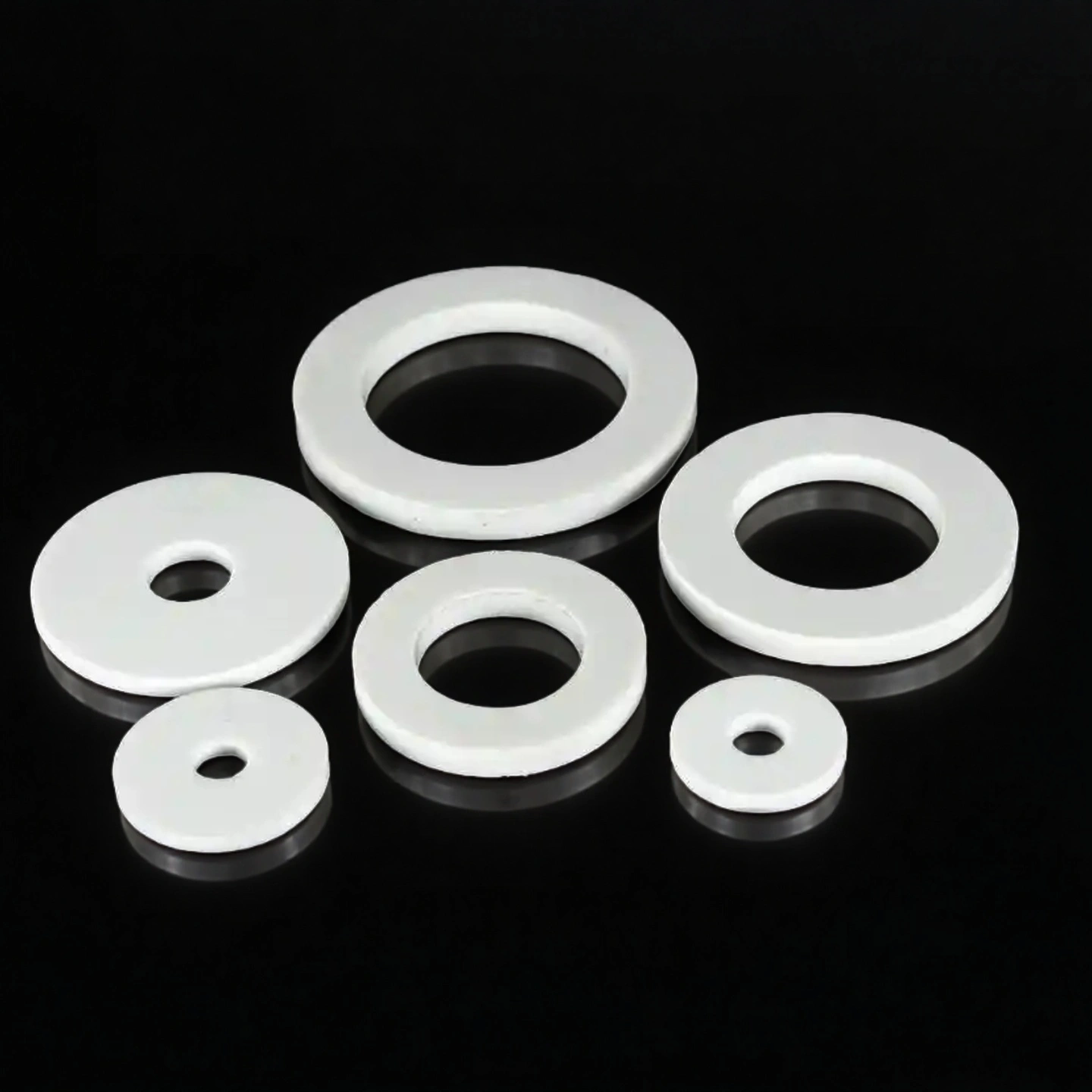
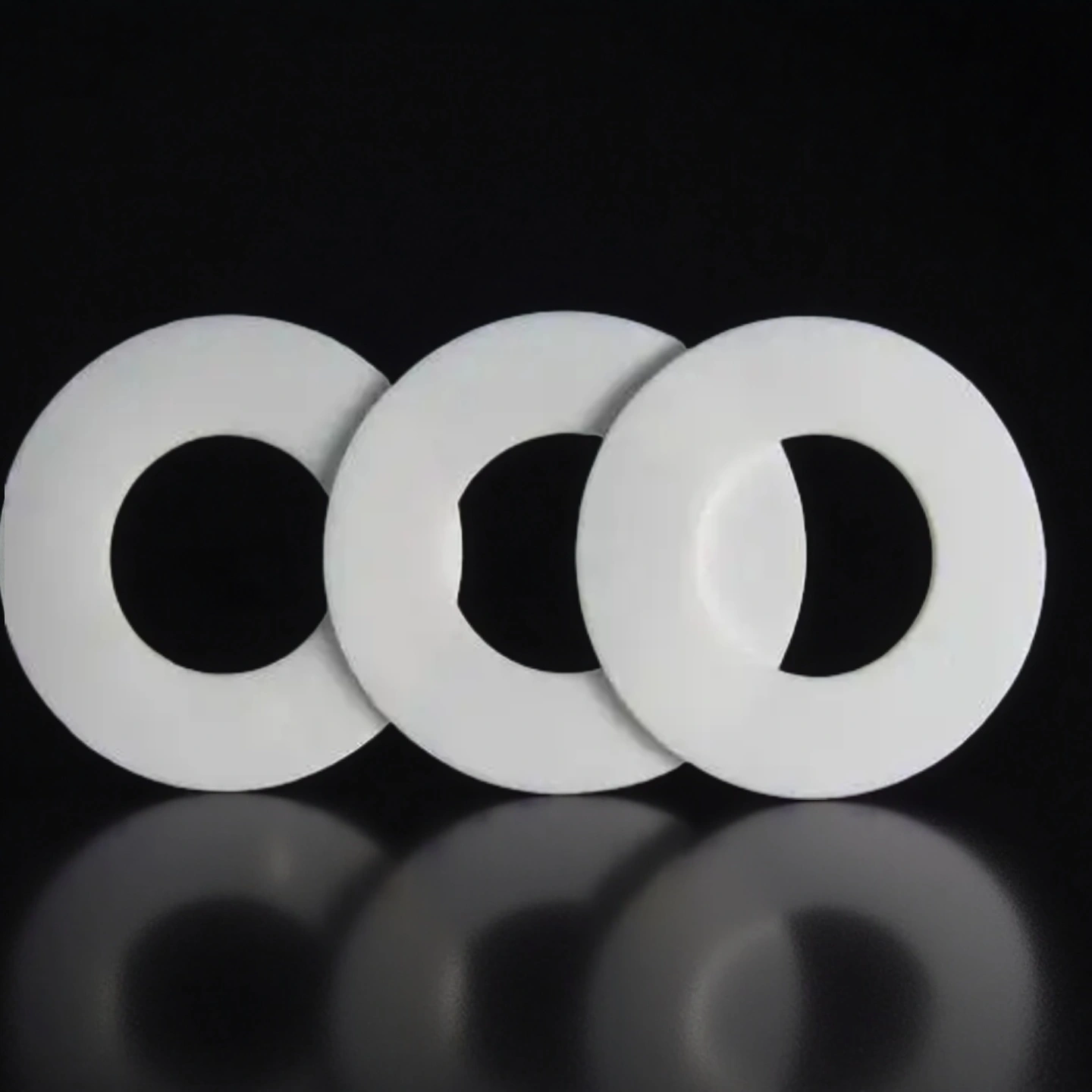
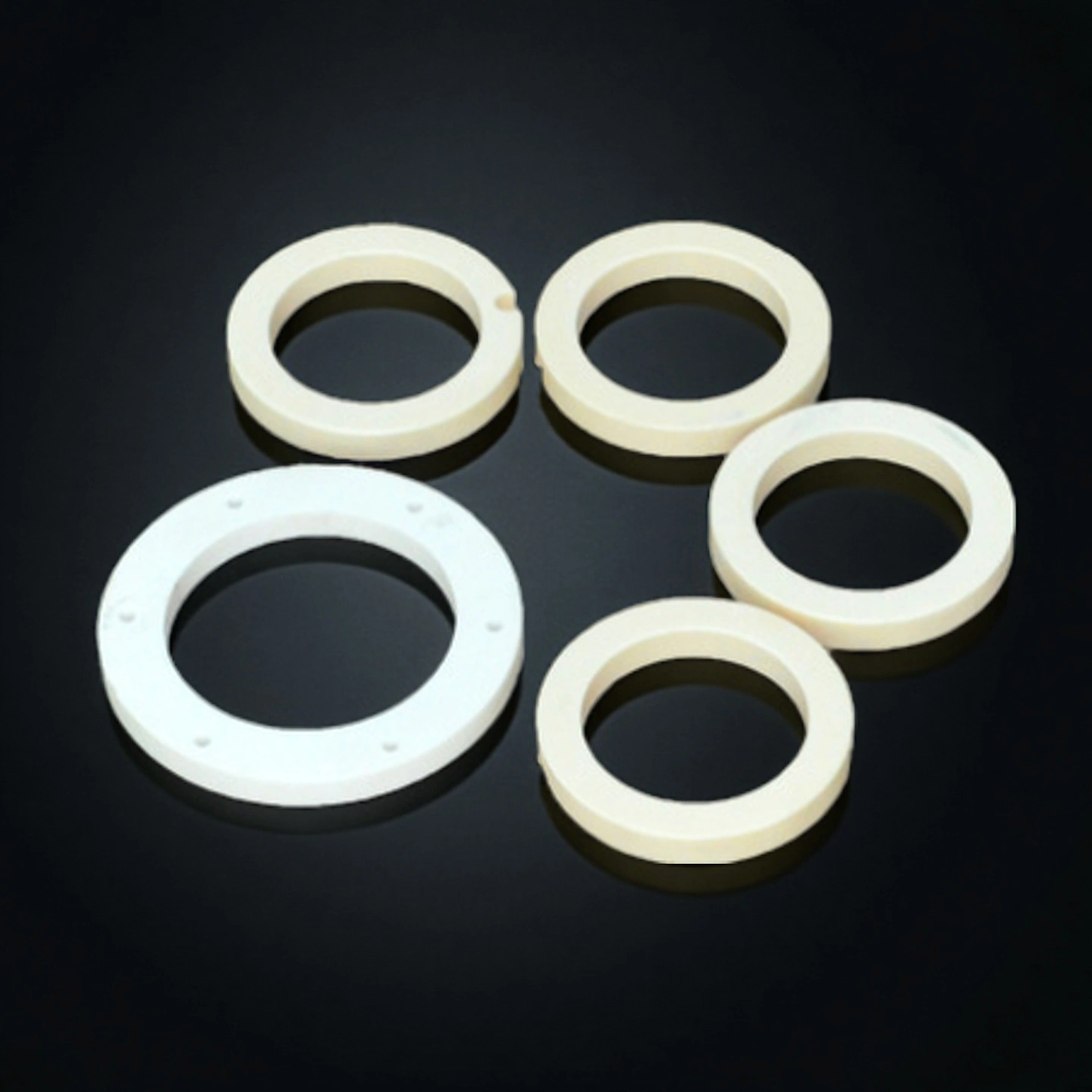
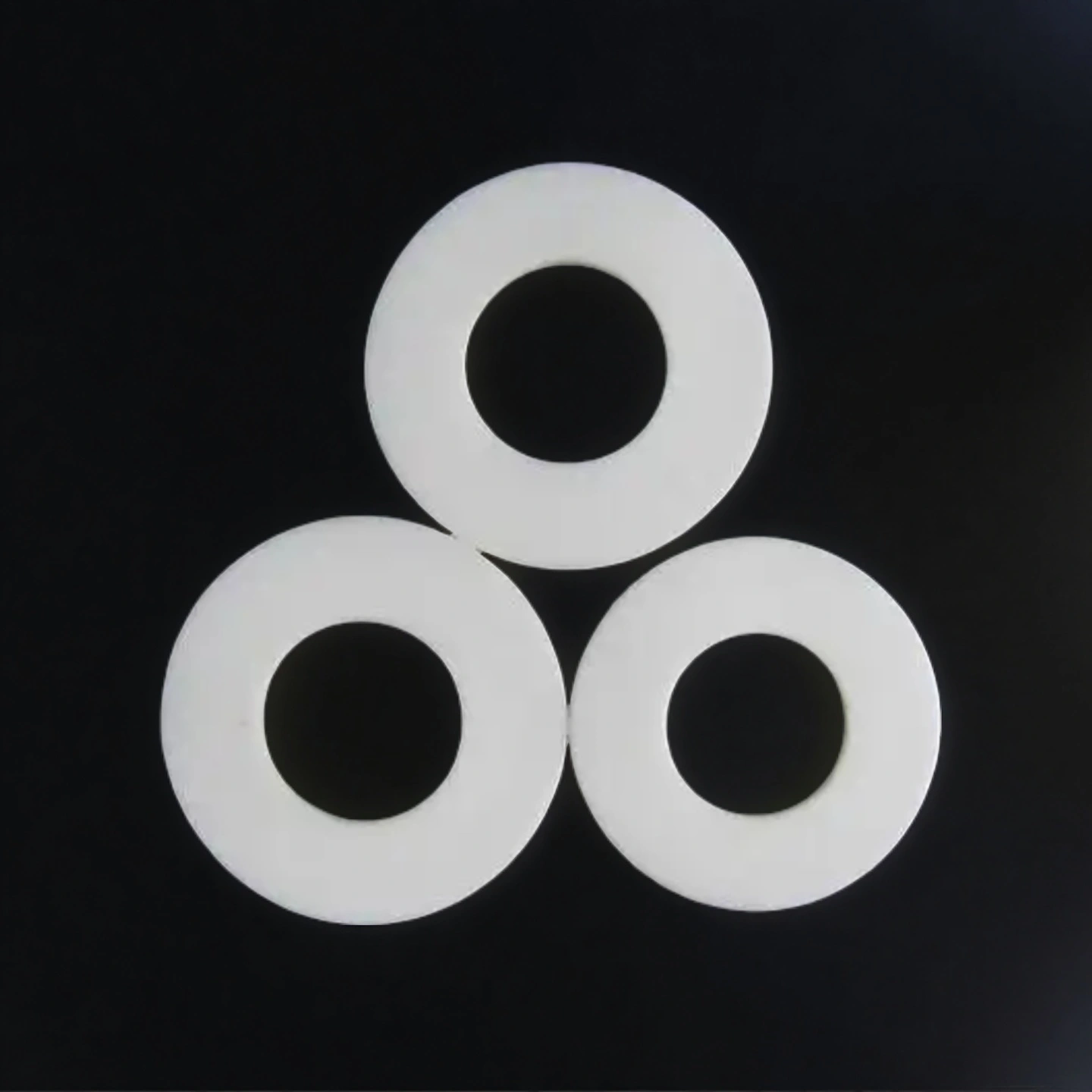
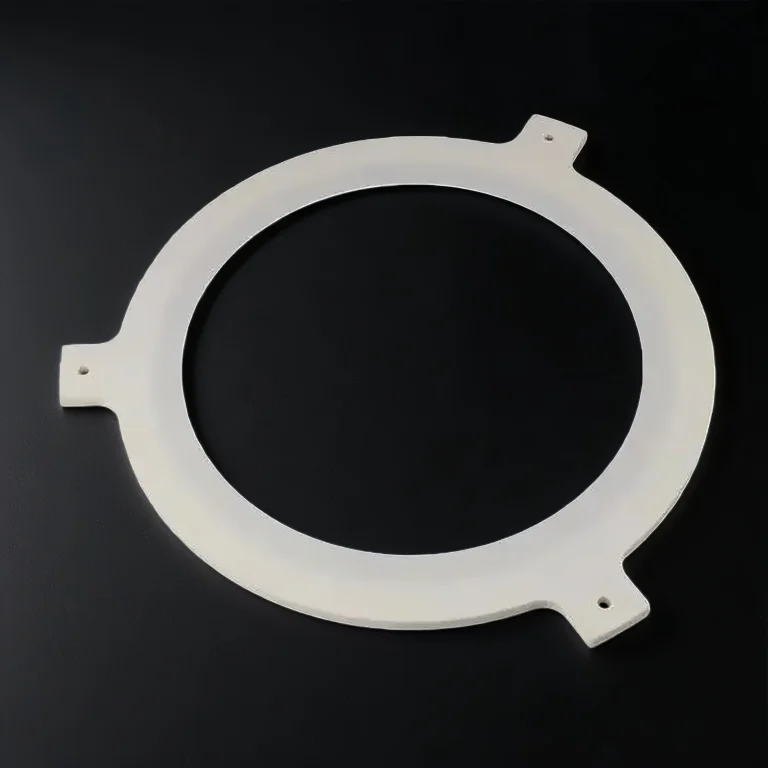
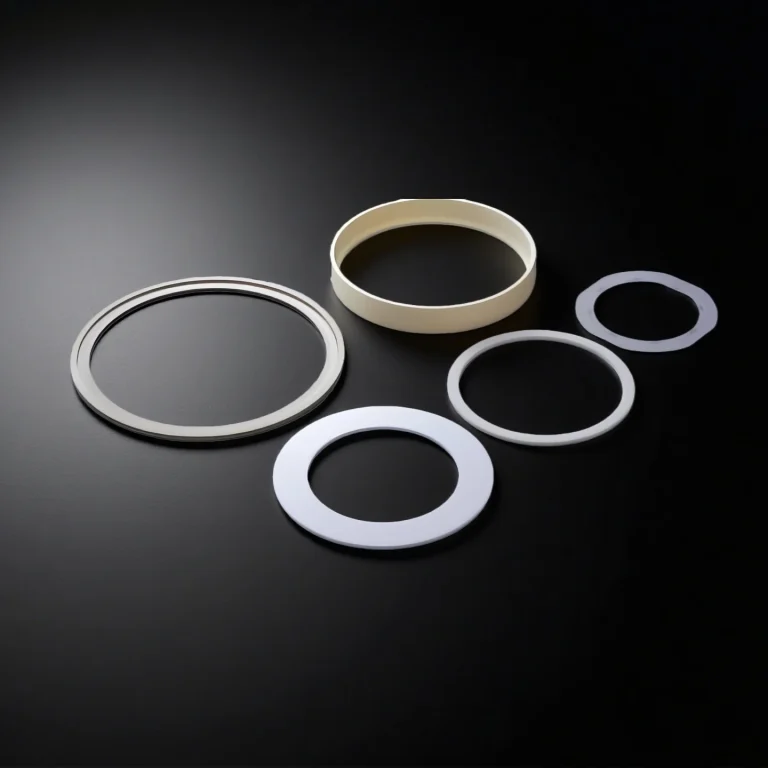
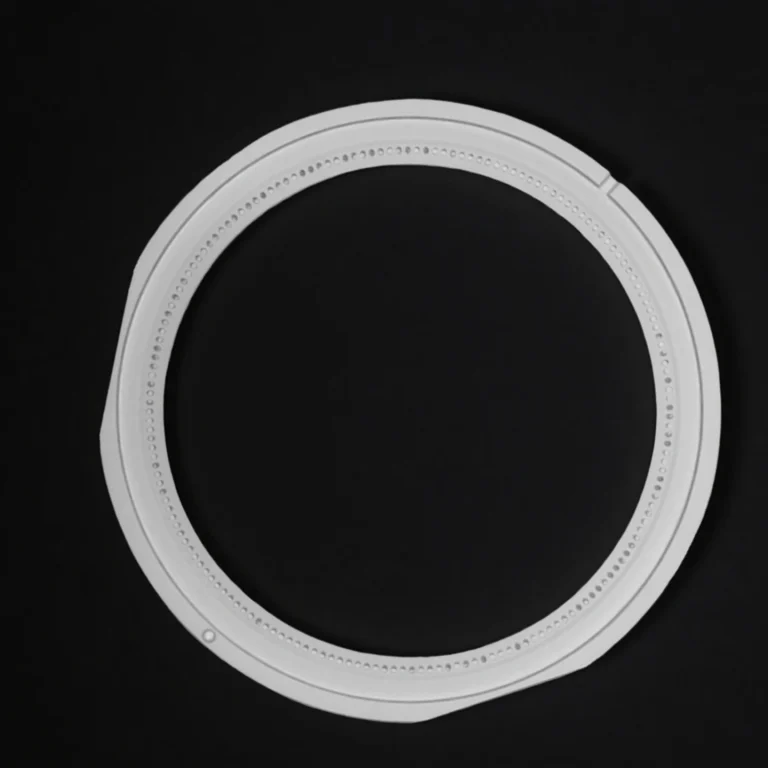
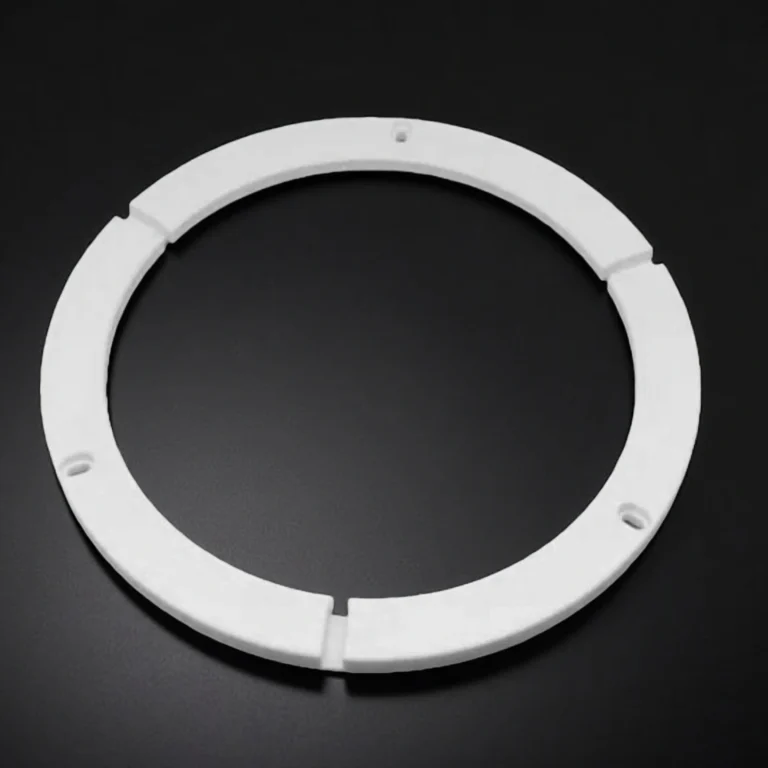
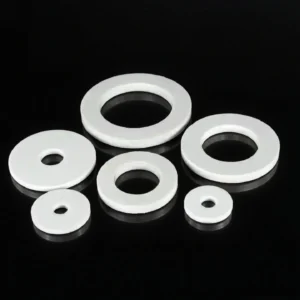
Alumina Ceramic Ring Slice is a thin, disc-like component made from high-purity aluminum oxide (Al₂O₃) in a ring geometry. It combines the shape of a ring with the flatness of a slice, meaning it has a central hole and relatively small thickness compared to its outer diameter.
Alumina Ceramic Ring Slice Benefits
- Exceptional Wear Resistance: Alumina ceramic ring slices exhibit high hardness, significantly extending the operational life of components in abrasive environments compared to traditional materials. This reduces maintenance frequency and associated costs.
- Stable Electrical Insulation: With high dielectric strength, these alumina ceramic ring slices provide reliable electrical isolation, crucial for high-voltage applications and sensitive electronic systems, preventing current leakage and ensuring operational safety.
- Superior Chemical Inertness: The inherent chemical stability of alumina ceramic ring slices ensures resistance to a wide array of corrosive chemicals, making them ideal for use in harsh chemical processing environments without degradation or contamination.
Alumina Ceramic Ring Slice Properties
|
Property |
Unit |
96% Al₂O₃ |
99% Al₂O₃ |
99.5% Al₂O₃ |
99.6% Al₂O₃ |
99.7% Al₂O₃ |
99.8% Al₂O₃ |
99.9% Al₂O₃ |
99.99% Al₂O₃ |
|
Alumina content |
% |
96 |
99 |
99.5 |
99.6 |
99.7 |
99.8 |
99.9 |
99.99 |
|
Density |
g/cm³ |
3.6-3.75 |
3.83 |
3.89 |
3.91 |
3.92 |
3.93 |
3.94 |
3.98 |
|
Color |
– |
white |
Ivory |
Ivory |
Ivory |
Ivory |
Ivory |
Ivory |
Ivory |
|
Water absorption |
% |
0 |
0 |
– |
0 |
0 |
0 |
0 |
0 |
|
Young’s modulus (Elastic modulus) |
GPa |
300 |
350 |
375 |
356 |
357 |
358 |
359 |
362 |
|
Shear modulus |
GPa |
– |
– |
152 |
– |
– |
– |
– |
– |
|
Bulk modulus |
GPa |
– |
– |
228 |
– |
– |
– |
– |
– |
|
Poisson’s ratio |
– |
– |
– |
0.22 |
– |
– |
– |
– |
– |
|
Compressive strength |
MPa |
1910 |
2210 |
2500 |
2552 |
2554 |
2556 |
2558 |
2570 |
|
Flexural strength |
MPa |
260 |
300 |
340 |
345 |
346 |
347 |
348 |
365 |
|
Fracture toughness |
MPa·m¹ᐟ² |
– |
– |
4 |
– |
– |
– |
– |
– |
|
Hardness |
GPa |
14.5 |
17 |
17 |
23 |
24 |
25 |
26 |
30 |
|
Thermal conductivity |
W/m·K |
20 |
31 |
31 |
31-33 |
31-33 |
31-33 |
31-35 |
31-35 |
|
Thermal shock resistance ΔT |
°C |
– |
– |
– |
222 |
223 |
224 |
225 |
228 |
|
Maximum use temperature (no load) |
°C |
1450 |
1680 |
≤1750 |
1755 |
1760 |
1765 |
1770 |
1800 |
|
Coefficient of thermal expansion |
10⁻⁶/°C |
7.6 |
7.6 |
7.6 |
7.6 |
7.5 |
7.5 |
7.4 |
7.4 |
|
Volume resistivity |
Ω·cm |
>1×10¹⁴ |
>1×10¹⁴ |
>1×10¹⁴ |
>1×10¹⁴ |
>1×10¹⁴ |
>1×10¹⁴ |
>1×10¹⁴ |
>1×10¹⁴ |
|
Dielectric constant (relative permittivity) |
– |
9.2 |
9.5 |
9.8 |
9.83 |
9.84 |
9.85 |
9.86 |
9.92 |
|
Dielectric strength |
kV/mm |
15 |
19 |
16.9 |
23.2 |
23.4 |
23.6 |
23.8 |
24 |
|
Dissipation factor (loss factor @ 1 kHz) |
– |
– |
– |
0.0002 |
– |
– |
– |
– |
– |
Alumina Ceramic Ring Slice Specifications
Alumina Ceramic Ring Slice Packaging
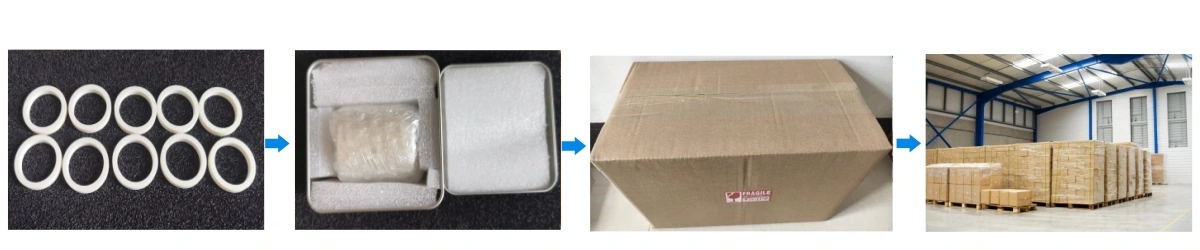
- Inspection & Protection: Each alumina ceramic ring slice is strictly inspected and individually wrapped in protective foam or bubble wrap.
- Secure Placement: Packed in custom-fit trays or compartmentalised boxes for stability during transit.
Alumina Ceramic Ring Slice Applications
Our alumina ceramic ring slices are integral components in industries demanding extreme precision, durability, and performance. Engineered to excel where other materials fail, these components address critical challenges in diverse high-tech applications.
-
Advanced Mechanical Sealing Systems
✅Key Advantages
1. Enhanced Wear Resistance: Alumina ceramic ring slices demonstrate a Mohs hardness of 9, significantly outperforming traditional steel seals and extending operational life by up to 5 times in abrasive fluid environments.
2. Chemical Inertness: With near-zero porosity and high resistance to acids and alkalis, these ring slices maintain seal integrity in corrosive chemical processing, preventing material degradation and system contamination.
3. High Temperature Stability: Capable of continuous operation up to 1750°C, alumina ceramic ring slices ensure reliable sealing performance in high-temperature pumps and valves where organic seals would fail.
✅ Problem Solved
A major industrial pump manufacturer faced frequent seal failures in their chemical transfer pumps due to abrasive slurries and corrosive media, leading to production line stoppages. By integrating our custom-engineered 99.7% alumina ceramic ring slices, the pump's mean time between failures (MTBF) increased by 300%, reducing maintenance costs by an estimated $15,000 per pump annually and eliminating unscheduled downtime.
-
High-Performance Electrical Insulation
✅Key Advantages
1. Superior Dielectric Strength: Alumina ceramic ring slices offer a dielectric strength exceeding 15 kV/mm, providing robust electrical isolation in high-voltage applications and preventing arcing or short circuits.
2. Low Dielectric Loss: With a low dielectric constant, these ring slices minimize energy loss in high-frequency electronic circuits, crucial for efficient operation of RF and microwave components.
3. Thermal Conductivity: Despite being an insulator, alumina ceramic ring slices possess good thermal conductivity (up to 30 W/mK), effectively dissipating heat from critical electronic components while maintaining electrical isolation.
✅ Problem Solved
An electronics manufacturer producing high-power semiconductor devices struggled with insulation breakdown in their previous polymer-based spacers, leading to device failure rates of 5%. Our precision-machined alumina ceramic ring slices, with their verified dielectric strength and thermal management properties, reduced insulation-related failures to less than 0.5%, significantly improving product reliability and reducing warranty claims by 90%.
-
Precision Components for Analytical Instruments
✅Key Advantages
1. Ultra-High Purity: Our 99.7% alumina ceramic ring slices ensure minimal contamination, critical for sensitive analytical techniques where even trace impurities can affect measurement accuracy.
2. Dimensional Stability: With a low coefficient of thermal expansion and excellent creep resistance, these ring slices maintain precise dimensions even under fluctuating temperatures, vital for optical alignment and sample positioning in instruments.
3. Vacuum Compatibility: The dense, non-porous structure of alumina ceramic ring slices makes them ideal for ultra-high vacuum (UHV) environments, preventing outgassing that could interfere with sensitive detectors.
✅ Problem Solved
A leading laboratory instrument company experienced issues with sample contamination and inconsistent results in their mass spectrometers due to outgassing from internal components. By replacing these with our high-purity, vacuum-compatible alumina ceramic ring slices, they achieved a 99% reduction in background noise, leading to more accurate and repeatable analytical data and enhancing their instrument's market competitiveness.
Alumina Ceramic Ring Slice Usage Instructions
Proper handling, installation, and maintenance of alumina ceramic ring slices ensure long service life, reliable performance, and reduced operational costs.
-
Installation
1. Surface Preparation: Ensure all mating surfaces are clean, dry, and free from debris, oils, or contaminants. Even small particles can compromise sealing integrity or cause stress points.
2. Gentle Handling: Alumina ceramic ring slices are hard but brittle. Avoid dropping or subjecting them to sudden impacts. Use clean, lint-free gloves to prevent transferring skin oils or contaminants.
3. Alignment: Carefully align the alumina ceramic ring slice with its mating components. For press-fit applications, ensure even pressure distribution during insertion to prevent chipping or cracking.
4. Lubrication (if applicable): If a lubricant is specified for installation (e.g., for O-rings or specific mechanical seals), use only the recommended type and amount to avoid material degradation or contamination.
-
Usage
1. Operating Parameters: Always operate the system within the specified temperature, pressure, and chemical compatibility limits for the alumina ceramic ring slice. Exceeding these can lead to material degradation or failure.
2. Thermal Shock Avoidance: While alumina has good thermal shock resistance, rapid heating or cooling cycles should be minimized where possible, especially for larger or thicker components, to prevent thermal stress fractures.
3. Vibration Monitoring: In applications with high vibration, regularly inspect the ceramic ring slices for signs of wear or micro-cracks, as prolonged vibration can accelerate fatigue.
-
Storage
1. Clean Environment: Store alumina ceramic ring slices in a clean, dry, and dust-free environment to prevent surface contamination or damage.
2. Protective Packaging: Keep components in their original protective packaging until ready for use. If repackaging, use individual compartments or soft, non-abrasive materials to prevent contact between parts.
3. Temperature & Humidity: Store at ambient room temperature and moderate humidity. Extreme fluctuations can potentially affect long-term material stability, though alumina is generally robust.
-
Cleaning
1. Mild Solvents: For general cleaning, use mild detergents or isopropyl alcohol (IPA) with a soft, lint-free cloth. Avoid harsh abrasives or strong acids/bases unless specifically recommended for your application.
2. Ultrasonic Cleaning: Ultrasonic cleaning can be effective for removing stubborn contaminants, but ensure the ceramic ring slices are properly supported and not in direct contact with the tank bottom to prevent damage.
3. Rinsing & Drying: Thoroughly rinse with deionized water and dry completely before re-installation or storage. Air drying or gentle heating is preferred over wiping to avoid scratching.
-
Common problems and solutions
1. Issue: Premature Wear or Chipping: If an alumina ceramic ring slice shows early signs of wear or chipping, it often indicates improper installation, misalignment, or operating conditions exceeding material limits.
Solution: Re-evaluate installation procedures for correct alignment and even pressure. Verify that operating temperatures, pressures, and chemical exposure are within the specified range for the chosen alumina grade. Consider a higher purity or denser alumina material if conditions are consistently harsh.
2. Issue: Electrical Breakdown in Insulating Applications: If an alumina ceramic insulating ring fails electrically, it could be due to surface contamination, micro-cracks, or exceeding the dielectric strength limit.
Solution: Ensure the ceramic surface is meticulously clean and dry before installation. Inspect for any visible defects. If the operating voltage is consistently near the material's limit, consider a thicker ring or a higher dielectric strength ceramic.
3. Issue: Sealing Leakage: Leakage around an alumina ceramic sealing ring can stem from inadequate surface finish, improper compression, or thermal expansion mismatch with mating parts.
Solution: Verify the surface roughness (Ra value) of the ceramic ring meets specifications for sealing. Check that the compression force applied during assembly is correct. If significant temperature fluctuations occur, review the thermal expansion coefficients of all contacting materials to ensure compatibility and prevent gaps.