Alumina Gauge | Non-magnetic Precision Gauging for Clean & Corrosive Environments

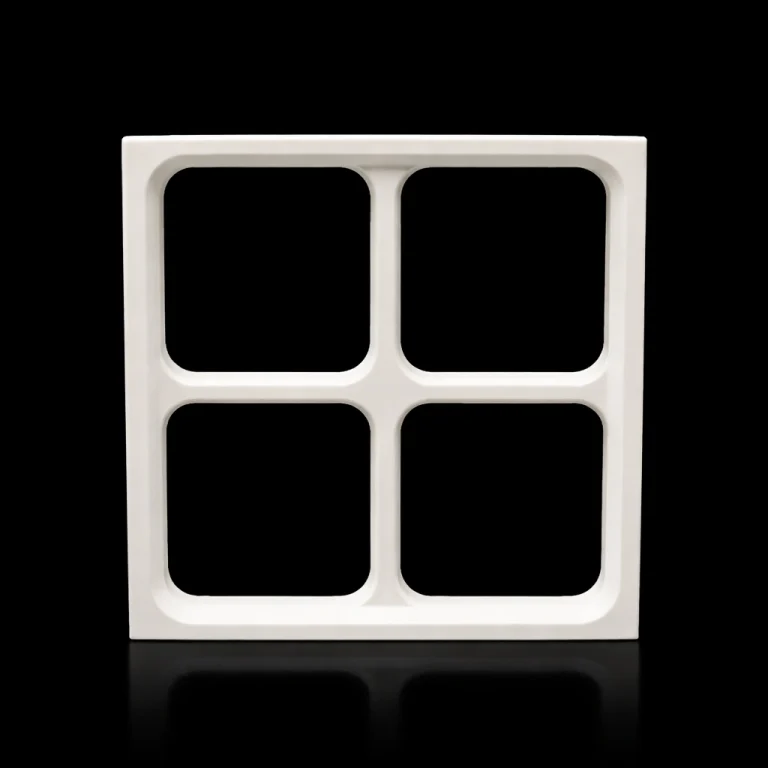
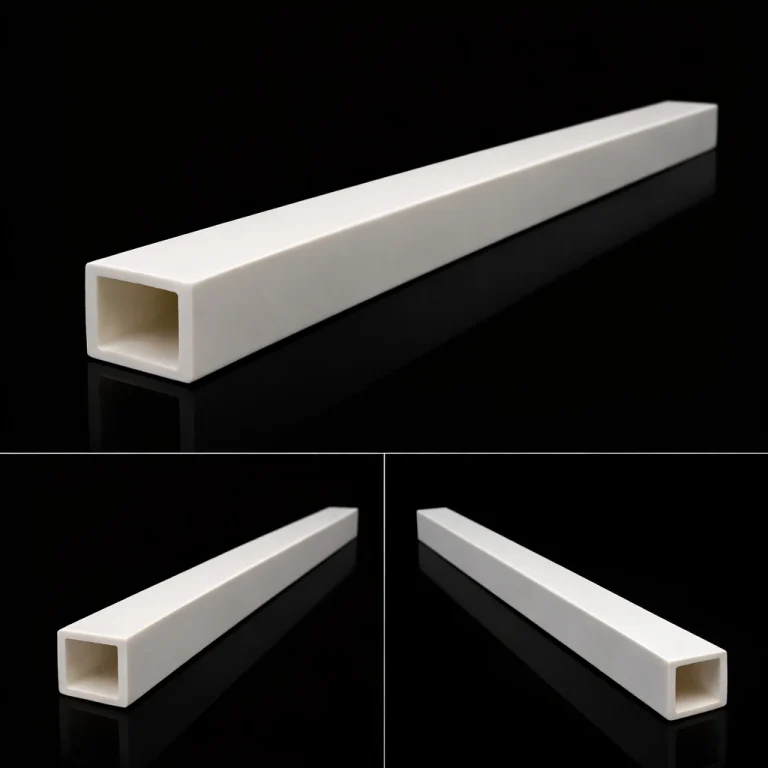
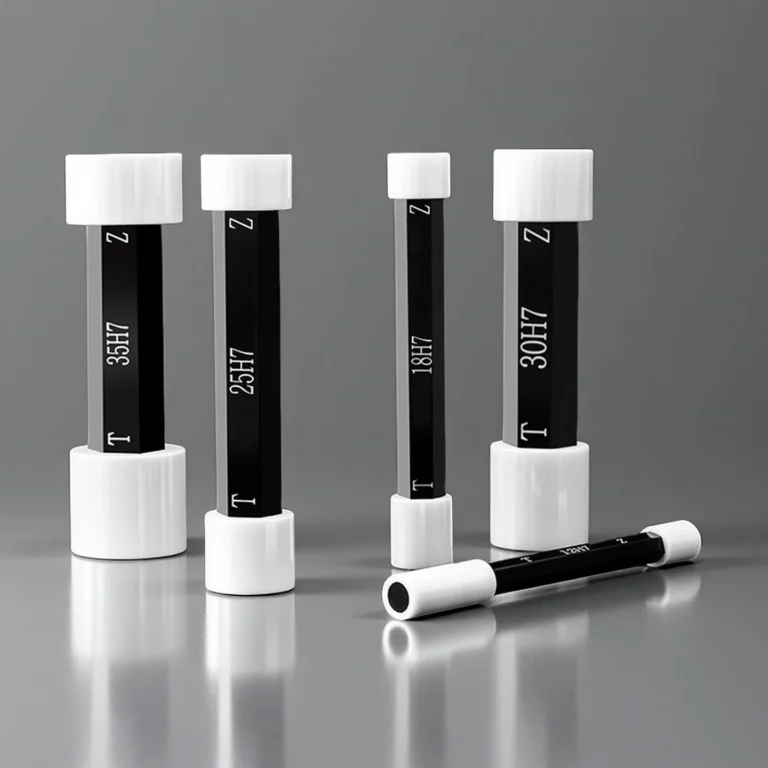
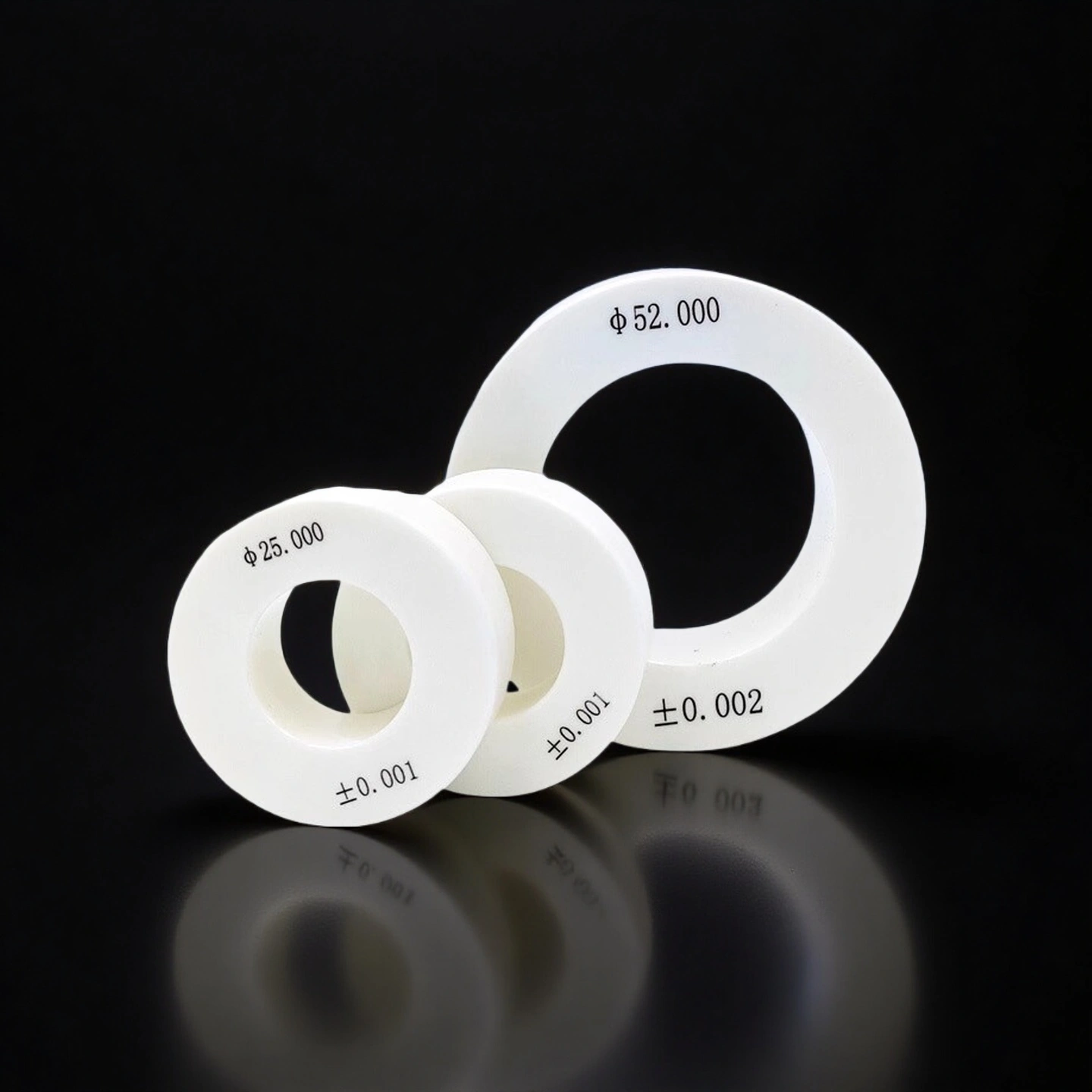
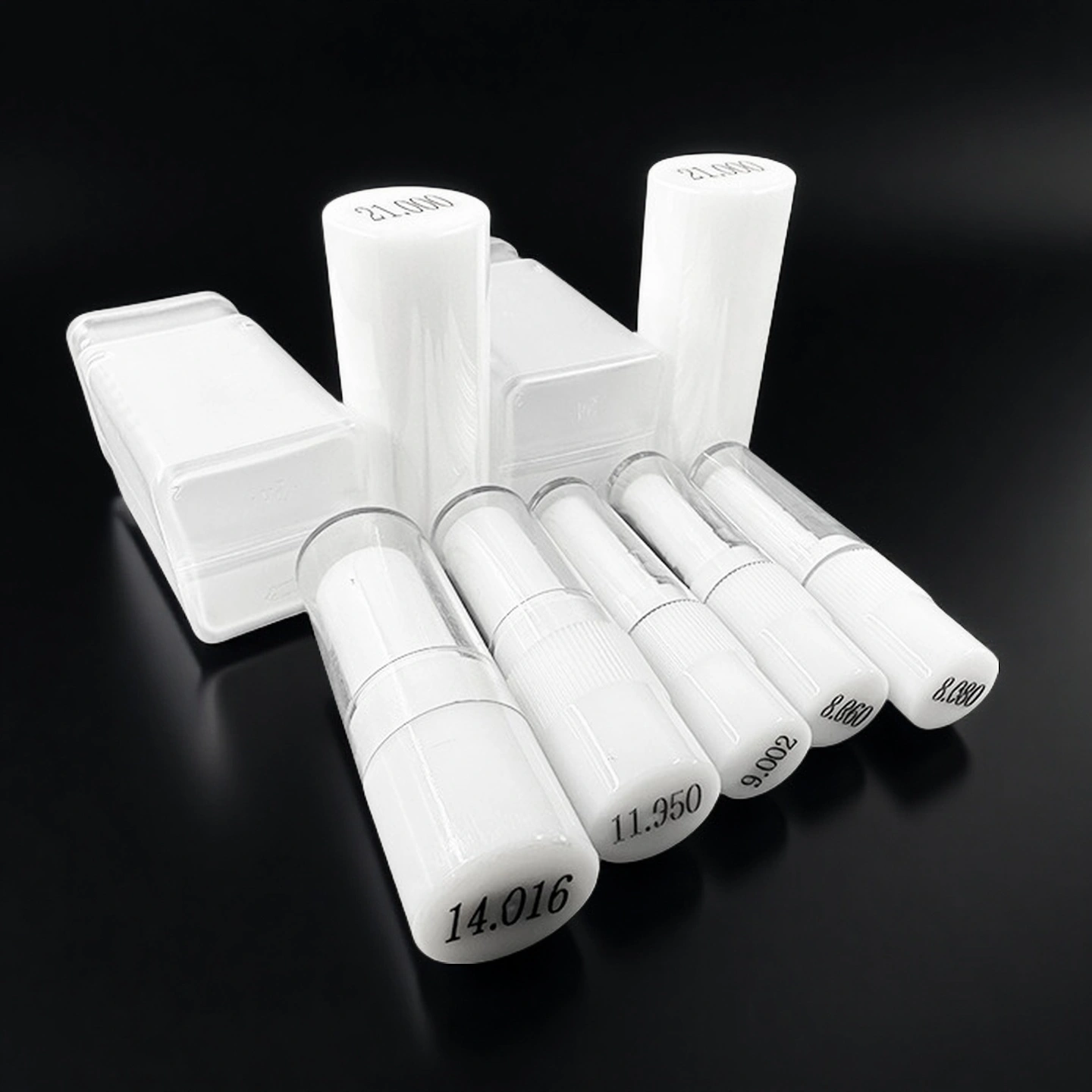
Alumina gauge options include pin gauges Φ0.50–Φ20 mm, ring gauges ID 5–80 mm, and ceramic gauge blocks in standard sets or custom stacks. Custom alumina gauge geometries and markings are available.

Catalogue No. AT-CMT-015
Material Al2O3
Dimensional tolerance band Pin gauges commonly ±0.001–0.002 mm; matched Go/No-Go deltas on request
Surface finish Polished options targeting low Ra; edge chipping control
Dimensions/Sizes Download Alumina Gauge PDF
24H Standard Dispatch
Small Batch Support OEM
Factory Direct
Expert Engineering Support

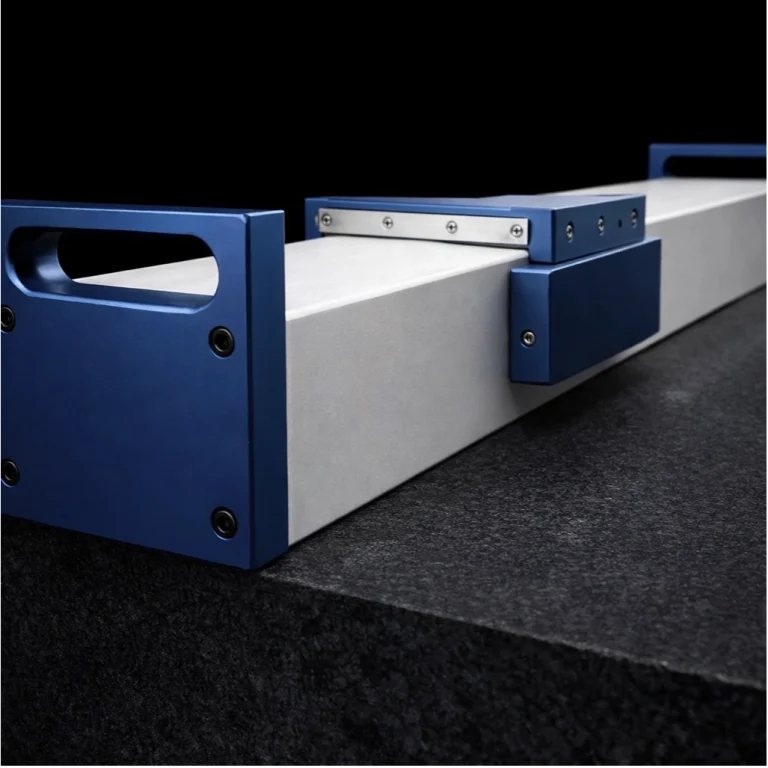
Alumina gauges are precision gauging tools and reference artefacts made from alumina (Al₂O₃) advanced ceramic. They are used to verify dimensions, set up fixtures, and perform go/no-go checks in machining cells, metrology labs, and cleanroom or wash-down environments. Because alumina is non-magnetic, chemically inert, wear-resistant, and thermally stable, these gauges maintain size and surface condition under frequent cleaning and in areas where steel gauges may corrode or attract debris.


Alumina Gauges Benefits

  • Stable pass/fail window — tight tolerance bands with matched Go/No-Go deltas.
  • Non-magnetic & inert surfaces — better near magnets, coolants, and cleaners.
  • Cleanroom-friendly finish — polished faces reduce particle hold and residue.
  • Corrosion resistance — consistent readings after repeated wet cleaning.
  • Traceable identification — optional laser-etched IDs for set management.


Alumina Gauges Properties

Property Unit 99.5% Al₂O₃ 99.6% Al₂O₃ 99.7% Al₂O₃ 99.8% Al₂O₃ 99.9% Al₂O₃ 99.99% Al₂O₃
Alumina content % 99.5 99.6 99.7 99.8 99.9 99.99
Density g/cm³ 3.89 3.91 3.92 3.93 3.94 3.98
Open porosity % 0
Color Ivory Ivory Ivory Ivory Ivory Ivory
Water absorption % 0 0 0 0 0
Young’s modulus (Elastic modulus) GPa 375 356 357 358 359 362
Shear modulus GPa 152
Bulk modulus GPa 228
Poisson’s ratio 0.22
Compressive strength MPa 2600 2552 2554 2556 2558 2570
Flexural strength MPa 379 312 313 314 315 320
Fracture toughness MPa·m¹ᐟ² 4
Hardness GPa 14.1 (≈1440 kg/mm²) 23 24 25 26 30
Thermal conductivity W/m·K 35 32–37 33–38 34–39 35–40 36–42
Thermal shock resistance ΔT °C 222 223 224 225 228
Maximum use temperature (no load) °C ≤1750 1755 1760 1765 1770 1800
Coefficient of thermal expansion 10⁻⁶/°C 8.4
Specific heat J/kg·K 880
Volume resistivity Ω·cm >1×10¹⁴ >1×10¹⁴ >1×10¹⁴ >1×10¹⁴ >1×10¹⁴ >1×10¹⁴
Dielectric constant (relative permittivity) 9.8 9.83 9.84 9.85 9.86 9.92
Dielectric strength kV/mm 16.9 23.2 23.4 23.6 23.8 24
Dissipation factor (loss factor @ 1 kHz) 0.0002


Alumina Ceramic Gauges Size

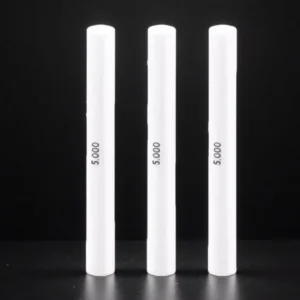
Type 1: Alumina Ceramic Pin 

Ra 0.2μm polished ceramic surface inspection

Alumina Ceramic Pin Gauge
Item No. Size(mm) Set interval Accuracy(H) Weight(g)
AT-CMT-1001 0.30-0.699 0.001/0.005/0.01/0.02/0.05/0.1/0.5/1.0mm ±0.001/0.0005mm 50
AT-CMT-1002 0.70-0.999 0.001/0.005/0.01/0.02/0.05/0.1/0.5/1.0mm ±0.001/0.0005mm 60
AT-CMT-1003 1.0-2.999 0.001/0.005/0.01/0.02/0.05/0.1/0.5/1.0mm ±0.001/0.0005mm 70
AT-CMT-1004 3.0-3.999 0.001/0.005/0.01/0.02/0.05/0.1/0.5/1.0mm ±0.001/0.0005mm 80
AT-CMT-1005 4.0-4.999 0.001/0.005/0.01/0.02/0.05/0.1/0.5/1.0mm ±0.001/0.0005mm 90
AT-CMT-1006 5.0-5.999 0.001/0.005/0.01/0.02/0.05/0.1/0.5/1.0mm ±0.001/0.0005mm 100
AT-CMT-1007 6.0-6.999 0.001/0.005/0.01/0.02/0.05/0.1/0.5/1.0mm ±0.001/0.0005mm 110
AT-CMT-1008 7.0-7.999 0.001/0.005/0.01/0.02/0.05/0.1/0.5/1.0mm ±0.001/0.0005mm 120
AT-CMT-1009 8.0-8.999 0.001/0.005/0.01/0.02/0.05/0.1/0.5/1.0mm ±0.001/0.0005mm 130
AT-CMT-1010 9.0-9.999 0.001/0.005/0.01/0.02/0.05/0.1/0.5/1.0mm ±0.001/0.0005mm 140
AT-CMT-1011 10.0-10.999 0.001/0.005/0.01/0.02/0.05/0.1/0.5/1.0mm ±0.001/0.0005mm 145
AT-CMT-1012 11.0-11.999 0.001/0.005/0.01/0.02/0.05/0.1/0.5/1.0mm ±0.001/0.0005mm 150
AT-CMT-1013 12.0-12.999 0.001/0.005/0.01/0.02/0.05/0.1/0.5/1.0mm ±0.001/0.0005mm 155
AT-CMT-1014 13.0-13.999 0.001/0.005/0.01/0.02/0.05/0.1/0.5/1.0mm ±0.001/0.0005mm 160
AT-CMT-1015 14.0-14.999 0.001/0.005/0.01/0.02/0.05/0.1/0.5/1.0mm ±0.001/0.0005mm 165
AT-CMT-1016 15.0-15.999 0.001/0.005/0.01/0.02/0.05/0.1/0.5/1.0mm ±0.001/0.0005mm 170
AT-CMT-1017 16.0-16.999 0.001/0.005/0.01/0.02/0.05/0.1/0.5/1.0mm ±0.001/0.0005mm 175
AT-CMT-1018 17.0-17.999 0.001/0.005/0.01/0.02/0.05/0.1/0.5/1.0mm ±0.001/0.0005mm 180
AT-CMT-1019 18.0-18.999 0.001/0.005/0.01/0.02/0.05/0.1/0.5/1.0mm ±0.001/0.0005mm 185
AT-CMT-1020 20.2-40mm 0.001/0.005/0.01/0.02/0.05/0.1/0.5/1.0mm ±0.001/0.0005mm 190

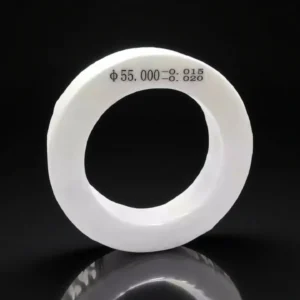
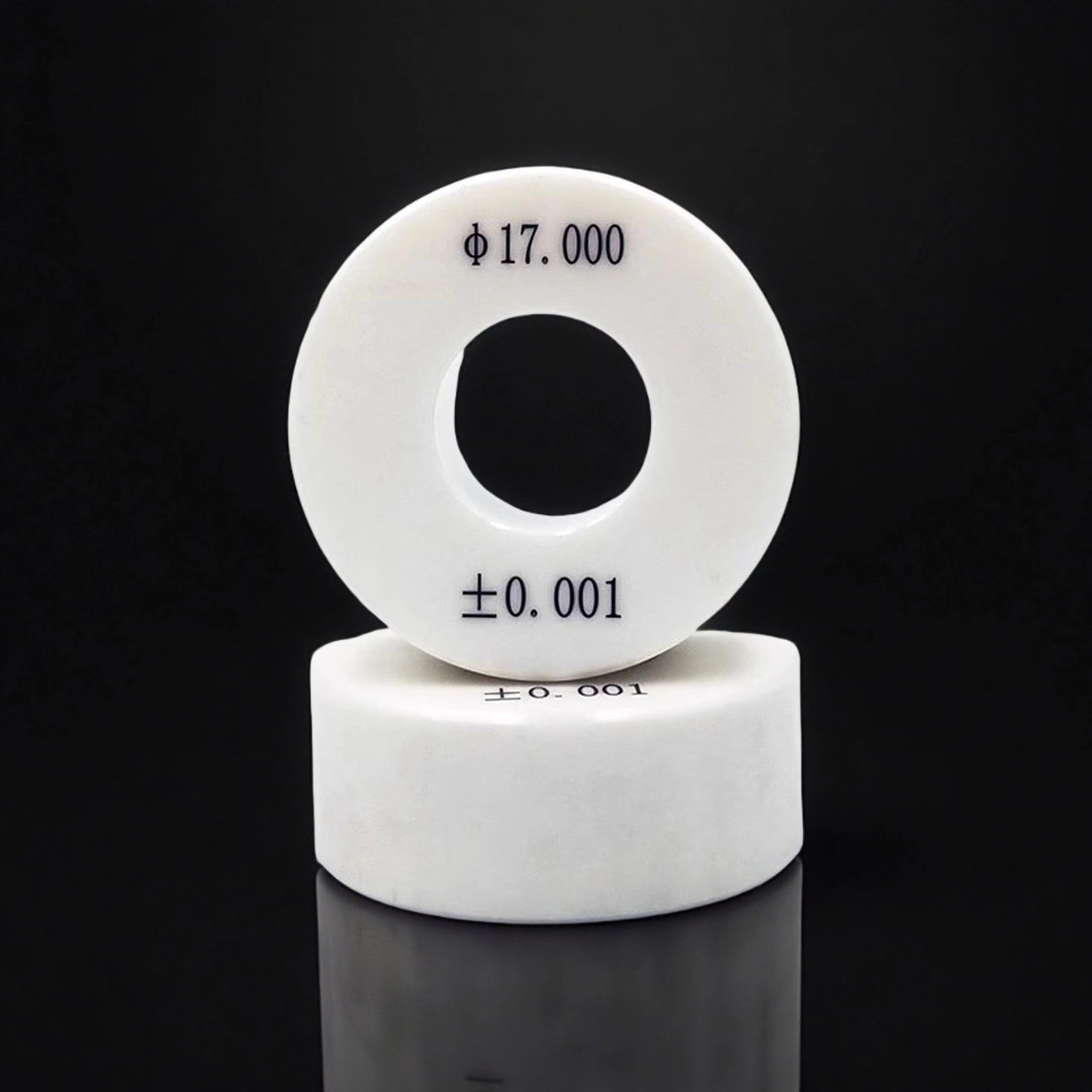
Type 2: Alumina Ring Gauges

alumina ring gauge

Alumina Ring Gauges
Item No. Diameter (mm) Thickness (mm)
AT-CMT-RG01 Customize

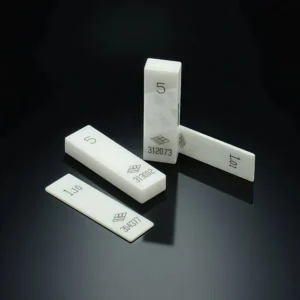
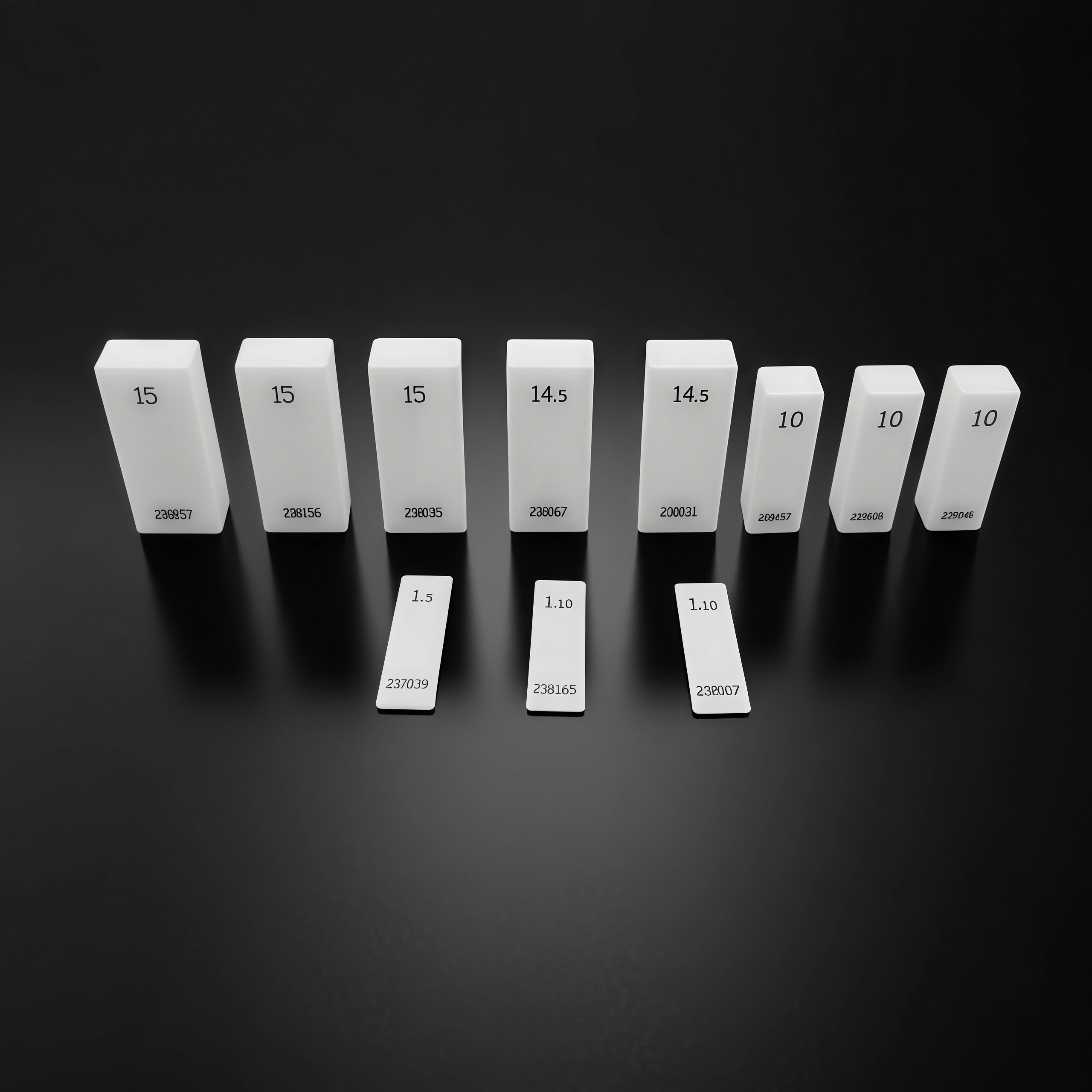
Type 3: Alumina Gauges Blocks

Laboratory Use of Non-Magnetic Gauge Blocks

Item Gauge Size(mm) Grades of Gauge Blocks(H) Options for Grades(h) Weight (g)
AT-CMT-015 0.5mm 1 1/0/K 10
AT-CMT-016 0.5mm 0 1/0/K 11
AT-CMT-017 25mm 1 1/0/K 26
AT-CMT-018 25mm 0 1/0/K 27
AT-CMT-019 30mm 1 1/0/K 28
AT-CMT-020 30mm 0 1/0/K 29
AT-CMT-021 40mm 1 1/0/K 30
AT-CMT-022 40mm 0 1/0/K 31
AT-CMT-023 41.2mm 1 1/0/K 32
AT-CMT-024 41.2mm 0 1/0/K 33
AT-CMT-025 41.3mm 1 1/0/K 34
AT-CMT-026 41.3mm 0 1/0/K 35
AT-CMT-027 50mm 1 1/0/K 36
AT-CMT-028 50mm 0 1/0/K 37
AT-CMT-029 60mm 1 1/0/K 38
AT-CMT-030 60mm 0 1/0/K 39
AT-CMT-031 70mm 1 1/0/K 40
AT-CMT-032 70mm 0 1/0/K 41
AT-CMT-033 75mm 1 1/0/K 42
AT-CMT-034 75mm 0 1/0/K 43
AT-CMT-035 80mm 1 1/0/K 44
AT-CMT-036 80mm 0 1/0/K 45
AT-CMT-037 81.5mm 1 1/0/K 46
AT-CMT-038 81.5mm 0 1/0/K 47
AT-CMT-039 90mm 1 1/0/K 48
AT-CMT-040 90mm 0 1/0/K 49
AT-CMT-041 100mm 1 1/0/K 50
AT-CMT-042 100mm 0 1/0/K 51
AT-CMT-043 125mm 1 1/0/K 52
AT-CMT-044 125mm 0 1/0/K 53
AT-CMT-045 150mm 1 1/0/K 54
AT-CMT-046 150mm 0 1/0/K 55


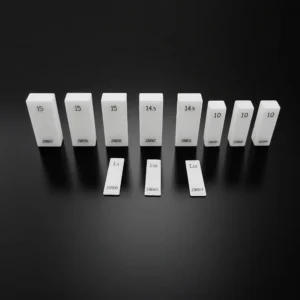
Type 4: Alumina Gauges Block Sets

Customized Alumina Gauge Calibration Set with Holder

Item Gauge Size(mm) Increments(mm) Total Blocks Grades of Gauge Blocks(h) Weight (g)
AT-CMT-001 1-1.5mm 0.01 51 1 12
AT-CMT-002 1-1.5mm 0.01 51 0 13
AT-CMT-003 1.6-1.9mm 0.1 4 1 14
AT-CMT-004 1.6-1.9mm 0.01 31 0 15
AT-CMT-005 2-6.5mm 0.5 10 1 16
AT-CMT-006 2-6.5mm 0.5 10 0 17
AT-CMT-007 7-9.5mm 0.5 6 1 18
AT-CMT-008 7-9.5mm 0.5 6 0 19
AT-CMT-009 10-13.5mm 0.5 8 1 20
AT-CMT-010 10-13.5mm 0.5 8 0 21
AT-CMT-011 14-19.5mm 0.5 12 1 22
AT-CMT-012 14-19.5mm 0.5 12 0 23
AT-CMT-013 20-24.5mm 0.5 10 1 24
AT-CMT-014 20-24.5mm 0.5 10 0 25


Detailed Size of Gauge Blocks


Gauge Size(mm) 1-1.5mm 1.6-1.9mm 1.6-1.9mm 2-6.5mm 7-9.5mm 10-13.5 mm 14-19.5  mm 20-24.5 mm
Increments(mm) 0.01 0.1 0.01 0.5 0.5 0.5 0.5 0.5
1 1 1.6 1.6 2 7 10 14 20
2 1.01 1.7 1.61 2.5 7.5 10.5 14.5 20.5
3 1.02 1.8 1.62 3 8 11 15 21
4 1.03 1.9 1.63 3.5 8.5 11.5 15.5 21.5
5 1.04 1.64 4 9 12 16 22
6 1.05 1.65 4.5 9.5 12.5 16.5 22.5
7 1.06 1.66 5 13 17 23
8 1.07 1.67 5.5 13.5 17.5 23.5
9 1.08 1.68 6 18 24
10 1.09 1.69 6.5 18.5 24.5
11 1.1 1.7 19
12 1.11 1.71 19.5
13 1.12 1.72
14 1.13 1.73
15 1.14 1.74
16 1.15 1.75
17 1.16 1.76
18 1.17 1.77
19 1.18 1.78
20 1.19 1.79
21 1.2 1.8
22 1.21 1.81
23 1.22 1.82
24 1.23 1.83
25 1.24 1.84
26 1.25 1.85
27 1.26 1.86
28 1.27 1.87
29 1.28 1.88
30 1.29 1.89
31 1.3 1.9
32 1.31
33 1.32
34 1.33
35 1.34
36 1.35
37 1.36
38 1.37
39 1.38
40 1.39
41 1.4
42 1.41
43 1.42
44 1.43
45 1.44
46 1.45
47 1.46
48 1.47
49 1.48
50 1.49
51 1.5


Alumina Gauges Packaging

  • Individual anti-scuff sleeves or foam-in-box; set boxes with size map
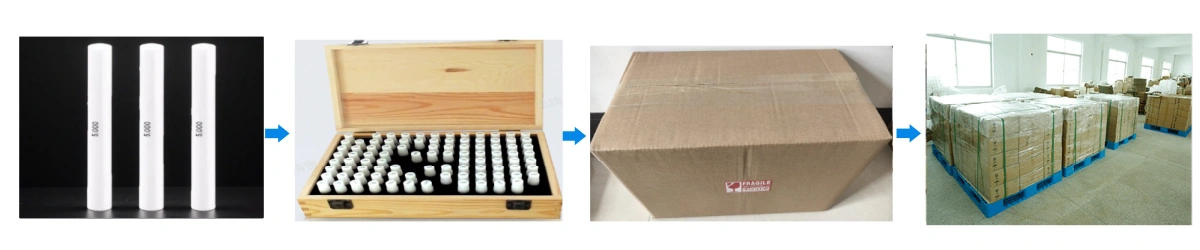
Alumina Ceramic Gauges Packaging

Alumina Gauge Applications

  • Precision Machining & Assembly Lines

    ✅Key Advantages

    1. Dimensional drift < 0.002 mm after 500 cycles of coolant and wipe-down checks.
    2. Non-magnetic readings maintain stability in automated inspection near inductive sensors.
    3. Go/No-Go delta ≤ 3 µm enables faster in-process pass/fail decisions under production pace.

    ✅ Problem Solved

    A European automotive supplier replaced steel pin gauges with alumina variants on three machining cells. After six months, gauge recalibration intervals extended from every 2 weeks → 8 weeks, and false rejects dropped by 22 %, improving uptime and reducing tool change interruptions across two shifts.

  • Metrology & Calibration Laboratories

    ✅Key Advantages

    1. Thermal drift < 0.5 µm per 10 °C, ensuring repeatability during temperature swings.
    2. Laser-etched ID traceability 99.9 % read accuracy across digital inspection logs.
    3. Surface wear rate < 0.02 µm/1 k contacts, verified in long-term calibration cycles.

    ✅ Problem Solved

    A calibration center standardized its master block sets with alumina gauges. Over a one-year audit, traceability errors were reduced to 0.1 %, and re-lapping downtime decreased by 40 % because surface flatness remained within the 0-class tolerance window through 1,200 verification runs.

  • Cleanroom, Pharmaceutical & Food Equipment Manufacturing

    ✅Key Advantages

    1. Zero corrosion after 200 CIP ( Cleaning-in-Place ) cycles using alkaline detergents.
    2. Surface particle retention < 10 ppm per cleaning audit, compliant with ISO 7 rooms.
    3. Chemical stability up to pH 13, compatible with sterilization chemicals and IPA.

    ✅ Problem Solved

    A U.S. filling-line OEM integrated alumina ring gauges into wash-down calibration fixtures.
    Over nine months, no corrosion marks or dimensional drift were detected after > 180 cleaning cycles, while steel masters previously required monthly replacement. Maintenance costs and calibration downtime were reduced by 35 %.

Alumina Gauge Usage Instructions

  • Install / Handling

    1. Use dedicated non-metallic holders or lined sockets to prevent micro-impacts on the gauge edges.
    2. Avoid dropping, sliding, or direct contact between alumina and metal surfaces; ceramic edges are strong in compression but fragile under point impact.
    3. Introduce a 1–2° lead-in chamfer on plug gauges to ensure smooth entry into the bore without edge stress.
    4. Align the gauge axially before insertion; excessive tilt or force can induce micro-cracks invisible to the naked eye.
    5. Always handle the gauge at room temperature (20 ± 2 °C) to avoid thermal mismatch when used in precision setups.

  • Use

    1. Standardize the measuring force or feel (typically 1–3 N for small-diameter pin gauges).
    2. Define the Go/No-Go delta according to process capability (e.g., 0.003 mm for tight-tolerance production).
    3. Keep gauges and workpieces at the same ambient temperature to minimize thermal drift (<0.5 µm per 10 °C).
    4. Record serial IDs and calibration dates for traceability; use laser-etched marks to prevent mix-ups.
    5. Clean before and after each inspection cycle to prevent contamination transfer between parts.
    6. Avoid using alumina gauges on rough or burr-contaminated surfaces that can scratch the ceramic contact area.

  • Store

    1. Place gauges in lined trays or foam inserts to prevent vibration and edge contact.
    2. Store each size in a separated, labeled slot; never allow stacked contact or rolling in a drawer.
    3. Maintain a stable storage temperature of 18–25 °C and humidity below 60 % RH.
    4. For calibration masters, keep in a temperature-controlled cabinet; avoid exposure to coolant vapor or oil mist.
    5. Insert desiccant bags or anti-static sheets if gauges are stored near electronic test stations.

  • Clean

    1. Use lint-free wipes, isopropyl alcohol (IPA), or neutral pH detergents; never apply acid, alkali, or abrasive compounds.
    2. Rinse with deionized water when required; dry using filtered compressed air or soft cloths only.
    3. Do not ultrasonically clean gauges with sharp edges unless fixtures are lined; cavitation can cause micro-chipping.
    4. After each cleaning cycle, inspect under light for residue or chipped edges.
    5. Regularly polish contact surfaces using certified fine-grade paste if roughness or residue appears.

  • Watch-outs & Fixes

    1. Edge-chipping risk → Add a micro-chamfer (0.2 mm × 45°) to high-usage gauges; use lined fixtures to absorb impact.
    2. Thermal shock → Always let gauges equilibrate 1–2 h before measurement after storage or cleaning.
    3. Residue build-up → Schedule a gentle periodic repolish every 3–6 months; maintain a cleaning log to monitor condition.
    4. Contact contamination → Avoid touching polished faces with bare hands; oils can affect calibration stability.
    5. Fixture wear mismatch → Re-inspect gauge holders annually; worn holders can induce local stress and breakage.

Alumina Ceramic Gauge FAQ

  1. Q: What are the main advantages of using alumina gauges over steel gauges?
    A: They are non-magnetic, corrosion-resistant, thermally stable, and maintain dimensional accuracy under frequent cleaning — ideal for cleanroom or wash-down environments.
  2. Q: Can I buy alumina gauge sets with both pin and ring types?
    A: Yes, ADCERAX supplies complete alumina ceramic gauge sets, including pin, ring, and block types. Mixed configurations are available for production and laboratory calibration use.
  3. Q: What sizes and tolerance bands can alumina ceramic gauges achieve?
    A: Standard tolerance families are ±0.001 mm and ±0.002 mm for pin and ring gauges, with custom Go/No-Go deltas or specific class grades upon request.
  4. Q: What is the price of alumina gauges?
    A: The price of alumina ceramic gauge depends on the size, tolerance, and quantity you need. Both standard and custom gauges can be made, so prices are quoted individually after reviewing your specifications or drawings.
  5. Q: Can I request custom marking or serial numbers on my alumina gauges?
    A: Yes. Laser-etched IDs, size codes, or set numbers can be added for traceability, helping labs and production sites manage tool calibration cycles efficiently.
  6. Q: Do you have jewellery alumina ceramic gauge for sale?
    A: Yes, we supply jewellery alumina ceramic gauge for sale to manufacturers and repair workshops that need accurate size inspection for rings, bracelets, or precision metal fittings. Each alumina ceramic gauge for sale is non-magnetic, scratch-free, and resistant to polishing dust or cleaning chemicals. Custom gauges can be produced according to jewellery sizes or toolmaker drawings to ensure precise and repeatable measurement.

Alumina Gauge Reviews

  • ⭐️⭐️⭐️⭐️⭐️
    “Alumina pin gauge set stabilized our go/no-go checks.” We replaced oiled steel pins on two lines with alumina pin gauges. No magnet interference now, and cleaning is straightforward.
    -- Hannah Cole, Quality Manager, FerroMach Components
  • ⭐️⭐️⭐️⭐️⭐️
    “Custom alumina ring gauges matched our fixtures.” The alumina ring gauge pair arrived with laser IDs and the lead-in we asked for. Fit checks are faster at the wash-down station.
    -- Marco Díaz, Tooling Engineer, AxisPack Systems
  • ⭐️⭐️⭐️⭐️⭐️
    “Factory-direct pricing helped us standardize sets.” Working with the ADCERAX factory made budgeting simpler. We rolled out two alumina gauge block sets per site.
    -- Ivy Morgan, Procurement Lead, Northway Automation
  • ⭐️⭐️⭐️⭐️⭐️
    “Drawing assistance reduced chipping risk.” The team suggested micro-chamfers on custom alumina gauge edges. Handling incidents dropped after implementation.
    -- Drawing assistance reduced chipping risk.
customize size

Customize Alumina Gauges

We tailor alumina gauge to your drawing, then validate manufacturability before samples. What You Can Specify:

1. Dimensions

  • Pin OD / Ring ID / Plug & Snap gauge profiles
  • Overall length or height range
  • Optional chamfer or radius transitions
  • Alignment fit for holders or automated fixtures

2. Tolerance Bands

  • Standard ±0.001 mm / ±0.002 mm families
  • Matched Go/No-Go deltas for paired gauges
  • Special precision grades upon request (e.g., 0-class, 00-class)

3. Geometry Options

  • Through-holes, steps, slots, or key flats
  • Complex shapes for fixture integration or reference masters
  • Optional anti-slip base or alignment shoulder

4. End Details

  • Chamfered or rounded ends for safe insertion
  • Edge-chip-controlled transitions to minimize cracking risk
  • Lead-in tapers or protective collars for high-use stations

5. Marking & Identification

  • Laser-engraved size codes and serial IDs
  • Set or sequence numbering for easy tracking
  • Custom branding or calibration reference marks

6. Surface Finish

  • As-fired matte for functional faces or Ra-polished contact zones
  • Optional micro-deburring and lapped edges
  • Surface integrity testing for particle-sensitive environments

7. Environment Fit

  • Cleanroom-compliant handling specification
  • Compatibility with IPA, neutral detergents, or deionised water cleaning
  • Resistance to corrosion and repeated wet-wipe cycles

Related Products

ADCERAX - Your Trusted Advanced Ceramics Manufacturing Partner

Direct factory manufacturing with comprehensive ceramic materials expertise and global supply capabilities

Direct Factory Manufacturing

China-based ceramic materials production facility with state-of-the-art equipment

Engineering Team

Experienced professionals in advanced ceramics applications and custom design

Quality Control

Strict quality control standards for technical ceramics manufacturing and quality management

Global Supply Chain

Serving customers worldwide with technical ceramics and rapid response

24/7 Technical Support

Round-the-clock support for ceramic components inquiries and technical assistance

500+ Satisfied Customers

Trusted by global customers for advanced ceramic materials and precision components

Get in touch with us

Our team will be happy to respond to you in less than 24 hours.

Adcerax's factory

Quick Quotation

*Our team will answer your inquiries within 24 hours.

*Your information will be kept strictly confidential.

Ready to Solve Your Engineering Challenge?

Partner with ADCERAX for reliable, high-performance advanced ceramic solutions. Our engineers are ready to discuss your project.

E-mail

info@adcerax.com

Phone

+(86) 0731-74427743 | WhatsApp: +(86) 19311583352

Response Time

Within 24 hours

Quick Quote

The more details you provide, the faster we can quote.

*We respond within 24 hours. All inquiries are confidential.

Download Catalog

Get Your Custom Sulution

The more details you provide, the faster we can respond.

customize size

*We respond within 24 hours. All inquiries are confidential.

Download Catalog