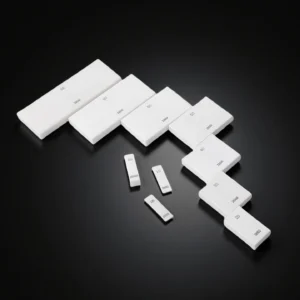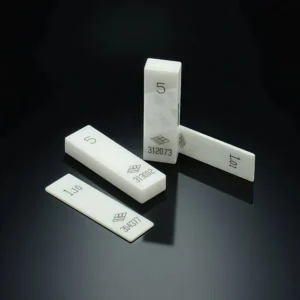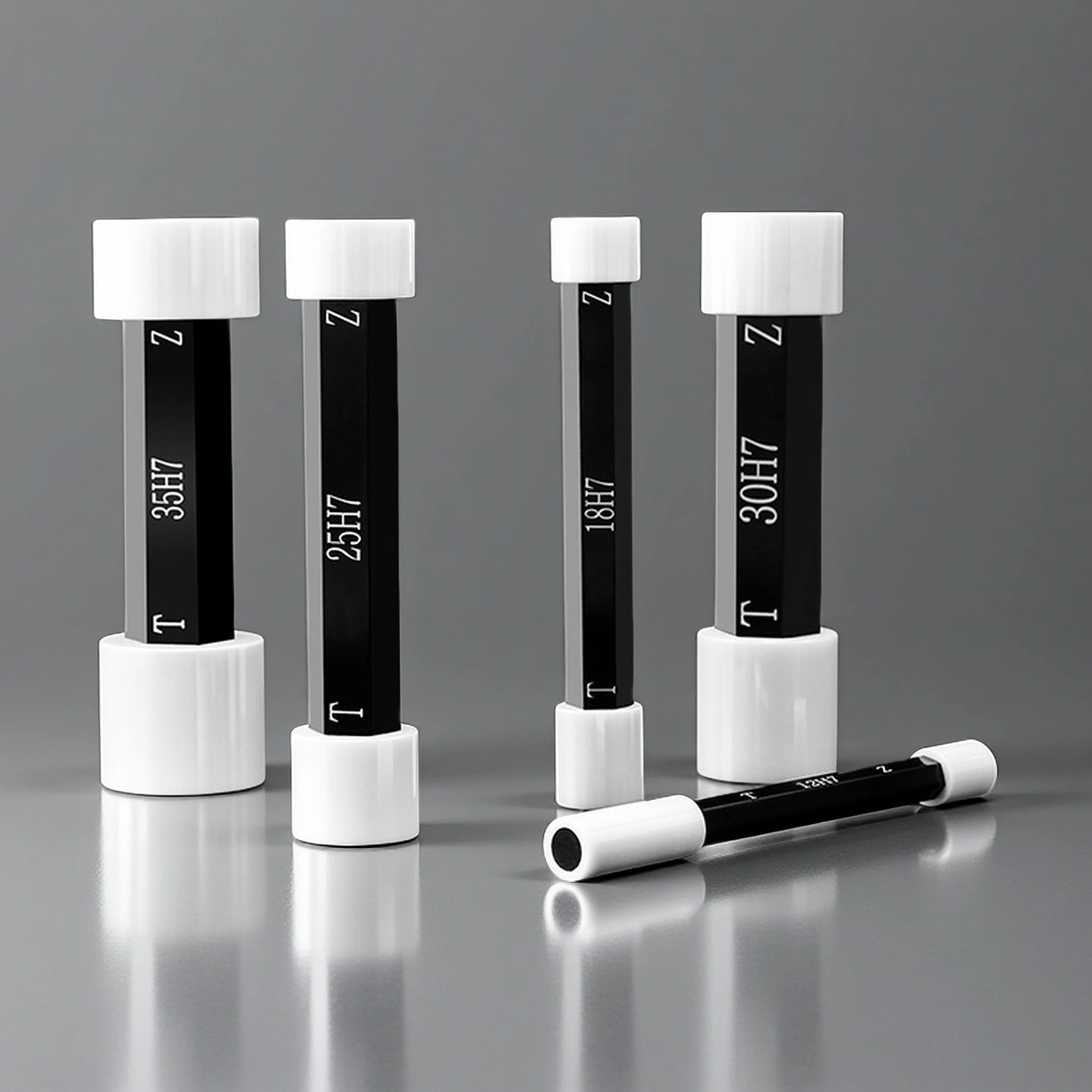
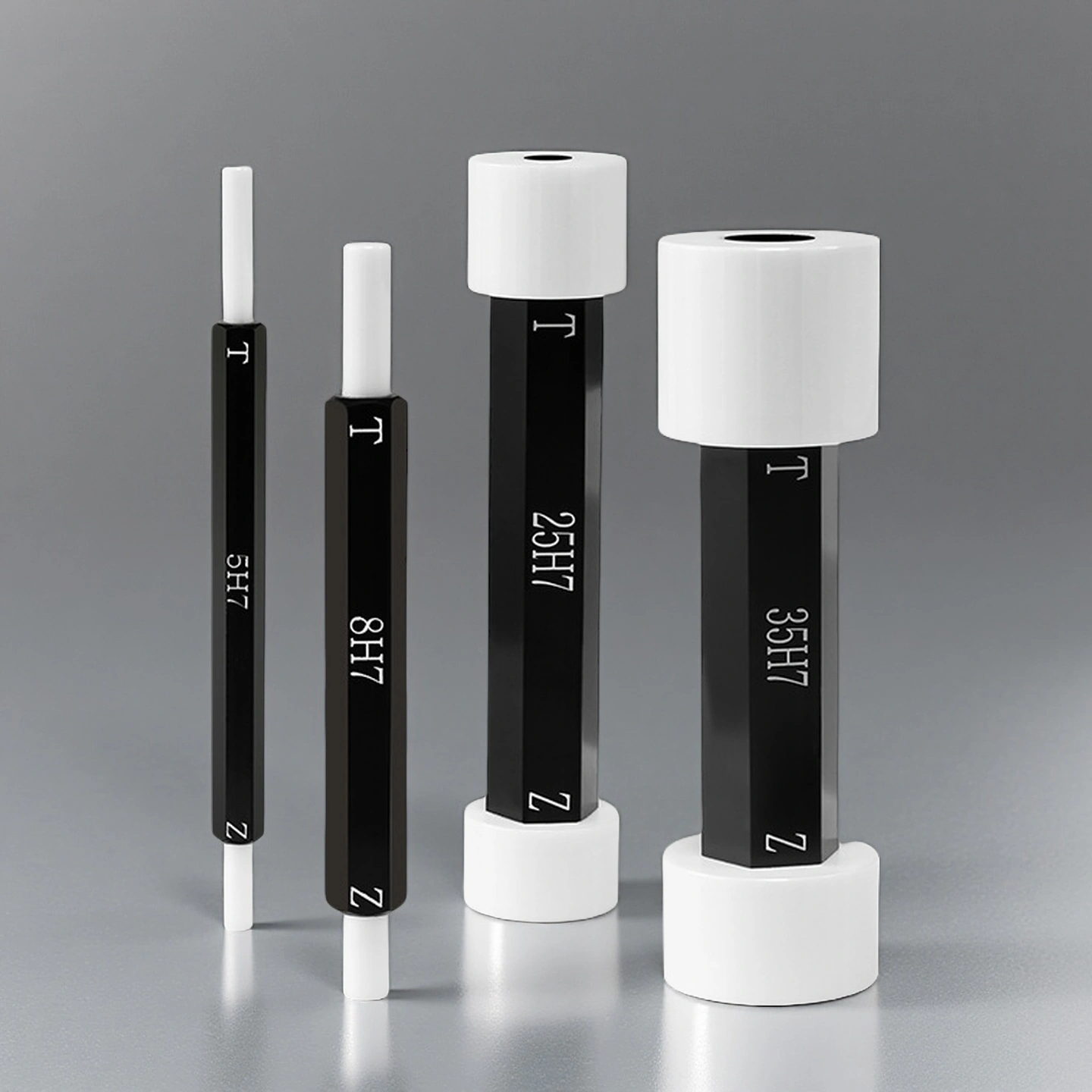
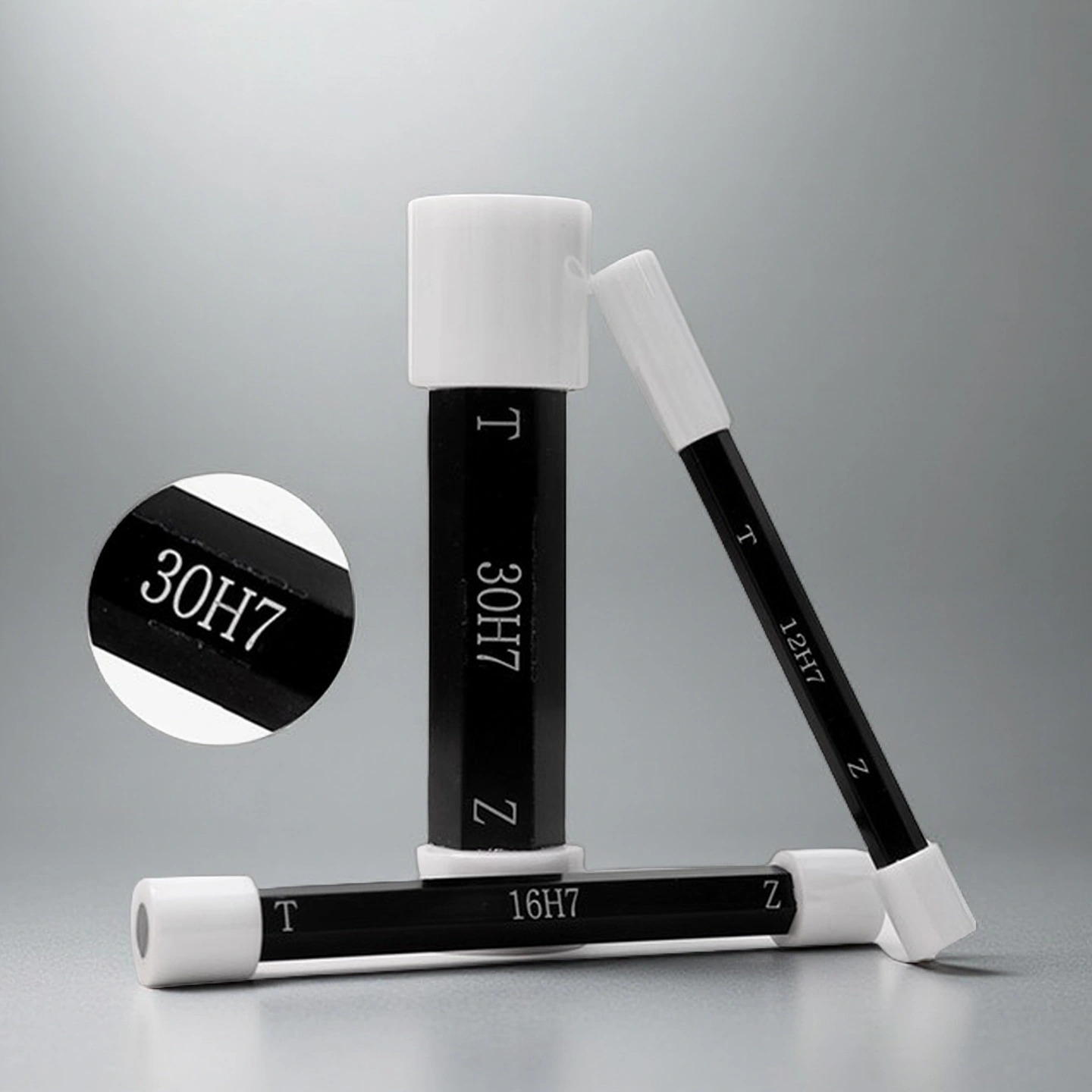
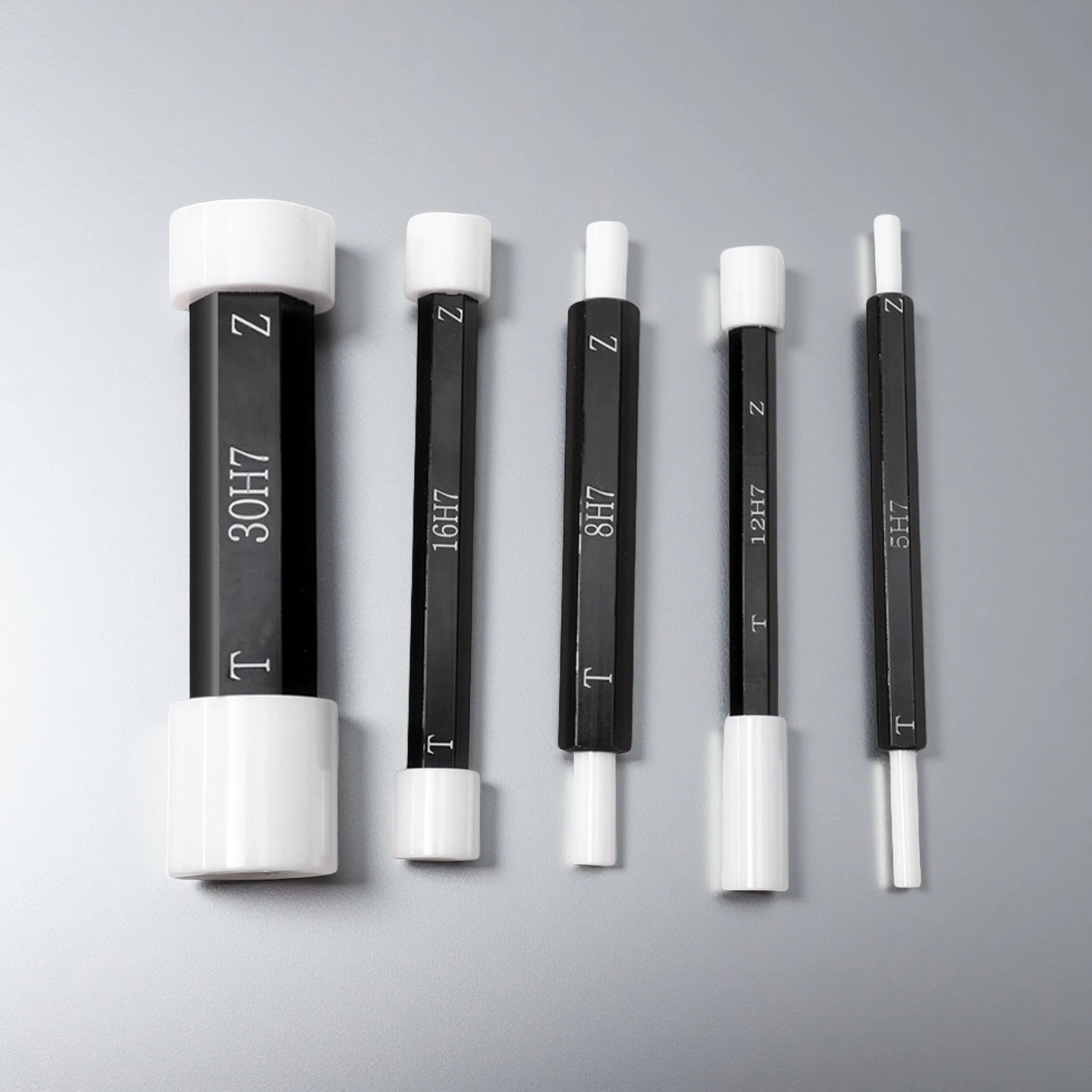
ADCERAX Zirconia Ceramic Plug Gauge is used for GO/NO‑GO bore verification in machining, automotive, and aerospace production cells where uptime and repeatable results matter. It supports stable bore decisions under water‑based coolants and electromagnetic noise due to its non‑magnetic and corrosion‑resistant Y‑TZP ceramic. Zirconia Ceramic Plug Gauge helps quality teams reduce CMM load and maintain takt time while keeping consistent readings in daily inspection routines.
Why Choose Zirconia for Plug Gauges?
Zirconia ceramic is selected for plug gauges when repeated bore inspection requires wear resistance, corrosion resistance, electrical insulation and stable contact with the inspected surface. In wet machining areas, clean assembly lines or non-magnetic inspection environments, metal gauges may rust, transfer particles, become magnetized or require oil protection.
Dense ZrO2 ceramic helps maintain a smooth inspection surface and reduces the risk of metal contamination during repeated GO/NO-GO checks. This makes zirconia plug gauges suitable for quality-control stations where gauge life, surface cleanliness and repeatable fit judgment are more important than low tool cost alone.
Zirconia Ceramic Plug Gauge Key Inspection Advantages
Zirconia ceramic plug gauges are used when repeated bore inspection requires a cleaner, more stable and more wear-resistant measuring surface than conventional metal gauges. Dense ZrO₂ ceramic helps reduce rust, magnetic interference, surface wear and metal transfer during daily GO/NO-GO inspection.
Wear-Resistant Ceramic Contact
The hard zirconia surface helps reduce gauge surface wear during repeated insertion into machined holes, sleeves and precision bores. This is useful for QC stations where the gauge is used frequently and stable fit judgment is important.
Non-Magnetic Material
Zirconia ceramic is non-magnetic, making it suitable for inspection areas near magnetic fixtures, sensors, electronic assemblies or components that should not be affected by magnetic tools.
Corrosion-Resistant ZrO₂
Unlike steel gauges, zirconia ceramic does not rust in selected wet, humid or coolant-exposed environments. This helps keep the gauge surface cleaner during inspection tasks where oil protection is not preferred.
Smooth Polished Surface
A polished ceramic surface helps reduce friction during insertion and removal. It also helps protect the inspected bore surface from metal transfer, scratches or unwanted contamination caused by repeated metal-to-part contact.
Electrical Insulation
Zirconia ceramic provides electrical insulation, which is useful for ESD-sensitive, electrically isolated or electronics-related inspection setups. It can be selected when the gauge should not create an unwanted conductive path.
Drawing-Based Geometry Review
ADCERAX can review special diameters, GO/NO-GO ends, chamfers, handles, marking methods and inspection environments before quotation. This helps match the ceramic gauge design to the actual bore condition and inspection workflow.
Technical Properties of ZrO₂ Gauge Material
The values below are typical material references for zirconia ceramic plug gauges. Final specifications should be confirmed according to zirconia grade, gauge size, surface finish, tolerance requirement and inspection environment.
| Property | Specification | Why It Matters for Inspection |
|---|---|---|
| Material Composition | Yttria-Stabilized Zirconia (Y-TZP) | This material provides a strong balance of hardness, toughness and wear resistance for repeated bore contact. |
| Density | 6.05 ± 0.05 g/cm³ | A dense ceramic structure helps reduce open porosity and supports a smoother inspection surface. |
| Hardness | ≥ 1300 HV | High hardness helps resist surface wear during repeated insertion into machined holes or sleeves. |
| Fracture Toughness | 8–10 MPa·m¹ᐟ² | Higher toughness helps reduce edge chipping risk compared with many conventional brittle ceramics. |
| Flexural Strength | ≥ 1000 MPa | Good bending strength supports small precision gauge parts during normal handling and inspection use. |
| Thermal Expansion Coefficient | ~9.2 × 10⁻⁶/K (20–800°C) | Thermal expansion should be considered when tight tolerance inspection is performed under changing temperatures. |
| Maximum Operating Temperature | 800°C stable performance | This supports use in selected warm or heated inspection environments, but measuring accuracy should still be confirmed at the actual working temperature. |
| Electrical Resistivity | >10¹² Ω·cm @ 20°C | Electrical insulation is useful for inspection stations where the gauge should not create a conductive path. |
| Magnetic Susceptibility | Zero, non-magnetic | Non-magnetic behavior is useful near sensors, magnetic fixtures, electronic assemblies or sensitive inspection setups. |
| Surface Roughness, GO Face | ≤ 0.02 μm Ra | A fine surface finish helps reduce friction, surface transfer and scratching risk during bore checking. |
| Roundness Deviation | ≤ 0.0015 mm | Better roundness supports more stable GO/NO-GO fit judgment in precision hole inspection. |
| Corrosion Resistance | Stable in pH 4–10 coolants and acids | Corrosion resistance helps reduce rust and surface attack in selected wet or coolant-exposed inspection areas. |
| Moisture Absorption | < 0.01% | Low moisture absorption helps maintain dimensional and surface stability in humid environments. |
| Color | Ivory white | The light ceramic color makes surface contamination, chips or visible damage easier to notice during inspection. |
Specifications of Zirconia Ceramic Plug Gauge
| Zirconia Ceramic Plug Gauge | |||
| Item No. | Specification | Interval | Accuracy |
| AT-YHG-TZG001 | 1~3.999mm | 0.001mm | ±0.001mm |
| AT-YHG-TZG002 | 4~5.999mm | 0.001mm | ±0.001mm |
| AT-YHG-TZG003 | 6~6.999mm | 0.001mm | ±0.001mm |
| AT-YHG-TZG004 | 7~7.999mm | 0.001mm | ±0.001mm |
| AT-YHG-TZG005 | 8~8.999mm | 0.001mm | ±0.001mm |
| AT-YHG-TZG006 | 9~9.999mm | 0.001mm | ±0.001mm |
| AT-YHG-TZG007 | 10~10.999mm | 0.001mm | ±0.001mm |
| AT-YHG-TZG008 | 11~11.999mm | 0.001mm | ±0.001mm |
| AT-YHG-TZG009 | 12~12.999mm | 0.001mm | ±0.001mm |
| AT-YHG-TZG010 | 13~13.999mm | 0.001mm | ±0.001mm |
| AT-YHG-TZG011 | 14~14.999mm | 0.001mm | ±0.001mm |
| AT-YHG-TZG012 | 15~15.999mm | 0.001mm | ±0.001mm |
| AT-YHG-TZG013 | 16~16.999mm | 0.001mm | ±0.001mm |
| AT-YHG-TZG014 | 17~17.999mm | 0.001mm | ±0.001mm |
| AT-YHG-TZG015 | 18~18.999mm | 0.001mm | ±0.001mm |
| AT-YHG-TZG016 | 19~19.999mm | 0.001mm | ±0.001mm |
| AT-YHG-TZG017 | 20~20.999mm | 0.001mm | ±0.001mm |
| AT-YHG-TZG018 | 21~21.999mm | 0.001mm | ±0.001mm |
| AT-YHG-TZG019 | 22~22.999mm | 0.001mm | ±0.001mm |
| AT-YHG-TZG020 | 23~23.999mm | 0.001mm | ±0.001mm |
| AT-YHG-TZG021 | 24~24.999mm | 0.001mm | ±0.001mm |
| AT-YHG-TZG022 | 25~25.999mm | 0.001mm | ±0.001mm |
| AT-YHG-TZG023 | 26~26.999mm | 0.001mm | ±0.001mm |
| AT-YHG-TZG024 | 27~27.999mm | 0.001mm | ±0.001mm |
| AT-YHG-TZG025 | 28~28.999mm | 0.001mm | ±0.001mm |
| AT-YHG-TZG026 | 29~29.999mm | 0.001mm | ±0.001mm |
| AT-YHG-TZG027 | 30~30.999mm | 0.001mm | ±0.001mm |
| AT-YHG-TZG028 | 31~31.999mm | 0.001mm | ±0.001mm |
| AT-YHG-TZG029 | 32~32.999mm | 0.001mm | ±0.001mm |
| AT-YHG-TZG030 | 33~33.999mm | 0.001mm | ±0.001mm |
| AT-YHG-TZG031 | 34~34.999mm | 0.001mm | ±0.001mm |
| AT-YHG-TZG032 | 35~35.999mm | 0.001mm | ±0.001mm |
| AT-YHG-TZG033 | 36~36.999mm | 0.001mm | ±0.001mm |
| AT-YHG-TZG034 | 37~37.999mm | 0.001mm | ±0.001mm |
| AT-YHG-TZG035 | 38~38.999mm | 0.001mm | ±0.001mm |
| AT-YHG-TZG036 | 39~39.999mm | 0.001mm | ±0.001mm |
| AT-YHG-TZG037 | 40.000mm | / | ±0.001mm |
| AT-YHG-TZG038 | 41.000mm | / | ±0.001mm |
| AT-YHG-TZG039 | 42.000mm | / | ±0.001mm |
| AT-YHG-TZG040 | 43.000mm | / | ±0.001mm |
| AT-YHG-TZG041 | 44.000mm | / | ±0.001mm |
| AT-YHG-TZG042 | 45.000mm | / | ±0.001mm |
| AT-YHG-TZG043 | 46.000mm | / | ±0.001mm |
| AT-YHG-TZG044 | 47.000mm | / | ±0.001mm |
| AT-YHG-TZG045 | 48.000mm | / | ±0.001mm |
| AT-YHG-TZG046 | 49.000mm | / | ±0.001mm |
| AT-YHG-TZG047 | 50.000mm | / | ±0.001mm |
Packaging of Zirconia Ceramic Plug Gauge
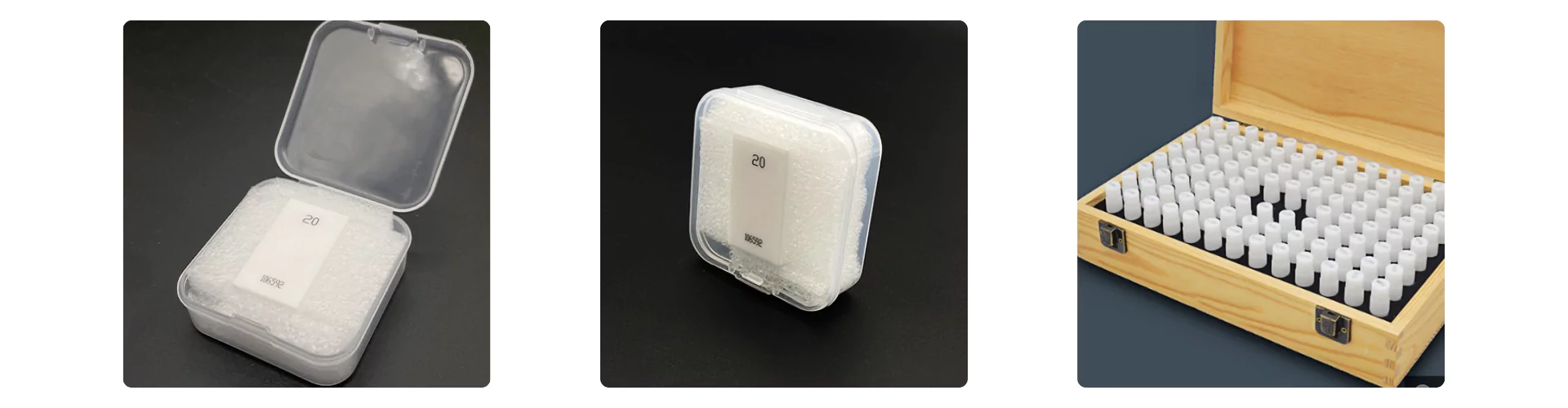
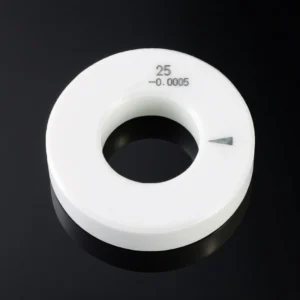
Each zirconia ceramic plug gauge should be separated and protected to avoid edge impact, surface scratches and ceramic-to-metal contact during transport. ADCERAX® can use foam positioning, individual cases, reinforced cartons or wooden packaging according to gauge size, quantity and shipment requirement.