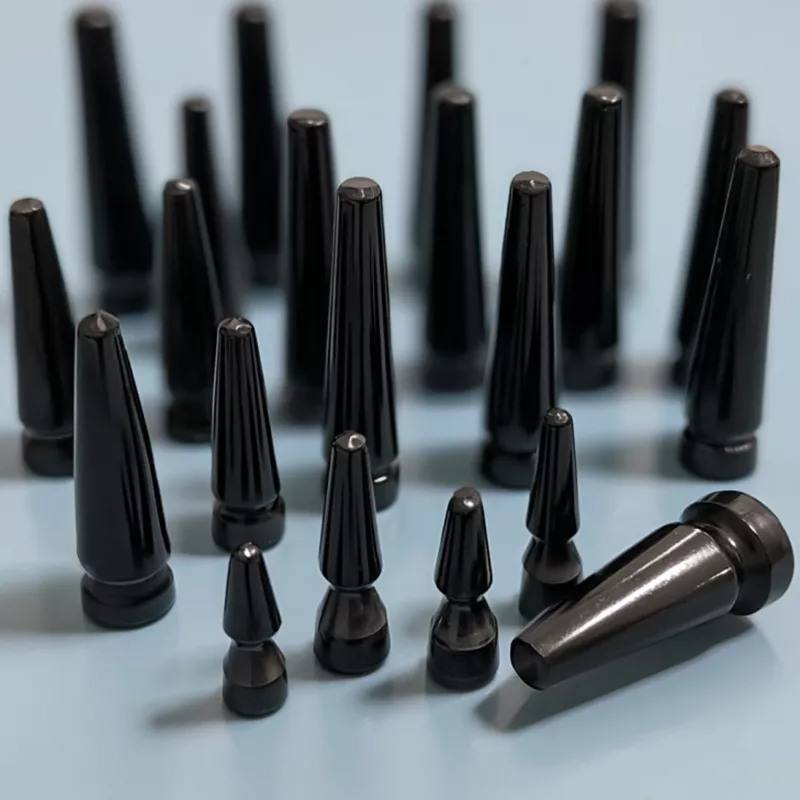
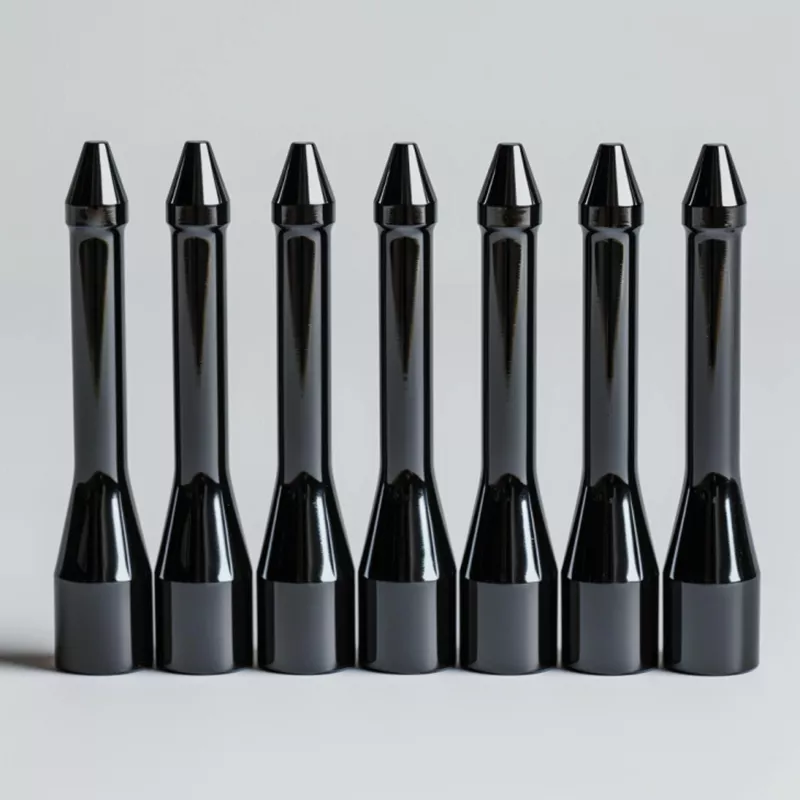
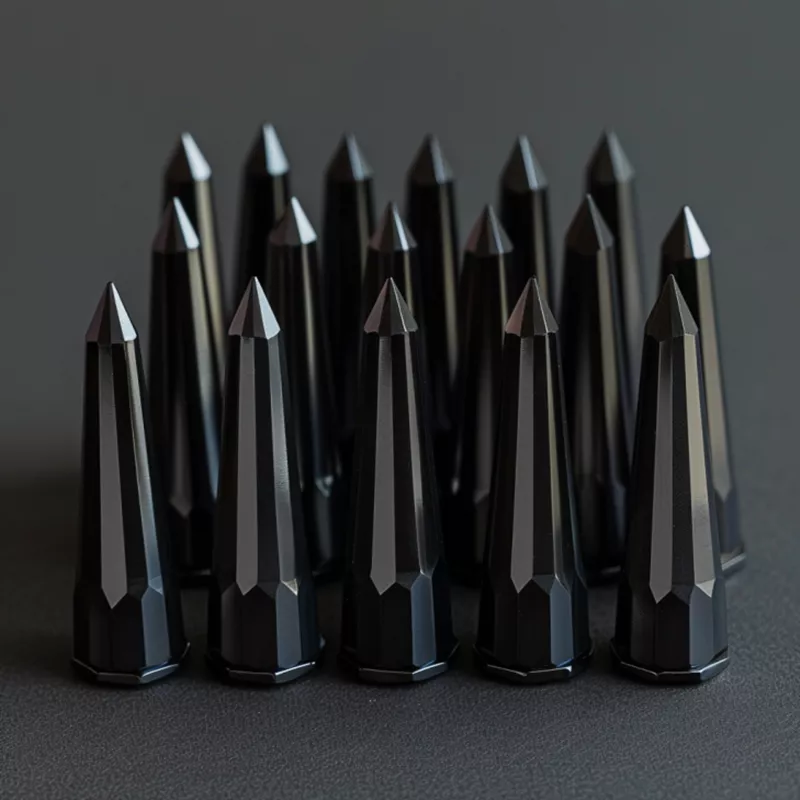
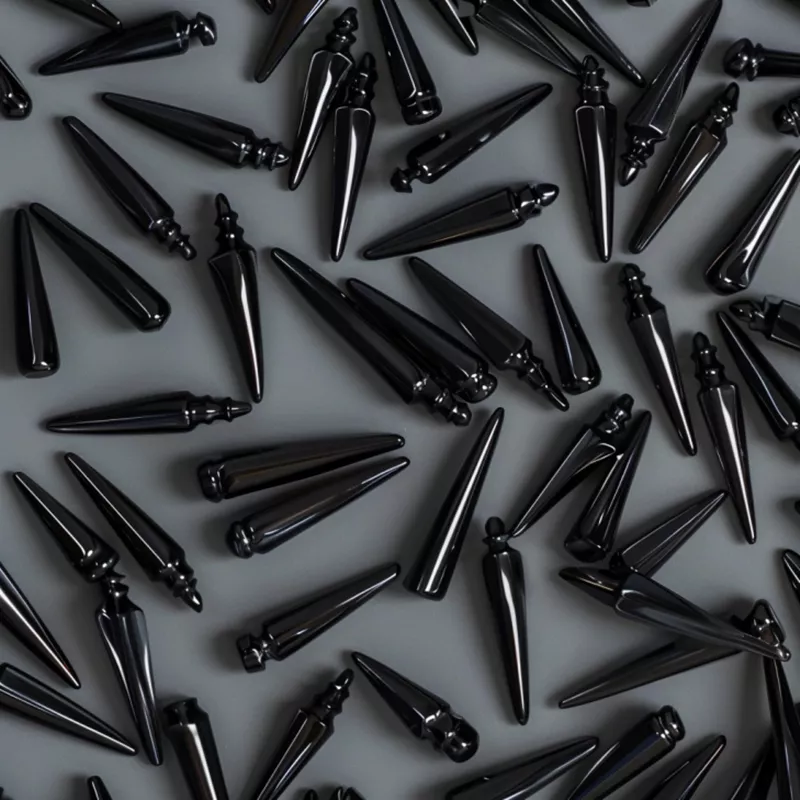
ADCERAX® Black Zirconia Ceramic Pin is engineered for industrial fixtures requiring high strength, chemical resistance, and thermal stability. It is widely used in robotic welding, precision tooling, and corrosive environments where conventional metal pins fail. Manufactured from yttria- or magnesia-stabilized zirconia, each pin delivers extended service life and consistent mechanical performance. The dense microstructure and black finish provide improved durability and visual detection in automated systems.
Features of Black Zirconia Ceramic Pin
- Flexural strength ≥ 1000 MPa enables load-bearing operation under dynamic force without structural failure. This level surpasses hardened steel dowels (typically 700–800 MPa).
- Fracture toughness of 7–10 MPa·m¹ᐟ² resists crack propagation from surface defects, which is 2× higher than alumina ceramics.
- Proven mechanical reliability in BIW robotic welding lines showed >90 days usage without dimensional drift under daily cycling.
- Measured hardness ranges from HV 1200–1300, ensuring long-term surface integrity in repetitive contact fixtures.
- Pin wear tests under 15 N load at 1000 cycles show <0.02 mm diameter loss, compared to 0.1–0.15 mm for steel equivalents.
- Ra ≤ 0.2 µm surface roughness maintains low friction and prevents particle buildup in high-speed or dirty environments.
- Black Zirconia Ceramic Pin remains stable from −50 °C to 800 °C, allowing installation near weld arcs or furnace zones.
- In 72‑hour acid bath testing (H₂SO₄, NaOH), weight change was <0.05%, confirming high corrosion resistance.
- Electrical resistivity over 10¹² Ω·cm prevents arcing or current leakage in high-voltage fixture assemblies.
Technical Properties of Black Zirconia Ceramic Pin
Black Zirconia Ceramic Pin demonstrates a combination of mechanical strength, thermal endurance, and electrical insulation optimized for continuous operation in industrial welding, tooling, and chemical environments. Its dense stabilized zirconia structure ensures consistent performance and dimensional integrity under high stress and temperature fluctuation.
| Property |
Specification |
| Material Composition |
3Y‑TZP / Mg‑PSZ Zirconia |
| Density |
≥ 6.0 g/cm³ |
| Flexural Strength |
≥ 1000 MPa |
| Compressive Strength |
≥ 2000 MPa |
| Hardness |
HV 1200 – 1300 (HRA 88) |
| Fracture Toughness (K_IC) |
7 – 10 MPa·m¹ᐟ² |
| Elastic Modulus |
200 – 210 GPa |
| Thermal Expansion Coefficient |
10.5 × 10⁻⁶ /K (20–400 °C) |
| Thermal Conductivity |
≈ 2.0 W/m·K |
| Electrical Resistivity |
> 10¹² Ω·cm |
| Operating Temperature Range |
−50 °C to 800 °C |
| Chemical Resistance |
Stable to acids, alkalis, and organic solvents |
| Water Absorption |
0 % (non‑porous) |
| Color |
Uniform black (anti‑reflective surface) |
| Surface Finish |
Ra ≤ 0.2 µm (precision‑ground) |
Specifications of Black Zirconia Ceramic Pin
|
Black Zirconia Ceramic Pin |
|
Model |
Size |
|
AT-HG-X1001 |
Customized |
Packaging of Black Zirconia Ceramic Pin
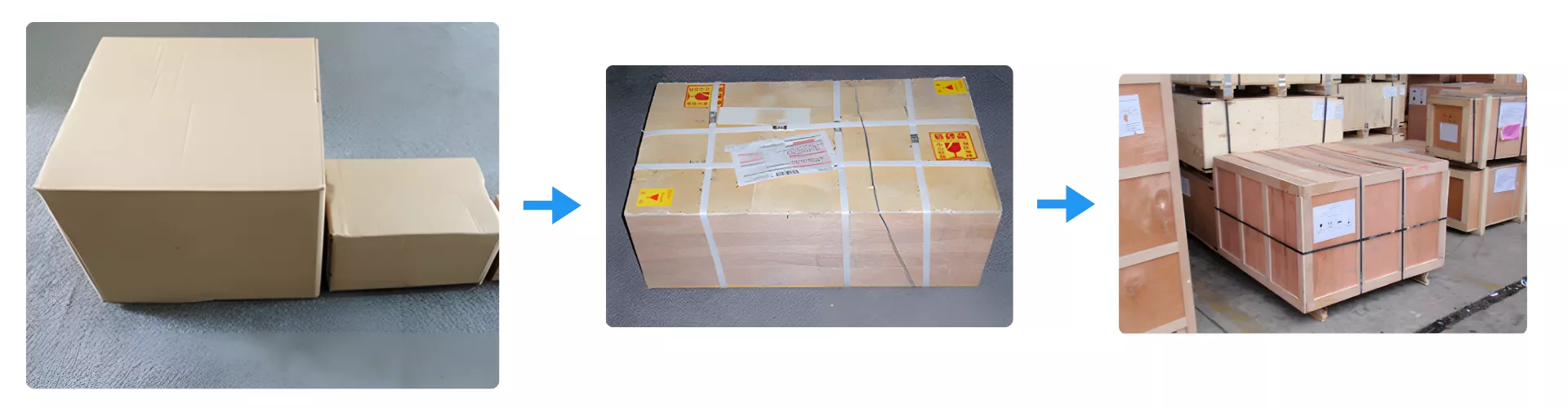
Black Zirconia Ceramic Pin is securely packed in multi-layer inner cartons followed by reinforced plywood crates. Each package is labeled with handling warnings and international shipping markings to ensure transit safety. Export wooden crates are palletized and strap-secured for forklift compatibility and moisture protection during long-distance transport.
Application-Specific Solutions Enabled by ADCERAX® Black Zirconia Ceramic Pin
ADCERAX® Black Zirconia Ceramic Pin is designed to meet the operational demands of industries that rely on high-strength, wear-resistant, and chemically inert components for precise positioning and stable load transfer. Its performance advantages translate directly into increased fixture longevity, improved safety, and minimized maintenance downtime across high-value applications.
-
Use of Black Zirconia Ceramic Pin in CNC Tool Preset Fixtures
✅Key Advantages
1. Thermal Cycle Resistance at Micro-Tolerances
Black Zirconia Ceramic Pin maintains dimensional accuracy under >1000 thermal load cycles from ambient to 180 °C. In spindle preset systems, this prevents cumulative toolpath deviation and fixture mismatch.
2. Debris-Resistant Surface Stability
The polished Ra ≤ 0.2 µm surface resists coolant-born debris adhesion during >10,000 rotational cycles, eliminating buildup that normally causes radial misalignment or tool deflection.
3. Dynamic Load Fatigue Resistance
With a fracture toughness of 7–10 MPa·m¹ᐟ², the pin endures sustained vibration and tool clamping cycles in high-RPM environments without micro-cracking or stress failure.
✅ ️Problem Solved
At a Tier-1 aerospace machining firm in Canada, tool presetters using hardened steel dowels experienced 0.025 mm drift after 6 weeks, causing offset compensation errors and 2.3% part rejection. After switching to ADCERAX® Black Zirconia Ceramic Pins, positional accuracy remained within 0.005 mm over 12 weeks, and scrap rates dropped below 0.4% without added cleaning or fixture resets.
-
Black Zirconia Ceramic Pin in Metallurgical Line Alignment Systems
✅Key Advantages
1. Zero Thermal Distortion at Operating Temperatures
Black Zirconia Ceramic Pin maintains shape at 600–800 °C ambient without creep or distortion, outperforming Cr-Mo alloy pins that elongate or warp under constant radiant exposure.
2. Resistance to Metal Oxide Scaling
Zirconia’s chemically inert surface showed <0.01% weight gain after 96-hour exposure to oxidized furnace atmospheres, preventing flake buildup that often blocks alignment bores.
3. Shock-Endurance Under High Compressive Stress
With ≥2000 MPa compressive strength, pins withstand impact loads during die or mold seating, preventing stress fracture commonly observed in carbon steel rods after 50+ cycles.
✅ ️Problem Solved
A Polish steelworks using pin-guided mold alignment faced weekly dowel swelling from oxide scaling, leading to ejection jams and 4 hours/week maintenance downtime. After implementing ADCERAX® Black Zirconia Ceramic Pins, thermal stability and alignment held for 10+ weeks, cutting maintenance intervention frequency by 70% and improving mold change efficiency across 4 production lines.
-
Black Zirconia Ceramic Pin for Chemical Transfer Pump Mounting Fixtures
✅Key Advantages
1. No Dimensional Degradation in Acid Vapor Environments
The Black Zirconia Ceramic Pin maintained dimensional consistency <0.005 mm loss after 72-hour exposure to HCl/NaOH vapors at 60 °C, while metal pins exceeded 0.08 mm loss.
2. Long-Term Fluid Isolation Integrity
Its 0% water absorption ensures full sealing support under continuous wet service, preventing seal misfit or shaft dislocation over 90-day operating cycles in fluid-facing interfaces.
3. Dielectric Strength for Embedded Sensor Isolation
With resistivity over 10¹² Ω·cm, the pin safely supports in-pump sensors or signal pathways without generating current bridges under high-moisture conditions.
✅ ️Problem Solved
A German chemical dosing equipment OEM found that 316L pins used to align PTFE-sealed impellers corroded within 30 days, causing vibration and shaft wobble. After switching to ADCERAX® Black Zirconia Ceramic Pins, alignment remained stable throughout a 6-month endurance test in a mixed acid environment (pH < 1), with zero pin degradation and uninterrupted seal concentricity. Maintenance frequency was reduced by 50%, and system reliability improved across four dosing pump models.
User Guidelines for Safe and Effective Use of Black Zirconia Ceramic Pin
Black Zirconia Ceramic Pin offers strong mechanical stability across complex industrial setups, but to maximize its lifecycle and avoid premature failure, users must follow application-specific handling and integration guidelines. The following instructions help ensure proper performance retention, structural integrity, and safety across installation, operation, and maintenance processes.
-
Installation Considerations in Precision Fixtures
1. Avoid Excessive Insertion Force
Use press-fit procedures only within validated interference limits. Do not hammer or deform the ceramic surface, which can cause microcracks that reduce service life.
2. Ensure Rigid Base Material Compatibility
Mount Black Zirconia Ceramic Pins into metal, composite, or ceramic blocks that maintain thermal compatibility. Avoid mismatched expansion coefficients, especially in heat-cycle applications.
3. Use Clean Contact Surfaces
Clean both the pin and fixture bore thoroughly before insertion. Debris or oil residue may cause alignment deviation or result in improper seating under load.
-
Operating Environment Requirements
1. Limit Contact with Abrasive Particulates
While Black Zirconia Ceramic Pin resists wear, exposure to glass fiber dust or hard metal chips can cause surface scoring during vibration or oscillation.
2. Stabilize Thermal Gradient Loads
Ensure even heating and avoid directional flame contact in applications above 600 °C. Thermal shocks greater than 300 °C/min may induce structural stress.
3. Prevent Long-Term Acid Vapor Exposure Without Isolation
Although acid-resistant, extended exposure to strong HF or sulfuric vapors may erode pin housing materials, compromising pin alignment indirectly.
-
Maintenance and Inspection Best Practices
1. Perform Alignment Checks After 10,000 Cycles
Use pin gauge tools or laser alignment verifiers to ensure < 0.01 mm drift tolerance. Misalignment often results from fixture base degradation, not the pin.
2. Inspect Surface for Gloss Changes or Microcracks
Any loss of surface luster or visible line fracture indicates internal stress propagation. Immediate replacement is recommended to avoid operational failures.
3. Log Service Time in Corrosive or Thermal Zones
Keep detailed usage logs for pins operating under chemical or thermal fatigue. Average lifespan varies from 6 to 18 months depending on exposure intensity.
-
Handling and Storage Instructions
1. Store in Impact-Proof, Padded Compartments
Always isolate Black Zirconia Ceramic Pins from steel tools and heavy parts. Unprotected bulk storage leads to edge chipping or fracture from contact damage.
2. Mark Orientation and Functional Surfaces
Use low-residue labels or laser markings for easy part identification. Avoid ink or solvent markers, which may chemically alter the surface.
3. Ensure Dry and Temperature-Stable Storage Area
Humidity above 60% or rapid daily thermal variation may affect surrounding packaging, leading to shock exposure during retrieval or unpacking.