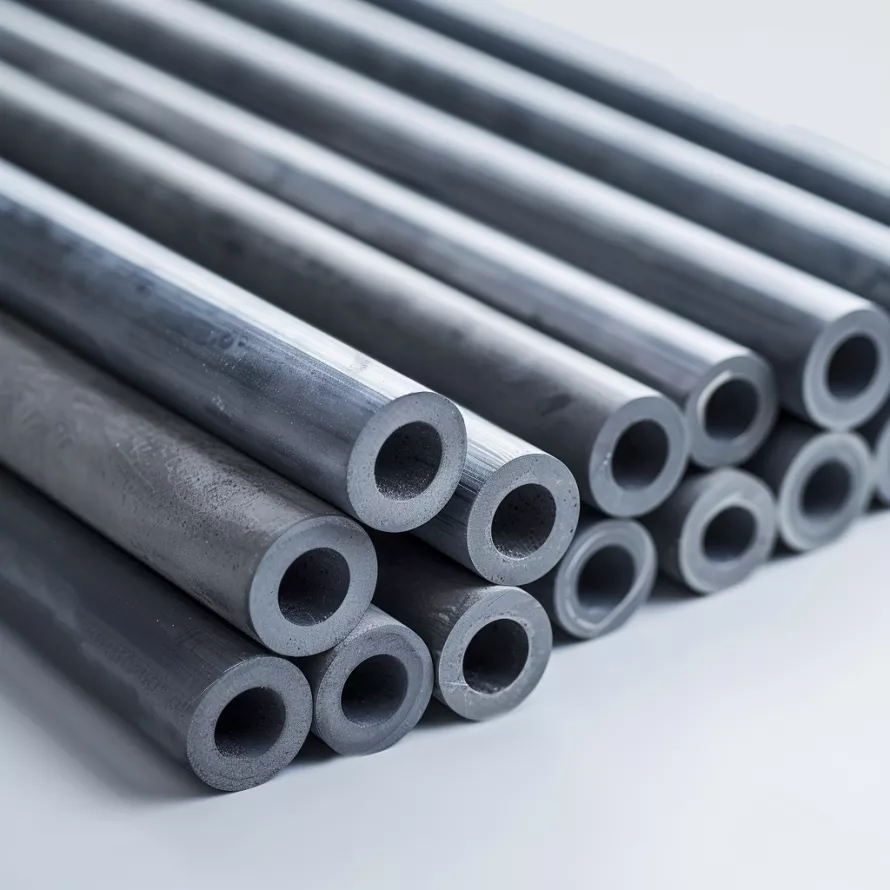
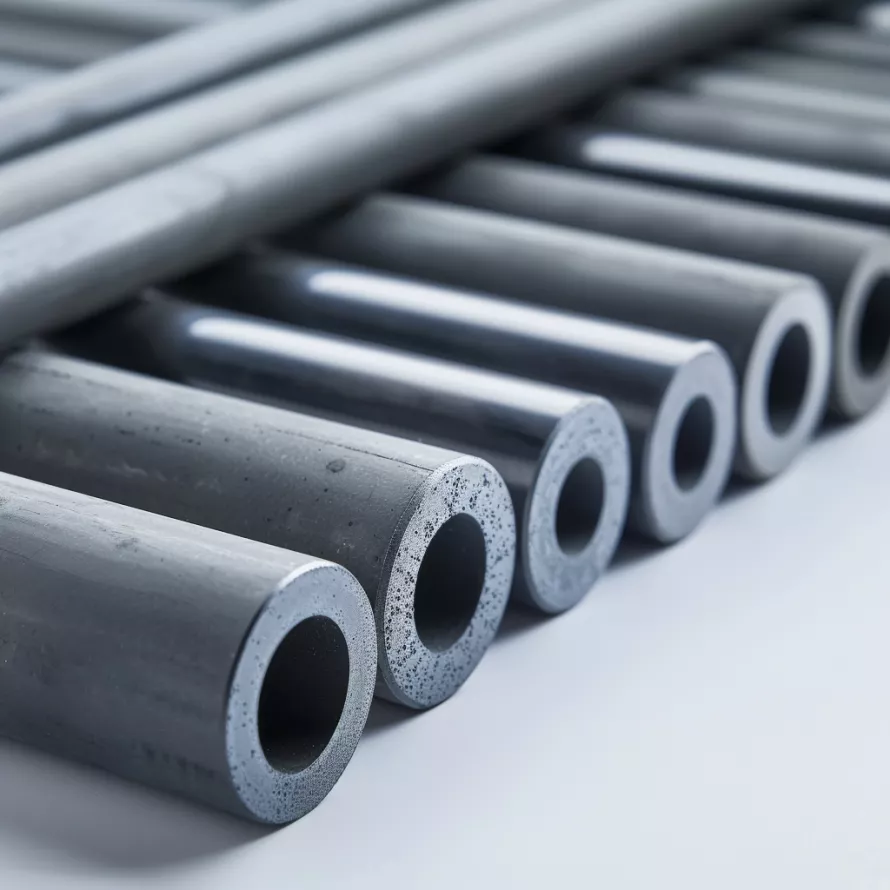
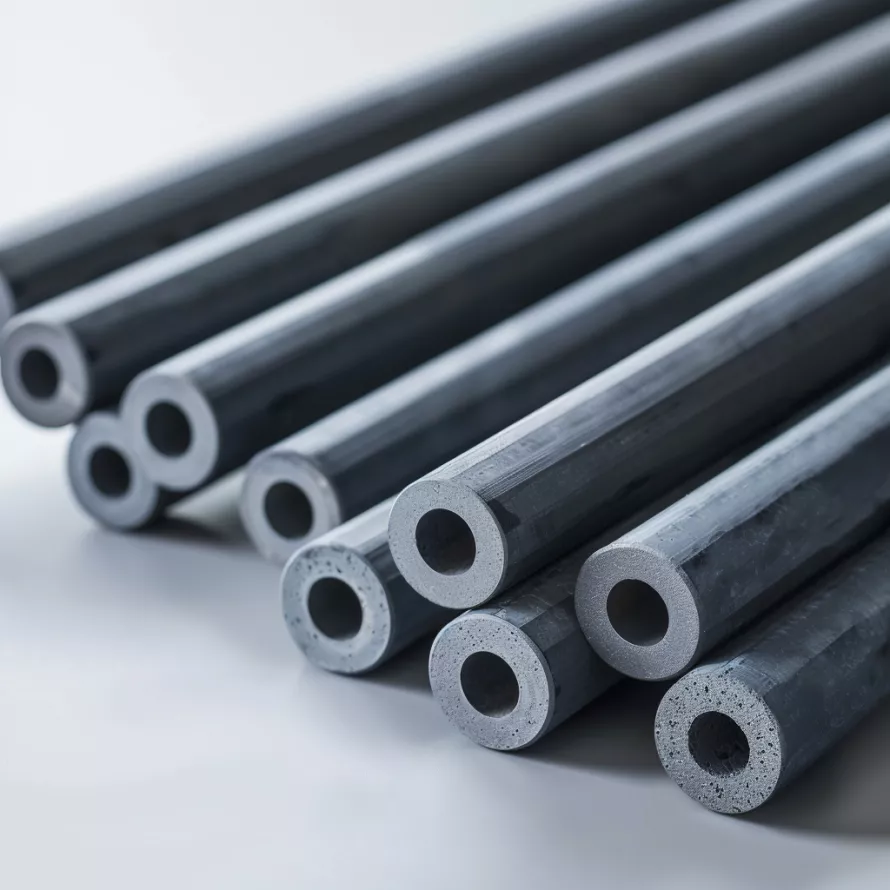
Reinforced Silicon Carbide Kiln Roller for Continuous Firing Systems

Silicon Carbide Kiln Roller delivers stable performance in continuous high-temperature production lines through its reaction-bonded SiC structure, high mechanical strength, and predictable thermal behavior under demanding kiln atmospheres.

Catalogue No. AT-THG-KB001
Material Reaction-Bonded Silicon Carbide (RBSiC / SiSiC)
Flexural Strength Typical >200–250 MPa for long-span stability
Working Temperature Continuous operation at 1,350–1,380 °C
Surface Hardness Comparable to HRA 88–90 for wear resistance
24H Standard Dispatch
Small Batch Support OEM
Factory Direct
Expert Engineering Support

ADCERAX® Silicon Carbide Kiln Roller is engineered for continuous thermal cycling in roller hearth kilns where material flow, straightness retention, and temperature uniformity determine production stability. Its reaction-bonded SiC microstructure provides high modulus and low creep behavior, allowing the roller to maintain alignment under heavy ceramic loads and persistent exposure to alkali-rich kiln atmospheres. This combination of mechanical rigidity and thermal efficiency supports consistent firing results across lithium battery materials, technical ceramics, and large-format porcelain applications.

Core Advantages of the ADCERAX® Silicon Carbide Kiln Roller

  • High-Strength RBSiC Microstructure

    • High Flexural Strength
      The roller maintains structural load capacity with a typical flexural strength of >200–250 MPa, supporting long spans without deformation.
      This strength level enables reliable performance in roller kilns where ware loads can exceed several hundred kilograms per zone.

    • High Surface Hardness
      The closed-pore SiC microstructure provides hardness comparable to HRA 88–90, reducing abrasion from kiln furniture and conveyed products.
      This hardness level helps extend service life by limiting surface wear even after thousands of heating cycles.

    • High Elastic Modulus
      The material’s elastic modulus supports long-span operation by mitigating bending and vibration at temperatures above 1,200 °C.
      This ensures the roller retains straightness across kilns exceeding 40–60 m in total length.

  • Thermal Stability in Continuous Kiln Operation

    • High-Temperature Working Range
      Stable operation is maintained at 1,350–1,380 °C in continuous firing conditions.
      This minimizes distortion and prevents structural drift across long firing schedules.

    • Thermal Shock Resistance
      The SiC matrix withstands abrupt changes in temperature, exceeding the performance of oxide-based rollers across repeated rapid-firing cycles.
      This resilience reduces the risk of cracking during kiln startups, shutdowns, or emergency cooling events.

    • High Thermal Conductivity
      The roller supports fast heat transfer, contributing to cycle-time reductions and more uniform temperature fields along the kiln.
      This thermal advantage helps lower firing energy usage by 5–15% in many continuous production environments.

  • Chemical Resistance and Dimensional Stability

    • Alkali Vapor Resistance
      The RBSiC structure withstands alkali vapors generated during calcination of LFP and high-nickel cathode materials, reducing surface corrosion rates by up to 40% compared with oxide rollers.
      This resistance stabilizes surface roughness over extended runs, preventing contamination during high-value material processing.

    • Low Creep Deformation
      The roller maintains dimensional stability with creep rates significantly below oxide ceramics in 1,200–1,350 °C furnace zones.
      This allows sustained operation over multi-month kiln cycles without appreciable bending or sagging.

    • Straightness Retention
      Precision-machined geometry supports straightness consistency even under heavy ware loading and elevated temperatures across long kiln spans.
      This stability reduces ware misalignment and minimizes downstream defects in continuous production lines.

Technical Specifications of Silicon Carbide Kiln Roller

ADCERAX® Silicon Carbide Kiln Roller demonstrates stable mechanical, thermal, and chemical performance under continuous high-temperature cycling, reflecting the inherent characteristics of reaction-bonded silicon carbide used in demanding kiln environments.

Property Specification
Material Composition Reaction-Bonded SiC (RBSiC / SiSiC)
Flexural Strength >200–250 MPa
Compressive Strength >1,500 MPa
Surface Hardness HRA 88–90
Elastic Modulus >300 GPa
Thermal Conductivity 35–45 W/m·K
Maximum Operating Temperature 1,350–1,380 °C (continuous use)
Thermal Expansion Coefficient 4.0–4.5 × 10⁻⁶ /K
Thermal Shock Resistance Stable after rapid ΔT cycles >250 °C
Bulk Density 2.95–3.05 g/cm³
Open Porosity <0.1%
Chemical Resistance Stable in alkali-rich, oxidizing, CO/CO₂ kilns
Creep Resistance Low creep at 1,200–1,350 °C
Oxidation Stability Stable up to 1,400 °C in air

Dimensions of Silicon Carbide Kiln Roller

Model No. Size(mm) OD(mm) ID(mm) Thickness(mm) Length(mm)
AT-THG-KB001 OD20XID12 20 12 4 50-4500mm
AT-THG-KB002 OD20XID10 20 10 5
AT-THG-KB003 OD25XID15 25 15 5
AT-THG-KB004 OD28XID20 28 20 4
AT-THG-KB005 OD25XID13 25 13 6
AT-THG-KB006 OD25.3XID17.3 25 17.3 4
AT-THG-KB007 OD25.3XID18.3 25 18.3 3.5
AT-THG-KB008 OD28XID18 28 18 5
AT-THG-KB009 OD30XID22 30 22 4
AT-THG-KB010 OD30XID18 30 18 6
AT-THG-KB011 OD30.3XID21.3 30 21.3 4.5
AT-THG-KB012 OD32XID24 32 24 4
AT-THG-KB013 OD32XID22 32 22 5
AT-THG-KB014 OD32XID20 32 20 6
AT-THG-KB015 OD33.5XID25.5 33 25.5 4
AT-THG-KB016 OD33.5XID23.5 33 23.5 5
AT-THG-KB017 OD33.5XID21.5 33 21.5 6
AT-THG-KB018 OD35XID27 35 27 4
AT-THG-KB019 OD35XID25 35 25 5
AT-THG-KB020 OD35XID23 35 23 6
AT-THG-KB021 OD35.5XID27.5 35 27.5 4
AT-THG-KB022 OD35.5XID25.5 35 25.5 5
AT-THG-KB023 OD35.5XID23.5 35 23.5 6
AT-THG-KB024 OD38XID30 38 30 4
AT-THG-KB025 OD38XID28 38 28 5
AT-THG-KB026 OD38XID26 38 26 6
AT-THG-KB027 OD40XID30 40 30 5
AT-THG-KB028 OD40XID29 40 29 5.5
AT-THG-KB029 OD40XID28 40 28 6
AT-THG-KB030 OD42XID32 42 32 5
AT-THG-KB031 OD42XID30 42 30 6
AT-THG-KB032 OD45XID35 45 35 5
AT-THG-KB033 OD45XID33 45 33 6
AT-THG-KB034 OD45XID31 45 31 7
AT-THG-KB035 OD48XID38 48 38 5
AT-THG-KB036 OD48XID36 48 36 6
AT-THG-KB037 OD48XID34 48 34 7
AT-THG-KB038 OD50XID40 50 40 5
AT-THG-KB039 OD50XID38 50 38 6
AT-THG-KB040 OD50XID36 50 36 7
AT-THG-KB041 OD55XID43 55 43 6
AT-THG-KB042 OD55XID39 55 39 8
AT-THG-KB043 OD58XID46 58 46 6
AT-THG-KB044 OD58XID44 58 44 7
AT-THG-KB045 OD58XID42 58 42 8
AT-THG-KB046 OD60XID48 60 48 6
AT-THG-KB047 OD60XID46 60 46 7
AT-THG-KB048 OD60XID44 60 44 8
AT-THG-KB049 OD65XID51 65 51 7
AT-THG-KB050 OD65XID53 65 53 6
AT-THG-KB051 OD70XID58 70 58 6
AT-THG-KB052 OD70XID56 70 56 7
AT-THG-KB053 OD70XID54 70 54 8
AT-THG-KB054 OD75XID63 75 63 6
AT-THG-KB055 OD75XID61 75 61 7
AT-THG-KB056 OD75XID59 75 59 8
AT-THG-KB057 OD89XID75 89 75 7
AT-THG-KB058 OD99XID79 99 79 10

Packaging Overview for Silicon Carbide Kiln Roller

Silicon Carbide Kiln Roller is packed in reinforced wooden crates with foam-lined compartments to prevent contact and vibration during transport. Each roller is individually separated to avoid surface abrasion and structural impact in long-distance shipments. The overall packaging structure is designed to maintain stability under stacking, ensuring safe arrival for industrial kiln installation.
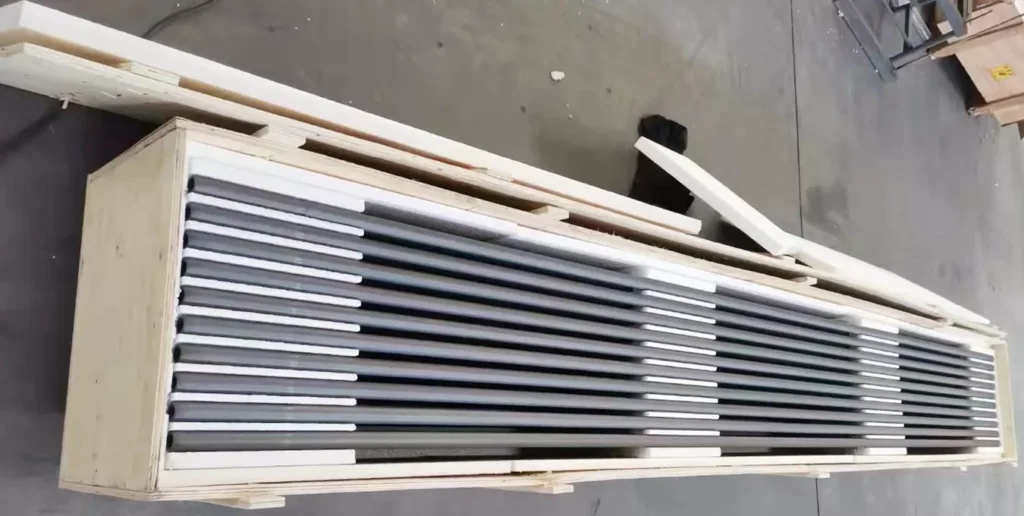

Packaging for Silicon Carbide Protection Tube

ADCERAX® Silicon Carbide Kiln Roller Resolves Critical Kiln-Line Challenges Across High-Demand Industrial Processes

The Silicon Carbide Kiln Roller from ADCERAX® is engineered to address process-level bottlenecks in continuous roller-hearth kilns where temperature uniformity, mechanical rigidity, and chemical durability directly influence production stability, yield consistency, and operating cost.

  • Silicon Carbide Kiln Roller in Lithium Cathode Calcination Lines

    ✅Key Advantages

    1. Alkali-Vapor Stable RBSiC Matrix
    The ADCERAX® Silicon Carbide Kiln Roller uses a reaction-bonded SiC matrix that maintains surface integrity in strong alkali vapor environments typical of LFP and high-nickel cathode kilns at 1,350–1,380 °C. Field experience shows that surface roughness growth rate can be reduced by 30–40% compared with conventional oxide rollers across 300–500 h firing campaigns.

    2. Long-Cycle Straightness Retention
    High flexural strength in the >200–250 MPa class and low creep at 1,200–1,350 °C allow the roller to keep transport alignment over extended production runs. In multi-zone cathode kilns, this performance helps maintain stable tracking across lines exceeding 40 m in length without reaching the sag levels that trigger emergency roller changes.

    3. Reduced Contamination Risk for Active Materials
    The dense SiC surface limits glaze formation and particle adhesion under continuous powder feed conditions. Plants upgrading to ADCERAX® Silicon Carbide Kiln Rollers have reported measurable reductions in contamination-related scrap, in some cases lowering powder batch rejection by 5–10% in high-throughput cathode production.

    ✅ ️Problem Solved

    A cathode material producer operating two roller-hearth lines at 1,350–1,380 °C experienced frequent roller bowing and surface corrosion after 300–400 h of operation, leading to misalignment, uneven powder layers, and emergency kiln stoppages. Average unplanned downtime reached 3–4 shifts per quarter, with each stoppage associated with significant lost output and material rework. After replacing the most critical positions with ADCERAX® Silicon Carbide Kiln Rollers, the plant recorded a reduction in unplanned roller-related stoppages by over 50% within the next operating cycle. Variability in cathode performance linked to transport instability decreased, and the production team was able to extend planned maintenance intervals without sacrificing process stability.

  • Silicon Carbide Kiln Roller in Technical Ceramic Substrate Firing

    ✅Key Advantages

    1. High Modulus Support for Long Kiln Lengths
    The ADCERAX® Silicon Carbide Kiln Roller offers an elastic modulus above 300 GPa, which limits deflection under substrate loads at temperatures exceeding 1,200 °C. This stiffness is particularly important in kilns longer than 40–60 m, where small angular deviations can accumulate into visible warpage on large, thin substrates.

    2. Thermal Conductivity for Uniform Heat Flow
    Thermal conductivity in the range of 35–45 W/m·K helps smooth temperature gradients along the roller surface, reducing hot and cold bands during firing. In substrate lines retrofitted with SiC rollers, process engineers have documented decreases in temperature non-uniformity of 10–20 °C across the width of the kiln, supporting tighter control of shrinkage and flatness.

    3. Dimensional Stability over Multiple Thermal Cycles
    Low creep deformation at 1,200–1,350 °C supports geometric stability across many firing cycles, even when substrate batches are processed continuously. This behavior helps limit rejection rates in high-volume operations, where distortion-related scrap had previously risen to 8–15% when roller distortion accumulated over time.

    ✅ ️Problem Solved

    A technical ceramics facility producing alumina and zirconia substrates reported increasing warp and thickness variation after repeated high-temperature cycles, with overall rejection climbing into the 10–12% range in peak months. Analysis showed that oxide rollers in a 50 m roller-hearth kiln had developed measurable deflection and uneven heat transfer behavior above 1,200 °C. After implementing ADCERAX® Silicon Carbide Kiln Rollers on the most sensitive zones, the plant recorded a drop in warp-related failures and brought total rejection back down toward 5–7%, while maintaining the same firing schedule. Improved straightness retention and more uniform heat flow also reduced re-lapping and re-polishing workloads downstream, stabilizing yield for high-precision substrate products.

  • Silicon Carbide Kiln Roller in High-Load Powder Metallurgy and Magnetic Material Sintering

    ✅Key Advantages

    1. High Flexural Strength under Dense Loads
    With flexural strength in the >200–250 MPa range, the ADCERAX® Silicon Carbide Kiln Roller supports heavy powder metallurgy and ferrite loads without reaching critical sag under 1,200–1,350 °C operating conditions. This capability is especially relevant where total ware weight per span can reach several hundred kilograms and campaigns extend over hundreds of hours.

    2. Low Creep in Extended Soak Zones
    The RBSiC composition exhibits low creep rates at typical sintering temperatures, which helps maintain roller geometry during long soak periods characteristic of high-density material cycles. Plants switching to SiC rollers have reported significantly lower mid-span deflection growth over time, allowing them to keep alignment within acceptable limits for tight-tolerance sintered components.

    3. Wear-Resistant Transport Surface
    The hard, closed-pore SiC surface (equivalent to HRA 88–90) maintains smooth contact with setters and trays across repeated loading and unloading operations. This reduces the rate of surface degradation and can extend operational life by factors of 2–4× compared with conventional oxide rollers in heavy-load lines, lowering the frequency of roller replacement campaigns.

    ✅ ️Problem Solved

    A powder metallurgy plant operating long sintering cycles at 1,250–1,300 °C experienced progressive sag and surface wear on conventional rollers, which led to part tipping, dimensional drift, and periodic line slow-downs. Over a typical year, heavy-load lines required one or more unscheduled roller replacement events, with associated output losses and increased maintenance hours. After installing ADCERAX® Silicon Carbide Kiln Rollers in the most heavily loaded zones, measured mid-span deflection after comparable operating hours decreased, and emergency roller changes were eliminated over the next 12-month period. The plant noted improved dimensional consistency on critical parts and a tangible reduction in maintenance interventions tied directly to roller degradation.

ADCERAX® Silicon Carbide Kiln Roller User Guide for Stable, Safe, and Long-Cycle Kiln Operation

The Silicon Carbide Kiln Roller requires proper handling, installation, and operating discipline to achieve its full mechanical and thermal stability across continuous firing environments, ensuring consistent kiln alignment and long service life.

  • Handling and Pre-Installation Preparation

    1. Proper Support During Unpacking
    Rollers must be lifted with stable multi-point support to avoid bending stress concentrated at a single location. The use of sling belts or padded grips helps prevent accidental surface abrasion during crate removal. Careful handling minimizes micro-damage that may propagate under high-temperature cycling.
    2. Inspection Before Assembly
    Each roller should be visually examined for chips, cracks, or unexpected surface marks before installation. Dimensional straightness can be verified with a calibrated reference fixture to ensure compatibility with the kiln’s transport rails. Any deviation detected at this stage prevents alignment drift inside the furnace.
    3. Controlled Pre-Heating Routine
    A gradual warm-up protocol should be applied when running rollers for the first time after installation. Controlled ramping allows the material to stabilize thermally and eliminates sudden differential expansion that may induce stress. Uniform thermal adaptation enhances long-cycle stability.

  • Installation and Alignment in Roller-Hearth Kilns

    1. Correct Seating on Bearing Blocks
    Rollers must be placed so the seating interfaces are clean, flat, and free of foreign particles to avoid point-loading during rotation. Proper shimming ensures stable contact pressure across the entire length. Accurate seating reduces misalignment during high-temperature operation.
    2. Consistent Axial Positioning
    Axial shift limiters should be adjusted to maintain stable left-right positioning during operation. Excessive axial freedom may cause lateral movement that alters product transport patterns. Axial stability is crucial for consistent kiln throughput.
    3. Rotation Check Before Heat-Up
    Each roller should be rotated manually after installation to confirm friction-free movement. Detectable resistance or noise indicates bearing contamination or misalignment requiring immediate correction. Smooth rotation minimizes torque peaks during firing cycles.

  • Operating Guidelines Under High-Temperature Cycling

    1. Maintain Stable Kiln Temperature Profiles
    Rapid temperature fluctuations exceeding recommended thresholds can trigger thermal stress concentrations. Operating with controlled heating and cooling curves improves resilience during repeated 1,200–1,380 °C cycles. Predictable thermal gradients extend roller lifespan.
    2. Avoid Overloading Transport Zones
    Distributed product loading should remain within the kiln’s rated mass limits to prevent excessive bending stress. High-density ceramics or powder loads must be positioned evenly across spans. Balanced loads minimize mid-span deflection growth.
    3. Regular Monitoring During Continuous Runs
    Vibration, noise changes, or visible tracking deviations may signal early deformation. Establishing periodic inspection intervals during long campaigns enables early corrective action. Proactive monitoring avoids unplanned shutdowns.

  • Maintenance, Cleaning, and Replacement Scheduling

    1. Surface Cleaning Between Campaigns
    Deposits from powders, alkali vapors, or furnace gases should be removed with non-abrasive tools during maintenance downtime. Controlled cleaning prevents surface scratches that could evolve into stress points. Clean surfaces maintain uniform heat transfer.
    2. Bearing and Support System Maintenance
    Lubrication condition, bearing wear, and support block integrity must be checked routinely. A degraded bearing system transfers uneven torque, accelerating roller wear. Well-maintained supports preserve rotation accuracy.
    3. Replacement Planning Based on Runtime Data
    Cycles exceeding 300–500 hours in alkali-rich environments should be documented to predict material fatigue. Plants benefit from tracking straightness, vibration, and surface changes to determine optimal replacement timing. Data-driven scheduling stabilizes kiln availability.

Technical FAQs on the ADCERAX® Silicon Carbide Kiln Roller for High-Demand Kiln Operations

  1. Q1: How does Silicon Carbide Kiln Roller maintain straightness during long firing cycles?

    The Silicon Carbide Kiln Roller maintains straightness through its high elastic modulus exceeding 300 GPa, which minimizes mid-span deflection even under heavy ceramic loads. This stability is retained during repeated heating at 1,200–1,380 °C, where oxide rollers typically deform. The controlled creep behavior of reaction-bonded SiC further prevents sagging over multi-week campaigns. As a result, kiln alignment remains consistent across long production runs.

  2. Q2: Why is Silicon Carbide Kiln Roller more resistant to alkali vapors than oxide rollers?

    Its dense RBSiC microstructure provides strong chemical resistance to alkali-rich atmospheres, especially those generated during cathode material calcination. This reduces corrosion and surface roughening that commonly disrupt powder flow. The SiC surface maintains stability during 300–500 h firing cycles. This allows producers to avoid contamination-related failures and costly kiln shutdowns.

  3. Q3: How does Silicon Carbide Kiln Roller improve temperature uniformity in roller-hearth kilns?

    The roller provides thermal conductivity in the 35–45 W/m·K range, enabling faster and more even heat transfer along its surface. This reduces temperature gradients that lead to warping or uneven sintering of technical ceramics. Stable thermal behavior is especially beneficial in kilns longer than 40–60 m, where heat distribution must remain predictable. Improved uniformity directly contributes to higher product consistency.

  4. Q4: What makes Silicon Carbide Kiln Roller suitable for heavy loads in powder metallurgy sintering?

    Its flexural strength exceeding 200–250 MPa allows the roller to support dense ferrite or metal-powder ware without excessive bending. This strength reduces the risk of load-induced deformation during prolonged high-temperature exposure. The surface hardness equivalent to HRA 88–90 limits wear from setters and trays. These combined properties stabilize transport under demanding load profiles.

  5. Q5: How does Silicon Carbide Kiln Roller reduce rejection rates in ceramic substrate firing?

    High stiffness and stable thermal conductivity minimize plate distortion and temperature variation during firing. This reduces edge lifting, thickness deviation, and microcracking—key contributors to 8–15% rejection rates in many facilities. The roller’s low creep at 1,200–1,350 °C helps preserve alignment over multiple cycles. Manufacturers experience more consistent product flatness and dimensional accuracy.

Engineering Feedback on the ADCERAX® Silicon Carbide Kiln Roller in High-Demand Kiln Operations

  • ⭐️⭐️⭐️⭐️⭐️

    The Silicon Carbide Kiln Roller has significantly improved thermal stability in our continuous calcination line. We observed better straightness retention during extended operation above 1,300 °C, with no alignment drift after multi-week campaigns. Its performance in alkali-rich zones exceeded our previous oxide rollers, reducing emergency stops. Overall, it enabled more predictable thermal profiles across the kiln.
    — M. Howard, Process Engineering Division, LXM Materials Group (EU)

  • ⭐️⭐️⭐️⭐️⭐️

    Our substrate firing facility achieved measurable reductions in warp-related defects after switching to the Silicon Carbide Kiln Roller. The roller’s high modulus under elevated temperatures kept long spans stable even with tight-tolerance ceramic plates. Temperature uniformity across firing zones improved enough to lower rejection rates by nearly 10%. This directly supported yield improvement in downstream polishing.
    — R. Thompson, Senior Ceramics Engineer, Northwave Industrial Ceramics (USA)

  • ⭐️⭐️⭐️⭐️⭐️

    In powder metallurgy sintering, the Silicon Carbide Kiln Roller provided excellent load stability during long soak cycles at 1,250 °C. Our team recorded lower mid-span deflection and smoother rotation over several months of operation. Heavy ferrite batches previously caused premature roller failures, which no longer occur with the ADCERAX® setup. Maintenance intervals now follow a more predictable schedule.
    — E. Müller, Metallurgy Operations Team, Helios Components GmbH (Germany)

  • ⭐️⭐️⭐️⭐️⭐️

    During lithium cathode material production, the Silicon Carbide Kiln Roller showed strong resistance to alkali vapor corrosion, maintaining surface smoothness over hundreds of operating hours. The roller’s consistent alignment reduced powder-layer variability, helping stabilize electrochemical uniformity in our final product. The upgrade also minimized contamination incidents that had previously forced batch rework.
    — J. Andersen, Thermal Process Group, Nordvolt Advanced Materials Lab (Scandinavia)

customize size

Customization Services for SiC Kiln Roller

The ADCERAX® Silicon Carbide Kiln Roller can be engineered to match diverse kiln designs, transport loads, and firing conditions required in high-duty industrial environments.

Structural Configuration Options

Alignment and load behavior are optimized when structural properties are configured according to operational demands.

  • Roller Geometry
    Adjusted to support specific kiln transport modes.

  • Wall Construction
    Tailored to balance thermal and mechanical behavior.

  • End Interface Design
    Modified to fit various bearing and drive assemblies.

Operational Integration Adjustments

Functional integration with the kiln system is refined through customized interface and performance parameters.

  • Drive-End Connection
    Configured for compatibility with rotation mechanisms.

  • Support Interface Fitment
    Aligned to existing support block and bearing systems.

  • Thermal Response Profile
    Tuned to match firing curves and heat-flow patterns.

Related Products

ADCERAX - Your Trusted Advanced Ceramics Manufacturing Partner

Direct factory manufacturing with comprehensive ceramic materials expertise and global supply capabilities

Direct Factory Manufacturing

China-based ceramic materials production facility with state-of-the-art equipment

Engineering Team

Experienced professionals in advanced ceramics applications and custom design

Quality Control

Strict quality control standards for technical ceramics manufacturing and quality management

Global Supply Chain

Serving customers worldwide with technical ceramics and rapid response

24/7 Technical Support

Round-the-clock support for ceramic components inquiries and technical assistance

500+ Satisfied Customers

Trusted by global customers for advanced ceramic materials and precision components

Get in touch with us

Our team will be happy to respond to you in less than 24 hours.

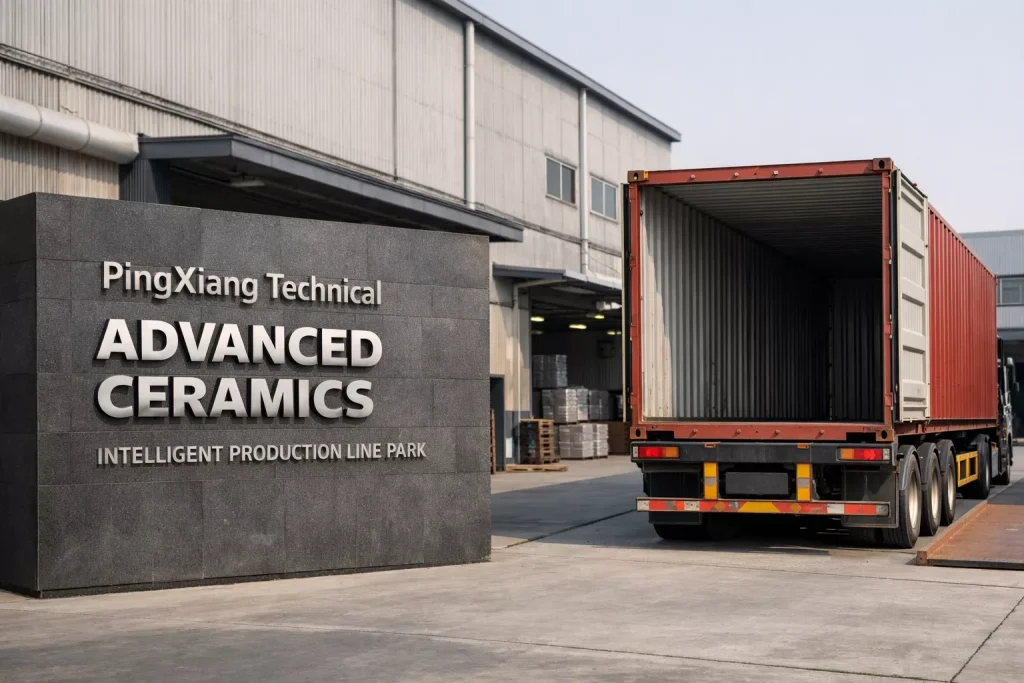
Adcerax's factory

Quick Quotation

*Our team will answer your inquiries within 24 hours.

*Your information will be kept strictly confidential.

Ready to Solve Your Engineering Challenge?

Partner with ADCERAX for reliable, high-performance advanced ceramic solutions. Our engineers are ready to discuss your project.

E-mail

info@adcerax.com

Phone

+(86) 0731-74427743 | WhatsApp: +(86) 19311583352

Response Time

Within 24 hours

Quick Quote

The more details you provide, the faster we can quote.

*We respond within 24 hours. All inquiries are confidential.

Download Catalog

Get Your Custom Sulution

The more details you provide, the faster we can respond.

customize size

*We respond within 24 hours. All inquiries are confidential.

Download Catalog