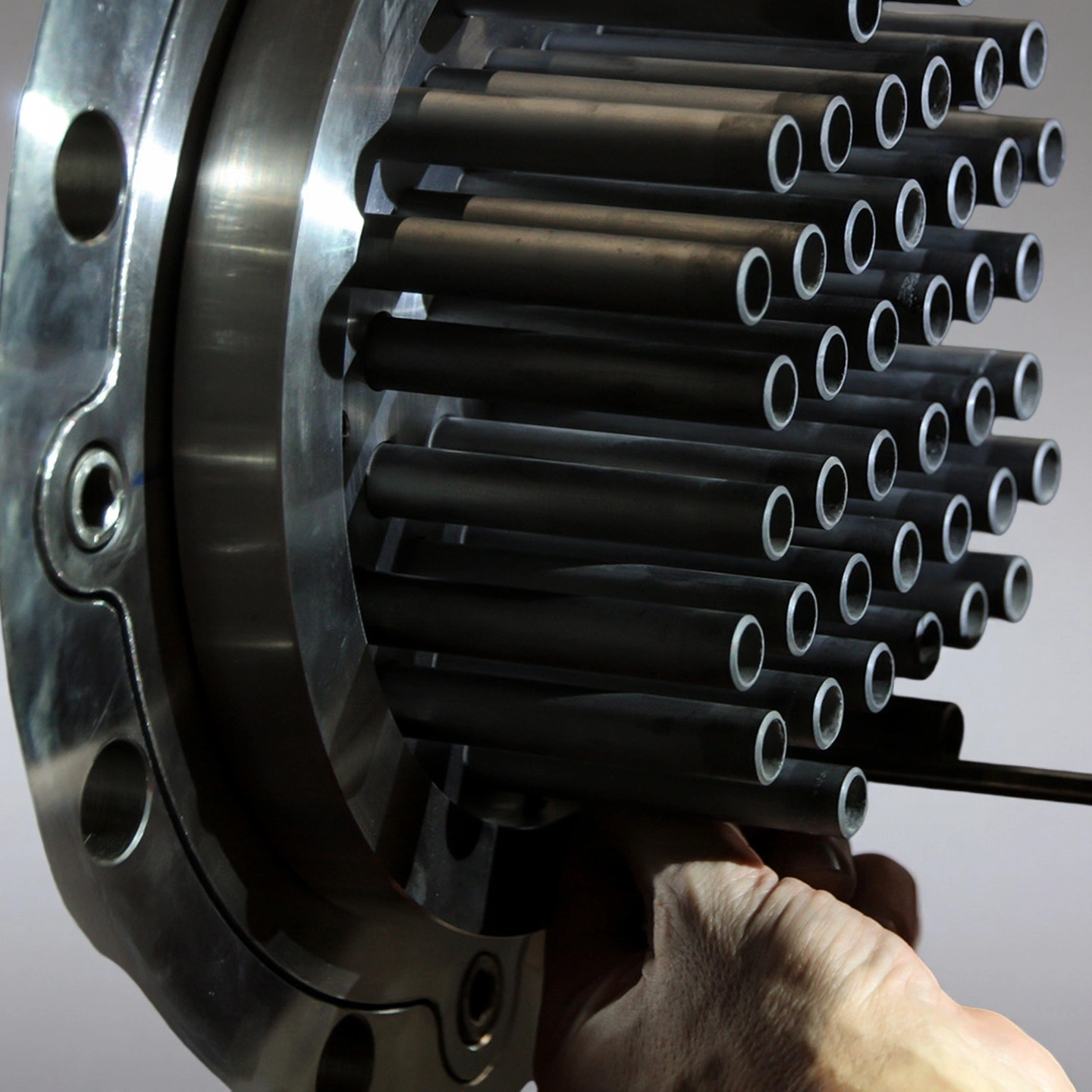
Silicon Carbide Shell and Tube Heat Exchanger for Corrosive Process Systems

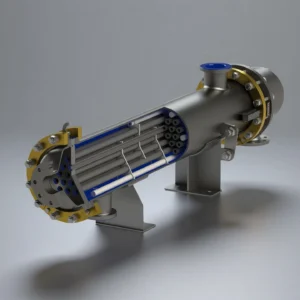
ADCERAX supplies custom silicon carbide shell and tube heat exchanger components for corrosive fluids, acid cooling, heat recovery and high-temperature process systems. SiC tube bundles, tube dimensions, interface design and material compatibility can be reviewed according to process media, flow rate, temperature range, pressure condition and installation requirements.

Catalogue No. AT-THG-HRG001
Material Silicon Carbide (RBSiC / SiSiC)
Thermal Conductivity High conductivity 120–170 W/m·K supporting compact heat-exchange design
Corrosion Resistance Inert to strong acids, alkalis and chlorides, enabling long-cycle operation in harsh fluids
Temperature Capability Stable mechanical and chemical performance up to 1300 °C continuous service
Engineering RFQ Review
Small-Batch Custom Support
Factory-Direct Manufacturing
Drawing & Process Review

What Is a Silicon Carbide Shell and Tube Heat Exchanger?

A silicon carbide shell and tube heat exchanger uses SiC ceramic tubes to transfer heat between two fluid streams without direct mixing. One fluid flows through the silicon carbide tubes, while the other fluid flows around the tube bundle through the shell side. The heat is transferred through the SiC tube wall, making the design suitable for corrosive, abrasive or high-temperature process media where metal or graphite systems may face corrosion, erosion or contamination risks.

Material Advantages of Silicon Carbide for Shell-and-Tube Heat Exchangers

Silicon carbide is selected for shell-and-tube heat exchanger systems because it combines strong thermal conductivity, chemical resistance and mechanical stability in harsh process environments. For corrosive fluids, abrasive media and high-temperature heat-transfer loops, SiC tubes can help reduce corrosion risk, improve heat-transfer response and support stable operation where many metallic materials may face pitting, scaling or contamination issues.

  • High Heat-Transfer Efficiency

    Silicon carbide provides strong thermal conductivity, allowing heat to pass efficiently through the tube wall. This helps improve heat-transfer response and may support more compact exchanger layouts when compared with lower-conductivity materials.

  • Resistance to Corrosive Media

    SiC is suitable for many aggressive chemical environments, including acid-rich, chloride-containing and oxidizing process conditions. Final compatibility should always be reviewed according to media type, concentration, temperature, impurities and sealing material.

  • Better Stability in Abrasive Flow

    The high hardness of silicon carbide helps the tube surface resist erosion from slurry, suspended particles and high-velocity fluids. This makes SiC useful for chemical processing, off-gas treatment, heat recovery and corrosive liquid circulation systems.

  • Thermal Shock Resistance

    SiC can support applications with rapid temperature changes when tube geometry, flow condition and system design are properly reviewed. This is important when inlet temperature fluctuates, process cycles change frequently or start-up and cleaning conditions create thermal stress.

  • Low Metal Contamination Risk

    Because silicon carbide is a ceramic material, it does not release metal ions in the same way as stainless steel or nickel-based alloys. This makes SiC useful for selected processes where metallic contamination should be minimized.

  • Compact Tube-Bundle Design Potential

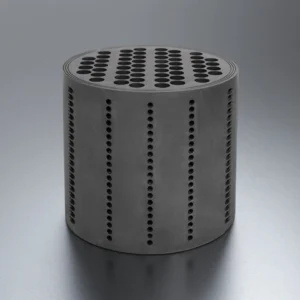
    The combination of thermal conductivity and chemical durability allows SiC tubes to support efficient heat exchange in limited installation space. Tube OD, ID, wall thickness, length and bundle layout should be reviewed according to heat duty, pressure drop, flow velocity and maintenance access.

  • Performance Under Cleaning Conditions

    SiC heat-exchange tubes can be reviewed for systems that require flushing, chemical cleaning or controlled maintenance cycles. Cleaning method, fouling type, seal material and tube-side access should be confirmed before final design.

Reference Material Properties for Silicon Carbide Heat-Exchange Tubes

These values are reference properties for SiC heat-exchange tubes. Final limits depend on tube design, sealing material, process media and installation conditions.

Property Specification Engineering Meaning for Heat Exchanger Use
Material Type Reaction-Bonded Silicon Carbide (RBSiC / SiSiC) This material system supports corrosion resistance, thermal conductivity and mechanical stability in demanding heat-transfer environments.
Thermal Conductivity 120–170 W/m·K High thermal conductivity helps transfer heat efficiently through the tube wall and may support compact tube-bundle designs.
Flexural Strength 250–350 MPa Strong flexural strength helps SiC tubes resist bending stress during installation, flow vibration and thermal cycling.
Compressive Strength 1800–2000 MPa High compressive strength supports structural stability when tubes are assembled into tube sheets or supported inside exchanger systems.
Hardness ~2500–2800 HV High hardness helps reduce erosion risk from slurry, suspended particles and high-velocity fluid flow.
Thermal Expansion Coefficient 4.0–4.5 × 10⁻⁶ /K Low thermal expansion helps reduce dimensional stress during repeated heating and cooling cycles.
Maximum Operating Temperature Up to 1300 °C This value should be treated as a material reference because the final exchanger limit also depends on seals, tube sheet, shell material and process conditions.
Density 3.02–3.10 g/cm³ Stable density supports consistent material structure and predictable ceramic tube performance in heat-transfer applications.
Porosity < 0.1% Low porosity helps reduce fluid penetration risk and supports cleaner operation in corrosive or contamination-sensitive systems.
Corrosion Resistance Stable in strong acids and alkalis, including H₂SO₄, HCl, HNO₃ and NaOH Corrosion resistance makes SiC suitable for many aggressive media, but final compatibility should be reviewed by concentration, temperature and impurities.
Oxidation Resistance Stable above 800 °C in oxidizing environments Oxidation resistance helps maintain tube surface stability in selected high-temperature gas, chemical and thermal-processing environments.
Thermal Shock Resistance Withstands > 300 °C rapid temperature shift Thermal shock resistance helps reduce cracking risk during startup, shutdown, cleaning cycles and sudden process temperature changes.
Erosion Resistance Suitable for high-velocity particle-laden streams Erosion resistance is useful for slurry, abrasive liquid and gas streams where metallic tubes may suffer surface wear.
Chemical Purity No metal ion release; extractables < 1 ppm Low metal contamination risk makes SiC useful for processes where product purity and non-metallic contact surfaces are important.

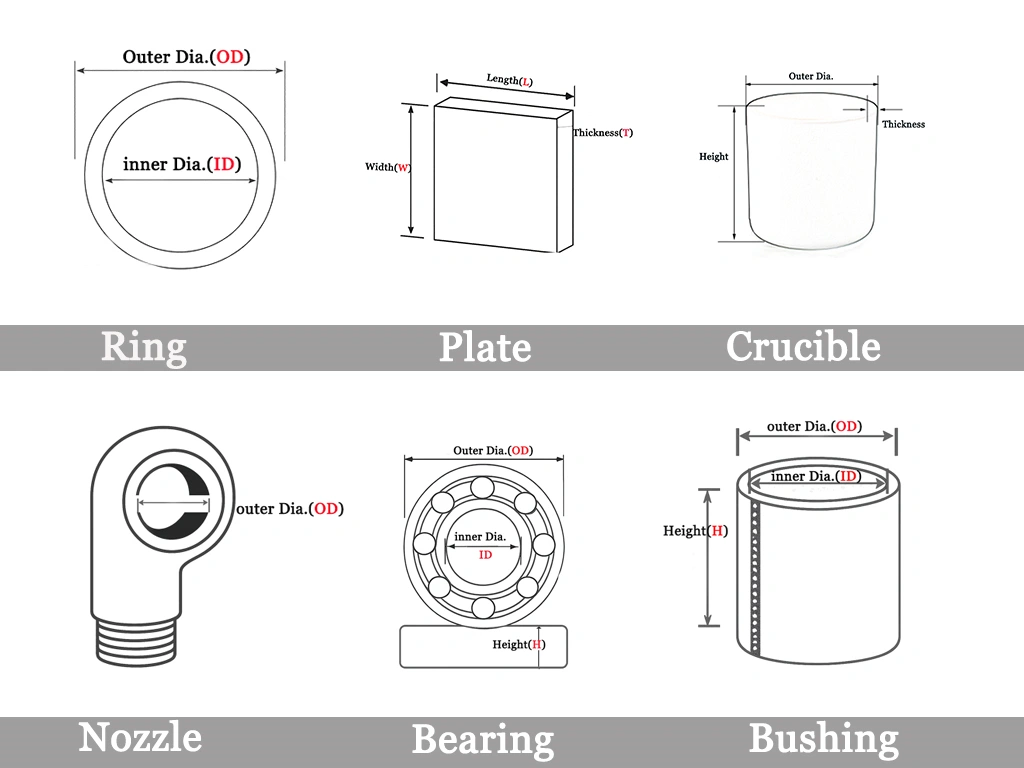
Dimensions of Silicon Carbide Shell and Tube Heat Exchanger

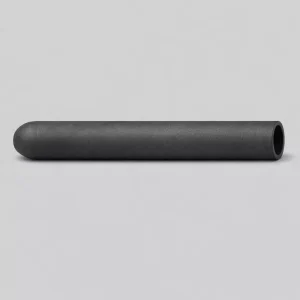
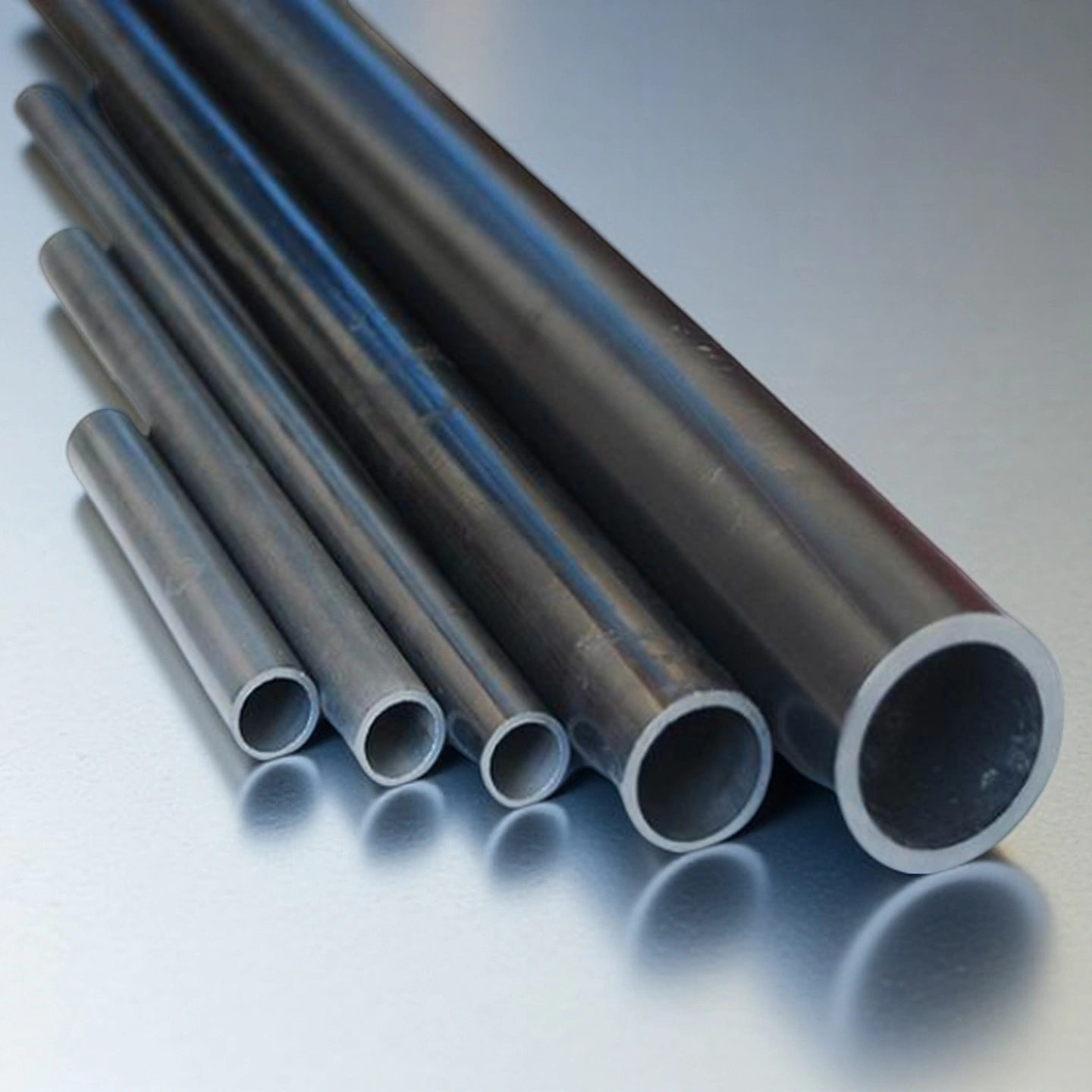
Silicon Carbide Heat Exchange Tube
Item No. Outer Diameter(mm) Inner Diameter(mm) Thickness(mm) Max Length(mm) Purity(%)
AT-THG-HRG001 8 6 1 2000 99%
AT-THG-HRG002 10 8 1 2000 99%
AT-THG-HRG003 14 11 1.5 4000 99%
AT-THG-HRG004 19 14.5 2.25 4000 99%
AT-THG-HRG005 25 20 2.5 4000 99%
AT-THG-HRG006 30 24 3 4000 99%
AT-THG-HRG007 35 25 5 4000 99%
AT-THG-HRG008 38 28 5 4000 99%

Packaging of Silicon Carbide Shell and Tube Heat Exchanger

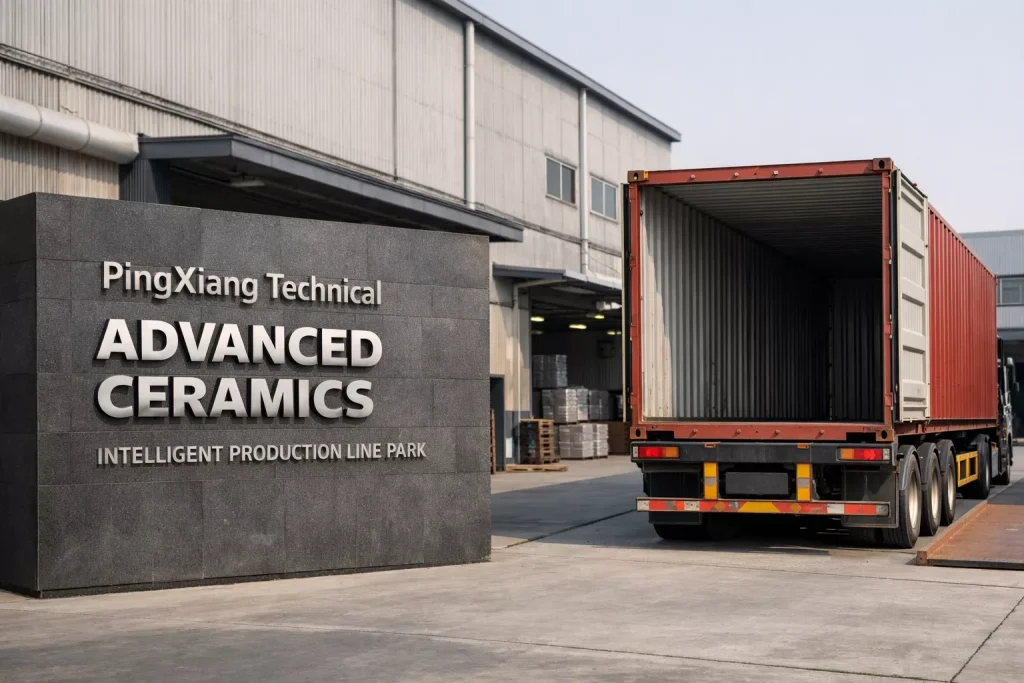
Silicon carbide heat exchanger components are packed with tube separation, fixed supports and reinforced protection. End caps, cushioning layers or wooden crates can be used to reduce abrasion, vibration and edge impact during transport.
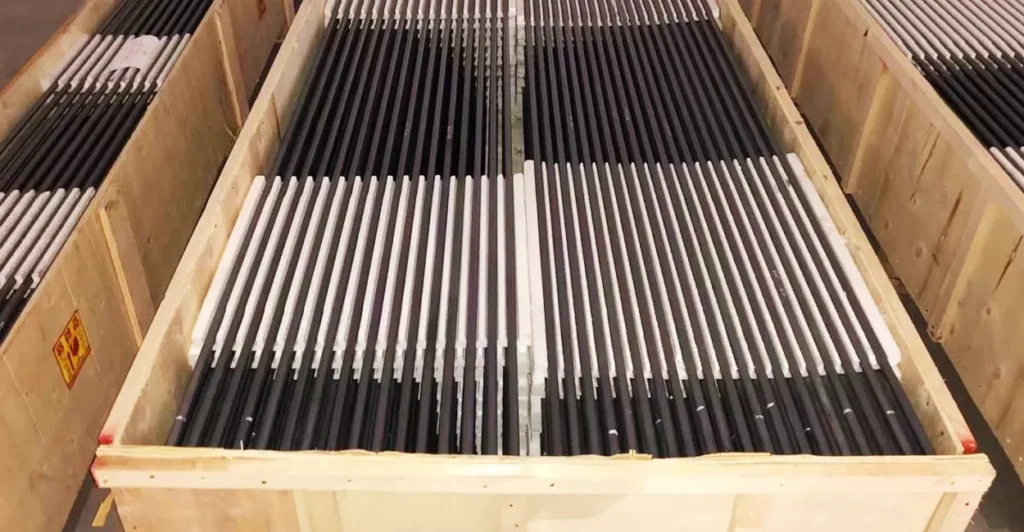
ADCERAX® Packaging of Silicon Carbide Shell and Tube Heat Exchanger

Applications of Silicon Carbide Shell and Tube Heat Exchangers

Silicon carbide shell and tube heat exchanger components are used in process systems where corrosion, abrasion, thermal stress or contamination risk makes conventional metal exchangers difficult to maintain. With SiC heat-exchange tubes, the system can support stable heat transfer in aggressive media while reducing the risk of metal corrosion, tube surface erosion and process contamination.

  • Chemical Processing and Acid Cooling

    Silicon carbide shell and tube heat exchangers are suitable for cooling and heating corrosive chemical fluids such as acid solutions, alkaline media, chloride-containing liquids and mixed chemical streams. They are often considered when stainless steel, graphite or alloy exchangers may face corrosion, scaling or erosion under continuous operation.

    For acid cooling loops, SiC tubes help provide a chemically stable heat-transfer surface. Final compatibility should still be reviewed according to acid type, concentration, temperature, impurities and sealing material.

  • Chloride-Rich and Oxidizing Media Handling

    Chloride-rich fluids and oxidizing chemicals can create pitting, crevice corrosion or rapid surface degradation in many metallic exchangers. Silicon carbide provides a non-metallic ceramic contact surface, making it useful for selected corrosive liquids, oxidizing solutions and process streams where metal corrosion control is a key concern.

    This application is especially relevant for chemical plants, surface treatment lines, inorganic chemical production and process water systems with aggressive additives.

  • Heat Recovery from Corrosive Process Streams

    In many industrial systems, waste heat is difficult to recover because the hot stream contains corrosive gases, acidic condensate or chemically aggressive liquids. SiC shell and tube heat exchanger components can be used in heat recovery systems where both thermal efficiency and corrosion resistance are required.

    This helps process engineers recover usable heat while reducing material degradation risks in harsh chemical environments.

  • Slurry, Abrasive Liquid and Particle-Laden Flow

    Silicon carbide has high hardness and strong erosion resistance, which makes it suitable for abrasive liquids, slurry circulation, particle-laden media and high-velocity process streams. In these applications, the tube surface must resist both chemical attack and mechanical wear.

    SiC heat-exchange tubes are useful when the process fluid contains suspended solids, crystallizing media, abrasive particles or other materials that may damage softer metallic or graphite surfaces.

  • Condensation and Off-Gas Treatment Systems

    Shell and tube heat exchangers using SiC tubes can be considered for condensing corrosive vapors, cooling off-gas streams or treating chemically aggressive exhaust systems. In these applications, acidic condensate, thermal cycling and mixed chemical exposure can place high stress on exchanger materials.

    SiC components help provide a stable ceramic contact surface for selected gas cooling, vapor condensation and chemical exhaust treatment systems.

User Guide for Silicon Carbide Shell and Tube Heat Exchanger Operation

To support stable operation, silicon carbide shell and tube heat exchanger components should be installed, started, cleaned and inspected according to the actual process media, flow condition and system design. Proper support, controlled heating, compatible cleaning methods and regular inspection help protect SiC tubes, seals and tube-sheet interfaces during long-term service.

  • Installation Requirements for Stable Integration

    The exchanger should be mounted on a rigid support structure to avoid bending stress, vibration transfer and misalignment at tube-to-header connections. Support fixtures should allow thermal expansion without applying external load to the SiC tubes.

    Before start-up, inlet and outlet lines should be flushed to remove particles, welding residue or debris. This helps reduce early-stage erosion and prevents foreign particles from entering the tube side.

    Sealing materials should be selected according to media chemistry, temperature and cleaning method. Uneven gasket compression or incompatible seal materials may increase leakage risk at the tube-sheet interface.

  • Safe Heating and Start-Up Procedure

    Temperature should be increased gradually to avoid sharp thermal gradients between the tube wall and process fluid. Controlled ramp-up helps reduce thermal stress during start-up.

    Flow circulation should be established before significant heating begins. Stable flow helps avoid stagnant hot zones and improves heat distribution across active tubes.

    During the first operating cycle, inlet and outlet temperature difference, pressure drop and flow stability should be monitored. Unusual changes may indicate flow maldistribution, fouling, air pockets or installation issues.

  • Cleaning, Inspection and Routine Maintenance

    Cleaning agents should be selected according to residue type, media chemistry and seal compatibility. Acidic or alkaline cleaning should be controlled to avoid unnecessary attack on auxiliary sealing components.

    Mechanical cleaning should be limited to accessible areas and performed with suitable non-metallic tools. Aggressive scraping or uncontrolled high-pressure jetting may scratch the tube surface or affect flow efficiency.

    Inspection intervals should be planned based on fluid corrosivity, solids content, operating temperature and duty cycle. Regular checks of tube surfaces, seals, tube-sheet areas and pressure drop help identify fouling or wear before performance declines.

  • Operational Safeguards for Reliable Use

    Tube-side and shell-side flow velocity should remain within the recommended design range. Excessive velocity may increase particle impact, while insufficient flow may reduce heat-transfer efficiency.

    Media compatibility should be reviewed when process formulations, additives or cleaning chemicals change. Even when SiC tubes remain stable, seals, gaskets and auxiliary components may have different compatibility limits.

    Air pockets should be avoided during filling and start-up because trapped gas can create localized overheating and unstable heat transfer. Proper venting supports smoother temperature control and more consistent exchanger performance.

Silicon Carbide Shell and Tube Heat Exchanger FAQs

  1. What is a silicon carbide shell and tube heat exchanger used for?

    A silicon carbide shell and tube heat exchanger is used for heat transfer in corrosive, abrasive or high-temperature process systems. Typical applications include acid cooling, chemical condensation, heat recovery, slurry heating, off-gas treatment and clean-media temperature control. SiC tubes are selected when metal, graphite or polymer-based exchangers may face corrosion, erosion or contamination risks.

  2. Why choose silicon carbide instead of stainless steel, graphite or titanium for a shell and tube heat exchanger?

    Silicon carbide combines high thermal conductivity, chemical stability and strong abrasion resistance. Compared with stainless steel, it is more suitable for many chloride-rich or oxidizing chemical environments. Compared with graphite, it offers higher mechanical hardness and better erosion resistance. Compared with titanium or nickel alloys, SiC may provide a more chemically stable ceramic surface in selected severe media, but final selection should always be based on process chemistry and operating conditions.

  3. Can silicon carbide shell and tube heat exchangers be used with hydrochloric acid, sulfuric acid, nitric acid or hydrofluoric acid?

    Silicon carbide is often selected for aggressive acid service, including many chloride-rich, oxidizing and mixed-acid environments. However, compatibility depends on acid type, concentration, temperature, impurities, flow velocity and sealing materials. ADCERAX recommends reviewing the complete media condition before confirming tube material, tube sheet design and sealing structure.

  4. What determines the operating temperature and pressure of a SiC shell and tube heat exchanger?

    The operating limit is not determined by the SiC tube alone. It also depends on shell material, tube sheet design, gasket or seal material, connection type, pressure load, thermal cycling and installation conditions. For this reason, ADCERAX treats temperature and pressure values as project-specific design items rather than fixed universal ratings.

  5. What information is needed to customize a silicon carbide shell and tube heat exchanger component?

    Useful RFQ information includes process media, concentration, temperature range, pressure condition, flow rate, heat duty, allowable pressure drop, tube OD and ID, tube length, shell-side and tube-side materials, connection standard, installation direction, cleaning method and drawing files. This information helps ADCERAX review material suitability and manufacturing feasibility.

  6. How should SiC shell and tube heat exchanger components be cleaned and maintained?

    Cleaning methods should be selected according to fouling type, chemical residue and sealing materials. Chemical cleaning, flushing or controlled mechanical cleaning may be considered, but abrasive tools and uncontrolled high-pressure impact should be avoided. Regular inspection of tube surfaces, seals, tube sheet interfaces and flow distribution helps maintain stable heat-transfer performance.

customize size

Customization Services for SiC Shell and Tube Heat Exchanger

ADCERAX® Silicon Carbide Shell and Tube Heat Exchanger can be engineered with application-specific structural and interface configurations to ensure stable performance across diverse industrial conditions.

Structural Tube Configuration Customization

A broad range of geometric and structural formats is enabled for adaptation to complex thermal and chemical operating environments.

  • Tube Geometry Options
    Adjusted cross-section formats for optimized flow behavior.

  • Wall Structure Design
    Modified structural profiles enhancing thermal uniformity.

  • Tube Bundle Arrangement
    Tailored layout improving shell-side distribution efficiency.

Interface, Connection and Assembly Adaptation

Connection ends and assembly interfaces are refined to integrate seamlessly into varied plant piping networks and heat-exchange systems.

  • End-Connection Style
    Configured termination forms matching system interfaces.

  • Mounting and Support Fit
    Tailored support interfaces stabilizing operational loads.

  • Seal-Interface Preparation
    Modified contact zones ensuring consistent sealing reliability.

Related Products

ADCERAX - Your Trusted Advanced Ceramics Manufacturing Partner

Direct factory manufacturing with comprehensive ceramic materials expertise and global supply capabilities

China-Based Manufacturer

ADCERAX supplies ceramic components for overseas OEMs, equipment builders, and labs.

Custom Drawing Support

We review drawings, dimensions, materials, and application conditions before quotation.

Ceramic Process Control

Forming, sintering, machining, grinding, and finishing are arranged by part requirements.

Pre-Shipment Inspection

Dimensional checks, visual inspection, and packaging review help reduce procurement risk.

Get in Touch with Us

Our team will be happy to respond to you in less than 24 hours.

Pingxiang Factory — Silicon carbide, silicon nitride, high-temperature ceramics

Quick Quotation

*Our team will answer your inquiries within 24 hours.

*Your information will be kept strictly confidential.

Ready to Solve Your Engineering Challenge?

Partner with ADCERAX for reliable, high-performance advanced ceramic solutions. Our engineers are ready to discuss your project.

E-mail

info@adcerax.com

Phone

+(86) 0731-74427743 | WhatsApp: +(86) 19311583352

Response Time

Within 24 hours

Quick Quote

The more details you provide, the faster we can quote.

*We respond within 24 hours. All inquiries are confidential.

Get Your Custom Solution

The more details you provide, the faster we can respond.

customize size

*We respond within 24 hours. All inquiries are confidential.

Download Catalog