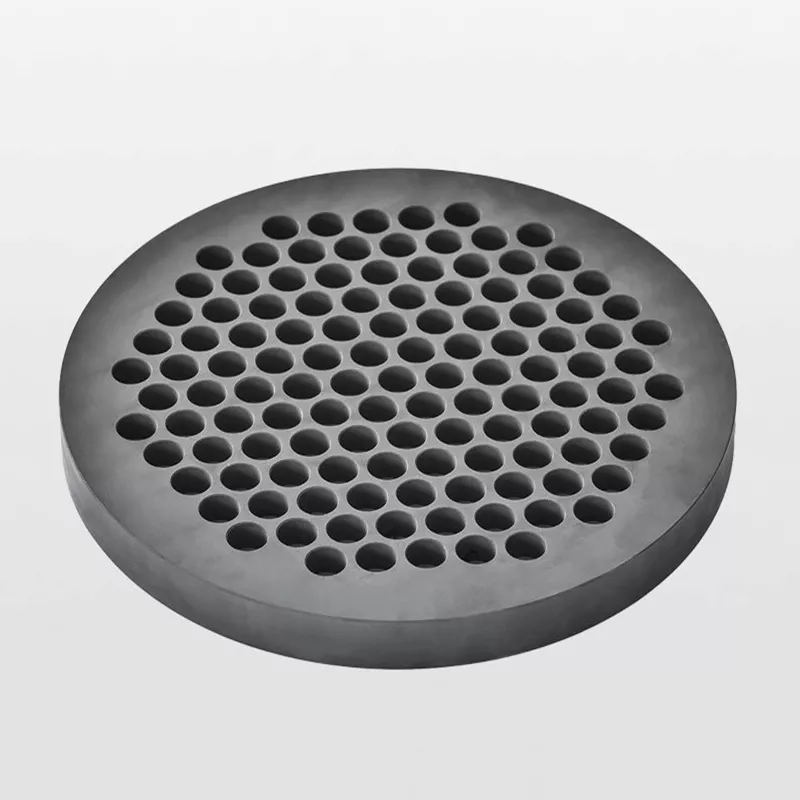
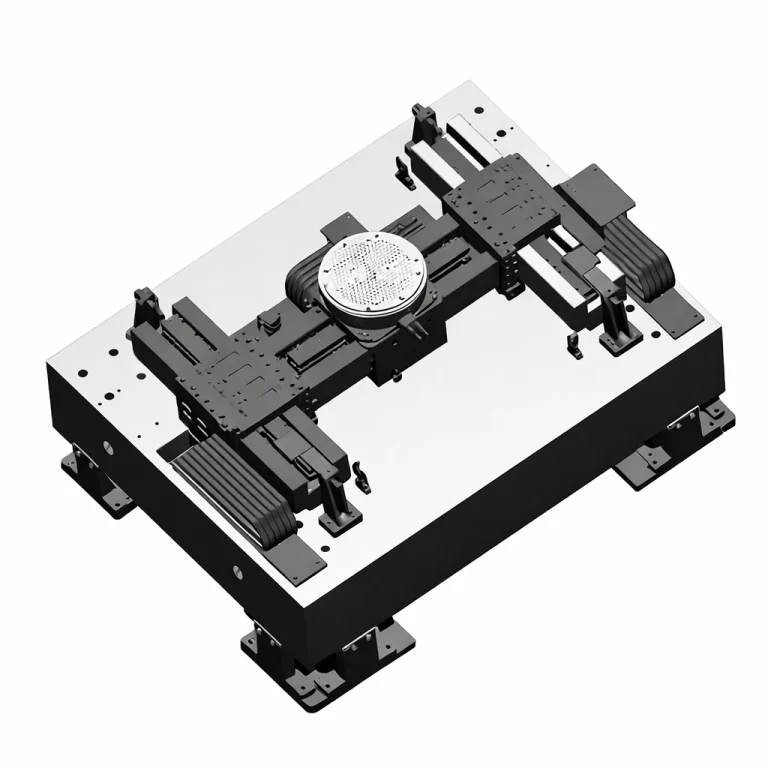
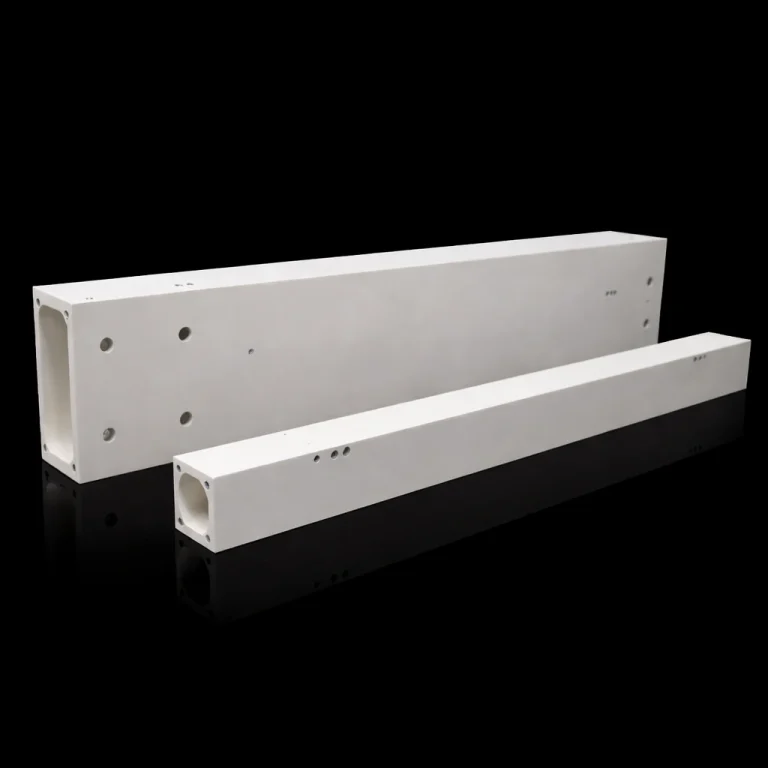
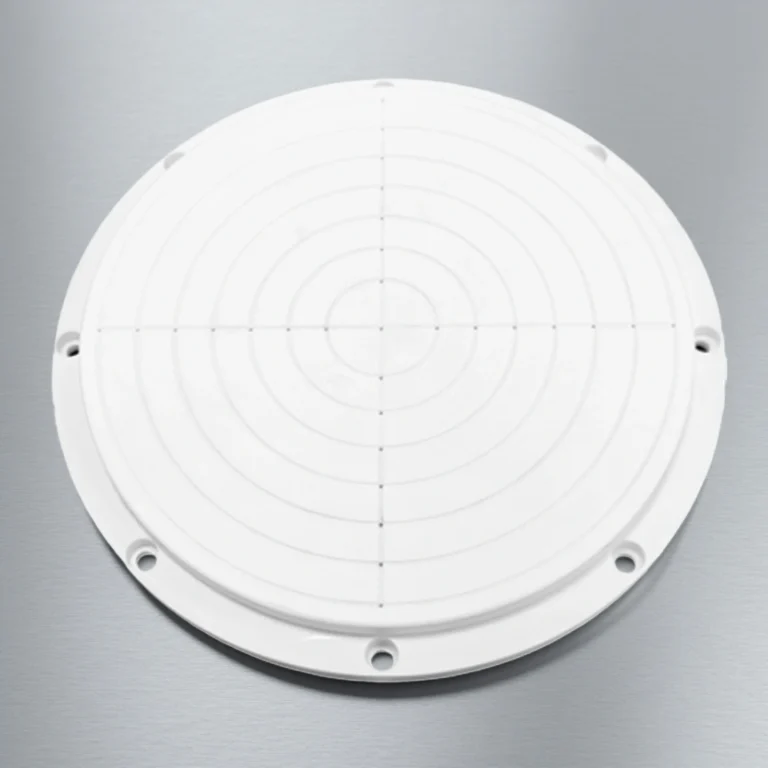
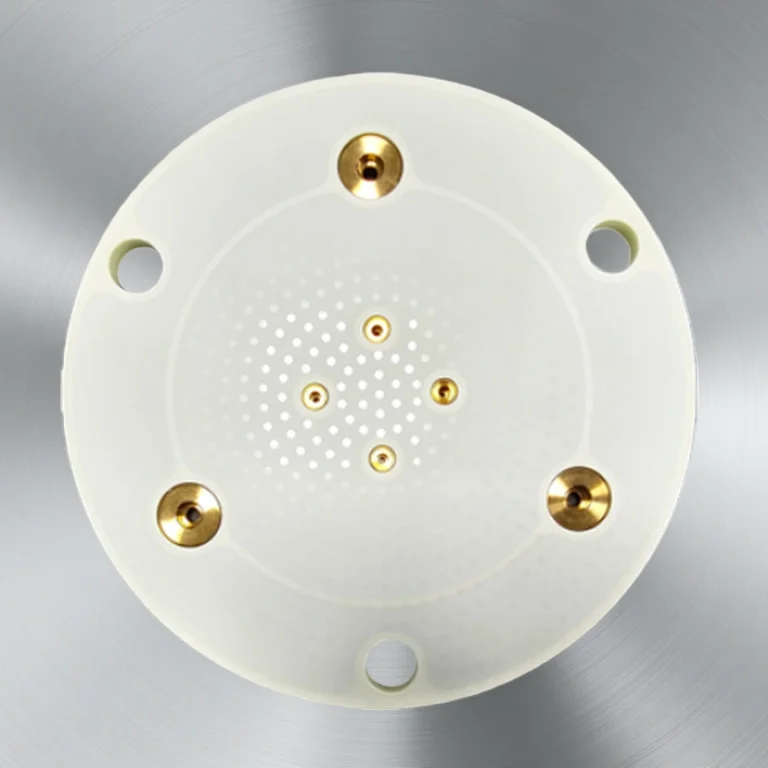
ADCERAX® Silicon Carbide Tube Sheet is engineered from dense SiC ceramic to deliver stable performance in high-temperature, high-pressure and chemically aggressive heat-exchange environments. Its structure maintains strength, hardness, and resistance to erosion, enabling reliable operation under rapid thermal cycling and high-velocity media. This combination of thermal stability, corrosion resistance and oxidation durability supports long service life across demanding industrial systems.
Engineered Performance Features of the Silicon Carbide Tube Sheet
- Acid Stability Performance
The SiC matrix remains chemically inert in HCl, HF and H₂SO₄, even at elevated temperatures where metal or graphite components rapidly degrade. Laboratory corrosion studies show mass loss rates <0.05 mg/cm²/day under continuous acid exposure.
- Diamond-Level Hardness
Silicon carbide demonstrates hardness second only to diamond, with typical Vickers values exceeding HV 2200. This prevents surface gouging and wear propagation when exposed to abrasive particulate streams.
- Dimensional Stability Under High Velocity Flow
High Young’s modulus and low wear rates preserve hole geometry, ensuring stable tube positioning during long-term operation. Tests under high-velocity particulate flow (>30 m/s) show minimal dimensional deviation over multi-year service.
- Stepped-Groove / Threaded Interface Accuracy
The sealing grooves are engineered for compression-based sealing using fluoropolymer O-rings such as FFKM or FEP, maintaining leak-tight performance even under >8 bar differential pressure. Validation tests confirm geometric repeatability and stable torque-retention during assembly.
- Precision Hole Geometry and Flatness Control
CNC machining maintains concentricity and perpendicularity of tube holes to engineering-grade accuracy, reducing assembly stress on tube bundles. Flatness verification across the plate surface shows deviations typically below 0.15 mm on large-format components.
Technical Specifications of Silicon Carbide Tube Sheet
The Silicon Carbide Tube Sheet is engineered from high-density SiC with stable thermal behavior, strong chemical inertness, and high mechanical reliability, enabling consistent performance under corrosive media, rapid thermal cycling and high-load operating conditions.
| Property |
Specification |
| Material Type |
High-Density SiC (RBSiC / SSiC) |
| Density |
≥ 3.05 g/cm³ |
| Hardness |
HV ≈ 2200 (Knoop equivalent) |
| Thermal Conductivity |
20–30 W/m·K at room temperature |
| Thermal Expansion |
≈ 4.0 ×10⁻⁶ /°C (25–800 °C) |
| Maximum Service Temperature |
Up to 1400 °C in oxidizing atmosphere |
| Chemical Resistance |
Stable in HCl, HF, H₂SO₄, HNO₃, mixed acids |
| Oxidation Resistance |
Stable performance to 1000–1400 °C depending on grade |
| Compressive Strength |
> 2200 MPa |
| Young’s Modulus |
≈ 350–420 GPa |
| Porosity |
< 0.1% (near-zero closed porosity) |
| Acid Corrosion Rate |
<0.05 mg/cm²/day (strong acid test conditions) |
| Thermal Shock Stability |
40–60% higher lifespan vs graphite components |
| Surface Integrity Testing |
FPT-verified, >99% defect-free acceptance rate |
Dimensions of Silicon Carbide Tube Sheet
|
SiC Tube Sheet |
|
Item No. |
Diameter(mm) |
Height (mm) |
|
AT-THG-HRG001-1 |
Customize |
Packaging of Silicon Carbide Tube Sheet
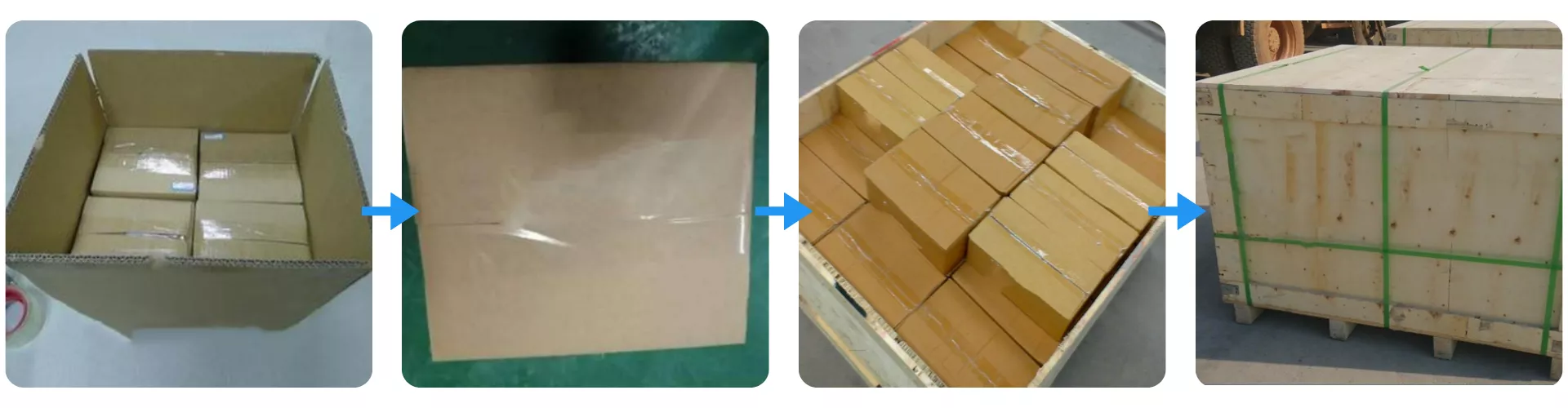
Silicon Carbide Tube Sheet units are packaged using multi-layer inner cartons, reinforced outer cartons, and secured wooden crates to ensure safe international transport. Each carton is individually sealed to prevent movement and protect the ceramic surfaces from impact and moisture. The final crate structure provides enhanced load stability, allowing the shipment to withstand long-distance handling and storage conditions.
ADCERAX® Silicon Carbide Tube Sheet Solves Critical Engineering Challenges in Corrosive and High-Temperature Heat-Exchange Systems
The Silicon Carbide Tube Sheet provides stable, long-lifecycle performance in corrosive chemical units, particulate-laden off-gas exchangers and high-temperature acid evaporation systems, addressing the operational failures and maintenance disruptions commonly seen with graphite, metallic and lined tube-sheet materials.
-
Silicon Carbide Tube Sheet for Chloride-Rich Acid Evaporation Systems
✅Key Advantages
1. Mixed-Acid Corrosion Stability
Content: In chloride-rich evaporators, the ADCERAX® Silicon Carbide Tube Sheet maintains a corrosion rate typically below 0.05 mg/cm²/day in HCl, HF and mixed-acid exposure tests. This stability allows continuous operation at elevated temperatures without measurable loss of mechanical integrity over multi-year cycles.
2. Sealing Interface Reliability
Content: The stepped-groove design keeps fluoropolymer O-rings under controlled compression, even when vapor condensation occurs on hot surfaces. Long-term plant observations show that leak incidents at the tube-sheet interface can be reduced by over 70% after replacing graphite plates with SiC designs.
3. Lifetime Extension Under Continuous Thermal Load
Content: In acid evaporation duty, the ADCERAX® Silicon Carbide Tube Sheet reaches service lives that are typically 4–5 times longer than graphite tube sheets under comparable conditions. This extension in life directly decreases planned replacement frequency and stabilizes operating schedules.
✅ ️Problem Solved
In a chloride-based acid concentration line, the original graphite tube sheets exhibited progressive surface degradation and seal failures after fewer than two operating campaigns. Each maintenance interval revealed severe attack in condensate-wetted regions and frequent gasket replacement around tube inlets. After retrofitting the system with the ADCERAX® Silicon Carbide Tube Sheet, corrosion monitoring recorded mass loss values below 0.05 mg/cm²/day and no structural deterioration of the sealing grooves during several campaigns. Leak events at the tube-sheet interface dropped by more than 70%, and the unit was able to extend the operating period between shutdowns by over 40%, improving availability without changing the process chemistry.
-
Silicon Carbide Tube Sheet for Abrasive Off-Gas Cooling Units
✅Key Advantages
1. High-Velocity Erosion Resistance
Content: The ADCERAX® Silicon Carbide Tube Sheet operates in off-gas channels where particle velocities exceed 30 m/s without significant material loss. Comparative wear observations show that erosion depth after a full campaign is often less than 20% of that measured on legacy graphite plates.
2. Dimensional Stability Around Tube Holes
Content: The high modulus of the SiC structure maintains roundness and alignment of tube holes despite continuous particulate impact. Field measurements indicate that positional deviation at the tube-sheet face can be kept below 0.2 mm over extended operation, reducing stress hotspots in tube-to-sheet joints.
3. Extended Service Life in Dust-Laden Flow
Content: In abrasive off-gas service, the ADCERAX® Silicon Carbide Tube Sheet routinely delivers operational life up to 5 times longer than graphite tube sheets under similar load conditions. This extended lifetime directly reduces the number of shutdowns required for tube-sheet replacement in metallurgical cooling lines.
✅ ️Problem Solved
In a metallurgical off-gas cooling system, the original graphite end-plates experienced severe grooving and edge wear after a short operating period, leading to visible deformation at the tube entrances. As erosion progressed, tube alignment shifted and localized stresses increased, forcing the plant to interrupt production frequently for component inspection and replacement. After implementing the ADCERAX® Silicon Carbide Tube Sheet, post-campaign inspections showed only minor surface polishing with no critical dimensional distortion of the tube region. Erosion depth decreased to less than one-fifth of the previous solution, and measured tube position deviation remained below 0.2 mm, allowing the plant to consolidate multiple short campaigns into one extended operating cycle with fewer maintenance stops.
-
Silicon Carbide Tube Sheet for High-Temperature Energy-Recovery Boilers
✅Key Advantages
1. Low Thermal Expansion Under Large ΔT
Content: The ADCERAX® Silicon Carbide Tube Sheet exhibits a thermal expansion coefficient of approximately 4.0 ×10⁻⁶ /°C, which limits stress buildup when boiler inlet and outlet sides operate with large temperature differences. This low expansion behavior reduces the driving force for crack initiation at tube-sheet transitions during repeated heat-up and cooldown cycles.
2. Thermal Shock and Fatigue Resistance
Content: Long-term operation in energy-recovery boilers shows that SiC tube sheets maintain performance under repeated temperature gradients of several hundred degrees per cycle. Lifetime assessments indicate a 40–60% improvement in operating hours before crack formation compared with metal tube sheets in similar duty.
3. High-Temperature Oxidation Stability
Content: The ADCERAX® Silicon Carbide Tube Sheet remains structurally stable up to 1000–1400 °C, depending on the selected SiC grade and flue gas composition. This stability prevents oxide-scale build-up and spalling that can be observed on metallic plates under prolonged high-temperature exposure.
✅ ️Problem Solved
In an industrial energy-recovery boiler recovering heat from hot process gases, conventional metal tube sheets showed progressive thermal fatigue cracking after numerous start–stop cycles. Visual inspections revealed oxide scaling and fine cracks around tube transitions, which propagated over time and required unscheduled replacement. After installing the ADCERAX® Silicon Carbide Tube Sheet, monitoring across several operating seasons showed no fatigue cracking despite frequent thermal cycling. The low thermal expansion of approximately 4.0 ×10⁻⁶ /°C and stable oxidation behavior up to 1000–1400 °C allowed the boiler to maintain tube-sheet integrity, and the measured service life increased by 40–60% compared with the previous metal-based configuration.
ADCERAX® Silicon Carbide Tube Sheet User Guide for Safe, Stable and Efficient Operation
The Silicon Carbide Tube Sheet requires correct handling, installation and operational awareness to maximize stability, corrosion endurance and long-term performance across demanding heat-exchange systems. This guide provides practical and engineering-oriented instructions that help users reduce avoidable risks, maintain structural integrity and ensure optimal service life under high-temperature and chemically aggressive conditions.
-
Pre-Installation Handling and Inspection Requirements
1. Visual Integrity Check
Every unit should be inspected under sufficient lighting to verify surface uniformity and absence of cracks or abnormal discoloration. Minor machining marks are normal, but any discontinuity affecting the tube-hole region should be reported before installation. Proper pre-screening ensures stable long-term sealing performance.
2. Cleanliness and Contamination Control
The contact surfaces must remain free from oil, dust, or metallic debris before assembly to maintain consistent sealing behavior. Use lint-free cloths or compressed air to remove contaminants without introducing mechanical scratches. Clean interfaces significantly reduce early leakage occurrences.
3. Environmental Conditioning Before Use
Allow the component to acclimate to plant temperature and humidity before installation to avoid unintended thermal shock. Sudden transitions from cold storage to hot environments may introduce stress concentration at tube-hole interfaces. Gradual conditioning stabilizes the structural response prior to operation.
-
Installation Guidance for Secure Tube-to-Sheet Assembly
1. Controlled Compression of Sealing Components
Ensure O-ring or gasket materials receive uniform compression according to the system’s sealing design without excessive force. Over-tightening can distort auxiliary sealing parts and reduce long-term reliability. Proper load distribution maintains stable sealing throughout thermal cycles.
2. Alignment Verification of Tube Bundles
Before tightening flange bolts or clamps, confirm that all tube positions are aligned and evenly seated within the tube sheet. Misalignment may cause uneven stress transfer during heating cycles. Accurate positioning preserves structural integrity under fluctuating temperatures.
3. Protection of Machined Faces During Assembly
Avoid contact with hard tools that could create micro-indentations on sealing grooves or tube-hole entrances. Synthetic wedges or polymer-based supports should be used when inserting tubes. Surface preservation directly contributes to extended operational service life.
-
Operational Recommendations for Stable Long-Term Performance
1. Gradual Temperature Ramp-Up
Heating systems should adopt controlled ramp rates to prevent thermal gradient stress between the hot and cold sides of the tube sheet. Rapid heating can induce local expansion differentials in off-design conditions. Steady ramping minimizes fatigue accumulation in high-temperature cycles.
2. Monitoring Flow Conditions and Media Purity
High-velocity particulates or corrosive condensates should be monitored to ensure they remain within the process design window. Changes in media purity may accelerate erosion or chemical attack on surrounding components. Process stability prolongs the overall lifespan of the equipment.
3. Routine Visual and Acoustic Performance Checks
Periodically observe system behavior for vibration shifts, seal noise, or abnormal thermal fluctuation signals. Early detection of off-normal operation enables timely preventive maintenance. Regular monitoring supports uninterrupted industrial performance.
-
Maintenance and Service Recommendations for Extended Lifecycle
1. Post-Cycle Inspection and Cleaning
At shutdown, remove any accumulated particulate residue or condensed chemical film using approved non-abrasive methods. Extended residue retention can influence localized stress over time. Routine cleaning safeguards tube-hole uniformity and sealing consistency.
2. Documentation of Temperature and Pressure History
Maintain cycle logs that record peak temperatures, ramp rates, and operating pressures for each production campaign. Consistent documentation allows trend analysis and early detection of risk patterns. Historical data improves predictive maintenance planning.
3. Assessment of Sealing Components and Gasket Condition
Inspect auxiliary sealing materials for hardness changes, deformation or chemical swelling after each major cycle. Replacement should follow plant-defined schedules to maintain optimal sealing performance. Timely gasket renewal prevents avoidable leakage failures.