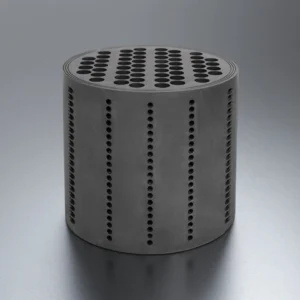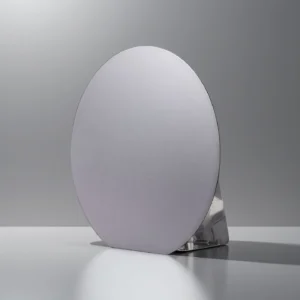
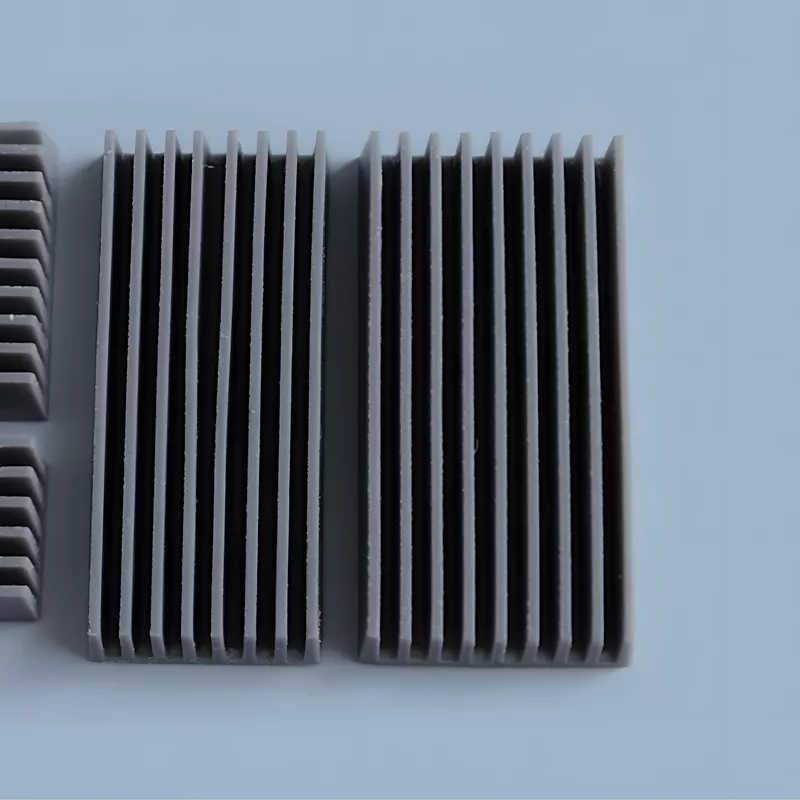
Thermal-Flux Stabilized SiC Heat Sink for Energy Conversion Systems

The SiC Heat Sink delivers stable thermal performance in demanding environments where elevated temperatures, corrosive atmospheres, and concentrated heat flux occur simultaneously. Its silicon-carbide material architecture maintains thermal integrity under high mechanical load, enabling its use in power-electronics modules, high-temperature furnace systems, plasma equipment, and chemical processing lines. The following features summarize the measurable engineering advantages based on material behavior and field performance.

Catalogue No. AT-SIC-P1047
Material Silicon Carbide (R-SiC or RB-SiC)
Thermal Conductivity 120–150 W/m·K, enabling stable heat-flux dissipation
Maximum Operating Temperature 1400–1500°C, maintaining consistent thermal performance
Flexural Strength 320–420 MPa, supporting long-term structural reliability
24H Standard Dispatch
Small Batch Support OEM
Factory Direct
Expert Engineering Support

ADCERAX® SiC Heat Sink is engineered for thermal management systems where high heat flux, corrosive media, and elevated operating temperatures converge. Its silicon-carbide structure maintains stable thermal conductivity across demanding industrial environments, allowing temperature distribution to remain consistent during continuous operation. This performance supports industries that require reliable heat dissipation and long-term structural stability in power-electronics assemblies, high-temperature equipment, and chemical processing lines.

Advanced Functional Features of SiC Heat Sink

  • High Thermal Conductivity and Stable Heat-Flux Control

    The SiC Heat Sink maintains uniform heat spreading by utilizing a thermal conductivity that reaches 120–150 W/m·K, enabling rapid dissipation of localized heat during continuous industrial operation.
    This stable conductivity level remains consistent even at temperatures up to 1400–1500°C, ensuring that system thermal profiles stay uniform during prolonged thermal cycling.
    Its low thermal expansion coefficient of 4.0–4.5 ×10⁻⁶ /K reduces thermally induced stress accumulation during rapid heating and cooling transitions.

  • Mechanical Strength for Long-Term Structural Reliability

    It offers flexural strength values in the range of 320–420 MPa, supporting structural stability in assemblies exposed to mechanical load and vibrational forces.
    Its compressive strength often exceeds 2000 MPa, allowing the component to maintain shape and contact pressure in high-load thermal interfaces.
    Dimensional rigidity is retained through repeated process cycles due to high elastic modulus values of 390–420 GPa, preventing substrate warping under thermal or mechanical gradients.

  • Chemical and Environmental Stability in Reactive Atmospheres

    They withstand oxidizing atmospheres up to 1100–1200°C, allowing long-term exposure without surface degradation in air-firing or furnace environments.
    It remains chemically stable in acidic and alkaline media, including environments containing HCl, NaOH, or oxidizing gases, ensuring consistent performance during chemical thermal-control operations.
    Porosity levels as low as 12–15% reduce reactive species penetration, extending operational service life in plasma, vapor, or corrosive gas systems.

Technical Specifications for Industrial Evaluation

The SiC Heat Sink exhibits stable thermal behavior, mechanical robustness, and chemical resistance suitable for long-duration operation in high-temperature and corrosive industrial environments. These characteristics support its use in power-electronics assemblies, furnace structures, plasma systems, and chemical processing equipment where consistent thermal conduction and structural reliability are essential.

Property Specification
Density 3.05–3.15 g/cm³
Thermal Conductivity 120–150 W/m·K
Maximum Operating Temperature 1400–1500°C
Thermal Expansion 4.0–4.5 ×10⁻⁶ /K
Flexural Strength 320–420 MPa
Compressive Strength >2000 MPa
Elastic Modulus 390–420 GPa
Porosity 12–15%
Hardness Mohs 9–9.5
Acid Resistance Stable in HCl / H₂SO₄
Alkali Resistance Stable in NaOH media
Oxidation Resistance 1100–1200°C in air

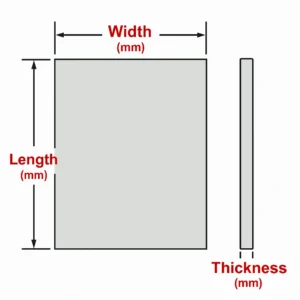
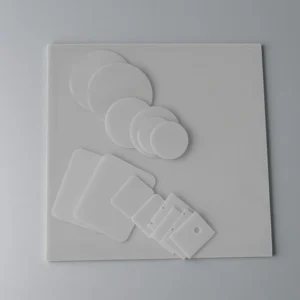
Dimensions of SiC Heat Sink

size for substrate

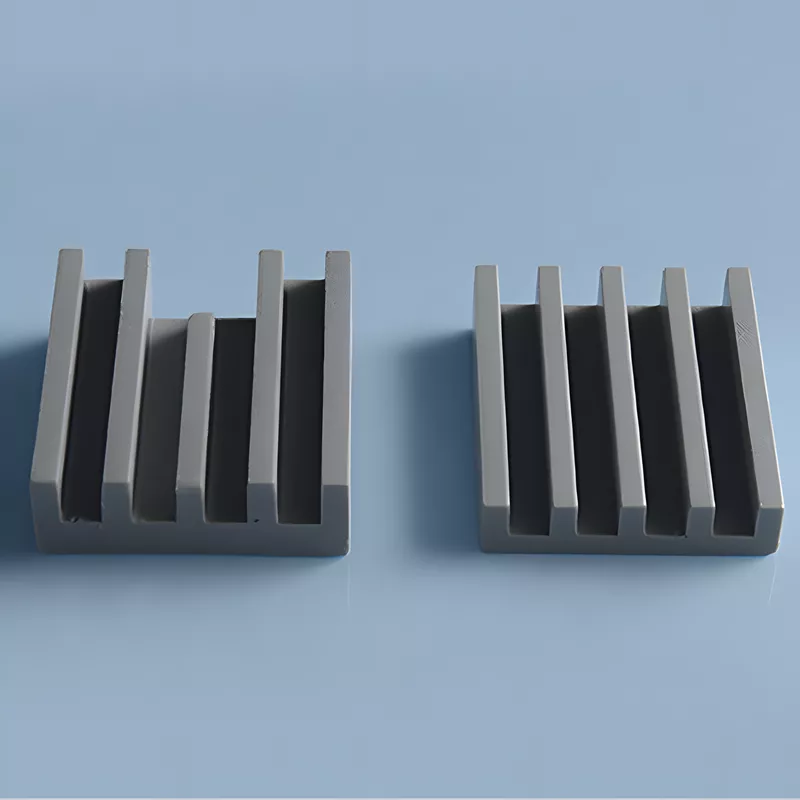
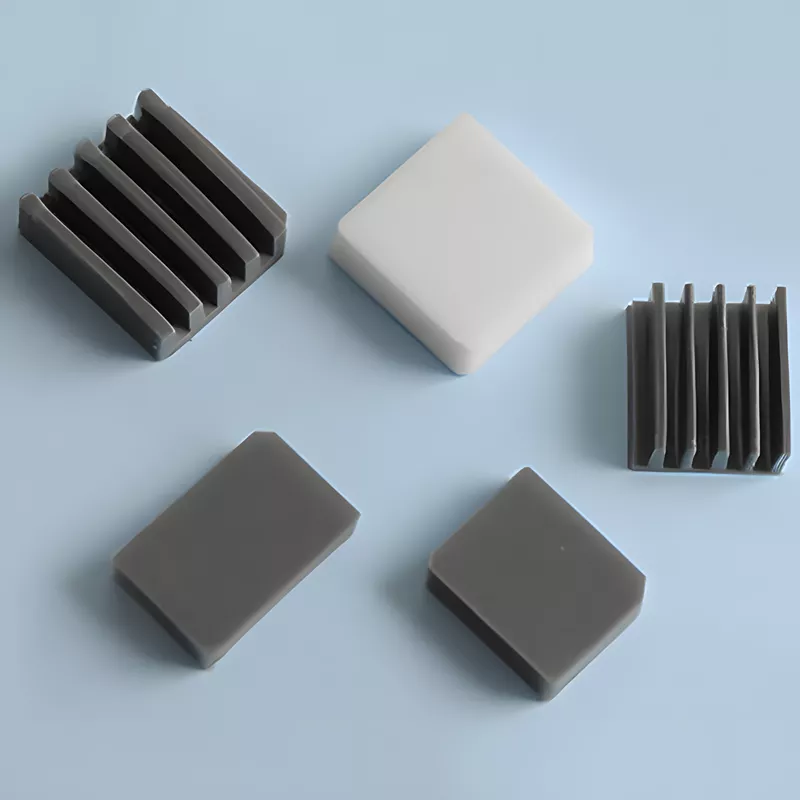
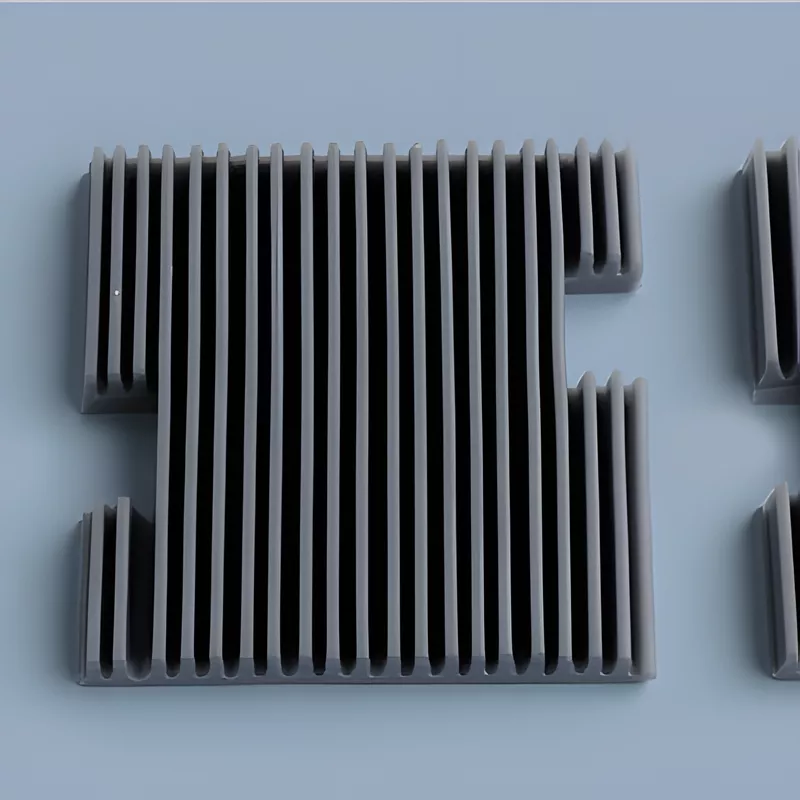
Silicon Carbide SiC Heat Sink
Model No. Length (mm) Width (mm) Thickness (mm) Surface Profile
AT-SIC-P1047 10 10 1.5 Flat Plate
AT-SIC-P1048 10 10 2 Flat Plate
AT-SIC-P1049 10 10 3 Flat Plate
AT-SIC-P1050 10 10 5 Flat Plate
AT-SIC-P1051 10 12 2.5 Flat Plate
AT-SIC-P1052 10 15 2 Flat Plate
AT-SIC-P1053 11 13 5 Corrugated
AT-SIC-P1054 15 15 2 Flat Plate
AT-SIC-P1055 15 15 3 Flat Plate
AT-SIC-P1056 15 15 4 Flat Plate
AT-SIC-P1057 15 15 5 Flat Plate
AT-SIC-P1058 20 20 10 Flat Plate
AT-SIC-P1059 20 20 10 Grooved
AT-SIC-P1060 20 20 2.5 Flat Plate
AT-SIC-P1061 20 20 2 Flat Plate
AT-SIC-P1062 20 20 5 Flat Plate
AT-SIC-P1063 20 20 5 Corrugated
AT-SIC-P1064 25 25 10 Corrugated
AT-SIC-P1065 25 25 2.5 Flat Plate
AT-SIC-P1066 25 25 3 Flat Plate
AT-SIC-P1067 25 25 5 Flat Plate
AT-SIC-P1068 25 25 5 Corrugated
AT-SIC-P1069 25 25 8 Corrugated
AT-SIC-P1070 30 30 10 Corrugated
AT-SIC-P1071 30 30 2.5 Flat Plate
AT-SIC-P1072 30 30 5 Flat Plate
AT-SIC-P1073 30 30 5 Corrugated
AT-SIC-P1074 30 30 8 Corrugated
AT-SIC-P1075 35 35 10 Corrugated
AT-SIC-P1076 40 40 3 Flat Plate
AT-SIC-P1077 40 40 4 Flat Plate
AT-SIC-P1078 40 40 5 Flat Plate
AT-SIC-P1079 40 40 5 Corrugated
AT-SIC-P1080 40 40 7 Corrugated
AT-SIC-P1081 40 40 8 Corrugated
AT-SIC-P1082 50 50 5 Flat Plate
AT-SIC-P1083 50 50 5 Perforated
AT-SIC-P1084 60 60 5 Flat Plate
AT-SIC-P1085 60 60 8 Flat Plate
Remarks: Adhesive / Non-Adhesive

Packaging of SiC Heat Sink

The SiC Heat Sink is packed through a multi-layer process that protects each component during international transportation. Individual units are first secured in reinforced inner cartons, which are then sealed and consolidated into a heavier outer box to prevent movement. The boxed goods are finally fixed inside a strapped wooden crate to ensure stability against vibration, stacking load, and long-distance freight conditions.
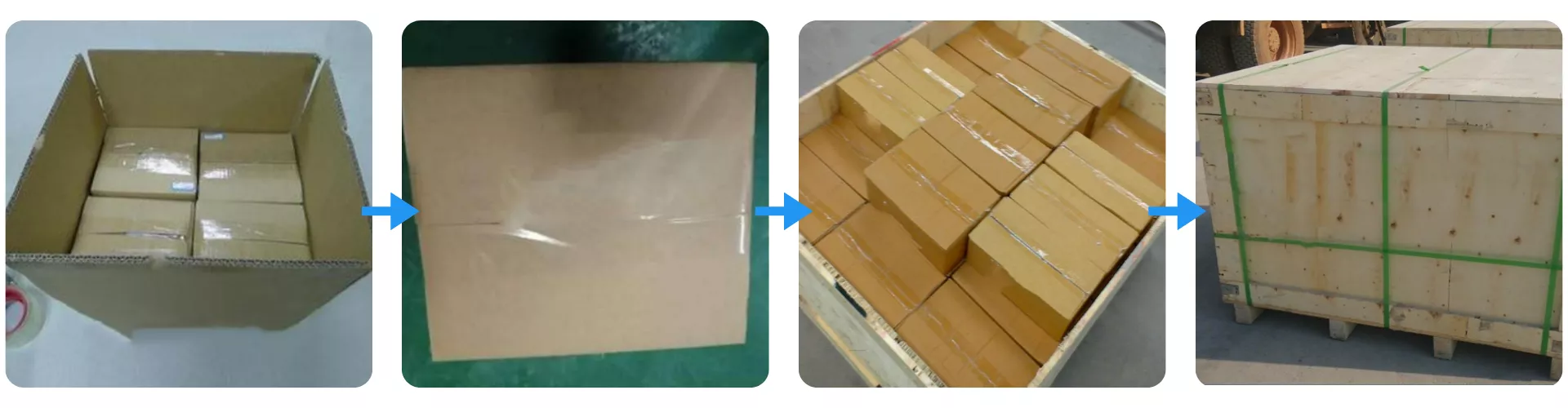

ADCERAX® Packaging of SiC Heat Sink

ADCERAX® SiC Heat Sink Resolves Critical Thermal Challenges in Industrial Systems

The ADCERAX® SiC Heat Sink is used in industrial systems where sustained heat flux, corrosive gas exposure, and rapid thermal transitions create operational instability. Its material characteristics support prolonged reliability in sectors such as power-electronics cooling, metallurgical furnace modules, chemical-reactor thermal plates, plasma-cleaning auxiliaries, and high-output laser assemblies.

  • High-Load IGBT Inverter Cabinets in Industrial Drives

    ✅Key Advantages

    1. Stable Heat Conduction at Elevated Cabinet Temperatures

    The SiC Ceramic Heat Sink maintains 120–150 W/m·K conductivity even when cabinet temperatures rise substantially during continuous switching cycles. This enables predictable thermal spreading when metal blocks lose efficiency due to thermal saturation.

    2. Minimal Thermal Drift Under High Switching Frequencies

    With a thermal expansion rate of 4.0–4.5×10⁻⁶/K, the SiC Heat Sink remains dimensionally stable while the inverter endures frequent power cycling. This stability reduces stress around semiconductor mounts where thermal gradients typically increase junction drift.

    3. Effective Cooling in Airflow-Restricted Enclosures

    The SiC matrix retains conduction performance independent of airflow turbulence or limited ventilation pathways. This provides consistent heat removal in compact inverter cabinets where fan-generated convection is insufficient.

    ✅ ️Problem Solved

    Industrial drive manufacturers frequently report progressive temperature creep in IGBT modules when switching frequencies rise, causing non-uniform heat propagation through metallic blocks. Junction temperatures can fluctuate with each duty cycle, leading to unstable conduction and accelerated degradation. In compact cabinet designs, restricted airflow further limits the effectiveness of conventional cooling blocks. ADCERAX® SiC Heat Sinks reduce these fluctuations by maintaining high thermal conductivity even under increased cabinet temperatures and repeated switching cycles. Field data from automation lines shows that conduction uniformity improves measurably when using SiC, supporting stable inverter behavior during long-duration operation.

  • Furnace-Mounted Heat Equalizing Blocks in Powder Metallurgy Processing

    ✅Key Advantages

    1. High-Temperature Structural Integrity in Sintering Zones

    The Silicon Carbide Heat Sink remains structurally stable at 1400–1500°C, preventing the geometric distortion that metal heat-distribution blocks experience during cyclical furnace loading. This ensures uniform thermal contact surfaces throughout extended sintering runs.

    2. Consistent Thermal Equalization Across Furnace Profiles

    With thermal conductivity maintained between 120–150 W/m·K, the SiC Heat Sink reduces thermal gradients that alter powder densification. This produces a more uniform heat field across the critical working zone.

    3. Oxidation Resistance Under Repeated Furnace Cycling

    Oxidation stability up to 1100–1200°C prevents surface scaling that alters heat-transfer pathways in metallic blocks. The stable SiC surface maintains predictable thermal flow after numerous furnace cycles.

    ✅ ️Problem Solved

    Powder metallurgy plants often encounter inconsistent sintering results due to thermal imbalance caused by deformation of metallic equalizing blocks. After multiple furnace cycles, thermal drift increases and leads to variable density distribution within the processed parts. Oxidation scales on metal blocks further disrupt heat transfer, amplifying these inconsistencies. ADCERAX® SiC Heat Sinks maintain consistent conductivity and geometry throughout repeated high-temperature cycling, enabling predictable furnace conditions. Operational observations show that temperature variations across the sintering zone are reduced when SiC equalizing blocks replace metal, improving process repeatability and material uniformity.

  • Corrosion-Exposed Thermal Plates in Acidic and Alkaline Chemical Reactors

    ✅Key Advantages

    1. Chemical Stability Under Acidic and Alkaline Vapor Exposure

    The SiC Heat Sinks maintain its structural and thermal properties in environments containing acidic vapors such as HCl and alkaline condensates like NaOH. This stability prevents the thickness loss and surface degradation typical of metallic cooling plates.

    2. Predictable Thermal Transfer in Mixed-Gas Reactors

    Thermal conductivity remains between 120–150 W/m·K even when the reactor atmosphere contains humidity and oxidizing gases. This ensures a stable thermal profile during both continuous and batch operations.

    3. Low-Porosity Barrier Against Reactive Media

    A porosity level of 12–15% restricts penetration of aggressive chemical species. The dense SiC matrix avoids internal weakening or reaction pathways that lead to structural instability in alternative materials.

    ✅ ️Problem Solved

    Chemical processing lines frequently experience performance degradation in metal thermal plates when exposed to cycles of acidic vapor, alkaline residues, or oxidizing atmospheres. Corrosion gradually reduces metal thickness and lowers heat-transfer efficiency, causing reactor temperature inconsistencies that disrupt controlled reaction pathways. High humidity and mixed gas concentrations accelerate this deterioration, shortening the operational lifespan of metal-based cooling components. ADCERAX® SiC Heat Sinks maintain thermal performance and surface integrity in these conditions because their material chemistry resists reaction with corrosive media. Process engineers report more stable temperature uniformity and longer service intervals after replacing corroded metal plates with SiC components.

Operational Guidance for Reliable Use of the ADCERAX® SiC Heat Sink

The SiC Heat Sink used in industrial thermal-management systems requires a clear understanding of handling, installation, and operational practices to ensure consistent performance across high-heat-flux and corrosive environments. This section provides practical guidance to help users maintain structural stability, preserve thermal efficiency, and avoid premature wear during long-term operation.

  • Installation Requirements for Stable Thermal Contact

    1. Ensure Proper Mounting Pressure
    The mounting force applied to the SiC Heat Sink must remain within a controlled range to avoid introducing uneven stress during operation. Excessive pressure can reduce contact uniformity and affect heat-spreading performance. It is essential to verify that fasteners, clamps, or frames distribute loading in a balanced way.
    2. Confirm Surface Cleanliness Before Assembly
    Surfaces must be free from debris, oil films, or oxidation layers to maintain stable thermal conduction paths. Contaminants may increase thermal resistance, causing localized temperature variations under high load. Cleaning with non-abrasive agents is recommended to preserve the machined surface of the component.
    3. Use Compatible Interface Materials
    If thermal interface materials are required, select products rated for temperatures compatible with >1400°C industrial use. Incompatible compounds may degrade, leaving residues that interfere with long-term thermal transfer. Testing small areas before full installation helps verify compatibility.

  • Operating Conditions for Consistent Thermal Performance

    1. Avoid Rapid Temperature Escalation Beyond System Ratings
    Sudden temperature rises may introduce thermal shock into surrounding structures, especially in mixed-material assemblies. Maintaining controlled temperature ramps preserves the stable thermal conductivity of the SiC body. This is particularly important in systems where heat flux can fluctuate sharply.
    2. Monitor Airflow or Fluid-Cooling Pathways
    Even though SiC retains thermal performance under restricted airflow, blocked ducts or contaminated cooling media can lower system efficiency. Regular inspection of fans, ducts, or coolant flow ensures consistent heat dissipation across the operating cycle.
    3. Prevent Exposure to Abrasive Particulates
    Abrasive particles circulating in air or fluid streams may wear adjacent materials and alter surface contact conditions. Ensuring clean, filtered media minimizes the risk of micro-scratches or buildup that can influence thermal transfer stability during extended operation.

  • Handling and Storage Practices for Long-Term Integrity

    1. Store in Low-Humidity, Covered Areas
    Although SiC is chemically stable, excessive ambient humidity may affect the metal assemblies stored nearby. Keeping components in a dry, sheltered environment protects surrounding packaging and mounting hardware. Proper storage helps maintain operational consistency over time.
    2. Use Protective Padding During Transport
    Rigid ceramics require buffering to prevent impact damage during loading and unloading. Shock-absorbing padding reduces the risk of chipping edges or creating micro-fractures that could influence heat-spreading behavior. All crates or cartons should be handled according to industrial-grade safety standards.
    3. Avoid Stacking Without Structural Support
    Placing heavy items directly on top of the heat sink can cause uneven stress distribution. If stacking is necessary, structural frames or spacers should be used to maintain proper load paths. This prevents deformation of packaging layers during warehouse storage.

  • Maintenance Recommendations for Extended Service Life

    1. Perform Scheduled Visual Inspections
    Regular checks allow early discovery of surface deposits, corrosion residues from nearby equipment, or mechanical wear. Identifying these conditions helps maintain stable thermal contact through the service cycle. Inspections should follow fixed maintenance intervals aligned with equipment duty cycles.
    2. Remove Deposits Using Approved Cleaning Agents
    Cleaning materials must be non-abrasive and chemically compatible with SiC to avoid surface modification. Deposits from furnace environments, chemical vapors, or airborne particulates should be removed promptly. Preserving a clean surface supports uniform thermal transfer across the entire heat-sink topography.
    3. Verify Fastener Stability During Overhauls
    Mechanical clamps or frames may loosen over long-term operation, especially in equipment with cyclical heating. Periodic re-torquing ensures stable mechanical coupling between the heat sink and adjoining components. Maintaining reliable mechanical contact improves thermal performance retention over extended service periods.

Engineering-Focused FAQs on the ADCERAX® SiC Heat Sink for High-Demand Industrial Systems

  1. Q1: How does the SiC Heat Sink maintain stable thermal conductivity under long operating cycles?

    The SiC Heat Sink preserves 120–150 W/m·K conductivity even when cabinet or furnace temperatures rise during extended duty cycles. This stability avoids the reduction in thermal flow seen in metal blocks during heat saturation. By maintaining a predictable conduction rate, the component minimizes thermal drift that would otherwise affect system reliability. It ensures steady heat spreading across varying load conditions.

  2. Q2: Why is the SiC Heat Sink effective in restricted-airflow inverter cabinets?

    Its conduction performance is independent of forced convection, allowing efficient heat transfer even when airflow is limited. Metal sinks rely heavily on air movement, but the ceramic matrix of SiC continues to spread heat uniformly. This capability prevents hotspot accumulation in compact cabinet designs. It ensures temperature consistency during rapid switching cycles.

  3. Q3: How does the SiC Heat Sink reduce thermal distortion in high-temperature furnace zones?

    The material maintains structural stability at 1400–1500°C, preventing warping that disrupts heat equalization. Traditional metal blocks deform under repeated cycling, altering furnace temperature profiles. SiC resists these shape changes, keeping heat dispersion surfaces uniform throughout operation. This contributes to consistent sintering quality in industrial furnaces.

  4. Q4: Can the SiC Heat Sink withstand corrosive vapors from chemical reactors?

    Its surface chemistry remains stable when exposed to acidic vapors, alkaline condensates, and oxidizing gases. Metal plates typically lose thickness and efficiency under these conditions, but SiC maintains chemical inertness even during prolonged contact. This behavior preserves predictable heat transfer across reactor cycles. It prevents corrosion-driven performance decline.

  5. Q5: What prevents cracking or damage during rapid thermal transitions?

    The SiC Heat Sink has a low thermal expansion rate of 4.0–4.5×10⁻⁶/K, reducing stress when temperatures rise or fall quickly. Other materials may fracture due to sudden expansion differences. This dimensional stability helps maintain mechanical integrity in systems undergoing frequent heating. It reduces failure risk during fast production cycles.

Field Insights on the ADCERAX® SiC Heat Sink from Engineering Teams

  • ⭐️⭐️⭐️⭐️⭐️

    The SiC Heat Sink has demonstrated remarkably stable heat distribution under continuous switching loads in our inverter cabinet upgrades. Its performance reduced thermal drift across long production shifts and kept junction temperatures far more predictable than with our previous metal blocks. The component maintained thermal consistency even in restricted-airflow enclosures.
    — M. Anderson, Power Electronics Division, NorthBridge Automation Group

  • ⭐️⭐️⭐️⭐️⭐️

    We integrated the SiC Heat Sink into our sintering furnace equalizing module, and the results showed significantly improved temperature uniformity across the work zone. The block resisted distortion after repeated thermal cycling, which directly improved batch-to-batch material consistency. Its oxidation stability also reduced the frequency of heat-distribution recalibrations.
    — L. Fischer, Materials Engineering Team, Helios Metallurgy Systems

  • ⭐️⭐️⭐️⭐️⭐️

    Our chemical-reactor line benefitted from the SiC Heat Sink’s strong resistance to acidic and alkaline vapor exposure. Thermal transfer remained consistent even when the reactor atmosphere fluctuated between humid and oxidizing conditions. This stability helped us sustain more predictable reaction temperatures over extended operating periods.
    — R. Thompson, Process Engineering Unit, Meridian Chemical Technologies

  • ⭐️⭐️⭐️⭐️⭐️

    In high-load automation drives, the SiC Heat Sink provided stable conduction during rapid switching cycles, preventing the hotspot progression we previously observed in metal cooling plates. Installation was straightforward, and the structural stability of the component held up well under long-duration mechanical vibration. Its impact on inverter reliability has been noticeably positive.
    — J. Morales, Industrial Drives Engineering Group, Ventra Motion Systems

customize size

Customization Services for SiC Heat Sink

The ADCERAX® SiC Heat Sink is customized through engineered adjustments that optimize heat-flow behavior, structural integration, and system compatibility across demanding industrial environments.

Customized Thermal-Flow Geometry Design

Enhanced heat-transfer patterns are enabled through geometry refinements tailored to system behavior.

  • Fin Orientation
    Adjusted to guide convection efficiency across defined flow paths.

  • Channel Layout
    Configured to optimize cross-direction thermal spreading.

  • Surface Topography
    Modified to stabilize heat distribution under fluctuating loads.

Structural Integration and Mounting Adaptation

Mechanical compatibility with adjoining assemblies is supported through interface-focused adjustments.

  • Mounting Interfaces
    Prepared to align with established fixture points.

  • Support Features
    Added to maintain structural contact under thermal cycling.

  • Edge Profiling
    Refined to reduce stress concentrations in loaded regions.

Related Products

ADCERAX - Your Trusted Advanced Ceramics Manufacturing Partner

Direct factory manufacturing with comprehensive ceramic materials expertise and global supply capabilities

Direct Factory Manufacturing

China-based ceramic materials production facility with state-of-the-art equipment

Engineering Team

Experienced professionals in advanced ceramics applications and custom design

Quality Control

Strict quality control standards for technical ceramics manufacturing and quality management

Global Supply Chain

Serving customers worldwide with technical ceramics and rapid response

24/7 Technical Support

Round-the-clock support for ceramic components inquiries and technical assistance

500+ Satisfied Customers

Trusted by global customers for advanced ceramic materials and precision components

Get in touch with us

Our team will be happy to respond to you in less than 24 hours.

Adcerax's factory

Quick Quotation

*Our team will answer your inquiries within 24 hours.

*Your information will be kept strictly confidential.

Ready to Solve Your Engineering Challenge?

Partner with ADCERAX for reliable, high-performance advanced ceramic solutions. Our engineers are ready to discuss your project.

E-mail

info@adcerax.com

Phone

+(86) 0731-74427743 | WhatsApp: +(86) 19311583352

Response Time

Within 24 hours

Quick Quote

The more details you provide, the faster we can quote.

*We respond within 24 hours. All inquiries are confidential.

Download Catalog

Get Your Custom Sulution

The more details you provide, the faster we can respond.

customize size

*We respond within 24 hours. All inquiries are confidential.

Download Catalog