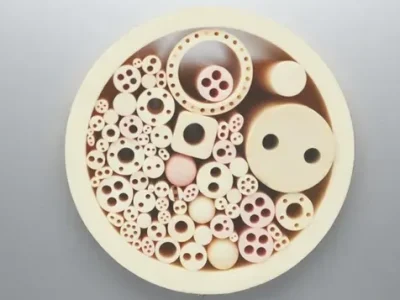
A multi-bore alumina tube is a dense ceramic tube with two or more separate lengthwise bores formed through the body. “Multi-bore” describes the number and arrangement of these bores — it is not the porosity of the ceramic wall. The bores stay separate along the length, so the tube can pass individual wires, leads, or flow paths through one part instead of several.
A common use is routing and protecting separate leads in a thermocouple or resistance temperature detector (RTD) assembly. How many bores, where they sit and how large they are is set by the assembly, so the bore layout and the overall size must match the part it fits.
The tables below list outside diameter (OD), individual bore diameter, length and material grade for the 2-, 4-, 6-, 9- and 10-bore layouts. Compare the three dimensions within one complete row.
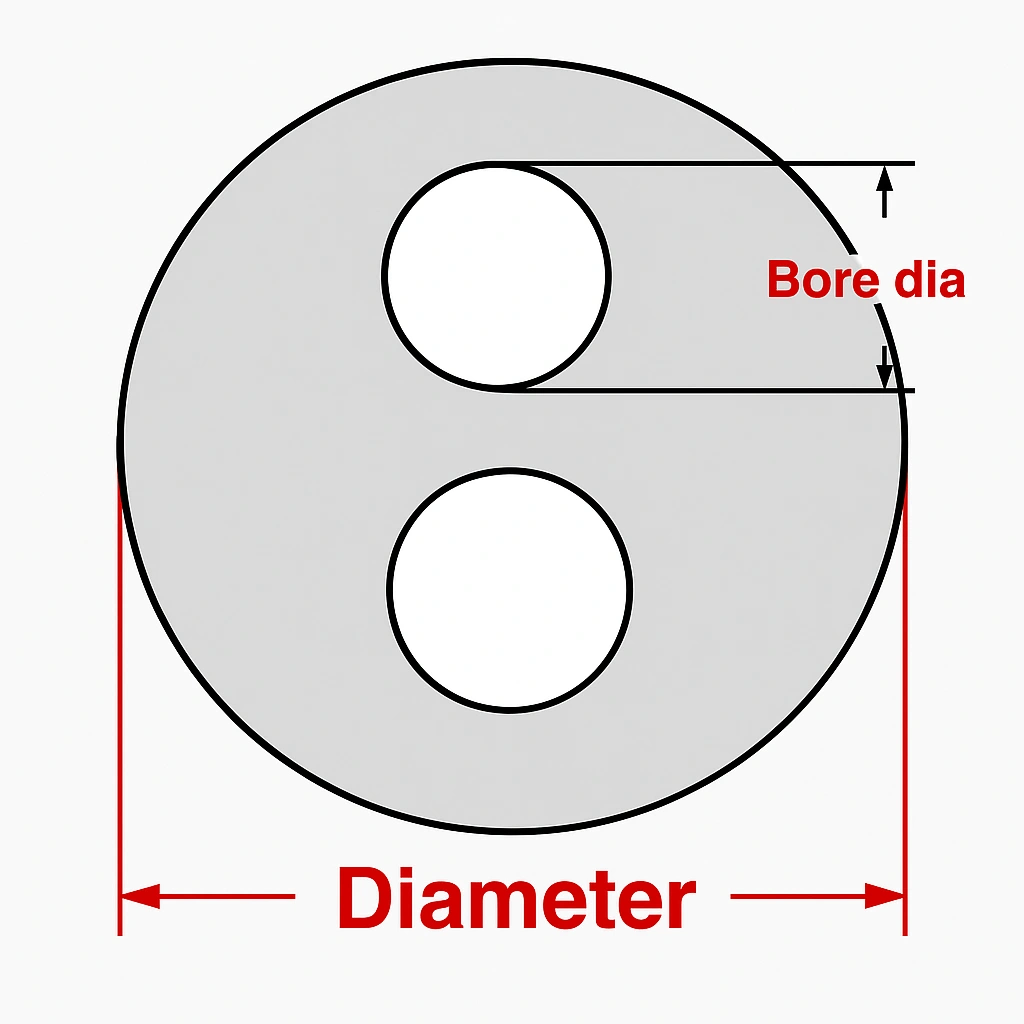
Type 1- Two-Bore Alumina Tubes
| Item No. | Dia.(mm) | Bore Dia(mm) | L(mm) |
| TE-AT-112 | 1 | 0.3 | L≤2500 |
| TE-AT-113 | 1.2 | 0.3 | L≤2500 |
| TE-AT-114 | 1.4 | 0.4 | L≤2500 |
| TE-AT-115 | 1.5 | 0.4 | L≤2500 |
| TE-AT-116 | 2 | 0.3 | L≤2500 |
| TE-AT-117 | 2 | 0.5 | L≤2500 |
| TE-AT-118 | 2 | 0.6 | L≤2500 |
| TE-AT-119 | 2.5 | 0.7 | L≤2500 |
| TE-AT-120 | 3 | 0.7 | L≤2500 |
| TE-AT-121 | 3.5 | 0.8 | L≤2500 |
| TE-AT-122 | 3.5 | 1 | L≤2500 |
| TE-AT-123 | 4 | 1.2 | L≤2500 |
| TE-AT-124 | 4 | 1.5 | L≤2500 |
| TE-AT-125 | 4.5 | 1.2 | L≤2500 |
| TE-AT-126 | 5 | 1.2 | L≤2500 |
| TE-AT-127 | 5 | 1.5 | L≤2500 |
| TE-AT-128 | 5.5 | 1.5 | L≤2500 |
| TE-AT-129 | 5.5 | 1.8 | L≤2500 |
| TE-AT-130 | 6 | 1.8 | L≤2500 |
| TE-AT-131 | 6.5 | 1.8 | L≤2500 |
| TE-AT-132 | 6.5 | 2 | L≤2500 |
| TE-AT-133 | 8 | 2 | L≤2500 |
| TE-AT-134 | 8 | 2.4 | L≤2500 |
| TE-AT-135 | 8.5 | 2.6 | L≤2500 |
| TE-AT-136 | 10 | 2.7 | L≤2500 |
| TE-AT-137 | 16 | 4.9 | L≤2500 |
| TE-AT-122 | 3.5 | 1 | L≤2500 |
For a dedicated two-bore selection, see the 2-hole alumina ceramic tube
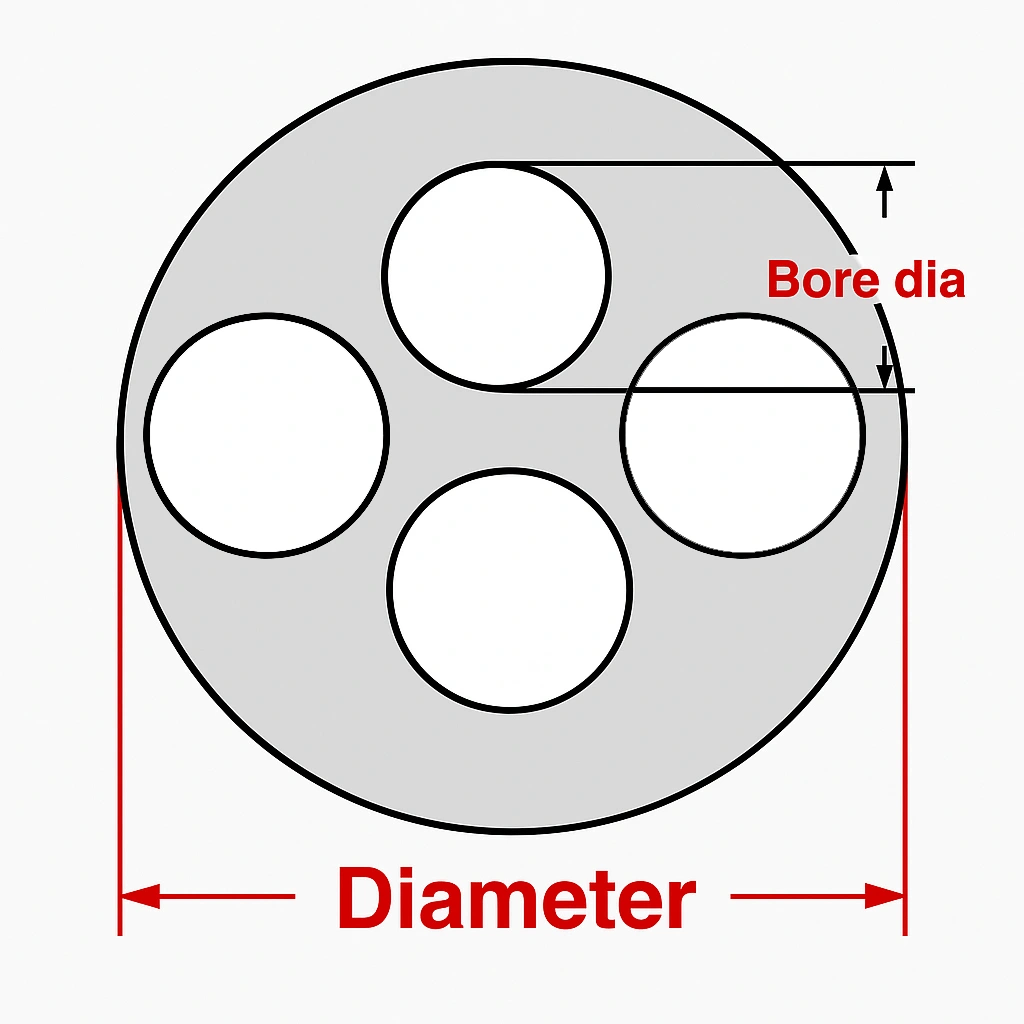
Type 2- Four-Bore Alumina Tubes
| SKU | Dia.(mm) | Bore Dia(mm) | L(mm) |
| TE-AT-138 | 1.5 | 0.3 | L≤2500 |
| TE-AT-139 | 2 | 0.4 | L≤2500 |
| TE-AT-140 | 2.5 | 0.6 | L≤2500 |
| TE-AT-141 | 3 | 0.8 | L≤2500 |
| TE-AT-142 | 3.5 | 0.8 | L≤2500 |
| TE-AT-143 | 3.5 | 1 | L≤2500 |
| TE-AT-144 | 4 | 1 | L≤2500 |
| TE-AT-145 | 4 | 1.3 | L≤2500 |
| TE-AT-146 | 4.5 | 1.2 | L≤2500 |
| TE-AT-147 | 5 | 1.2 | L≤2500 |
| TE-AT-148 | 5.5 | 1.3 | L≤2500 |
| TE-AT-149 | 6 | 1.3 | L≤2500 |
| TE-AT-150 | 6.5 | 1.4 | L≤2500 |
| TE-AT-151 | 8 | 2.0 | L≤2500 |
| TE-AT-152 | 8.5 | 2.2 | L≤2500 |
| TE-AT-153 | 10 | 3.0 | L≤2500 |
| TE-AT-154 | 12 | 3.9 | L≤2500 |
| TE-AT-155 | 14 | 3.9 | L≤2500 |
| TE-AT-156 | 16 | 4.0 | L≤2500 |
For a dedicated four-bore selection, see the 4-bore alumina tube
Type 3-Six-Bore Alumina Tubes
| SKU | Diameter(mm) | Bore Diameter(mm) | L(mm) |
| TE-AT-60001 | 1.85 | 0.2 | ≤3000 |
| TE-AT-60002 | 4.5 | 0.8 | ≤3000 |
| TE-AT-60003 | 4.6 | 0.8 | ≤3000 |
| TE-AT-60004 | 4.7 | 0.8 | ≤3000 |
| TE-AT-60005 | 5.8 | 1 | ≤3000 |
| TE-AT-60006 | 6 | 1 | ≤3000 |
| TE-AT-60007 | 7.8 | 1.25 | ≤3000 |
| TE-AT-60008 | 7.8 | 1.1 | ≤3000 |
| TE-AT-60009 | 8 | 0.8 | ≤3000 |
| TE-AT-60010 | 8 | 1.15 | ≤3000 |
| TE-AT-60011 | 8.2 | 1.15 | ≤3000 |
| TE-AT-60012 | 10 | 1.3 | ≤3000 |
| TE-AT-60013 | 15 | 1 | ≤3000 |
| TE-AT-60014 | 20 | 1.5 | ≤3000 |
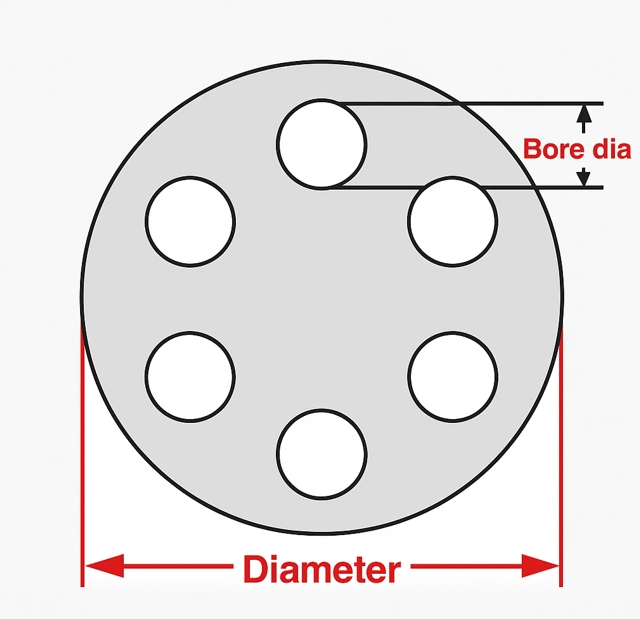
Type 4- Nine-Bore Alumina Tubes
| Item No. | Outer Diameter (mm) | Bore Dia (mm) | Length (mm) |
| TE-AT-90001 | 13 | 0.6 | ≤1000 |
| TE-AT-90002 | 16 | 0.6 | ≤1000 |
For a dedicated nine-bore selection, see the industrial 9-hole alumina ceramic tube
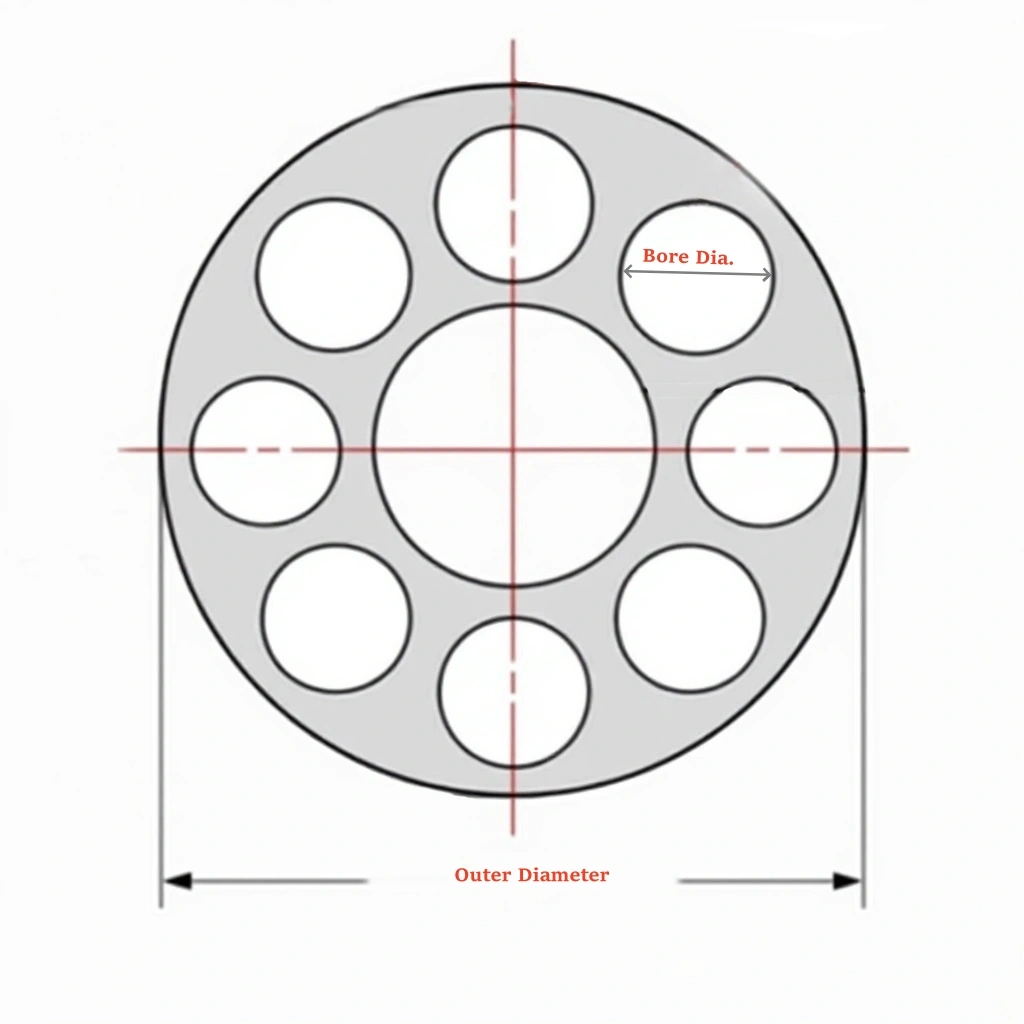
Type 5- Ten-Bore Alumina Tubes
| SKU | Diameter(mm) | Bore Diameter(mm) | L(mm) |
| TE-AT-70015 | 6 | 0.8 | ≤1500 |
| TE-AT-70016 | 6.5 | 0.8 | ≤1500 |
| TE-AT-70017 | 6.5 | 0.9 | ≤1500 |
| TE-AT-70018 | 7 | 0.9 | ≤1500 |
| TE-AT-70019 | 7 | 1 | ≤2500 |
| TE-AT-70020 | 8 | 1.1 | ≤2500 |
| TE-AT-70021 | 14 | 1.5 | ≤2500 |
| TE-AT-70022 | 16 | 1.5 | ≤2500 |
| TE-AT-70023 | 20 | 1.5 | ≤2500 |
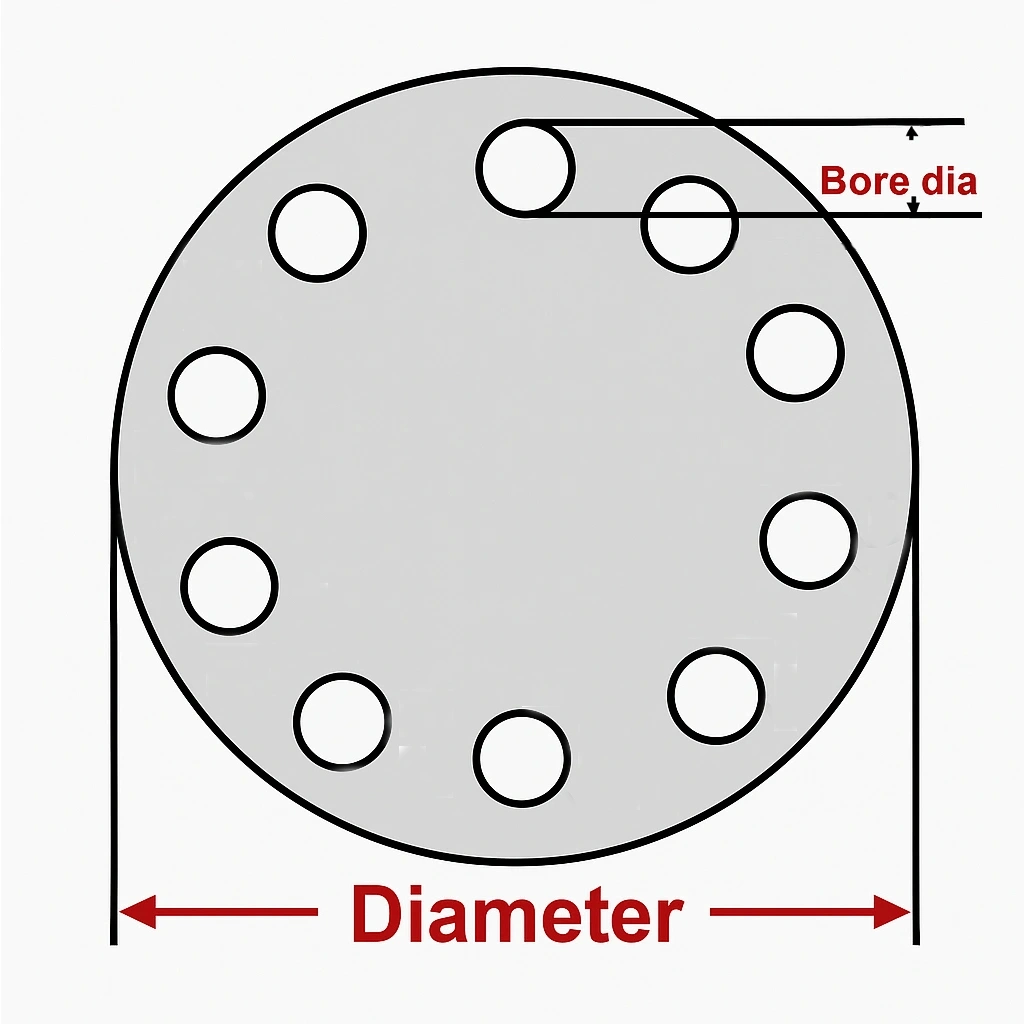
Note: We offer custom dimensions, shapes, and specifications to meet your specific requirements. Contact our engineering team for consultation.
Decide how many separate bores the assembly needs and where they must sit. Bore count alone does not set the number of sensors or sealed paths.
In the 2-, 4-, 6-, 9- or 10-bore tables, compare outside diameter, bore diameter and length within one complete row. Check bore positions and mating clearance.
If no row fits, use the custom ranges below and send a sketch or current part. Grade, wall thickness, end condition and service environment matter to the final choice.
| Nominal Al₂O₃ content (wt%) | Thermal conductivity (typical) | Service-temperature guide (application-dependent; not a continuous-use rating) | Volume resistivity |
|---|---|---|---|
| 95% Al₂O₃ | 18–25 W/(m·K) at 25°C | 1400°C | >10¹² Ω·cm at 20°C |
| 96% Al₂O₃ | 25 W/(m·K) at 20°C | 1600°C maximum in air | 10¹⁴ Ω·cm typical at 20°C |
| 99% Al₂O₃ | 24 W/(m·K) at 25°C | 1600°C | >10¹⁴ Ω·cm at 20°C |
| 99.5% Al₂O₃ | 30–38 W/(m·K) at 25°C | 1650°C | >10¹⁴ Ω·cm at 20°C |
| 99.7% Al₂O₃ | 35–40 W/(m·K) at 25°C | 1700°C | >10¹⁴ Ω·cm at 20°C |
A multi-bore alumina tube works wherever several leads, wires or flow paths have to run through one part and stay separate — usually inside a hot zone or a chemically active process. The common cases are below. Check the one closest to your assembly
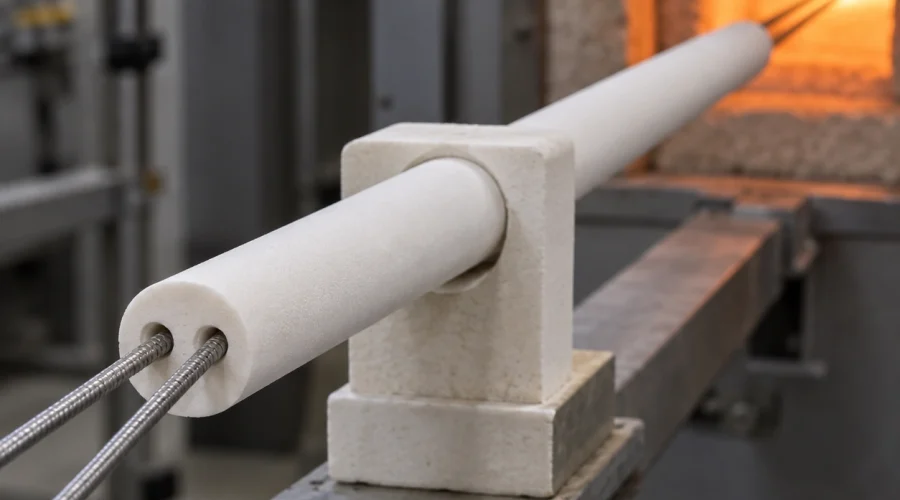
Multiple leads run through a single tube, each one held in its own bore. That is the standard build for a thermocouple or resistance temperature detector that has to measure a hot zone without the leads touching each other. If your sensor has more than one element, or a grounded and an ungrounded junction in the same probe, this is the part that keeps them apart.
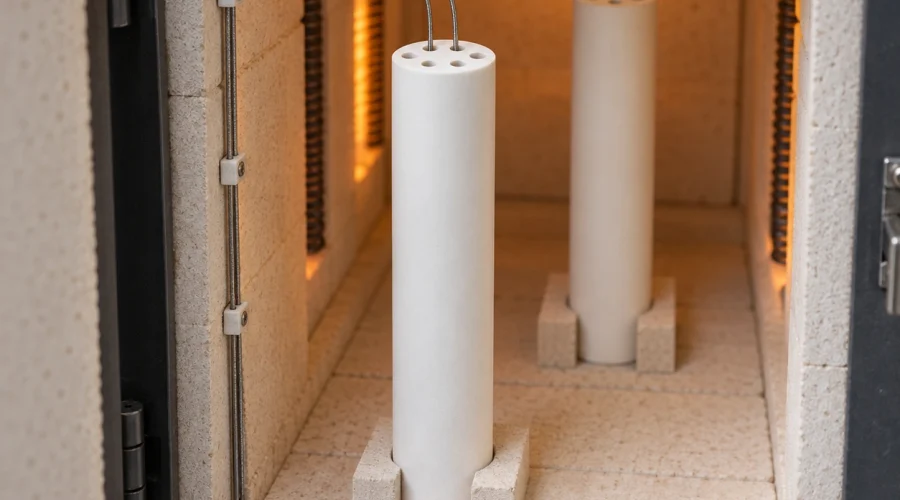
Insulated leads, thermocouple wiring and support elements often have to cross the hot zone of a furnace, kiln or heat-treatment chamber. A dense alumina tube holds that routing through the peak temperature and keeps the conductors isolated from the shell and from each other. The bore layout is picked to match the number of leads and the space the chamber allows.
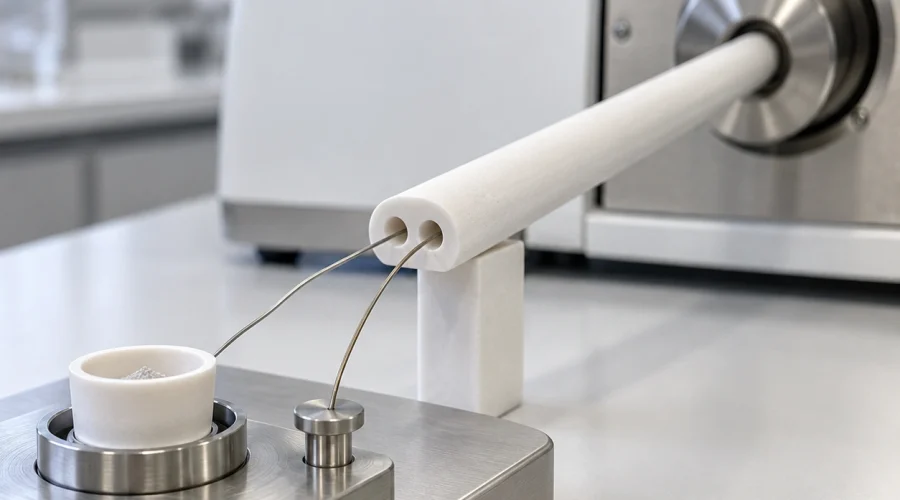
In TGA, DSC, gas analyzers and similar instruments, a multi-bore tube can carry a sample line and a reference line in one part, keeping them separate until they reach the measurement point. The ceramic body stays inert through the process, so it does not react with the sample stream or introduce contamination.
ADCERAX supplies custom multi-bore alumina tubes built to your drawing. You do not need every technical detail to start — send the basic bore layout, dimensions and application first. Bore count, individual bore diameter, material grade and end condition can be worked out together during engineering review before quotation.
Item number or drawing, outside diameter (OD), individual bore diameter, overall length and dimensional requirements.
Number of bores, bore positions and spacing.
End condition, flange or sealing surface and mounting details, if any.
Surface finish and any critical tolerance shown on the drawing.
Required alumina grade (95% to 99.7% Al₂O₃) and the chemical or temperature conditions for engineering review.
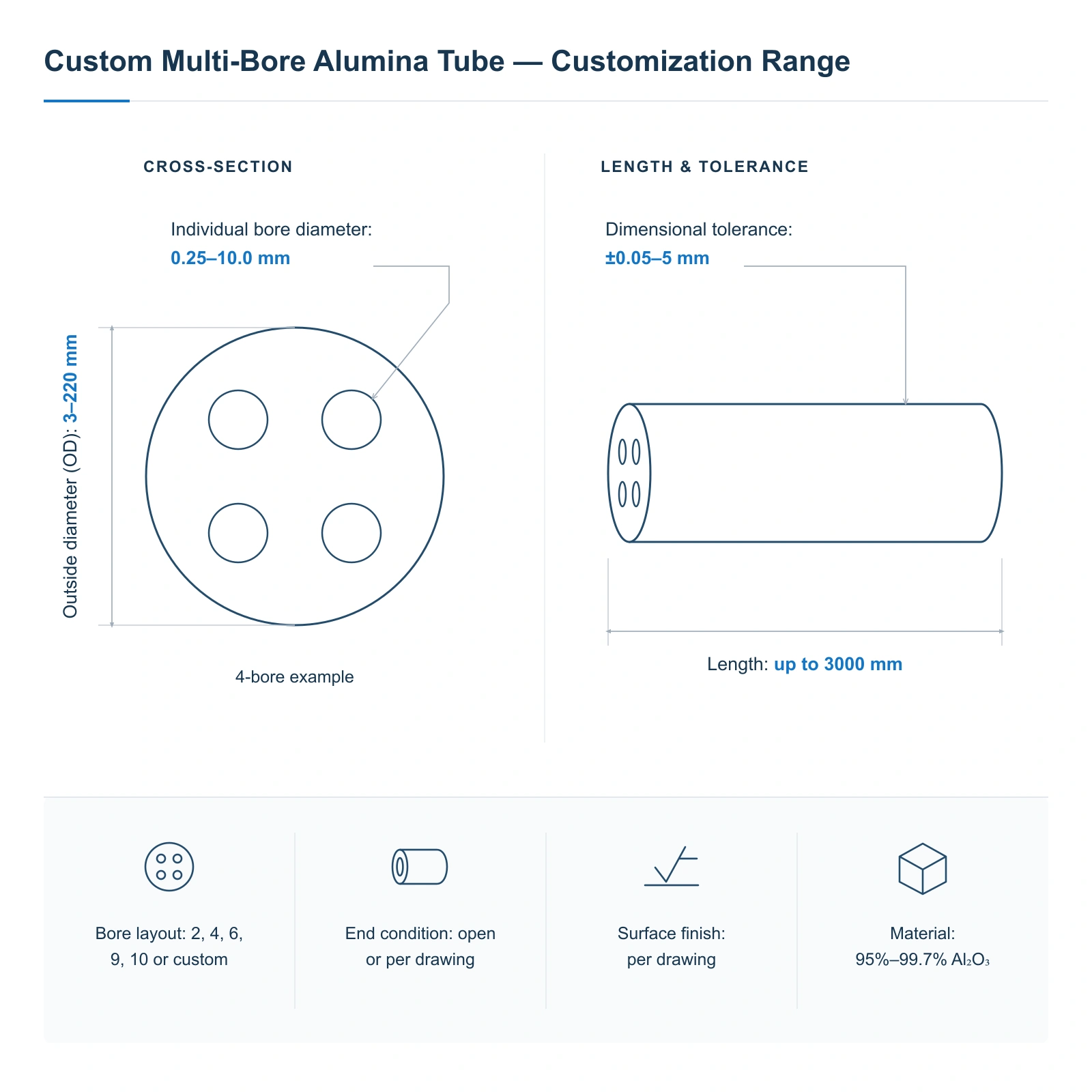
| Feature | Custom range | How to use it |
|---|---|---|
| Outside diameter (OD) | 3–220 mm | Check the proposed bore count, spacing and wall thickness. |
| Individual bore diameter | 0.25–10.0 mm | Show each bore diameter on the cross-section. Some listed size-table rows are smaller than this custom summary. |
| Length | Up to 3000 mm | The length limit for a listed row depends on its bore layout. |
| Dimensional tolerance | ±0.05–5 mm | Mark the feature and required tolerance on the drawing; this span is not one tolerance guaranteed for every OD, bore, length or layout. |
Agree the bore layout and acceptance criteria before evaluating a sample. Confirm the mating assembly and support arrangement first.
Send the application, drawing or known dimensions (OD, bore diameter, length, end condition) and quantity. Engineering reviews geometry feasibility and grade selection before quotation.
The quote states the confirmed geometry — bore count, bore diameters, tolerances and lead time. Requested inspection is tested to the agreed specification, not assumed as standard.
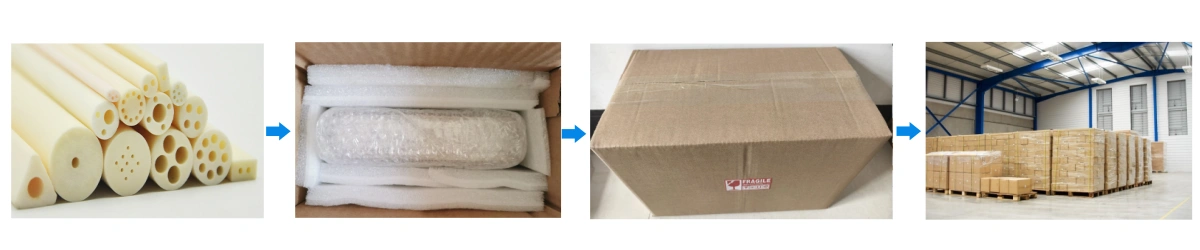
The tube is produced to the agreed drawing. Dimensional inspection and order-specified tests are performed before shipment.
Agree the packaging, required inspection documents and delivery schedule in the order specification.
Before installation
Operating conditions
On receipt
Start with the number, diameter and position of the bores your assembly needs. Compare outside diameter, individual bore diameter and length within one row of the 2-, 4-, 6-, 9- or 10-bore tables. If the bore layout differs, see the custom size ranges.
Bore-to-bore insulation depends on the wall between the bores, the end hardware, the temperature and the electrode arrangement — not on the material grade alone. A volume-resistivity value at 20°C is a material test value, not an assembly voltage rating.
If isolation matters in your assembly, send the operating voltage, test method, maximum temperature and electrode arrangement, and we will review the selected bore layout against them.
Request a Quote for a Custom Multi-Bore Alumina Tube
ADCERAX supplies custom multi-bore alumina tubes to your drawing and application requirements. Share the information below to start your engineering review.
*Our team will answer your inquiries within 24 hours.
*Your information will be kept strictly confidential.
info@adcerax.com
Tel:+86-0731-84428843
WhatsApp:+86 19311583352
Within 24 hours
Send RFQ on WhatsApp
The more details you provide, the faster we can quote.
*All inquiries are confidential.
The more details you provide, the faster we can respond.

*We respond within 24 hours. All inquiries are confidential.