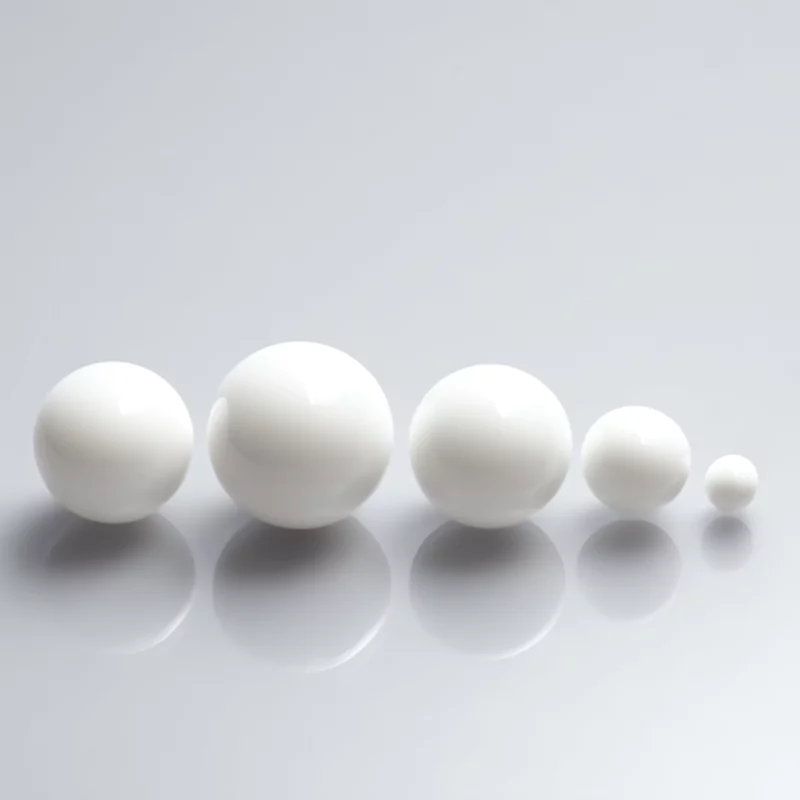
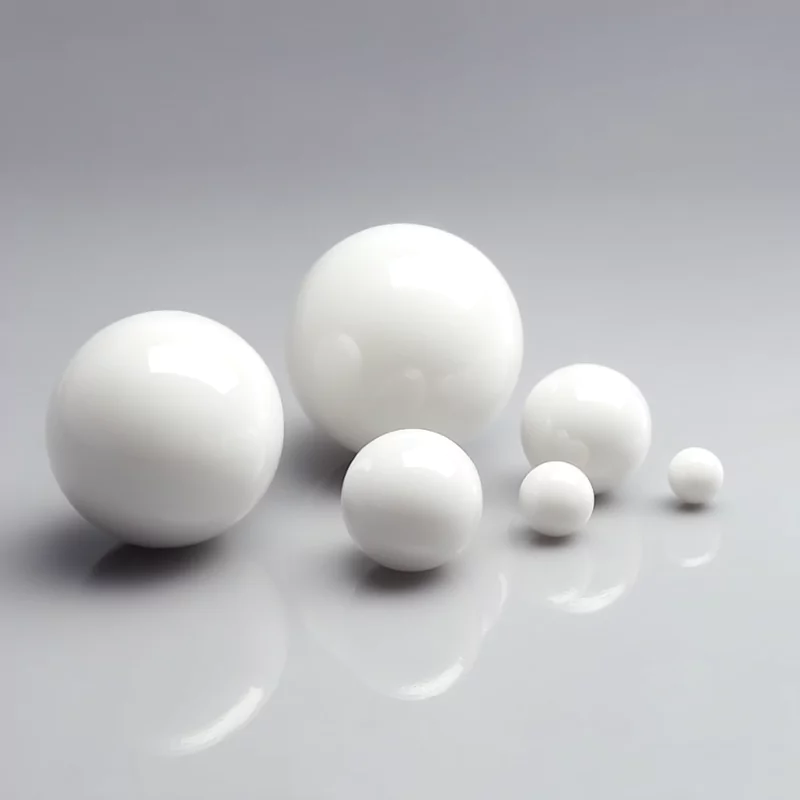
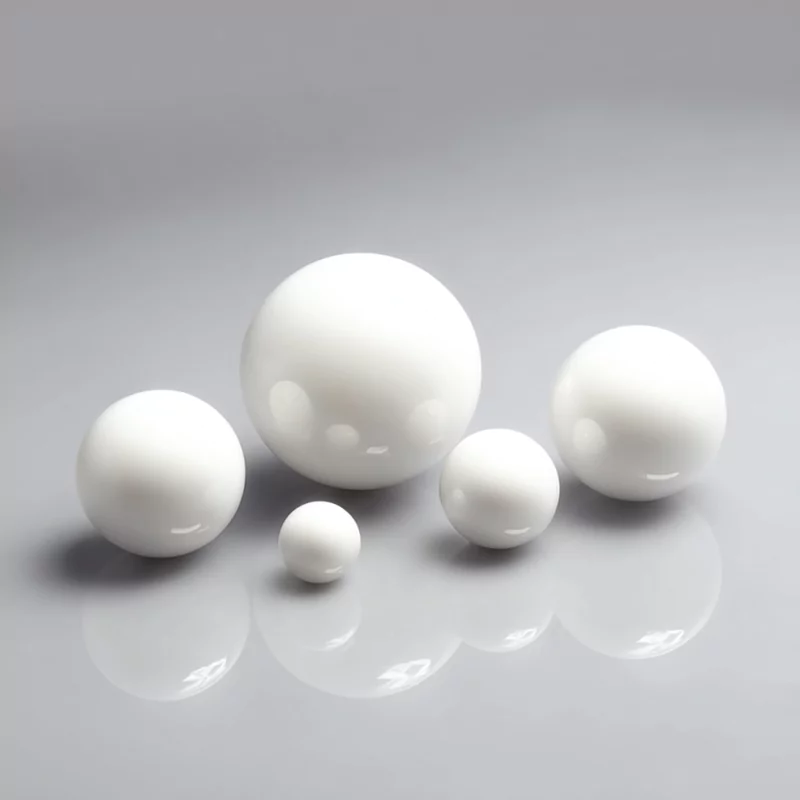
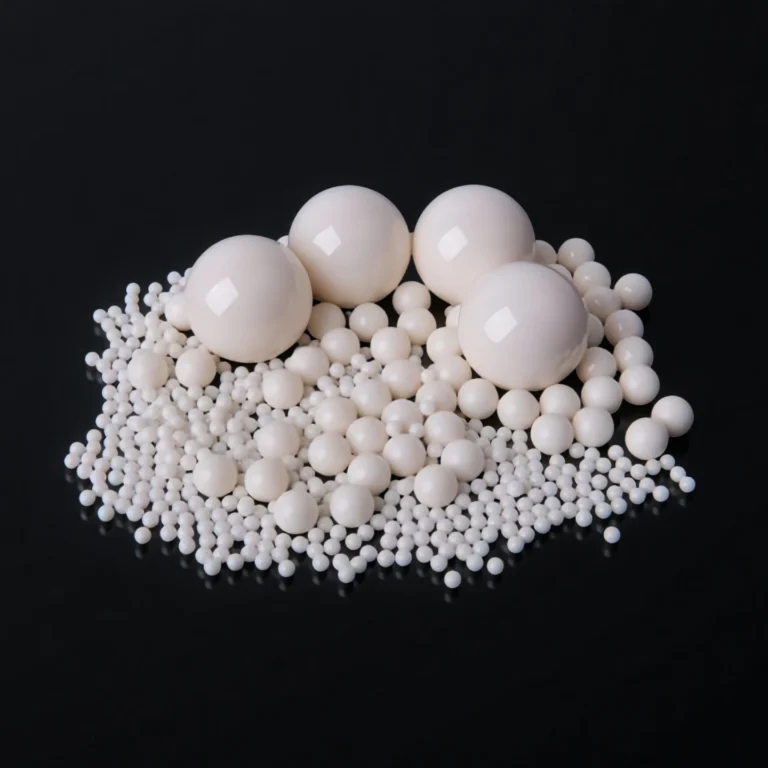
Reinforced Composite Zirconia Beads for High-Efficiency Milling
Composite Zirconia Beads combine zirconia and alumina to deliver enhanced durability, efficiency, and stability in demanding grinding environments. Their performance is validated by measurable data that directly addresses customer pain points in coatings, pigments, battery materials, and ceramics.
ADCERAX® Composite Zirconia Beads are engineered for industrial users requiring efficient grinding and reliable dispersion performance. Produced from zirconia and alumina through advanced sintering, they provide higher strength, low wear, and stable density for continuous operations. Industries such as coatings, pigments, battery materials, and ceramics rely on them to reduce contamination risks and extend service cycles. Their consistent sphericity and chemical stability ensure dependable results in demanding production environments.
Features of Composite Zirconia Beads
Crush strength reaches ≥20 kN (Φ7 mm), preventing bead fracture during high-energy milling. Each cycle maintains operational stability across continuous runs.
Elastic modulus of 200 GPa withstands repeated impacts without deformation. This ensures lower replacement frequency in long-term production.
Hardness above 11 GPa provides superior wear resistance. Users report bead life up to 40% longer than conventional zirconia-silicate media.
Density of 6.02–6.07 g/cm³ delivers strong grinding force, enabling finer particle reduction within shorter milling times.
Wear rate is less than 0.1 kg per ton, cutting material losses and operational costs compared with standard alumina beads.
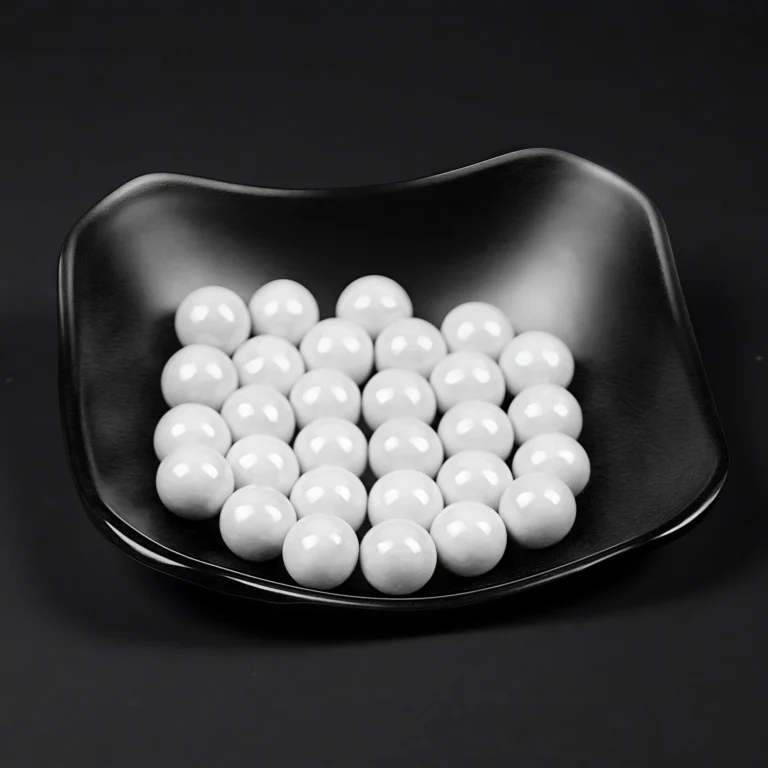
Sphericity exceeding 96% improves particle flow, ensuring consistent dispersion in coatings and battery electrode slurries.
Thermal expansion coefficient is 9.6 ×10⁻⁶/°C (20–400°C), allowing safe use under variable heating and cooling cycles.
Corrosion resistance verified by acid and alkali tests shows <0.02 wt% Fe₂O₃, reducing contamination risks in sensitive applications.
Non-magnetic property eliminates interference in electronic materials, ensuring 100% compatibility with precision processing environments.
Technical Properties for Composite Zirconia Beads
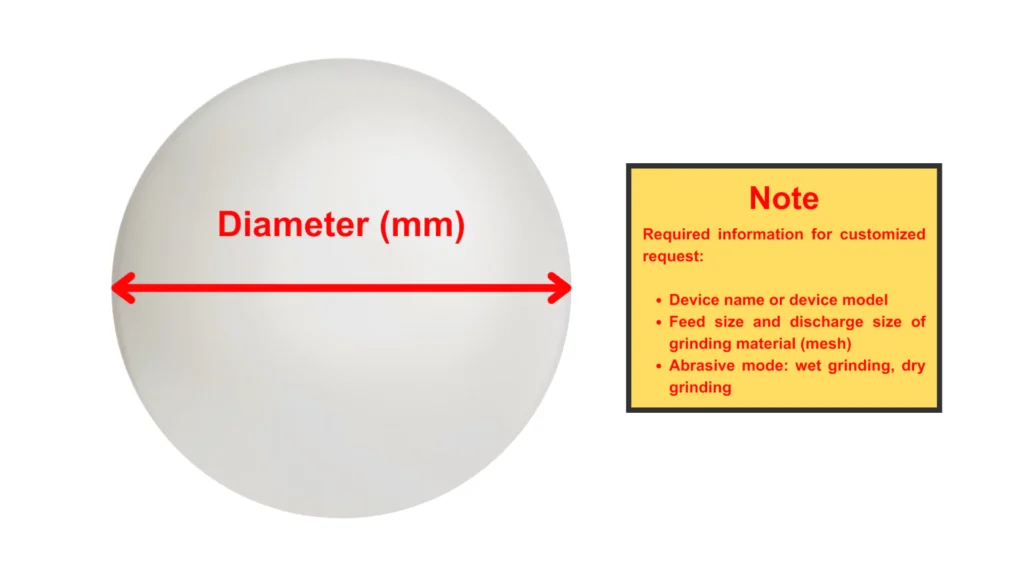
The following section presents the technical parameters of Composite Zirconia Beads, covering key physical, chemical, and mechanical properties. This information complements the detailed property table and supports the dimension charts available in the catalog, helping buyers evaluate material performance for industrial applications.
Property
Specification
Density
6.02–6.07 g/cm³
Vickers Hardness
>11 GPa
Elastic Modulus
200 GPa
Fracture Toughness
8 MPa·m½
Thermal Expansion Coefficient (20–400°C)
9.6 ×10⁻⁶ /°C
Crush Strength (Φ7 mm)
≥20 kN
Wear Rate
<0.1 kg/ton processed
Sphericity
>96%
Impurity Fe₂O₃ Content
<0.02 wt%
Grain Size
≤0.5 μm
Specifications of Composite Zirconia Beads
ADCERAX® Specifications of Composite Zirconia Beads
Type 1: Chemical Composition
Component
ZrO2+Y2O3
Al2O3
SiO2
Fe2O3
Na2O
wt%
90%
8%
2%
< 0.02
< 0.02
ZrO2 and Y2O3 Composite Zirconia Beads
Item No.
Diameter (mm)
AT-NAZ6-001
0.6-0.8
AT-NAZ8-002
0.8-1.0
AT-NAZ10-003
1.0-1.2
AT-NAZ12-004
1.2-1.4
AT-NAZ14-005
1.4-1.6
AT-NAZ16-006
1.6-1.8
AT-NAZ18-007
1.8-2.0
AT-NAZ20-008
2.0-2.2
AT-NAZ22-009
2.2-2.5
AT-NAZ25-010
2.5-2.8
AT-NAZ28-011
2.8-3.2
AT-NAZ32-012
3.2-3.5
Type 2: Chemical Composition
Component
ZrO2
Al2O3
Other
wt%
30%
60%
10%
Type 2: Composite zirconia beads
Item No.
Diameter (mm)
AT-NH6-001
0.6-0.8
AT-NH8-002
0.8-1.0
AT-NH10-003
1.0-1.2
AT-NH12-004
1.2-1.4
AT-NH14-005
1.4-1.6
AT-NH16-006
1.6-1.8
AT-NH18-007
1.8-2.0
AT-NH22-008
2.2-2.5
AT-NH25-009
2.5-2.8
AT-NH28-010
2.8-3.2
AT-NHB3-011
3.0-5.0
AT-NHB5-012
5.0-7.0
AT-NHB7-013
7.0-9.0
AT-NHB9-014
9.0-12.0
Type 3: Chemical Composition
Component
AL2O3
ZrO2
other
wt%
85%
10%
5%
ZrO2 and Y2O3 Composite Zirconia Beads
Item No.
Diameter (mm)
AT-NZC8-001
1.0-1.3
AT-NZC10-002
1.3-1.7
AT-NZC12-003
1.5-2.0
AT-NZC20-004
2.0-2.5
AT-NZC25-005
2.5-3.0
AT-NZC30-006
3.0-3.5
AT-NZC35-007
3.5-4.0
AT-NZC40-008
4.0-4.5
AT-NZC45-009
4.5-5.0
Packaging of Composite Zirconia Beads
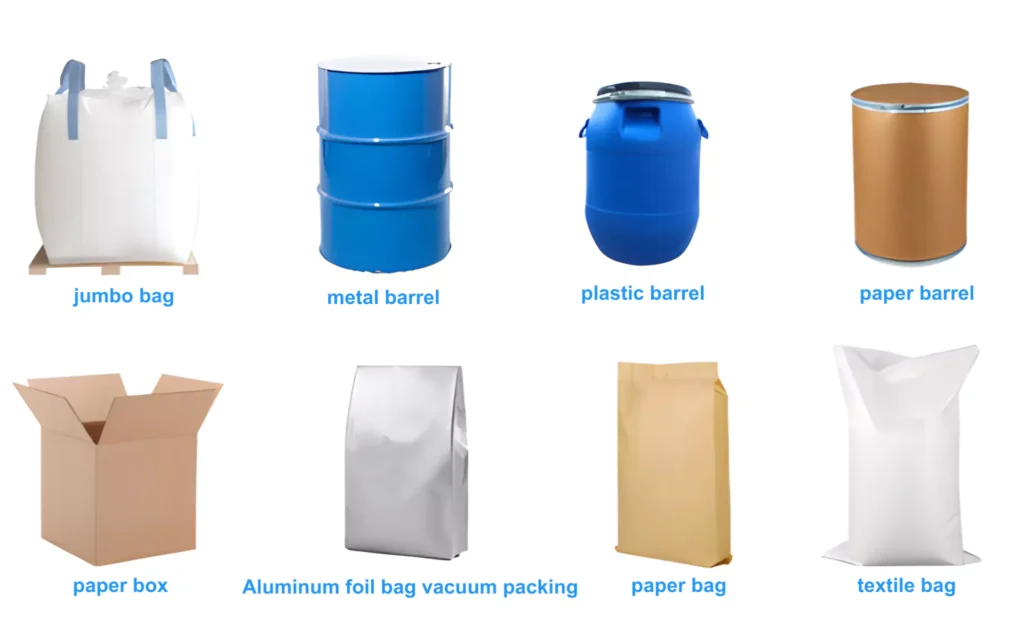
Composite Zirconia Beads are securely packed in jumbo bags, metal barrels, plastic barrels, or paper barrels to meet bulk industrial needs. For smaller quantities, Composite Zirconia Beads can be supplied in paper boxes, aluminum foil vacuum bags, paper bags, or textile bags. Each packaging option ensures safe transport, moisture resistance, and long-term storage stability of Composite ZrO2 Beads.
Solving Application Challenges with ADCERAX® Composite Zirconia Beads
Composite Zirconia Beads are engineered to address critical performance challenges in specialized industries where grinding efficiency, chemical stability, and product purity are essential. By targeting the needs of battery materials, high-performance coatings, and pharmaceutical suspensions, these beads directly solve application pain points through measurable performance advantages.
Lithium-Ion Battery Cathode Slurries
✅Key Advantages
1. Ultra-low wear, clean slurry — <0.1 kg/ton wear minimizes bead shedding. Fe contaminant stays <0.02 wt% Fe₂O₃, and the media are non-magnetic for clean PSD control.
2. High-energy milling stability — Crush strength ≥20 kN (Φ7 mm) resists fragmentation in high shear. Elastic modulus 200 GPa maintains shape under repeated impacts.
3. Uniform dispersion kinetics — Sphericity >96% promotes narrow PSD at target solids. Density 6.02–6.07 g/cm³ supplies sufficient shear for fast D50 reduction.
✅ ️Problem Solved
On a cathode NCM slurry line, replacing zirconia-silicate media (typical wear 0.20–0.30 kg/ton) with ADCERAX® Composite Zirconia Beads cut bead loss to <0.10 kg/ton and eliminated magnet pickup events. ICP screening kept Fe at <0.02 wt% Fe₂O₃ across runs. Higher crush strength (≥20 kN) prevented bead fracture, stabilizing viscosity windows. Plants reported fewer mid-shift stops for media top-ups and more consistent electrode coating quality.
Automotive and Industrial Coatings
✅Key Advantages
1. Fracture-resistant at line speed — Crush strength ≥20 kN (Φ7 mm) prevents chipping in high-RPM disc mills. Hardness >11 GPa limits micro-abrasion that creates fines.
2. Consistent pigment dispersion — Sphericity >96% sustains uniform flow through the mill. Density 6.02–6.07 g/cm³ supports rapid grind-out to spec.
3. Low contamination in color-critical systems — Wear <0.1 kg/ton reduces filter loading. Bulk impurities remain <0.02 wt% Fe₂O₃ to protect ΔE targets.
✅ ️Problem Solved
A coil-coating black base formulation experienced fines carryover and frequent screen clogging with lower-grade media. Switching to ADCERAX® Composite Zirconia Beads dropped media wear to <0.10 kg/ton, reducing debris loading. With sphericity >96%, pigment dispersion stabilized batch-to-batch, and Fe remained <0.02 wt%. Maintenance intervals extended as bead fracture was mitigated by ≥20 kN crush strength.
In a nanosuspension milling step for a heat-sensitive API, prior media introduced detectable metals and variable PSD. ADCERAX® Composite Zirconia Beads maintained Fe at <0.02 wt%, while wear remained <0.10 kg/ton, protecting purity and yield. Stable bead geometry (crush ≥20 kN) reduced out-of-spec lots linked to media damage. The result was consistent particle size with fewer post-milling deviations.
User Guide for Composite Zirconia Beads
Correct usage and handling of Composite Zirconia Beads are essential to achieve consistent grinding efficiency, minimize wear, and extend product lifetime. This guide provides practical recommendations for filling, operating, cleaning, and maintaining Composite ZrO2 Beads during industrial applications.
Optimal Filling Practices
1. Determine proper loading: Calculate filling ratio based on mill size and slurry type; overfilling can cause energy loss and underfilling reduces grinding efficiency.
2. Maintain bead-to-material ratio: A balanced ratio ensures stable energy transfer, with Composite Zirconia Beads achieving higher shear forces for fine dispersion.
3. Monitor bead distribution: Uneven filling leads to vibration and increased wear; ensure uniform bead layer inside the chamber.
Controlled Milling Operations
1. Avoid excessive speed: Running mills beyond recommended RPM creates bead breakage and slurry contamination, shortening equipment lifespan.
2. Stabilize operating temperature: High thermal stress accelerates wear; Composite Zirconia Beads retain efficiency when temperatures are controlled within standard ranges.
3. Track energy input: Excessive energy raises milling costs and increases bead attrition; adjust parameters to balance throughput with bead life.
Cleaning and Replacement Protocols
1. Schedule regular cleaning: Residues left inside the mill can harden and contaminate new batches; routine cleaning protects product integrity.
2. Remove damaged beads: Screen out fractured or irregular beads, replacing with fresh Composite Zirconia Beads to maintain consistent performance.
3. Prevent chemical buildup: Flush with approved cleaning agents to eliminate deposits without harming bead surfaces.
Storage and Handling Precautions
1. Keep packaging sealed: Exposure to moisture can degrade bead surface quality; store Composite Zirconia Beads in dry and sealed containers.
2. Protect from physical impact: Dropping bags or barrels causes micro-cracks that reduce bead durability during milling.
3. Label by batch number: Proper identification ensures traceability and quality control across multiple production runs.
FAQs about Composite Zirconia Beads
Q: How do Composite Zirconia Beads improve grinding efficiency compared to other media?
A: Composite Zirconia Beads combine zirconia and alumina to achieve medium-high density with excellent sphericity. This ensures stronger shear forces and faster particle size reduction. Customers report up to 20–30% higher throughput in continuous milling systems.
Q: What contamination risks are reduced by using Composite Zirconia Beads?
A: Unlike glass or metal media, Composite Zirconia Beads are chemically inert and non-magnetic. This minimizes the chance of leaching or metallic contamination. The beads ensure slurry or suspension purity, meeting strict standards in pharma and battery industries.
Q: How do Composite Zirconia Beads perform under high-energy milling conditions?
A: Composite Zirconia Beads show compressive strength exceeding 20 kN (Φ7 mm). This allows them to withstand high line-speed disc mills without fracturing. As a result, downtime from bead breakage and contamination is significantly reduced.
Q: Can Composite Zirconia Beads handle highly viscous materials?
A: Yes, the specific gravity >5.3 kg/dm³ ensures strong momentum transfer in thick slurries. This makes Composite Zirconia Beads effective for dispersing viscous pastes like electrode inks or ceramic suspensions. Customers achieve finer dispersions with shorter milling times.
Q: What advantage do Composite Zirconia Beads offer in pigment and coating production?
A: Their uniform sphericity >96% maintains consistent flow and pigment dispersion in high-speed mills. This prevents color shade variations and coating defects. Users confirm lower scrap rates and higher product uniformity when switching to Composite Zirconia Beads.
Client Experiences with ADCERAX® Composite Zirconia Beads
⭐️⭐️⭐️⭐️⭐️
“We switched to Composite Zirconia Beads for our cathode slurry production, and the results were immediate. The beads showed over 40% lower wear rate compared with our previous media, reducing contamination risk and downtime. Their stable density gave us consistent slurry performance across multiple production cycles.”
– Mr. H., R&D Manager – [Battery Materials Co., Germany]
⭐️⭐️⭐️⭐️⭐️
“Our coating lines struggled with pigment dispersion until we adopted Composite Zirconia Beads. The beads maintained uniform particle size with zero contamination issues even after extended high-speed milling. Equipment cleaning frequency dropped by half, which improved our throughput efficiency significantly.”
– Ms. T., Process Engineer – [Automotive Coatings Ltd., USA]
⭐️⭐️⭐️⭐️⭐️
“We rely on Composite Zirconia Beads for pharmaceutical suspension grinding due to strict purity standards. Their chemical inertness eliminated trace metal leaching, which had caused repeated batch rejections in the past. Regulatory compliance is now much easier to achieve, and our QA team is fully satisfied.”
– Dr. K., Quality Director – [PharmaTech Laboratories, Japan]
⭐️⭐️⭐️⭐️⭐️
“In our ceramic raw material processing, Composite Zirconia Beads demonstrated 30% higher compressive strength than the alumina beads we previously used. This allowed us to run longer milling cycles without bead fracture. The improvement in efficiency and reduced replacement cost made a clear impact on our operating budget.”
– Mr. L., Production Manager – [Advanced Ceramics Group, South Korea]
Tailored solutions ensure that Composite Zirconia Beads meet the specific requirements of diverse industries. ADCERAX® provides flexible customization options to help clients optimize grinding efficiency, purity, and performance across critical applications.
Material Composition Options
Customized composition helps match bead properties with specialized industrial requirements.
Zirconia ratio: Adjusted for strength and grinding performance.
Alumina content: Balanced to improve toughness and reduce wear.
Grain refinement: Controlled for enhanced sphericity and durability.
Size and Density Configurations
Flexibility in size and density supports optimal performance across different milling environments.
Bead diameter: Tuned for energy transfer and particle reduction.
Bulk density: Designed to achieve stable slurry dispersion.
True density: Maintained for consistent operational efficiency.
Surface and Structural Design
Surface quality and structure customization improve dispersion consistency and reduce contamination.
Surface polish: Refined to minimize slurry contamination risk.
Shape precision: Maintained for uniform particle distribution.
Structural strength: Ensured for longer bead service life.
ADCERAX® Composite Zirconia Beads are engineered for industrial users requiring efficient grinding and reliable dispersion performance. Produced from zirconia and alumina through advanced sintering, they provide higher strength, low wear, and stable density for continuous operations. Industries such as coatings, pigments, battery materials, and ceramics rely on them to reduce contamination risks and extend service cycles. Their consistent sphericity and chemical stability ensure dependable results in demanding production environments.
Features of Composite Zirconia Beads
Crush strength reaches ≥20 kN (Φ7 mm), preventing bead fracture during high-energy milling. Each cycle maintains operational stability across continuous runs.
Elastic modulus of 200 GPa withstands repeated impacts without deformation. This ensures lower replacement frequency in long-term production.
Hardness above 11 GPa provides superior wear resistance. Users report bead life up to 40% longer than conventional zirconia-silicate media.
Density of 6.02–6.07 g/cm³ delivers strong grinding force, enabling finer particle reduction within shorter milling times.
Wear rate is less than 0.1 kg per ton, cutting material losses and operational costs compared with standard alumina beads.
Sphericity exceeding 96% improves particle flow, ensuring consistent dispersion in coatings and battery electrode slurries.
Thermal expansion coefficient is 9.6 ×10⁻⁶/°C (20–400°C), allowing safe use under variable heating and cooling cycles.
Corrosion resistance verified by acid and alkali tests shows <0.02 wt% Fe₂O₃, reducing contamination risks in sensitive applications.
Non-magnetic property eliminates interference in electronic materials, ensuring 100% compatibility with precision processing environments.
Technical Properties for Composite Zirconia Beads
The following section presents the technical parameters of Composite Zirconia Beads, covering key physical, chemical, and mechanical properties. This information complements the detailed property table and supports the dimension charts available in the catalog, helping buyers evaluate material performance for industrial applications.
Property
Specification
Density
6.02–6.07 g/cm³
Vickers Hardness
>11 GPa
Elastic Modulus
200 GPa
Fracture Toughness
8 MPa·m½
Thermal Expansion Coefficient (20–400°C)
9.6 ×10⁻⁶ /°C
Crush Strength (Φ7 mm)
≥20 kN
Wear Rate
<0.1 kg/ton processed
Sphericity
>96%
Impurity Fe₂O₃ Content
<0.02 wt%
Grain Size
≤0.5 μm
Specifications of Composite Zirconia Beads
ADCERAX® Specifications of Composite Zirconia Beads
Type 1: Chemical Composition
Component
ZrO2+Y2O3
Al2O3
SiO2
Fe2O3
Na2O
wt%
90%
8%
2%
< 0.02
< 0.02
ZrO2 and Y2O3 Composite Zirconia Beads
Item No.
Diameter (mm)
AT-NAZ6-001
0.6-0.8
AT-NAZ8-002
0.8-1.0
AT-NAZ10-003
1.0-1.2
AT-NAZ12-004
1.2-1.4
AT-NAZ14-005
1.4-1.6
AT-NAZ16-006
1.6-1.8
AT-NAZ18-007
1.8-2.0
AT-NAZ20-008
2.0-2.2
AT-NAZ22-009
2.2-2.5
AT-NAZ25-010
2.5-2.8
AT-NAZ28-011
2.8-3.2
AT-NAZ32-012
3.2-3.5
Type 2: Chemical Composition
Component
ZrO2
Al2O3
Other
wt%
30%
60%
10%
Type 2: Composite zirconia beads
Item No.
Diameter (mm)
AT-NH6-001
0.6-0.8
AT-NH8-002
0.8-1.0
AT-NH10-003
1.0-1.2
AT-NH12-004
1.2-1.4
AT-NH14-005
1.4-1.6
AT-NH16-006
1.6-1.8
AT-NH18-007
1.8-2.0
AT-NH22-008
2.2-2.5
AT-NH25-009
2.5-2.8
AT-NH28-010
2.8-3.2
AT-NHB3-011
3.0-5.0
AT-NHB5-012
5.0-7.0
AT-NHB7-013
7.0-9.0
AT-NHB9-014
9.0-12.0
Type 3: Chemical Composition
Component
AL2O3
ZrO2
other
wt%
85%
10%
5%
ZrO2 and Y2O3 Composite Zirconia Beads
Item No.
Diameter (mm)
AT-NZC8-001
1.0-1.3
AT-NZC10-002
1.3-1.7
AT-NZC12-003
1.5-2.0
AT-NZC20-004
2.0-2.5
AT-NZC25-005
2.5-3.0
AT-NZC30-006
3.0-3.5
AT-NZC35-007
3.5-4.0
AT-NZC40-008
4.0-4.5
AT-NZC45-009
4.5-5.0
Packaging of Composite Zirconia Beads
Composite Zirconia Beads are securely packed in jumbo bags, metal barrels, plastic barrels, or paper barrels to meet bulk industrial needs. For smaller quantities, Composite Zirconia Beads can be supplied in paper boxes, aluminum foil vacuum bags, paper bags, or textile bags. Each packaging option ensures safe transport, moisture resistance, and long-term storage stability of Composite ZrO2 Beads.
Send RFQ on WhatsApp
Quick Quote
The more details you provide, the faster we can quote.
*All inquiries are confidential.
Get Your Custom Solution
The more details you provide, the faster we can respond.
*We respond within 24 hours. All inquiries are confidential.