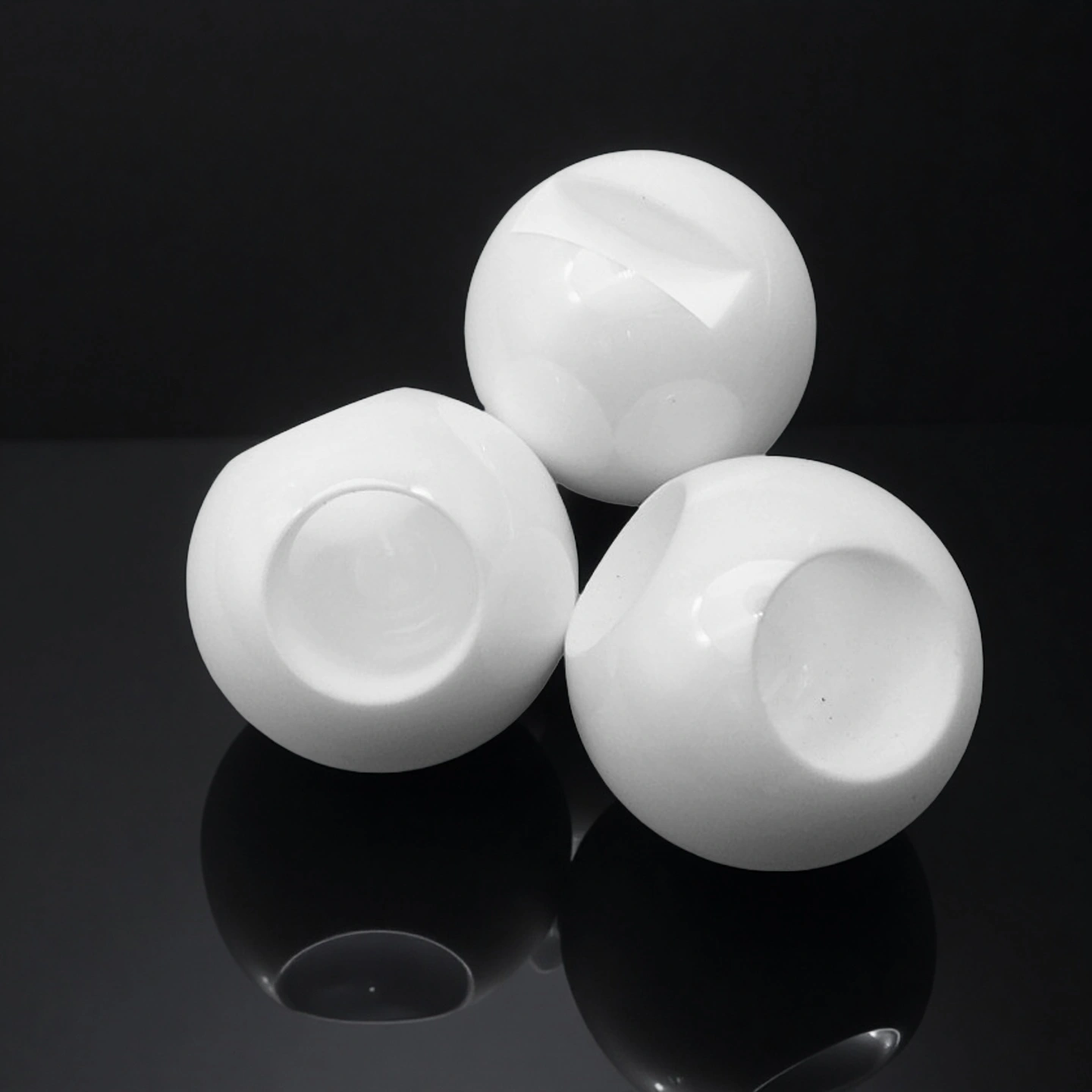
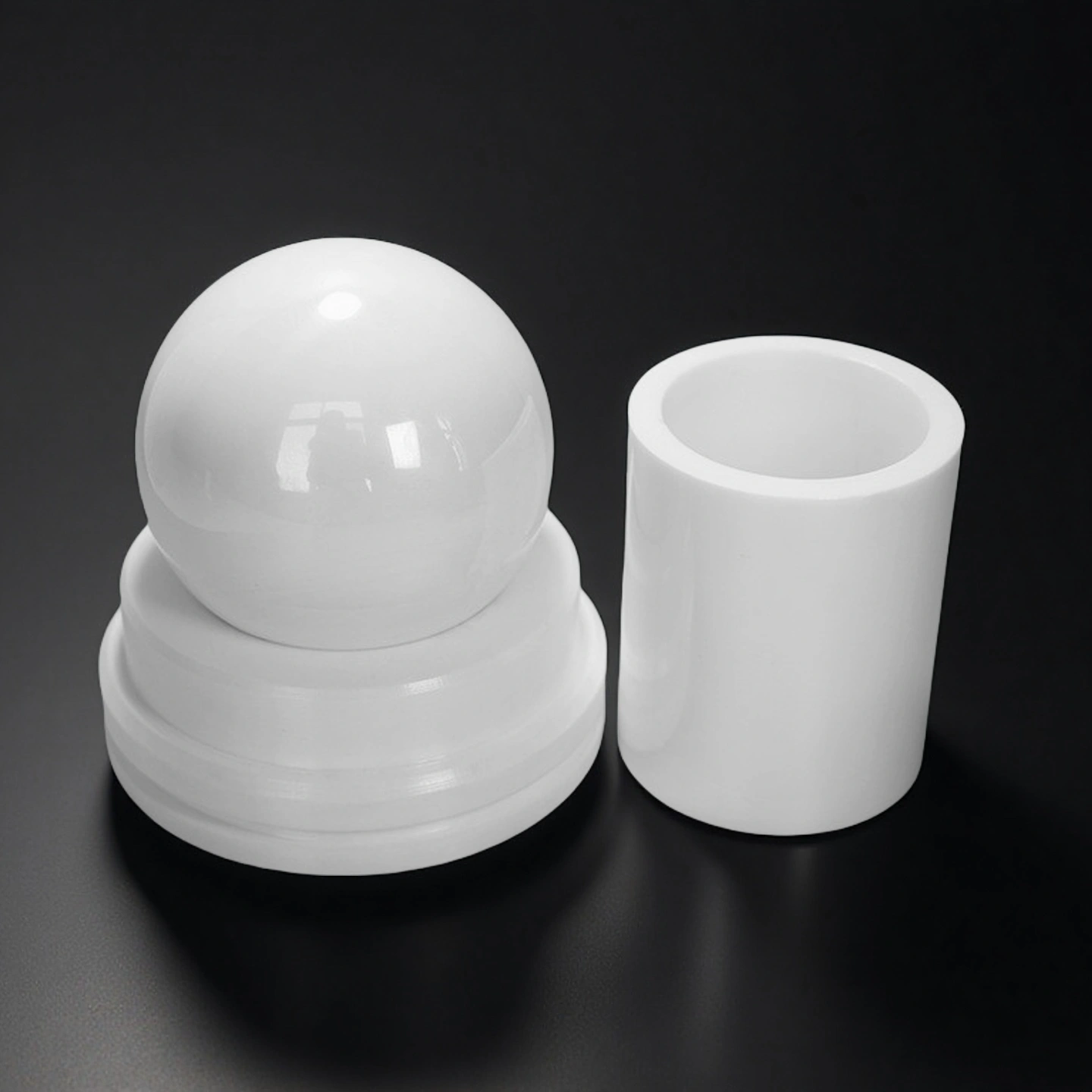
Alumina Ceramic Ball Valve with High-Purity Ceramic Seats and Ball

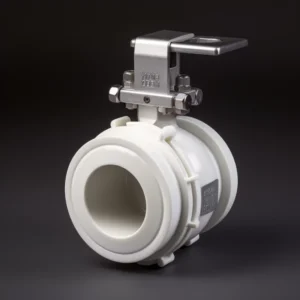
Alumina ceramic ball valve in DN15–DN200 (DN15–DN250 for the V-port type), rated PN16/PN25/Class 150–300, with alumina ceramic ball, seats and liner in either the O-type on/off, V-port control or eccentric half-ball design. Standard sizes ship from stock; non-standard face-to-face, flange and actuation are machined from your drawing.

Catalog No. AT-CVO-001
Material ≥ 96% Al2O3
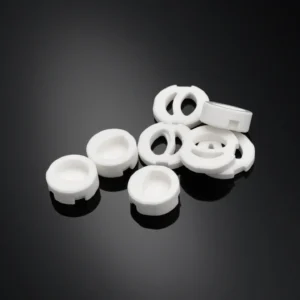
Ceramic trim Alumina ball, seat and lining options
Custom options Bore, face-to-face, end connection and actuation
Dimensions/Sizes Download PDF
Engineering RFQ Review
Small-Batch Custom Support
Drawing-Based Production
Drawing & Process Review

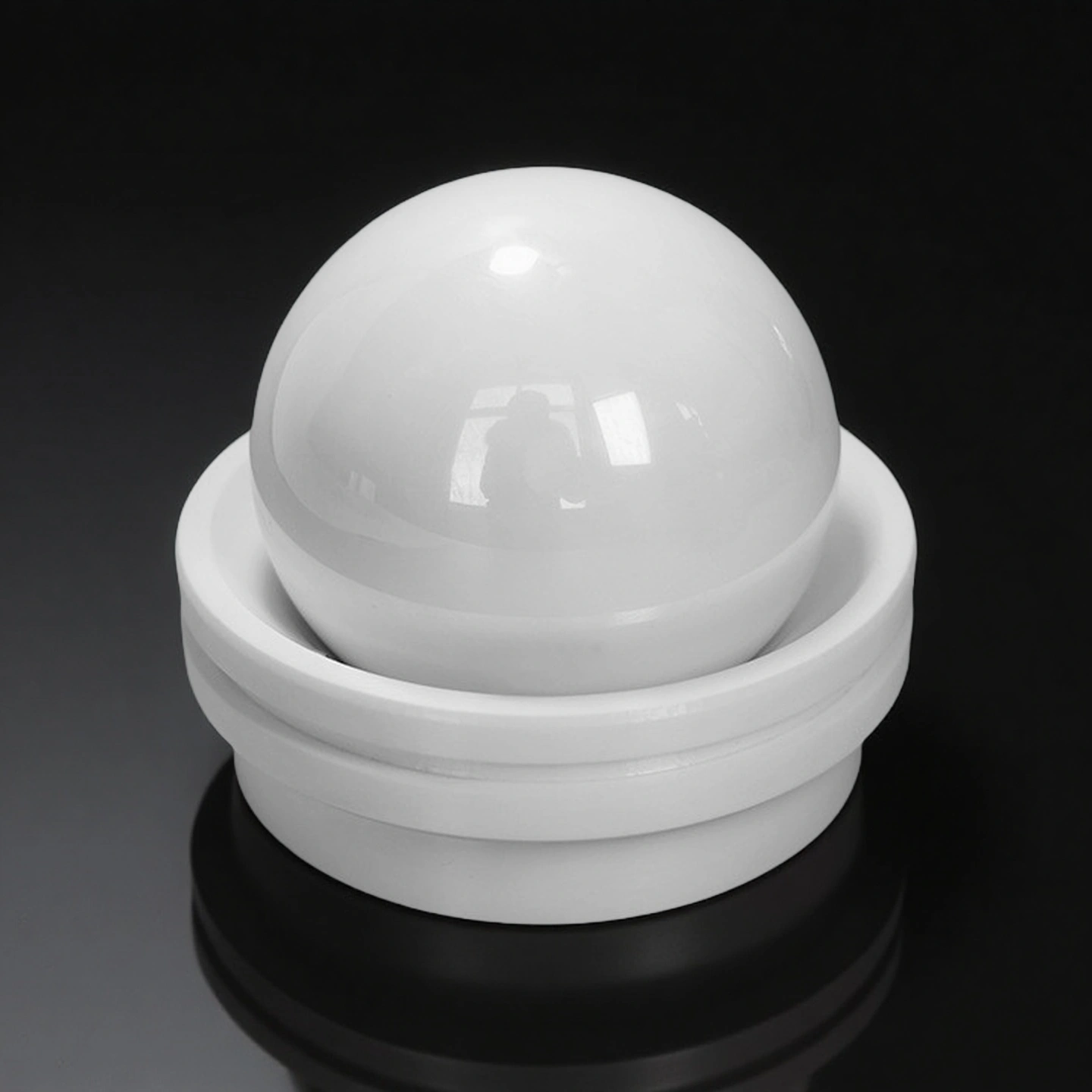
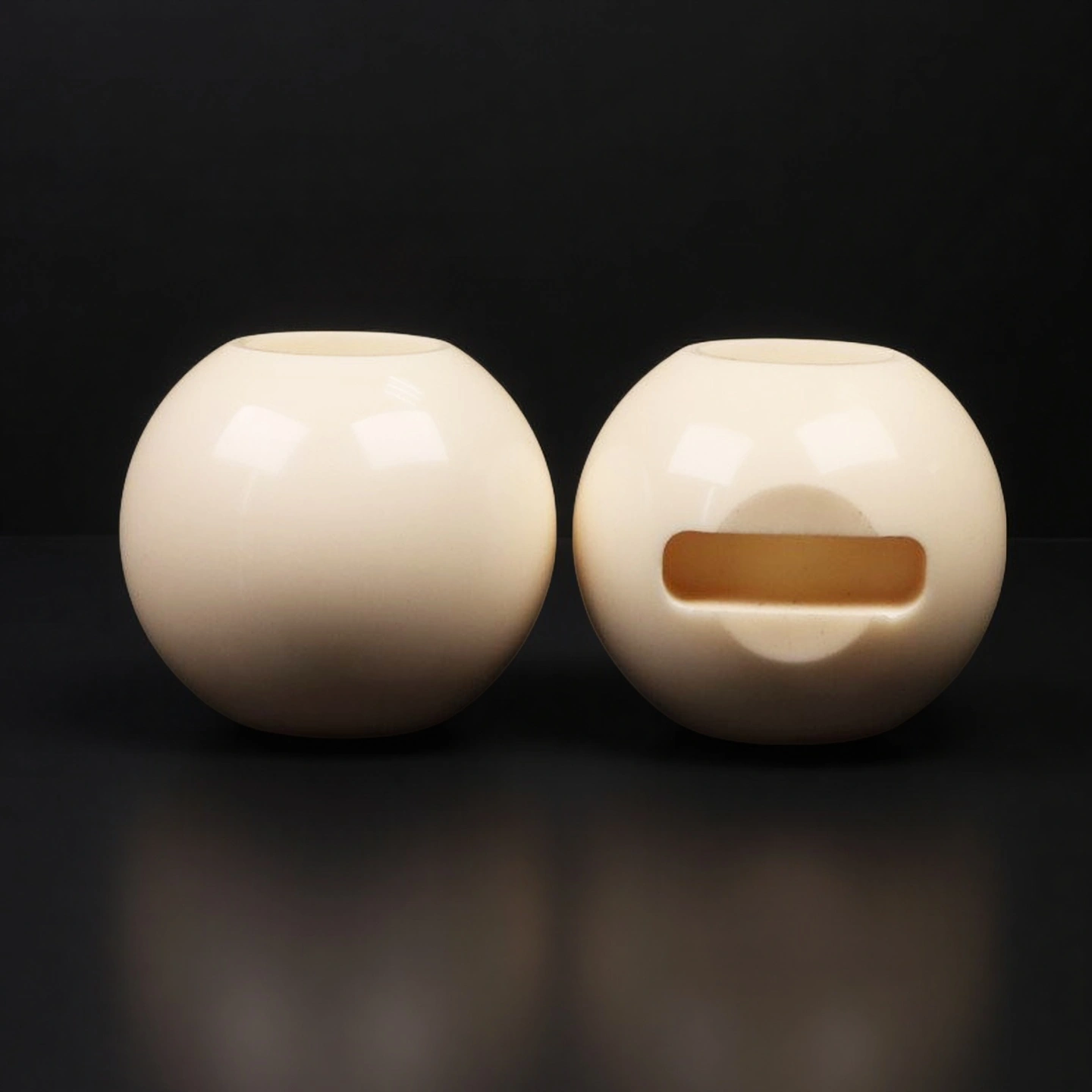
An alumina ceramic ball valve is a quarter-turn industrial valve whose ball, seats and bore liner are made of dense alumina (Al2O3) ceramic instead of metal or polymer. The alumina trim resists abrasion and chemical attack, so the valve keeps its sealing face and closing torque on abrasive slurries, corrosive chemicals and fiber-laden pulp where metal-seated valves wear out.


Alumina Ceramic Ball Valve Specifications

size of ball valve

Part No. Parts Material
1 Valve Body WCB
2 Middle Body WCB
3 Gland Flang Engineering Ceramic
4 Valve Seat Engineering Ceramic
5 Ball Engineering Ceramic
6 Bushing Engineering Ceramic
7 Stem 2Cr13
8 Packing Flexible Graphite
9 Packing Gland WCB
10 Lever WCB


Type 1: Alumina Ceramic Lined O-Type Ball Valve
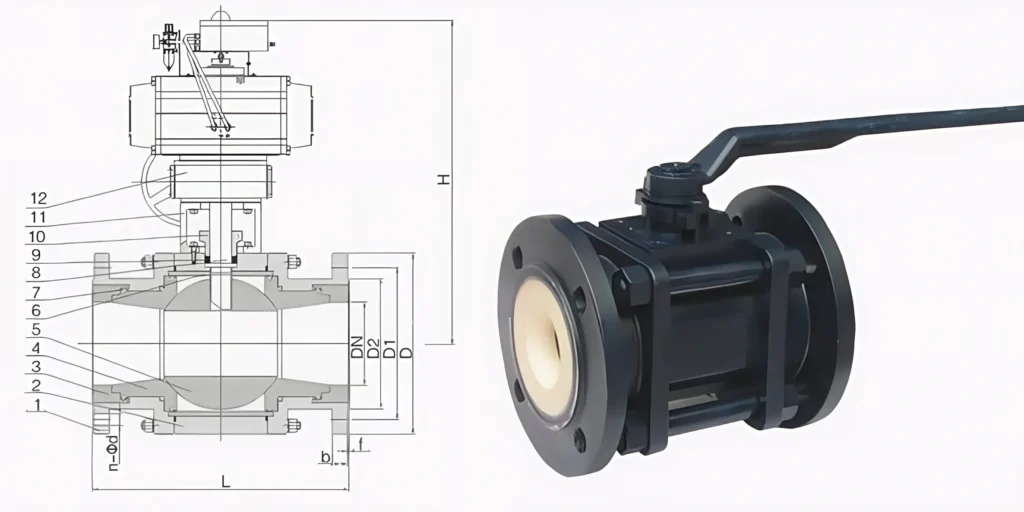
size of ball valve 1

Alumina Ceramic Lined O Type Ball Valve
Item NO. DN PH (Mpa) D (mm) D1 (mm) D2 (mm) C (mm) H (mm) n-d
AT-CVO-001 15 1.6 130 95 45 14 180 4-∅14
AT-CVO-002 20 1.6 140 105 55 16 190 4-∅14
AT-CVO-003 25 1.6 150 115 65 16 220 4-∅14
AT-CVO-004 32 1.6 165 135 75 18 235 4-∅18
AT-CVO-005 40 1.6 180 145 85 18 255 4-∅18
AT-CVO-006 50 1.6 203 160 100 20 270 4-∅18
AT-CVO-007 65 1.6 220 180 120 20 310 4-∅18
AT-CVO-008 80 1.6 250 195 135 20 370 8-∅18
AT-CVO-009 100 1.6 280 215 155 22 430 8-∅18
AT-CVO-010 125 1.6 320 245 185 22 510 8-∅18
AT-CVO-011 150 1.6 394 280 210 24 590 8-∅23
AT-CVO-012 200 1.6 457 335 265 24 750 8-∅23
AT-CVO-013 250 1.6 533 506 320 26 850 12-∅23
AT-CVO-014 300 1.6 610 460 375 30 920 12-∅25


Type 2: Alumina Ceramic Lined Eccentric Half Ball Valve
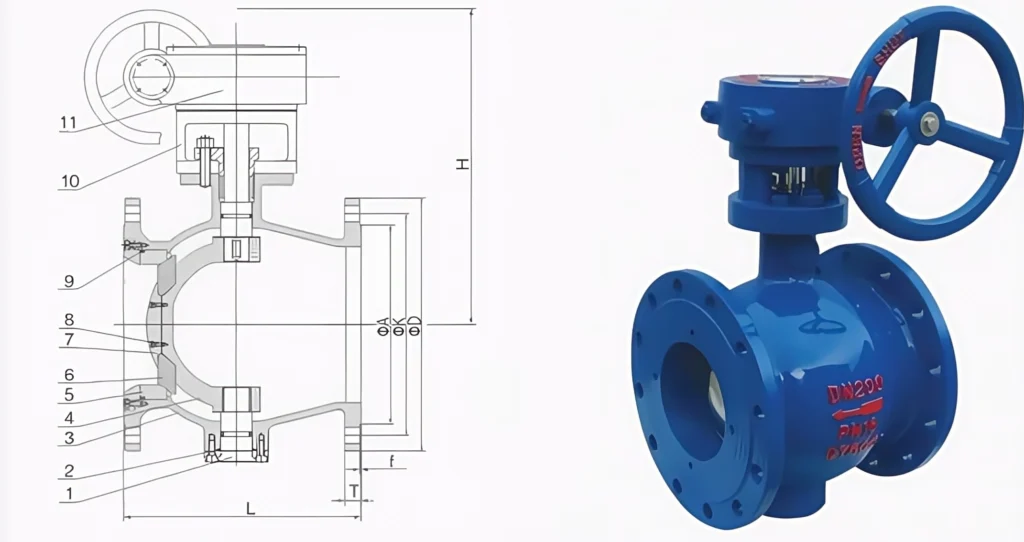
size of ball valve 2

Alumina Ceramic Lined Eccentric Half Ball Valve
Item NO. DN PN (Mpa) H (mm) L (mm) D (mm) D1 (mm) D2 (mm) n-d C (mm) F (mm)
AT-CVP1-001 50 1.6 230 124 165 125 100 4-∅18 16 3
AT-CVP1-002 65 1.6 237 145 185 145 120 4-∅18 18 3
AT-CVP1-003 80 1.6 260 165 200 160 135 8-∅18 20 3
AT-CVP1-004 100 1.6 270 194 220 180 156 8-∅18 20 3
AT-CVP1-005 125 1.6 320 210 250 210 185 8-∅22 22 3
AT-CVP1-006 150 1.6 340 229 285 240 211 8-∅22 26 3
AT-CVP1-007 200 1.6 390 243 340 295 265 8-∅23 26 3
AT-CVP1-008 250 1.6 420 297 405 355 319 8-∅26 30 3
AT-CVP1-009 300 1.6 510 338 460 410 375 8-∅26 30 4


Type 3: Alumina Ceramic Lined V Ball Control Valve
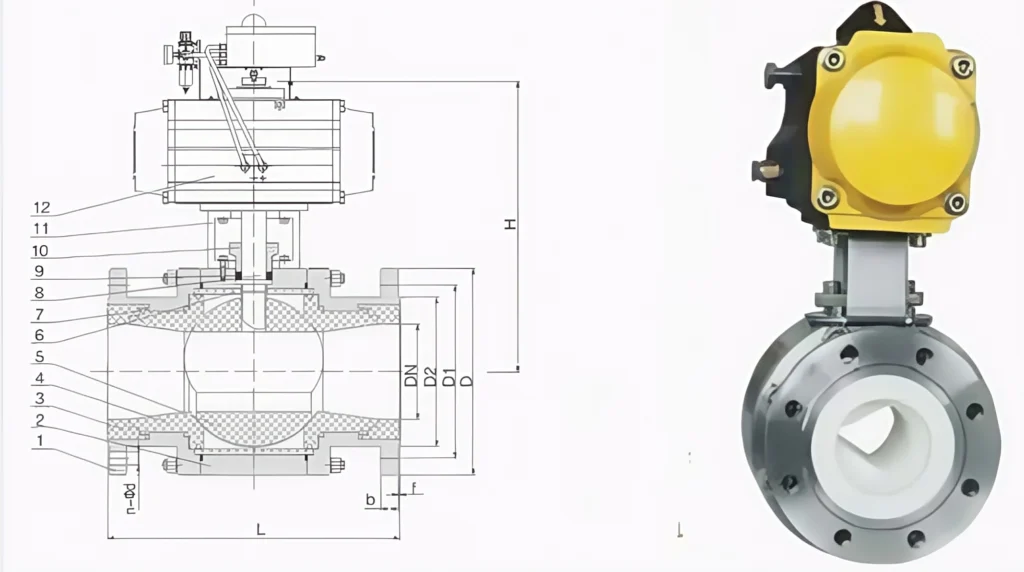
size of ball valve 3

Alumina Ceramic Lined V Ball Control Valve
Item No. DN NPS H (mm) L (mm) D (mm) D1 (mm) D2 (mm) n-d b (mm) f (mm)
AT-CVV1-001 15 1 2" 170 108 90 60.3 34.9 4-M12 11.6 2
AT-CVV1-002 20 3 /4" 180 117 100 69.9 42.9 4-M12 13.2 2
AT-CVV1-003 25 1" 185 127 110 79.4 50.8 4-M12 14.7 2
AT-CVV1-004 32 1-1/4" 220 140 115 88.9 63.5 4-M12 16.3 2
AT-CVV1-005 40 1-1/2" 230 165 125 98.4 73 4-M12 17.9 2
AT-CVV1-006 50 2" 247 178 150 120.7 92.1 4-M16 19.5 2
AT-CVV1-007 65 2-1/2" 270 190 180 139.7 104.8 4-M16 22.7 2
AT-CVV1-008 80 3" 310 203 190 152.4 127 4-M16 24.3 2
AT-CVV1-009 100 4" 355 229 230 190.5 139.7 4-M16 24.3 2
AT-CVV1-010 125 5" 430 356 255 215.9 157.2 4-M20 24.3 2
AT-CVV1-011 150 6" 490 394 280 241.3 185.7 4-M21 25.9 2
AT-CVV1-012 200 8" 590 457 345 298.5 215.9 4-M22 29 2

Download Size Guide

Alumina Ceramic Ball Valve Trim Properties

Unless noted, these values describe ADCERAX’s six dense alumina grades for balls, seats and liners at room temperature—not valve ratings. Pressure class, leakage, Cv and cycle life depend on the assembled design and operating conditions; confirm them from the valve drawing and tested assembly.

Property Unit / condition AD-ALU-999 AD-ALU-997 AD-ALU-995 AD-ALU-990 AD-ALU-960 AD-ALU-950
Al₂O₃ content wt%, nominal 99.90 99.70 99.50 99.00 96 95
Bulk density g/cm³, typical 3.94 3.94 3.90–3.92 3.80–3.91 3.70 3.75
Flexural strength MPa, 20 °C, typical 315–340 330 320–350 300–320 300 280
Compressive strength MPa, 20 °C, typical 2558–2900 2500 2400 2400 2000 2000
Young’s modulus GPa, typical 359–375 370 365 355 275 (at 20 °C) 340
Fracture toughness KIC MPa·m½, method-dependent 3.8–4.2 3.6 3.5 3.3 3.5 (at 20 °C) 3.0
Thermal conductivity W/(m·K), typical 35–42 at 25 °C 35–40 at 25 °C 30–38 at 25 °C 24 at 25 °C 25 at 20 °C 18–25 at 25 °C
Mean CTE 10⁻⁶/K, stated range 7.6 (25–800 °C) 7.6 (25–800 °C) 7.6 (25–800 °C) 7.2 (25–800 °C) 8.2 (25–1000 °C) 7.6 (25–800 °C)
Water absorption %, selection limit unless stated ≤0.01 ≤0.05 ≤0.10 ≤0.10 ≈0, typical ≤0.20
Mohs hardness typical 9 9 9 9 Not provided 9
Vickers hardness HV1, 1 kgf, typical Not provided Not provided Not provided Not provided 1600 Not provided
Color visual Ivory Ivory Ivory Ivory White Ivory / white
Service temperature guide °C, application-dependent 1750 1700 1650 1600 1600 max in air 1400

Choosing the Right Alumina Ceramic Ball Valve

The key choices are valve type, bore, trim grade and actuation. Send a drawing or datasheet; ADCERAX will confirm the specifications and provide a dimensioned proposal. You don’t need to select the ceramic grade.

1. Match the valve type to the duty

  • O-type: On/off isolation with a straight bore and low pressure drop; suited to slurry lines and tank discharge.
  • V-port: Throttling and flow control; the V-notch improves control at low openings.
  • Eccentric half-ball: For coarse-solids lines such as cyclone underflow, thickener feed and tailings. The seat lifts clear as the valve opens, helping prevent solids from being trapped.

2. Choose the bore for solids and velocity

  • Full bore: Matches the pipe ID, keeping velocity lower to help limit erosion.
  • Reduced bore: Adds pressure drop and can allow a smaller actuator or shorter face-to-face length.

Share the solids content and maximum particle size; we’ll recommend a bore and flag erosion limits.

3. Match the trim grade to the medium

  • AD-ALU-960 (96%): For most abrasive slurry service; stocked for standard valves.
  • AD-ALU-995 and above: For chemically aggressive or contamination-sensitive service, including high-purity chemicals, pharmaceuticals and pilot plants.

A higher grade isn’t always needed. The sealing face and lapping have more influence on shutoff.

4. Size the actuator from measured torque

Ceramic seats provide stable torque. We measure breakaway and running torque on the assembled valve, then size the pneumatic or electric actuator for your air supply or voltage. Limit switches and a positioner are available for control loops.

Alumina Ball Valve Packaging

  • Each valve unit is carefully packed with the foam-injected crate.
  • Anti-fracture reinforced outer box aligned with the valves' dimensions.
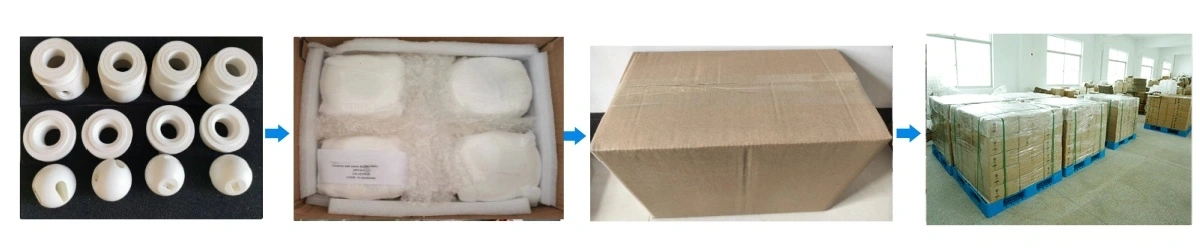
Alumina Ceramic Ball Valve Packaging

Alumina Ceramic Ball Valve Applications

These are the duties where customers most often replace metal or polymer-seated ball valves with alumina: abrasive slurry, corrosive chemical, mineral processing and powder. Each entry states the working condition, what the alumina trim changes about it, and what to confirm before ordering.

  • Mining and mineral slurry — cyclone underflow, tailings, concentrate lines

    The seat sees continuous fine and coarse solids at pressure. Alumina ball and seat keep a lapped sealing face where a metal seat galls and embeds fines, and full-bore keeps velocity and erosion down. Confirm the solids top size and whether the line slugs; heavy slugging or sharp coarse particles may point to zirconia or silicon carbide.

  • Chemical processing — acid dosing, mixing and transfer

    Media alternate between acid and alkali during cleaning and between campaigns. Alumina stands up to acid and oxidizing media and does not swell or cold-flow the way polymer seats do, so closing torque stays predictable for pneumatic and electric actuators. Confirm pH range, any caustic step, and the body material — alumina is attacked by strong hot alkali and by hydrofluoric acid, and for those the trim spec changes.

  • Flue gas desulfurization and limestone slurry.

    Limestone slurry is abrasive and mildly alkaline, and valves on the recirculation and bleed lines cycle often. A lined O-type or eccentric half-ball valve with alumina trim holds shutoff through the solids loading and keeps maintenance on a planned basis. Confirm chloride level in the slurry and the slurry temperature, since both affect the body and packing selection.

  • Alumina, zirconia and other ceramic powder handling.

    Pneumatic conveying and gravity discharge lines carry hard particles at speed. A ceramic ball valve avoids the metal contamination and seat washout that steel valves show on these lines, and the non-metallic bore keeps the product clean. Confirm particle size and conveying velocity, and whether a purge port is needed.

  • Laboratory and pilot-scale service.

    Small reactors and dosing skids need repeatable shutoff and no metal-ion leaching into the process fluid. High-purity alumina (AD-ALU-995 and above) gives a non-contaminating bore with stable torque for analytical loops. Confirm the fluid compatibility and whether the small sizes in stock suit the skid; anything else is machined to drawing.

Alumina Ceramic Ball Valve Applications

  • Installation

    Check the flow arrow, flange class, gasket material and actuator orientation before lifting the valve into place. Align pipe supports so the body carries no bending load, and set the end gap for thermal expansion. Torque the flange bolts to standard, then run a hydrostatic shell test and a seat test to your project specification before the line goes live.

  • Operation

    Stroke the valve several times at line pressure to confirm the seat engages cleanly. On modulating duty, set the positioner gain and dead band so the actuator does not hunt around the seating torque. Avoid throttling with solids at a nearly closed position — use the V-port if control duty is required, because a straight bore erodes fast at small openings.

  • Storage

    Store dry with the ends capped and out of direct sunlight, and keep the actuator indoors. Cycle a stored valve quarterly if it sits for a long period, so the packing and seat do not take a set.

  • Cleaning & maintenance

    Flush with a compatible medium after slurry service and inspect the seat for deposits. Check the stem packing on a schedule and treat a rising torque trend as the maintenance trigger. Replace the trim as a matched set — ball, seats and liner — and re-lap where the drawing specifies; do not mix a new ball with a worn seat.

  • Common misuse & fixes

    Rapid closing that causes water hammer: add damping or a positioner and review the close time. Plugging by coarse particles: specify full-bore or a purge port, and review upstream screening. A torque spike when switching chemistries: review the seat grade and lapping, and confirm the actuator safety factor.

Alumina Ceramic Ball Valve FAQ

  1. What media are suitable for an alumina ceramic ball valve?
    Abrasive slurries, mixed acid and alkali streams, oxidizing chemicals, fiber-laden pulp and mineral powder — anywhere metal or polymer seats wear, gall or swell fast. Alumina is the wrong choice for hydrofluoric acid and for strong hot caustic; tell us the medium and we will confirm the trim grade or point you to zirconia or silicon nitride.
  2. Is an alumina ceramic ball valve only for on/off service?
    No. A characterized V-port ball with a suitable positioner handles a practical control range. It is not a general-purpose control valve, though — send the solids loading, the pressure drop and the turndown you need, and we will tell you whether the V-port fits or whether a different valve type suits the loop better.
  3. Full-bore or reduced-bore — which should I choose?
    Full-bore for high solids: it keeps the flow area at pipe ID and holds velocity and erosion down. Reduced-bore where you need pressure drop, a smaller actuator or a shorter face-to-face on a tight skid. On slurry lines the bore is an erosion decision first and a Cv decision second.
  4. Which flange standards can the ends match?
    Flange drilling and bolt holes follow your specified pattern. Face-to-face dimensions match your drawing or existing line series and are confirmed before machining. Wafer, lug, butt-weld and socket-weld ends suit space-constrained lines.
  5. Can it replace a metal-seated ball valve one-for-one?
    Usually yes, when face-to-face, flange standard, stem/actuation envelope and the pipe schedule all match. Send the old valve's nameplate photo or drawing and we will check the replacement against it rather than against a catalog size.
  6. How do I size it for slurry service?
    Give us solids percentage, particle size distribution and top size, viscosity, temperature, pressure drop and duty cycle (cycles per day, continuous or batch). From that we can confirm bore, valve type, trim grade and actuator torque.
  7. What do I need to send for a quotation?
    The first round is enough to start: valve type (or a photo of the old valve), DN and pressure class, medium with solids content, temperature range and quantity. On the second round we settle face-to-face, flange standard, actuation and trim grade on a marked-up drawing. A sketch, nameplate photo or P&ID extract works — a drawing is not required to open the conversation.
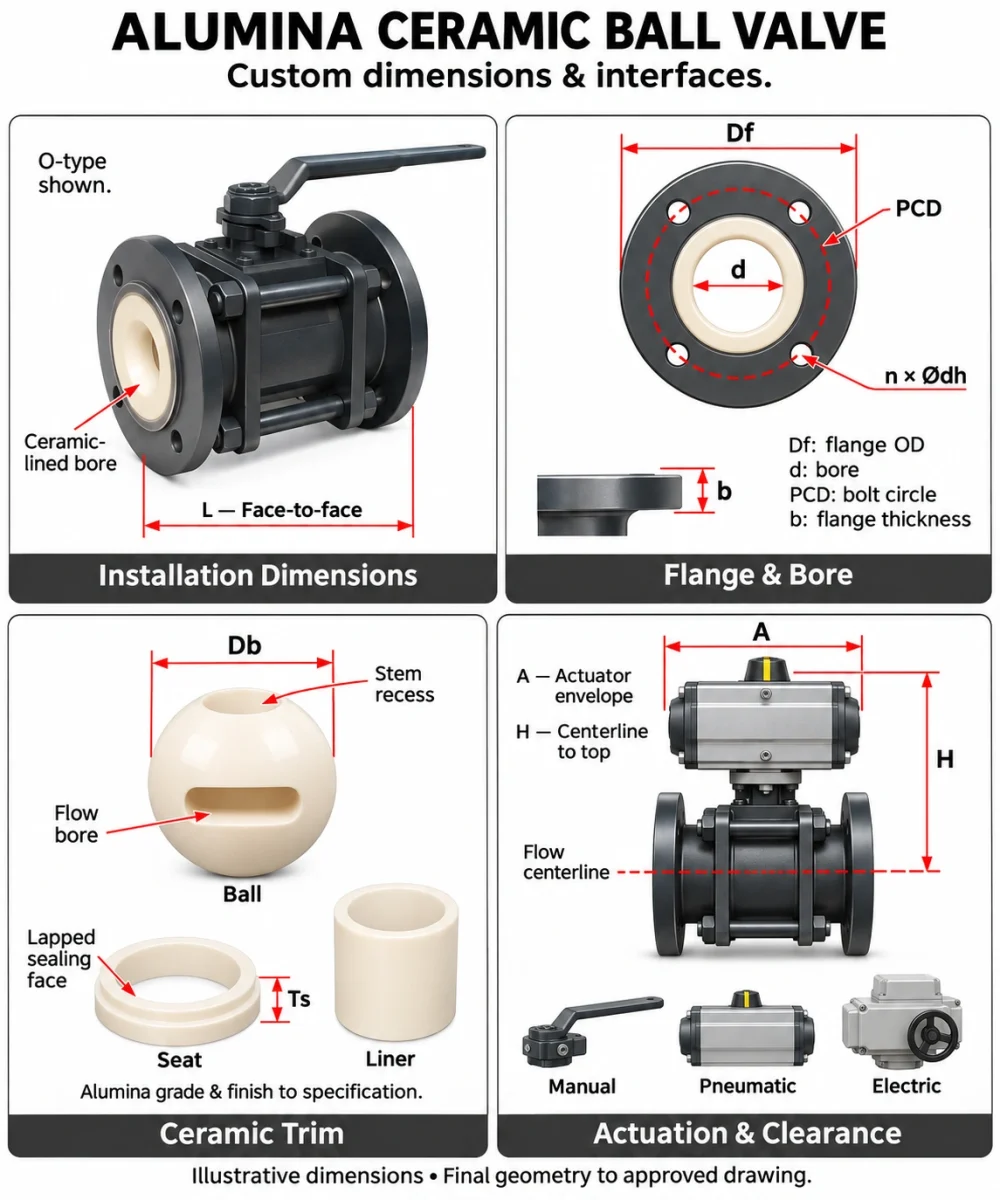
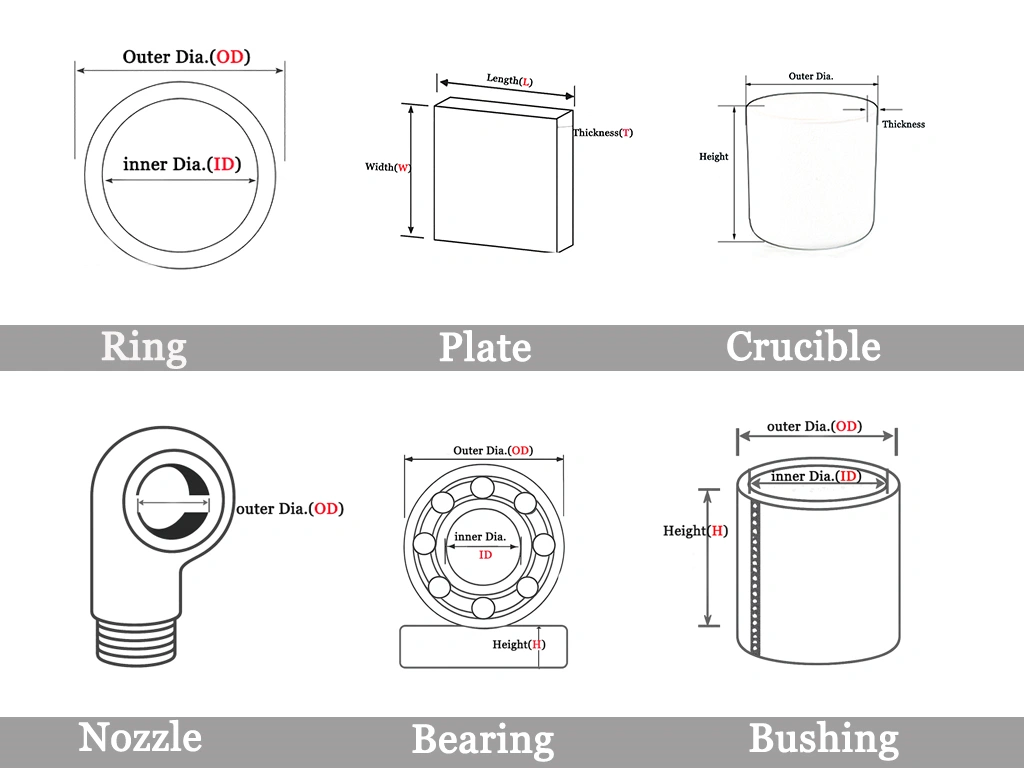
Alumina ceramic ball valve diagram showing face-to-face length, flange and bore dimensions, ceramic ball, seat and liner, and actuator clearance.

Customize Alumina Ceramic Ball Valve

Many pipelines are non-standard. ADCERAX lines the valve geometry up with your line, your standards and your medium, and gives you a dimensioned drawing to approve before anything is machined. What you can specify:

Bore and size. DN and NPS, full-bore or reduced-bore, and the bore profile for V-port control duty.

Face-to-face: to your project drawing, or the dimensional series your existing line uses. Ends: flanged to your specified standard (ASME or EN), or wafer, lug, butt-weld and socket-weld.

Ceramic trim grade. AD-ALU-950, 960, 990, 995, 997 or 999 — chosen against your medium, not against a price tier. Ball, seat and liner are quoted as one matched set.

Body and stem. WCB, CF8, CF8M, duplex or project alloy; stem material and hardfacing confirmed against the medium.

Actuation. Lever, gear, pneumatic double-acting or spring-return, electric on/off or modulating, with positioner, limit switches and solenoid valve as needed.

Surface and inspection. Lapped sealing faces as standard; surface finish and inspection level set on the drawing. Non-destructive and dimensional reports per your acceptance criteria on request.

Related Products

ADCERAX - Your Trusted Advanced Ceramics Manufacturing Partner

ADCERAX – Custom Ceramic Supply and Engineering Coordination
ADCERAX coordinates drawing review, production and inspection with manufacturing partners against agreed specifications.

China-Based Ceramic Supply Partner

ADCERAX coordinates custom ceramic supply for overseas OEMs, equipment builders, and labs.

Custom Drawing Support

We review drawings, dimensions, materials, and application conditions before quotation.

Ceramic Process Control

Forming, sintering, machining, grinding, and finishing are arranged by part requirements.

Pre-Shipment Inspection

Dimensional checks, visual inspection, and packaging review help reduce procurement risk.

Get in Touch with Us

Our team will be happy to respond to you in less than 24 hours.

Adcerax's factory

Quick Quotation

*Our team will review your inquiry and respond with the next steps.

*Your information will be kept strictly confidential.

Ready to Solve Your Engineering Challenge?

Partner with ADCERAX for reliable, high-performance advanced ceramic solutions. Our engineers are ready to discuss your project.

E-mail

info@adcerax.com

Phone

Tel: +86-0731-84428843 WhatsApp: +86 19311583352

Response Time

Within 24 hours

Quick Quote

The more details you provide, the faster we can quote.

*All inquiries are confidential.

Get Your Custom Solution

The more details you provide, the faster we can respond.

customize size

*We respond within 24 hours. All inquiries are confidential.

Download Catalog