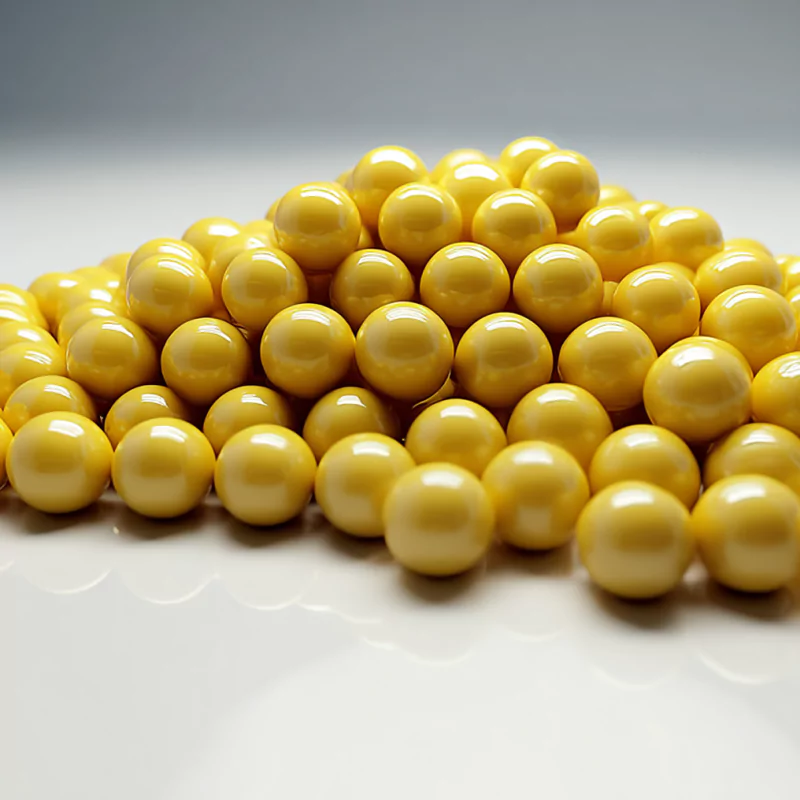
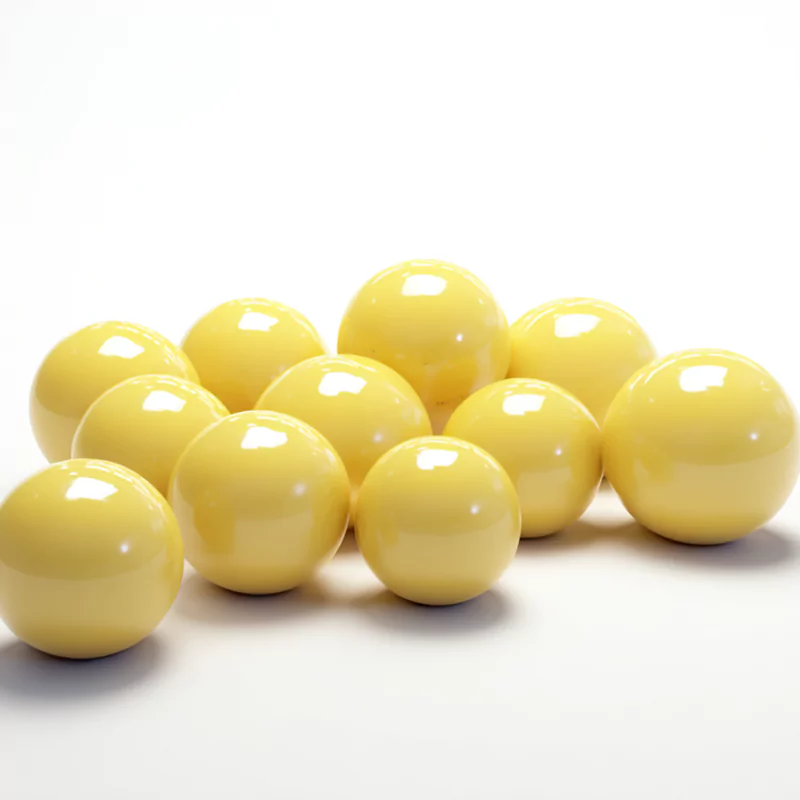
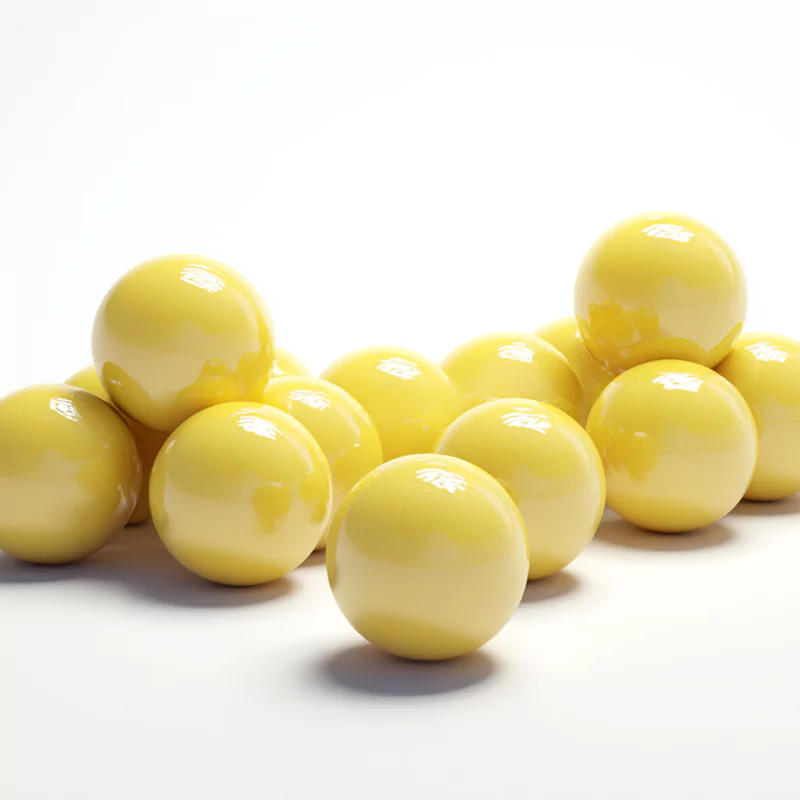
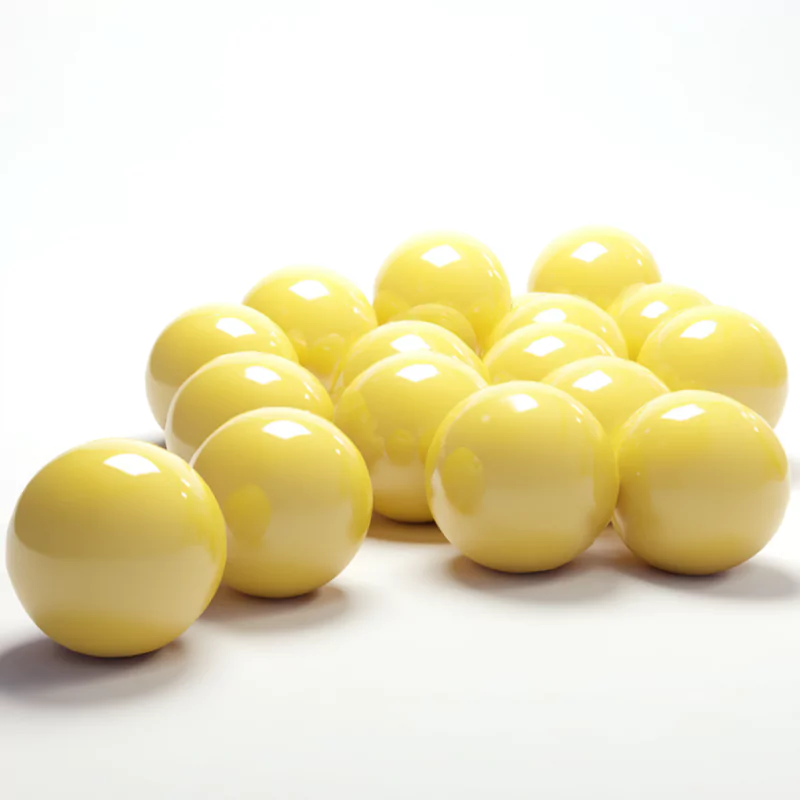
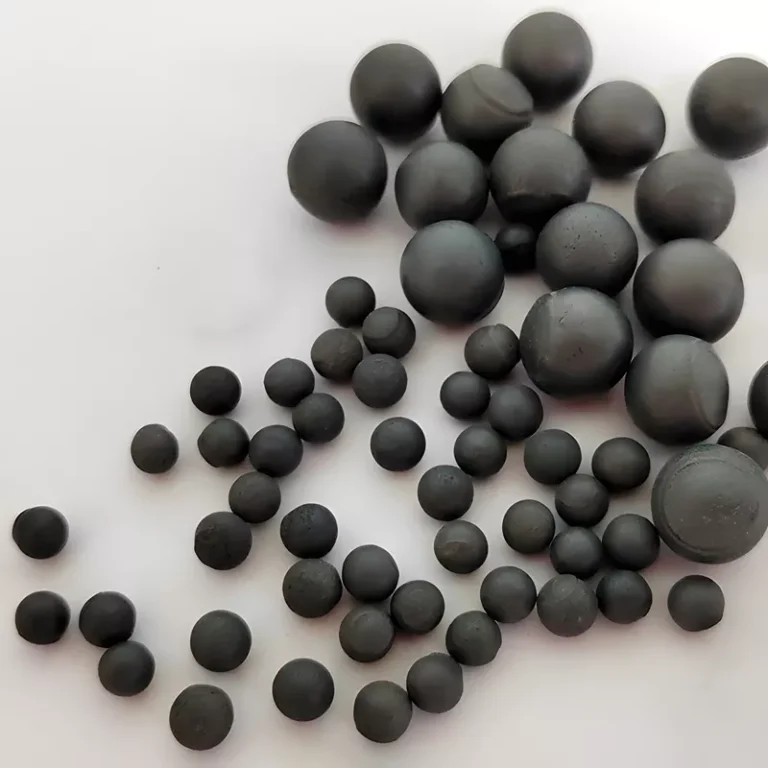
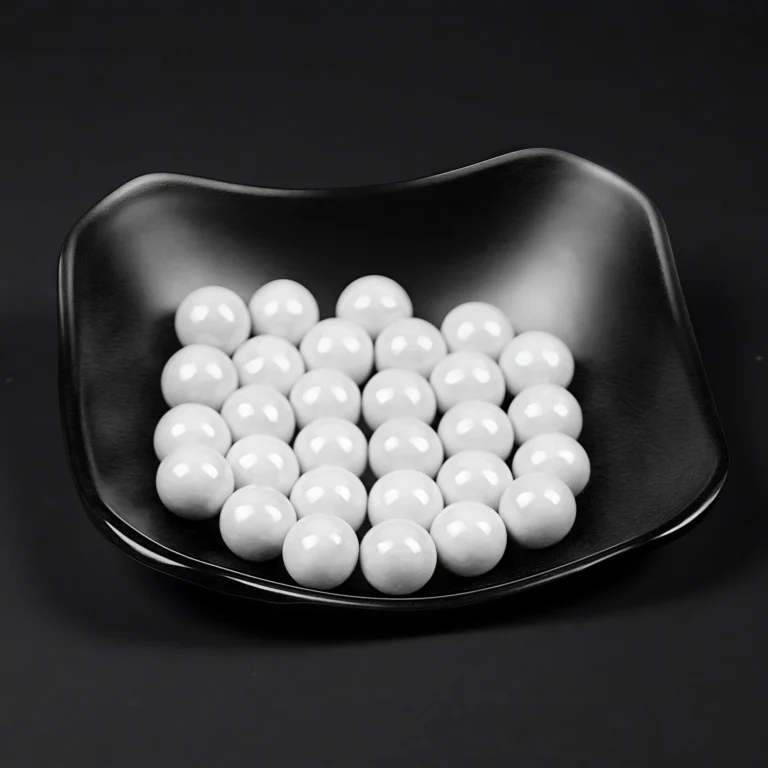
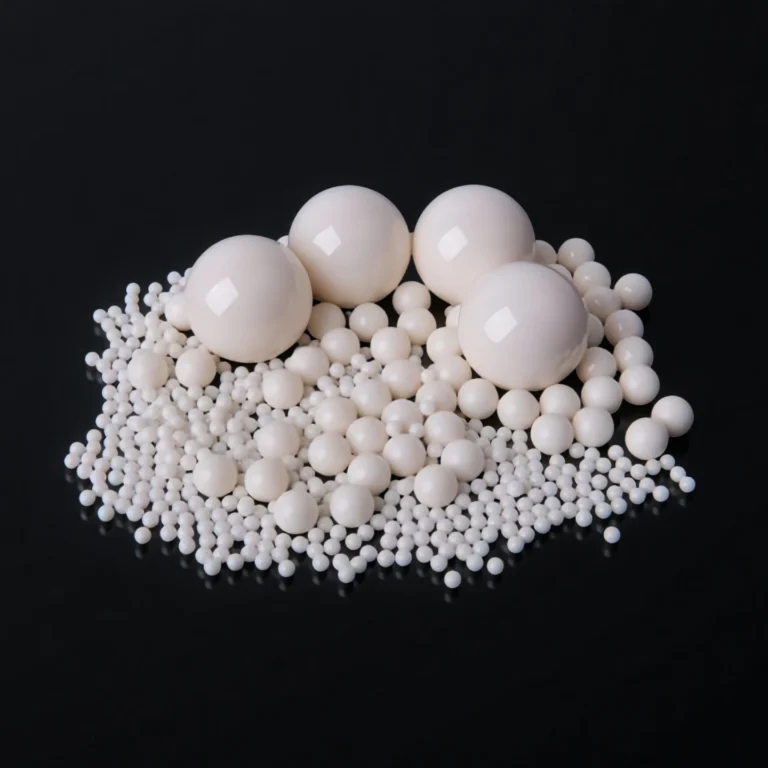
ADCERAX® Ceria Stabilized Zirconia Beads are high-density grinding media engineered for industries where durability, efficiency, and material purity are critical. They provide long service life, low wear, and consistent performance in demanding applications such as coatings, pigments, ceramics, electronics, and pharmaceuticals. By combining exceptional hardness with chemical stability, they enable reliable dispersion of high-viscosity and high-solids materials while minimizing contamination.
Features of Ceria Stabilized Zirconia Beads
- The beads achieve a density of 6.1–6.3 g/cm³, delivering stronger grinding force in high-viscosity slurries. This ensures reduced milling time and higher throughput.
- With a Mohs hardness of ~9, they resist surface wear under continuous operation. This prevents shape loss and maintains long-term grinding efficiency.
- Vickers hardness above 1100 HV guarantees minimal bead fracture. This reduces replacement frequency and lowers total operating cost.
- Service life is 6–8 times longer than zirconium silicate beads, enabling fewer media changeovers. This lowers downtime and improves productivity.
- Compared with glass beads, the beads last over 30 times longer, making them more cost-effective in continuous production.
- Wear rate is controlled at less than 0.01 kg/T, ensuring stable product quality even in high-shear dispersion systems.
- The beads provide a crush strength ≥20 kN at φ7 mm, resisting breakage under high-energy input. This makes them reliable in turbine and disc mills.
- Their fracture toughness exceeds 15 MPa·m½, preventing catastrophic bead failure in heavy-duty grinding processes.
- Elastic modulus is measured at 200 GPa, offering strong resistance against deformation and ensuring uniform grinding pressure distribution.
Technical Properties for Ceria Stabilized Zirconia Beads
The following specifications provide a reliable reference for buyers assessing Ceria Stabilized Zirconia Beads in demanding industrial applications. This section covers key physical, chemical, optical, and mechanical properties, along with links to the related technical parameter table and size specification chart for deeper evaluation.
| Property |
Specification |
| Density |
6.1–6.3 g/cm³ |
| Grain Size |
≤0.5 μm |
| Fracture Toughness |
>15 MPa·m½ |
| Elastic Modulus |
200 GPa |
| Crush Strength (φ7 mm) |
≥20 kN |
| Composition |
~80% ZrO₂ / ~20% CeO₂ |
| Corrosion Resistance |
Stable in acids/alkalis |
| Thermal Conductivity |
~3 W/m·K |
| Thermal Expansion (20–400 °C) |
9.6 ×10⁻⁶ /K |
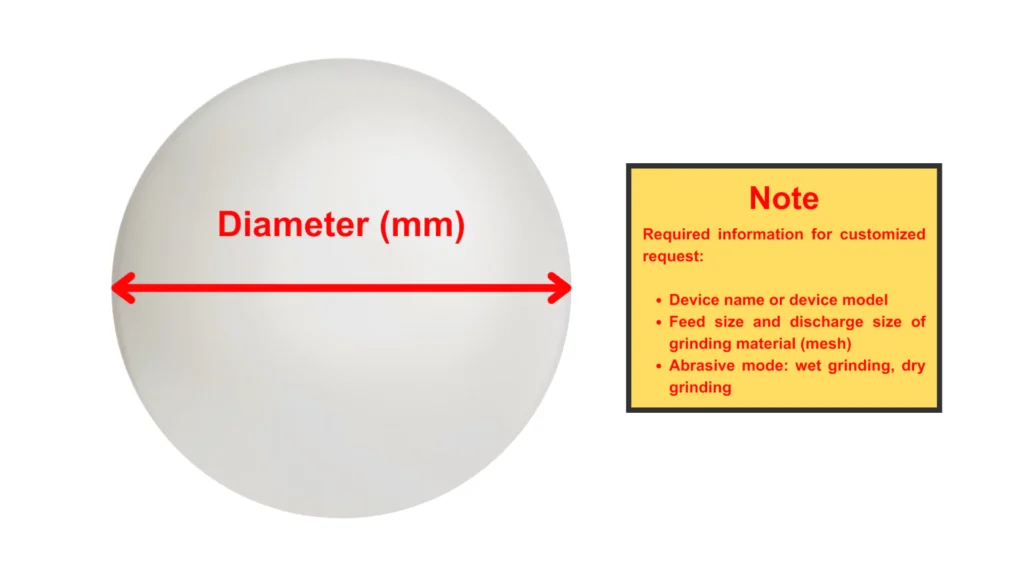
Specifications of Ceria Stabilized Zirconia Beads
| Chemical Composition |
| Component |
ZrO2 |
CeO2 |
| wt% |
80% |
20% |
Packaging of Ceria Stabilized Zirconia Beads
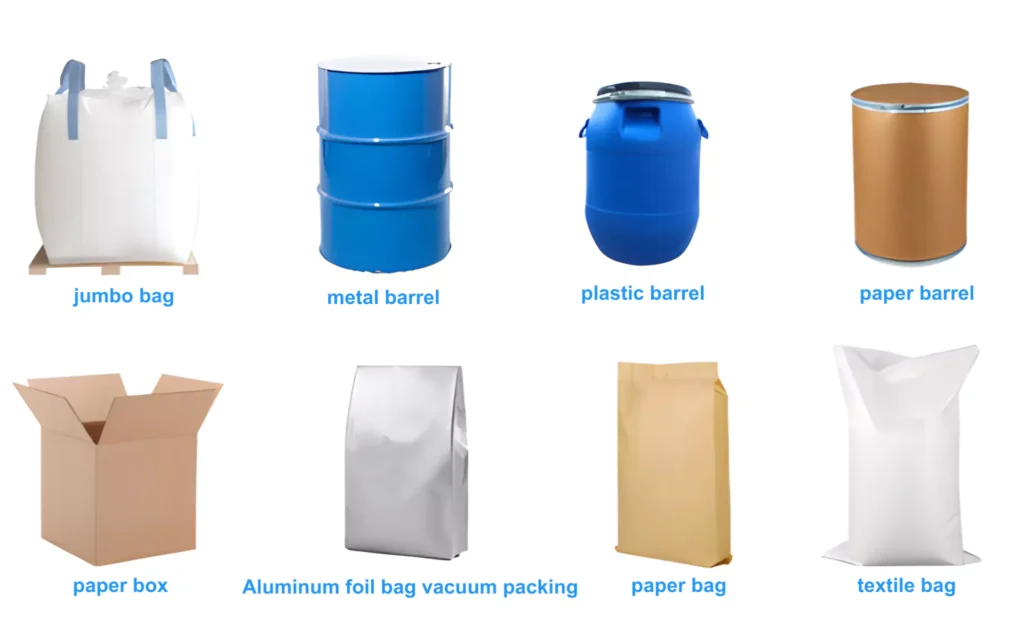
ADCERAX® Ceria Stabilized Zirconia Beads are securely packed in jumbo bags, metal barrels, plastic barrels, or paper barrels for bulk transportation. Smaller quantities of them are supplied in paper boxes, aluminum foil vacuum bags, paper bags, or textile bags. All packaging options are designed to ensure product safety, cleanliness, and easy handling during storage and shipment.
Solving Application Challenges with ADCERAX® Ceria Stabilized Zirconia Beads
Industrial buyers face recurring challenges when processing high-viscosity, high-hardness, or purity-sensitive materials. ADCERAX® Ceria Stabilized Zirconia Beads are engineered to overcome these pain points, delivering measurable improvements in throughput, product quality, and operational stability. The following application cases demonstrate how their unique density, toughness, and chemical stability translate into practical industry solutions.
-
UV Inkjet Printing Inks
✅Key Advantages
1. Submicron dispersion control — Density 6.1–6.3 g/cm³ and micrograin ≤0.5 μm drive efficient pigment deagglomeration. This supports stable PSD below the nozzle-risk range while maintaining color accuracy.
2. Low-wear contamination floor — Wear loss <0.01 kg/T limits bead-derived particulates entering UV ink. This helps protect printheads from residue that triggers banding or color shifts.
3. Continuous high-speed stability — Hardness >1100 HV and toughness >15 MPa·m½ resist chipping during long runs. This preserves bead roundness and consistent jetting rheology.
✅ ️Problem Solved
Modern UV inkjet heads employ fine nozzles where oversize particles cause misfires and streaking. Competing glass or silicate media shed debris, shortening head life and destabilizing color. ADCERAX® Ceria Stabilized Zirconia Beads leverage >1100 HV hardness and <0.01 kg/T wear to minimize foreign particulates, maintaining clean, submicron dispersions. With 6.1–6.3 g/cm³ density and ≤0.5 μm bead micrograin, mills reach target fineness faster under continuous duty. Users report steadier output quality with fewer unplanned cleans and changeovers.
-
Cosmetic Powder Formulations
✅Key Advantages
1. Purity-first milling — Inert ~80% ZrO₂ / ~20% CeO₂ composition reduces ionic leachables versus glass or silicate media. This supports clean processing for sensitive-skin powders and premium pigments.
2. Silky texture consistency — High density 6.1–6.3 g/cm³ plus micrograin ≤0.5 μm promote smooth particle breakage. This enables uniform feel without gritty residues in foundations and eye pigments.
3. Minimal trace carryover — Wear rate <0.01 kg/T and hardness >1100 HV limit bead fines in bulk. This helps downstream sieving and QC meet tight cosmetic thresholds.
✅ ️Problem Solved
Cosmetic producers often see “grit” complaints when media contributes fines to powders. With alternative beads, attrition elevates trace particulates that degrade feel and finish. ADCERAX® Ceria Stabilized Zirconia Beads hold wear to <0.01 kg/T and maintain shape under load (>1100 HV, >15 MPa·m½), reducing off-spec lots. The 6.1–6.3 g/cm³ density drives fast, controlled PSD refinement for smooth textures. This supports reliable scale-up from pilot to production while protecting brand quality.
-
High-Performance Ceramic Capacitors (MLCC)
✅Key Advantages
1. Dielectric integrity assurance — Toughness >15 MPa·m½ and crush strength ≥20 kN (φ7 mm) mitigate bead fracture. This avoids dielectric contamination that shifts capacitance.
2. Tight submicron control — Micrograin ≤0.5 μm and hardness >1100 HV sustain uniform powder refinement. This supports narrow PSD targets required for MLCC layer consistency.
3. High-energy milling endurance — Density 6.1–6.3 g/cm³ maintains effective energy transfer in viscous slurries. This shortens time-to-spec while preserving slurry cleanliness.
✅ ️Problem Solved
MLCC powders demand consistent submicron PSD to keep dielectric constants within spec. Standard media fracture under high energy, seeding contaminants that force batch rework or scrap. ADCERAX® Ceria Stabilized Zirconia Beads combine ≥20 kN crush strength, >1100 HV hardness, and <0.01 kg/T wear to keep slurries clean and equipment stable. With 6.1–6.3 g/cm³ density and ≤0.5 μm micrograin, mills reach target fineness without introducing bead debris. Producers gain steadier yields and fewer stoppages during intensive milling.
User Guide for Ceria Stabilized Zirconia Beads
When using Ceria Stabilized Zirconia Beads, customers must follow clear operational, cleaning, and storage guidelines to ensure efficiency and extend product service life. This guide provides practical instructions from bead loading to long-term maintenance, helping users achieve consistent performance and minimize unnecessary costs.
-
Bead Loading and Filling
1. Always determine the optimal filling ratio based on the mill type and target particle size. Overfilling may reduce energy efficiency, while underfilling increases wear rates.
2. For high-viscosity slurries, maintain a filling density of ≥3.5 kg/L to ensure effective energy transfer during milling.
3. Regularly monitor the bead volume inside the chamber, as loss of media can reduce grinding uniformity and throughput.
-
Operating Conditions
1. Control the milling speed to avoid exceeding design limits, since overspeed operation can increase bead attrition.
2. Keep slurry temperatures within a stable range to prevent thermal stress and premature bead damage.
3. Adjust circulation and flow rates to ensure uniform dispersion, especially in continuous high-energy grinding processes.
-
Cleaning and Maintenance
1. Implement a scheduled bead cleaning cycle using filtered water or suitable solvents depending on the slurry type.
2. Avoid using harsh chemicals that may alter the bead surface or introduce contamination into sensitive formulations.
3. Inspect beads periodically for microfractures and replace damaged ones to maintain consistent grinding results.
-
Storage and Handling
1. Store Ceria Stabilized Zirconia Beads in dry, sealed containers to avoid moisture absorption that can affect performance.
2. Handle bags, barrels, or boxes carefully to prevent mechanical impact that may cause microcracks in the beads.
3. Label storage containers clearly with bead type, size, and lot number for traceability and quality control purposes.