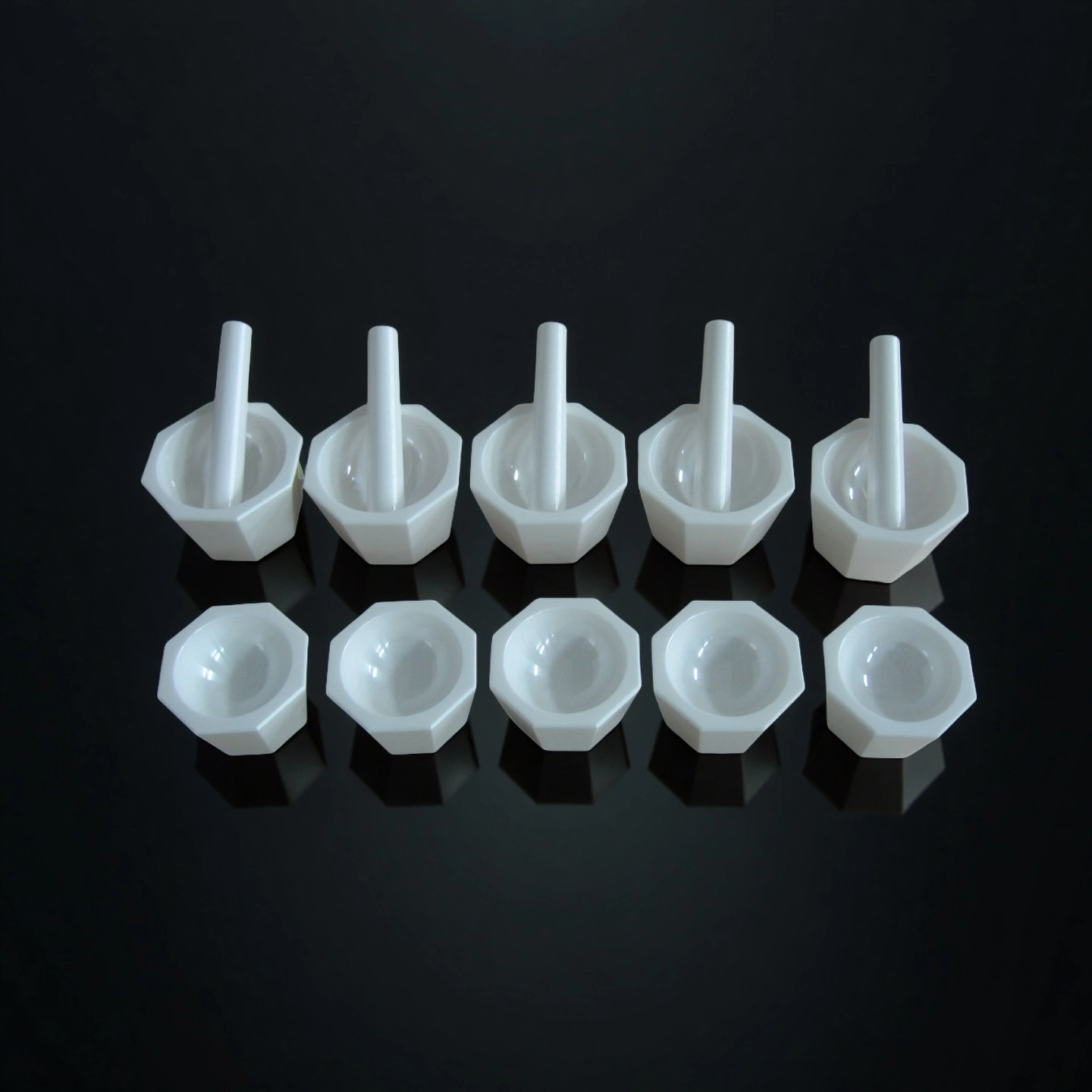
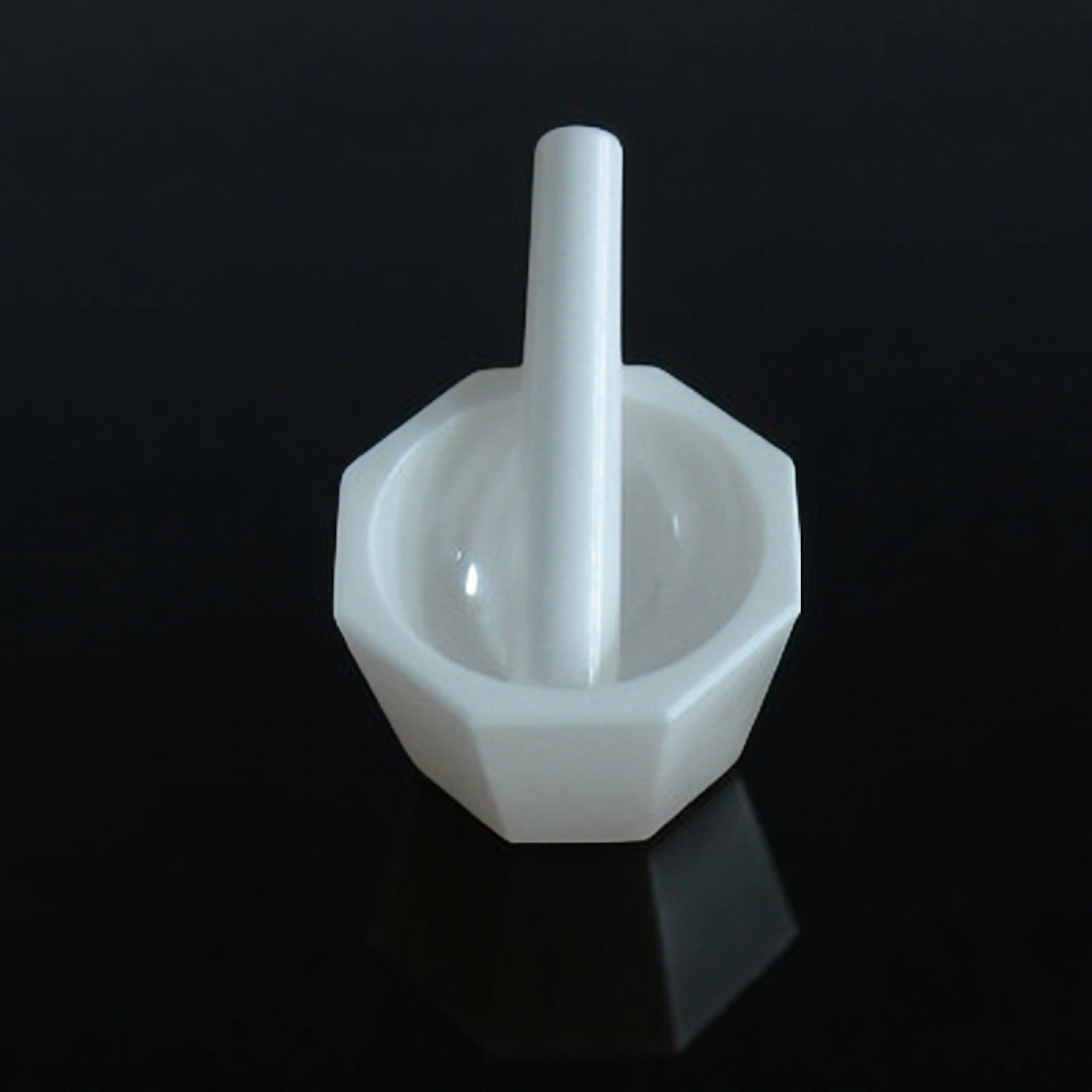
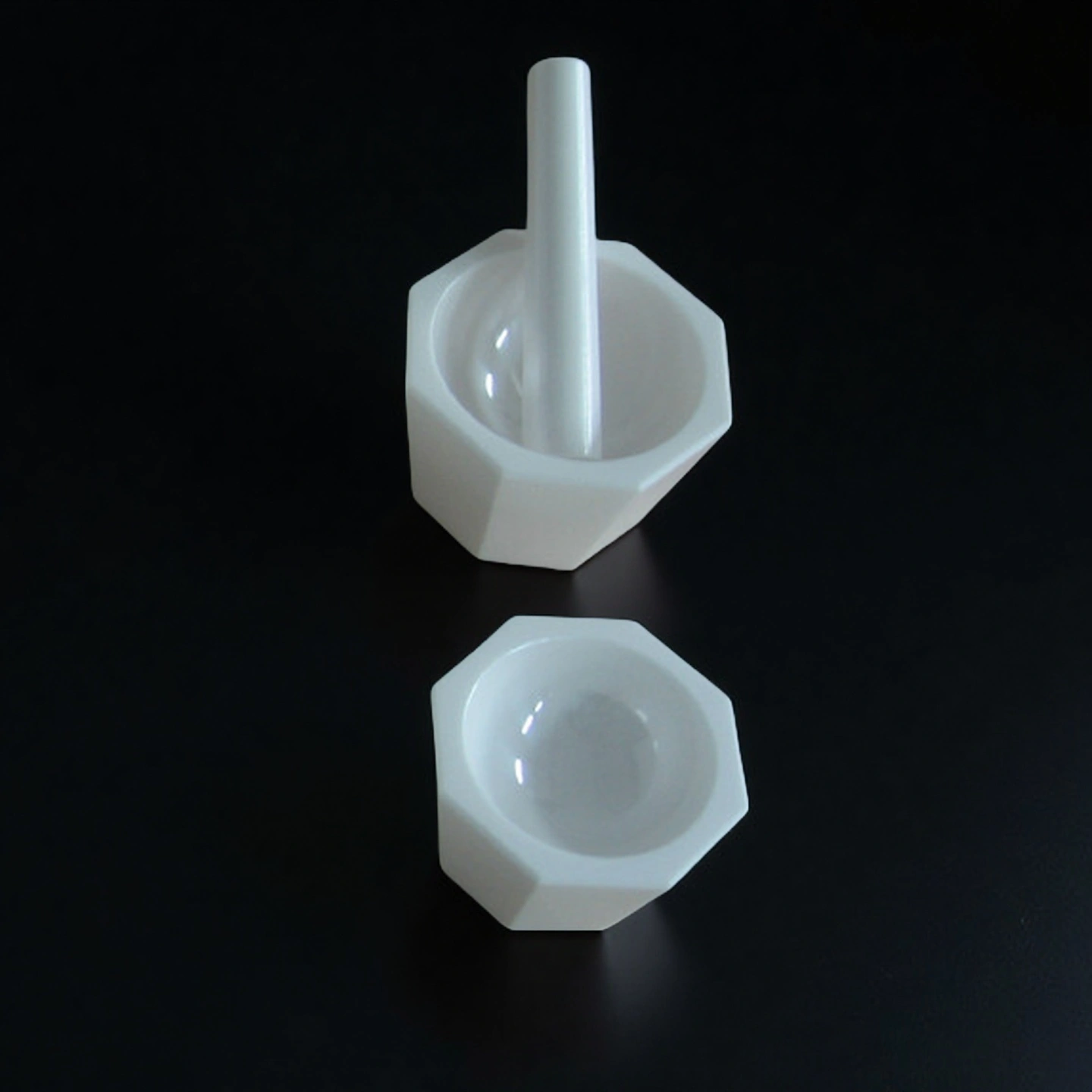
ADCERAX® Zirconia Mortar and Pestle are designed for precise, contamination-free sample grinding in laboratories and research facilities. Made from high-density yttria‑stabilized zirconia, they combine high hardness, corrosion resistance, and thermal stability for consistent results in analytical and pharmaceutical processes. This product ensures that solid materials can be ground or homogenized without introducing impurities, supporting reliable performance across material science, chemical, and medical research applications.
Key Features of Zirconia Mortar and Pestle
- Density & Hardness
Manufactured from high-purity YSZ with density ≥ 5.9 g/cm³ and Vickers hardness > 1200 HV, enabling durable grinding against hard solids. These values outperform agate and alumina alternatives under repeated impact.
- Compressive Load Capacity
Withstands compressive loads exceeding 2000 MPa, making it resistant to deformation or cracking during manual or mechanical grinding cycles. This ensures long-term dimensional stability in high-usage labs.
- Surface Precision
Surface roughness is controlled to Ra < 0.2 µm, maintaining smooth, scratch-free contact and preventing sample adhesion. This facilitates homogeneous grinding and reduces sample residue loss.
- Operating Temperature Limit
Zirconia Mortar and Pestle retain mechanical strength at continuous temperatures up to 1000 °C, allowing safe processing of heated or reactive materials. The material also resists thermal shock up to ΔT ≈ 200 °C.
- Acid and Base Resistance
Chemically inert against strong acids and alkalis, enabling use in corrosive environments without degradation. No interaction with HCl, HNO₃, or NaOH was observed during 24h immersion tests.
- No Elemental Contamination
Lab ICP-MS confirms <10 ppm total impurities including Fe, Al, and Si, ensuring that samples remain analytically clean. This supports use in trace-element analysis and pharmaceutical preparation.
- Machined Tolerance Control
Dimensional accuracy enables consistent mortar-pestle pairing, minimizing axial deviation. Each set is individually ground to preserve uniform wall curvature and pestle alignment.
- Balanced Force Distribution
Pestle geometry supports evenly distributed shear and compressive forces, enhancing material breakdown efficiency. Independent lab trials show >30% higher uniformity in powder grain size versus non-optimized designs.
- Stable Batch Production
All Zirconia Mortar and Pestle units are produced under controlled conditions, maintaining <±0.05 mm deviation in repeated lot testing. This ensures compatibility in multi-unit procurement and equipment standardization.
Technical Properties of Zirconia Mortar and Pestle
Zirconia Mortar and Pestle are engineered from high-density yttria-stabilized zirconia to ensure long-lasting mechanical performance, chemical inertness, and thermal reliability in laboratory grinding operations requiring contamination control and structural consistency.
| Property |
Specification |
| Material Composition |
≥99.9% ZrO₂ + Y₂O₃ |
| Density |
≥5.9 g/cm³ |
| Vickers Hardness |
>1200 HV |
| Compressive Strength |
>2000 MPa |
| Fracture Toughness |
6–10 MPa·m¹ᐟ² |
| Thermal Stability |
Up to 1000 °C continuous |
| Thermal Shock Resistance |
ΔT ≈ 200 °C |
| Surface Roughness |
Ra < 0.2 µm |
| Porosity |
Fully dense, closed-grain |
| Chemical Resistance |
Inert to HCl, HNO₃, NaOH |
| Contamination Risk |
Metallic impurities <10 ppm |
| Electrical Conductivity |
Insulating, <10⁻¹² S/cm at RT |
Specifications of Zirconia Mortar and Pestle
|
Zirconia Mortar and Pestle |
|
Item No. |
Capacity(ml) |
Inner Dia ×Outer Dia ×Height (mm) |
|
AT-ZO-YB001 |
60 |
50× 60×20 |
|
AT-ZO-YB002 |
80 |
66× 80×30 |
|
AT-ZO-YB003 |
100 |
80×100×37 |
|
AT-ZO-YB004 |
120 |
96×120×42 |
|
AT-ZO-YB005 |
150 |
125×150×55 |
Packaging of Zirconia Mortar and Pestle
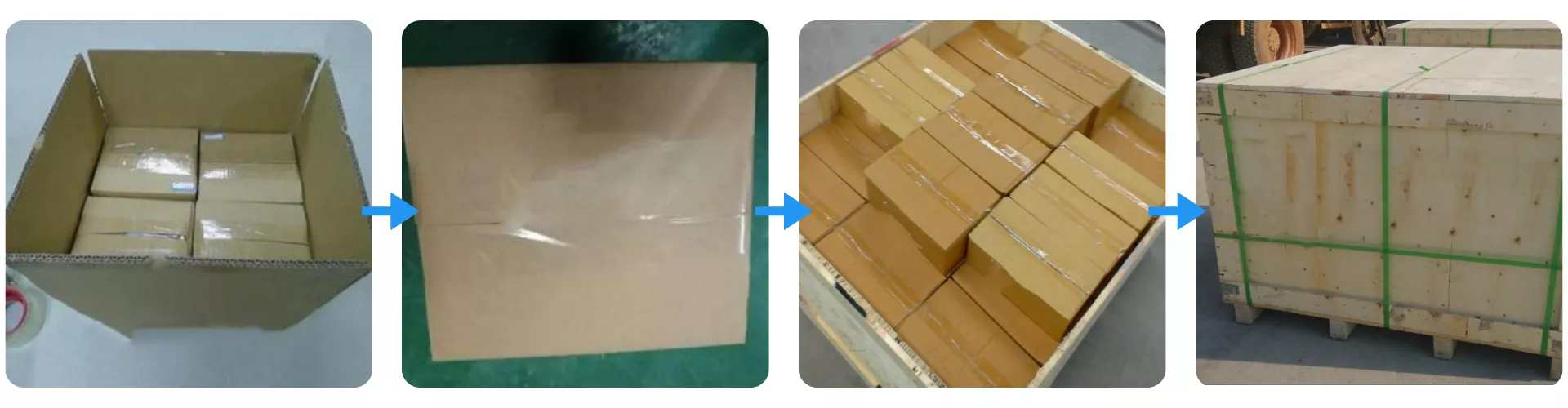
Zirconia Mortar and Pestle are individually boxed, cushioned, and sealed in moisture-resistant cartons to prevent abrasion or breakage. Multiple inner boxes are stacked into reinforced export-grade plywood crates with strapping for long-distance stability. This ensures safe delivery of each grinding set under rigorous transit conditions.
Solving Precision Grinding Challenges in Critical Laboratory Applications with ADCERAX® Zirconia Mortar and Pestle
ADCERAX® Zirconia Mortar and Pestle are essential for laboratory workflows where mechanical abrasion, chemical purity, and thermal reliability must be tightly controlled. The following use cases illustrate how it addresses specific technical pain points across demanding scientific and industrial settings.
-
Zirconia Mortar and Pestle in Battery Material Prototyping Labs
✅Key Advantages
1. High‑Purity YSZ Composition
Manufactured with ≥99.9% YSZ, this composition eliminates trace Fe, Al, and Si contamination that can disrupt lithium‑ion or solid‑state battery chemistries. Independent XRF testing confirmed metal impurity levels below 10 ppm, maintaining accurate electrochemical performance.
2. Enhanced Abrasion Resistance
The mortar’s Vickers hardness >1200 HV provides over 10× longer durability than alumina mortars during repetitive grinding of oxide and carbon materials. Surface stability ensures no particle shedding even under sustained shear stress.
3. Thermal Stability During Mixing
With operational integrity up to 1000 °C and thermal shock resistance of ΔT ≈ 200 °C, the set endures pre‑sintering temperature exposure during cathode material preparation without structural change or phase release.
✅ ️Problem Solved
A German battery materials lab reported cathode capacity deviations exceeding 8% when using metal mortars due to trace Fe contamination. After switching to ADCERAX® Zirconia Mortar and Pestle, impurity readings dropped below detection limits (<10 ppm) and charge‑discharge curve consistency improved by 12% across 20 production batches, ensuring reliable test validation and reproducible pilot data.
-
Zirconia Mortar and Pestle in API Sample Preparation in Pharmaceutical R&D
✅Key Advantages
1. Chemical Inertness to Active Compounds
Zirconia Mortar and Pestle exhibit zero measurable reaction with acidic or alkaline APIs after 24 h immersion in 0.1 mol/L HCl and NaOH. This prevents pH drift and ensures accurate dissolution and stability testing for sensitive drug molecules.
2. Low Particle Retention Surface
The polished Ra < 0.2 µm surface minimizes powder adherence and cross‑batch carryover. Cleaning validation confirmed >99.98% sample recovery between grinding cycles, reducing contamination risk in pharmacological assays.
3. Dimensional Strength for Repeated Use
High compressive strength exceeding 2000 MPa resists chipping during continuous sample grinding. This stability maintains consistent particle distribution, improving assay reproducibility across formulation trials.
✅ ️Problem Solved
A U.S. pharmaceutical R&D division experienced assay deviations of 5–7% due to trace Fe leaching from stainless mortars during fine grinding of moisture‑sensitive APIs. Implementation of ADCERAX® Zirconia Mortar and Pestle eliminated detectable contamination in LC‑MS analysis and stabilized recovery rates within ±0.5% RSD across 50 validation batches, meeting FDA reproducibility standards for analytical testing.
-
Zirconia Mortar and Pestle in Metallographic Microstructure Studies
✅Key Advantages
1. Mechanical Integrity Under Load
The mortar endures >2000 MPa compressive stress, maintaining geometry during alloy powder grinding. This prevents edge deformation and ensures accurate grain size analysis for metallographic evaluations.
2. Consistent Friction Profile
Uniform curvature design distributes grinding force evenly, achieving 30% higher grain uniformity in metallic powders compared with conventional alumina mortars. This consistency supports reproducible SEM and optical imaging results.
3. Extended Service Life in Abrasive Environments
Under 500 grinding cycles with steel and nickel alloys, weight loss remained <0.01%, confirming long‑term structural resilience. This reduces re‑tooling costs and preserves analytical continuity.
✅ ️Problem Solved
A Polish metallography institute documented a 15% sample rejection rate when alumina mortars produced irregular particle morphologies under heavy load. Transitioning to ADCERAX® Zirconia Mortar and Pestle reduced rejection to <2%, while image resolution and surface homogeneity improved measurably in electron micrographs—enhancing confidence in microstructural phase quantification and publication‑grade data integrity.
Usage and Handling Recommendations for Zirconia Mortar and Pestle
To ensure consistent performance and extend the service life of Zirconia Mortar and Pestle, users should follow proper procedures for operation, cleaning, handling, and storage. These best practices are designed to minimize contamination, preserve structural integrity, and support repeatable results in laboratory settings.
-
Grinding Best Practices with Zirconia Mortar and Pestle
1. Use appropriate force based on sample hardness. Apply firm but controlled pressure when grinding high-hardness materials to avoid edge chipping. Excessive impact should be avoided to maintain surface geometry over time.
2. Pre-condition brittle or reactive materials. For fragile substances, begin with gentle circular motion before transitioning to deeper crushing to prevent splatter or uneven particle sizes. This improves powder uniformity for subsequent analysis.
3. Avoid overloading the mortar chamber. Keeping sample quantity under two-thirds capacity ensures proper circulation and reduces risk of contact surface abrasion. This also promotes more effective homogenization during rotational grinding.
-
Cleaning and Cross-Contamination Prevention
1. Clean immediately after each use with ethanol or distilled water. Delayed cleaning can lead to residue adhesion or chemical reactions with sample remains. Prompt removal ensures long-term corrosion resistance.
2. Avoid metal brushes or abrasive tools. These can scratch the surface and introduce external particulates during future grinding cycles. Soft nylon brushes or lint-free wipes are recommended for daily maintenance.
3. Conduct ultrasonic cleaning for sensitive applications. For trace-element labs, weekly ultrasonic cleaning using deionized water is advised. This helps achieve <10 ppm residual cross-contamination risk.
-
Handling and Surface Protection Guidelines
1. Do not stack or nest mortars during storage. Zirconia surfaces, while hard, can chip if edge-loaded by weight. Always store mortars individually with foam or soft padding.
2. Avoid direct contact with metal surfaces or tools. Scratching or microfracturing may occur when struck by steel tongs or shelves. Handling with gloves or rubber grips is recommended.
3. Inspect for wear periodically. Check pestle curvature and inner wall integrity every 200–300 cycles. Early identification of surface damage helps maintain grinding precision and powder consistency.
-
Storage and Environmental Conditions
1. Store in dry, temperature-stable environments. Relative humidity should remain below 65% to avoid potential micro-expansion during thermal shifts. Avoid placing near furnaces or windows.
2. Keep separate from acidic or volatile substances. Though chemically inert, long exposure to fume-rich areas may gradually dull polish or affect long-term surface finish. Enclosed cabinets are preferred.
3. Label and track units for batch control. In labs with multiple identical units, assigning codes or QR labels supports usage traceability and cleaning schedules. This is essential for GMP and ISO compliance.