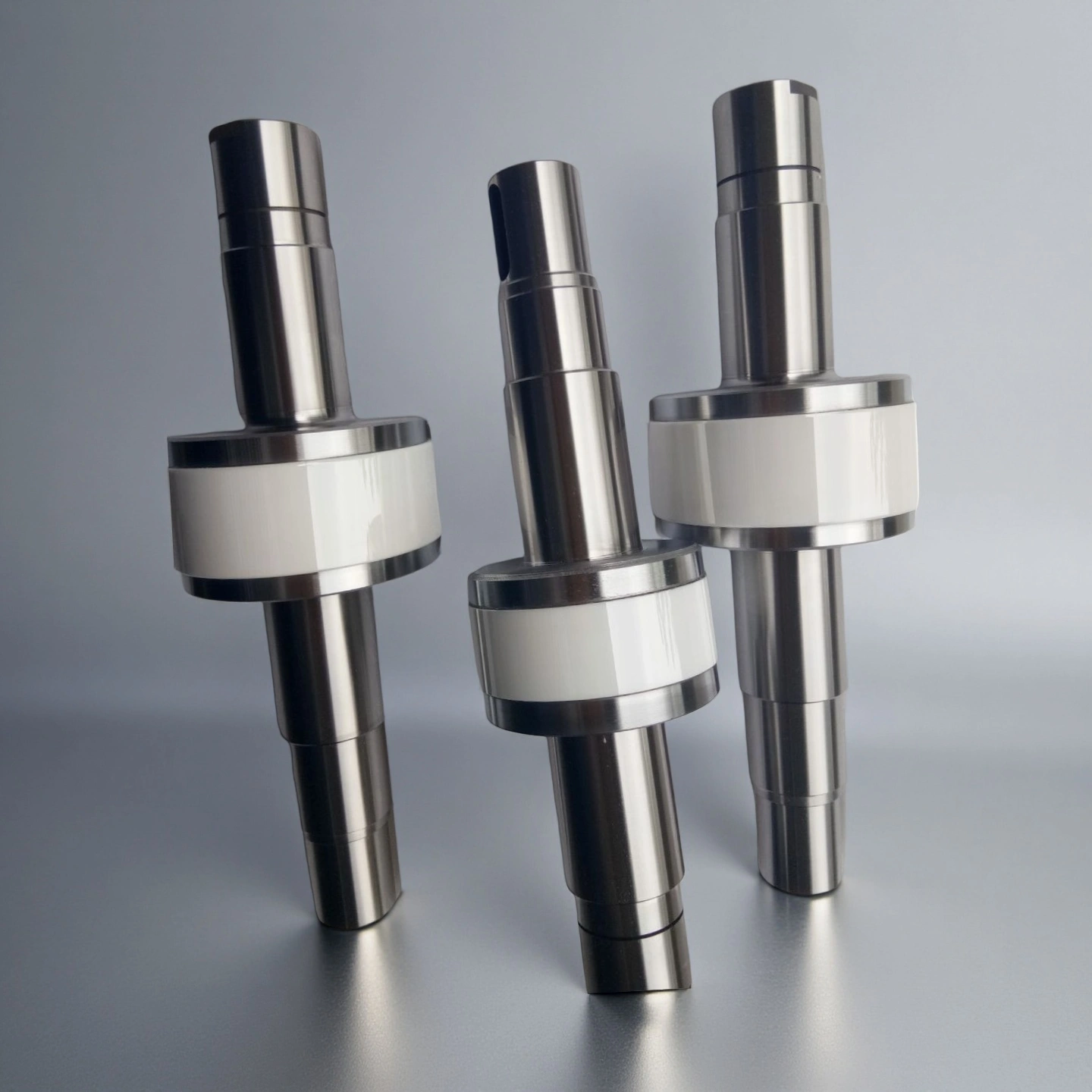
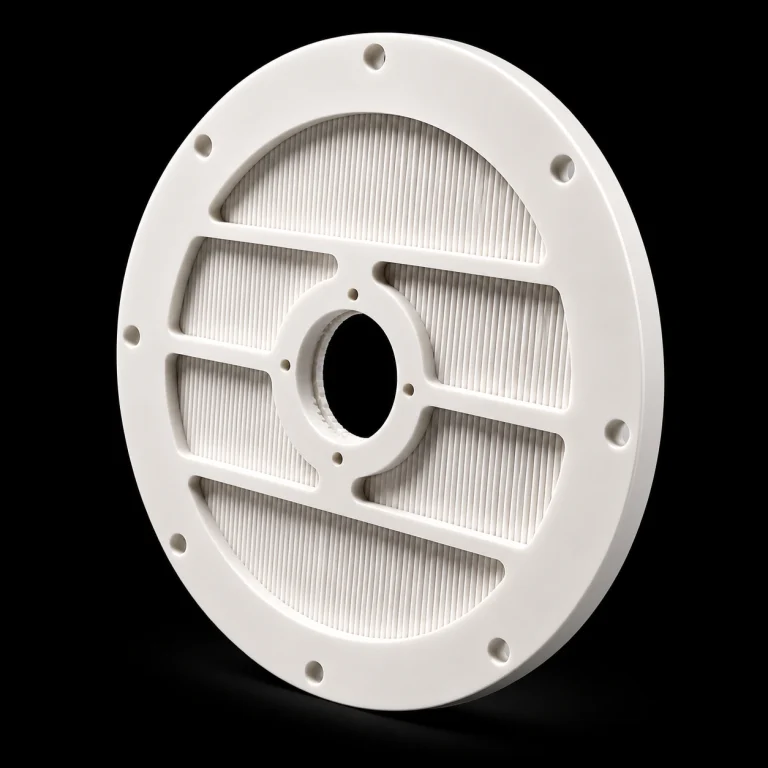
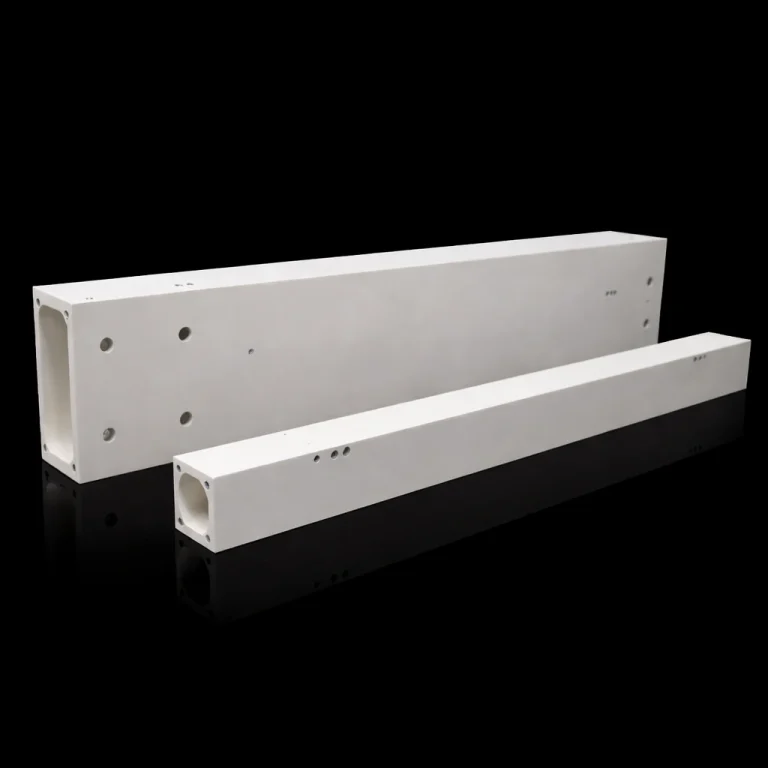
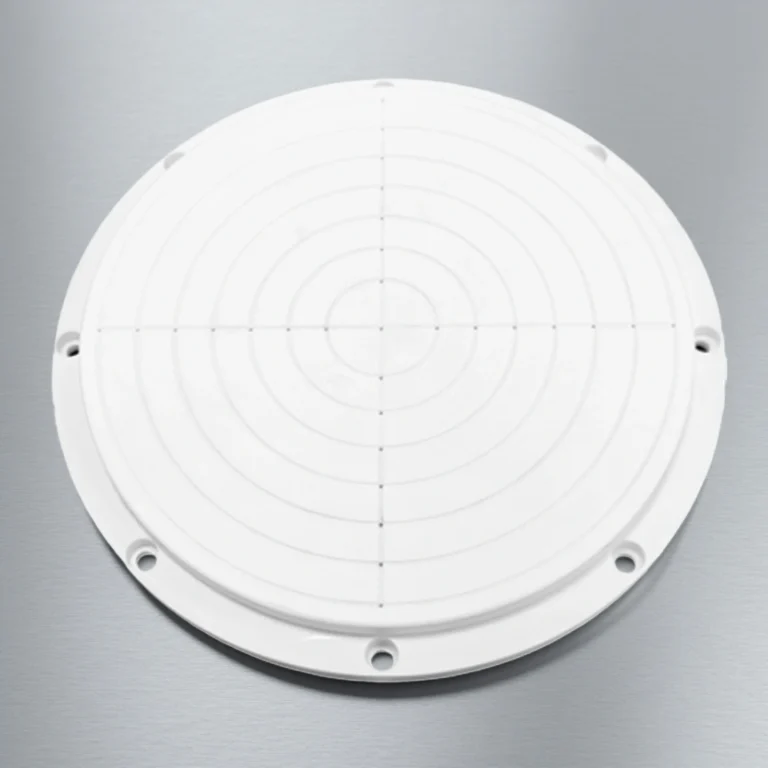
ADCERAX® Zirconia Ceramic Roller is a high-density yttria-stabilized component designed for calendering and crushing systems that require stable geometry, high hardness, and thermal resistance. It plays a critical role in battery electrode rolling, copper and aluminum foil processing, and nonmetallic material forming. With excellent dimensional stability under heat and load, Zirconia Ceramic Roller delivers consistent surface finish and extended service life. Its chemical inertness and non-adhesive surface reduce contamination risks and minimize downtime in industrial production lines.
Key Performance Features of Zirconia Ceramic Roller
- High Flexural Strength
The roller offers a flexural strength of 1000–1200 MPa, enabling it to resist bending under heavy nip loads in industrial lines. This ensures mechanical integrity in applications where metal rollers deform.
- Compressive Load Capacity
With a compressive strength exceeding 2000 MPa, the Zirconia Ceramic Roller performs reliably in high-pressure forming environments such as battery electrode compression.
- Enhanced Density
Each unit achieves a density ≥ 6.0 g/cm³, equivalent to >99.8% of theoretical density, ensuring structural uniformity and preventing micro-cracks under mechanical cycling.
- Exceptional Hardness
With a Vickers hardness above 12 GPa, the roller maintains its surface finish even under continuous abrasive contact with metal foils and particulate materials.
- Surface Finish Precision
A surface roughness of Ra 0.1–0.2 μm supports high-quality foil and electrode production, achieving better material contact uniformity.
- Low Roundness Tolerance
The roller is manufactured with roundness ≤ 0.01 mm, ensuring accurate rotational balance and uniform material thickness over long production cycles.
- High Operating Temperature
The roller withstands continuous operation at 1000 °C, making it compatible with thermal calendering, sintering, and high-energy foil rolling.
- Thermal Shock Tolerance
It endures thermal cycling up to ΔT ≈ 250 °C, which minimizes cracking and delamination in rapid heating/cooling environments.
- Consistent Dimensional Performance
With a thermal expansion coefficient of 10.5 × 10⁻⁶/K, the roller maintains interface stability with metal components and prevents misalignment due to thermal mismatch.
Technical Properties of Zirconia Ceramic Roller
Zirconia Ceramic Roller offers a unique combination of mechanical strength, surface hardness, thermal stability, and chemical inertness, making it suitable for demanding industrial environments such as high-temperature calendering, foil processing, and high-purity material forming.
| Property |
Specification |
| Material Type |
Yttria-Stabilized Zirconia (Y-TZP) |
| Density |
≥ 6.0 g/cm³ |
| Flexural Strength |
1000–1200 MPa |
| Compressive Strength |
> 2000 MPa |
| Vickers Hardness |
> 12 GPa |
| Elastic Modulus |
≈ 200 GPa |
| Surface Roughness |
Ra 0.1–0.2 μm |
| Roundness Tolerance |
≤ 0.01 mm |
| Thermal Expansion Coefficient |
10.5 × 10⁻⁶/K |
| Maximum Working Temperature |
1000 °C (continuous) |
| Thermal Shock Resistance |
ΔT ≈ 250 °C |
| Electrical Conductivity |
< 10⁻¹² S/cm |
| Chemical Stability |
Resistant to acids, bases, solvents |
| Microstructure |
Fully dense, > 99.8% theoretical density |
Specifications of Zirconia Ceramic Roller
|
Zirconia Ceramic Roller |
|
Item No. |
Diameter(mm) |
Height (mm) |
|
AT-YHG-ZG1001 |
Customize |
Packaging of Zirconia Ceramic Roller
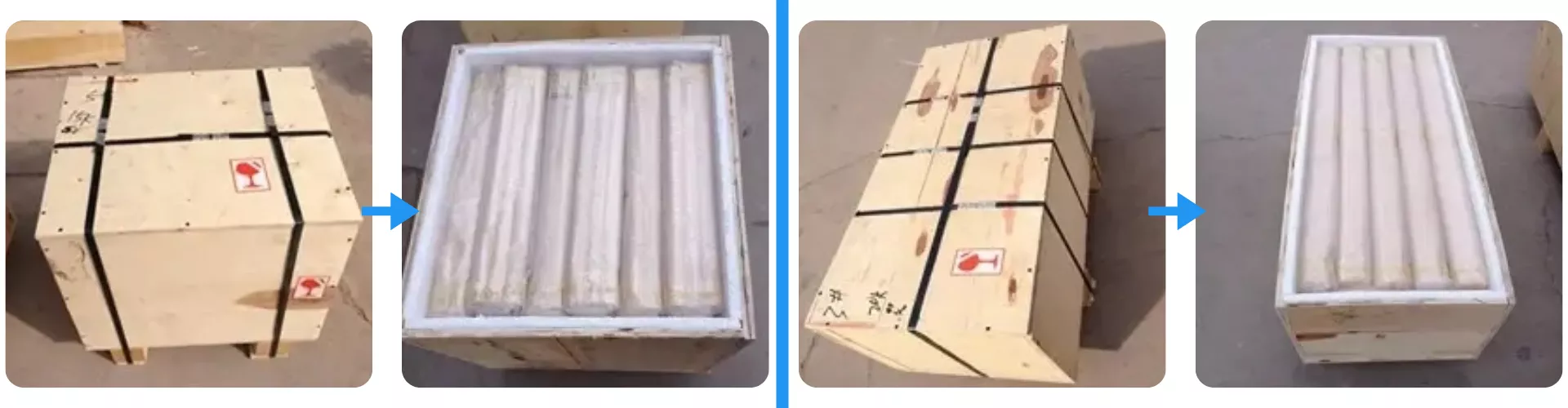
Zirconia Ceramic Roller is securely packed in reinforced wooden crates lined with shock-absorbing foam to prevent breakage during transport. Each roller is individually wrapped to minimize friction and contamination. The entire shipment is moisture-protected and labeled with international handling symbols for safe export logistics.
Addressing Precision, Durability, and Contamination Challenges with ADCERAX® Zirconia Ceramic Roller
ADCERAX® Zirconia Ceramic Roller plays a critical role in industrial systems that demand high rolling accuracy, wear resistance, and chemical purity. Its application spans specialized sectors where traditional metal or alumina rollers fail to meet process requirements due to thermal instability, surface adhesion, or particulate contamination. The following scenarios illustrate how Zirconia Ceramic Roller provides targeted solutions in precise production environments.
-
Zirconia Ceramic Roller in Graphite Sheet Calendering for Thermal Interface Materials
✅Key Advantages
1. Anti-Adhesion Surface Stability
The Zirconia Ceramic Roller prevents graphite flake adhesion under pressures exceeding 10 MPa, maintaining consistent sheet flow without material buildup. Its dense, non-porous surface (<0.01% porosity) eliminates graphite transfer during continuous rolling cycles.
2. Flatness Control Under Load
With an elastic modulus of ~200 GPa, the roller minimizes surface deflection, ensuring tight flatness tolerance (≤ ±3 μm) on graphite films. This allows uniform compression across sheet width even at high line speeds (>20 m/min).
3. Micro-Crack Suppression
High flexural strength (≥ 1000 MPa) prevents roller deformation that typically causes graphite micro-cracks or delamination in thin TIM substrates. This directly enhances mechanical stability of laminated end-products.
✅ ️Problem Solved
A battery material processor in South Korea reported delamination and thickness variation in graphite TIMs during high-speed rolling. After switching to ADCERAX® Zirconia Ceramic Roller, defect rates fell from 18% to 4.5%, and roller cleaning frequency decreased from every 4 hours to once per shift, boosting effective throughput by over 22%.
-
Zirconia Ceramic Roller in PTFE Film Forming for Chemical Equipment Linings
✅Key Advantages
1. Heat Distortion Resistance
The roller maintains shape under thermal load up to 1000 °C, avoiding roller sag or ovality during PTFE film pressing. Dimensional integrity is sustained over >2000 heating cycles without mechanical drift.
2. Anti-Warp Surface Integrity
Thanks to a hardness of >12 GPa, the Zirconia surface resists micro-abrasion and retains a surface roughness of Ra ≤ 0.2 μm, preventing ripple and warping issues common in ultra-thin PTFE extrusion.
3. Electrostatic Neutrality
Its non-conductive ceramic structure (<10⁻¹² S/cm) eliminates static buildup during film processing, reducing surface wrinkling and particle attraction without requiring external antistatic systems.
✅ ️Problem Solved
A chemical film manufacturer in Germany faced high PTFE scrap rates due to film edge thinning and static wrinkling. Implementing ADCERAX® Zirconia Ceramic Roller led to a 38% reduction in defect rates, with film surface flatness variation reduced to <4 μm across full width, enabling consistent downstream lamination without rework.
-
Zirconia Ceramic Roller in High-Purity Ceramic Raw Material Crushing
✅Key Advantages
1. Particle-Free Crushing Interface
With zero metal ion release and a chemical purity of >99.8%, the Zirconia Ceramic Roller prevents elemental contamination, ensuring raw powder meets electronics-grade limits of <10 ppm total impurities.
2. Extreme Compressive Strength
Capable of withstanding loads beyond 2000 MPa, the roller enables efficient size reduction of hard feedstock like fused alumina without cracking or surface degradation.
3. Abrasion Resistance in Impact Zones
Vickers hardness of >12 GPa ensures dimensional consistency over >5000 crushing cycles, avoiding surface pitting that could introduce wear particles into high-purity batches.
✅ ️Problem Solved
A lithium ceramic powder producer in Japan recorded trace Fe and Cr contamination during roll-crushing with stainless steel tools. Replacing with ADCERAX® Zirconia Ceramic Roller reduced contamination from 85 ppm to <15 ppm, allowing compliance with export-grade purity specs and extending roller change intervals by 4×.
Operational Guidance for Zirconia Ceramic Roller
Zirconia Ceramic Roller requires correct handling and operating procedures to ensure optimal lifecycle performance across industrial calendering or crushing systems. This section provides structured usage recommendations to help users reduce premature failure, improve process outcomes, and maintain material integrity in high-load applications.
-
Handling and Installation Precautions
1. Avoid Impact or Drop Loading
Although Zirconia Ceramic Roller features high hardness, its brittleness under concentrated impact can cause microcracks or edge chipping. Use padded grips or lifting supports during installation to avoid any abrupt force contact. Always place rollers on padded surfaces when unpacking.
2. Check Alignment Before Engagement
Misalignment during mounting may generate uneven stress distribution along the roller axis. This can lead to premature surface fatigue or fracture over time. Use laser alignment tools or precision fixtures to ensure coaxiality.
3. Maintain Clean Contact Interfaces
Contaminants such as metallic dust or abrasive grit can scratch the roller surface and compromise downstream processing. Clean all shaft bores, bearings, and housing seats thoroughly before assembly. Use oil-free cloths for final surface wiping.
-
Start-Up and Operating Conditions
1. Preheat Slowly in High-Temp Systems
When operating in elevated temperatures (≥600°C), subject Zirconia Ceramic Roller to gradual ramp-up. Thermal shock should not exceed 300°C per minute. Avoid direct flame impingement.
2. Limit Peak Surface Loadings
Ensure that maximum surface contact stress remains below 1000 MPa under dynamic compression. Excessive load can cause internal grain boundary damage or thermal expansion mismatch issues.
3. Prevent Metal Adhesion Under Load
In metal rolling applications (e.g., copper or aluminum), ensure the roller surface is coated with anti-stick agents or low-viscosity lubricants. This prevents galling or hot-welded material residues.
-
Maintenance and Cleaning
1. Inspect for Surface Microfractures
Perform visual inspections and non-destructive testing (e.g., ultrasonic or dye-penetrant) every 500 hours of continuous use. Microfractures compromise surface integrity and dimensional control.
2. Avoid Acid or Alkali Cleaning Agents
Zirconia is chemically inert but surface treatments may degrade under extreme pH cleaners. Use neutral pH solvents or deionized water during cleaning to protect surface finish.
3. Rebalance After Extended Use
Long-term roller wear may cause slight mass distribution imbalance. Recalibrate using dynamic balancing systems to maintain smooth operation and prevent bearing wear.
-
Storage and Replacement Planning
1. Store in Temperature-Stable Environments
Store Zirconia Ceramic Roller in a controlled space with humidity <60% and temperature between 10–35°C. Avoid sunlight exposure or moisture accumulation.
2. Avoid Stacking Without Dividers
Never stack rollers directly on each other. Use foam or rubber spacers between units and keep in upright or horizontal cradles to avoid flexural stress.
3. Plan Replacement Based on Cycle Count
In high-volume production, track usage cycles. Recommend replacement every 12,000–15,000 hours depending on application severity and wear rate.