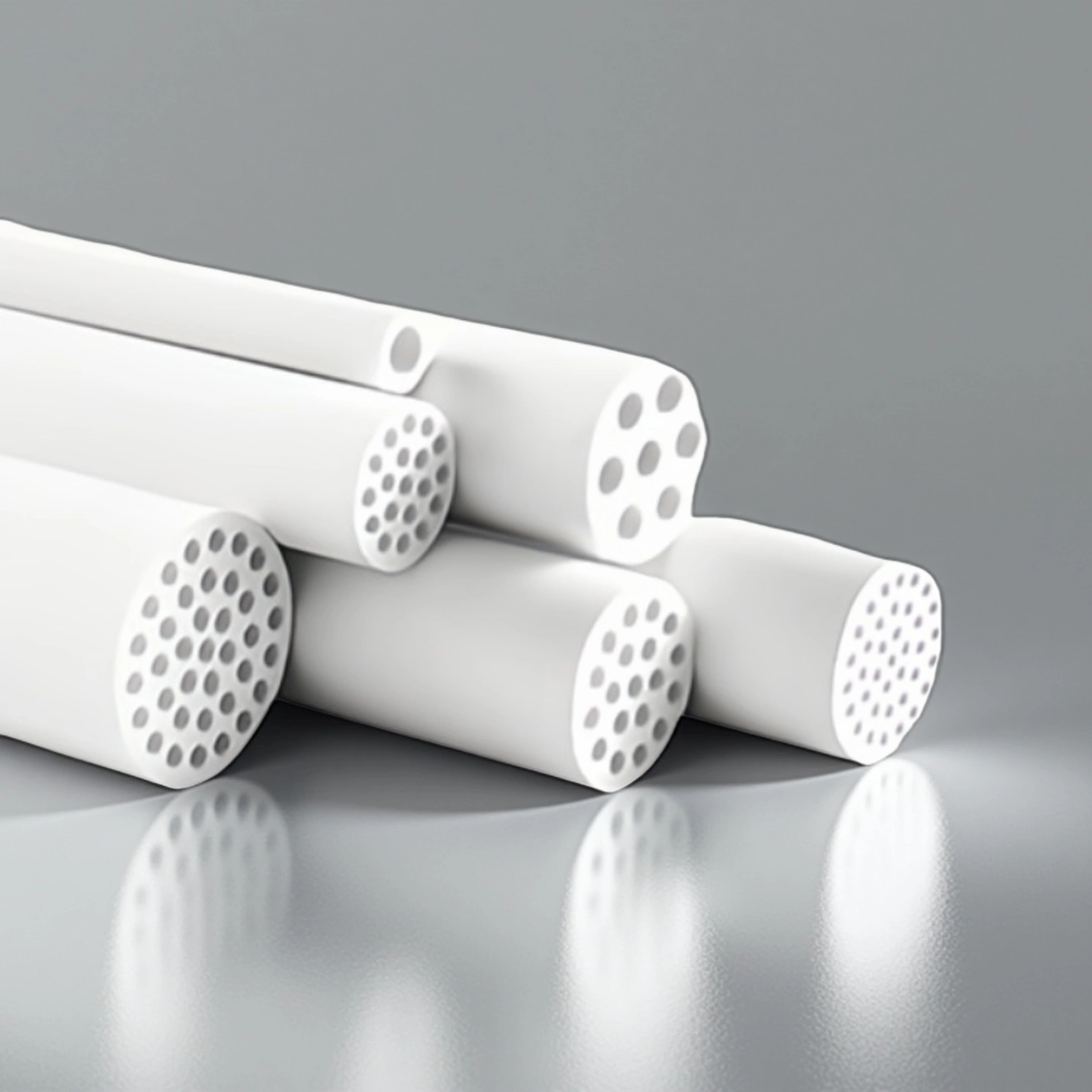
Zirconia Ceramic Membrane Tubes for Liquid MF/UF

ADCERAX supplies zirconia ceramic membrane elements for liquid crossflow microfiltration and ultrafiltration. Select a separation grade and channel layout for clarification, solids recovery or concentration, then match the element to your process and housing.

Catalogue No. AT-YHG-MG1001
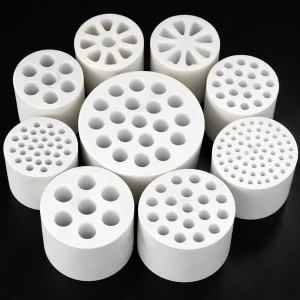
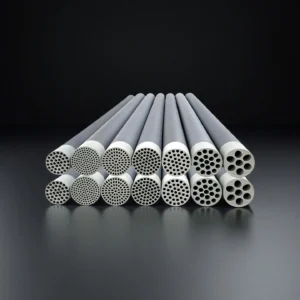
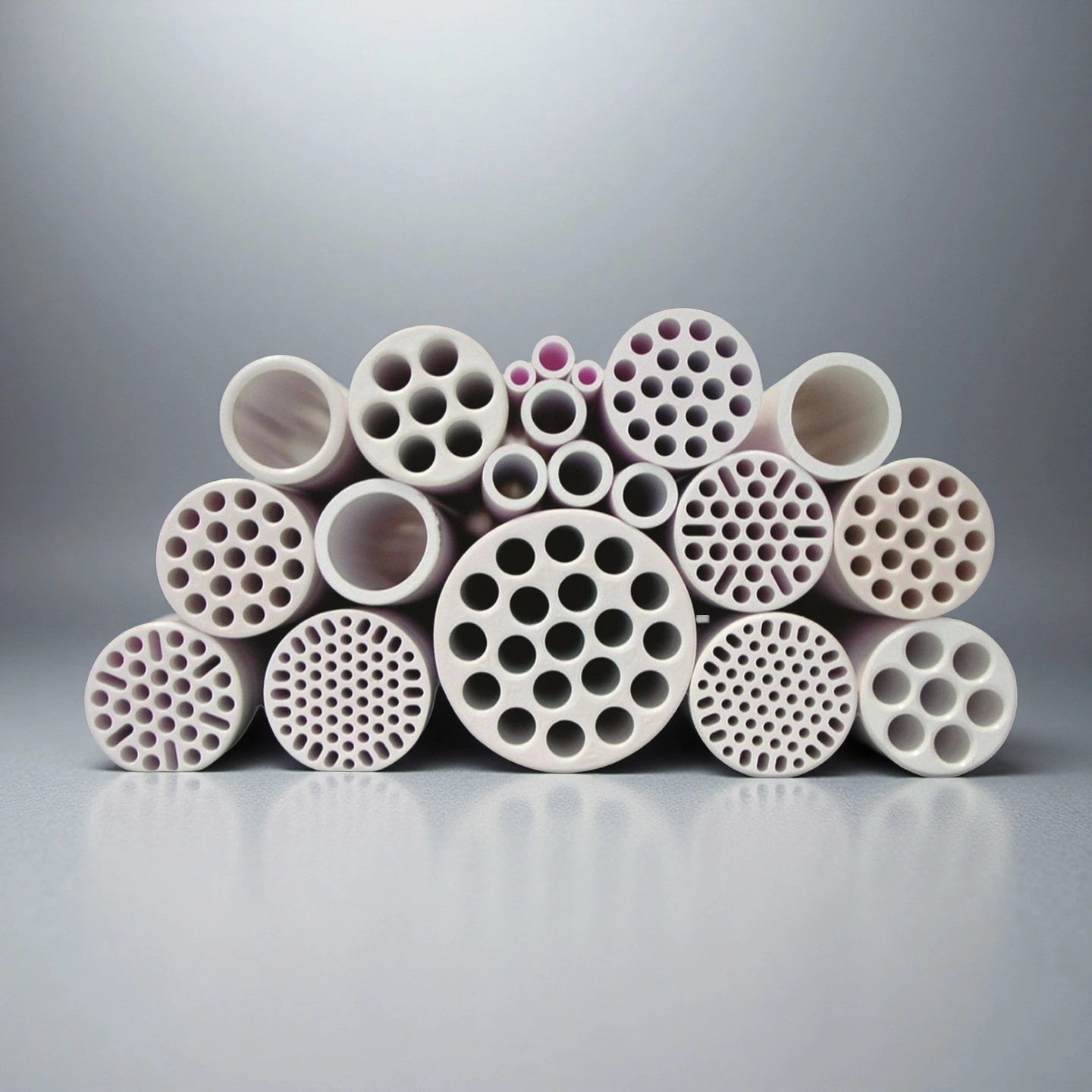
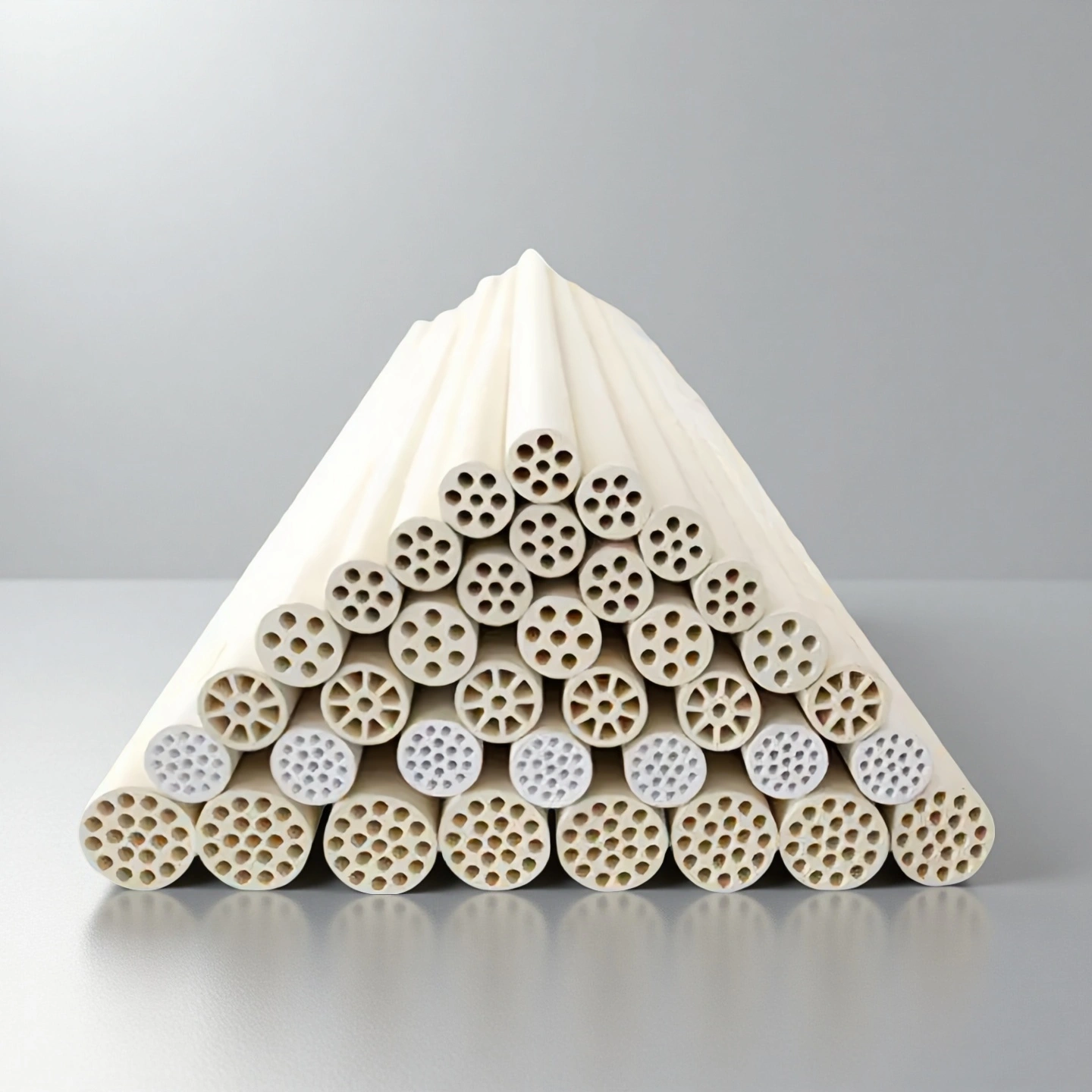
Channel layouts 7 / 8 / 19 / 23 / 25 / 37 / 49 channels
UF cut-off references P1 / 3 / 5 / 8 / 15 / 50 / 150 / 300 kDa
MF pore references 0.14 / 0.2 / 0.45 / 0.8 / 1.4 µm
Diameter/Size Download More Sizes
Engineering RFQ Review
Small-Batch Custom Support
Drawing-Based Production
Drawing & Process Review

A zirconia ceramic membrane tube is a multichannel filtration element for liquid crossflow microfiltration or ultrafiltration. The element consists of a porous ceramic support with one or more selective membrane layers. Feed liquid flows through parallel channels; the membrane retains target solids or solutes while permeate passes through the element wall.

The element specification identifies the porous support, transition/selective layers and end treatment separately. The supply item is a membrane element; housing and system interfaces are defined for the project.

Read Each Membrane Measure for Its Own Purpose

Measure Unit or Basis Selection Use
Feed-channel geometry mm; shape defined on the drawing Flow passage, solids handling and cleaning access
MF pore specification µm; defined method Candidate separation scale for the feed
UF molecular-weight cut-off (MWCO) kDa; specified test basis Candidate retention of target components
Water permeance L/(m²·h·bar), with temperature and test conditions Pressure-normalized water-test baseline
Process-feed flux L/(m²·h), with feed and operating conditions Throughput evaluation using the agreed effective area

Keep channel geometry, pore specification and MWCO as separate requirements. Assess production duty with representative-feed performance, active membrane area and cleaning recovery.

Available Zirconia Membrane Tube Configurations

Zirconia Ceramic Membrane Filter Tube
Item No. Bore Quantities Picture Bore Diameter (mm) Membrane Area Size Micro filter Super filter Fine ultrafiltration
AT-YHG-MG1001 19 3.5mm 0.05 m2 Outer Diameter:25mm,Length :250mm 0.14μm,0.2μm,0.45μm,0.8μm,1.4μm 15KD,50 KD,150KD,300KD 1 KD,3KD,5KD,8KD
AT-YHG-MG1002 23 3.5mm
AT-YHG-MG1003 7 6mm 0.16m2
AT-YHG-MG1004 8 6mm
AT-YHG-MG1005 19 3.5mm
AT-YHG-MG1006 23 3.5mm
AT-YHG-MG1007 49 2.5mm
AT-YHG-MG1008 19 6mm 0.35m2
AT-YHG-MG1009 25 5.5mm
AT-YHG-MG1010 37 3.6mm

Download the Product Catalogue

Choose a Separation Grade and Channel Layout

Match the separation grade to the component you want to retain or recover. Compare product recovery, fouling and cleaning recovery alongside the nominal pore size or cut-off.

Available Separation References

Microfiltration (MF) pore sizes: 0.14 / 0.2 / 0.45 / 0.8 / 1.4 µm
Match the listed pore reference to particle distribution, solids and the target separation.

Ultrafiltration (UF) molecular-weight cut-offs: 1 / 3 / 5 / 8 / 15 / 50 / 150 / 300 kDa
Match the cut-off and test basis to the target components and required retention.

These discrete values are enquiry references. The proposed membrane layer, separation grade and test basis are selected for the feed; each channel layout is specified separately.

Evaluate Membrane Performance for Your Feed

Membrane performance is defined by permeate flux, rejection of target components, and flux recovery after cleaning. These measures depend on feed composition, crossflow velocity, transmembrane pressure, temperature, and the selected membrane grade.

Performance Parameter What It Tells You
Permeate flux Throughput per unit area and time under defined feed, TMP, temperature and crossflow conditions
Rejection / Retention Percentage of target solids or solutes retained by the membrane, verified with representative feed
Fouling resistance Flux decline rate and recovery after backwash or chemical cleaning under process conditions
Operating life Cycles to acceptable flux decline, retention loss, or physical damage under defined duty

Test the proposed membrane grade with your actual feed or a close surrogate. Water permeability is a baseline check; process performance must be verified under production conditions.

Selection Comparison: When to Choose a Zirconia Membrane

Select the membrane route by separation requirement, chemical compatibility, operating conditions and economics. Zirconia ceramic membranes are one option among several; the right choice depends on your specific duty.

Membrane Route What to Compare for Selection
Zirconia ceramic membrane Specified selective layer, support and end interfaces under the proposed feed and cleaning duty
Alumina ceramic membrane Layer material, pore options and mechanical strength for the same separation target and cleaning protocol
Silicon carbide (SiC) membrane Thermal conductivity, abrasion resistance and module format under high-solids or thermal-cycling conditions
Polymeric membrane Separation quality, module format, chemical/cleaning fit and replacement economics for the process

Use the ceramic membrane range for a broader material and format comparison.

Match the Element to the Housing

Fit Decision Dimensions or Features to Match
Feed passages Channel shape and size; solids handling and cleaning access
Element envelope OD and overall length for physical fit; active length and effective area for filtration duty
End interfaces End profiles, sealing zones, insertion depth and critical tolerances

Packaging for Zirconia Membrane Tubes

Zirconia Ceramic Membrane Tube is securely packed in foam-lined wooden crates to prevent damage during international transit. Each tube is individually wrapped with shock-resistant cushioning to avoid surface scratches or impact stress. Custom-fit compartments ensure stability and separation throughout handling and shipping.
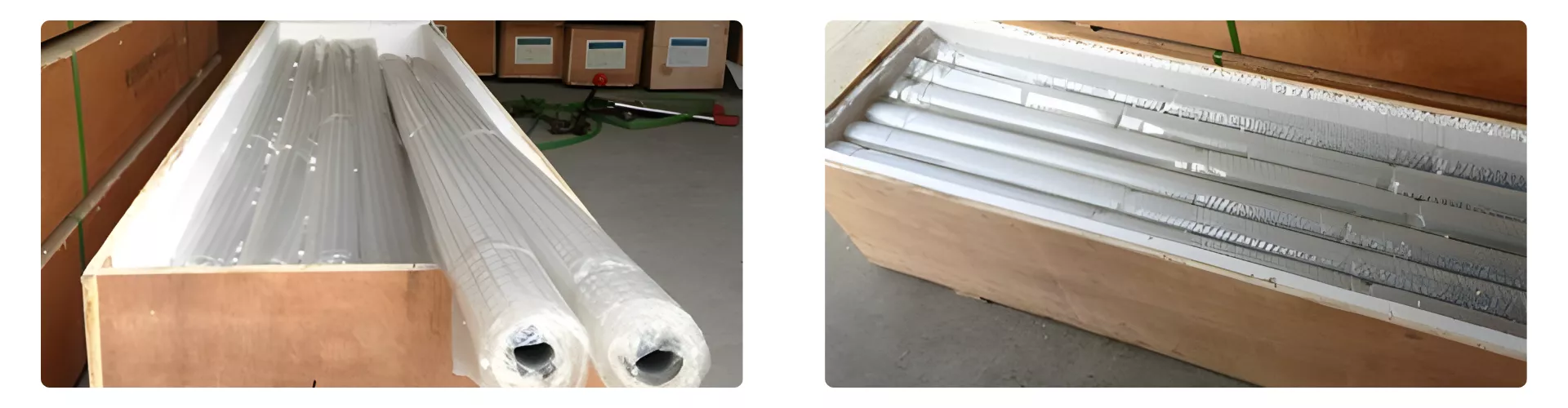
ADCERAX® Packaging of Zirconia Ceramic Membrane Tube

Application Fit for Zirconia Ceramic Membrane Tubes

ADCERAX Zirconia Ceramic Membrane Tube is specifically engineered to address filtration challenges in industries requiring stable throughput, chemical durability, and consistent purity. Its micro-porous structure and strong mechanical stability enable reliable separation and purification in diverse continuous-flow systems.

  • Process water and oily wastewater

    Describe particles, dispersed oil, dissolved components, temperature and the required permeate quality. Distinguish removal of suspended or emulsified material from dissolved-species separation. Set a target throughput and test it with representative feed; a pure-water value cannot establish wastewater capacity or discharge compliance.

  • Fermentation and food-process clarification

    Identify which cells, particles or macromolecules should be retained and which product must pass. Evaluate product recovery, fouling, cleaning recovery and hygienic interfaces together. Provide the contact and regulatory requirements for the intended use; no food or pharmaceutical certification is implied by the membrane material.

  • Chemical, catalyst and emulsion separation

    Define the valuable fraction, solids distribution, solvent or chemical composition, concentration, temperature and cleaning cycle. Compatibility must cover the membrane layers, support, end treatment, seals and housing, not just the zirconia name.

  • Process Clarification Before Downstream Treatment

    ZrO₂ membrane tubes can be used as a durable pretreatment element before RO, ion exchange, evaporation, or reuse systems. They help reduce suspended solids and process instability when the feed stream requires a clean and repeatable filtration step.

Practical User Guide for Zirconia Ceramic Membrane Tube Operation

To ensure stable performance, long service life, and optimal separation results, follow proper operational and maintenance guidelines during installation, cleaning, storage, and system integration.

  • Inspect and fit

    Check the element and end regions against the agreed specification. Protect ceramic edges from impact and point loading; use the approved housing and seal arrangement rather than forcing a fit.

  • Establish a baseline

    Define conditioning and water-test conditions before comparing permeability. Record temperature, relevant pressures, effective area and the measurement method.

  • Evaluate actual feed

    Monitor permeate quality, flux, feed/concentrate behaviour and pressure changes under the proposed crossflow conditions. Distinguish target throughput from a measured stable result.

  • Keep pressure limits separate

    Operating pressure, transmembrane pressure, reverse-pressure/backwash conditions and destructive burst tests are different quantities. Use limits confirmed for the actual element, end seals and module.

  • Define cleaning compatibility

    Identify each chemical, concentration, pH, temperature, contact time and cycle. Check all wetted components. Do not adopt a universal cleaning interval, oxidant dose or steam condition from a material label.

  • Verify recovery and integrity

    Agree on how to compare performance after cleaning and how to assess leakage or integrity for the intended test boundary. Define rejection, recovery and replacement criteria for the actual process.

FAQs About Zirconia Ceramic Membrane Tubes

  1. Q1: Is this a dense zirconia tube or a complete filtration system?
    A: Neither. This concerns a porous multichannel membrane element for liquid MF/UF evaluation. A housing, seals, pump and process controls are separate system components unless explicitly included in the proposal.
  2. Q2: How do I choose the right pore size?
    A: Selection depends on particle size, target retention, feed composition, viscosity, flux requirement, and cleaning method. Please provide your process details for engineering review.
  3. Q3: Is zirconia better than alumina for ceramic membranes?
    A: Zirconia is usually selected when stronger chemical durability, smoother separation behavior, or more aggressive cleaning resistance is required. Alumina can be more cost-effective for general filtration.
  4. Q4: Can the tube be used with strong acids or alkalis?
    A: Zirconia ceramic has strong chemical resistance, but the full assembly must be checked together, including seals, housing, adhesive, and cleaning cycle.
  5. Q5: Can ADCERAX customize the channel count and length?
    A: Yes. Tube length, OD, channel count, pore grade, end interface, and sealing structure can be reviewed according to the filtration module.
  6. Q6: What should I send a quotation?
    A: Please send pore size or MWCO, feed liquid, target separation, flow rate, pressure, temperature, cleaning chemistry, tube size, and drawing if available.
  7. Q7: Is this tube suitable for food clarification?
    A: It can be considered for food and beverage clarification applications, but final suitability depends on the process, cleaning protocol, and compliance requirements.
  8. Q8: How should the membrane tube be packed?
    A: Tubes should be individually protected with cushioning and separated in rigid export packaging to avoid chipping, surface damage, and impact stress.
  9. Q9: How do I choose between MF and UF?
    A: Start with the components to retain or pass and the required product quality. Consider the feed distribution, fouling and product recovery, then evaluate a candidate separation specification with a defined method and representative feed. You do not need to select the cut-off before enquiring.

Information Needed for Zirconia Membrane Tube Quotation

RFQ Detail Why It Matters
Pore size or MWCO Determines separation grade and retention target.
Feed liquid composition Helps evaluate chemical compatibility and fouling risk.
Target particle size or impurity Helps select MF or UF membrane grade.
Flow rate and pressure Affects channel count, membrane area, and module design.
Operating temperature Helps check ceramic, seal, and housing compatibility.
Cleaning chemistry Important for CIP, backwash, and long-term stability.
Tube OD, length, and channel count Ensures fit with the filtration housing.
Drawing or module sketch Reduces design back-and-forth before quotation.

Send us your pore size, feed liquid, pressure, temperature, and tube dimensions. Our team will review the filtration requirement and recommend a suitable zirconia membrane tube configuration.

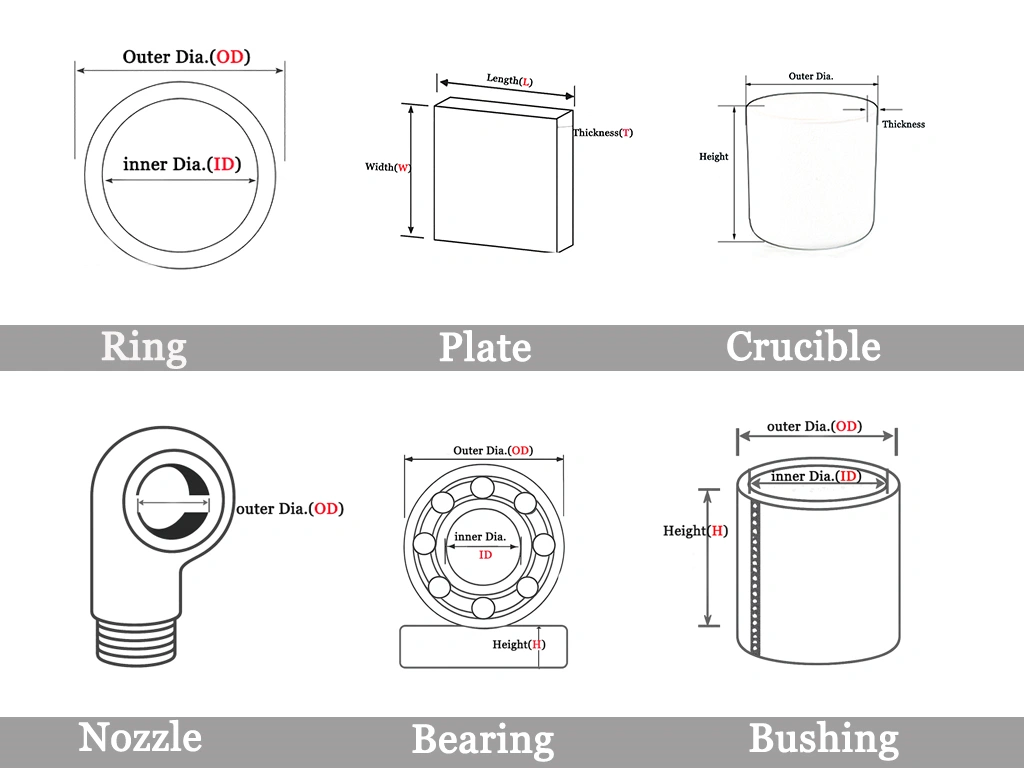
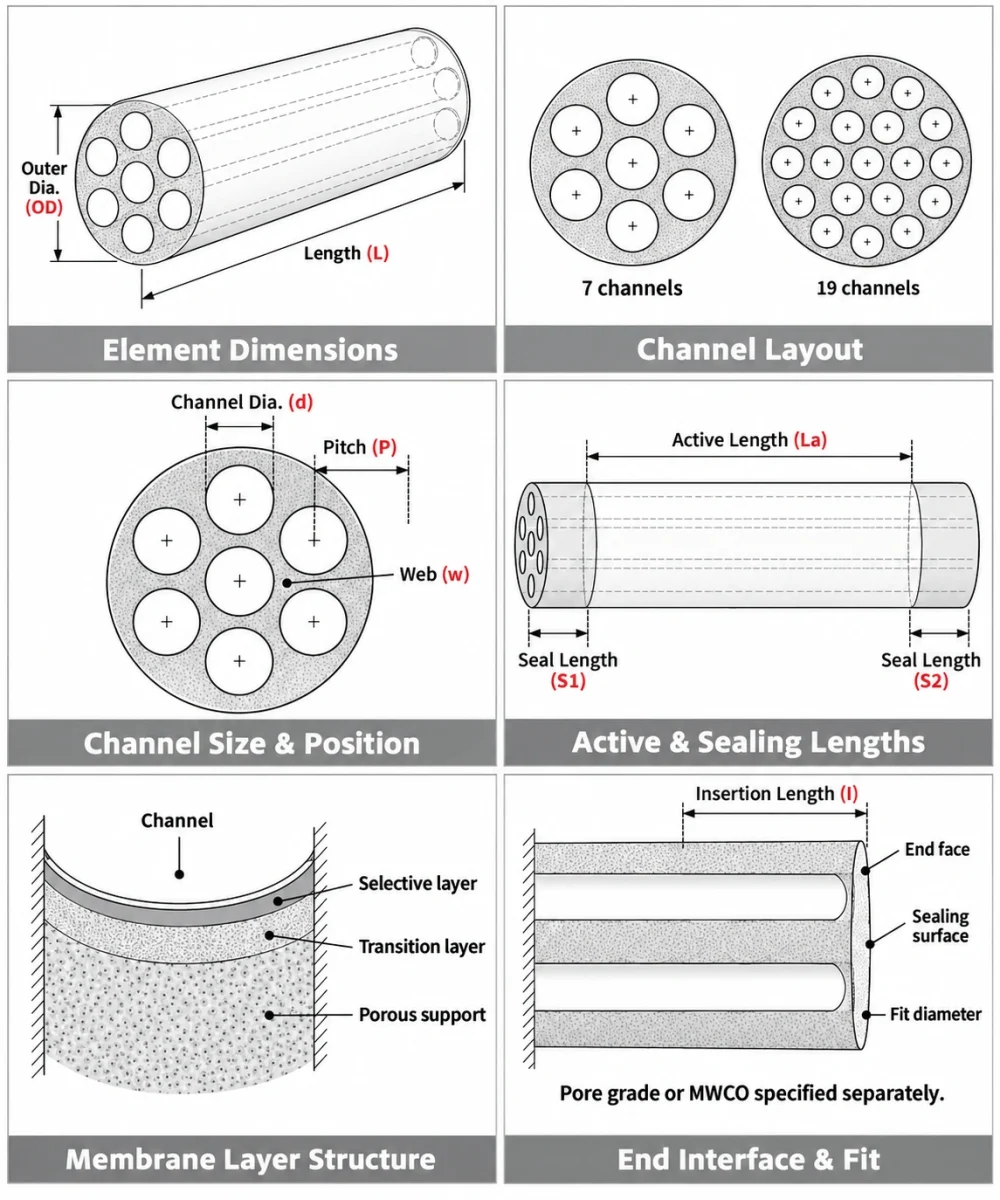
Zirconia ceramic membrane tube diagrams showing element dimensions, channel layouts, sealing zones, membrane layers and end interfaces.

Custom Zirconia Ceramic Membrane Tubes

ADCERAX builds zirconia ceramic membrane elements to the project drawing rather than a fixed catalogue. Membrane specification and element geometry are customized together to match both the separation duty and the mating housing.

What Can Be Customized

  • Membrane layer and separation grade — selective layer material, pore size (MF) or molecular-weight cut-off (UF) for the target separation
  • Channel layout — channel count and channel shape defined on the drawing
  • Element envelope — outer diameter (OD), overall length and active length for the housing fit
  • End interfaces — end profiles, sealing zones and insertion depth to match the module interface
  • Support and end treatment — porous support and end sealing defined with the element specification

Drawing-Based Supply

  • One specification — membrane grade, channel and end geometry, and acceptance requirements are reviewed as a single element specification
  • Trial and production — define the trial scope and the production requirement against the agreed specification
  • Approved changes — record changes to the layer, geometry, surfaces or end treatment before the production order

Related Products

ADCERAX - Your Trusted Advanced Ceramics Manufacturing Partner

ADCERAX – Custom Ceramic Supply and Engineering Coordination
ADCERAX coordinates drawing review, production and inspection with manufacturing partners against agreed specifications.

China-Based Ceramic Supply Partner

ADCERAX coordinates custom ceramic supply for overseas OEMs, equipment builders, and labs.

Custom Drawing Support

We review drawings, dimensions, materials, and application conditions before quotation.

Ceramic Process Control

Forming, sintering, machining, grinding, and finishing are arranged by part requirements.

Pre-Shipment Inspection

Dimensional checks, visual inspection, and packaging review help reduce procurement risk.

Get in Touch with Us

Our team will be happy to respond to you in less than 24 hours.

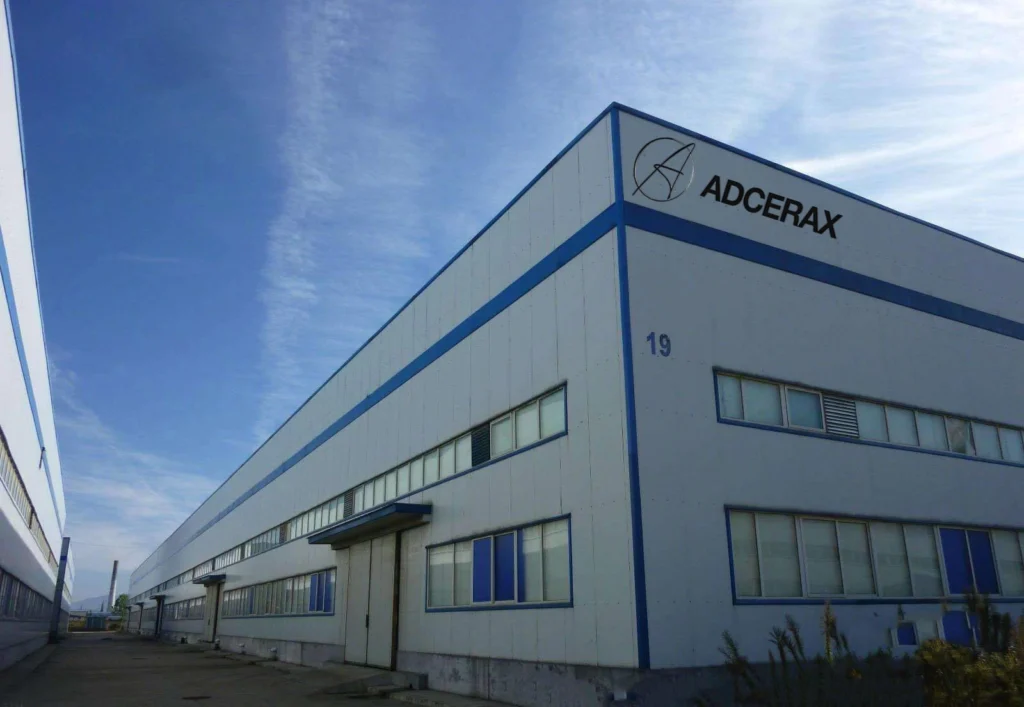
Adcerax's factory

Quick Quotation

*Our team will review your inquiry and respond with the next steps.

*Your information will be kept strictly confidential.

Ready to Solve Your Engineering Challenge?

Partner with ADCERAX for reliable, high-performance advanced ceramic solutions. Our engineers are ready to discuss your project.

E-mail

info@adcerax.com

Phone

Tel: +86-0731-84428843 WhatsApp: +86 19311583352

Response Time

Within 24 hours

Quick Quote

The more details you provide, the faster we can quote.

*All inquiries are confidential.

Get Your Custom Solution

The more details you provide, the faster we can respond.

customize size

*We respond within 24 hours. All inquiries are confidential.

Download Catalog