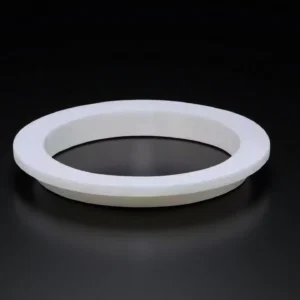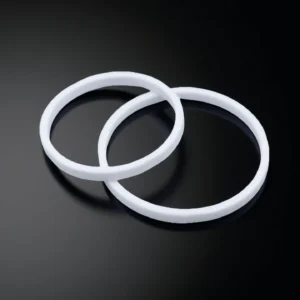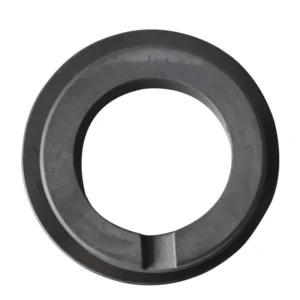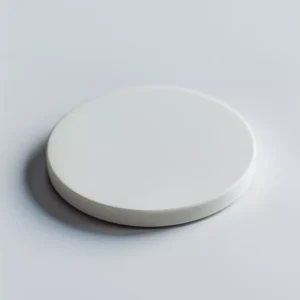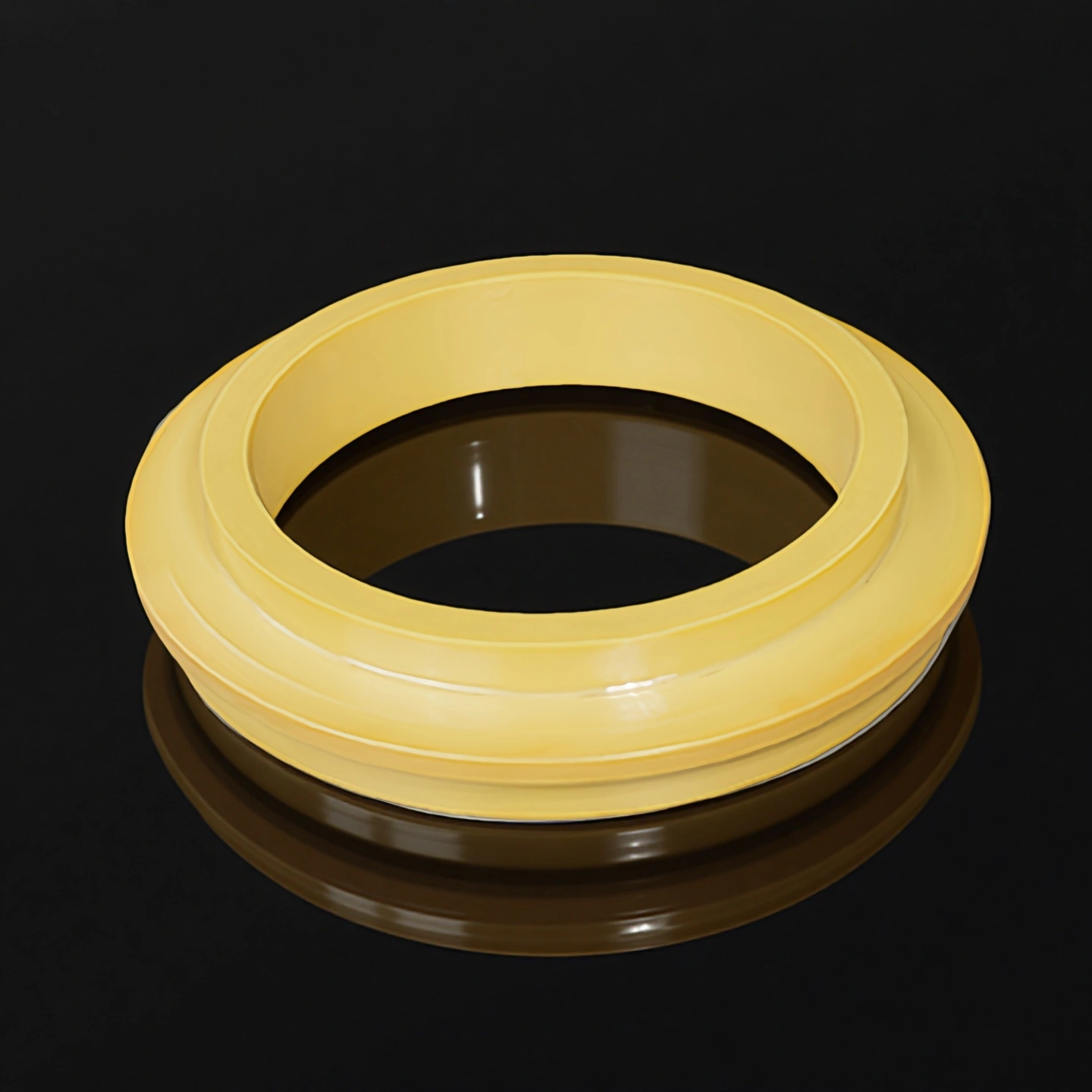
ADCERAX MSZ Ceramic Seal Ring is engineered from magnesia‑stabilized zirconia to deliver stable mechanical performance under demanding thermal and chemical conditions. Its multi‑phase microstructure provides improved resistance to thermal shock and surface degradation, enabling reliable sealing in pumps, valves, and fluid‑handling assemblies exposed to corrosive or abrasive media. This material stability supports long operating cycles, minimizes leakage risk, and maintains sealing integrity across a wide range of industrial environments.
Key Benefits of MSZ Ceramic Seal Ring
1. Improved Toughness for Sealing Contact
Magnesia stabilized zirconia provides higher fracture toughness than many standard oxide ceramics. This helps reduce edge chipping during assembly, pressure cycling, vibration or intermittent sealing contact.
2. Wear Resistance for Rotating and Sliding Faces
The hard ceramic surface helps maintain sealing geometry in pump, valve and mechanical seal assemblies. It is suitable for sealing areas exposed to friction, slurry, abrasive particles or repeated sliding contact.
3. Chemical Stability in Corrosive Media
MSZ ceramic seal rings can be reviewed for acids, alkalis, chloride-containing liquids, cleaning fluids and selected solvent-contact environments. This makes them useful where metal or softer sealing materials may corrode, swell or wear quickly.
4. Thermal Stability During Cleaning or Process Cycling
MSZ helps maintain dimensional stability when the sealing area is exposed to hot water, steam cleaning, elevated process temperature or repeated thermal cycling. This is important for systems that need stable sealing performance after repeated operation and cleaning.
5. Drawing-Based Manufacturing Support
ID, OD, thickness, sealing face width, surface finish, chamfer, groove, step and mounting interface can be reviewed according to the customer’s drawing or sample. This helps match the ceramic ring to the existing pump, valve or mechanical seal structure.
MSZ Ceramic Seal Ring Material Properties
The following values are typical reference data for magnesia stabilized zirconia ceramic. Final selection should be reviewed according to the drawing, sealing structure, counterface material, working medium, pressure, temperature and cleaning method.
| Property | Specification | Why It Matters for Seal Ring Design |
|---|---|---|
| Material Composition | MgO-Partially Stabilized Zirconia | This material structure helps improve toughness and phase stability, making the seal ring suitable for demanding pump, valve and mechanical seal applications. |
| Density | 5.7 ± 0.05 g/cm³ | Stable density supports consistent ceramic quality, dimensional stability and predictable sealing performance after machining and grinding. |
| Flexural Strength | 500–620 MPa | Higher flexural strength helps the seal ring resist bending stress during assembly, pressure cycling and contact with mating components. |
| Compressive Strength | 2000–2500 MPa | Strong compressive performance helps the ceramic ring withstand sealing pressure, clamping force and localized contact load. |
| Vickers Hardness | 1100–1200 HV | High hardness helps reduce surface wear when the ring works against sliding, rotating or abrasive contact surfaces. |
| Fracture Toughness | 6–12 MPa·m1/2 | Improved toughness helps reduce edge chipping, cracking and damage risk during installation or intermittent operation. |
| Maximum Operating Temperature | ~1000°C | High-temperature capability allows the seal ring to maintain structural stability in heated fluid systems, cleaning cycles or thermal process equipment. |
| Thermal Expansion Coefficient | ~10 × 10⁻⁶ K⁻¹ | Controlled thermal expansion helps reduce mismatch stress when the ceramic ring is assembled with metal, carbon, SiC or other mating materials. |
| Thermal Conductivity | 2–3 W/m·K | Low thermal conductivity helps limit rapid heat transfer, but thermal gradients and cooling conditions should still be reviewed during design. |
| Corrosion Resistance | Stable in pH 1–13 acids and bases | Chemical resistance helps the seal ring work in selected acidic, alkaline or cleaning-fluid environments where metal parts may corrode. |
| Ionic Leaching | <0.1 ppm (Na⁺, K⁺) | Low ionic leaching can support cleaner fluid-contact applications where contamination control is important. |
| Surface Finish Capability | Sub-micron Ra achievable | Fine surface finish supports lower leakage risk, smoother sealing contact and better compatibility with mechanical seal faces. |
Dimensions of MSZ Ceramic Seal Ring
| Mg-PSZ Ceramic Seal Ring | |||
| Item No. | Outer Diameter(mm) | Inner Diameter (mm) | Height(mm) |
| AT-MG-M1001 | 50.00 | 30.00 | 5.00 |
| AT-YHG-M1002 | 62.00 | 50.00 | 5.50 |
| AT-YHG-M1003 | 89.00 | 65.00 | 5.30 |
| AT-YHG-M1004 | 90.00 | 55.00 | 16.00 |
| AT-YHG-M1005 | 100.00 | 80.00 | 15.00 |
| AT-YHG-M1006 | 115.00 | 80.00 | 15.00 |
| AT-YHG-M1007 | 118.00 | 65.00 | 20.00 |
| AT-YHG-M1008 | 1-150 Customize | 0.5-140 Customize | 1-50 Customize |
MSZ vs Alumina, YSZ, ZTA and SiC Seal Rings
MSZ ceramic seal rings are not selected only for hardness. They are usually considered when the sealing component needs a balance of toughness, wear resistance, corrosion stability and thermal-cycle durability.
- MSZ vs Alumina: MSZ generally provides better toughness and lower chipping risk, while alumina is often more cost-effective for stable-duty applications.
- MSZ vs YSZ: MSZ is often reviewed for higher-temperature or moisture-exposed environments where phase stability and thermal durability are important.
- MSZ vs ZTA: ZTA combines alumina hardness with zirconia toughening, while MSZ is selected when zirconia-based toughness and corrosion behavior are more important.
- MSZ vs SiC: SiC provides excellent hardness and thermal conductivity, while MSZ may be preferred when toughness and edge-chipping resistance are key concerns.
Packaging for MSZ Ceramic Seal Ring
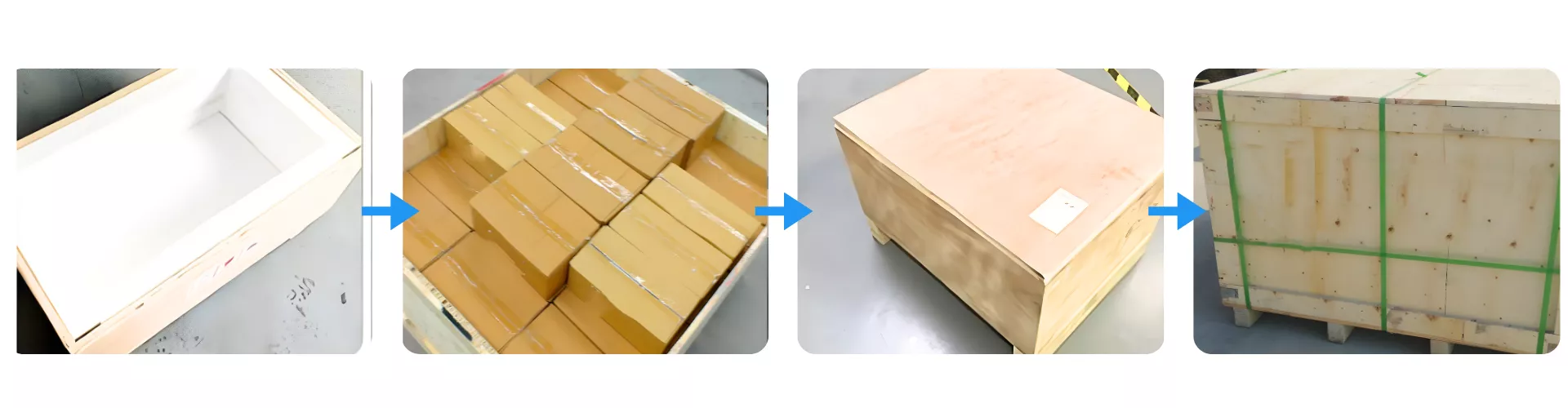
MSZ Ceramic Seal Ring is securely packed using a multi-layer protection method to prevent damage during international transportation. Each unit is first boxed with shock-absorbing inner lining, then consolidated into reinforced cartons and sealed in moisture-proof wooden crates. The final palletized packaging ensures stability and integrity throughout handling and delivery.