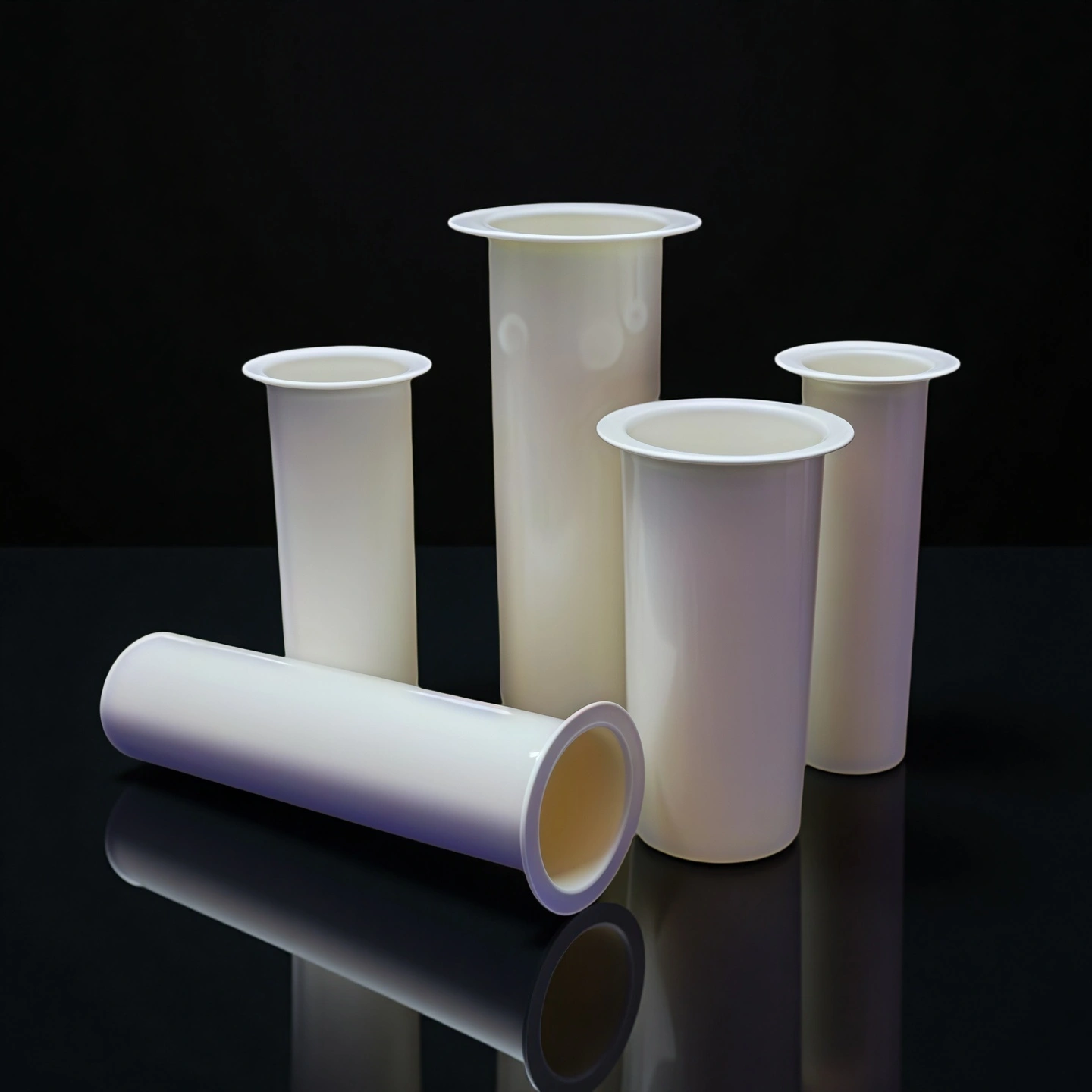
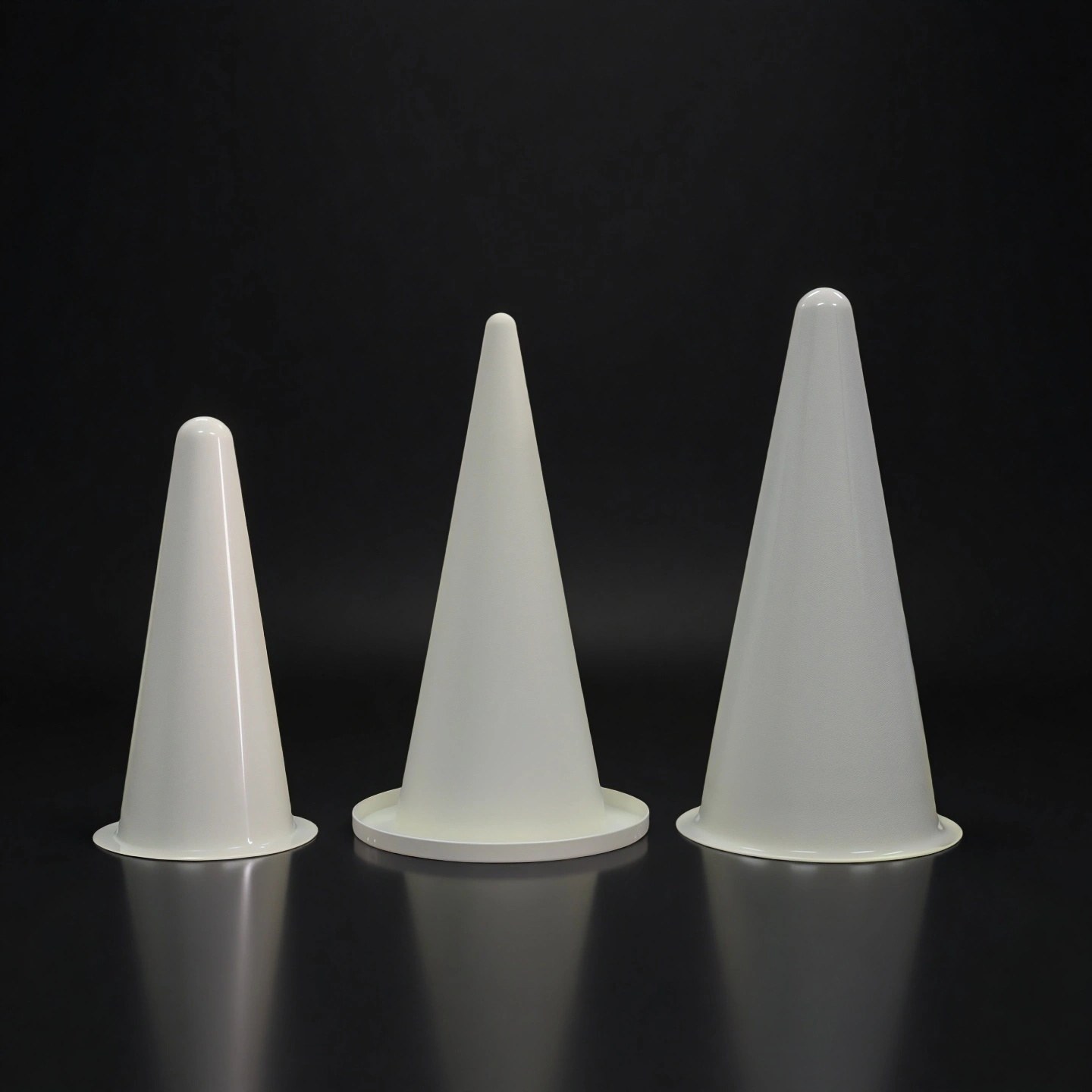
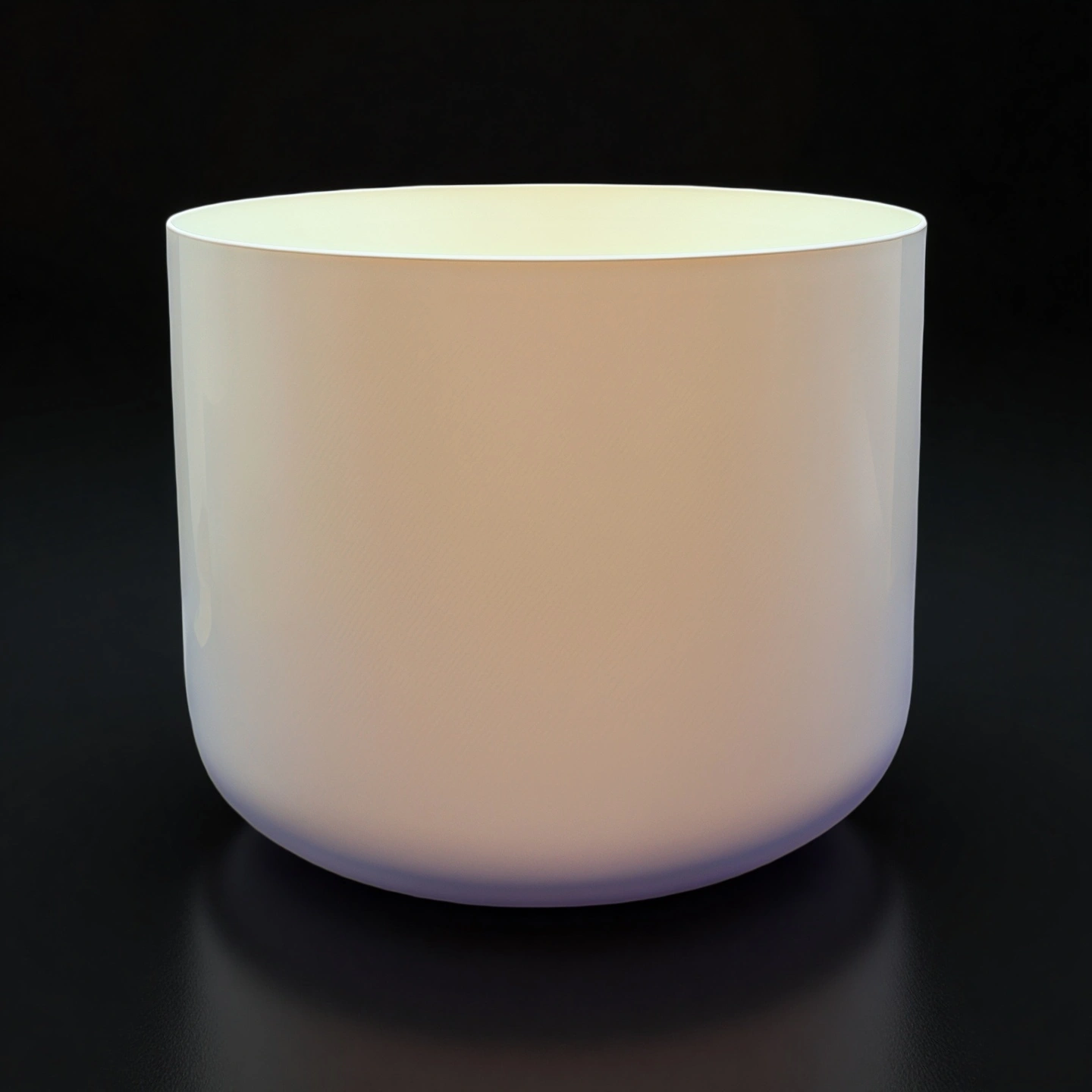
Pyrolytic Boron Nitride (PBN) Crucible for MBE & Vacuum Evaporation

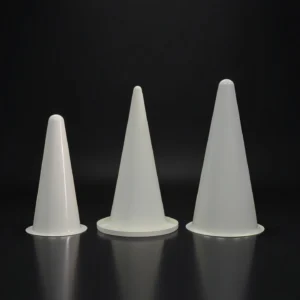
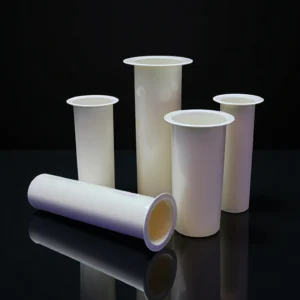
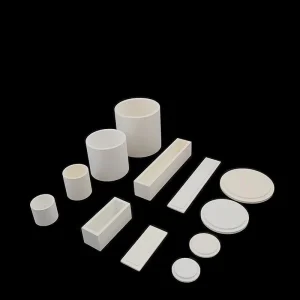
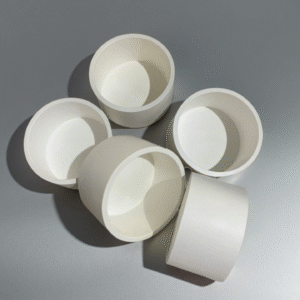
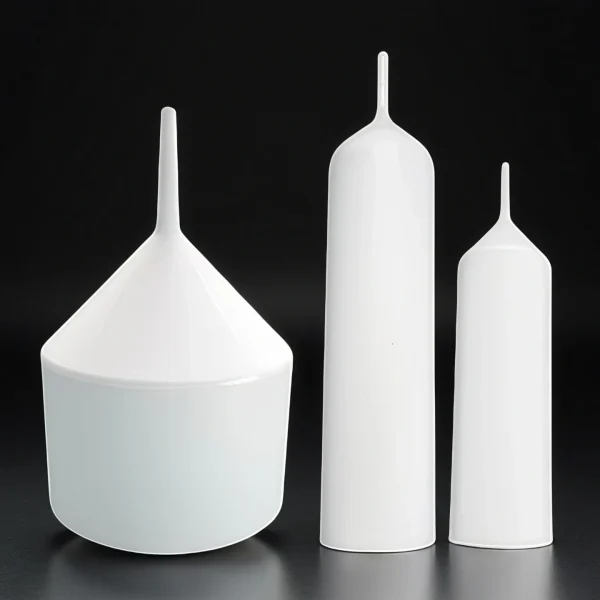
Pyrolytic boron nitride (PBN) crucibles provide a non-wetting, low-outgassing interior for metal, oxide, and organic evaporation in MBE and PVD tools, supporting uniform deposition and easier post-run cleaning. Standard 20–120 cc conical or cylindrical crucibles are available, and custom volumes, bores, lips, and wall profiles are produced to drawing to fit mainstream effusion sources and evaporation boats.

Catalogue No. AAT-PBN-VGF1001
Material Pyrolytic boron nitride crucible
Maximum Working Temperature 1800°C in vacuum or inert atmosphere
Thermal Expansion Coefficient  ~1.3 × 10⁻⁶ /K
Dimensions/Sizes Download PDF
24H Standard Dispatch
Small Batch Support OEM
Factory Direct
Expert Engineering Support

Pyrolytic Boron Nitride (PBN) crucible is a high-purity evaporation or containment vessel produced not by sintering powder, but by chemical vapor deposition (CVD) of boron and nitrogen gases onto a heated graphite mold. This process forms a fully dense, layered boron nitride structure with a purity typically above 99.99%, and in some grades up to 99.999% (5N).


PBN Crucible Benefits

  • Beam & Flux Stability: matched geometry and wall profile enable predictable thermal fields and stable emission.
  • Non-Wetting Interior: reduces material adhesion and improves changeover cleanliness across common source chemistries.
  • Low Outgassing Surface: supports clean baselines in UHV / high vacuum to protect film purity.
  • Anisotropic Thermal Response: PBN’s in-plane conductivity helps tune heat paths for consistent evaporation.
  • Repeatable Dimensions: tight-tolerance machining on IDs/ODs, lips, and cones for source-to-source interchange.


Pyrolytic Boron Nitride Crucible Properties

Property Unit Pyrolytic Boron Nitride Hot Pressed Boron Nitride
Purity 99.99% 99.50%
Density g/cm3 2.15-2.19 1.96-2
Hardness HV0.5 651 62
Volume resistivity Ohm*cm 2*1014 1.2*1014
Dielectric strength kV/mm 55 76
Maximum working temperature 1000 (air), 2300 (vacuum) 900 (air), 1850 (vacuum)
Bending strength MPa 173 (A direction) 310
Thermal conductivity W/m*K 60 (A direction) 55
Tensile strength MPa 112 (A direction) 110
Thermal expansion coefficient /℃ 6*10-7 1.8*10-6
Compressive strength MPa 154 (A direction) 120


Types of PBN Crucible

1. MBE Crucible

Molecular Beam Epitaxy (MBE) is a mainstream epitaxial growth method for multilayers, heterostructures, superlattices, and high-purity compound films. MBE crucibles are used as source containers in the process.
Key features: It can be made in large sizes (typical maximum diameter about 12 inches and maximum height about 17 inches). It offers high density (up to about 2.20 g/cm³). The material purity reaches ≥99.99%. It shows non-wetting behavior and good dimensional stability.
Typical application: It is mainly used for MBE growth of III–V compound semiconductors.

2. VGF Crucible

The Vertical Gradient Freeze (VGF) technique grows single crystals by solidifying the melt under a controlled vertical temperature gradient. VGF crucibles are matched to that furnace style.
Key features: It supports large sizes (up to about 8 inches in diameter and about 17 inches in height). It provides high density and high purity (≥99.99%). It maintains uniform temperature fields for directional solidification.
Typical application: It is used for growing GaAs and InP single crystals for the semiconductor industry.

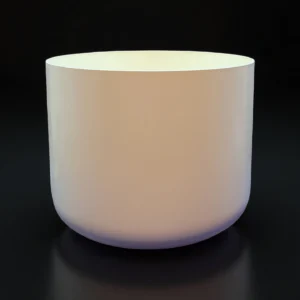
3. LEC Crucible

The Liquid Encapsulated Czochralski (LEC) method is suitable for pulling volatile III–V single crystals under a protective encapsulant.
Key features: It accepts large sizes (typical maximum diameter about 12 inches and maximum height about 17 inches). The purity is ≥99.99%. With an encapsulant at high temperature (above ~1500 °C), it suppresses volatile loss and helps maintain stable composition during growth.
Typical application: It is used to grow GaAs, InP, and GaP single crystals and related III–V materials.

4. OLED Crucible

OLED vacuum thermal evaporation requires clean, stable sources; OLED crucibles serve as the primary containers for organic or metal materials during deposition.
Key features: The material purity is typically ≥99.999%. It withstands high temperature, maintains uniform thickness, and offers good anisotropic thermal behavior for stable heating. It has non-wetting and easy-to-clean interiors. It resists chemical attack and does not react with common evaporation materials.
Typical application: It is used as the main source container in OLED and CIGS evaporation processes.

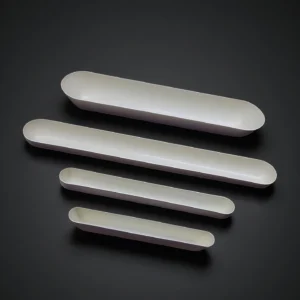
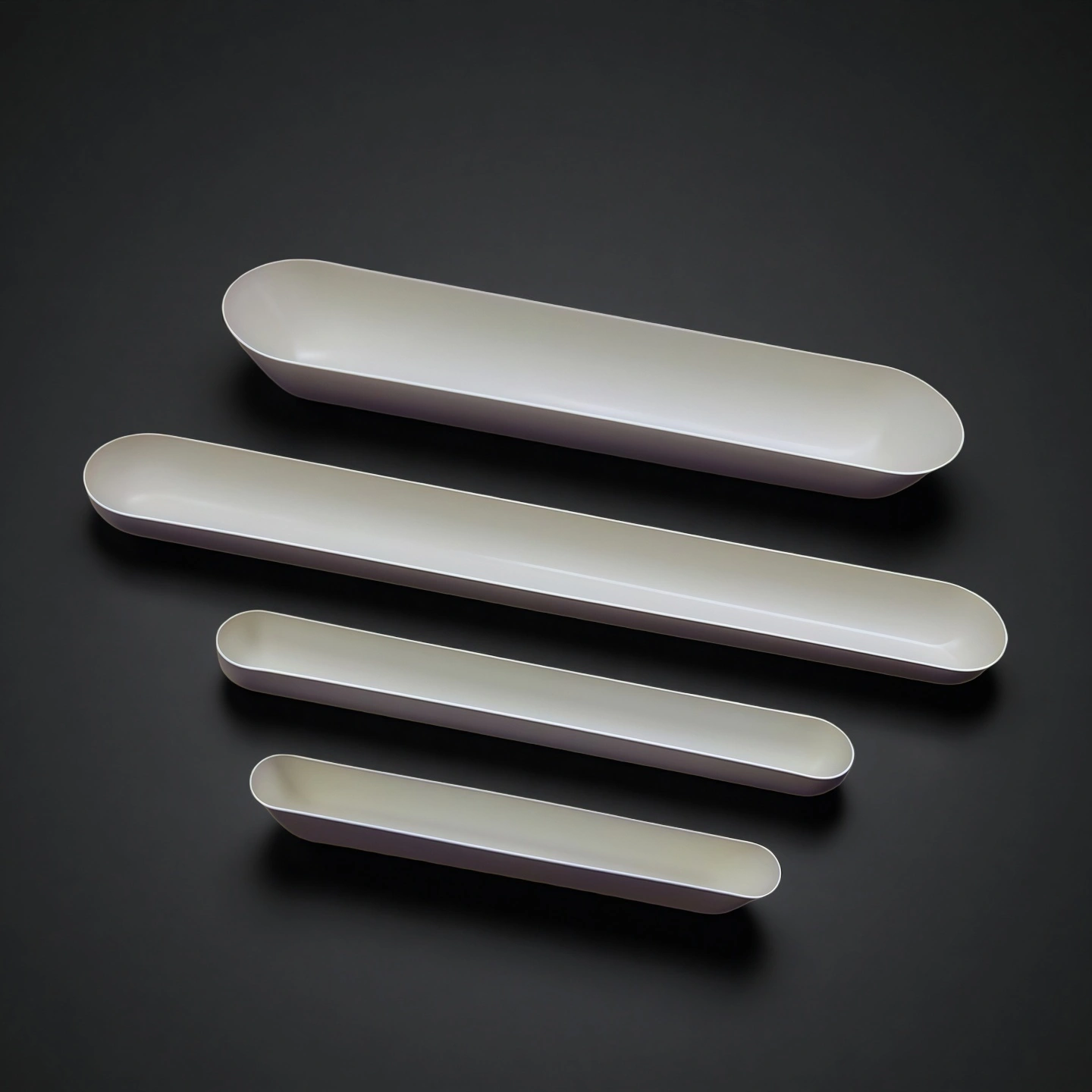
5. PBN Boat

The horizontal directional solidification method uses a multi-zone furnace to create a thermal gradient and control crystal growth; PBN boats are the carriers for the melt in this process.
Key features: It can be made in large formats (maximum diameter about 17 inches). The density can reach about 2.20 g/cm³. The purity is ≥99.99%. It is non-wetting and shows excellent high-temperature performance (up to about 2300 °C in inert atmospheres). It has good oxidation resistance and stable geometry.
Typical application: It is used for horizontal directional solidification of III–V compound crystals.

Pyrolytic Boron Nitride Crucible Specifications

Type 1: VGF Crucible
VGF crucibles

VGF Crucible
Item NO. Inner Diameter(inch) Height(inch) Thickness(inch) Purity
AAT-PBN-VGF1001 2" 10 " 0.035" 99.99%
AAT-PBN-VGF1002 3" 10 " 0.035" 99.99%
AAT-PBN-VGF1003 4" 8 " 0.035" 99.99%
AAT-PBN-VGF1004 5 " 8 " 0.04" 99.99%
AAT-PBN-VGF1005 6 " 7 " 0.04" 99.99%
AAT-PBN-VGF1006 8 " 20 "   99.99%


Type 2: MBE Crucible

MBE Crucible

MBE Crucible
Item NO. Inner Diameter(mm) Lip Diameter(mm) Height(mm) Purity
AAT-PBN-MBE1001 19 50 59.2 99.99%
AAT-PBN-MBE1002 34 51 59.9 99.99%
AAT-PBN-MBE1003 32.5 51 110.3 99.99%
AAT-PBN-MBE1004 44 59.9 115 99.99%
AAT-PBN-MBE1005 35 59.9 167 99.99%
AAT-PBN-MBE1006 13 27 77 99.99%
AAT-PBN-MBE1007 19.7 32 88.9 99.99%
AAT-PBN-MBE1008 23.6 36.8 88.9 99.99%
AAT-PBN-MBE1009 23.6 36.83 30 99.99%
AAT-PBN-MBE1010 18.5 36.3 83 99.99%
AAT-PBN-MBE1011 20.8 36.3 83 99.99%
AAT-PBN-MBE1012 20.8 36.3 141 99.99%
AAT-PBN-MBE1013 38.1 54.2 108 99.99%
AAT-PBN-MBE1014 37.1 54.1 108 99.99%
AAT-PBN-MBE1015 10.5 17.2 26 99.99%
AAT-PBN-MBE1016 16.7 28.7 77 99.99%
AAT-PBN-MBE1017 38.1 53.3 89 99.99%


Type 3: OLED Crucible

OLED crucible

OLED Crucible
Item NO. Inner Diameter(mm) Lip Diameter (mm) Height(mm) Purity
AAT-PBN-OLED1001 55 70 160 99.99%
AAT-PBN-OLED1002 55 82 190 99.99%
AAT-PBN-OLED1003 62 84 186 99.99%
AAT-PBN-OLED1004 61 85 240 99.99%
AAT-PBN-OLED1005 78 115 240 99.99%


Type 4: LEC Crucible

LEC crucible

LEC Crucible
Item NO. Inner Diameter(inch) Height(inch) Thickness(inch) Purity
AAT-PBN-LEC1001 3" 3" 0.03" 99.99%
AAT-PBN-LEC1002 4" 4" 0.035" 99.99%
AAT-PBN-LEC1003 5 " 5 " 0.035" 99.99%
AAT-PBN-LEC1004 6 " 6 " 0.04" 99.99%
AAT-PBN-LEC1005 7 " 7 " 0.04" 99.99%
AAT-PBN-LEC1006 8 " 8 " 0.04" 99.99%
AAT-PBN-LEC1007 14 " 14 " 0.08" 99.99%


Type 5: PBN Boat

PBN Boat

PBN Boat
Item NO. Length(inch) Height(inch) Thickness(inch) Purity
AAT-PBN-ZH1001 2"~15" 0.5"~1" 0.035"~0.08" 99.99%
AAT-PBN-ZH1002 6"~20" 1" 0.035"~0.08" 99.99%
AAT-PBN-ZH1003 6"~20" 1.5" 0.035"~0.08" 99.99%
AAT-PBN-ZH1004 6"~20" 2" 0.035"~0.08" 99.99%


Pyrolytic Boron Nitride (PBN) Crucible Packaging

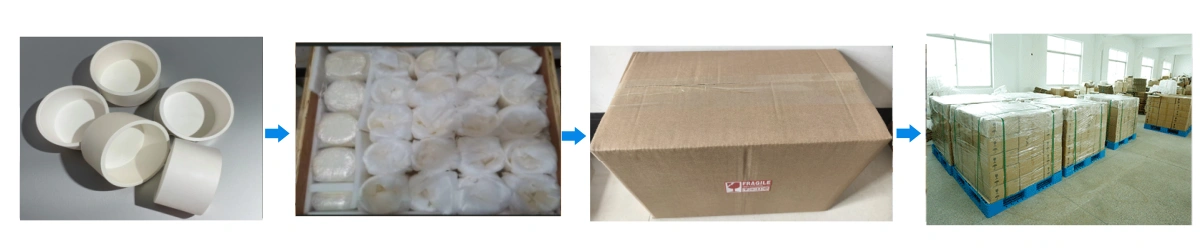
  • Each BN liner is individually wrapped in soft foam or EPE padding to protect edges
  • Placed in firm cardboard or plywood box with fixed positioning to prevent movement

Boron Nitride Crucible Liner Packaging

Pyrolytic Boron Nitride Crucible Applications

  • OLED/Vacuum Thermal Evaporation

    ✅Key Advantages

    1. Flux Uniformity — conical or insert-assisted geometry supports consistent film thickness across substrates.
    2. Clean Evaporation — low outgassing interior helps maintain chamber baseline and reduce particle risk.
    3. Non-Wetting Behavior — improves changeover hygiene and material utilization.

    ✅ Problem Solved

    A display coater reduced rework events after switching to non-wetting PBN interiors and matched lip geometry; line reported more stable evaporation rate during long runs and smoother cleanouts between materials, improving planned uptime across a quarter.

  • MBE Platforms(Universities /Institutes /Pilot)

    ✅Key Advantages

    1. Stable Beam Flux — consistent cone and wall profile aids source repeatability during long growth cycles.
    2. Dimensional Repeatability — ID/OD and lip tolerances allow comparable runs across parallel sources.
    3. UHV Compatibility — low outgassing surface supports background cleanliness for sensitive stacks.

    ✅ Problem Solved

    A research platform standardized 20–120 cc crucibles with common lips and heights; cross-tool substitution improved scheduling, and flux stabilization trimmed trial iterations during recipe transfer.

  • Optical Coatings

    ✅Key Advantages

    1. Material Release — non-wetting interior aids stable wetting angles during metal/oxide melts.
    2. Thermal Management — anisotropic PBN helps guide heat for steady evaporation.
    3. Geometry Options — cylindrical for steady draw, conical for directional shaping.

    ✅ Problem Solved

    A coating shop reduced post-run clean time and maintained targeted deposition rates over longer batches after adopting cylindrical PBN crucibles with tuned wall thickness for their source.

Pyrolytic Boron Nitride Crucible Usage Instructions

Proper installation and handling of a PBN crucible directly affect material utilization, flux stability, and service life. The following guidelines are designed for users in MBE, PVD, OLED evaporation and high-temperature vacuum systems.

  • Installation & Pre-Use Preparation

    1. Check compatibility with the effusion cell/evaporation source (shoulder diameter, lip height, mounting groove).
    2. Inspect visually for edge chips, pore contamination, or cracks under light—especially at the lip and inner surface.
    3. Clean handling only: use powder-free gloves and avoid touching the inner surface with bare hands.
    4. Dry-fit alignment before heating to confirm clearance for thermocouples, shutter and crucible holder.
    5. Initial bake-out recommended: gradually heat to remove adsorbed moisture (e.g., 150–200 °C for 1–2 hours in vacuum or inert gas).

  • Operating During Evaporation/ MBE/ Deposition

    1. Material loading
    a. Fill factor should be 50–80% of crucible volume to avoid overflow or thermal shock.
    b. Use non-metal tweezers or ceramic tools when placing material.

    2. Heating process
    a. Ramp temperature slowly (≤ 10 °C/min) for first use to prevent thermal stress.
    b. Stabilize at the target evaporation temperature before opening the shutter.
    c. Monitor crucible wall temperature vs. source material vapour pressure.

    3. Evaporation control
    a. For MBE: maintain stable flux rate (via beam flux monitor, quartz crystal, or ion gauge).
    b. For organics (OLED): avoid overheating above the decomposition point to reduce carbon buildup.
    c. For metals: ensure non-wetting behaviour remains; if material starts to stick, stop heating and inspect.

  • Cooling & Post-Operation Handling

    1. Allow the crucible to cool naturally to < 200 °C before any movement.
    2. Do not quench or expose to airflow while hot—this can induce cracks.
    3. Record material residue height, weight of crucible, or deposition rate for process tracking.
    4. If switching materials, gently remove remaining material—avoid scraping the inner PBN layer.

  • Cleaning & Maintenance

    1. Recommended methods

    a. Dry removal only: remove remaining chunks using soft plastic or PBN tools.
    b. No chemical immersion: PBN can absorb some liquids and crack upon reheating.
    c. No abrasive blasting or sharp scrapers: this damages the CVD layer and leads to future crack initiation.

    2. If contamination occurs

    a. Light organic residue → low-temperature oxygen plasma or slow oxidation (<500 °C) if the chamber allows.
    b. Metal adhesion → mechanical removal only; replace crucible if inner surface becomes rough or wettable.

  • Storage & Protection

    1. Store each crucible in an individual clean pouch or foam cavity to prevent lip contact.
    2. Use labeling or a QR code for material type and number of cycles.
    3. Avoid humid or dusty environments; if moisture is absorbed, perform a low-temperature bake-out before reuse.
    4. Do not stack crucibles directly; keep upright to avoid edge fractures.

Pyrolytic Boron Nitride Crucible Properties FAQ

  1. Q: What makes a PBN crucible different from regular BN or alumina crucibles in vacuum evaporation?
    A: PBN crucibles are produced by chemical vapor deposition (CVD), not powder sintering, which results in a fully dense, pore-free structure with ≥99.99% purity. Unlike alumina or hot-pressed BN, they exhibit lower outgassing, non-wetting behavior to molten metals and organics, and maintain stability in UHV and effusion cell environments.
  2. Q: Can a PBN crucible be used for both metal evaporation and organic OLED materials?
    A: Yes. PBN crucibles are chemically inert and non-wetting to most metals (Al, Au, Ag, In, Mg) and organic molecules used in OLED evaporation. Users must, however, control temperature to avoid thermal decomposition of organics and prevent carbonization on the crucible surface.
  3. Q: How long does a PBN crucible typically last in MBE or evaporation systems?
    A: Service life depends on thermal cycling, source material, and cleaning method. In well-controlled MBE systems, a PBN crucible can last 100–300 heating cycles. Lifetime is shortened if exposed to thermal shock, aggressive scraping, or metal infiltration due to overheating.
  4. Q: Why does flux drift occur even when using a high-purity PBN crucible?
    A: Flux drift usually results from uneven material loading, oxide formation on melt surfaces, misaligned thermocouples, or poor crucible/material wetting. If PBN's non-wetting property is lost (e.g., due to surface contamination), material may climb the wall and alter emission angles.
  5. Q: Can PBN crucibles be reused after evaporation? How should they be cleaned?
    A: Yes, they are reusable. Cleaning must be dry only—using plastic or PBN tools to remove residual material. No chemical soaking, ultrasonic cleaning, or sandblasting. Organic residues can be treated with low-temperature oxygen cleaning (<500 °C), while metal residues must be mechanically removed or the crucible replaced if inner surface roughness increases.
  6. Q: Is PBN electrically insulating at high temperatures inside an effusion cell?
    A: Yes. PBN maintains high electrical resistivity (~10¹³–10¹⁶ Ω·cm) from room temperature up to ~1500 °C, making it suitable for heater-coil isolation and preventing current leakage within effusion cell assemblies. In contrast, graphite liners become conductive and react at high temperature.

Pyrolytic Boron Nitride Crucible Reviews

  • ⭐️⭐️⭐️⭐️⭐️
    The PBN crucible with a conical interior stabilized our OLED evaporation rate and simplified cleanouts between materials.
    Hannah Lee — Process Engineer, Vistalux Displays
  • ⭐️⭐️⭐️⭐️⭐️
    We standardized on MBE PBN crucibles across two tools; dimensional repeatability improved recipe transfer.
    Martin K. — Lab Manager, Northbridge Materials Institute
  • ⭐️⭐️⭐️⭐️⭐️
    ADCERAX supported a shaped PBN crucible with an insert. Even at a higher unit cost, reduced rework and fewer pan changes offset spend.
    Diego Romero — Sourcing Lead, OptiCoat Systems
  • ⭐️⭐️⭐️⭐️⭐️
    We started using a pyrolytic boron nitride (PBN) crucible in our MBE system. Flux became more stable and the cleaning time dropped, especially with gallium and indium sources.
    Alina Novak — Production Supervisor, Luminate Coatings
customize size

Customize Pyrolytic Boron Nitride Crucible

We manufacture PBN crucibles based on customer drawings or matched to specific effusion cell models. Below are the parameters that can be specified in detail:

① Dimensions & Shape

  • Inner/outer diameter, height, depth — ±0.05–0.1 mm tolerance achievable depending on geometry
  • Supported volumes from 5 cc up to 150 cc or according to drawing
  • Conical, cylindrical, flat-bottom, stepped-wall or hybrid structures

② Edge/Lip/Mouth Geometry

  • Open top/fully closed end
  • Straight lip, chamfered lip, sloped inlet, recessed sealing edge
  • Spill-control features and anti-drip groove options for organic or metal evaporation

③ Interior Structure & Features

  • Smooth conical or cylindrical inner walls
  • Elliptical inner chamber or multi-cavity designs
  • Beam-shaping inserts、center pocket、material guide slot for flux shaping
  • Step-type bottom for matching heating coils or thermocouple access

④ Wall & Base Thickness Control

  • Uniform thickness for general evaporation
  • Thickened base for high-temperature stability and lower heat loss
  • Reduced wall thickness for fast-response or low thermal mass designs

⑤ Surface Condition

  • As-deposited (standard)
  • Fine-finished interior for organic evaporation or metal wetting tests
  • Polished sealing surfaces for tight assembly with effusion cell heater blocks

⑥ Fitting & Mounting Compatibility

  • Shoulder diameter customized to Veeco, Riber, MBE Komp, or Aixtron source models
  • Locating groove/ flange rings/ fixing holes for direct installation
  • Optional lid, cover, or matched crucible holder upon request

⑦ Optional Functional Enhancements

  • Integrated PBN lid or cover plate
  • Multi-zone crucible design for dual or triple material evaporation
  • Pre-assembled with PBN heater, graphite susceptor, or tantalum shield
  • Serial marking/laser engraving for position tracking and chamber records

Related Products

ADCERAX - Your Trusted Advanced Ceramics Manufacturing Partner

Direct factory manufacturing with comprehensive ceramic materials expertise and global supply capabilities

Direct Factory Manufacturing

China-based ceramic materials production facility with state-of-the-art equipment

Engineering Team

Experienced professionals in advanced ceramics applications and custom design

Quality Control

Strict quality control standards for technical ceramics manufacturing and quality management

Global Supply Chain

Serving customers worldwide with technical ceramics and rapid response

24/7 Technical Support

Round-the-clock support for ceramic components inquiries and technical assistance

500+ Satisfied Customers

Trusted by global customers for advanced ceramic materials and precision components

Get in touch with us

Our team will be happy to respond to you in less than 24 hours.

Adcerax's factory

Quick Quotation

*Our team will answer your inquiries within 24 hours.

*Your information will be kept strictly confidential.

Ready to Solve Your Engineering Challenge?

Partner with ADCERAX for reliable, high-performance advanced ceramic solutions. Our engineers are ready to discuss your project.

E-mail

info@adcerax.com

Phone

+(86) 0731-74427743 | WhatsApp: +(86) 19311583352

Response Time

Within 24 hours

Quick Quote

The more details you provide, the faster we can quote.

*We respond within 24 hours. All inquiries are confidential.

Download Catalog

Get Your Custom Sulution

The more details you provide, the faster we can respond.

customize size

*We respond within 24 hours. All inquiries are confidential.

Download Catalog