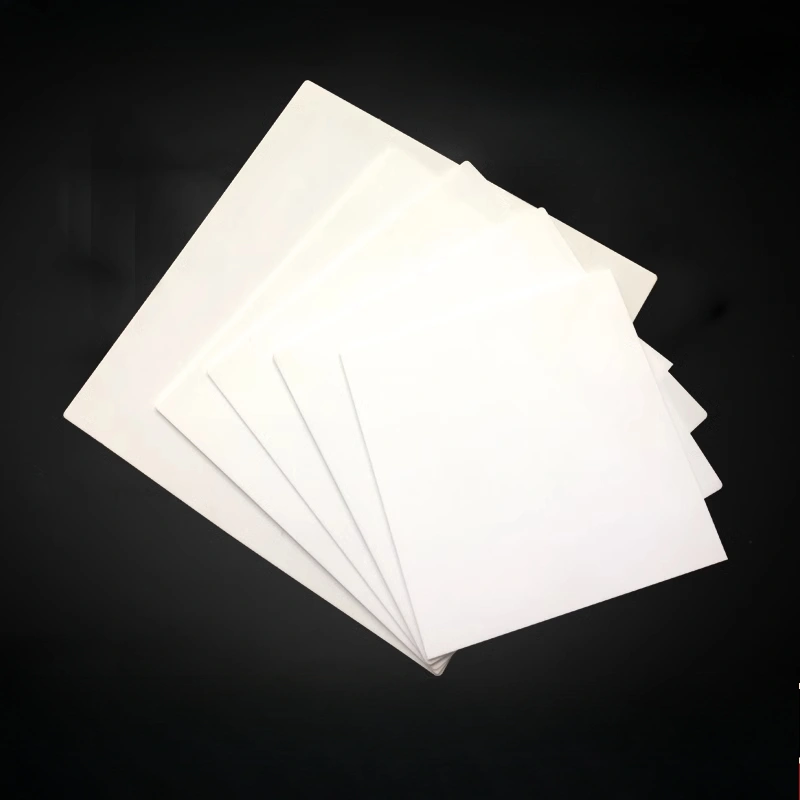
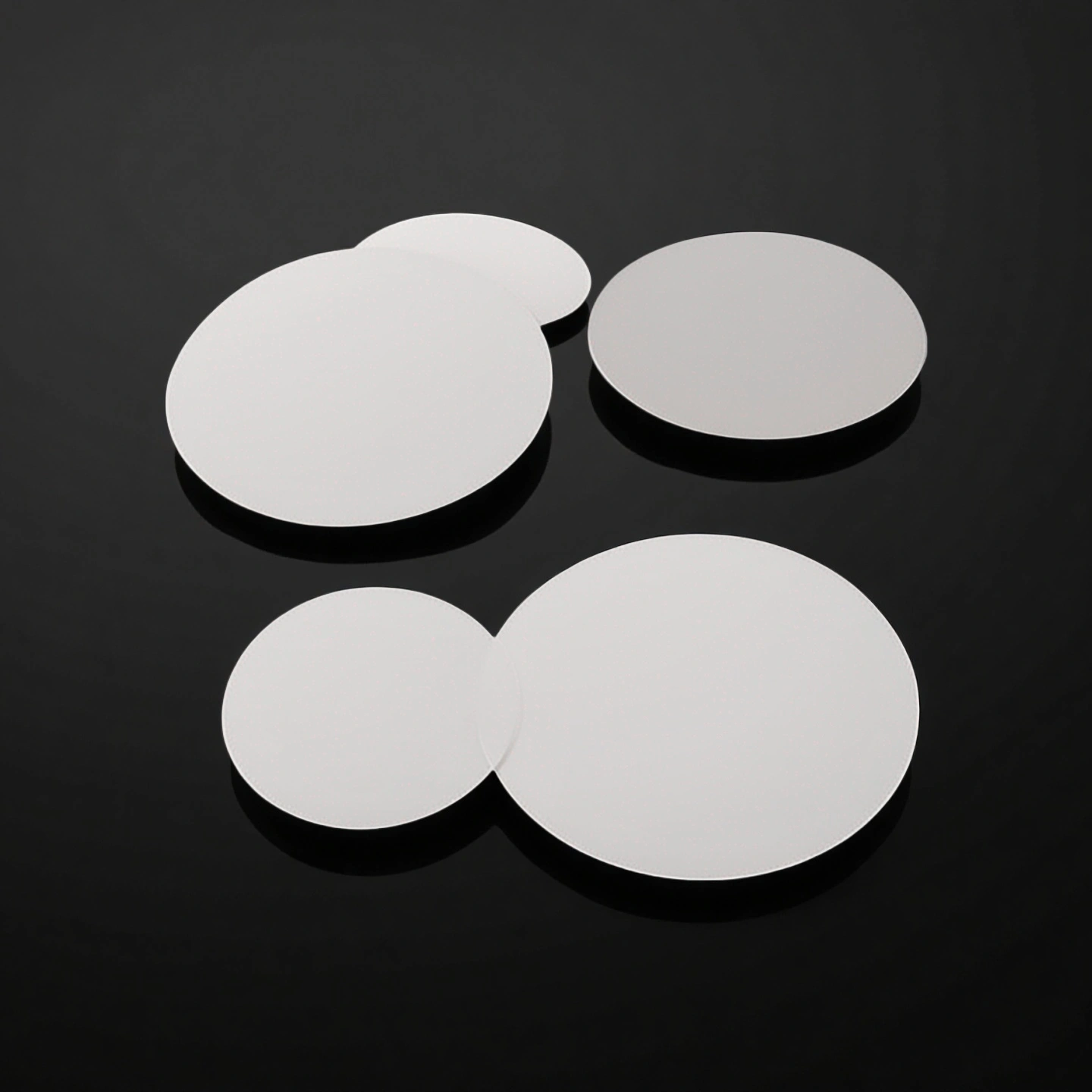
What Is a PBN Sheet?
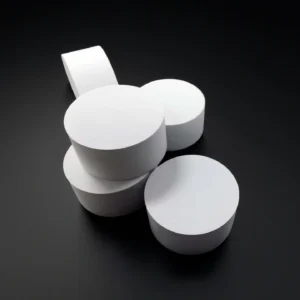
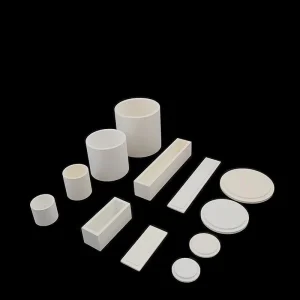
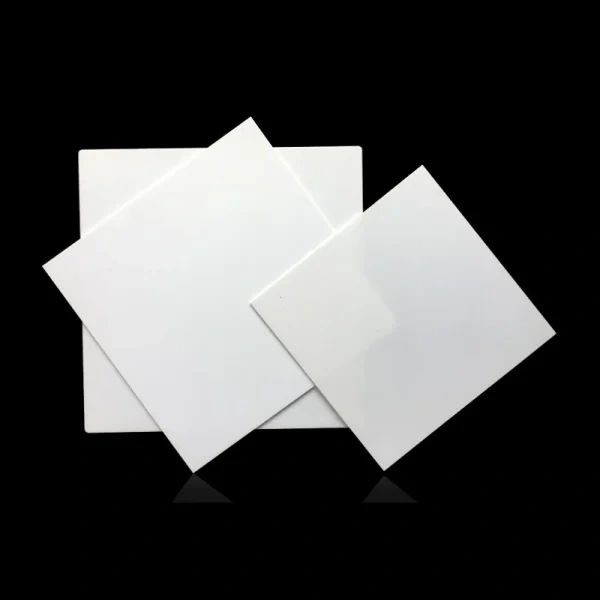
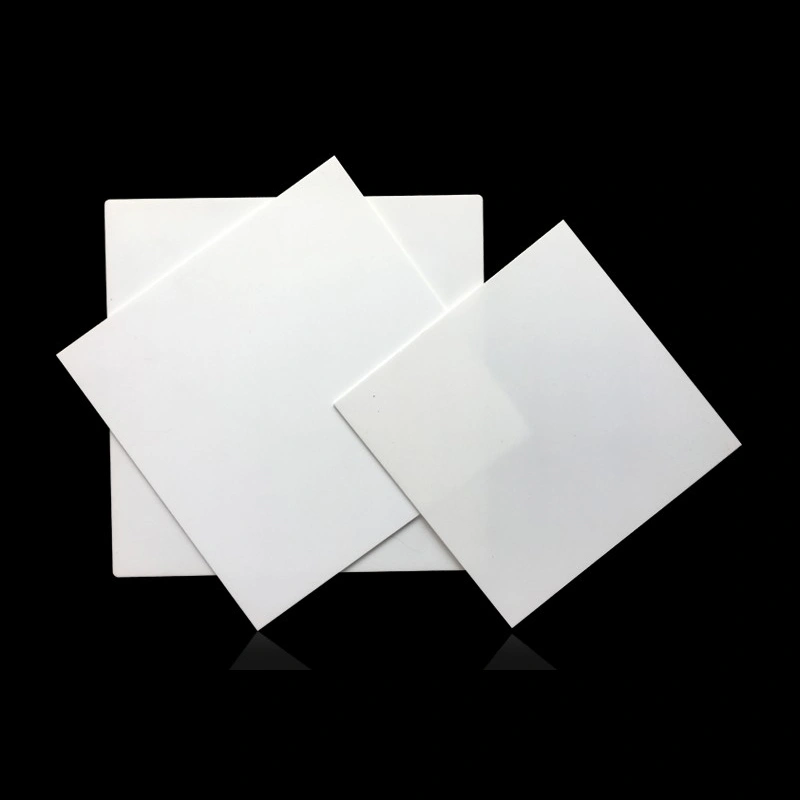
A PBN sheet is a pyrolytic boron nitride plate produced by chemical vapor deposition rather than powder pressing. This process forms a dense, binder-free and layered boron nitride structure. Compared with common hot-pressed BN plates, PBN sheets are selected when the application requires cleaner vacuum behavior, lower particle risk, controlled thermal direction and stable electrical insulation near high-temperature zones.
Pyrolytic Boron Nitride Sheet Benefits
-
Anisotropic Thermal Management
In-plane thermal conductivity is significantly higher than through-thickness, enabling efficient lateral heat spreading while keeping the backside thermally insulated. -
High Purity and Low Outgassing
CVD-deposited pyrolytic boron nitride contains no binders or glassy phases, which helps maintain low contamination and stable vacuum levels in high-vacuum and UHV equipment. -
High-Temperature Stability in Vacuum
PBN plates maintain mechanical integrity and electrical insulation at temperatures up to around 2000 °C in vacuum or inert gas, which is suitable for many high-temperature heater assemblies and shields. -
Electrical Insulation with Good Dielectric Properties
Pyrolytic boron nitride combines high volume resistivity with low dielectric loss, allowing PBN plates to function as electrical insulators close to hot zones and power elements. -
Predictable Machining and Surface Quality
PBN plates can be machined to tight dimensional tolerances and controlled surface roughness, allowing close fit to graphite, metal or ceramic assemblies in heater modules and fixtures.
Pyrolytic Boron Nitride Sheet Properties
| Property | Unit | PBN Reference Material | Hot-Pressed BN Plate Material |
| Purity | 99.99% | 99.50% | |
| Density | g/cm³ | 2.15-2.19 | 1.96-2 |
| Hardness | HV0.5 | 651 | 62 |
| Volume resistivity | Ohm*cm | 2*1014 | 1.2*1014 |
| Dielectric strength | kV/mm | 55 | 76 |
| Maximum working temperature | ℃ | 1000 (air), 2300 (vacuum) | 900 (air), 1850 (vacuum) |
| Bending strength | MPa | 173 (A direction) | 310 |
| Thermal conductivity | W/m*K | 60 (A direction) | 55 |
| Tensile strength | MPa | 112 (A direction) | 110 |
| Thermal expansion coefficient | /℃ | 6*10-7 | 1.8*10-6 |
| Compressive strength | MPa | 154 (A direction) | 120 |
Pyrolytic Boron Nitride Sheet Function
- Electrical Insulation — Maintains dielectric strength ≥ 10 kV/mm under vacuum or inert gas, ensuring stable isolation of heating elements and conductive components.
- Thermal Barrier — Low thermal expansion (2–4 × 10⁻⁶ /K) and high temperature tolerance (≈ 1000 °C) reduce stress and deformation during repeated heating cycles.
- Non-Wetting Separation Layer — Chemically inert to molten aluminum, magnesium, and zinc alloys, preventing adhesion, metal buildup, and contamination of furnace parts.
PBN Sheet Specifications
| PBN Sheet | ||
| Item No. | Diameter(mm) | Height (mm) |
| AT-PBN-BC001 | Customize | |
Why Choose PBN Sheet Instead of Hot-Pressed BN?
PBN Sheet vs Hot-Pressed BN Sheet
| Selection Factor | PBN Sheet | Hot-Pressed BN Sheet |
|---|---|---|
| Manufacturing | CVD-grown structure | Powder pressed and sintered |
| Cleanliness | Better for clean vacuum systems | Suitable for general high-temperature use |
| Thickness Range | Often used in thinner sheets | Easier for thicker blocks and larger parts |
| Thermal Behavior | Strong anisotropy | More general BN behavior |
| Cost | Usually higher | Usually more economical |
| Best Fit | Vacuum, evaporation, clean fixtures | Furnace insulation, non-wetting supports, machinable parts |
PBN Sheet Selection Factors
| Selection Factor | PBN Sheet Advantage | Engineering Note |
|---|---|---|
| Vacuum cleanliness | Binder-free CVD structure helps reduce outgassing risk. | Suitable for clean thermal chambers and evaporation systems. |
| Thermal direction control | In-plane heat spreading is stronger than through-thickness transfer. | Orientation should be confirmed during design. |
| Thin plate stability | Dense layered structure supports thin sheet use. | Mounting stress must still be controlled. |
| Electrical insulation | PBN remains electrically insulating in many high-temperature layouts. | Voltage gap and working temperature should be reviewed together. |
| Cost suitability | HPBN may be enough for less clean or less demanding fixtures. | PBN should not be over-specified when HPBN is sufficient. |
Pyrolytic Boron Nitride Sheet Packaging
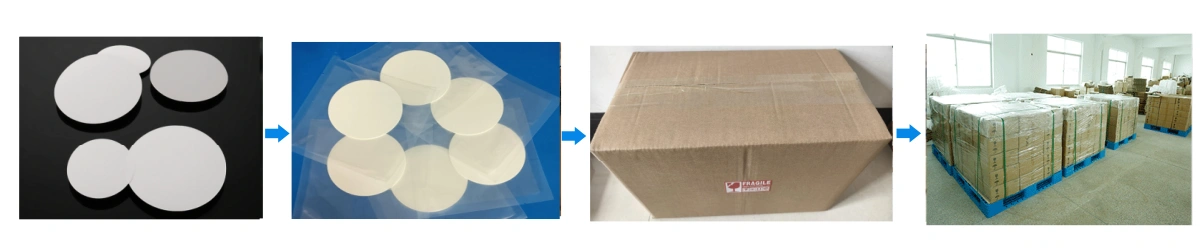
PBN sheets are packed with individual separation, surface protection and reinforced outer packaging according to size, thickness and quantity. Thin plates, sharp corners, polished surfaces and machined holes require extra protection to reduce edge chipping, surface scratches and vibration damage during international shipment.