Custom Boron Nitride Tubes for High-Temperature Insulation and Vacuum Assemblies

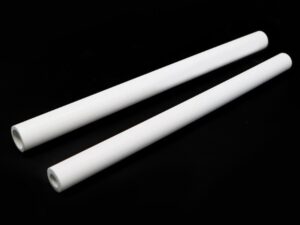
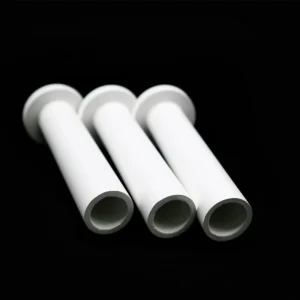
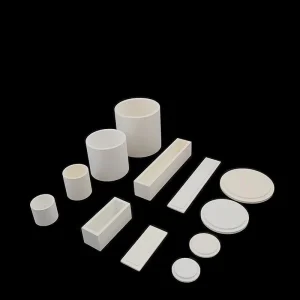
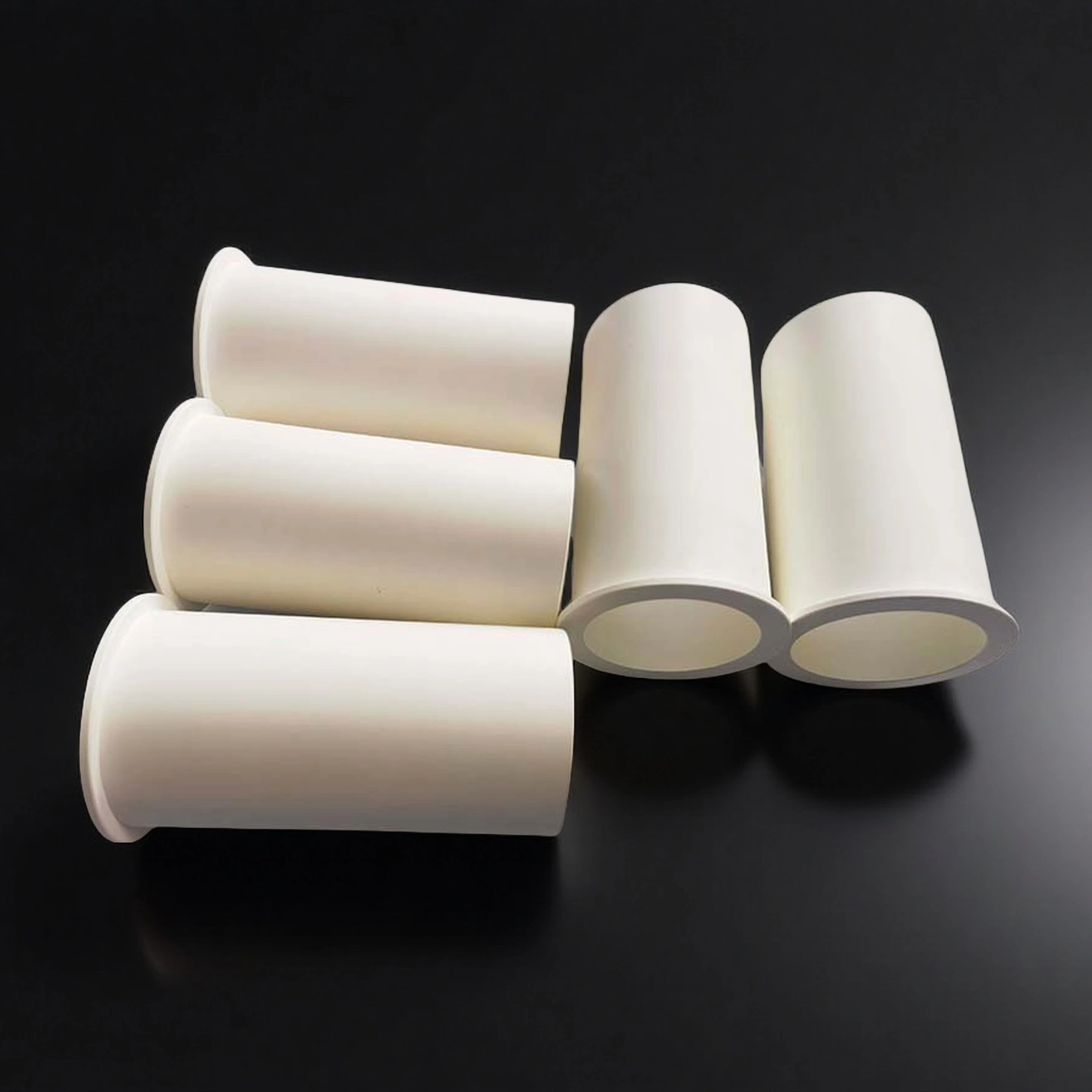
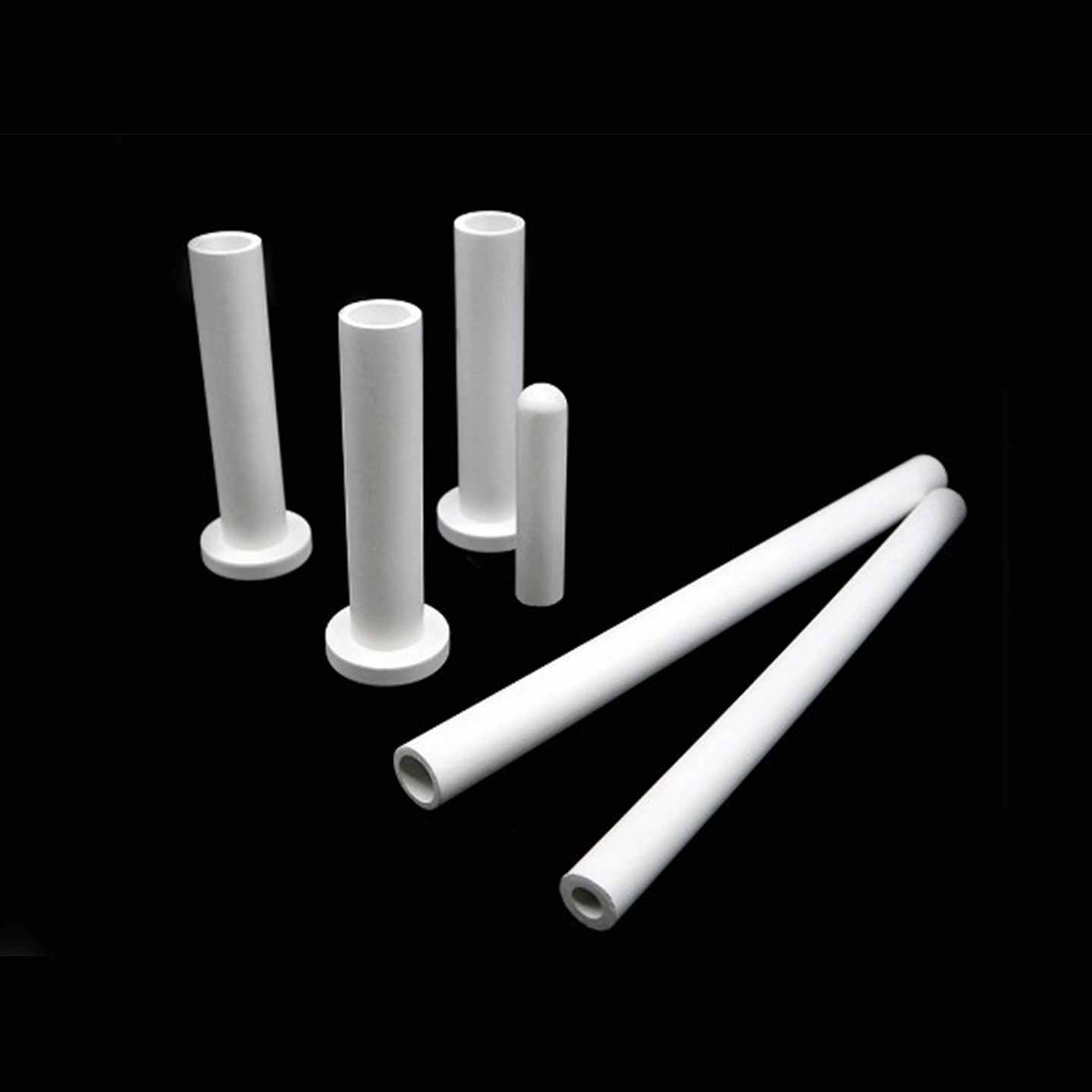
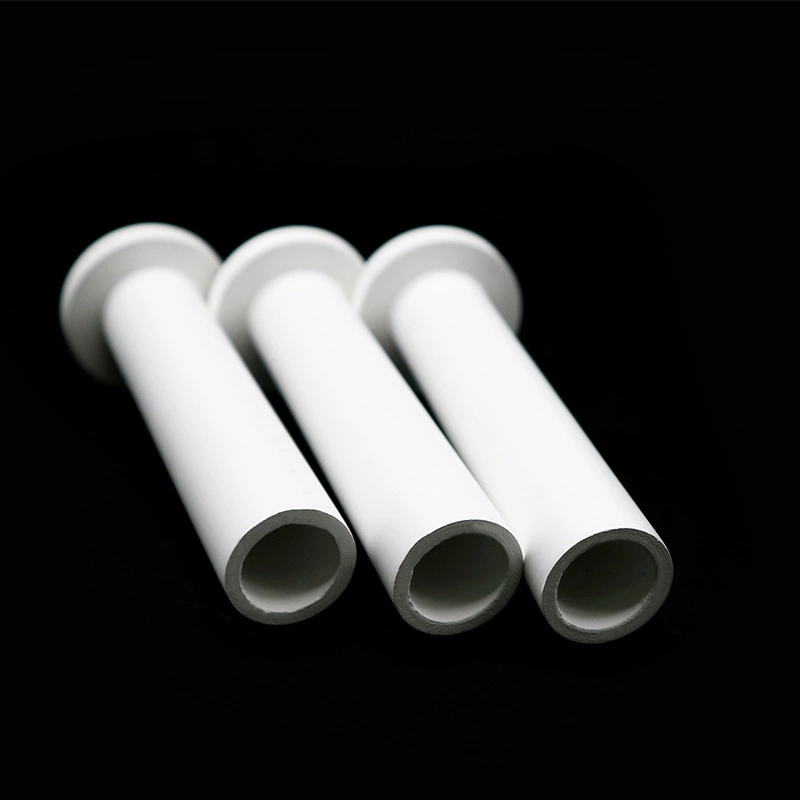
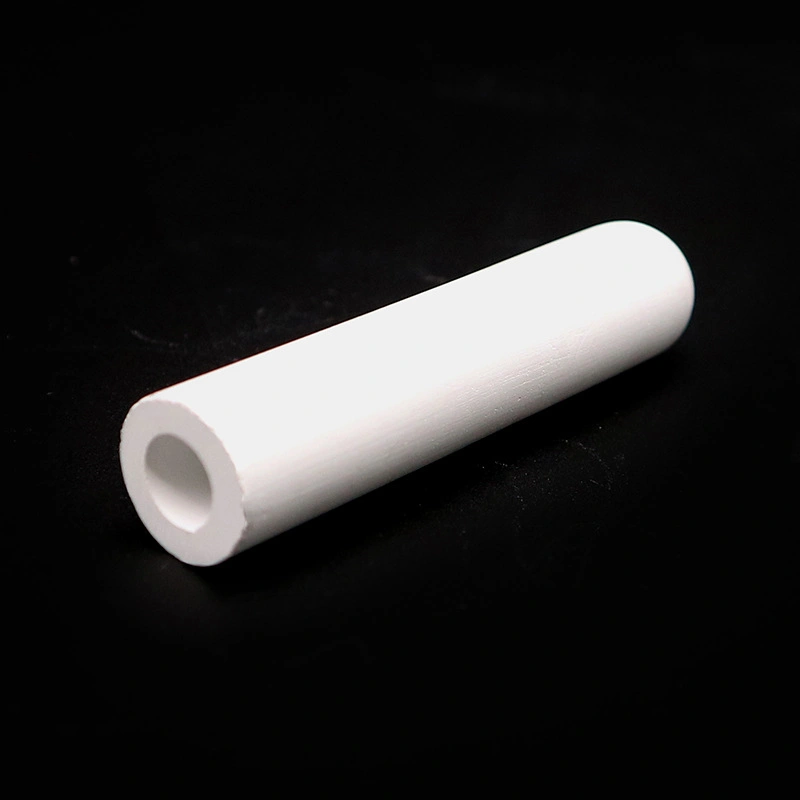
Boron nitride tube is a machinable ceramic sleeve used for high-temperature insulation, vacuum furnace assemblies, molten metal contact and precision thermal fixtures. ADCERAX supplies standard and custom hot-pressed BN tubes with drawing-based ID, OD, length, wall thickness, end shape and bore design. PBN options can be reviewed for higher-purity vacuum applications.

Catalogue No. AT-BN-G5001
Material Boron Nitride
Maximum Working Temperature 1800°C in an inert atmosphere
Thermal Expansion Coefficient ≤2.7 × 10⁻⁶ /K
Dimensions/Sizes Standard and custom sizes available for drawing-based review
Engineering RFQ Review
Small-Batch Custom Support
Factory-Direct Manufacturing
Drawing & Process Review

What Is a Boron Nitride Tube?

A boron nitride tube is a machinable advanced ceramic tube used when an assembly needs electrical insulation, thermal stability, low thermal expansion and non-wetting contact surfaces at elevated temperatures. Hot-pressed BN tubes are commonly used as furnace sleeves, thermocouple protection parts, heater insulators, vacuum fixtures, molten metal contact guides and custom ceramic spacers.

Unlike alumina or quartz, boron nitride is easier to machine into complex geometry and offers a low-sticking surface for many molten metals and process residues. Unlike graphite, BN remains electrically insulating, making it useful near electrodes, heaters and powered assemblies.

Why Choose a Boron Nitride Tube?

Boron nitride tubes are selected when a ceramic tube must combine electrical insulation, thermal stability, machinability and non-wetting behavior in high-temperature equipment. They are especially useful in hot zones where metal, graphite, alumina or quartz tubes may create insulation, sticking, machining or contamination concerns.

Electrical Insulation Near Hot Zones

BN tubes help isolate heaters, electrodes, thermocouples and sensor assemblies while maintaining stable geometry under thermal exposure. This makes them suitable for furnace sleeves, heater supports and powered components that require ceramic insulation.

Non-Wetting Contact With Molten Metal

Boron nitride has low wetting behavior with many non-ferrous metals and process residues. In selected aluminum, magnesium, copper alloy or glass-related contact points, a BN tube can help reduce sticking, residue buildup and difficult cleaning.

Machined Geometry for Custom Assemblies

Hot-pressed BN is easier to machine than many dense technical ceramics. It can be processed into stepped tubes, shoulders, grooves, multi-bore holes, chamfers and controlled wall thickness for drawing-based assemblies.

Low Thermal Expansion for Better Fit-Up

BN has low thermal expansion, which helps reduce fit-up stress when the tube is installed with metal holders, ceramic mating parts or high-temperature fixture components. This is helpful when the assembly experiences repeated heating and cooling cycles.

Vacuum and Inert Atmosphere Compatibility

BN tubes are suitable for many vacuum, inert-gas and controlled-atmosphere furnace assemblies when the temperature, exposure time and process chemistry are reviewed. For higher-purity vacuum use, PBN options can be evaluated separately based on the application.

Typical Boron Nitride Tube Properties for Engineering Review

The values below are reference data only. Final performance depends on BN grade, tube design and operating atmosphere. ADCERAX reviews each application before grade selection.

Property Unit PBN Reference Material Hot-Pressed BN Plate Material
Purity 99.99% 99.50%
Density g/cm³ 2.15-2.19 1.96-2
Hardness HV0.5 651 62
Volume resistivity Ohm*cm 2*1014 1.2*1014
Dielectric strength kV/mm 55 76
Maximum working temperature 1000 (air), 2300 (vacuum) 900 (air), 1850 (vacuum)
Bending strength MPa 173 (A direction) 310
Thermal conductivity W/m*K 60 (A direction) 55
Tensile strength MPa 112 (A direction) 110
Thermal expansion coefficient /℃ 6*10-7 1.8*10-6
Compressive strength MPa 154 (A direction) 120


Boron Nitride Tube Standard Size

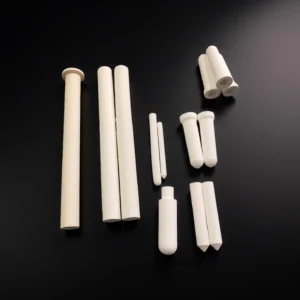
ADCERAX supplies open-end, closed-end, stepped, multi-bore and custom boron nitride tubes. Final availability, tolerance and lead time depend on tube size, bore design, BN grade and quantity.

Type 1: Closed-End Boron Nitride Tubes
bn ceramic one end closed tube

BN Ceramic One End Closed Tube
Item No. Outer Diameter(mm) Inner Diameter(mm) Length(mm)
AT-BN-G1001 10 8.4 35
AT-BN-G1002 10 6 ≤200
AT-BN-G1003 15 10
AT-BN-G1004 20 14
AT-BN-G1005 25 18
AT-BN-G1006 30 20


Type 2: Open-End Boron Nitride Tubes

Boron Nitride Tube with Both End Open

Boron Nitride Tube with Both End Open
Item No. Outer Diameter(mm) Inner Diameter(mm) Length(mm)
AT-BN-G2001 6.5 1.7 50
AT-BN-G2002 8 5 50
AT-BN-G2003 4 2.3 7
AT-BN-G2004 4 2.3 8
AT-BN-G2005 5 3 10
AT-BN-G2006 8 5 100
AT-BN-G2007 8 6 100
AT-BN-G2008 10 5 80
AT-BN-G2009 10 5 100
AT-BN-G2010 12 8 100
AT-BN-G2011 15 10 100
AT-BN-G2012 15 10 150
AT-BN-G2013 20 10 100
AT-BN-G2014 20 10 150
AT-BN-G2015 20 10 200
AT-BN-G2016 20 15 100
AT-BN-G2017 20 15 200
AT-BN-G2018 40 32 30


Type 3: Multi-Bore Boron Nitride Tubes
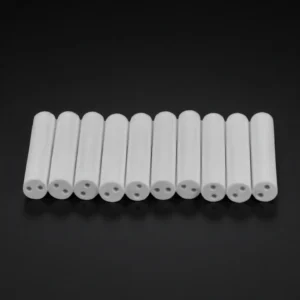
Boron Nitride Tube with Two Bores

Boron Nitride Tube with Two Bores
Item No. Outer Diameter(mm) Inner Diameter(mm) Length(mm)
AT-BN-G3001 3 0.7 25
AT-BN-G3002 4 0.7 20
AT-BN-G3003 4 1 20
AT-BN-G3004 5 1 25
AT-BN-G3005 6 1.5 30


Type 4: Stepped Boron Nitride Tubes

Boron Nitride Step Tube

Boron Nitride Step Tube
Item No. Outer Diameter(mm) Inner Diameter(mm) Length(mm)
AT-BN-G5001 Customize ≤300

BN Tube Material Selection

Material Option Best Fit Notes
Hot-Pressed BN Tube General high-temperature insulation, furnace sleeves, molten metal contact and custom machined ceramic parts. This should be the main material direction for the page.
h-BN Tube Lightweight insulation and low-friction ceramic contact parts. Suitable when machinability and non-wetting behavior are more important than high mechanical load.
PBN Tube High-purity vacuum, evaporation or selected thin-film process components. Use only when purity, outgassing and process cleanliness are confirmed by the application.
BN Composite Tube Application-specific thermal, mechanical or erosion requirements. Should be reviewed case by case.

Packaging and Inspection for BN Ceramic Tubes

  • Boron nitride tubes may chip at thin walls, sharp edges or unsupported ends. ADCERAX uses separated, cushioned and reinforced packaging, and checks key dimensions, bore condition, edges and protection before shipment.
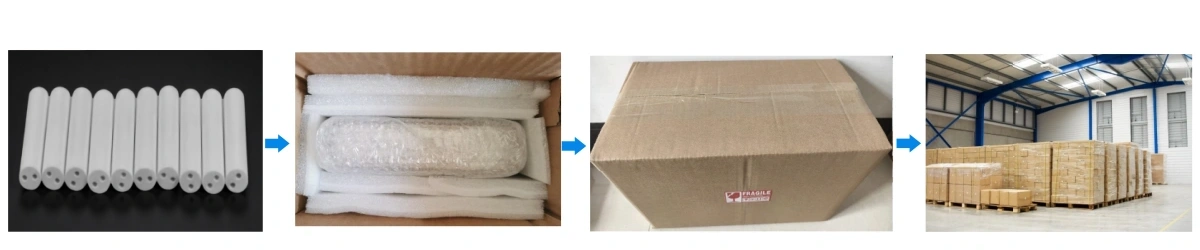

Boron Nitride Ceramic Tube Packaging

Boron Nitride Tube Applications

  • Vacuum Furnace and Heat-Treatment Assemblies

    Boron nitride tubes are used as insulating sleeves, spacer tubes and thermal fixture parts in vacuum furnaces, inert-atmosphere furnaces and high-temperature test assemblies. They help isolate heating elements, reduce fit-up stress caused by thermal expansion mismatch and provide a machinable ceramic interface for custom furnace hardware.

    Application fit: heater sleeves, electrode insulation, furnace spacers, sensor protection tubes, vacuum hot-zone fixtures.

  • Thermocouple and Sensor Protection

    BN ceramic tubes can be used around thermocouples, temperature probes or sensor assemblies where electrical insulation and thermal response are both important. The material should be selected according to atmosphere, wall thickness, mechanical support and exposure temperature. For impact-heavy or abrasive locations, alumina, zirconia or silicon carbide may be more suitable.

    Application fit: temperature measurement sleeves, insulating sensor tubes, hot-zone sensor spacers.

  • PVD, CVD and Vacuum Equipment

    Boron nitride tubes can support vacuum equipment assemblies that require clean insulation, low thermal expansion and stable machined geometry. Hot-pressed BN is suitable for many custom insulating parts, while PBN may be reviewed for higher-purity vacuum or evaporation-related applications when the process requires it.

    Application fit: insulating sleeves, source-area spacers, deposition fixture parts, custom vacuum ceramic tubes.

  • Molten Metal and Glass Contact

    BN tubes are useful in selected non-ferrous metal and glass-related environments where a non-wetting ceramic surface can reduce adhesion and residue buildup. The final design should consider melt chemistry, contact time, mechanical load, thermal cycling and cleaning method.

    Application fit: aluminum contact guides, alloy transfer sleeves, non-wetting ceramic inserts, glass-processing contact parts.

Boron Nitride Tube Handling and Use Guidelines

Boron nitride tubes are machinable ceramic parts with good insulation and thermal stability, but they should be handled carefully because thin walls, sharp edges and unsupported ends may chip under concentrated stress. Proper installation, operation, storage and cleaning help maintain tube integrity during high-temperature and vacuum assembly use.

  • Installation

    Before installation, confirm the tube ID, OD, length, straightness, end shape and mating fit. Avoid rigid point loading, over-tight clamping or direct hard contact with metal fasteners. For long or thin-wall BN tubes, additional support should be considered to reduce bending, vibration or uneven stress during operation.

    For closed-end or sealed-end designs, the assembly should allow safe pressure relief when gas expansion or temperature cycling may occur. The tube should be installed with compatible gaskets, sleeves or supports based on the actual furnace, vacuum or fixture structure.

  • Operation

    BN tubes are commonly used in vacuum, inert-gas and controlled-atmosphere hot zones. The usable temperature depends on BN grade, wall thickness, exposure time, atmosphere and mechanical loading. Before use, confirm whether the tube will contact molten metal, reactive vapor, flame, abrasive particles or rapid thermal cycling.

    Avoid direct flame impact, severe thermal shock, heavy mechanical load and unreviewed reactive gas exposure. Although BN is an electrical insulator, the surrounding assembly should still be checked for voltage clearance, local overheating and contact with conductive deposits.

  • Storage

    Store boron nitride tubes in a dry, clean and cushioned environment. Do not stack tubes directly against each other, especially when the parts have thin walls, precision bores, sharp edges or closed-end geometry. Keep each tube separated with soft packaging material to reduce edge damage during storage and handling.

    For repeat purchasing or maintenance replacement, keep the part label, drawing number, material grade and order reference together with the product.

  • Cleaning

    Use dry, clean air or nitrogen to remove loose particles from the tube surface and bore. If surface cleaning is required, use a lint-free cloth and avoid aggressive scraping, hard brushes or impact cleaning. For vacuum, high-purity or equipment-specific use, the cleaning method should follow the assembly requirement and confirmed BN grade.

    If contamination, oxidation marks or surface damage appear after use, the tube should be checked before reinstallation, especially when it is used near heaters, electrodes, sensors or molten-metal contact areas.

  • Common Misuse & Fixes

    1. Over-tight assembly may create local stress and cause cracks at the tube end or bore area. Use compliant support where possible and avoid forcing the tube into a rigid fit.

    2. Edge chipping may occur when sharp BN edges contact metal tools, hard clamps or other ceramic parts. Handle the tube from supported areas and protect thin edges during assembly.

    3. Oxidation or surface change may occur when BN is exposed to unsuitable atmosphere or prolonged high-temperature air exposure. Review the operating atmosphere before use, especially for furnace, vacuum and molten-metal applications.

    4. Residue buildup may appear when the tube contacts process vapor, molten metal, flux, glass or powder. Cleaning should be gentle, and the application should be reviewed if repeated buildup affects fit, insulation or thermal behavior.

Boron Nitride (BN) Ceramic Tube FAQ

  1. Q: What is a boron nitride tube used for?
    A: A boron nitride tube is used as an electrically insulating and thermally stable ceramic sleeve in high-temperature, vacuum, inert-gas and selected molten-metal contact environments. Common uses include heater insulation, thermocouple protection, furnace sleeves, vacuum fixture parts, electrode spacers and custom ceramic tubes for thermal-processing equipment.
  2. Q: What is the difference between a hot-pressed BN tube and a PBN tube?
    A: A hot-pressed BN tube is usually selected when the part needs machinability, custom geometry, electrical insulation and non-wetting behavior. A PBN tube is made by chemical vapor deposition and is normally reviewed when higher purity, low contamination or clean vacuum behavior is required. For most custom insulation and furnace sleeve applications, hot-pressed BN is the safer starting point.
  3. Q: How hot can a boron nitride tube be used?
    A: The usable temperature depends on BN grade, atmosphere, tube design, exposure time and mechanical loading. BN performs best in vacuum or inert atmospheres, while prolonged oxidizing exposure at elevated temperature should be reviewed carefully. ADCERAX recommends confirming the working atmosphere and thermal cycle before selecting the BN tube grade.

  4. Q: Is a boron nitride tube electrically insulating?
    A: Yes. Boron nitride is widely used as an electrical insulation ceramic, especially near heaters, electrodes, sensors and powered hot-zone assemblies. It is selected when the design needs insulation combined with thermal stability and machinable geometry.

  5. Q: Can a boron nitride tube replace alumina, quartz or graphite?
    A: A BN tube can replace alumina, quartz or graphite in selected applications, but the choice depends on the operating condition. BN is easier to machine than alumina, offers better non-wetting behavior than many oxide ceramics and remains electrically insulating unlike graphite. However, BN is softer than alumina or silicon carbide, so it is not the best option for heavy impact or abrasive service.
  6. Q: What information is needed to quote a custom boron nitride tube?
    A: For quotation, please provide the tube ID, OD, length, wall thickness, end design, bore layout, tolerance requirement, material grade if known, operating temperature, atmosphere, mating parts and quantity. A drawing in PDF, STEP or DWG format is recommended for faster engineering review.
customize size

Customize Boron Nitride Tube

1. Dimensions
ID/OD tolerance up to ±0.10 mm, length ≤1000 mm.
Straightness and concentricity can be controlled for long parts.

2. End Details
Options include open, closed, beveled, stepped, or counterbored ends.
Relief grooves or fillets (R 0.3–1.0 mm) help prevent edge chipping and ease assembly.

3. Cross-Section
Available in round (standard), square, rectangular, or multi-bore profiles.
Keyway or slot shapes possible for positioning and locking.

4. Wall Design

  • Thin-wall (0.8–2 mm): fast thermal response.
  • Thick-wall (≥5 mm): added stiffness and wear resistance.

5. Surface Finish
As-machined, fine-ground, or polished surfaces per Ra target; polished PBN surfaces reduce particles in vacuum use.

6. Material Grade

  • Machinable h-BN: for complex shapes, quick prototyping.
  • Pyrolytic BN (PBN): for ultra-clean evaporation or semiconductor processes.

Related Products

ADCERAX - Your Trusted Advanced Ceramics Manufacturing Partner

Direct factory manufacturing with comprehensive ceramic materials expertise and global supply capabilities

China-Based Manufacturer

ADCERAX supplies ceramic components for overseas OEMs, equipment builders, and labs.

Custom Drawing Support

We review drawings, dimensions, materials, and application conditions before quotation.

Ceramic Process Control

Forming, sintering, machining, grinding, and finishing are arranged by part requirements.

Pre-Shipment Inspection

Dimensional checks, visual inspection, and packaging review help reduce procurement risk.

Get in Touch with Us

Our team will be happy to respond to you in less than 24 hours.

Pingxiang Factory — Silicon carbide, silicon nitride, high-temperature ceramics

Quick Quotation

*Our team will answer your inquiries within 24 hours.

*Your information will be kept strictly confidential.

Ready to Solve Your Engineering Challenge?

Partner with ADCERAX for reliable, high-performance advanced ceramic solutions. Our engineers are ready to discuss your project.

E-mail

info@adcerax.com

Phone

+(86) 0731-74427743 | WhatsApp: +(86) 19311583352

Response Time

Within 24 hours

Quick Quote

The more details you provide, the faster we can quote.

*We respond within 24 hours. All inquiries are confidential.

Get Your Custom Solution

The more details you provide, the faster we can respond.

customize size

*We respond within 24 hours. All inquiries are confidential.

Download Catalog