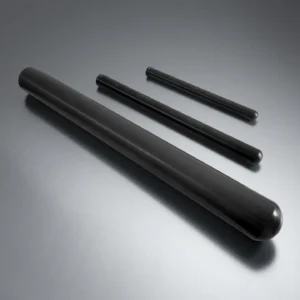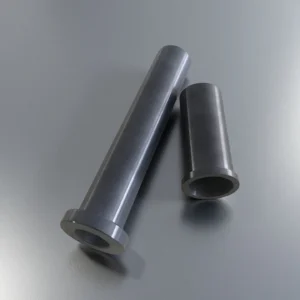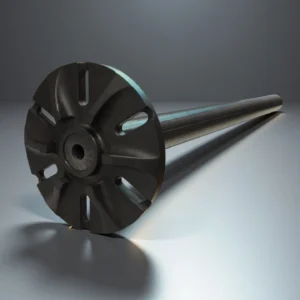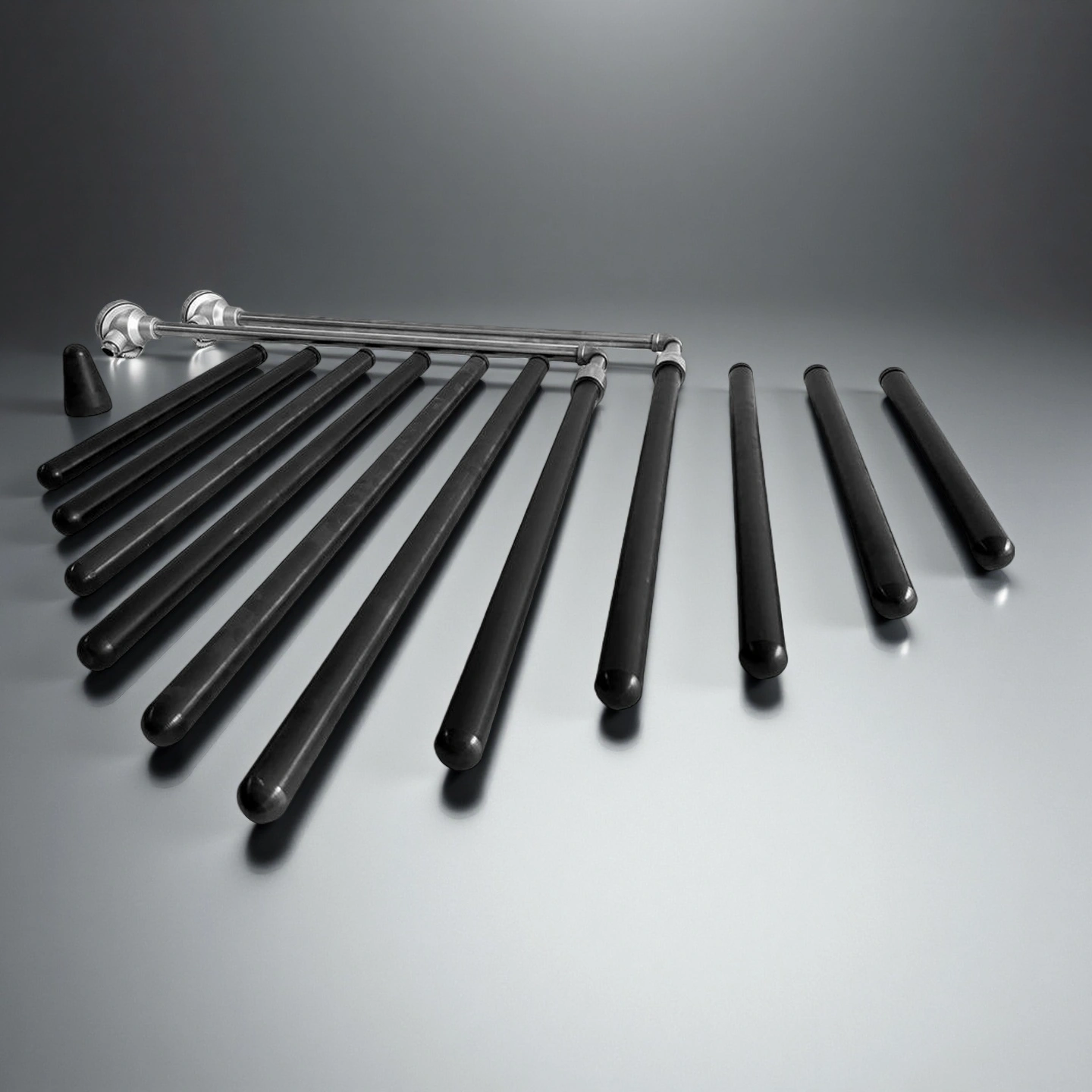
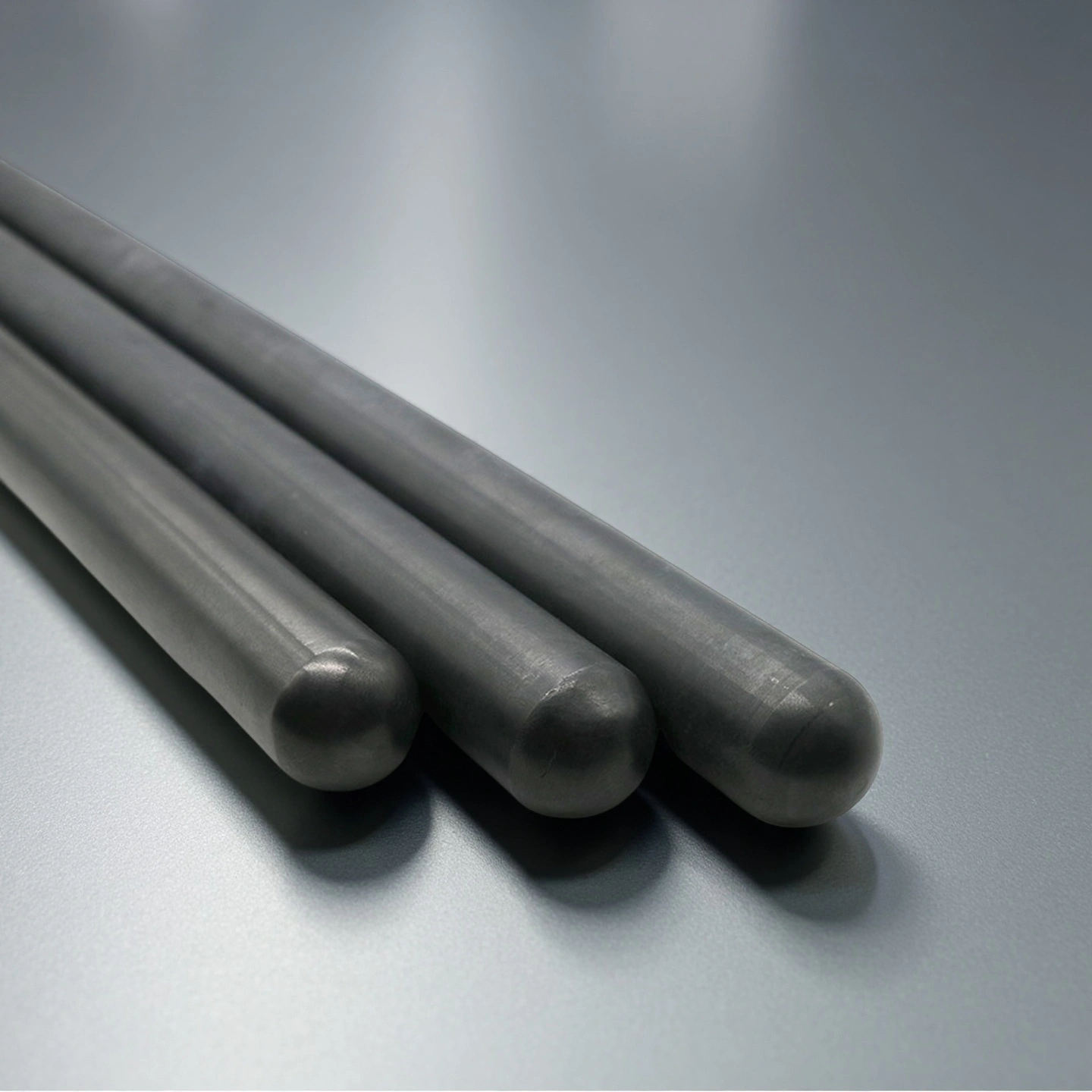
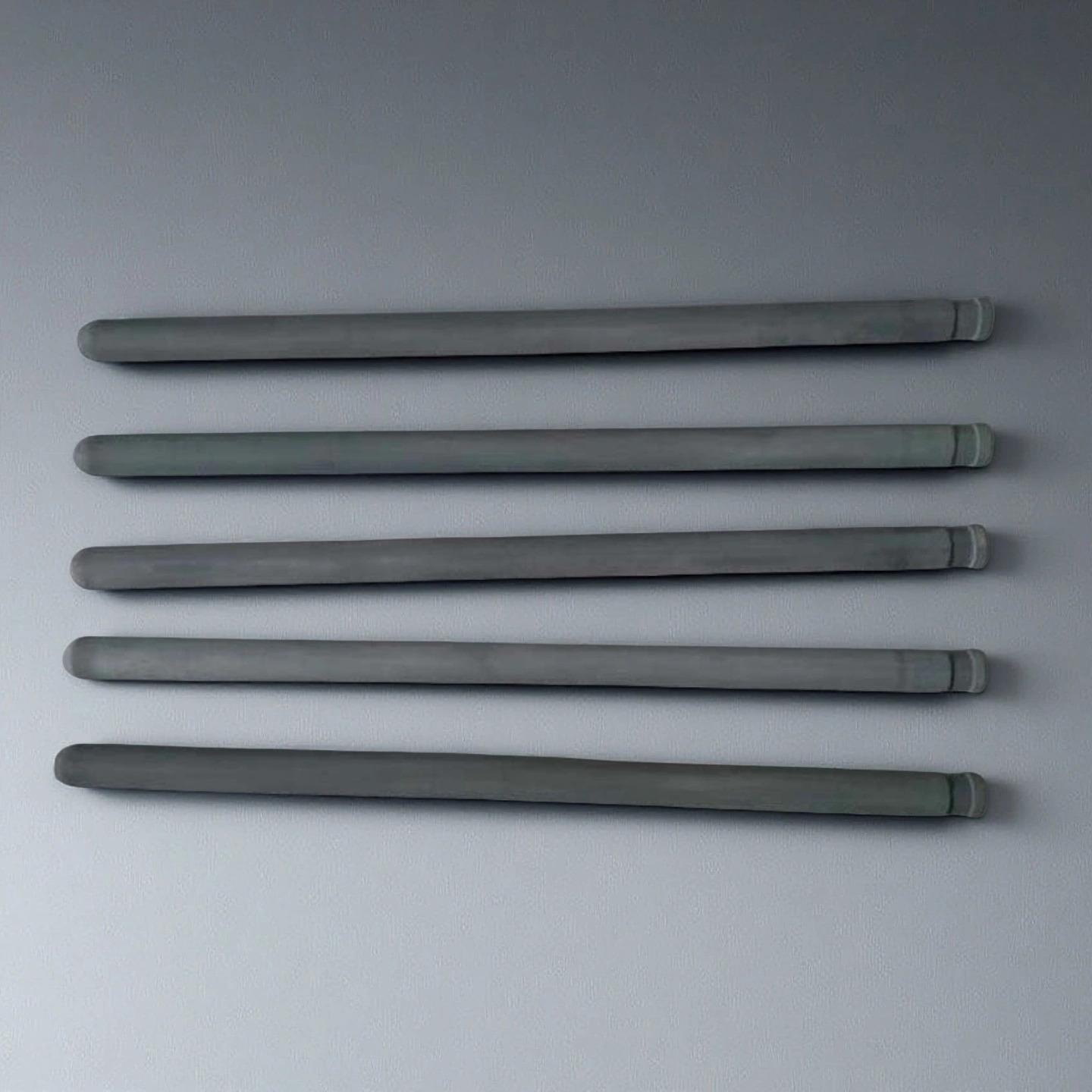
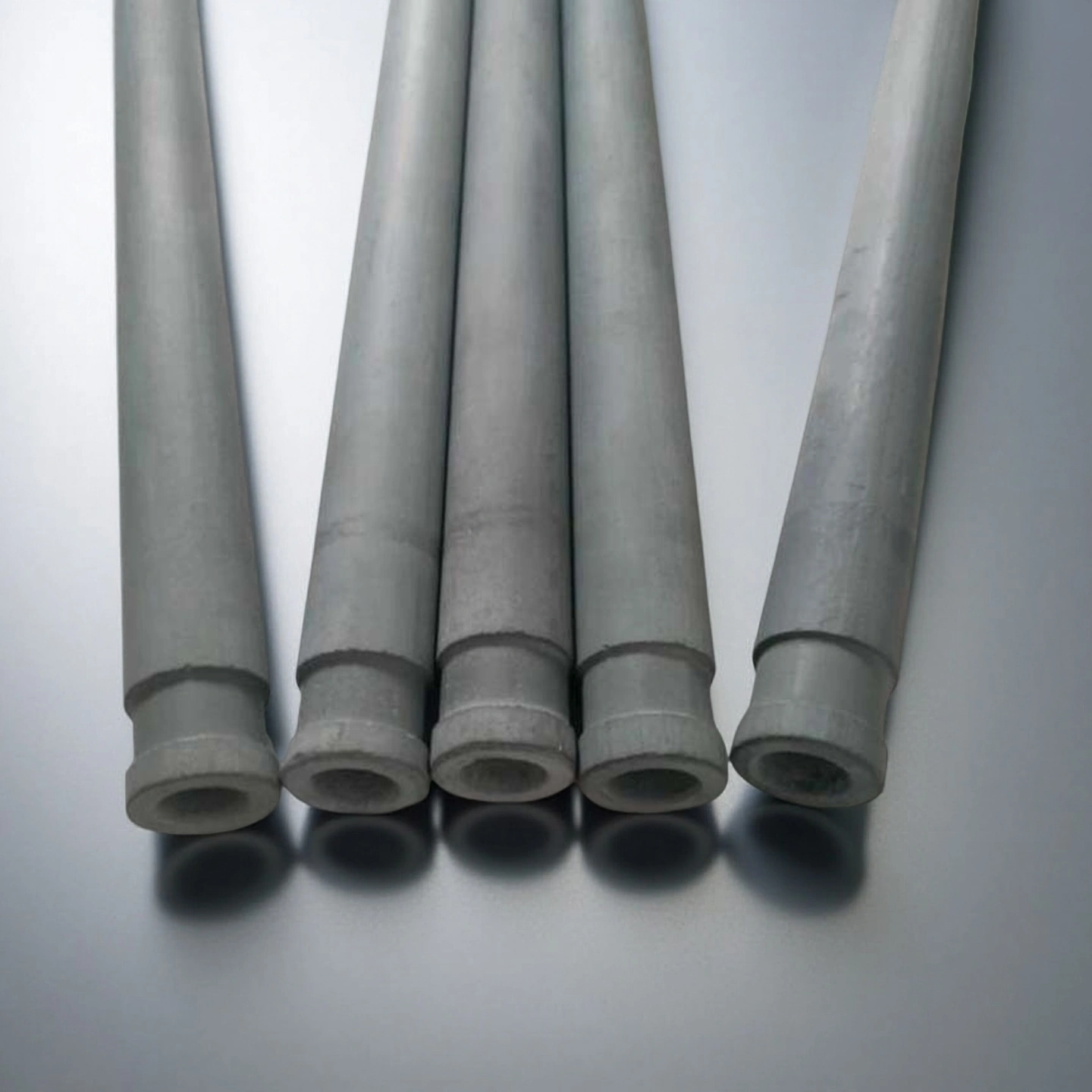
A silicon nitride (Si₃N₄) thermocouple protection tube is a closed-end ceramic sheath that protects a K/N/S thermocouple while it measures molten aluminum, zinc or magnesium. Because Si₃N₄ is not wetted by molten aluminum, it resists metal sticking, oxide build-up and iron contamination, and its thermal-shock resistance keeps readings stable through repeated dips. It is a ceramic, so it must be preheated in stages before immersion — never drop a cold tube straight into the melt.
Silicon Nitride Thermocouple Protection Tube Benefits
-
Non-wetting to Molten Aluminum and Alloys
— the dense Si₃N₄ surface has low wettability to molten aluminum and Al-Si alloys, which helps limit metal adhesion, oxide buildup, and slag bridging around the thermocouple tip and can reduce temperature drift. -
Closed-end, gas-tight integrity
— the sintered/precision-machined closed tip gives a dense structure (typical open porosity near zero) that resists erosion and prevents aluminum ingress into the sensor cavity, typically at 680–750 °C operating ranges. -
Dimensional stability & repeatability
— OD/ID tolerance can be held to ±0.1 mm on request and straightness to ≤0.5 mm per 1000 mm, so immersion depth stays consistent across furnaces. -
Thermal-Shock and Cycling Resistance
— low CTE (~3×10⁻⁶/K) and high fracture toughness (typically 6–8 MPa·m¹ᐟ²) support repeated dip cycles when the tube is preheated correctly. -
Sensor & system compatibility
— fits K/N/S thermocouple cartridges, metal/ceramic seats, compression fittings and flange geometries used in LPDC/HPDC and holding furnaces.
Silicon Nitride Thermocouple Tube Properties
| Si3N4 Type | Gas pressure sintering Si3N4 | Hot pressing sintering Si3N4 | High thermal conductivity Si3N4 |
| Density (g/cm3) | 3.2 | 3.3 | 3.25 |
| Flexural Strength (MPa) | 700 | 900 | 600~800 |
| Young Modulus (GPa) | 300 | 300 | 300~320 |
| Poisson's ratio | 0.25 | 0.28 | 0.25 |
| Compressive strength (MPa) | 2500 | 3000 | 2500 |
| Hardness (GPa) | 15 | 16 | 15 |
| Fracture toughness (MPa*m1/2) | 5~7 | 6~8 | 6~7 |
| Maximum working temperature (℃) | 1100 | 1300 | 1100 |
| Thermal conductivity (W/m*K) | 20 | 25 | 80~100 |
| Thermal expansion coefficient (/℃) | 3*10-6 | 3.1*10-6 | 3*10-6 |
| Thermal shock resistance (ΔT ℃) | 550 | 800 | / |
Typical published values for sintered Si₃N₄ protection-tube grades, for material selection only
Material Comparison: Si₃N₄ vs. Graphite vs. Alumina vs. Cast Iron/Steel
| Option | Wetting by Molten Aluminum | Iron Contamination | Notes |
|---|---|---|---|
| Silicon Nitride | Non-wetting | None (ceramic) | Resistant to thermal shock and suitable for closed-end, gas-tight designs. Preheating is required. Public manufacturer sources describe service life several times longer than cast iron under certain conditions; actual performance is application-dependent. |
| Graphite Tube | Low | None | Oxidizes and is consumed relatively quickly when exposed to air. |
| Alumina Tube | May stick | None | Commonly used, but has lower thermal-shock resistance in molten aluminum and may experience sticking or cracking. |
| Cast Iron / Steel Thermowell | Wets and reacts | Yes (iron pickup) | Inexpensive and widely available, but may erode, contaminate the molten aluminum and shorten service life. |
Si3N4 Thermocouple Protection Tube Specifications
| Si3N4 Thermocouple Protection Tube | |||
| Item No. | Outer Diameter (mm) | Inner Diameter (mm) | Length (mm) |
| AT-DHG-G1001 | 16 | 8 | 300-1200 |
| AT-DHG-G1002 | 22 | 12 | 300-1200 |
| AT-DHG-G1003 | 28 | 16 | 300-1200 |
| AT-DHG-G1004 | 30 | 18 | 300-1200 |
| AT-DHG-G1005 | 45 | 25 | 300-1200 |
Silicon Nitride Thermocouple Tube Packaging
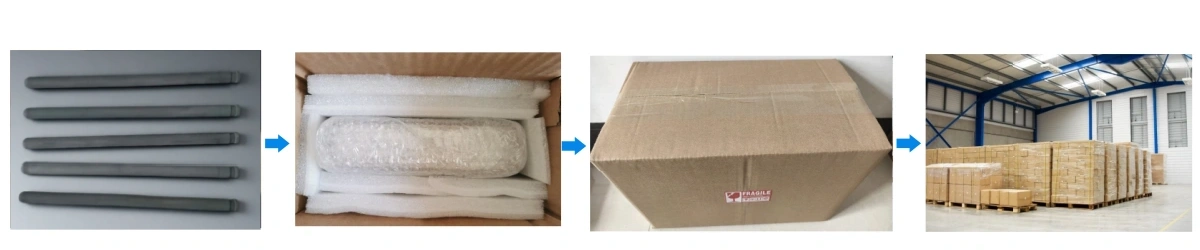
- Each tube is individually packed in foam-lined cartons