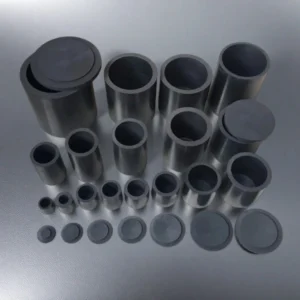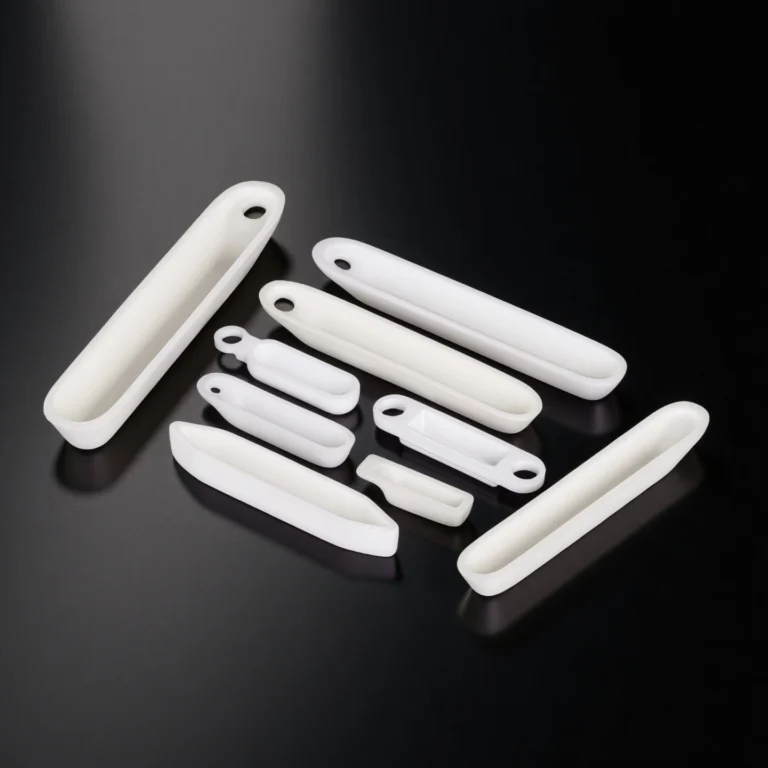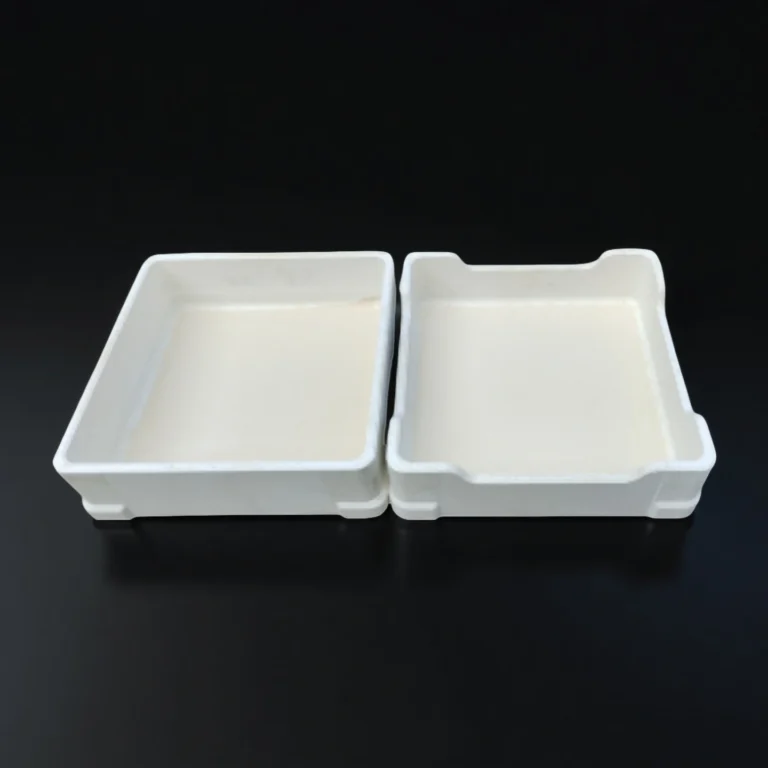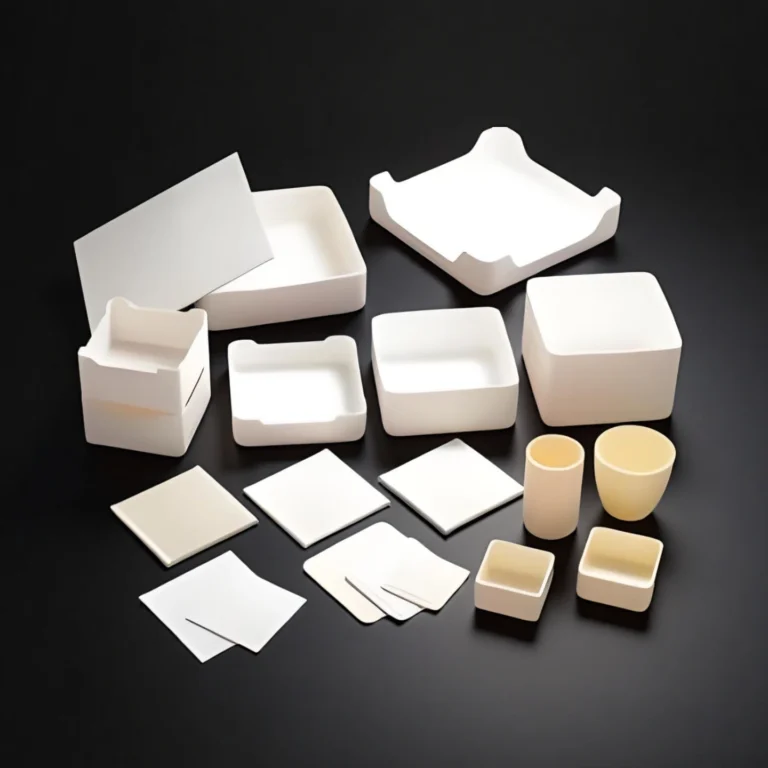
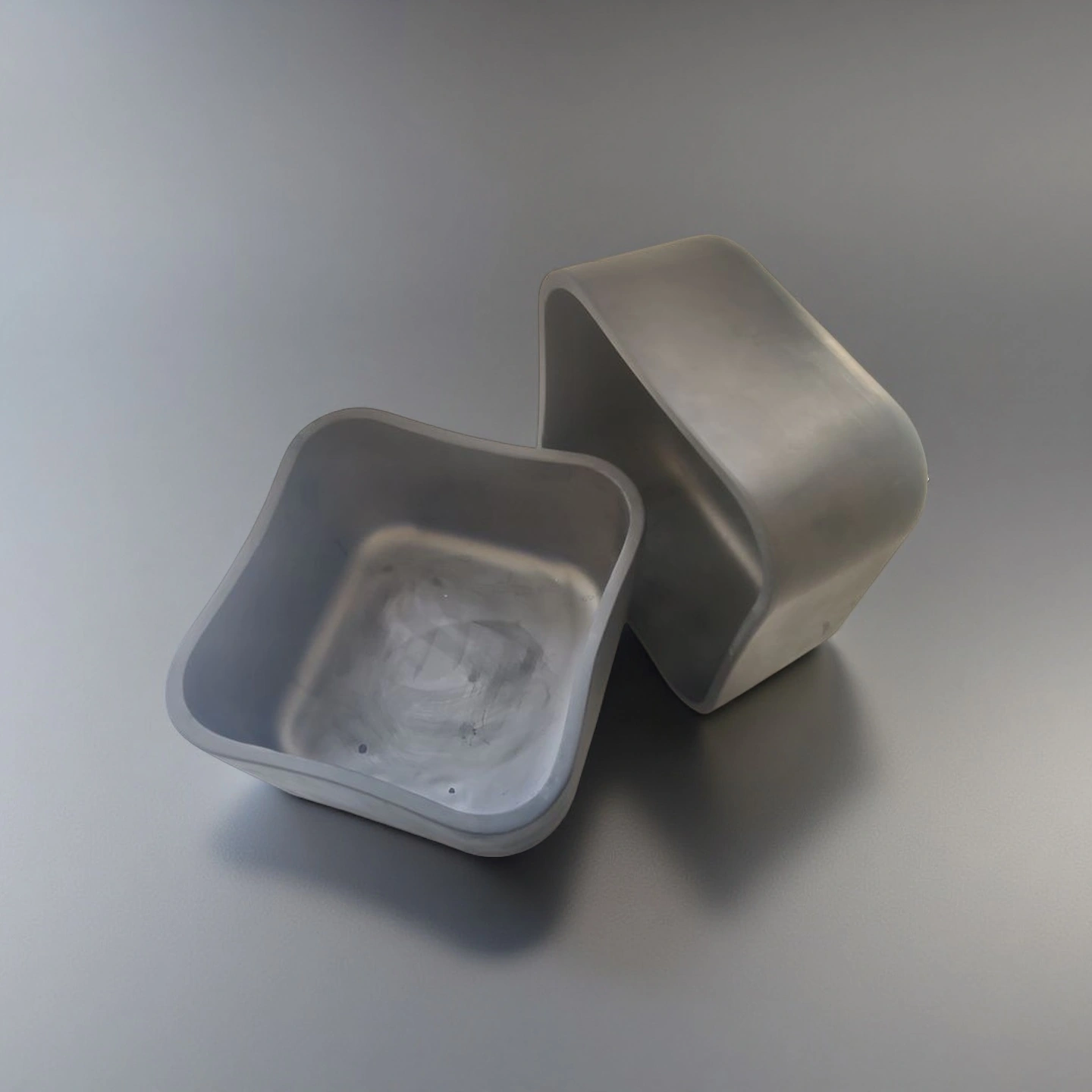
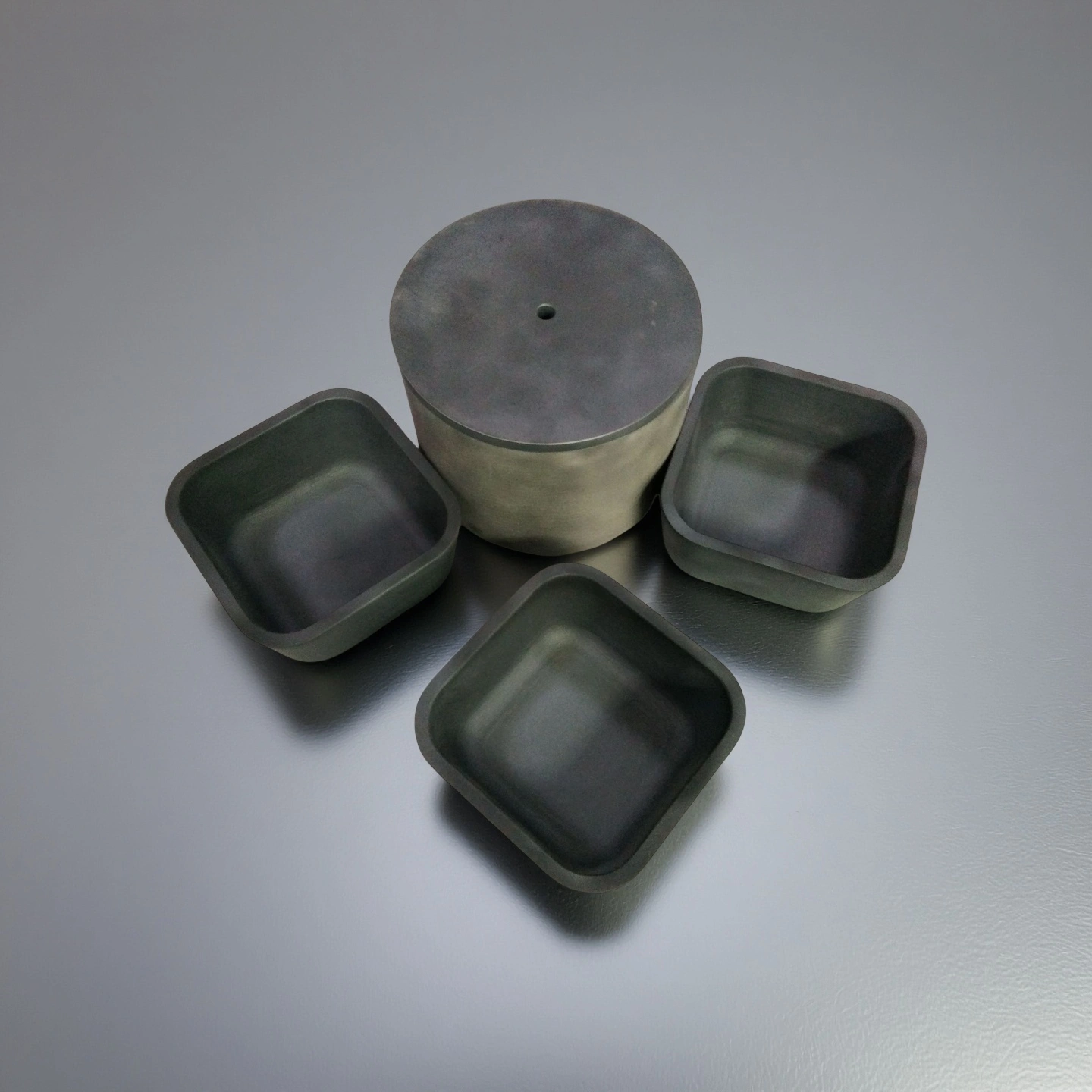
Silicon Nitride Crucible for Aluminum, Magnesium and Zinc Melt Processing

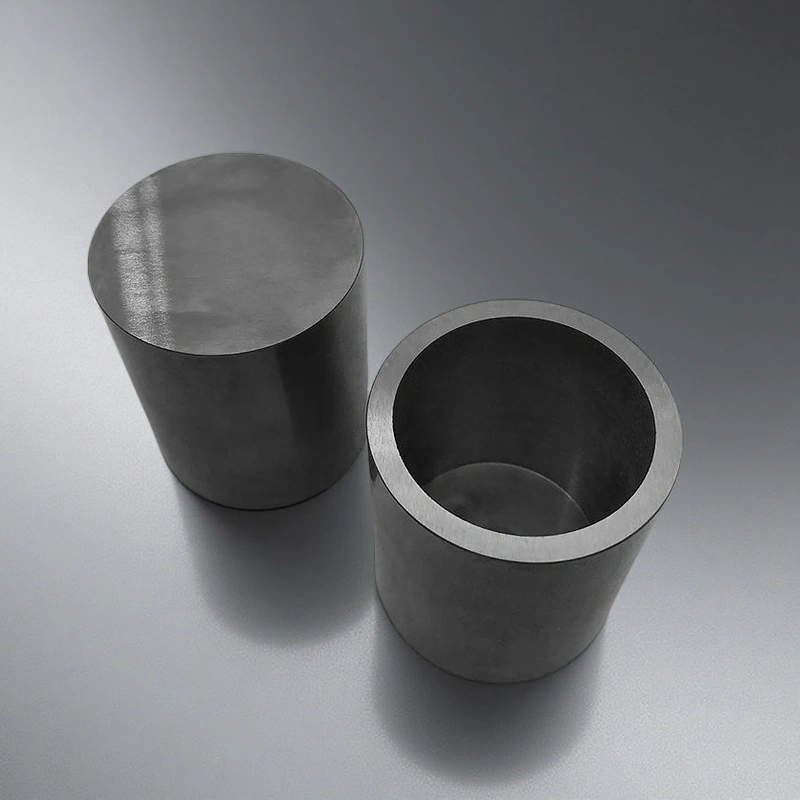
Silicon nitride crucible for non-ferrous alloy melting and sampling, Standard sizes cover 50, 100, 250, 500, 1000 and 2000 ml with matching lids; custom diameter, depth and lip details are made to drawing for silicon nitride crucible applications in foundry cells and bench furnaces.

Catalogue No. AT-DHG-GG001
Material Silicon Nitride
Maximum Working Temperature 1450°C
Thermal Expansion Coefficient ≤ 3.2 × 10⁻⁶ /K
Flexural strength 600–800 MPa
24H Standard Dispatch
Small Batch Support OEM
Factory Direct
Expert Engineering Support

Silicon nitride crucible is a technical ceramic vessel developed for melting, holding or sampling aluminum, magnesium and zinc alloys where conventional graphite or alumina crucibles fail due to oxidation, short service life or alloy contamination. Unlike traditional crucibles, it combines low wettability to molten metals, resistance to thermal shock and stable geometry over repeated heating cycles, which makes it preferred in foundries, vacuum furnace systems and metal research labs.

Silicon Nitride Crucible Benefits

  • Low wettability to molten Al/Mg reduces buildup and cleaning time.
    Silicon nitride forms a chemically stable surface that resists adhesion of aluminum and magnesium dross. This lowers metal loss, minimizes contamination and shortens manual cleaning intervals between casts.

  • Dimensional accuracy (typically ±0.2 mm on ID/OD) improves furnace fit and automation.
    Consistent geometry allows the crucible to sit securely in the furnace pocket or mechanical holder. It also prevents robotic misalignment and reduces downtime caused by improper seating or excessive movement.

  • Low thermal expansion (2.8–3.2 × 10⁻⁶/K) and dense microstructure reduce cracking.
    The material can withstand rapid heating and cooling if pre-heated correctly. This stabilizes cycle life in foundries or labs where temperature changes are frequent and helps prevent premature fracture.

  • Polished inner surface (Ra ≤ 1.6 μm) supports clean metal flow and sampling.
    A smoother inner wall reduces trapped oxides and prevents alloy residues from sticking to the crucible. This is particularly useful in alloy research, casting samples and molten metal transfer operations.

  • Batch-to-batch uniformity simplifies OEM standardization and repeat orders.
    Controlled sintering and machining processes keep each crucible consistent in density, wall thickness and roundness. Furnace manufacturers and high-volume users can reorder the same geometry without adjusting fixtures or tools.

Silicon Nitride Crucible Properties

Si3N4 Type Gas pressure sintering Si3N4 Hot pressing sintering Si3N4 High thermal conductivity Si3N4
Density (g/cm3) 3.2 3.3 3.25
Flexture strength (MPa) 700 900 600~800
Young Modulus (GPa) 300 300 300~320
Poisson's ratio 0.25 0.28 0.25
Compressive strength (MPa) 2500 3000 2500
Hardness (GPa) 15 16 15
Fracture toughness (MPa*m1/2) 5~7 6~8 6~7
Maximum working temperature (℃) 1100 1300 1100
Thermal conductivity (W/m*K) 20 25 80~100
Thermal expansion coefficient (/℃) 3*10-6 3.1*10-6 3*10-6
Thermal shock resistance (ΔT ℃) 550 800 /


Si3N4 Crucible Specifications

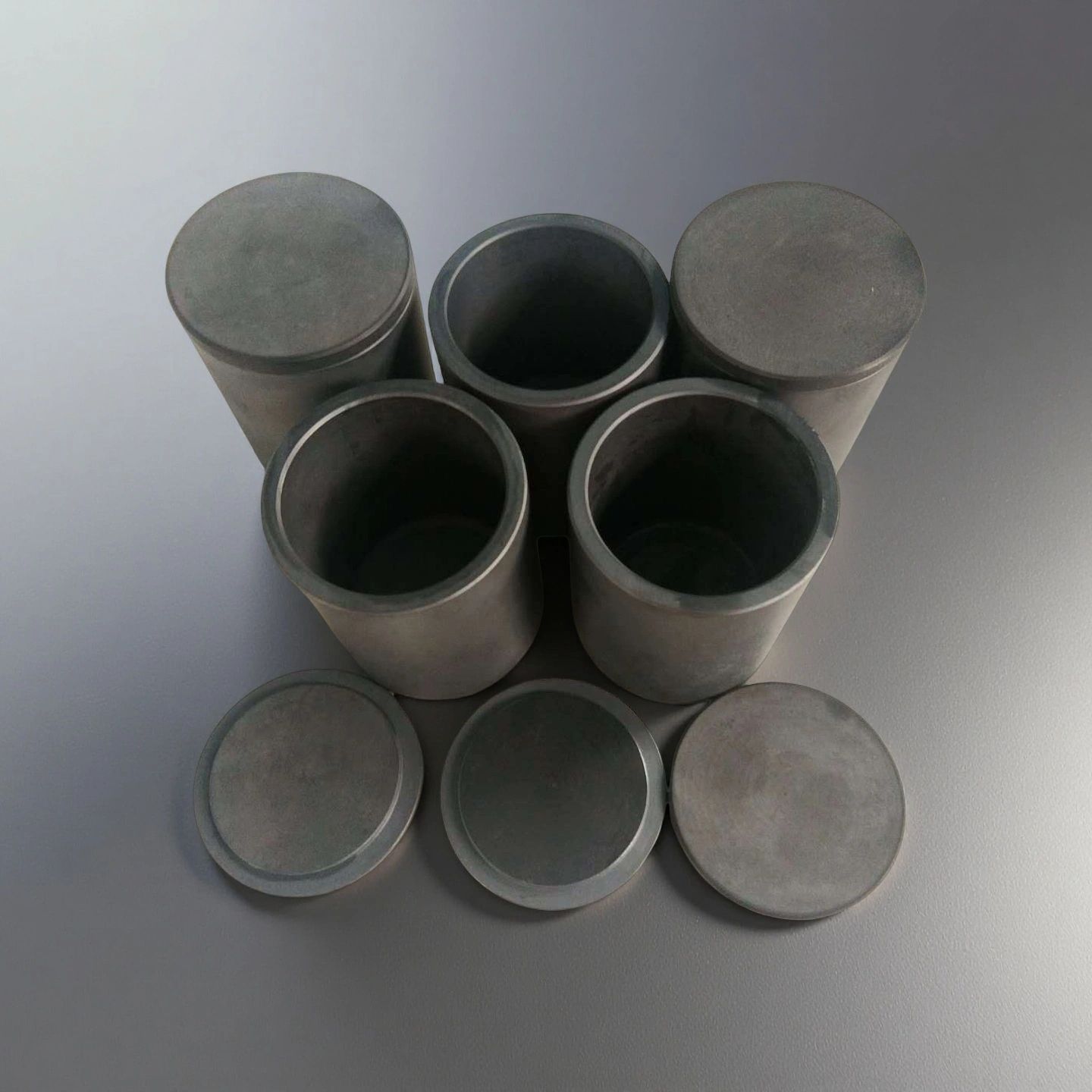
Type 1: Silicon Nitride Crucible Cylinder
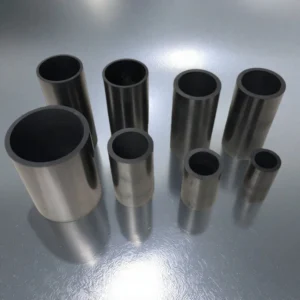
Silicon Nitride Crucible Cylinder

Silicon Nitride Crucible Cylinder
Item No. Outer Diameter(mm) Inner Diameter(mm) Height(mm) Thickness(mm)
AT-DHG-GG001 61 50 65 5.5
AT-DHG-GG002 58.0  50.0  70.0  4.0 
AT-DHG-GG003 58.0  52.0  90.0  3.0 
AT-DHG-GG004 72.0  65.0  95.0  3.5 
AT-DHG-GG005 81.5  70.0  90.0  5.5 
AT-DHG-GG006 81.0  72.0  100.0  4.5 
AT-DHG-GG007 85.0  75.0  105.0  5.0 
AT-DHG-GG008 87.0  75.0  108.0  6.0 
AT-DHG-GG009 87.0  78.0  112.0  4.5 
AT-DHG-GG010 88.0  80.0  115.0  4.0 
AT-DHG-GG011 93.0  85.0  125.0  4.0 
AT-DHG-GG012 99.0  90.0  125.0  4.5 
AT-DHG-GG013 104.0  95.0  130.0  4.5 
AT-DHG-GG014 110.0  100.0  135.0  5.0 
AT-DHG-GG015 131.0  120.0  150.0  5.5 
AT-DHG-GG016 136.0  125.0  165.0  5.5 
AT-DHG-GG017 172.0  150.0  190.0  6.0 


Type 2: Silicon Nitride Crucible Arc-Shaped
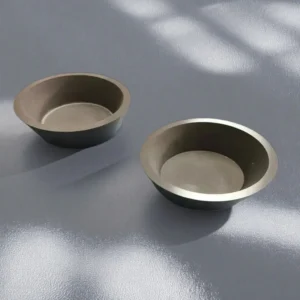
Silicon Nitride Crucible Arc-Shaped

Silicon Nitride Crucible Arc-Shaped
Item No. Top Outer Diameter(mm) Bottom Outer Diameter (mm) Height(mm) Thickness(mm)
AT-DHG-GG018 58 33 66 3
AT-DHG-GG019 58 35 68 5
AT-DHG-GG020 59 35 71 4
AT-DHG-GG021 67 42 78 4.5
AT-DHG-GG022 73 44 86 5
AT-DHG-GG023 75 46 78 4.5
AT-DHG-GG024 79 46 96 5
AT-DHG-GG025 80 70 78 4.8
AT-DHG-GG026 83 50 106 6
AT-DHG-GG027 91 56 108 6
AT-DHG-GG028 100 65 110 5.5
AT-DHG-GG029 100 60 118 7
AT-DHG-GG030 100 60 70 4


Type 3: Silicon Nitride Crucible Lid

Silicon Nitride Crucible Lid

Silicon Nitride Crucible Lid
Item No. Diameter (mm) Thickness(mm)
AT-DHG-GG031 50 5.5
AT-DHG-GG032 60 5
AT-DHG-GG033 68 4.7
AT-DHG-GG034 73 5
AT-DHG-GG035 80 5
AT-DHG-GG036 84 5


Silicon Nitride Crucible Packaging

  • Multi-layer foam fit with anti-shock corners; bagged for dust control
  • Individual lid packed separately or pre-mated per request
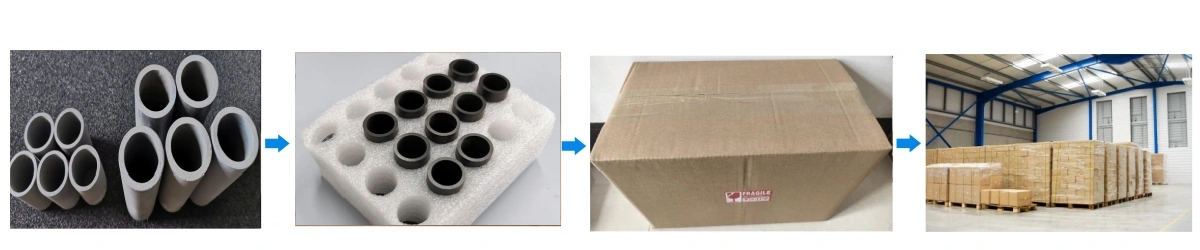
Silicon Nitride Crucible Packaging

Si3N4 Ceramic Crucible Applications

  • Aluminum Casting & Foundry Cells

    ✅Key Advantages

    1. Extended Casting Cycles Without Metal Wetting
    Silicon nitride crucibles maintain non-wetting behavior in Al-Si melts, enabling 200–450 casting cycles before replacement when preheated to 850 °C prior to metal contact.

    2. Dimensional Consistency Reduces Robot Alignment Errors
    With controlled tolerances (±0.2 mm ID/OD), the crucible seats accurately in LPDC fixtures and supports automated ladling arms with <1 mm clearance.

    3. Lower Dross Accumulation Improves Melt Cleanliness
    Smooth inner surface (Ra ≤ 1.6 µm) reduces aluminum oxide buildup by up to 30%, keeping molten metal contact cleaner and decreasing inclusion defects in castings.

    ✅ Problem Solved

    A Tier-2 automotive casting plant using AlSi9Cu3 switched from graphite to silicon nitride crucibles in its low-pressure casting cells.
    Cycle life increased from an average of 120 pours to 340 pours per crucible under a controlled preheat of 300 °C → 900 °C → 750 °C standby.
    Robot arm misalignment alarms due to lip wear dropped from 8 per week to less than 2 per month.
    Scrap rate caused by dross inclusions decreased from 2.6% to 1.3%, and the furnace downtime for cup replacement was reduced by approximately 28%.

  • Vacuum & Atmosphere Furnace OEM

    ✅Key Advantages

    1. Stable geometry across heating cycles enables precise furnace alignment
    Silicon nitride crucibles maintain roundness deviation within ≤0.15 mm after repeated heating to 1300 °C in N₂ atmosphere, ensuring consistent fixture positioning.

    2. Low gas permeability reduces contamination in controlled atmospheres
    Open porosity below 1% prevents hydrogen or nitrogen infiltration into the melt, keeping aluminum and magnesium alloys free from gas porosity defects.

    3. Compatible with robotic loading systems in OEM-integrated furnaces
    Custom lip and shoulder profiles with ±0.2 mm tolerance support automated crucible placement with less than 0.5 mm clearance tolerance in machine loaders.

    ✅ Problem Solved

    A European furnace OEM supplying vacuum alloy testing systems replaced alumina crucibles with silicon nitride models to address deformation and leakage during thermal cycling.
    In 50-unit pilot production, silicon nitride crucibles held dimensional accuracy after 60 heating cycles up to 1350 °C in argon, while alumina units showed >0.4 mm warping and microcracking.
    Gas inclusion in Al-Mg alloy samples dropped by 35%, and no metal leaks were recorded across the testing series.
    The OEM standardized one crucible geometry instead of the three previous models, reducing machining time by 22% and simplifying spare part logistics.

  • Materials Laboratory & Alloy Research

    ✅Key Advantages

    1. Small-volume melting with high mass precision
    Silicon nitride crucibles allow alloy melting in 20–200 ml ranges with mass deviation typically within ±1.5% across repeated heating and pouring cycles.

    2. Low contamination during alloy composition testing
    Si₃N₄ does not release carbon or oxygen into Al-Mg-Ti melts, keeping impurity levels below 0.02 wt%, which is critical for metallographic and DSC/TGA samples.

    3. Surface finish supports repeatable sample decanting
    Polished inner surface (Ra ≤1.6 µm) enables clean metal flow and reduces residue buildup, ensuring consistent sample retrieval and easier post-test cleaning.

    ✅ Problem Solved

    A university materials lab conducting Al–Mg–Sc alloy trials reported inconsistent test results when using graphite crucibles due to carbon pickup and mass loss during decanting.
    After switching to 80 ml silicon nitride crucibles, sample weight variation reduced from ±3.8% to ±1.2% over 15 test runs.
    Elemental contamination from the crucible fell below 0.02 wt% (verified via ICP-OES), and no carbon or oxygen inclusion rings appeared in metallographic sections.
    Cleaning time between tests was reduced by 40%, as molten alloy no longer adhered to the crucible wall after solidification.

Silicon Nitride Crucible Usage Instructions

  • Installation

    1. Check the crucible pocket size, support ring or seating surface before heating. Dry-fit the crucible to verify stability and avoid tilting or lip stress.
    2. Measure ID/OD and base flatness against the drawing during incoming inspection to confirm dimensional tolerance and robotic pickup compatibility.
    3. Avoid direct metal-to-metal contact between the crucible edge and the steel support; use insulating pads if specified by the furnace manufacturer.

  • Pre-heating & Use

    1. For first use, heat gradually: 20 °C → 300 °C (hold 30 min), 300 °C → 800–900 °C (hold 30 min), then approach operating temperature. This avoids thermal shock and microcracks caused by sudden temperature gradients.
    2. Use a diffuser, burner screen, or indirect heating to prevent direct flame impact on the crucible base or walls, which causes localized overheating.
    3. Once molten metal is introduced, keep skimming oxides to prevent dross buildup and avoid letting aluminum freeze inside the crucible, as solidified alloy can exert expanding stress and crack the walls.

  • Storage

    1. Store the crucible in a dry, ventilated room with desiccant, especially after sea or winter transport, to avoid moisture absorption that can cause steam pressure cracks during reheating.
    2. Keep lids and crucibles paired by batch to maintain proper lip contact and sealing performance, especially when used in a nitrogen or argon atmosphere.

  • Cleaning

    1. Clean while the crucible is still warm (not hot) using non-metallic tools to remove dross or metal films without scratching the surface.
    2. Do not immerse a hot crucible in water or place it on a cold steel plate; rapid cooling will cause internal thermal stress and reduce cycle life.
    3. For polished inner surfaces (Ra ≤1.6 μm), use soft scrapers or fiber brushes to preserve smoothness and prevent microabrasion that increases melt adhesion.

  • User Errors & Prevention

    Issue Cause Prevention
    Cracking on first heat-up Heated directly to 700 °C from room temperature Use staged pre-heating as specified above
    Crucible stuck to furnace base Molten aluminum seeped and solidified under cup Use proper insulating ring and remove frozen metal before cooling completely
    Robot misalignment alarm Lip deformation or size drift after cycles Inspect lip diameter periodically; replace when deviation exceeds design tolerance

Silicon Nitride (Si3N4 ) Crucible FAQ

  1. Q: What is a silicon nitride crucible used for in aluminum casting?
    A: A silicon nitride crucible, also called a Si₃N₄ ceramic crucible, is used to melt, hold or sample aluminum and magnesium alloys in foundry cells, furnace systems and laboratory test setups where low wettability and stable cycle life are required.
  2. Q: How many casting cycles can a silicon nitride crucible typically withstand?
    A: In aluminum foundries, silicon nitride crucibles from reliable manufacturers can last 200–450 cycles, depending on alloy, preheating and handling conditions.
  3. Q: Where can I find silicon nitride crucible for sale or wholesale purchase?
    Silicon nitride crucibles for sale can be sourced directly from a silicon nitride crucible factory or manufacturer in China if you require OEM sizes, bulk purchasing or wholesale pricing.
  4. Q: Do you offer silicon nitride crucible made in China with factory customization?
    A: Yes, China Si₃N₄ ceramic crucible manufacturers, such as ADCERAX, provide drawing-based production for different furnace models and accept custom dimensions with ±0.2 mm tolerances
  5. Q: Can silicon nitride crucibles be used in laboratory research?
    A: Yes, laboratory use Si₃N₄ crucibles are widely used for DSC analysis, small-volume melting and metal decanting in research institutes and university material labs.
  6. Q: Does molten aluminum stick to silicon nitride crucibles?
    A: No, silicon nitride ceramic crucibles show very low wettability to Al/Mg melts; this is why many buyers switch from graphite crucibles to Si₃N₄ crucibles to reduce dross adhesion.
  7. Q: Can I order a silicon nitride coating crucible or coated version?
    A: Yes, some manufacturers offer silicon nitride coating crucibles or Si₃N₄-coated graphite versions for specific melt chemistries, but full silicon nitride crucibles are preferred for longer service life.


Customer Reviews — Silicon Nitride Crucible

  • ⭐️⭐️⭐️⭐️⭐️
    We tested silicon nitride crucibles from several suppliers, but the batches from the Chinese manufacturer we work with now lasted over 300 casting cycles in our LPDC cells. The non-wetting surface reduced aluminum buildup and our changeover time dropped noticeably.
    -- Michael Turner | Production Supervisor | AlloyCast Foundry, USA
  • ⭐️⭐️⭐️⭐️⭐️
    We needed a custom Si3N4 ceramic crucible with a 148 mm ID and ±0.2 mm tolerance for our automated furnace loader. The factory in China adjusted the lip profile according to our drawing and the crucibles fit correctly without rework.
    -- Sara Müller | Procurement Manager | G-Tech Furnace Systems, Germany
  • ⭐️⭐️⭐️⭐️⭐️
    For laboratory use, we ordered 80 ml Si3N4 crucibles for alloy testing. The mass repeatability improved compared to graphite cups because there was no carbon contamination. They clean easily, which is important when running multiple DSC or melt trials in one day.
    -- Dr. Kenichi Sato | Materials Lab Engineer | Osaka Technical Institute, Japan
  • ⭐️⭐️⭐️⭐️⭐️
    We purchase wholesale silicon nitride crucibles for our aluminum recycling line. Pricing from the manufacturer is stable, and delivery from the China-based factory is consistent. Even after several shipments, the dimensional quality and cycle life have been reliable.
    -- Luis Hernández | Purchasing Director | Metal Reclaim Solutions, Mexico
customize size

Customize Silicon Nitride Crucible

We manufacture silicon nitride crucibles based on technical drawings or application requirements. Each crucible can be adapted to furnace type, automation system, melt volume or process temperature. What you can specify:

1. Dimensions & Tolerance
• Inner/outer diameter and depth according to furnace pocket or robot gripper
• Standard tolerance ±0.2 mm; tighter tolerance down to ±0.1 mm available on request

2. Wall & Base Design
• Wall thickness from 3–8 mm or reinforced bottom for longer service life
• Uniform or tapered wall profiles depending on stress and heat distribution

3. Capacity Options
• Standard volumes 50–2000 ml for sampling or melt holding
• Larger capacity made upon feasibility review for furnace compatibility

4. End Configuration
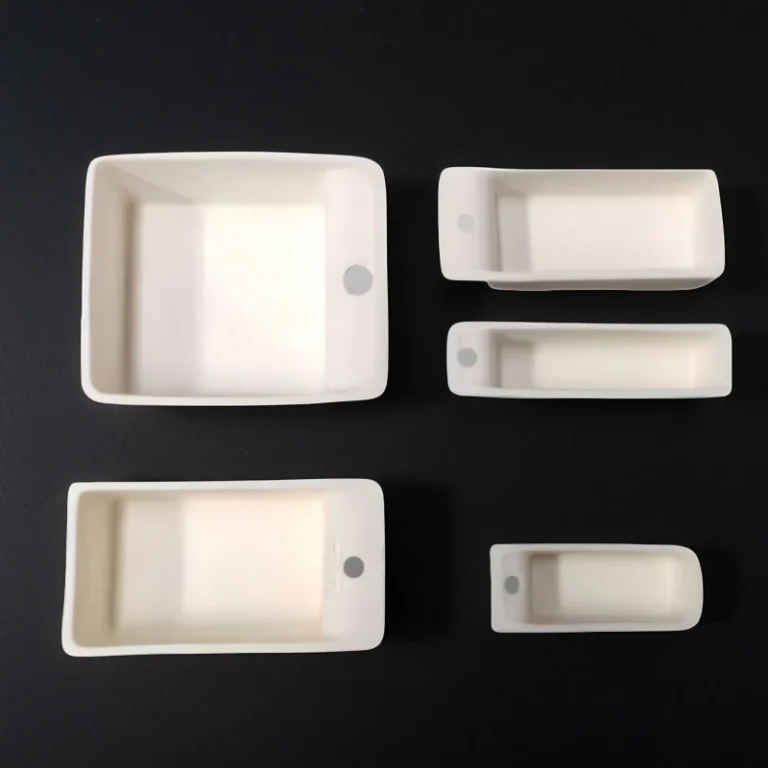
• Open top, sealed top, with fitted lid, extended lip, flange, or pouring spout
• Shouldered base or seating groove to match fixed-position setups

5. Shape Variations
• Cylindrical, rectangular, deep-form, flat-bottom, or conical wall options
• Custom cross-sections for multi-station furnaces or alloy testing rigs

6. Surface Treatment
• Raw-sintered, honed inner surface, polished Ra≤1.6 μm, or sandblasted exterior
• Optional coating for specific alloy protection or wetting control

7. Operating Atmosphere Compatibility
• Designed for air, nitrogen or argon atmosphere heating
• Pre-heating and baking procedures can be adjusted to avoid thermal cracking

Related Products

ADCERAX - Your Trusted Advanced Ceramics Manufacturing Partner

Direct factory manufacturing with comprehensive ceramic materials expertise and global supply capabilities

Direct Factory Manufacturing

China-based ceramic materials production facility with state-of-the-art equipment

Engineering Team

Experienced professionals in advanced ceramics applications and custom design

Quality Control

Strict quality control standards for technical ceramics manufacturing and quality management

Global Supply Chain

Serving customers worldwide with technical ceramics and rapid response

24/7 Technical Support

Round-the-clock support for ceramic components inquiries and technical assistance

500+ Satisfied Customers

Trusted by global customers for advanced ceramic materials and precision components

Get in touch with us

Our team will be happy to respond to you in less than 24 hours.

Adcerax's factory

Quick Quotation

*Our team will answer your inquiries within 24 hours.

*Your information will be kept strictly confidential.

Ready to Solve Your Engineering Challenge?

Partner with ADCERAX for reliable, high-performance advanced ceramic solutions. Our engineers are ready to discuss your project.

E-mail

info@adcerax.com

Phone

+(86) 0731-74427743 | WhatsApp: +(86) 19311583352

Response Time

Within 24 hours

Quick Quote

The more details you provide, the faster we can quote.

*We respond within 24 hours. All inquiries are confidential.

Download Catalog

Get Your Custom Sulution

The more details you provide, the faster we can respond.

customize size

*We respond within 24 hours. All inquiries are confidential.

Download Catalog