Aluminum Nitride Crucible for Powder Metallurgy and High-Temperature Melting

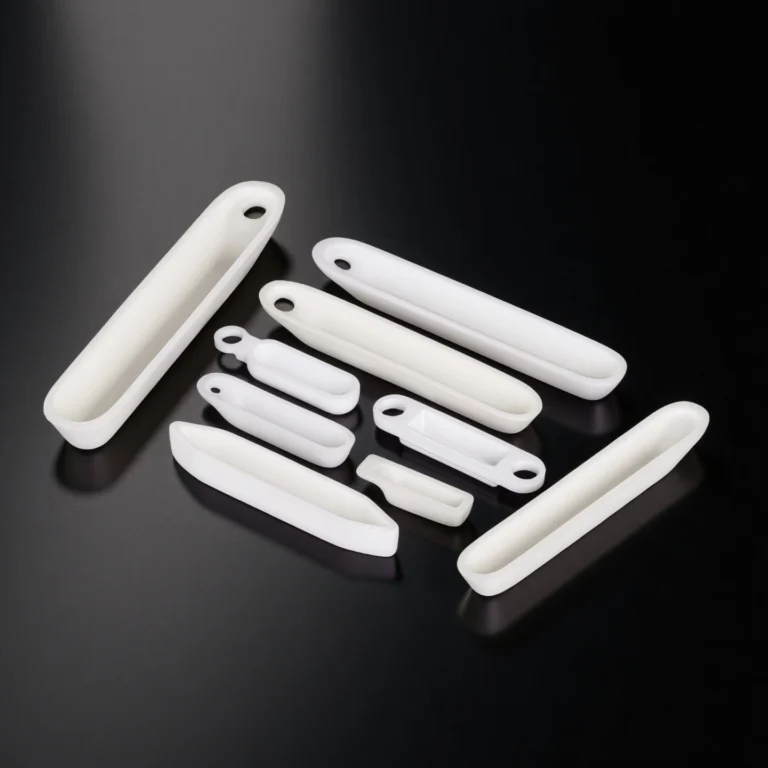
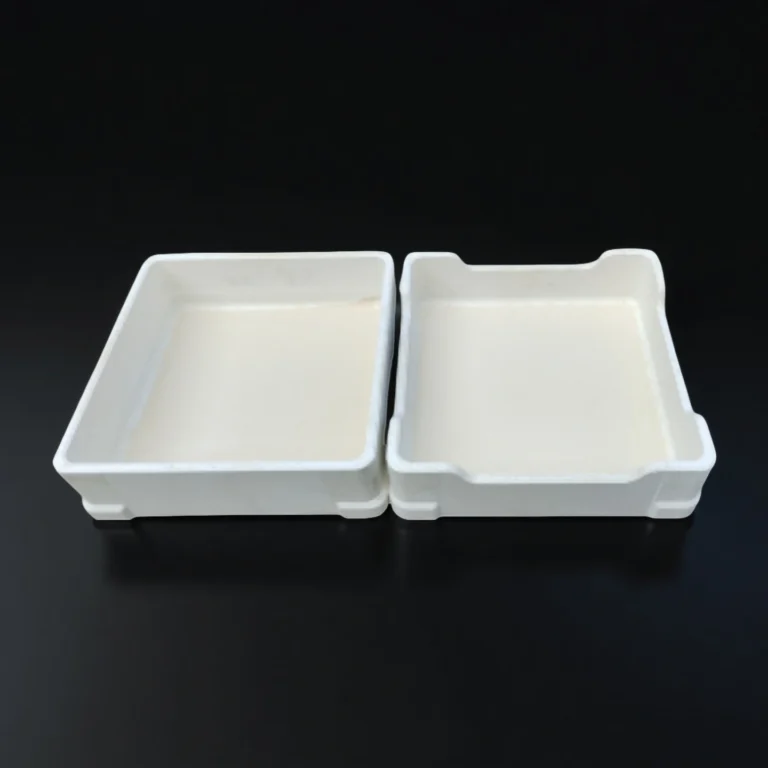
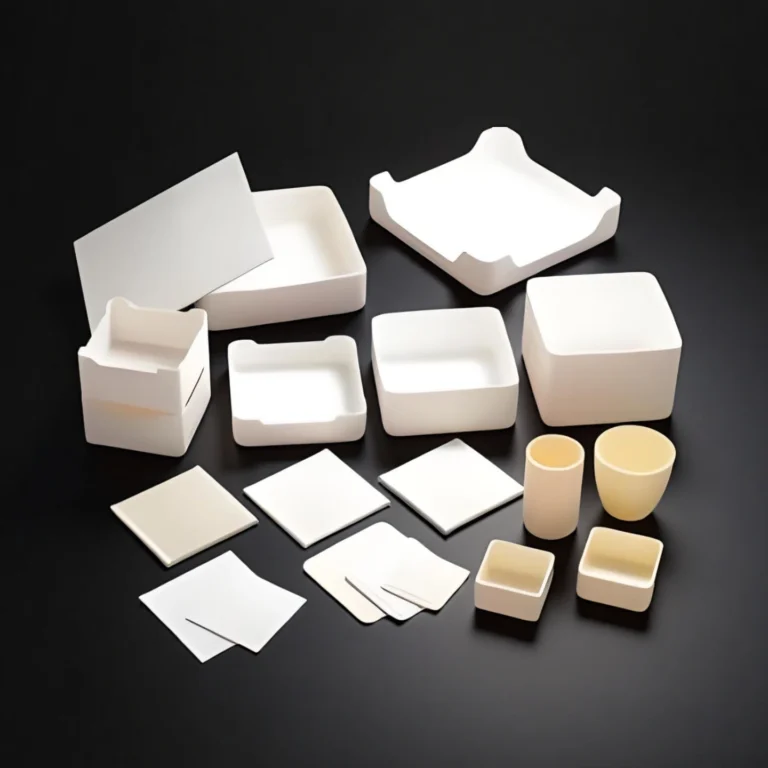
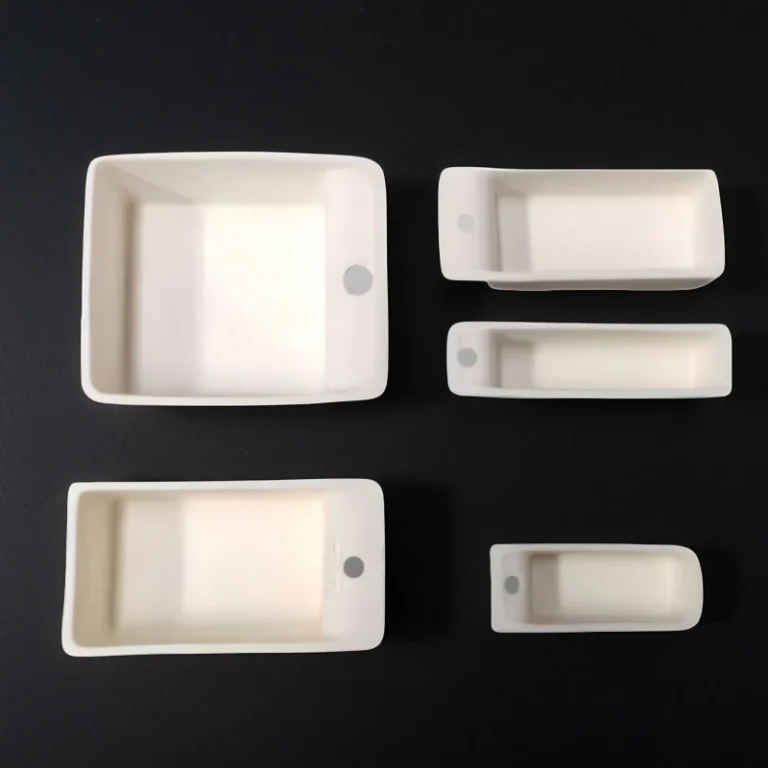
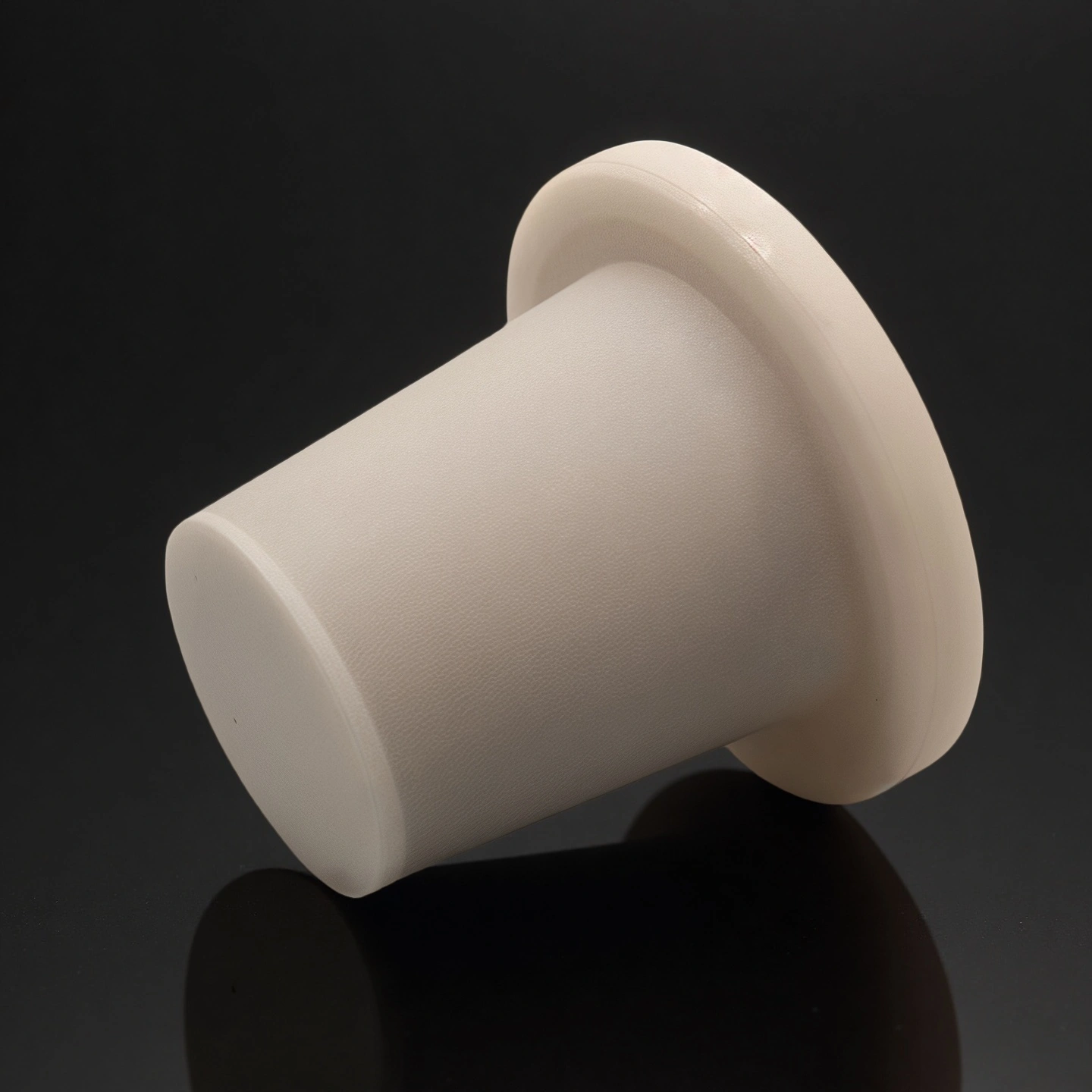
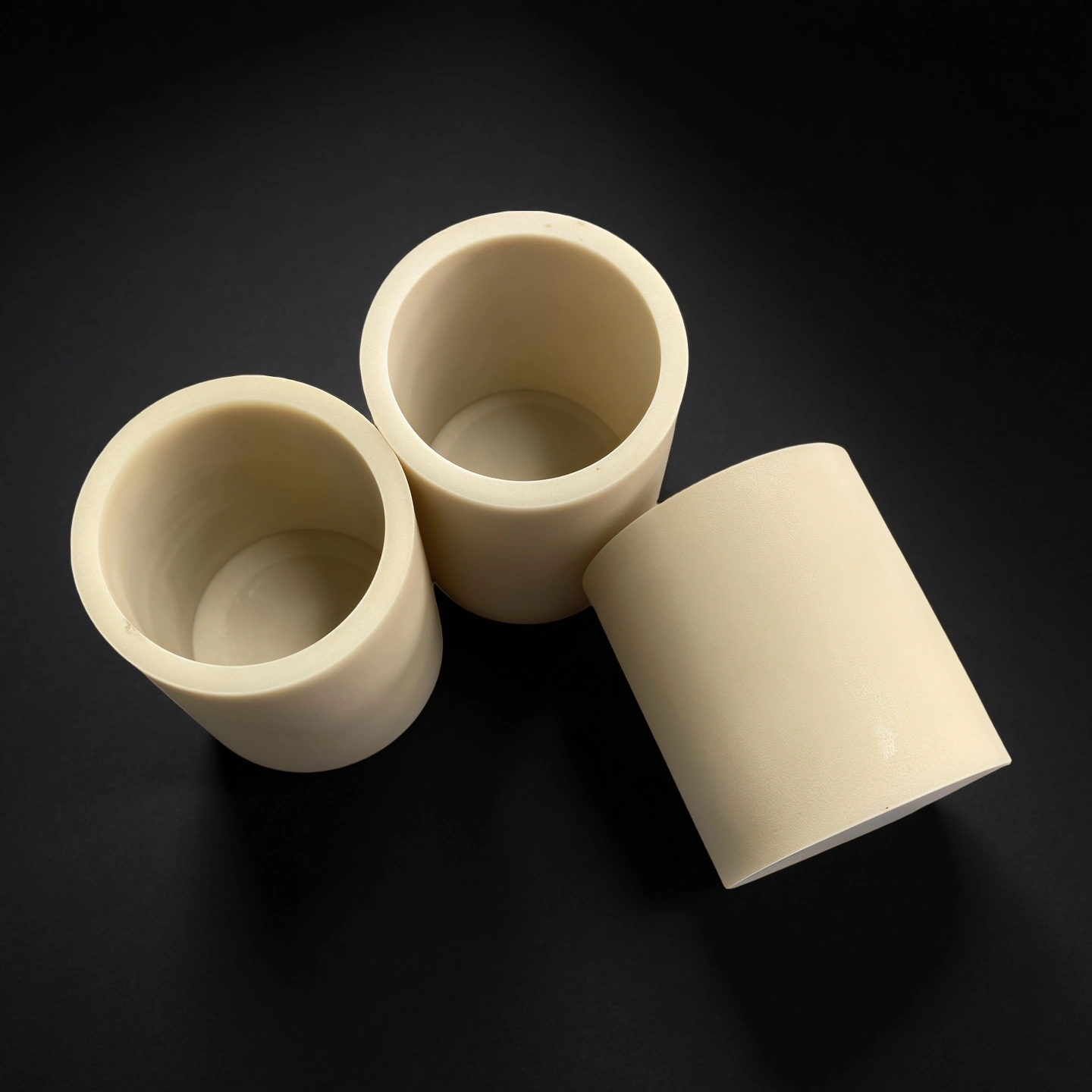
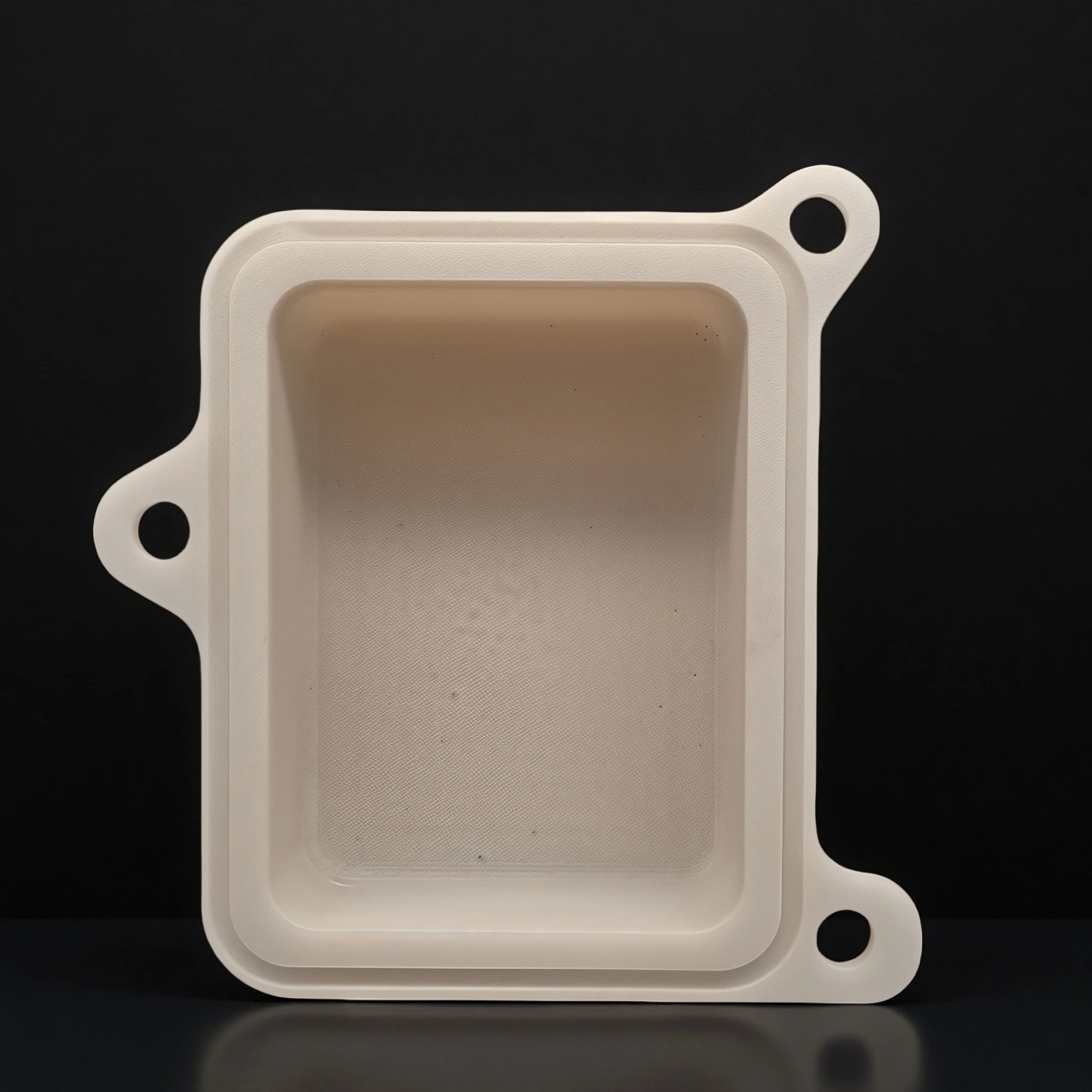
Aluminum nitride crucible is a dense sintered ceramic vessel with high thermal conductivity and electrical insulation, supplied in standard volumes from about 5 ml to 500 ml and in custom geometries based on customer drawings. The crucibles are designed for repeated high-temperature use in laboratory furnaces, evaporation sources, and material research systems, with dimensional tolerances suitable for precision fixtures.

Catalogue No. AT-AIN-GG1001
Material  Aluminum Nitride
Thermal Conductivity ≥170 W/m·K
Thermal Expansion Coefficient 4.5–5.5 ×10⁻⁶/K
Maximum recommended use temperature up to 1700°C (in inert atmosphere)
24H Standard Dispatch
Small Batch Support OEM
Factory Direct
Expert Engineering Support

Aluminum nitride crucible is a high-temperature ceramic vessel made from dense sintered AlN, engineered for applications that require both high thermal conductivity and electrical insulation in a compact container. Compared with common alumina crucibles, aluminum nitride crucibles transfer heat much more efficiently, helping achieve more uniform temperature profiles in laboratory furnaces, evaporation sources, and material research processes. Their low impurity level, stable geometry, and resistance to thermal cycling make them suitable for melting small metal charges, evaporating functional materials, and conducting controlled thermal analysis in inert or vacuum atmospheres.

Aluminum Nitride Crucible Benefits

  • High heat transfer across thin walls
    Thin-wall aluminum nitride crucible design allows fast and uniform heat distribution across the melt or sample, which helps reduce radial temperature gradients compared with typical alumina crucibles.

  • Electrical insulation with high thermal conductivity
    The crucible combines ceramic-level electrical insulation with a thermal conductivity commonly one order of magnitude higher than alumina, making it suitable for induction-assisted or high-power-density heating zones.

  • Stable performance at elevated temperature
    The material structure and wall thickness are optimized for repeated heating cycles up to around 1700°C in inert or controlled atmospheres, while limiting deformation and microcracking under normal furnace ramp rates.

  • Low contamination for sensitive samples
    The dense AlN microstructure and controlled impurity levels help reduce chemical interaction with molten metals, alloys, and functional powder systems, which is important for thin-film precursors and material property measurements.

  • Geometries aligned with equipment fixtures
    The crucible shapes can be matched to common sample holders, evaporation sources, and furnace carriers, including stepped profiles or deep chambers where filling height and view port geometry are critical.

Aluminium Nitride Ceramic Crucible Properties

Property Content Unit Unit ALN-170 ALN-200 ALN-230
Basic Properties Color gray light yellow light yellow
Density g/cm³ 3.2-3.3 3.2-3.3 3.2-3.3
Surface Roughness μm 0.2-0.75 0.2-0.75 0.2-0.8
Camber length ‰ ≤3‰ ≤3‰ ≤3‰
Hardness HV 1100 1100 1100
Thermal Properties Max Operating Temperature °C 1100 1100 1100
Thermal Conductivity W/m·K 170-190 190-220 220-230
Coefficient of Thermal Expansion 10⁻⁶/K(20-400°c) 4-5 4-5 4-5
Coefficient of Thermal Expansion 10⁻⁶/K(400-800°c) 5-6 5-6 5-6
Mechanical Properties Flexural Strength MPa 300-400 350-450 400-500
Tensile Strength MPa 200-300 250-350 280-380
Compressive Strength MPa 2000-3000 2200-3200 2500-3500
Electrical properties Dielectric Constant at 1MHz 8-9 8-9 8-9
Dielectric strength KV/mm ≥15 ≥15 ≥15
Volume resistivity 20℃ Ω.cm ≥1014 ≥1014 ≥1014


Aluminium Nitride Crucible Specifications

Aluminum Nitride Crucible
Item No. Diameter (mm) Height (mm)
AT-AIN-GG1001 Customize


Aluminum Nitride Melting Crucible Packaging

  • Each aluminum nitride crucible is individually wrapped in soft cushioning material to protect edges and rims from chipping.
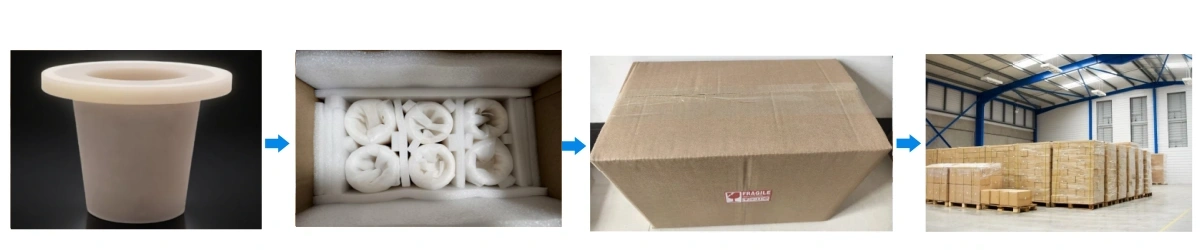

Aluminum Nitride Melting Crucible Packaging

AlN Crucibles Applications

  • Laboratory Furnaces and Thermal Analysis Systems

    ✅Key Advantages

    Aluminum nitride crucible combines high thermal conductivity with stable geometry, helping reduce temperature gradients across small powder or pellet samples during furnace programs and thermal analysis runs.

    ✅ Problem Solved

    A laboratory materials group reported that with standard alumina crucibles, temperature variation across a 10–15 mm diameter pellet could exceed 30°C at 1200°C, creating scatter in sintering and mass-change results. With aluminum nitride crucibles of similar volume but higher thermal conductivity and thinner, controlled walls, the measured variation dropped to below approximately 10–15°C under the same ramp conditions. This reduction in gradient improved run-to-run repeatability and reduced the number of re-tests required per development cycle.

  • Metal Evaporation and Thin-Film Deposition

    ✅Key Advantages

    In PVD and thermal evaporation setups, aluminum nitride crucible allows energy from heaters or electron beams to reach the charge efficiently, supporting controlled melt pools and helping maintain consistent film thickness over long runs.

    ✅ Problem Solved

    In a vacuum coating line, switching from lower-conductivity crucibles to aluminum nitride crucibles helped reduce warm-up time for small metal charges by roughly 20–30% for identical heater power settings. The evaporation rate became more stable over time, which led to thinner thickness adjustment margins in process recipes and fewer production interruptions due to unstable deposition rate alarms.

  • Powder Metallurgy and High-Temperature Material R&D

    ✅Key Advantages

    Aluminum nitride crucible provides a chemically stable vessel for test melts, alloy development, and powder reaction studies, especially when multiple heating cycles are required on small quantities.

    ✅ Problem Solved

    A powder metallurgy customer running trial melts in small batches found that with conventional crucibles, spalling and wall wear after several cycles could introduce particulate contamination. By moving to high-density aluminum nitride crucibles and controlling ramp rates, the number of cycles before visible wear increased significantly, which in turn reduced the frequency of cleaning and the risk of test batches deviating due to vessel degradation.

AlN Ceramic Crucible Usage Instructions

Proper use and handling of an aluminum nitride crucible can extend its service life and improve process consistency. The following steps cover installation, operation, storage, cleaning, and common precautions.

  • Installation

    1. Inspect the crucible visually before use for chips, cracks, or impact marks, especially around the rim and bottom corner.
    2. Place the aluminum nitride crucible on a stable support or carrier; avoid direct contact with sharp metal edges that concentrate stress.
    3. Ensure the crucible sits flat in the holder; rocking or point contact may lead to local stress during thermal cycling.
    4. When used in induction systems, confirm that the crucible position aligns with coil geometry and that any metallic support is mechanically decoupled to limit stress on the ceramic.

  • Operation

    1. Use heating rates that are compatible with the furnace and crucible size; moderate ramp rates help reduce thermal shock, especially in the first cycles.
    2. Avoid charging the crucible to the very top; leave a practical freeboard for expansion, splashing, and easier handling.
    3. When running above about 1400–1500°C, monitor atmosphere, heating time, and chemical loading, because these factors strongly influence long-term crucible behavior.
    4. Do not apply mechanical force to a hot crucible; allow it to cool to a safe handling temperature before moving or unloading.

  • Storage

    1. Store aluminum nitride crucibles in a dry cabinet or on shelves with padding so that rims and corners do not contact hard surfaces.
    2. Separate different sizes with dividers or soft layers to avoid impact if boxes are moved.
    3. Keep away from corrosive vapors that may gradually react with the ceramic surface in long-term storage.

  • Cleaning

    1. After use, gently remove loose residues once the crucible has cooled. Tools should be smooth and non-metallic where possible to avoid point impacts.
    2. For adherent residues, use controlled mechanical cleaning or suitable chemical removal compatible with aluminum nitride and the processed material.
    3. Avoid thermal shocking a contaminated crucible with rapid heating for cleaning; instead, apply gradual heating if a bake-out is necessary.

  • Common Misuse Points and Remedies

    1. Rapid heating from room temperature to high setpoint
    Risk: thermal shock and microcracks.
    Remedy: introduce intermediate holds or use a lower initial ramp rate for the first cycles.

    2. Unsupported overhanging geometry in the furnace
    Risk: bending stresses and cracking at the base.
    Remedy: redesign the support so the crucible is fully supported at the bottom or step shoulder.

    3. Using the same crucible for incompatible chemical systems
    Risk: reactions with previous residues, affecting test results.
    Remedy: dedicate crucibles to material families where cross-contamination is not acceptable, and document usage history.

FAQ — Aluminum Nitride Crucible

  1. Q: How does an aluminum nitride crucible compare with an alumina crucible?
    A: Compared with alumina, an aluminum nitride crucible typically offers much higher thermal conductivity while maintaining ceramic-level electrical insulation. This combination supports more uniform temperature profiles and faster heat transfer, which can be important when sample homogeneity or cycle time is critical.
  2. Q: Can an aluminum nitride crucible be used in vacuum and inert atmospheres?
    A: Yes, aluminum nitride crucibles are commonly used in vacuum and inert atmospheres such as nitrogen or argon. The crucible design and maximum recommended temperature should be chosen based on the process gas, temperature, and chemical system.
  3. Q: What temperature range is suitable for aluminum nitride crucibles?
    A: Many aluminum nitride crucible designs are used at temperatures up to around 1600–1700°C in inert atmospheres, subject to geometry, load, and heating rate. For specific duty cycles and thermal programs, the operating window should be confirmed with the supplier based on drawings and process information.
  4. Q: When should I choose an aluminum nitride crucible instead of boron nitride?
    A: An aluminum nitride crucible is typically chosen when higher structural rigidity, higher bulk density, and more stable geometry are required, especially under repeated thermal cycling. Boron nitride can offer easier machining, but aluminum nitride crucibles often provide better dimensional stability for long-term or higher-load applications.
  5. Q: Can an aluminum nitride crucible be used for metal evaporation or thin-film deposition?
    A: Yes, aluminum nitride crucibles are frequently used as evaporation crucibles in PVD and thin-film deposition, especially for metals and alloys that benefit from high thermal conductivity and stable container geometry during long runs.
  6. Q: What sizes and shapes of aluminum nitride crucible are available?
    A: Typical standard aluminum nitride crucible volumes range from small laboratory sizes of a few milliliters up to a few hundred milliliters. Custom options can include deep cylindrical chambers, stepped shoulders, flanged rims, and matching lids to suit specific holders or coil assemblies.
  7. Q: Can aluminum nitride crucibles be customized according to my drawings?
    A: Yes, aluminum nitride crucibles can be produced according to customer drawings or samples, including outer and inner diameters, wall thickness targets, steps, holes, and special bottoms. Dimensional tolerances are usually defined on the drawing and discussed before production.

Aluminum Nitride Crucible Reviews

  • ⭐️⭐️⭐️⭐️⭐️
    We integrated the aluminum nitride crucible into a new series of high-temperature lab furnaces. The higher thermal conductivity gave us tighter control over sample temperatures, and the dimensional consistency allowed us to use the same holders without rework.
    -- Michael R., R&D Manager, Thermatech Instruments, USA
  • ⭐️⭐️⭐️⭐️⭐️
    For our metal evaporation process, the aluminum nitride crucibles supplied by ADCERAX delivered stable melt behavior over long coating runs. After several months of operation, the wear pattern has been predictable, which simplifies maintenance planning.
    -- Dr. Julia Schneider, Process Engineer, OptiCoat Systems, Germany
  • ⭐️⭐️⭐️⭐️⭐️
    We use custom aluminum nitride crucibles for powder reaction studies. The thin-wall design and controlled tolerances help us keep temperature gradients under control, and the crucibles have supported multiple heating cycles without significant deformation.
    -- Kenji Sato, Senior Engineer, Advanced Materials Lab, Japan
  • ⭐️⭐️⭐️⭐️⭐️
    Our small-batch alloy trials previously suffered from inconsistent results due to container variation. After switching to aluminum nitride crucibles with defined tolerances, run-to-run variation decreased, and we reduced scrap rates for development batches.
    -- Luis Martínez, Production Supervisor, Metapowder Technologies, Spain
customize size

Custom Aluminum Nitride Crucible

ADCERAX can supply custom aluminum nitride crucibles built to the exact geometry required for your equipment. Custom options include outer and inner diameters, depth, wall-thickness distribution, stepped or flanged profiles, bottom shapes, lid interfaces, tolerances, and surface conditions, as well as openings, grooves, or alignment features needed for furnace holders or evaporation sources.

1. Geometry and dimensions

  • Outer diameter, inner diameter, and depth
  • Wall thickness distribution (uniform or graded)
  • Step heights and shoulders for seating in fixtures

2. Shape options

  • Cylindrical, conical, or deep straight-wall chamber
  • Stepped or flanged crucible for holders
  • Slot, notch, or key features for anti-rotation

3. End and opening details

  • Flat or radiused bottom
  • Matching lid (loose or guided fit)
  • Pouring lip, spout, or groove for controlled discharge

4. Tolerances and fit

  • Dimensional tolerances typically in the range of ±0.1 mm to ±0.2 mm, depending on size
  • Fit to metal or ceramic carriers, shields, or induction coils

5. Surface and functional details

  • As-fired or ground surfaces on critical interfaces
  • Machined edges where a sealing or close fit is required
  • Small ports for thermocouples or gas inlets where design permits

Related Products

ADCERAX - Your Trusted Advanced Ceramics Manufacturing Partner

Direct factory manufacturing with comprehensive ceramic materials expertise and global supply capabilities

Direct Factory Manufacturing

China-based ceramic materials production facility with state-of-the-art equipment

Engineering Team

Experienced professionals in advanced ceramics applications and custom design

Quality Control

Strict quality control standards for technical ceramics manufacturing and quality management

Global Supply Chain

Serving customers worldwide with technical ceramics and rapid response

24/7 Technical Support

Round-the-clock support for ceramic components inquiries and technical assistance

500+ Satisfied Customers

Trusted by global customers for advanced ceramic materials and precision components

Get in touch with us

Our team will be happy to respond to you in less than 24 hours.

Adcerax's factory

Quick Quotation

*Our team will answer your inquiries within 24 hours.

*Your information will be kept strictly confidential.

Ready to Solve Your Engineering Challenge?

Partner with ADCERAX for reliable, high-performance advanced ceramic solutions. Our engineers are ready to discuss your project.

E-mail

info@adcerax.com

Phone

+(86) 0731-74427743 | WhatsApp: +(86) 19311583352

Response Time

Within 24 hours

Quick Quote

The more details you provide, the faster we can quote.

*We respond within 24 hours. All inquiries are confidential.

Download Catalog

Get Your Custom Sulution

The more details you provide, the faster we can respond.

customize size

*We respond within 24 hours. All inquiries are confidential.

Download Catalog