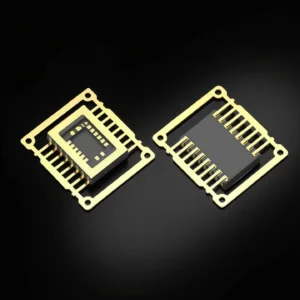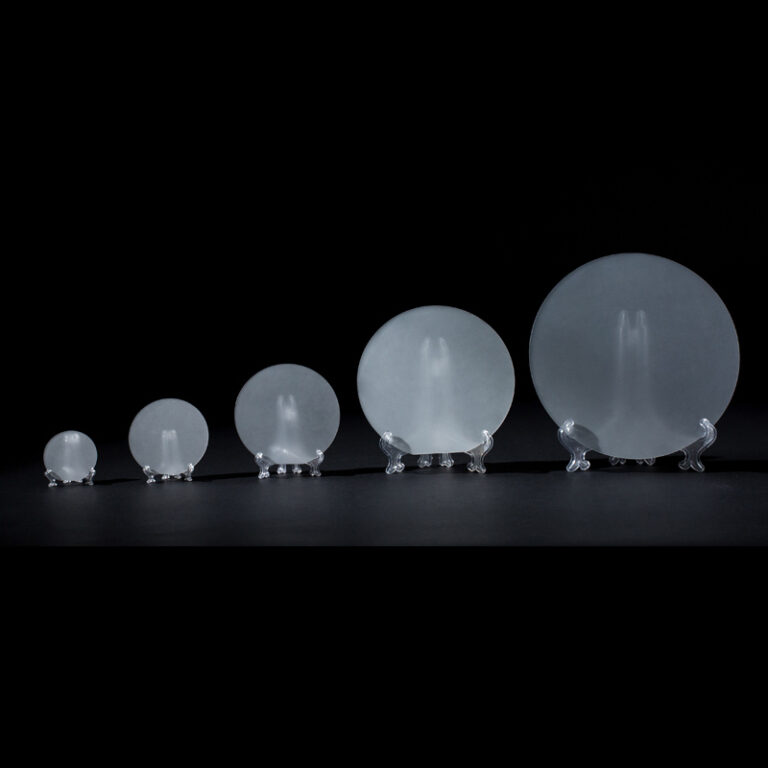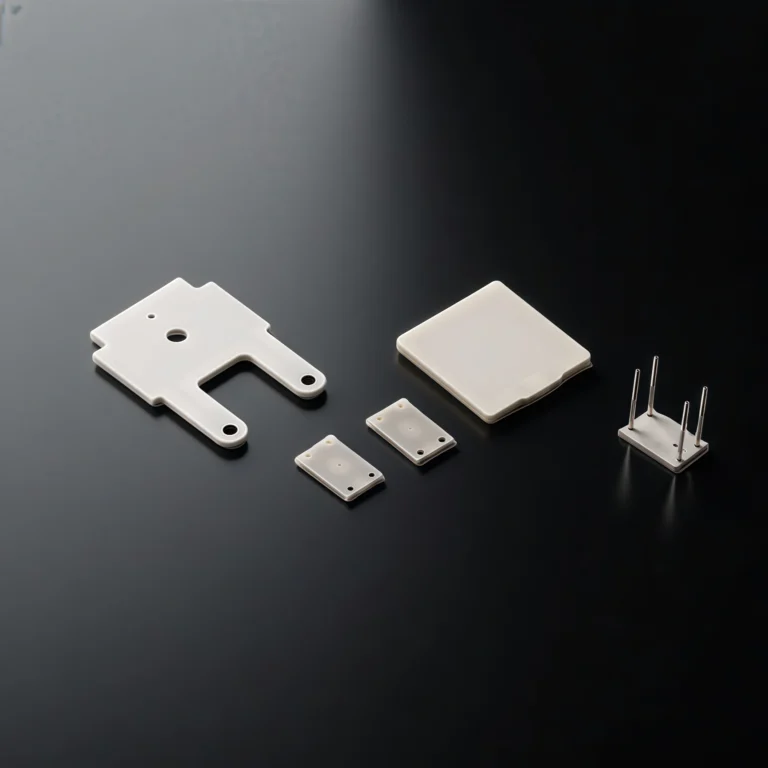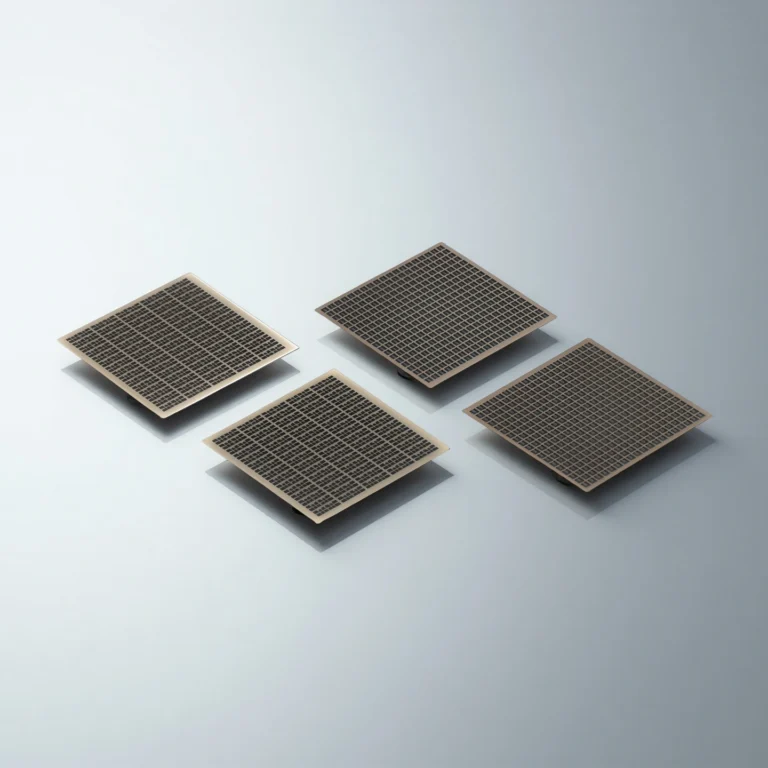
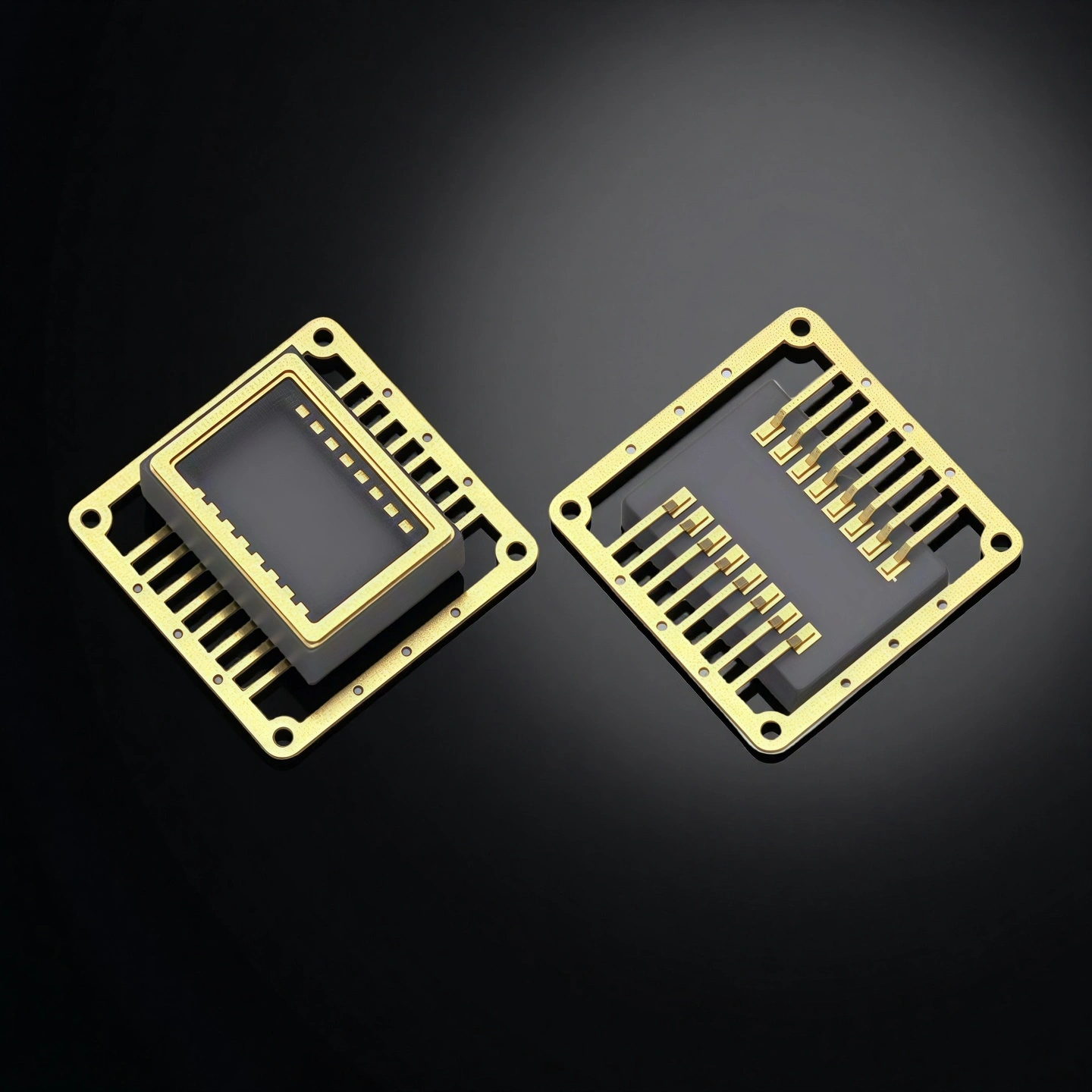
Aluminum Nitride Ceramic Packaging Shell for SiC and IGBT Power Modules

The aluminum nitride ceramic packaging shell is offered either as a bare machined AlN body or prepared with metallization layers matched to the target assembly process. It can be produced in standard footprints or fully custom layouts for power, RF and LED module integration. Outer dimensions, cavity depth and wall thickness are defined according to customer drawings, with typical overall sizes ranging from 5 × 5 mm to 80 × 80 mm.

Catalogue No. AT-DIP04B
Material  Aluminum Nitride
Thermal Conductivity ≥170 W/m·K
Diameter Tolerance ±0.05 mm
Dimensions/Sizes Download PDF
24H Standard Dispatch
Small Batch Support OEM
Factory Direct
Expert Engineering Support

Aluminum nitride ceramic packaging shell is a precision-machined structural enclosure made from high-thermal-conductivity aluminum nitride (AlN) ceramic, designed to serve as the mechanical, thermal and electrical foundation for high-power electronic and optoelectronic devices. It provides a rigid housing, a low-resistance heat-dissipation path, and a high-insulation barrier within a single monolithic ceramic body.

AIN Ceramic Packaging Shell Benefits

  • Thermal path designed into the shell
    The aluminum nitride ceramic packaging shell uses high-conductivity AlN so that heat spreads efficiently from the die region into the base and mounting interface, reducing junction temperature at power densities above 50–100 W/cm².

  • CTE matching to Si and SiC devices
    The coefficient of thermal expansion of the AlN shell is close to Si and SiC, which reduces thermo-mechanical stress on solder and sintered joints during thermal cycling and extends module lifetime.

  • Controlled cavity and wall geometry
    Cavity depth, wall thickness and step features are machined to tight tolerances to support automated pick-and-place, wire bonding and lid sealing, with typical dimensional tolerances down to ±0.05–0.10 mm on critical features.

  • Support for complex metallization layouts
    The surface of the AlN ceramic package can be prepared for Mo/Mn, W-based or sputtered metal systems, enabling fine-pitch pads, isolated lands and ground planes for RF and power layouts.

  • Suitable for hermetic or near-hermetic sealing
    The dense aluminum nitride ceramic packaging shell structure and flat sealing surfaces support solder-sealed metal lids or glass-to-metal transitions for low leak rates in demanding environments.


Aluminum Nitride Package Shell Properties

Property Content Unit Unit ALN-170 ALN-200 ALN-230
Basic Properties Color gray light yellow light yellow
Density g/cm³ 3.2-3.3 3.2-3.3 3.2-3.3
Surface Roughness μm 0.2-0.75 0.2-0.75 0.2-0.8
Camber length ‰ ≤3‰ ≤3‰ ≤3‰
Hardness HV 1100 1100 1100
Thermal Properties Max Operating Temperature °C 1100 1100 1100
Thermal Conductivity W/m·K 170-190 190-220 220-230
Coefficient of Thermal Expansion 10⁻⁶/K(20-400°c) 4-5 4-5 4-5
Coefficient of Thermal Expansion 10⁻⁶/K(400-800°c) 5-6 5-6 5-6
Mechanical Properties Flexural Strength MPa 300-400 350-450 400-500
Tensile Strength MPa 200-300 250-350 280-380
Compressive Strength MPa 2000-3000 2200-3200 2500-3500
Electrical properties Dielectric Constant at 1MHz 8-9 8-9 8-9
Dielectric strength KV/mm ≥15 ≥15 ≥15
Volume resistivity 20℃ Ω.cm ≥1014 ≥1014 ≥1014


Aluminium Nitride Ceramic Packaging Shell  Specifications

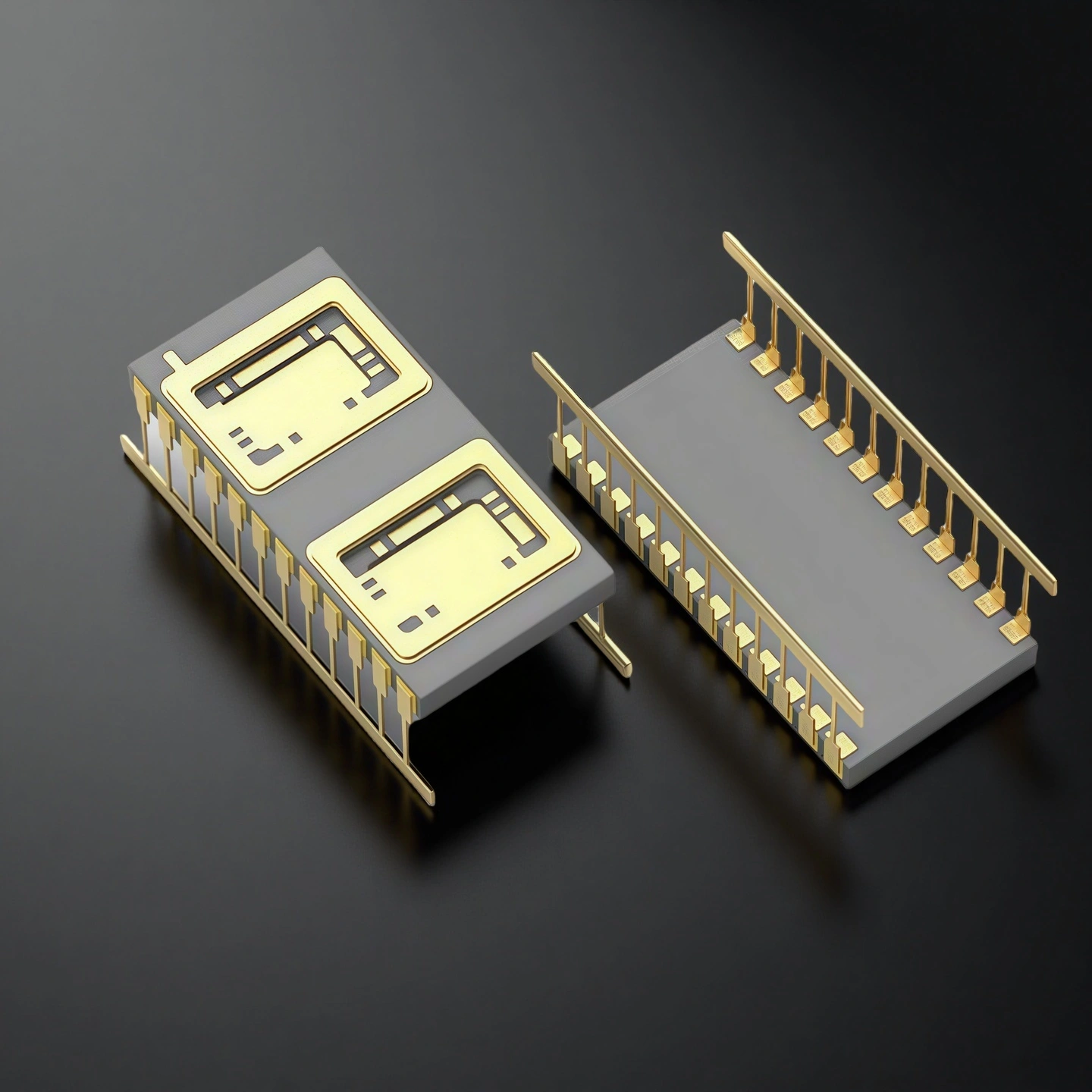
Type 1: CDIP Ceramic Dual-in-line Shell
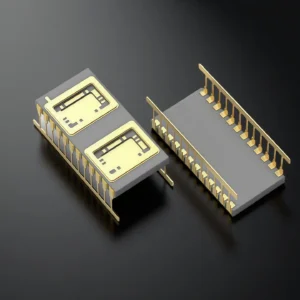
Aluminum nitride ceramic housing for IGBT module

CDIP Ceramic Dual-in-line Shell
Model Number of Leads Lead Pitch Core Cavity Size Ceramic Package Size Sealing Method With/Without Heat Sink
AT-DIP04B 4 2.54 5.4*3.2 7.4*5.2 Flat Seal No
AT-DIP04C 4 2.54 5.3*2.65 7.4*5.1 Flat Seal No
AT-DIP04D 4 2.54 5.4*3.2 7.4*5.2 Flat Seal No
AT-DIP04S2 4 2.54 5.0*2.6 7.3*5 Flat Seal No
AT-DIP06B 6 2.54 6.6*5.4 8.4*7.4 Flat Seal No
AT-DIP06C 6 2.54 6.6*5.4 8.51*7.49 Flat Seal No
AT-DIP06D 6 2.54 6.6*5.4 8.4*7.4 Flat Seal No
AT-DIP06E 6 2.54 5.16*4 9*7.4 Flat Seal No
AT-DIP06S3 6 2.54 5.2*4.2 9.3*7.4 Flat Seal No
AT-DIP08A 8 2.54 7.7*5.4 9.7*7.4 Flat Seal No
AT-DIP08AL 8 2.54 10.08*7.37 8*5.72 Flat Seal No
AT-DIP08M 8 2.54 17.1*6.6 19.46*9.91 Flat Seal No
AT-DIP08S2 8 2.54 5.72*5.21 10.28*7.37 Flat Seal No
AT-DIP12 12 2.54 5.6*3.8 15.24*7.37 Flat Seal No
AT-DIP14 14 2.54 5.6*3.8 17.9*7.5 Flat Seal No
AT-DIP16 16 2.54 5.6*4.32 20.32*7.37 Flat Seal No
AT-DIP16A 16 2.54 5.59*4.19 20.32*7.42 Flat Seal No
AT-DIP16B 16 2.54 5.6*3.8 20.32*7.5 Flat Seal No
AT-DIP16C 16 2.54 5.4*4.5 23.6*7.4 Flat Seal No
AT-DIP16S2 16 2.54 18.2*4.9 20.6*7.37 Flat Seal No
AT-DIP20A 20 2.54 5.6*3.8 25.14*7.37 Flat Seal No
AT-DIP24 24 2.54 5.75*3.8 30.48*7.49 Flat Seal No
AT-DIP28A 28 2.54 5.6*4.2 40*25.1 Flat Seal No
AT-DIP32 32 2.54 10*6.2 40.64*9.91 Flat Seal No


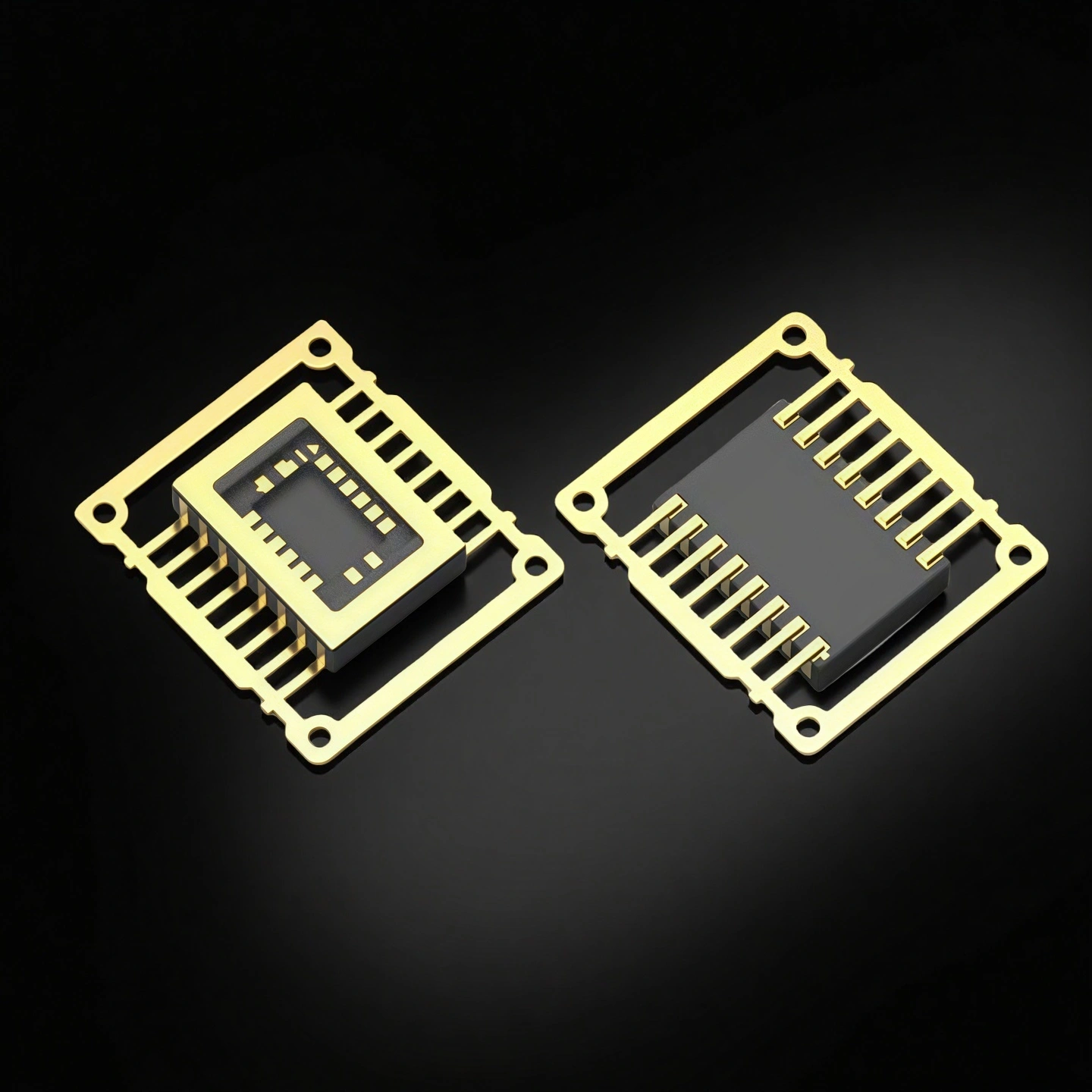
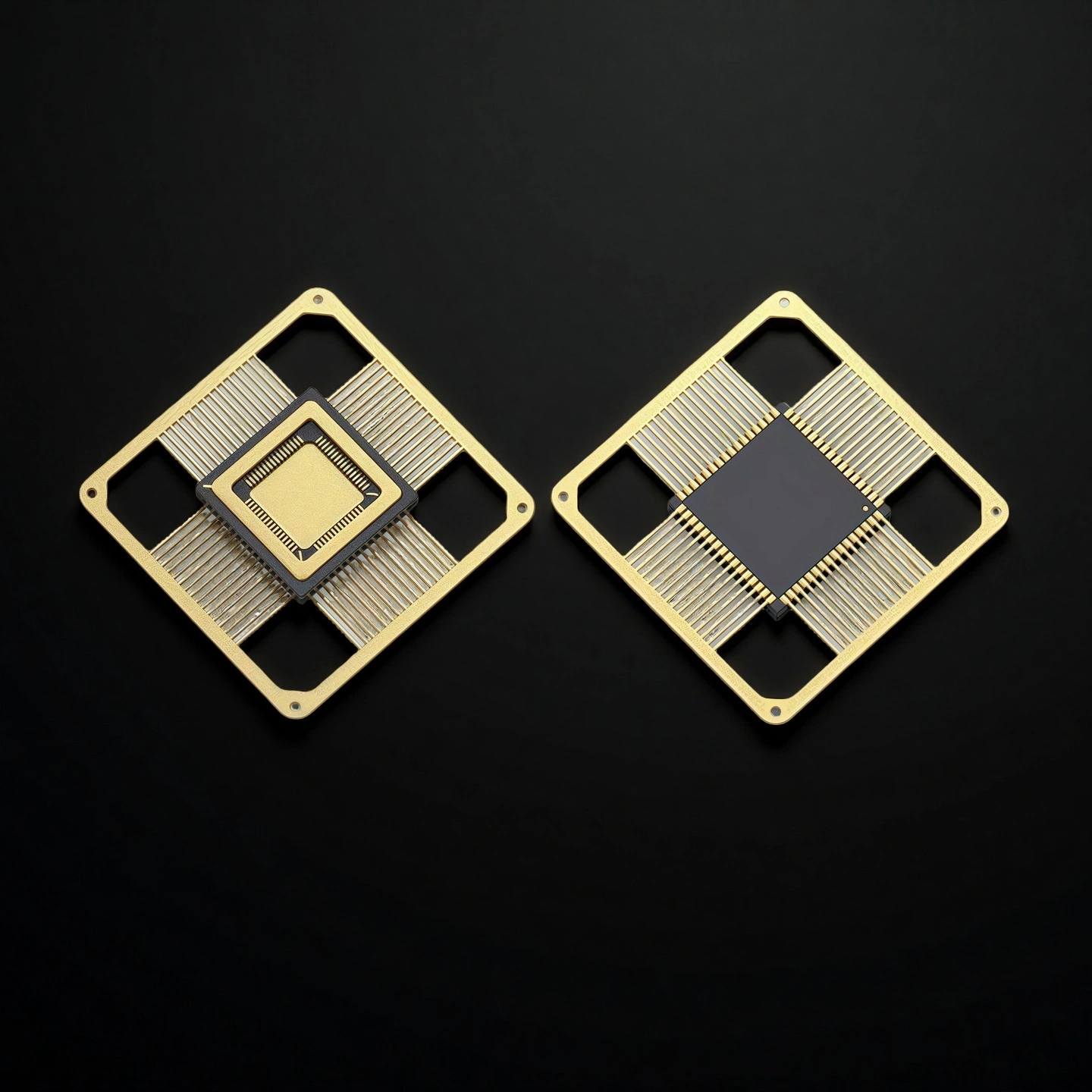
Type 2: CQFP Ceramic Quad Flat Shell

CQFP ceramic four-sided flat shell

CQFP Ceramic Quad Flat Shell
Item No. Number of Leads Lead Pitch Core Cavity Size Ceramic Package Size Sealing Method With/Without Heat Sink
AT-CQFP24A 24 0.65 3.3*3.3 6.6*6.8 AuSn (Gold-Tin) Yes
AT-CQFP28 28 1.27 7.6*7.6 12*12 AuSn (Gold-Tin) No
AT-CQFP28B 28 1.27 5.5*5.5 11.43*11.43 Flat Seal Yes
AT-CQFP28D 28 0.8 4.2*4.2 9*9 AuSn (Gold-Tin) Yes
AT-CQFP28E 28 0.8 4.5*4.5 7*7 AuSn (Gold-Tin) Yes
AT-CQFP28F 28 0.8 4.2*4.2 9*9 AuSn (Gold-Tin) Yes
AT-CQFP40B 40 1.27 4.8*4.8 14.6*14.6 AuSn (Gold-Tin) No
AT-CQFP40D 40 0.5 4.6*4.6 11*11 AuSn (Gold-Tin) Yes
AT-CQFP44 44 0.8 6.1*6.1 10*10 AuSn (Gold-Tin) No
AT-CQFP44B 44 0.8 6.4*6.4 10*10 AuSn (Gold-Tin) No
AT-CQFP44C 44 0.8 6.9*6.9 10*10 AuSn (Gold-Tin) No
AT-CQFP44E 44 0.8 5.13*5.13 10.6*10.6 AuSn (Gold-Tin) No
AT-CQFP44F 44 1.27 8.1*8.1 16.51*16.51 AuSn (Gold-Tin) No
AT-CQFP48A 48 0.5 4.2*4.2 8.5*8.5 AuSn (Gold-Tin) No
AT-CQFP48B 48 1 6*6 14.22*14.22 AuSn (Gold-Tin) No
AT-CQFP48C 48 1 8.9*8.9 14.22*14.22 AuSn (Gold-Tin) No
AT-CQFP48D 48 1 8.7*8.7 14.22*14.22 AuSn (Gold-Tin) No
AT-CQFP64A 64 0.8 5*5 14*5*14.5 AuSn (Gold-Tin) No
AT-CQFP64B 64 0.8 6.4*6.4 14.6*14.6 AuSn (Gold-Tin) No
AT-CQFP64C 64 1 5*5 18.4*18.4 AuSn (Gold-Tin) No
AT-CQFP64D 64 0.8 8*8 14.6*14.6 AuSn (Gold-Tin) No
AT-CQFP64E 64 1 9.2*9.2 18.4*18.4 AuSn (Gold-Tin) No
AT-CQFP64P 64 0.5 7*7 11*11 AuSn (Gold-Tin) No
AT-CQFP80A 80 0.5 7.8*7.8 12.2*12.2 AuSn (Gold-Tin) No
AT-CQFP84 84 1.27 15.1*15.1 29.3*29.3 AuSn (Gold-Tin) No
AT-CQFP100B 100 0.65 7.6*7.6 22*16 AuSn (Gold-Tin) No


Type 3: CFP Ceramic Flat Housing

CFP Ceramic Flat Shell

CFP Ceramic Flat Housing
Item No. Number of Leads Lead Pitch Core Cavity Size Ceramic Package Size Sealing Method With/Without Heat Sink
AT-FP04X2 4 1.27 3.4*1.6 5*3.2 Flat Seal No
AT-FP08M 8 1.27 2.5*1.8 5.6*5.2 Flat Seal No
AT-FP08N 8 1.27 3.4*2.2 6.6*4.2 Flat Seal No
AT-FP10K 10 1.27 4.5*3 6.35*6.35 Flat Seal No
AT-FP14H 14 1.27 3.4*2.4 9*4.4 Flat Seal No
AT-FP16F 16 1.27 8.1*5.1 10.4*7.4 Flat Seal No
AT-FP16P 16 1.27 5*2.5 9.9*6.35 Flat Seal No
AT-FP20D 20 1.27 5.6*4.3 10.1*7.5 Flat Seal No
AT-FP28 28 1.27 6.3*5.3 17.75*12.45 Flat Seal No
AT-FP36 36 1.27 19.67*9.66 23.37*14.73 Flat Seal No


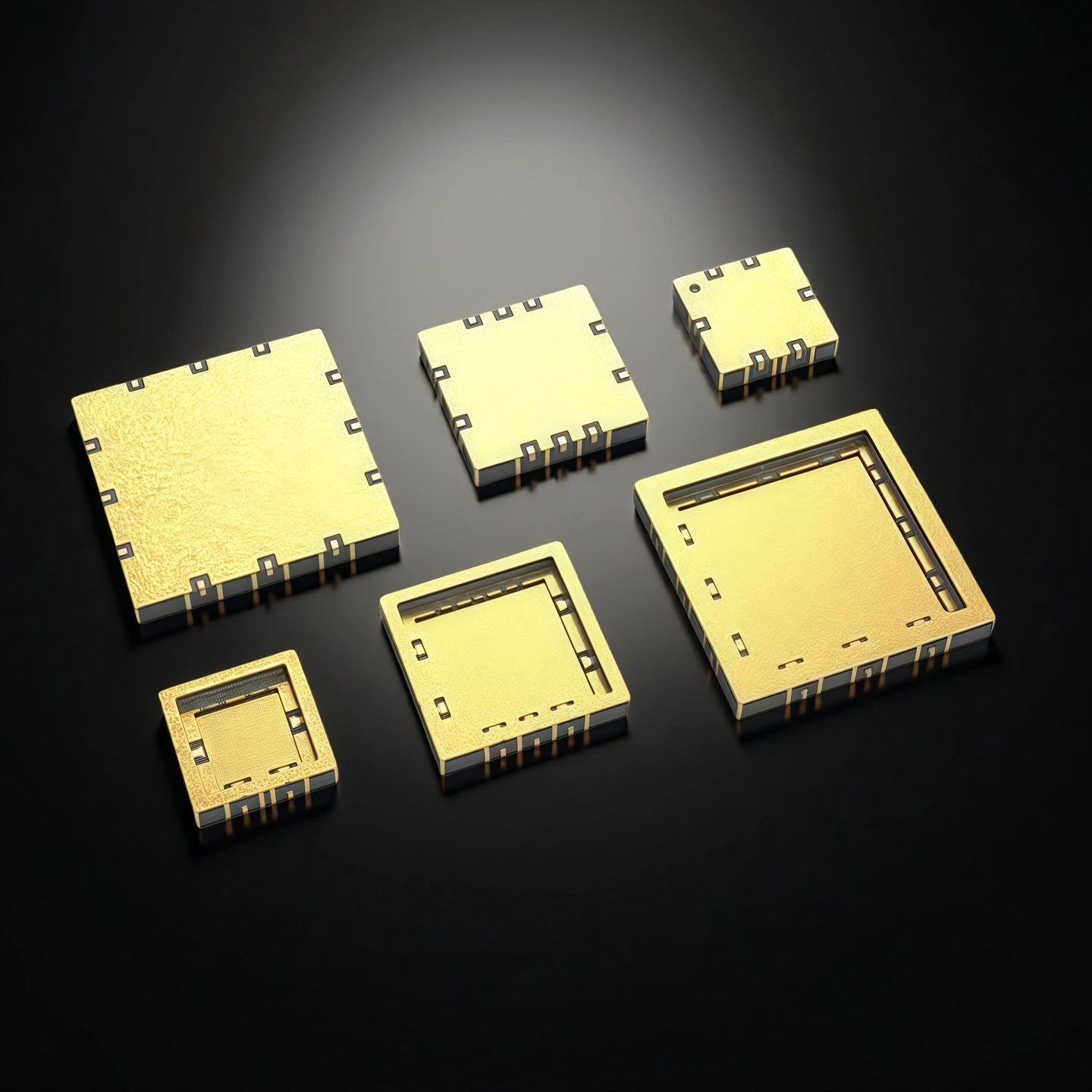
Type 4: CQFN Ceramic Four-sided Flat Pinless Packaging Shell

CQFN ceramic four-sided flat pinless shell

CQFN Ceramic Four-sided Flat Pinless Packaging Shell
Product Name Number of Leads Lead Pitch Core Cavity Size Ceramic Package Size Sealing Method With/Without Heat Sink
AT-CQFN12 12 0.5 SQ1.4 SQ3 AuSn (Gold-Tin) No
AT-CQFN12A 12 1.27 SQ1.5 SQ5 AuSn (Gold-Tin) No
AT-CQFN12B 12 1 SQ4.25 SQ7.65 AuSn (Gold-Tin) No
AT-CQFN12C 12 1 2.2*1.8 SQ7.65 AuSn (Gold-Tin) No
AT-CQFN16 16 0.5 SQ2.2 SQ4 AuSn (Gold-Tin) No
AT-CQFN16A 16 0.65 SQ1.4 SQ4 AuSn (Gold-Tin) No
AT-CQFN16B 16 0.5 SQ1.4 SQ3 AuSn (Gold-Tin) No
AT-CQFN16C 16 1.27 SQ4.5 SQ7 AuSn (Gold-Tin) No
AT-CQFN16D 16 1.27 SQ2.4 SQ4.6 AuSn (Gold-Tin) No
AT-CQFN16F 16 0.5 SQ2.4 SQ4.6 AuSn (Gold-Tin) No
AT-CQFN20 20 0.5 SQ2.2 SQ4 AuSn (Gold-Tin) No
AT-CQFN20B 20 0.5 SQ2.2 SQ4 AuSn (Gold-Tin) No
AT-CQFN20D 20 0.5 SQ2 SQ4 AuSn (Gold-Tin) No
AT-CQFN20E 20 0.5 SQ1.7 SQ4 AuSn (Gold-Tin) No
AT-CQFN20P 20 1.5 SQ8.4 SQ10 AuSn (Gold-Tin) No
AT-CQFN24 24 0.5 SQ2.62 SQ4 AuSn (Gold-Tin) No
AT-CQFN24A 24 0.5 SQ2.62 SQ4 AuSn (Gold-Tin) No
AT-CQFN24B 24 0.5 SQ2.7 SQ4 AuSn (Gold-Tin) No
AT-CQFN24C 24 0.5 SQ2.7 SQ4 AuSn (Gold-Tin) No
AT-CQFN24D 24 0.5 SQ2.2 SQ4 AuSn (Gold-Tin) No
AT-CQFN24E 24 0.5 SQ2.5 SQ4 AuSn (Gold-Tin) No
AT-CQFN32 32 0.5 SQ3.3 SQ5 AuSn (Gold-Tin) No
AT-CQFN32G 24 0.5 SQ5 SQ7 AuSn (Gold-Tin) No
AT-CQFN32L 32 0.5 SQ4.4 SQ7 AuSn (Gold-Tin) No
AT-CQFN40 40 0.5 SQ4.5 SQ6 AuSn (Gold-Tin) No
AT-CQFN40A 40 0.5 SQ3 SQ6 AuSn (Gold-Tin) No


Type 5: CSOP Ceramic Small-profile Shell

CSOP ceramic small-profile housing

CSOP Ceramic Small-profile Shell
Item No. Number of Leads Lead Pitch Core Cavity Size Ceramic Package Size Sealing Method With/Without Heat Sink
AT-CSOP04 4 2.54 2.6*2.4 5.4*4 Flat Seal No
AT-CSOP04B 4 1.27 1.9*1.8 4.5*3.4 Flat Seal No
AT-CSOP05 5 0.95 3*2.74 5*4.4 Flat Seal No
AT-CSOP06 6 0.95 2.7*2.5 5.2*4.2 Flat Seal No
AT-CSOP08A 8 1.27 2.5*1.67 5.16*5.16 Flat Seal No
AT-CSOP08B 8 1.27 3*2.74 5*4.4 Flat Seal No
AT-CSOP08D 8 1.27 4.32*4.32 5.7*5.7 Flat Seal No
AT-CSOP08E 8 1.27 3.76*3.76 5.16*5.16 Flat Seal No
AT-CSOP08F 8 0.65 2.15*1.6 5.4*4.1 Flat Seal No
AT-CSOP08H 8 1.27 3*2.8 6*4.4 Flat Seal No
AT-CSOP08V 8 1.27 1.6*1.35 5.1*5.1 Flat Seal No
AT-CSOP10 10 1.27 4.75*3.15 6.35*6.35 Flat Seal No
AT-CSOP12 12 1.27 4.2*4 10.5*7.5 Flat Seal No
AT-CSOP14 14 1.27 6*3.6 11.7*7.5 Flat Seal No
AT-CSOP16 16 1.27 8.5*2 10.5*5.4 Flat Seal No
AT-CSOP16B 16 0.65 4.2*2.7 6*6 Flat Seal No
AT-CSOP16C 16 1.27 4*2 11.1*7.1 Flat Seal No
AT-CSOP16D 16 1.27 5*3 10.5*7.5 Flat Seal No
AT-CSOP16F 16 1.27 4*2.3 10*4.4 Flat Seal No
AT-CSOP20 20 1.27 3.1*2.8 12.7*7.5 Flat Seal No
AT-CSOP20A 20 0.635 4.3*3.1 7*5.3 Flat Seal No
AT-CSOP28 28 1.27 7.7*5.6 18.09*7.5 Flat Seal No
AT-CSOP32 32 1.27 7.52*5.4 18.4*8.8 Flat Seal No
AT-CSOP36 36 1.27 4.9*3 22.7*7.1 Flat Seal No


Aluminum Nitride Ceramic Housing Packaging

  • Each aluminum nitride ceramic packaging shell is separated in rigid plastic trays or cavity blister packs to prevent edge chipping and surface contact.
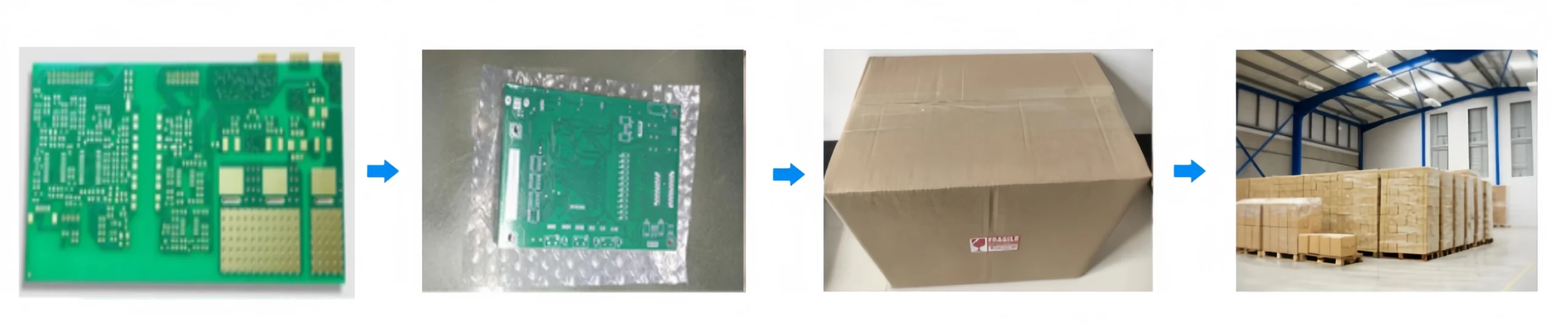
Metalized Alumina Substrate Packaging

Applications of AlN Ceramic Packaging Shells

  • Power Electronics Modules – Aluminum Nitride Ceramic Packaging Shell for SiC and IGBT

    ✅Key Advantages

    1. High heat flux management – The aluminum nitride ceramic packaging shell supports power densities above 80–100 W/cm² by combining a high thermal conductivity base with short thermal paths from die to heat sink.
    2. Stable operation over long thermal cycles – CTE matching between the AlN shell and SiC or IGBT chips reduces solder fatigue during more than 10⁴–10⁵ thermal cycles between typical operating temperatures.
    3. Optimized creepage and clearance – The cavity and sidewalls can be designed to maintain required creepage distances at working voltages in the 600–1700 V range without oversizing the module.

    ✅ Problem Solved

    A drive inverter manufacturer running SiC modules at 1200 V observed field returns due to solder fatigue in alumina-based packages when inverter output reached 50 kW per cabinet. By switching the high-power modules to an aluminum nitride ceramic packaging shell with a thermal conductivity close to 180 W/m·K, junction temperature under full load dropped by around 10–15 °C. Internal qualification over 20,000 thermal cycles showed a reduction in solder crack occurrence from roughly 6–7% of samples to less than 1%, while module dimensions remained compatible with the existing heat sink platform.

  • RF and Microwave Power Devices – AlN Ceramic Package Shell for GaN Amplifiers

    ✅Key Advantages

    1. Low-loss ceramic housing – The AlN ceramic package shell provides a stable, low-loss dielectric environment for GaN and GaAs RF devices operating up to multi-GHz frequencies.
    2. Efficient heat spreading under RF hotspots – The high thermal conductivity of the aluminum nitride ceramic packaging shell reduces temperature rise under RF hotspots where local power density can exceed 20–40 W/mm of gate width.
    3. Fine metallization pattern compatibility – Surface quality and planarity support fine-pitch metallization and bonding pads needed for RF matching networks and multi-chip assemblies.

    ✅ Problem Solved

    A RF module supplier for communication base stations upgraded from alumina hybrid packages to aluminum nitride ceramic packaging shells for a series of GaN power amplifiers. Thermal simulation and measurement showed that under a 150 W output stage the maximum case temperature fell by around 8–10 °C. At the same time, the AlN shell allowed closer routing of ground and RF pads without exceeding dielectric stress limits, enabling a more compact RF layout. Over a 1,000-hour accelerated life test, gain and output power drift stayed within the RF customer’s specification without additional derating of the module.

  • High-Power LED and Automotive Lighting – Aluminum Nitride Ceramic Housing for LED Modules

    ✅Key Advantages

    1. Improved lumen maintenance – By using an aluminum nitride ceramic housing, LED junction temperature can be reduced by 5–10 °C compared with alumina carriers at similar drive currents, supporting higher lumen maintenance over lifetime.
    2. Compact high-current LED arrays – The AlN package shell allows tighter LED spacing and higher drive currents while keeping case temperature within the limits of automotive and industrial lighting standards.
    3. Dimensional stability for optical alignment – Tight control of cavity and base flatness keeps optical alignment tolerance within a few tenths of a millimeter over the luminaire operating temperature range.

    ✅ Problem Solved

    An automotive lighting supplier developing a compact headlamp module needed to drive a multi-chip LED array above 1 A per emitter while keeping lumen depreciation after 2,000 hours below a defined threshold. Using an aluminum nitride ceramic packaging shell with a high-conductivity base, the LED board temperature at rated current dropped from around 115 °C to about 105 °C compared with the previous alumina design. Accelerated lumen maintenance tests showed that light output after 2,000 hours improved by roughly 3–5%, and the housing dimensions stayed within the optical alignment tolerance window during thermal cycling between cold-start and full operating temperature.

AlN Ceramic Packaging Shells Usage Instructions

  • Installation

    1. Check incoming shells for visible edge chips, cracks or deformation before assembly; segregate any units with visible defects.
    2. Use flat, clean fixtures to support the aluminum nitride ceramic packaging shell during die attach so that bending stresses do not exceed design limits.
    3. Align the shell with mechanical datums or fiducials defined on the drawing to keep cavity and pad positions within bonding and lid sealing tolerances.

  • Operation and Assembly

    1. Select die attach materials (solder, sintered silver or conductive adhesive) with compatible processing temperatures and CTE for aluminum nitride.
    2. Control temperature ramp rates during die attach, wire bonding and lid sealing to avoid excessive thermal shock; typical ramp rates are kept within a few °C per second.
    3. Ensure that process residues are removed from the cavity and sealing surfaces before final closing to maintain insulation resistance and possible hermetic performance.

  • Storage

    1. Store aluminum nitride ceramic packaging shells in dry, clean conditions, ideally below 60% relative humidity and at stable room temperature.
    2. Keep shells in original trays or carriers to avoid uncontrolled stacking or contact that may cause micro-chipping on edges.
    3. Separate unfinished shells from those that have already been metallized or plated, to reduce contamination risk.

  • Cleaning

    1. Use non-abrasive cleaning methods such as filtered air blow-off, ultrasonic cleaning in suitable solvents, or deionized water rinsing when compatible with the metallization system.
    2. Avoid aggressive mechanical brushing or hard tools on sealing rims and metallized areas, which may damage surface finish or remove thin metal layers.
    3. Dry components thoroughly after wet cleaning to prevent spotting, residues or corrosion on metal regions.

  • Precautions and Typical Misuse Points

    1. Thermal shock from rapid heating or cooling
    Problem: Moving the aluminum nitride ceramic packaging shell directly from low storage temperatures to peak process temperatures or cooling it too quickly can introduce thermal stress.
    Solution: Implement controlled pre-heat stages and limit ramp rate to the values validated in your process window.

    2. Over-tight clamping during assembly
    Problem: Excessive clamping force on corners or uneven support can cause micro-cracks or permanent warpage of the shell.
    Solution: Use flat, compliant fixtures and distribute clamping forces uniformly across the base, within the mechanical limits defined by your design.

    3. Contamination of cavity and sealing rim
    Problem: Flux residues, particles or fingerprints on the sealing surface can compromise insulation resistance and lid sealing quality.
    Solution: Apply defined cleaning procedures before final assembly, introduce handling rules with gloves, and verify surfaces under appropriate inspection before closure.

FAQ – Aluminum Nitride Ceramic Packaging Shell

  1. Q: How does an aluminum nitride ceramic packaging shell compare with an alumina package?
    A: Compared with alumina packages, an aluminum nitride ceramic packaging shell typically provides a thermal conductivity in the 170–200 W/m·K range instead of 20–30 W/m·K, while keeping similar dielectric strength. This allows higher power density or lower junction temperature for the same module footprint.
  2. Q: What standard sizes are available for AlN ceramic packages?
    A: Standard aluminum nitride ceramic packaging shell sizes usually cover small packages around 5 × 5 mm up to module-class shells in the 50–80 mm range. Many OEMs still choose custom footprints and cavity depths, so it is common to adapt dimensions to a specific module layout rather than rely only on catalog sizes.
  3. Q: Can ADCERAX supply fully custom aluminum nitride ceramic packaging shells?
    A: Yes, ADCERAX can produce custom aluminum nitride ceramic packaging shell designs based on 2D drawings or 3D models, including specific cavity shapes, step features and pad locations. Dimensional tolerances and inspection criteria can be set according to the customer’s internal standards.
  4. Q: What is the maximum recommended operating temperature for an AlN packaging shell?
    A: In many designs, the aluminum nitride ceramic packaging shell is suitable for continuous operation in the 200–300 °C range at the ceramic level, with junction temperatures defined by the device manufacturer. The exact temperature limit depends on the selected metallization, solder and lid materials in the package stack.
  5. Q: What information is needed to request a quotation for AlN ceramic packaging shells?
    A: To quote an aluminum nitride ceramic packaging shell, suppliers typically need a dimensional drawing or 3D file, material and metallization requirements, annual volume, inspection needs and any special flatness or leak-tightness specifications. Providing the thermal design target can also help optimize base thickness and cavity layout.

Customer Reviews – Aluminum Nitride Ceramic Packaging Shell

  • ⭐️⭐️⭐️⭐️⭐️
    We used the aluminum nitride ceramic packaging shell from ADCERAX in a 75 kW inverter project. The new AlN ceramic package helped reduce measured junction temperature by around 10 °C compared with the previous alumina housing, and the cavity tolerances were stable across the first 5,000 pieces.
    -- Michael L., Power Electronics Engineering Manager, DriveTech GmbH
  • ⭐️⭐️⭐️⭐️⭐️
    For our GaN RF power amplifiers we needed an AlN ceramic package shell with precise cavity depth and pad locations. The aluminum nitride ceramic packaging shells matched our drawings closely, and the surface finish worked well with our metallization and wire bonding processes.
    -- Sarah T., RF Module Design Lead, NovaWave Systems Ltd.
  • ⭐️⭐️⭐️⭐️⭐️
    ADCERAX supplied custom aluminum nitride ceramic packaging shells for our SiC driver modules in several frame sizes. The combination of consistent dimensions and competitive pricing allowed us to standardize across multiple product families without redesigning the heat sink interface.
    -- Kenji M., Purchasing Supervisor, Industrial Controls OEM, Japan
  • ⭐️⭐️⭐️⭐️⭐️
    “We adopted aluminum nitride ceramic housing for a compact automotive headlamp module. After switching to the new metallized AlN ceramic package, our thermal tests showed lower case temperature and more stable alignment of the optical elements over the full operating temperature range.
    -- Laura R., Optoelectronics Product Manager, Lumenix Lighting Corp.
customize size

Custom Aluminum Nitride Ceramic Packaging Shells 

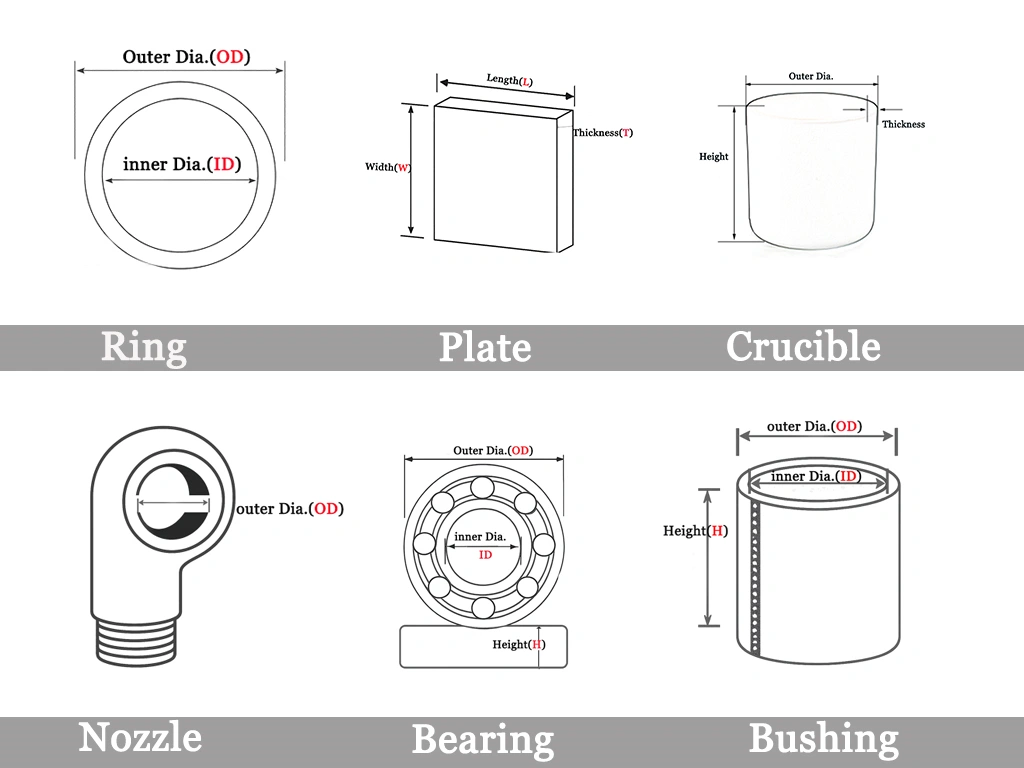
  • Overall footprint: length and width from 5–80 mm, with selectable corner geometries (square, chamfered, rounded, radiused) and optional perimeter ribs for mechanical stiffness.

  • Cavity dimensions: cavity length, width and depth; support for multi-level steps, die-attach terraces, thermal spreading zones and isolation channels for stacked dies or insulation layers.

  • Wall & base thickness: sidewall thickness 0.5–3.0 mm and base thickness 0.5–2.5 mm, with optional locally thickened regions beneath terminals, mounting bosses or heat-generating zones.

  • Base design variations: flat base, recessed base, raised pedestals for die attach, multi-zone bases for selective metallization, or integrated heat-spreading platforms.

  • Opening geometry: single cavity, dual-cavity, multi-cavity housings; slots for busbars; notches for pins; feedthrough windows; optical or alignment windows; and stepped openings for lid seating.

  • Sealing surfaces: rim width, surface finish and flatness optimized for soldered lids, braze frames or seam-sealed metal covers; adjustable sealing rim height for different lid thicknesses.

  • Metallization areas: bond pad regions, terminal pads, ground planes, guard rings and keep-out zones for later metal patterning (Mo/Mn+Ni/Au, TiW/Cu/Au, or customer-defined stack).

  • Reference surfaces: alignment shoulders, fiducials, datum planes, and mechanical datums to support automated pick-and-place, wire bonding, optical inspection and robotic assembly.

  • Dimensional tolerances: baseline ±0.1 mm or tightened tolerances on critical dimensions such as cavity depth, wall thickness, sealing rim height, pad-to-pad spacing and base flatness.

Related Products

ADCERAX - Your Trusted Advanced Ceramics Manufacturing Partner

Direct factory manufacturing with comprehensive ceramic materials expertise and global supply capabilities

Direct Factory Manufacturing

China-based ceramic materials production facility with state-of-the-art equipment

Engineering Team

Experienced professionals in advanced ceramics applications and custom design

Quality Control

Strict quality control standards for technical ceramics manufacturing and quality management

Global Supply Chain

Serving customers worldwide with technical ceramics and rapid response

24/7 Technical Support

Round-the-clock support for ceramic components inquiries and technical assistance

500+ Satisfied Customers

Trusted by global customers for advanced ceramic materials and precision components

Get in touch with us

Our team will be happy to respond to you in less than 24 hours.

Adcerax's factory

Quick Quotation

*Our team will answer your inquiries within 24 hours.

*Your information will be kept strictly confidential.

Ready to Solve Your Engineering Challenge?

Partner with ADCERAX for reliable, high-performance advanced ceramic solutions. Our engineers are ready to discuss your project.

E-mail

info@adcerax.com

Phone

+(86) 0731-74427743 | WhatsApp: +(86) 19311583352

Response Time

Within 24 hours

Quick Quote

The more details you provide, the faster we can quote.

*We respond within 24 hours. All inquiries are confidential.

Download Catalog

Get Your Custom Sulution

The more details you provide, the faster we can respond.

customize size

*We respond within 24 hours. All inquiries are confidential.

Download Catalog