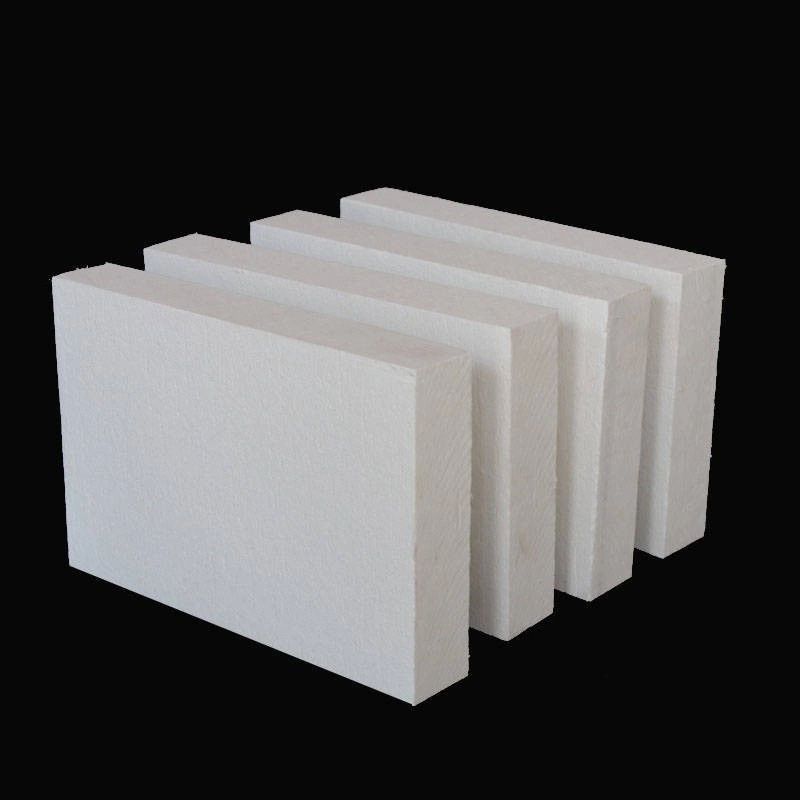
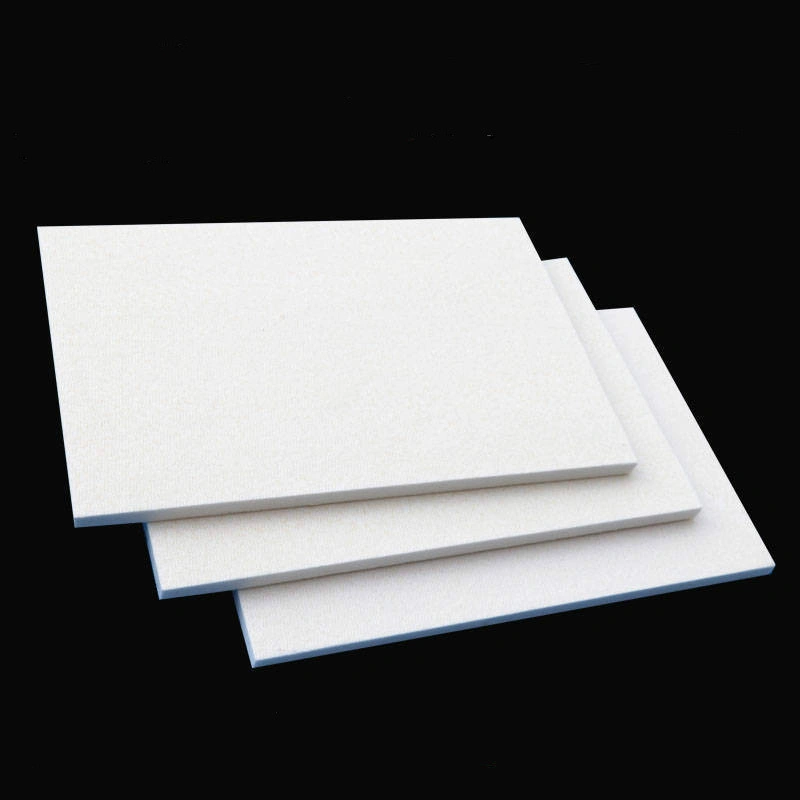
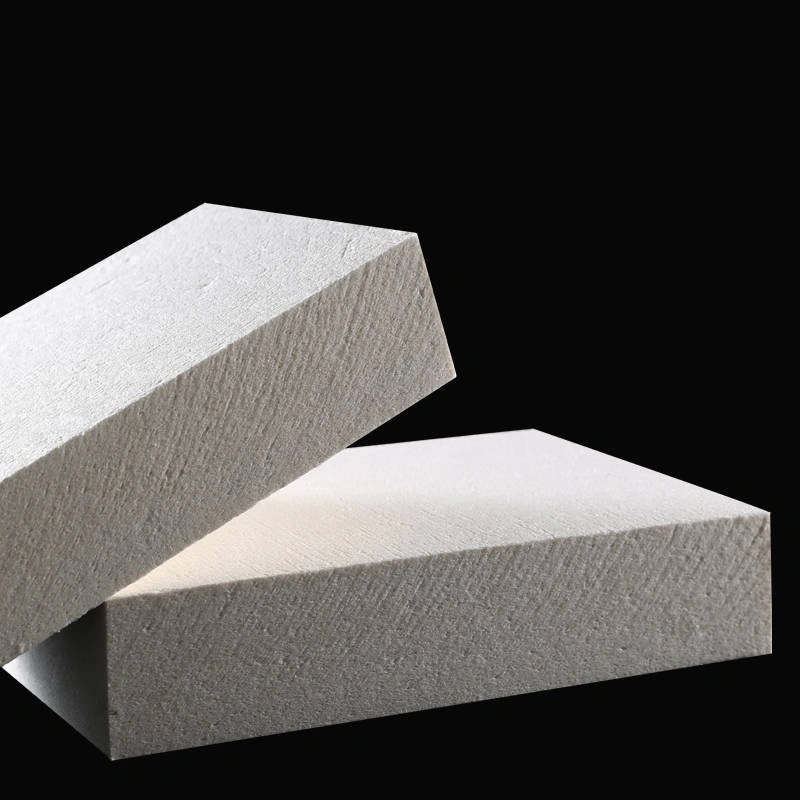
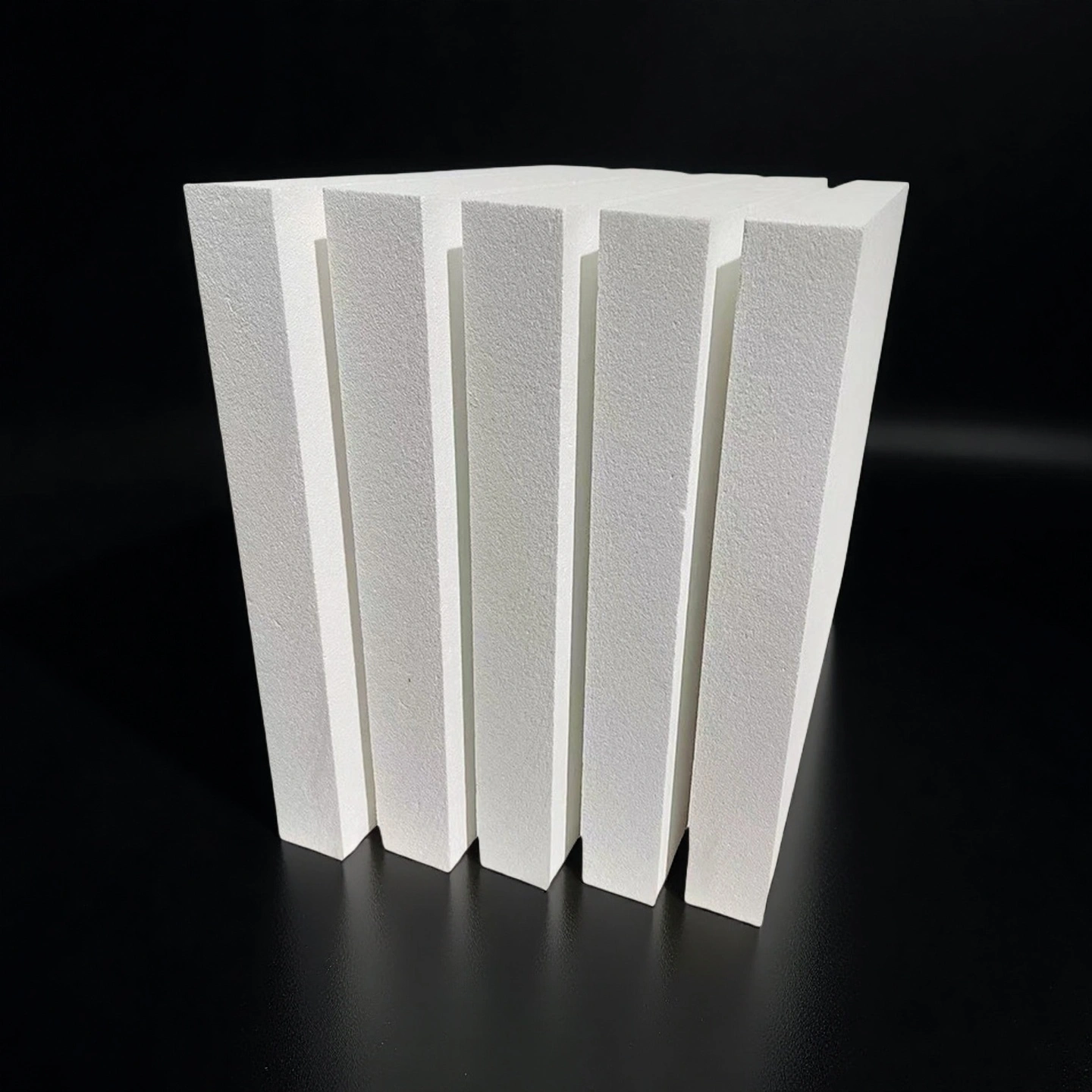
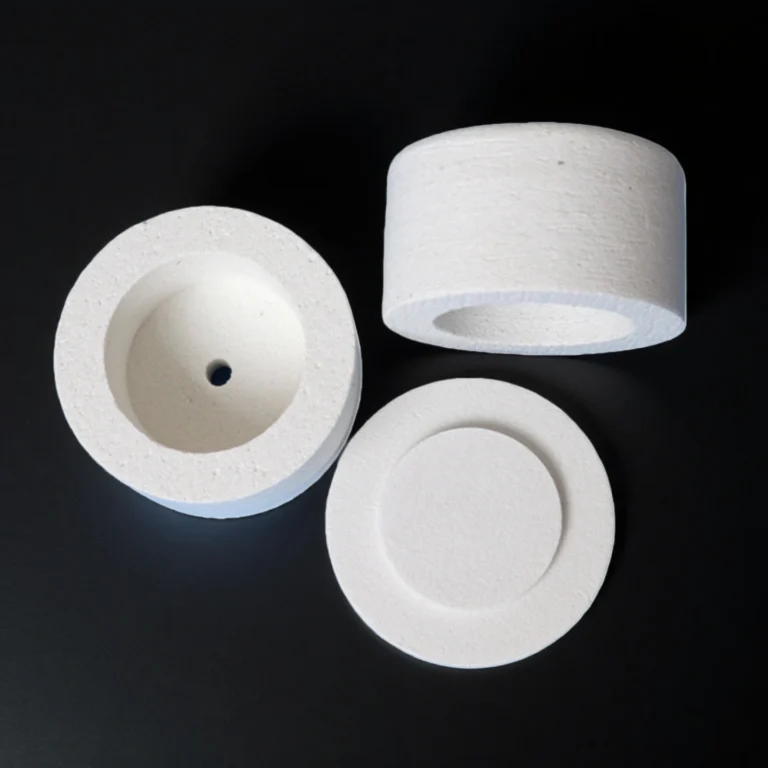
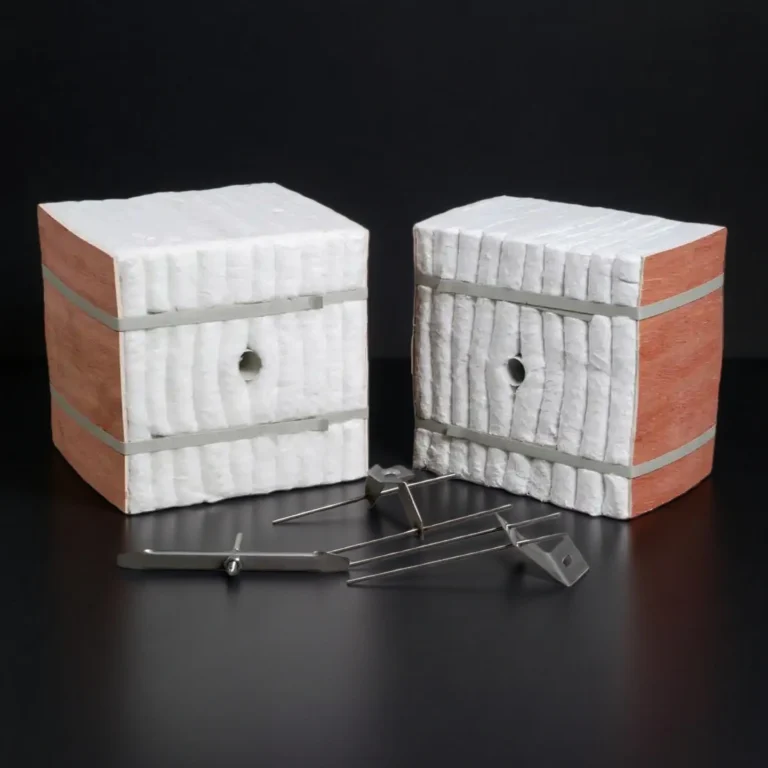
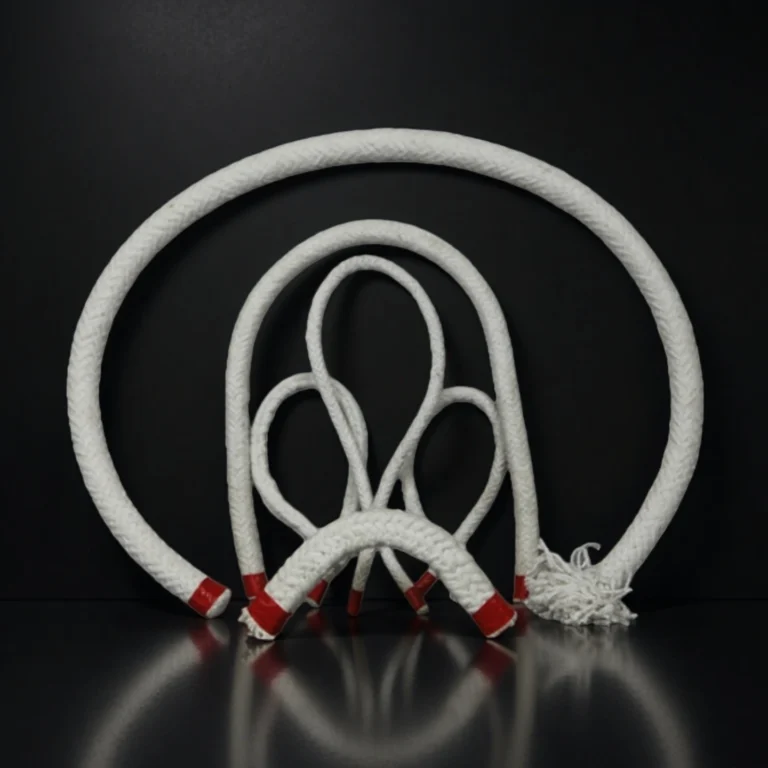
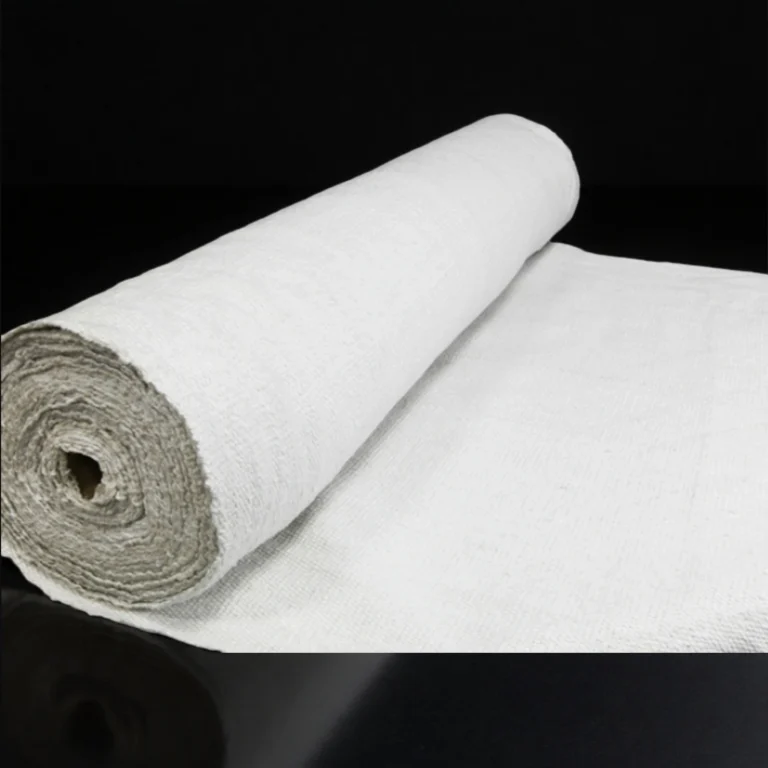
Alumina fiber board is a rigid, machinable high-temperature insulation board made from alumina (Al₂O₃) fibers and a small amount of inorganic binders. It combines the low thermal conductivity of ceramic fibers with the dimensional stability of a pressed board, so it can be cut, drilled, and anchored as a structural insulation layer in furnaces, kilns, and thermal processing equipment.
Alumina Fiber Board Benefits
- Low shrinkage at temperature: Helps maintain hot-face geometry and seal integrity during cycling.
- Stable low conductivity: Supports energy reduction and improved temperature uniformity at mid-to-high temperatures.
- Machinable rigid sheet: Slots, through-holes, and countersinks can be produced cleanly with controlled edge quality.
- Surface flatness & clean face: Reduces fiber fallout and supports cleaner hot-zone assemblies.
- Anchor/adhesive compatible: Works with stainless anchors or high-temperature bonding cements for reliable installation.
Alumina Ceramic Fiber Board Properties
|
Chemical Composition |
|
Item |
1000°C Fiber Blanket |
1260 °C Fiber Blanket |
1425°C Fiber Blanket |
1500°C Fiber Blanket |
1600°C Fiber Blanket |
|
AI2O3 |
42-44% |
45-47% |
34-36% |
41-43% |
72% |
|
SiO2 |
56-58% |
53-55% |
49-51% |
54-56% |
28% |
|
ZrO2 |
- |
- |
14-17% |
- |
- |
|
Cr2O3 |
- |
- |
- |
2-3% |
- |
|
Physical Properties |
|
Item |
1000 |
1260 |
1425 |
1500 |
1600 |
|
Classification Temperature (°C) |
1000 |
1260 |
1425 |
1500 |
1600 |
|
Melting Point (°C) |
1700 |
1760 |
1700 |
1760 |
- |
|
Color |
White |
White |
White |
Light Green |
White |
|
Average Fiber Diameter (mm) |
2.6 |
2.6 |
2.8 |
2.65 |
3.1 |
|
Fiber Length (mm) |
~200 |
~250 |
~250 |
~150 |
~100 |
|
Bulk Density(kg/m3) |
2600 |
2600 |
2800 |
2650 |
3100 |
|
Thermal Conductivity (W/m·K) 400℃ |
0.15 |
0.13 |
- |
- |
- |
|
Thermal Conductivity (W/m·K) 600℃ |
0.22 |
0.19 |
0.13 |
0.13 |
0.06 |
|
Thermal Conductivity (W/m·K) 800℃ |
0.31 |
0.25 |
0.2 |
0.19 |
0.1 |
|
Thermal Conductivity (W/m·K) 1000℃ |
- |
- |
0.29 |
0.26 |
0.14 |
Alumina Fibre Board Specifications
|
Alumina Ceramic Fiber Board |
|
Item No. |
Length(mm) |
Width (mm) |
Thickness (mm) |
Temperature℃ |
SiO2+Al2O3(%) |
|
AT-AO-XW1001 |
600 |
400 |
20-150 |
1000℃-1800℃ |
96%-99.8% |
|
AT-AO-XW1002 |
900 |
600 |
20—150 |
|
AT-AO-XW1003 |
1000 |
500 |
20-150 |
|
AT-AO-XW1004 |
1000 |
600 |
20-150 |
|
AT-AO-XW1005 |
1100 |
700 |
10-150 |
|
AT-AO-XW1006 |
1200 |
1000 |
10—150 |
Alumina Fibre Board Packaging
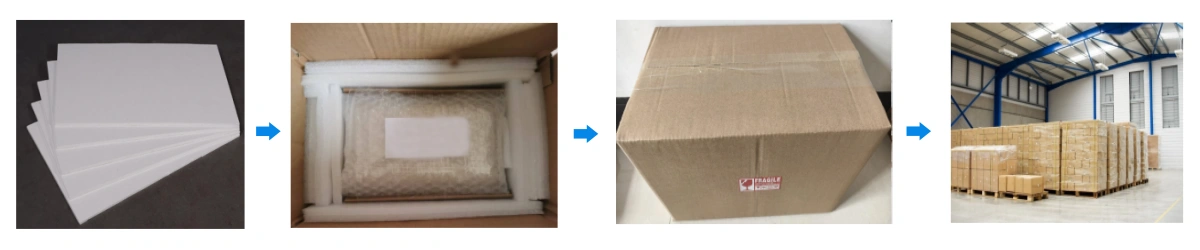
- Boards are packed in moisture-proof cartons with foam protection
Alumina Fibre Board Applications
These cases show that alumina fiber boards improve energy efficiency, process stability, and equipment reliability across a wide range of high-temperature industries, demonstrating their value in real applications.
-
Industrial Furnaces — Hot-Face & Back-Up Panels
✅Key Advantages
1. Low shrinkage at temperature: Holds seal lines during cycling, minimizing heat leaks.
2. Stable conductivity at mid/high-temp: Supports tighter temperature bands for process consistency.
3. Rigid & machinable: Clean slots/holes ensure fast fit with existing anchors and carriers.
✅ Problem Solved
Retrofitting a mixed-load heat-treat line required maintaining ±10 °C uniformity at 900–1050 °C while cutting energy use. Replacing aged boards with high-alumina sheets plus a 25 mm back-up layer reduced burner duty, improved side-to-center delta by ~8–12 °C, and shortened ramp-up by ~10–15 min per cycle. The line avoided unscheduled downtime and brought maintenance intervals back on plan.
-
Advanced Materials & Powder Metallurgy — Sintering Cells
✅Key Advantages
1. Clean surface & low particulates: Helps protect sensitive green parts and fixtures.
2. Flatness control: Supports repeatable stack-ups and fixture alignment.
3. Thermal stability: Reduces dimensional drift across long holds and multiple cycles.
✅ Problem Solved
A sintering cell handling fragile compacts saw edge erosion on the hot-face. Switching to flatness-controlled alumina fiberboard sheets with sealed hot-face reduced debris accumulation, cut fixture re-shimming time by ~30–40%, and stabilized length change across batches.
-
Industry: Kiln Energy Retrofit — Back-Up & Baffle Panels
✅Key Advantages
1. Lower heat loss: Reduced wall flux improves energy balance at steady state.
2. Easy machining: Large pass-throughs and baffles shaped without complex tooling.
3. Fast install: Rigid sheets anchor cleanly, enabling phased upgrades during short outages.
✅ Problem Solved
A periodic kiln targets energy savings without extending downtime. Installing 50 mm alumina insulation ceramic fibre boards behind the hot face lowered fuel consumption per firing cycle by a measured single-digit percentage and kept product profiles within spec, avoiding post-firing rework.