Alumina Ceramic Boat performance often becomes the hidden variable behind inconsistent LOI and ashing results. When data drift, rework, or unexplained deviations appear, laboratories frequently trace the root cause back to thermal carriers rather than furnace settings or balances.
In response, this article consolidates the full engineering logic behind alumina ceramic boat selection, use, and control in LOI, ash, and high-temperature gravimetric testing. It integrates material science, thermal behavior, geometry, contamination control, and workflow practices into a single, technically coherent reference.
Accordingly, the discussion progresses from fundamental function to practical laboratory integration, ensuring each technical decision aligns with long-term data reliability and repeatability objectives.
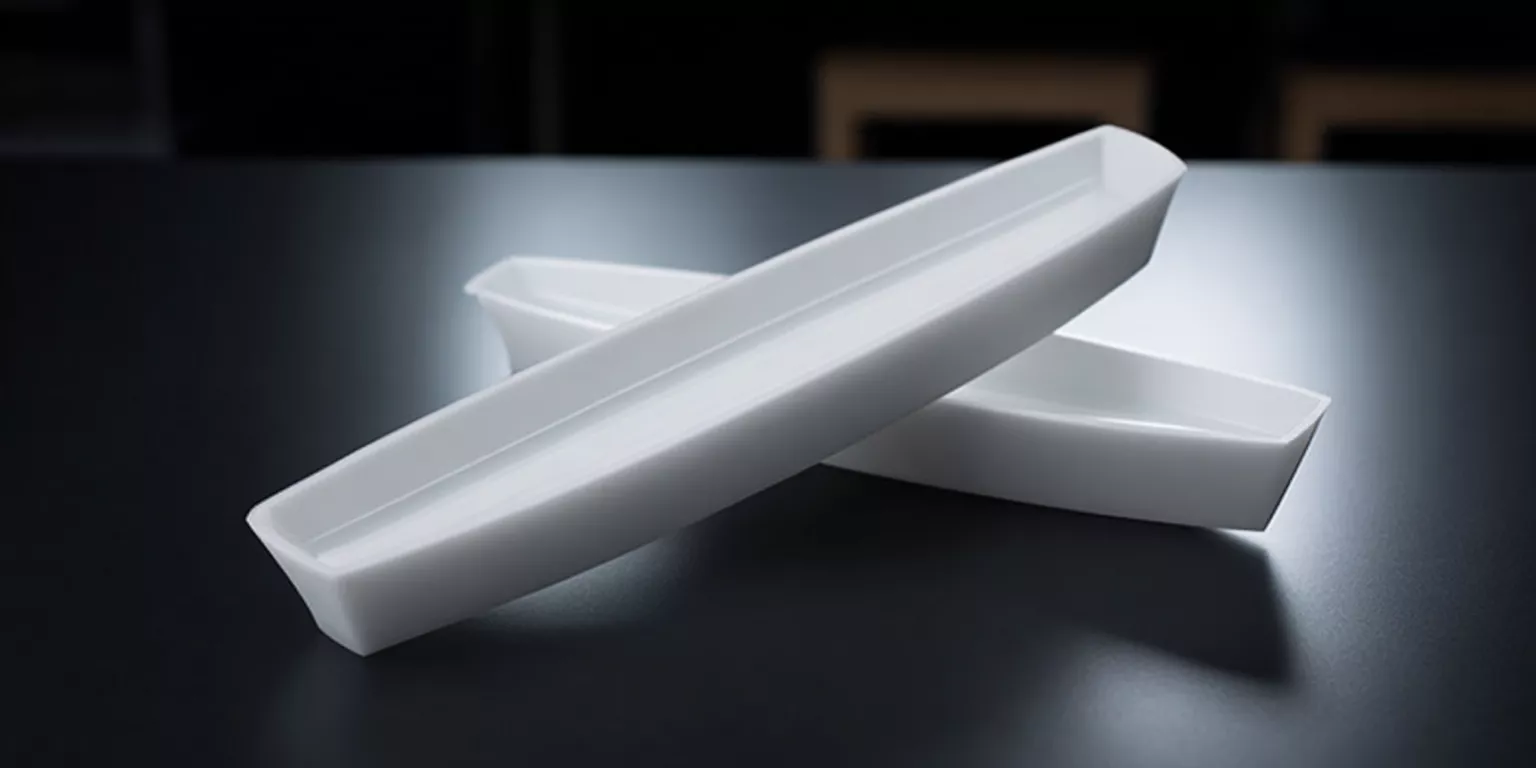
Fundamental Function of Alumina Ceramic Boats in LOI and Ashing
Before examining material grades or geometry details, it is essential to clarify why alumina ceramic boats occupy a central position in LOI1 and ashing2 workflows. Moreover, this foundational role explains why seemingly minor deviations in boat behavior often propagate into measurable analytical error.
Thermal Stability Requirements in LOI and Ashing Protocols
Thermal stability is the first non-negotiable requirement for any alumina ceramic boat used in LOI and ashing analysis. LOI procedures typically involve sustained exposure between 750 °C and 1000 °C, followed by controlled cooling prior to gravimetric evaluation.
In practice, laboratories observe that even small thermal distortions alter heat distribution across the sample bed. For example, during routine cement raw meal testing, technicians frequently notice that unstable carriers produce uneven ash coloration after 2–4 hours of dwell time. Consequently, inconsistent thermal behavior translates directly into mass-loss variability rather than furnace instability.
For this reason, alumina ceramic boats must maintain dimensional integrity across repeated high-temperature cycles, ensuring that furnace temperature profiles remain the dominant variable rather than carrier-induced heat gradients.
Material Inertness and Its Impact on Gravimetric Accuracy
Beyond thermal resistance, alumina ceramic boats serve as chemically inert platforms during LOI testing. Gravimetric methods rely on the assumption that only the sample contributes to measurable mass change.
Field experience shows that alumina with ≥99.5 wt% Al₂O₃ purity minimizes interaction with common oxides, carbonates, and mineral phases. In contrast, lower-purity ceramics containing fluxing oxides may subtly react or adsorb residues, introducing mass shifts below 0.1 mg that accumulate across repeated cycles.
Therefore, chemical inertness directly safeguards measurement validity, particularly in high-throughput QC environments where cumulative error compromises trend analysis rather than single data points.
Why Boat Geometry Matters More Than Often Assumed
Geometry plays a more critical role than many laboratories initially assume. Alumina ceramic boats function not only as containers but also as thermal mediators between furnace atmosphere and sample mass.
Shallow, open-profile boats promote uniform gas exposure, which accelerates reaction completion within 30–60 minutes depending on sample type. Conversely, deeper geometries may shield lower layers, extending required dwell times and increasing variability between batches.
Accordingly, boat geometry governs reaction kinetics, heat flow, and sample accessibility, making it an integral parameter rather than a cosmetic design choice.
Summary of Functional Requirements in LOI Applications
| Functional Aspect | Engineering Requirement | Impact on LOI Results |
|---|---|---|
| Operating temperature (°C) | 750–1000 continuous | Prevents deformation and thermal drift |
| Alumina purity (wt%) | ≥99.5 Al₂O₃ | Reduces chemical interaction and mass error |
| Geometry profile | Shallow open profile | Improves heat and gas uniformity |
| Dimensional stability | <0.2% change per cycle | Maintains repeatable sample exposure |
| Thermal cycling tolerance (cycles) | >200 typical QC cycles | Supports long-term reuse without bias |
Material Science Foundations of Alumina Ceramic Boats
Moreover, once functional requirements are established, understanding the material science behind alumina ceramic boats becomes essential for explaining performance differences observed during routine LOI and ashing work. In particular, purity, microstructure, and thermal expansion behavior jointly govern stability, contamination risk, and service life.
Alumina Purity Levels and Phase Stability at Elevated Temperatures
Alumina ceramic boats used in LOI testing are commonly produced from alumina powders ranging between 95 wt% and 99.8 wt% Al₂O₃. At elevated temperatures above 800 °C, purity directly influences phase stability and grain boundary behavior.
In laboratory practice, technicians often notice that lower-purity boats exhibit subtle surface glossing or localized deformation after 50–80 thermal cycles. This behavior originates from residual glassy phases formed by silica, alkali oxides, or alkaline earth impurities, which begin to soften well below alumina’s intrinsic melting point of 2050 °C. Consequently, even when macroscopic deformation is not visible, microscopic viscous flow alters surface chemistry and contact conditions.
Therefore, higher alumina purity ensures phase stability across repeated LOI cycles, maintaining both geometric consistency and predictable thermal response over extended use.
Microstructure Density and Its Relation to Contamination Risk
Beyond chemical composition, microstructural density critically affects contamination control. Alumina ceramic boats typically exhibit bulk densities between 3.6 and 3.9 g/cm³, depending on forming and sintering conditions.
In dense microstructures, closed porosity limits adsorption of moisture and volatile species during cooling. By contrast, boats with higher open porosity may absorb atmospheric water within 5–15 minutes after furnace removal, especially under humid laboratory conditions. Experienced analysts frequently encounter unexplained mass rebounds of 0.05–0.2 mg when porous carriers are reused without sufficient equilibration time.
As a result, microstructural density directly governs post-cooling mass stability, making it a hidden but decisive factor in gravimetric repeatability rather than a purely mechanical attribute.
Thermal Expansion Behavior Under Cyclic Heating
Thermal expansion mismatch is another material-driven phenomenon affecting alumina ceramic boat reliability. Dense alumina exhibits a linear thermal expansion coefficient of approximately 8.0–8.5 × 10⁻⁶ K⁻¹ between room temperature and 1000 °C.
During cyclic heating and cooling, this expansion generates internal stresses proportional to temperature gradients across the boat wall thickness. In practice, laboratories observe that boats with uneven wall thickness develop microcracks after 100–150 cycles, even when operated below maximum temperature limits. These microcracks often remain invisible yet accelerate moisture uptake and surface contamination.
Hence, controlled thermal expansion behavior combined with uniform wall geometry is essential for sustaining long-term dimensional and chemical stability in QC environments.
Summary of Material Science Influences on Performance
| Material Parameter | Typical Range | Effect on LOI Reliability |
|---|---|---|
| Alumina purity (wt%) | 95–99.8 | Governs phase stability and softening risk |
| Bulk density (g/cm³) | 3.6–3.9 | Controls porosity and moisture adsorption |
| Open porosity (%) | <2 preferred | Reduces post-cooling mass drift |
| Thermal expansion (×10⁻⁶ K⁻¹) | 8.0–8.5 | Influences cyclic stress accumulation |
| Stable cycle count | 150–300 | Indicates practical service life |
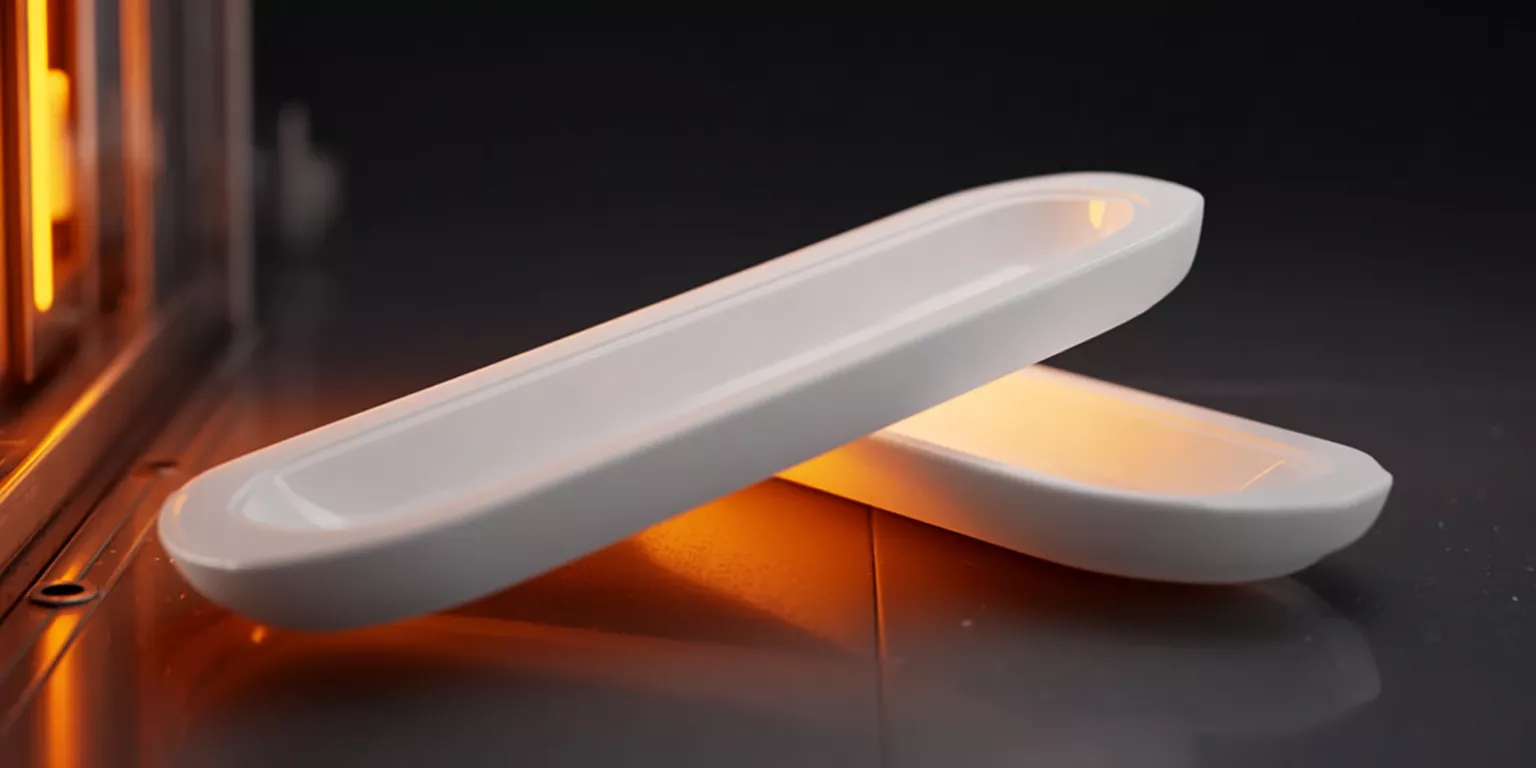
Thermal Shock Behavior During Heating and Cooling Cycles
However, even when alumina purity and density are properly controlled, thermal shock remains the most frequent cause of premature alumina ceramic boat failure in LOI and ashing laboratories. Accordingly, understanding how heating and cooling practices interact with material behavior is essential for preserving dimensional integrity and analytical repeatability.
Heating Rate Sensitivity in Alumina Ceramic Boats
Heating rate directly influences stress development within an alumina ceramic boat during LOI testing. Alumina ceramics tolerate high temperatures well; nevertheless, rapid temperature ramps generate steep thermal gradients across the boat wall thickness.
In routine QC operations, technicians often load room-temperature boats into furnaces preheated above 700 °C to save time. Although this practice shortens setup, it frequently induces tensile stress exceeding 30–40 MPa at the inner surface, approaching the fracture threshold of dense alumina. After 10–20 such cycles, microscopic cracks emerge, even though no visible damage is apparent.
Therefore, controlled heating rates below 5 °C/min through the 200–600 °C range significantly reduce stress accumulation and extend usable service life without compromising throughput.
Cooling Stage Risks After High Temperature Exposure
Cooling introduces an even greater thermal shock risk than heating. After furnace removal, alumina ceramic boats experience rapid surface cooling while the core remains hot, producing inverted thermal gradients.
In practice, laboratories often place hot boats directly onto stainless steel benches or ceramic tiles. This creates localized cooling rates exceeding 15 °C/min, resulting in compressive surface stress followed by delayed tensile rebound. Over repeated use, this pattern causes edge chipping or corner cracking typically observed after 80–120 cycles.
Consequently, gradual air cooling on low-conductivity supports such as alumina fiber boards stabilizes temperature gradients and preserves structural integrity during post-ashing handling.
Practical Thermal Handling Practices for Laboratory Staff
Effective thermal shock management relies on consistent handling rather than specialized equipment. Experienced QC teams standardize loading, heating, and cooling procedures to minimize variability between operators.
For example, laboratories that adopt a staged protocol—preheating boats to 200–300 °C, followed by controlled ramping to target temperature—report service life extensions of 40–60% compared with direct insertion methods. Similarly, enforcing a minimum 10-minute furnace dwell below 300 °C before removal reduces edge cracking incidents.
As a result, operator-level thermal discipline becomes a primary reliability control, often outperforming material upgrades alone in extending alumina ceramic boat longevity.
Summary of Thermal Shock Control Parameters
| Process Stage | Recommended Practice | Reliability Impact |
|---|---|---|
| Initial heating rate (°C/min) | ≤5 through 200–600 °C | Limits internal stress formation |
| Furnace insertion temperature (°C) | <300 preferred | Reduces thermal gradient severity |
| Cooling surface conductivity | Low (fiber or ceramic) | Prevents rapid surface quenching |
| Post-test cooling time (min) | ≥10 before handling | Stabilizes internal temperature |
| Typical cycle life (cycles) | 150–250 with control | Improves reuse consistency |
Geometry and Capacity Selection for Accurate LOI Results
Nevertheless, even when thermal shock is well controlled, inaccurate LOI results often originate from improper geometry or capacity selection. Accordingly, alumina ceramic boat dimensions must be treated as analytical parameters rather than passive accessories within the gravimetric workflow.
Capacity Matching Between Sample Mass and Furnace Volume
Capacity selection governs both heat transfer efficiency and reaction completeness during LOI testing. Alumina ceramic boats are commonly available in capacities ranging from 3 mL to 50 mL, yet laboratories frequently default to oversized boats for convenience.
In practice, when sample mass occupies less than 20–30% of the boat’s internal volume, heat distribution becomes nonuniform. The sample experiences delayed thermal equilibrium, extending effective burnout time by 15–25% compared with correctly matched capacities. Technicians often misinterpret this delay as furnace instability rather than geometric mismatch.
Therefore, aligning boat capacity so that sample fill height remains below 5 mm while maintaining sufficient lateral exposure ensures predictable heat transfer and minimizes dwell-time variability across batches.
Open Profile Versus Enclosed Profile Boat Designs
Profile design directly affects gas exchange and reaction kinetics. Open-profile alumina ceramic boats facilitate unrestricted oxygen access, accelerating oxidation and volatilization reactions during ashing.
By contrast, semi-enclosed or deep-wall designs restrict convection flow, particularly when sample packing density exceeds 0.8 g/cm². Field observations show that enclosed profiles may retain residual carbon even after nominal dwell completion, requiring secondary firing cycles. This phenomenon becomes especially pronounced in organic-rich or polymer-modified samples.
As a result, open-profile geometries are preferred for LOI and ash determination, while enclosed designs should be reserved for specialized containment needs rather than routine QC analysis.
Dimensional Consistency Across Batches
Dimensional repeatability is often overlooked during procurement yet strongly influences long-term analytical consistency. Variations in wall thickness or internal length alter heat flux paths, even when nominal capacity remains unchanged.
In high-frequency QC laboratories, analysts have documented mass deviation trends of ±0.2–0.4% LOI when switching between batches of boats differing by as little as 0.5 mm in internal depth. Such deviations accumulate gradually, complicating trend analysis rather than triggering immediate alarms.
Consequently, tight dimensional tolerances and batch-level consistency are critical for laboratories relying on longitudinal data comparison rather than isolated measurements.
Summary of Geometry and Capacity Selection Criteria
| Selection Parameter | Recommended Range | Analytical Effect |
|---|---|---|
| Sample fill height (mm) | ≤5 | Ensures rapid thermal equilibrium |
| Sample volume fraction (%) | 20–60 of boat volume | Balances exposure and containment |
| Profile type | Open preferred | Improves oxidation completeness |
| Internal depth tolerance (mm) | ±0.3 or better | Maintains batch-to-batch consistency |
| Typical LOI deviation (%) | <0.2 with control | Stabilizes trend analysis |
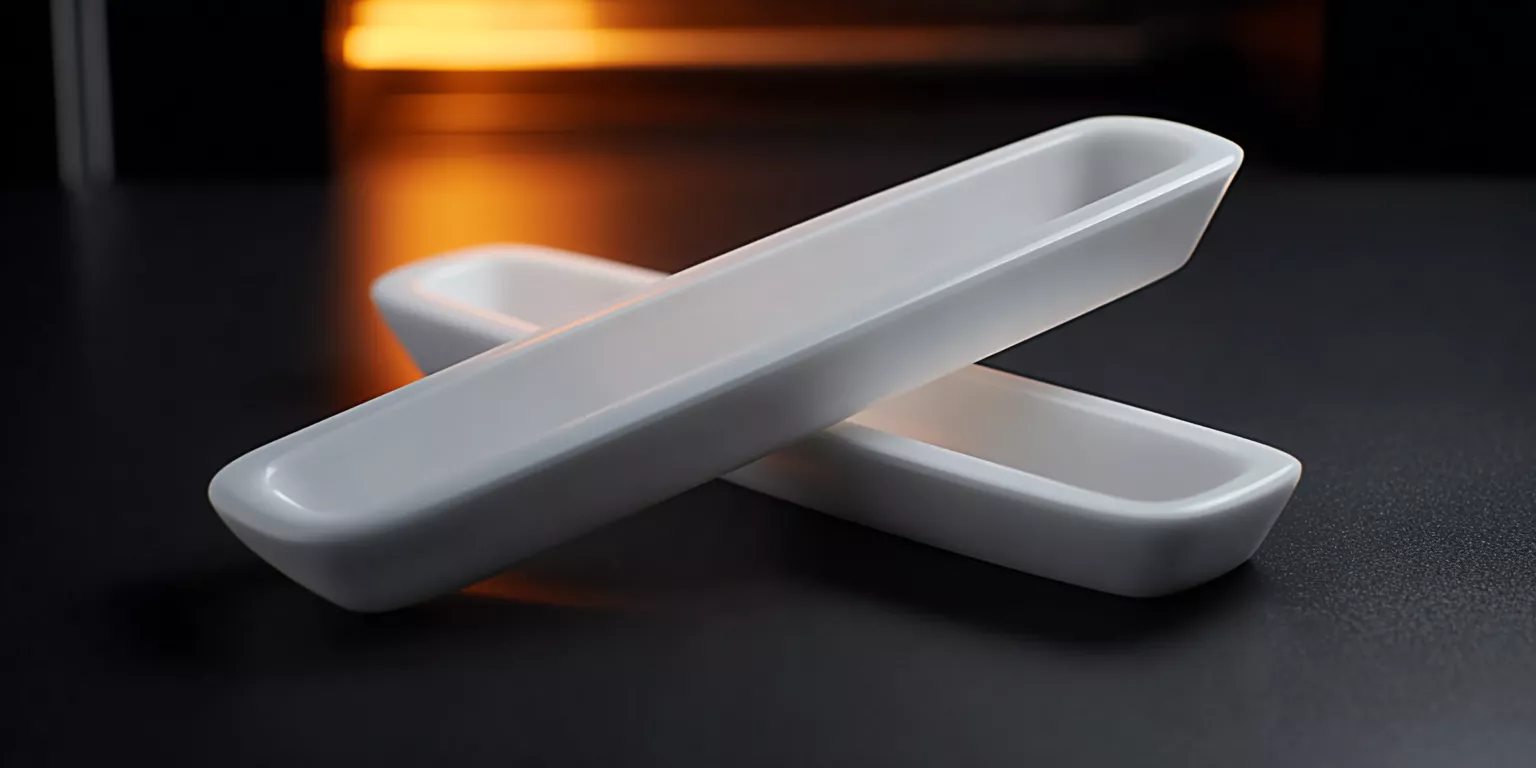
Interaction Between Alumina Ceramic Boats and Furnace Atmospheres
Conversely, even when geometry and capacity are correctly selected, furnace atmosphere exerts a decisive influence on alumina ceramic boat behavior during LOI and ashing. Accordingly, understanding atmosphere-specific interactions prevents misinterpretation of results and avoids inappropriate reuse decisions.
Performance Under Oxidizing Conditions
Oxidizing atmospheres represent the most common environment for LOI and ash determination. Under air or oxygen-rich conditions, alumina ceramic boats remain chemically stable across 750–1000 °C, provided purity exceeds 99.5 wt% Al₂O₃.
In daily laboratory operation, technicians observe that oxidation proceeds uniformly when oxygen diffusion across the sample surface is unrestricted. Boats with smooth, dense surfaces promote consistent gas exposure, reducing residual carbon levels below 0.05 wt% after standard dwell times. By contrast, surface roughness or microcracks locally disrupt gas flow, creating micro-environments where oxidation lags.
Therefore, stable alumina surfaces under oxidizing conditions support complete combustion and reliable mass-loss determination, reinforcing alumina’s suitability as the default carrier for LOI analysis.
Limitations in Reducing or Reactive Atmospheres
Reducing or chemically reactive atmospheres introduce additional constraints. Although alumina itself remains largely inert, associated impurities and surface phases may interact with gases such as hydrogen, carbon monoxide, or sulfur-containing species above 800 °C.
Laboratories conducting specialized ash tests under modified atmospheres frequently report subtle surface darkening or mass drift after 30–50 cycles. These effects rarely indicate catastrophic degradation; however, they compromise gravimetric precision when reused without reconditioning. In such cases, analysts often misattribute deviations to balance calibration rather than atmosphere-induced surface changes.
Consequently, alumina ceramic boats exposed to non-oxidizing atmospheres require stricter reuse limits and more frequent inspection to preserve data integrity.
Long Term Exposure Effects on Surface Chemistry
Repeated high-temperature exposure alters surface chemistry even under nominally benign conditions. Grain boundary diffusion and minor impurity segregation gradually modify surface energy and adsorption behavior.
In extended QC campaigns exceeding 200 thermal cycles, experienced analysts note increased moisture uptake during cooling, manifested as transient mass gains of 0.05–0.1 mg within minutes of furnace removal. Although small, these changes introduce noise into high-resolution LOI measurements where repeatability targets approach 0.1%.
Accordingly, long-term atmosphere exposure must be considered when defining service life, particularly in laboratories emphasizing trend consistency over absolute values.
Summary of Atmosphere Interaction Effects
| Furnace Atmosphere | Typical Temperature (°C) | Observed Impact on Boats |
|---|---|---|
| Oxidizing (air) | 750–1000 | Stable surface and mass behavior |
| Oxygen-enriched | 800–950 | Accelerated oxidation, minimal risk |
| Reducing (H₂/CO) | 700–900 | Surface modification after 30–50 cycles |
| Reactive gases | Variable | Increased inspection and replacement need |
| Long-term cycling | >200 cycles | Gradual adsorption behavior changes |
Contamination Pathways and Error Propagation in LOI Testing
Nevertheless, even when furnace atmosphere and thermal handling are well controlled, contamination remains a dominant source of uncertainty in LOI workflows. Accordingly, alumina ceramic boats must be evaluated not only as thermal carriers but also as potential vectors for systematic error accumulation.
Surface Adsorption and Moisture Uptake After Cooling
Surface adsorption begins immediately after alumina ceramic boats are removed from the furnace. Dense alumina surfaces cool rapidly; however, they also attract atmospheric moisture during the first 5–10 minutes of exposure at room temperature.
In practical QC environments, analysts frequently observe transient mass increases of 0.03–0.10 mg when hot boats are placed on open benches. This effect intensifies under relative humidity above 50%, particularly when microcracks or residual porosity are present. Over repeated cycles, such adsorption shifts baseline measurements and widens control limits without obvious procedural changes.
Therefore, cooling environment control and equilibration timing are essential to prevent moisture-driven mass artifacts from propagating into LOI results.
Cross Contamination from Handling Tools and Storage
Handling practices introduce a second, often underestimated contamination pathway. Metallic tweezers, stainless steel trays, or improperly cleaned ceramic supports may transfer trace residues onto alumina ceramic boats during routine manipulation.
In daily laboratory operation, experienced technicians notice that repeated contact with metal tools can leave microscopic metallic traces, which oxidize during subsequent firings. Although visually imperceptible, these residues contribute incremental mass changes below 0.05 mg per cycle. Over 50–100 tests, such accumulation becomes analytically significant, especially in low-mass samples.
Consequently, dedicated ceramic or PTFE handling tools and controlled storage protocols reduce cross contamination risk and stabilize long-term measurement behavior.
Distinguishing Boat Related Errors from Method Errors
Separating boat-induced artifacts from methodological errors is a persistent challenge in QC diagnostics. When LOI deviations emerge, laboratories often first suspect furnace calibration or balance drift.
However, comparative testing using parallel alumina ceramic boats frequently reveals that mass variability correlates with specific carriers rather than procedural changes. Analysts who track individual boat histories over 100+ cycles identify patterns of drift linked to surface condition, microcracking, or adsorption behavior. Without such tracking, erroneous conclusions lead to unnecessary recalibration or method modification.
As a result, systematic monitoring of boat condition enables accurate attribution of error sources, preserving both analytical confidence and operational efficiency.
Summary of Contamination and Error Propagation Factors
| Contamination Source | Typical Magnitude | Impact on LOI Accuracy |
|---|---|---|
| Moisture adsorption (mg) | 0.03–0.10 | Baseline mass drift |
| Tool residue transfer (mg) | <0.05 per cycle | Cumulative bias over time |
| Microcrack adsorption | Progressive | Increased variability |
| Storage environment RH (%) | >50 | Accelerated uptake |
| Cycle count sensitivity | >50 cycles | Error propagation risk |
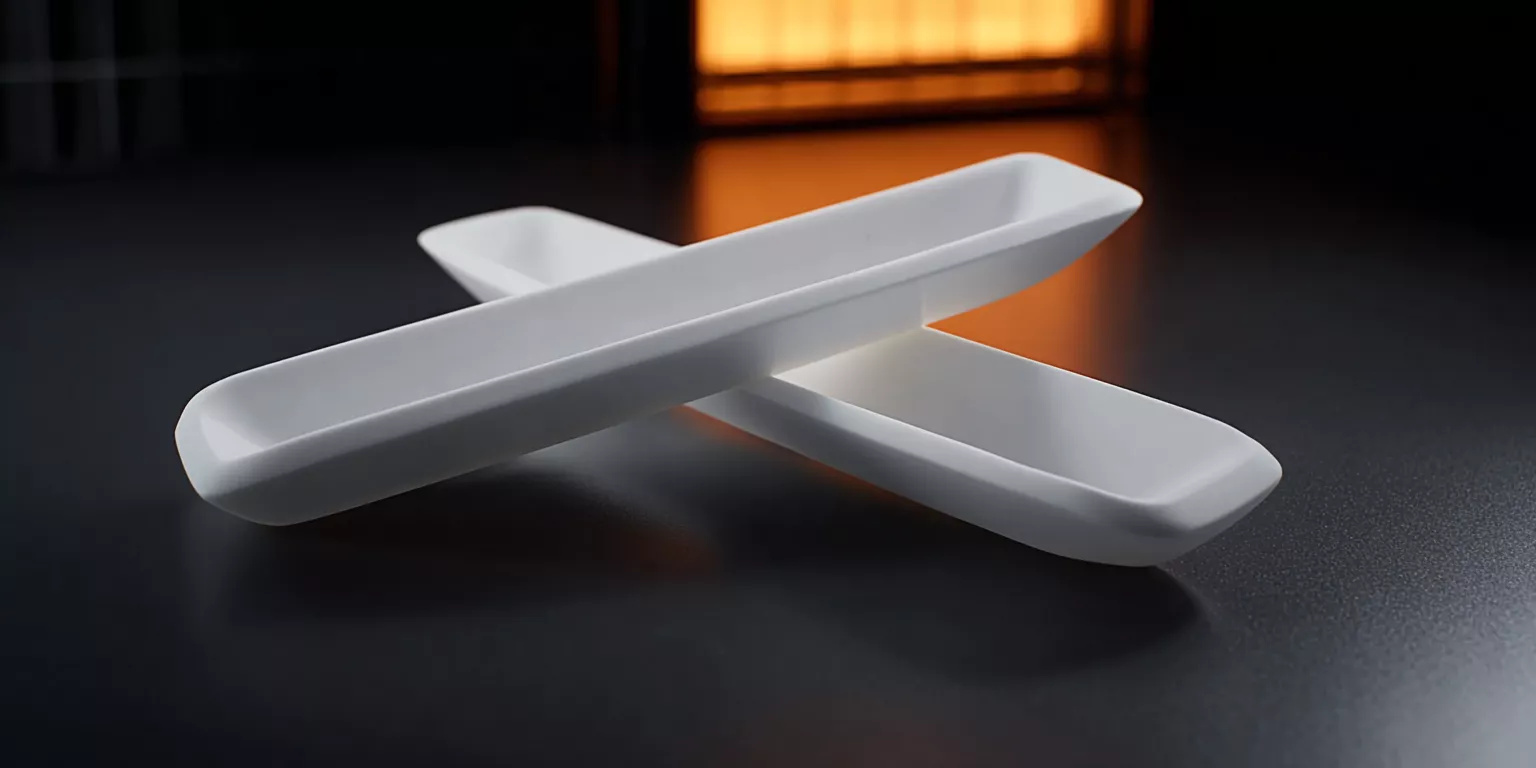
Reusability and Service Life in High Frequency QC Environments
Nevertheless, contamination control alone does not define the practical value of an alumina ceramic boat in LOI laboratories. In high-frequency QC environments, reusability and predictable service life ultimately determine whether analytical consistency can be sustained without escalating operational risk.
Mechanical Fatigue Under Repeated Thermal Cycling
Repeated thermal cycling subjects alumina ceramic boats to cumulative mechanical fatigue, even when individual cycles remain within nominal temperature limits. Each heating and cooling sequence introduces tensile and compressive stresses driven by thermal gradients and constrained expansion.
In routine LOI laboratories operating 3–5 cycles per day, analysts frequently observe the onset of fatigue-related degradation after 120–180 cycles. At this stage, microcracks form preferentially at corners and edges where stress concentration exceeds bulk levels by 20–30%. Although these defects rarely cause immediate fracture, they alter heat flow and adsorption behavior.
Therefore, mechanical fatigue should be evaluated as a progressive process, not a sudden failure event, when defining reuse limits for alumina ceramic boats.
Visual and Dimensional Indicators of End of Service Life
Visual inspection remains the most accessible method for identifying end-of-life indicators. However, laboratories often underestimate subtle cues that precede catastrophic failure.
Experienced technicians recognize early-stage fatigue through edge whitening, slight corner rounding, or localized surface dulling after 150+ cycles. Dimensional checks occasionally reveal internal depth reductions of 0.2–0.4 mm, sufficient to influence heat distribution without obvious deformation. When such changes accumulate, mass repeatability degrades even though boats appear intact.
Consequently, visual and dimensional indicators must be interpreted collectively, rather than in isolation, to prevent latent analytical bias.
Cost of Reuse Versus Cost of Data Rework
The economic implication of reuse decisions extends beyond replacement cost. In QC-driven production environments, data rework often consumes more resources than consumable replacement.
For instance, re-running a single LOI batch may require 2–4 hours of furnace time plus analyst labor, whereas timely retirement of marginal boats avoids this disruption entirely. Laboratories tracking rework frequency often find that conservative replacement after 150 cycles reduces overall analytical downtime by 15–25%.
As a result, service life management should prioritize data integrity over maximal physical reuse, aligning consumable decisions with QC performance metrics.
Summary of Reusability and Service Life Indicators
| Service Life Factor | Typical Threshold | Operational Implication |
|---|---|---|
| Thermal cycles (count) | 120–180 | Onset of fatigue effects |
| Edge condition | Whitening or rounding | Early warning of stress |
| Dimensional change (mm) | 0.2–0.4 | Alters heat distribution |
| Microcrack density | Increasing | Adsorption and variability |
| Recommended retirement | ~150 cycles | Minimizes rework risk |
Standardization Versus Customization in Laboratory Applications
However, once service life expectations are defined, laboratories must decide whether standardized alumina ceramic boats are sufficient or whether customization becomes necessary. This distinction is critical because inappropriate customization can introduce variability, while under-specification limits analytical control.
When Standard Alumina Ceramic Boats Are Sufficient
Standard alumina ceramic boats adequately support the majority of routine LOI and ash determinations. In laboratories following fixed methods, sample mass, furnace geometry, and dwell time remain consistent across batches.
In such cases, standardized boats with capacities between 5–20 mL and controlled dimensional tolerances maintain repeatability within ±0.1–0.2% LOI over 100+ cycles. Analysts working with cement raw materials, fly ash, and mineral fillers often report stable baselines when standardized geometries are paired with disciplined handling procedures. These conditions minimize operator-induced variability and simplify inventory management.
Therefore, standardization is advantageous whenever test conditions remain stable, allowing laboratories to focus resources on method optimization rather than carrier variability.
Scenarios Requiring Dimensional or Structural Customization
Customization becomes justified when laboratory constraints deviate from standard assumptions. Non-standard furnace chamber dimensions, restricted airflow, or atypical sample morphologies often necessitate geometric adaptation.
For example, laboratories processing bulky or layered samples may require elongated boats to maintain uniform exposure across 30–50 mm lengths. Similarly, high-throughput facilities operating parallel furnaces sometimes adopt shallow, wide-profile boats to reduce dwell time by 10–15%. In these scenarios, dimensional customization improves throughput and data consistency simultaneously.
Accordingly, custom alumina ceramic boats align geometry with process realities, provided that customization is driven by validated workflow requirements rather than convenience.
Risks of Over Customization Without Process Alignment
Excessive customization introduces its own risks. Minor geometric variations, when unvalidated, alter heat flow patterns and adsorption behavior in unpredictable ways.
Laboratories that introduce multiple custom profiles often observe increased inter-operator variability, with LOI deviations expanding to ±0.3–0.5% across test sets. Without standardized handling protocols, customized designs complicate training and reduce comparability between historical datasets.
Thus, customization should be implemented selectively and documented rigorously, ensuring that every deviation from standard geometry serves a measurable analytical purpose.
Summary of Standardization and Customization Tradeoffs
| Application Scenario | Recommended Approach | Analytical Outcome |
|---|---|---|
| Routine LOI testing | Standardized boats | Stable long-term repeatability |
| Fixed furnace geometry | Standard profiles | Simplified workflow control |
| Non-standard chambers | Dimensional customization | Improved exposure uniformity |
| High-throughput testing | Structural optimization | Reduced dwell time |
| Unvalidated customization | Avoid | Increased variability risk |
Quality Control Parameters Laboratories Should Verify Before Use
Moreover, regardless of whether alumina ceramic boats are standardized or customized, incoming quality verification remains essential before integration into LOI workflows. Without structured pre-use checks, latent defects propagate silently into analytical variability.
Dimensional Tolerance and Batch Consistency
Dimensional verification ensures that alumina ceramic boats behave consistently across repeated tests. Although nominal dimensions may appear identical, minor deviations alter heat flow and sample exposure.
In practice, laboratories performing incoming inspection often detect internal length or depth variations of ±0.3–0.6 mm across mixed batches. When such variation exists, analysts report LOI spread widening by 0.2–0.4% despite unchanged furnace parameters. This deviation becomes particularly problematic in trend monitoring rather than single-point testing.
Therefore, batch-level dimensional consistency is a prerequisite for reliable longitudinal data, even when absolute accuracy appears acceptable.
Visual Defects and Microcrack Screening
Visual inspection remains a rapid yet effective screening method when applied systematically. Edge integrity, surface uniformity, and corner sharpness provide early indicators of hidden structural weaknesses.
Experienced QC technicians routinely reject boats exhibiting edge chips exceeding 0.5 mm or surface pitting visible under 5× magnification. Although such defects rarely cause immediate fracture, they concentrate thermal stress and accelerate moisture adsorption during cooling. Over 30–50 cycles, these flaws amplify mass variability beyond acceptable limits.
As a result, visual screening reduces downstream analytical noise by eliminating carriers predisposed to early degradation.
Documentation Traceability and Material Declarations
Documentation underpins traceability within regulated QC environments. Material declarations confirm alumina purity, while batch identifiers enable correlation between analytical anomalies and specific production lots.
Laboratories maintaining documentation records report faster root-cause resolution when deviations arise. For example, correlating a 0.15% LOI shift with a specific boat batch allows targeted replacement rather than full method review. Without such records, analysts often expend unnecessary effort recalibrating equipment or modifying procedures.
Consequently, documentation completeness directly supports analytical governance, reinforcing confidence in both results and corrective actions.
Summary of Incoming Quality Verification Parameters
| Verification Aspect | Acceptance Criteria | Analytical Benefit |
|---|---|---|
| Dimensional tolerance (mm) | ±0.3 or better | Consistent heat distribution |
| Edge integrity (mm) | <0.5 chip size | Reduced crack initiation |
| Surface condition | No visible pits | Stable adsorption behavior |
| Batch identification | Traceable | Faster deviation analysis |
| Material declaration | ≥99.5 wt% Al₂O₃ | Predictable chemical behavior |
Integration of Alumina Ceramic Boats into Routine QC Workflows
Meanwhile, after material selection and quality verification are completed, alumina ceramic boats must be consistently integrated into daily QC workflows. At this stage, operational discipline rather than material properties becomes the dominant factor influencing data stability.
-
Standardized pre-conditioning before first use
New alumina ceramic boats should undergo an initial empty firing cycle at 800–900 °C to remove residual binders and stabilize surface chemistry. This step reduces first-use mass drift and aligns new boats with those already in service.In practice, laboratories that skip pre-conditioning often report anomalous LOI offsets during the first 3–5 tests, which disappear only after repeated firing. Therefore, controlled pre-conditioning establishes a reliable baseline before analytical deployment.
-
Consistent handling and cooling protocols across operators
Uniform handling procedures ensure that operator behavior does not become an uncontrolled variable. Boats should be transferred using dedicated ceramic or PTFE tools and cooled on low-conductivity surfaces for at least 10 minutes before weighing.When multiple technicians follow identical cooling timelines, inter-operator LOI variation typically narrows by 20–30%. Consequently, procedural consistency directly reinforces method robustness.
-
Lifecycle tracking within QC documentation systems
Tracking cycle counts and inspection outcomes for each alumina ceramic boat allows laboratories to anticipate degradation before analytical impact occurs. Simple log entries noting usage frequency and observed defects support proactive replacement.Subsequently, laboratories with lifecycle tracking programs experience fewer unexpected re-tests and reduced investigative workload during audits. In turn, workflow predictability improves without altering core analytical methods.
Overall, integrating alumina ceramic boats into QC workflows requires alignment between material capability and human execution, ensuring that analytical reliability is preserved through routine practice.
Common Misapplications and Avoidable Failures in LOI Testing
However, even well-equipped laboratories encounter recurring LOI inconsistencies due to avoidable misapplications of alumina ceramic boats. These issues typically stem from procedural shortcuts rather than material limitations, yet their analytical consequences are substantial.
-
Direct insertion into preheated furnaces
Placing room-temperature alumina ceramic boats into furnaces above 700 °C induces severe thermal gradients. Although this practice appears time-efficient, it accelerates microcrack formation and shortens service life by 30–50%.In daily QC operations, technicians may overlook early damage because visible fractures do not appear immediately. Subsequently, latent defects manifest as drifting LOI values rather than obvious breakage.
-
Inconsistent cooling and weighing intervals
Weighing boats immediately after removal or after variable cooling durations introduces moisture-related mass fluctuations. Variations of 0.05–0.1 mg are common when cooling protocols differ among operators.As a result, laboratories misinterpret environmental effects as balance instability. Consistent equilibration intervals prevent such misdiagnosis.
-
Overextended reuse beyond fatigue thresholds
Continuing to use alumina ceramic boats beyond 180–200 cycles often prioritizes consumable savings over data quality. This approach increases re-test frequency and audit exposure.Therefore, proactive retirement policies outperform reactive replacement triggered by visible failure.
Overall, avoiding these misapplications preserves analytical confidence without additional capital investment.
Engineering Support and Custom Solutions from ADCERAX
In addition, when laboratory workflows exceed the limits of standard configurations, engineering collaboration becomes essential. ADCERAX supports LOI and QC laboratories by aligning alumina ceramic boat design with specific furnace geometries, sample characteristics, and throughput demands.
ADCERAX provides material selection guidance, recommending alumina purity and density ranges tailored to operating temperatures between 750–1000 °C. Furthermore, dimensional customization focuses on uniform wall thickness and controlled heat flow, which can reduce cycle-to-cycle variability during high-frequency testing.
Beyond fabrication, ADCERAX integrates process-oriented engineering advice, including heating and cooling practices verified across 100+ thermal cycles. Combined with batch-level quality inspection and traceable documentation, this one-stop approach helps laboratories maintain repeatable results while reducing method disruption.
Closing Perspective on Long Term Data Reliability
Ultimately, long-term LOI reliability depends less on isolated equipment specifications and more on the disciplined interaction between material behavior, thermal handling, and workflow control. When alumina ceramic boats are selected, verified, and managed as analytical components rather than consumables, QC laboratories achieve stable data continuity across extended testing horizons.
Conclusion
In conclusion, alumina ceramic boats underpin LOI accuracy through material stability, controlled geometry, and disciplined handling. When managed systematically, they transform routine testing into a consistently reliable analytical process.
For laboratories seeking stable LOI performance under demanding QC conditions, ADCERAX offers engineering-guided alumina ceramic boat solutions aligned with real-world workflows. Technical consultation is available upon request.
FAQ
What alumina purity is recommended for LOI testing?
Alumina ceramic boats with ≥99.5 wt% Al₂O₃ provide optimal chemical inertness and thermal stability for routine LOI and ash determination.
How many times can an alumina ceramic boat be reused safely?
Under controlled heating and cooling, typical service life ranges between 120–180 thermal cycles before replacement is recommended.
Why does LOI drift appear even when furnace settings remain unchanged?
LOI drift often originates from carrier-related factors such as microcracking, moisture adsorption, or dimensional variation rather than furnace calibration.
Is customization necessary for all laboratories?
No. Standard alumina ceramic boats suffice for most LOI workflows; customization is beneficial only when furnace geometry or throughput requirements deviate from standard conditions.
References: